


A_L
-
Posts
652 -
Joined
-
Last visited
-
Days Won
1
Everything posted by A_L
-
@MikeSharp01 except that the VCL is not less permeable than the PU layer. If the VCL (layer 3) is the one you say you used here https://forum.buildhub.org.uk/topic/11282-alternative-vcl-to-dupont-airguard-control/?tab=comments#comment-189936 then it has a vapour resistance of 10-30 Mn.s/g. The foil layer of a board insulation has a vapour resistance of at least 70Mn.s/g https://www.ribaproductselector.com/Docs/6/01636/external/AG953197.pdf and 50mm of polyurethane a vapour resistance of about 5.75Mn.s/g giving a total of at least 75Mn.s/g. I think you should also add about 8.5Mn.s/g for the OSB to the PU layer resistance
-
Here is an alternative with about the same vapour resistance. https://novia.co.uk/vapour-control-layers/vc2-avcl
-
Although no MVHR using default (15m3/m2/hr@50Pa) ventilation rate seems excessive
-
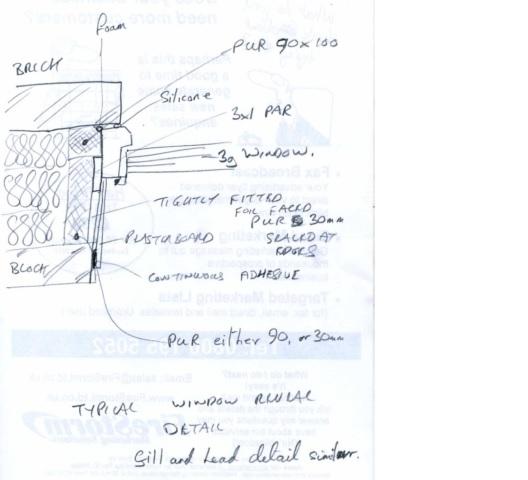
Possibly this is what is being referred to:- https://forum.buildhub.org.uk/topic/10669-frameless-glazing-units/?tab=comments#comment-180111
-
I do not have the experience to have an opinion, but you may find the attached, although no longer 'current' informative (sections 1.C.3 & 1.C.6). Small_Buildings_Structural_Guidance.pdf
-
What is the effect of EPC changes?
A_L replied to Ferdinand's topic in General Self Build & DIY Discussion
It is not linear from about 51 down but appears to be above this. From page 35 https://www.bre.co.uk/filelibrary/SAP/2012/SAP-2012_9-92.pdf N.B. The deflator = 0.42, The square should be a minus sign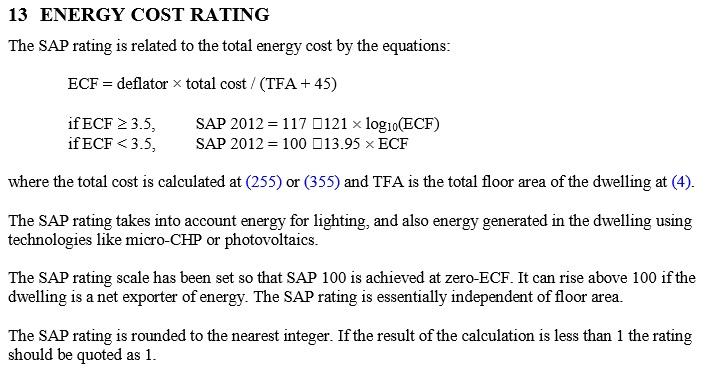
-
What is the effect of EPC changes?
A_L replied to Ferdinand's topic in General Self Build & DIY Discussion
@Ferdinand, The SAP 1-100+ scale is a cost index (of energy for heating & hot water), changes to the emission factor for an energy source will change the Dwelling Emission Rate (DER) but should not affect the SAP score. -
Not quite, when you allow 15% for timber fraction, on same build-up as before U=0.157. To get 0.14 or better you need at least 70mm, U=0.136
-
Is an electric combi boiler acceptable now for a new build?
A_L replied to ProDave's topic in Other Heating Systems
This is my preferred link, couldn't find it before! http://www.thermaflowheating.co.uk/single-phase-models/ -
Is an electric combi boiler acceptable now for a new build?
A_L replied to ProDave's topic in Other Heating Systems
The term 'electric combi boiler' does not mean instantaneous water heating, just using something that looks like a gas boiler to heat a cylinder and rads https://www.electric-heatingcompany.co.uk/electric-boilers/comet-combi/ -
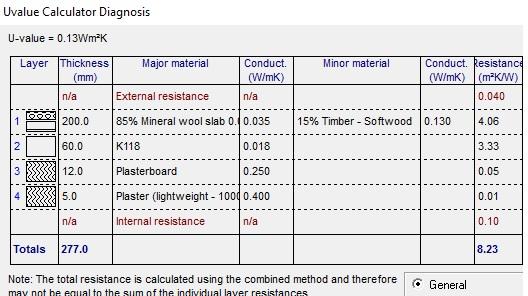
200mm of frametherm 35 or RWA45 between your rafters, and your K118 will give U = 0.13
-
The 1% value for KAY Metzler EPS70 is a bit lower than you might 'guess' at 20 kPa KayMetzler EPS.pdf
-
I would not want to (for various reasons) render directly onto timber based sheets. However render direct onto a substrate (without cavity) is possible. @ProDave has proprietary render onto wood fibre insulation board. In the attached link there is an exposure map, direct render in zones 1 to 3 is perfectly possible with render onto something like cement bonded particle board or proprietary systems. https://www.parex.co.uk/GetFile.ashx?file_id=1453
-
-so about 15kPa, EPS100 with a 1% deformation at around 45kPa would be O.K., perhaps use EPS300 to be safe - here are several possible high compressive strength options foamglas - https://uk.foamglas.com/en-gb/applications/foamglas-perinsul marmox thermoblock - http://www.marmox.co.uk/products/thermoblock purenit - http://en.puren.com/fileadmin/user_upload/products/industrie/purenit/en/Purenit_ENGLISCH_2016_SCREEN.pdf compacfoam - http://www.compacfoam.com/26-compressive-strength.html - none are exactly cheap though. KayMetzler EPS.pdf
-
If being a vapour check is O.K. https://novia.co.uk/uploads/components/variation/NoviaVC2Mar19-5c865c7509c30.pdf
-
Here are a couple of on-line simulators, http://spectrum.pilkington.com/ https://calumenlive.com/home# I prefer the first as it stores your work The optimum gap varies with the fill gas, e.g. air 20mm, argon 16mm, krypton 12-14 (all figures approximate ?)
-
Not sure if this is what @Ed Davies was referring to from http://tonyshouse.readinguk.org/category/the-build/page/2/ about 25% down page
-
Cost of eps is less for same thermal resistance, eps is unaffected by permanently damp environments, more eps may mean less of something else e.g. hardcore, eps can be obtained in load bearing forms up to at least 500kPa (10%) KayMetzler EPS.pdf
-
Ideally should at least be covered to keep rain off. Under permanently damp conditions PIR can undergo hydrolysis (breakdown into constituent parts). It is why when used as under slab insulation it has a dpm below as well as above. http://blog.celotex.co.uk/technical/what-celotex-insulation-can-be-used-in-floor-applications/
-
@Oz07 as http://forum.buildhub.org.uk/topic/10204-would-you-notice-much-difference-020-versus-017-u-value/?tab=comments#comment-172917 so about 1.2kWh/m2 per year
-
@moldy, you are going to need something like 250mm of PIR/PUR in a timber frame with 50mm eps insulation on the outside and ewi render directly applied (no cavity)
-
Would you notice much difference 0.20 versus 0.17 U value?
A_L replied to colin7777's topic in Heat Insulation
In central England (Midlands) SAP says it saves about 1.7kwH/yr per m2. -
Assuming buildings regs levels of insulation and reasonable levels of air leakage and no MVHR 8kW should be sufficient.
-
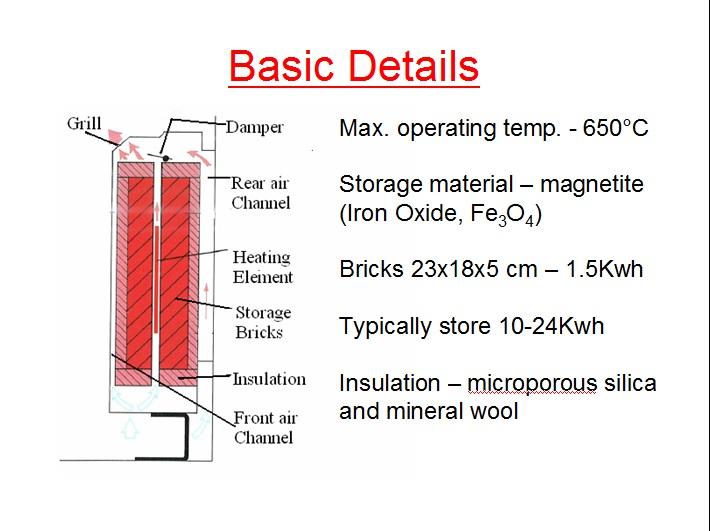
Storage radiators charge at only one rate from the start of the charge period till the core reaches the temperature corresponding to the input control setting. They then passively give off heat till the start of the next charge period Perhaps this will help:
-
When the storage rad is energised the resistor heats and the heat transfers to the bi-metallic strip which 'flexes' because the two metals expand at different rates, the bi-metallic strip will be attached to the flap and the flexing causes the flap to close.

