


Russell griffiths
-
Posts
7788 -
Joined
-
Last visited
-
Days Won
60
Everything posted by Russell griffiths
-
Can you take that panel out ? if so it needs to drain into the cill and out the front of the cill.
-

Hep2O Sleves/pipe-inserts Stuck in Hep2O Fittings
Russell griffiths replied to GandyP's topic in Introduce Yourself
I have had this, I normally de mount both sides and chuck the fitting, I’m not risking catching the rubber o ring to save a £2 fitting. -
Picture.
-
Why do you need 120mm pir on top of 172mm eps. Do you have solid timbers as stiffening in the sips. Isnt a sips roof a warm roof already?? looks like somebody is making a fairly simple build up complicated. Ive never done a sips roof, but understand the principles of vcl.
-
Internal glass panelled wall with sliding door
Russell griffiths replied to JohnSW's topic in General Joinery
first one I found.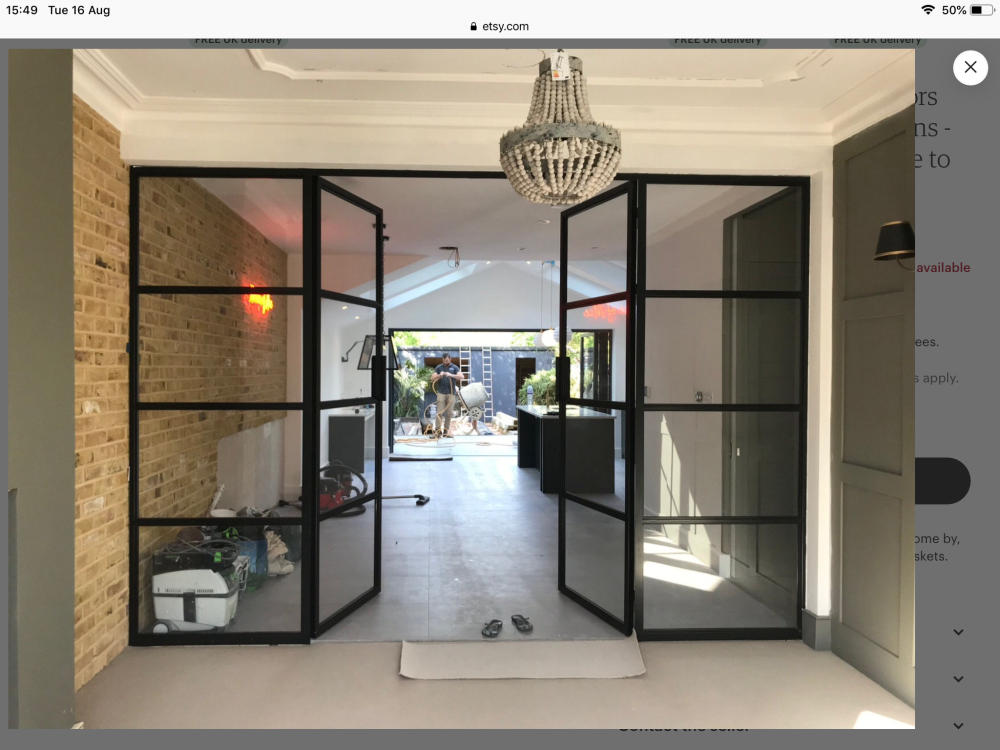
-
Internal glass panelled wall with sliding door
Russell griffiths replied to JohnSW's topic in General Joinery
Isn’t that picture either aluminium or steel. Wouldnt timber look to fat and chunky. You can buy what’s in the picture directly and install yourself. -
That’s exactly it, but I wouldn’t use steel, use a glue lam and then you can use joist hangers to fix to sides. but price it up steel versus glue lam and hangers.
-
Sunday morning with a pressure washer, I bet it looks loads better, get the damaged bit rebuilt. Got to be worth a few hours to see how it comes up.
-
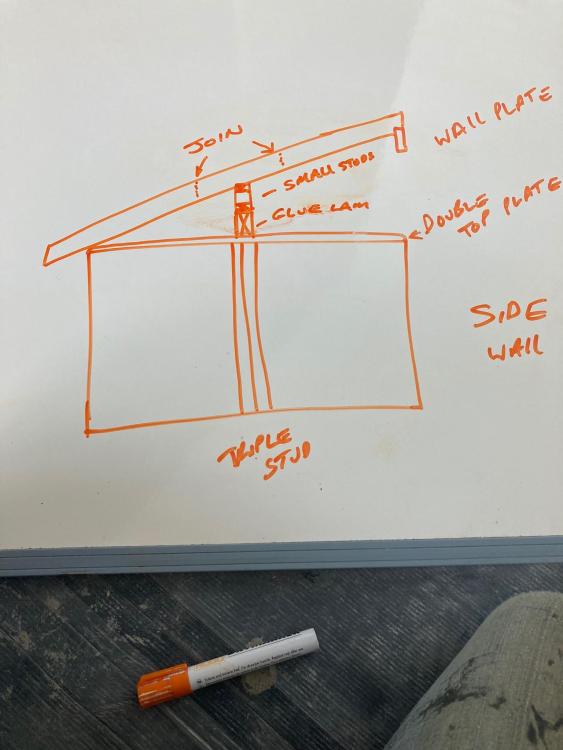
About as technical cal as my drawings get. I know what I mean, and that’s good enough for me.
-
Ok so know you actually said what you want to do. I lived in oz for seven years and built a couple of places. So dig a trench around complete perimeter 400x400 for a footing, add formwork so you can pour the floor slab and footing in one. Could look for a pic but I cannot be bothered. Plastic membrane across the whole thing. Termite barrier around any pipe penetrations. Walls 90x35 structural grade, cannot remember the number, get the blue stuff with termite treatment on. Frame walls at 400 centres, ensure studs line up with board sizes so 1200 and 2400. Double top plate divide long wall in half and put in a triple stud on both sides. Span side to side with a glue lam beam 225 x 90 or whatever you can find. Pitch roof as high as you can 10 degrees is fine for steel but the higher the better. Build a short stud wall on top of glue lam to pick up the centre of the rafters. Pitch rafters up from original house to front of new wall with the join in the rafters over this mini stud wall. Add gable ladder to both sides. Loads of insulation in roof. Sitting on ceiling timbers. Top hat on top of rafters, membrane, shines one with insulation inside, then tin. Crack a stubbie job done.
-
My door supplier insisted on a 30mm gap above the doors, due to lots of larger openings dropping over time. I would not fill this gap with anything solid, but wait for the doors to be installed then fill with an eps insulation and use a trim to match the doors, powder coated aluminium or pvc.
-
Do you mean extension, as in habitable, part of the house, or just a lean to to keep the mower under ?? If it’s the former then you need to think about everything, how will it comply with building regs, what wall design? what roof ? 10 degrees is not enough pitch for most roof materials, there are many that go that low, but will need designing in now.
-
Limestone onto liquid screed before it's fully dried?
Russell griffiths replied to ashthekid's topic in Floor Tiles & Tiling
Why measure rh surely you need to measure moisture content of the screed. -
As a new roof, scaffolding up once, roof off, new facia soffit gutter and roof. Scaffolding down.
-
Behind tile fixing plate for mains bar shower
Russell griffiths replied to Modernista's topic in General Plumbing
Stop messing about, you cocked up, so just fix it. Chop into the back wall and remove a 600 square of plasterboard, fix a noggin then shower plate then patch up wall and fill. You just need to close your eyes and do it. -
Convert part of large farm shed into office / workshop
Russell griffiths replied to pstunt's topic in Garages & Workshops
Definitely put a window in, it will be a miserable place to work without one. -
Scaffold Boards - are these ok and safe to use?
Russell griffiths replied to Oxbow16's topic in Building Materials
What you need to remember is that a standard scaffold board is designed to be supported every 1.2 m just because it’s longer does not mean it can be supported on just the ends. -
1930's Suspended Timber UFH options?
Russell griffiths replied to RedMango's topic in Underfloor Heating
Ok, I thought in the 1930,s it was all solid 9inch brick. -
1930's Suspended Timber UFH options?
Russell griffiths replied to RedMango's topic in Underfloor Heating
@RedMango are you sure about the cavity walls. -
Get rimless toilets.
-
Cladding options (now that Siberian Larch is contraband)
Russell griffiths replied to Kelvin's topic in Timber Frame
Have a look at Douglas fir. a neighbour has just used it and looks very nice. -
Not really, I have another house, we are building a new one to live in, if it takes me another year then that will be 5 years, this is not a problem, it’s what you do when it’s finished. If you move in and live there for 3 years then no problems, if you finish it and sell it you will be liable to pay the cil, as well as sorting the vat out. If its for you and your family then happy days, it doesn’t matter how long, but as soon as it looks like you did it to make a profit then tax is due in one form or another.
-
Other things to think of. CIL Payment, if you don’t live in it then you are liable to pay the cil. Vat, again if it’s not your principal place of residence then you cannot claim the vat as a new build, you can claim the vat if you are building this for profit and it’s your business, but then you will pay tax on your profit. Basically if it isn’t your house for you, then you will pay a chunk of something to the tax man.
-
I think the words load bearing are confusing. Its not holding up the roof its not holding up a jumbo jet but I definitely think it is assisting that joist and helping with removing flex. Remove it then go up stairs and jig about a bit, I bet that joist has an unhealthy amount of bounce.
-
I bet my left nut that if you remove that the bounce in the floor upstairs will increase. up to you if it’s an acceptable level. I personally would be adding strength to that joist. Its not going to fall down, but any flexwill end up with cracked ceilings.



