

BotusBuild
-
Posts
1408 -
Joined
-
Last visited
-
Days Won
10
Everything posted by BotusBuild
-
I left the site in November 2019 with the two trees felled, and we had decided that the design and approved planning application were not quote to our liking, so we took the decision to put in a variation of condition which went in for consideration in December 2019?. Little did we know what this would mean to progress; as we are building very much at the DIY end of the self build spectrum, and not living close to site, by the time we had the go-ahead we were in Lockdown 1.0 and unable to get to site until July 2020. But before that, I'd already started the applications to install water and electricity, so in the first few months of 2020, I had lined up the water installation and had most of the things in place for the electricity connection. The water was due to go in at the end of March, and as you can expect, this was postponed. However, by keeping in touch with my local ground worker, the two neighbours and hte water and electricity folks, we were able to get things lined up to get both connected in the same week in July. Also, our local ground worker convinced us to push an access straight from the lane down to where we were building - I recommend listening to the experienced ? As well as getting things in place for our return to site, we took the opportunity to source a caravan that we could put onsite in order to make it easier to be able to travel straight to site and not have to rely on being able to use the local TravelLodge - little did we know how useful that was going to be. So, in June and early July a couple of short preparatory trips moving the caravan to site and setting up, connecting the water standing pipe, installing meter boxes, then in July - October, we made several trips to clear and burn vegetation, feed and water the water and electricity teams, have meals with our "to be" neighbours, take delivery of a septic tank dig a lot of holes lay drainage pipes fit a septic tank fill holes with stone fill holes with spoil and finally start digging a very large foundation hole for the insulated raft foundation 20201012_094541.mp4 And then we hit Lockdown 2.0 - another month of enforced "stay away from site", then in early December, I returned for two short visits to finish off concreting in the drainage pipes that will end up feeding through the insulated raft. And so we find ourselves in Lockdown 3.0 during which we are sorting out re-mortgaging to a lower fixed interest rate, which we always knew we would do, but we had hoped to be a lot further along ? choosing insulated raft supplier determining steel re-inforcement requirements and, due to delays, considering moving slightly along the self build spectrum towards more use of subcontractors ? And so as I write this with the Calcutta Cup on in the background wondering how long it will be before the travel restrictions are lifted, but planning for a late March trip West.
-
So, Huepar support have been great at answering emails and making suggestions about my problem receiver, but they have been absolutely SH1TE after they offered to swap the unit. I have heard absolutely nothing since that offer was made despite several chasing emails (all polite!!) So, moving on, I am looking to find out if anyone knows of and can recommend a different receiver that will work with the Huepar 603CG laser level
-
As a sailor, that is very apt
-
More like a Merlot
-
SWMBO would like the latest sink taps included in the plans - anyone know where these can be sourced?

-
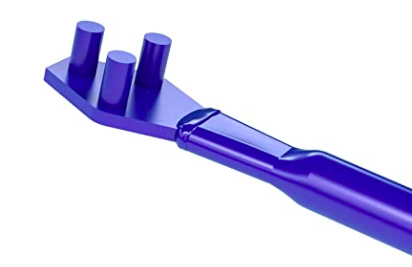
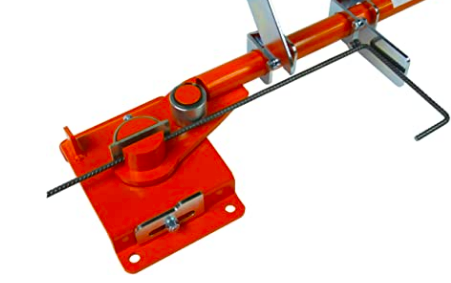
Anyone done it? What did you use? FYI - I'm DIY'ing as much of the build as possible to minimize costs I will be needing 10's of L shaped pieces of rebar (all about 2m long) as part of the build. I figure there must be a straight forward method of making 90 degree bends and have come up with: 1. hydraulic benders (expensive bits of kit) 2. manual benders (two arms hinged together that you bolt to a large piece of wood) 3. As above but also calls itself a pipe bender (so I am a bit dubious) 4. A bar with 3 prongs at the end (a hickey bar I think its called) - vary in price from £30 upwards 5. One of these (this one up to 14mm rebar) for about £70-80 Then I saw this Youtube video (skip first 15s) - brilliant. Now searching for a "forged eybolt"
-
Thanks Simon - the brightness does reduce when I switch it to pulse mode I have emailed their support and they have been responsive, but those responses have so far not given me confidence. I await next weeks follow up from them. Silver lining of the lockdown - I have some time to sort this out before needing to use the darn thing ?
-
Definitely clean - no fingerprints. Not been near a building site yet so very little chance of getting dirty!!
-
I got one of the Huepar 603CG laser and the LR-6RG receiver. Whatever I did, the receiver would not detect, so it went back and I got the LR-5RG receiver which arrived today and that doesn't seem to work either. Before anyone asks, yes, I did put the laser onto Pulse Mode as per the instructions. Reading reviews on eBay and Amazon, I am now seeing a lot of 1* reviews mentioning the exact same problem. Anyone else got the above models? Had any problems? I am hoping that it is not the laser unit itself that is a fault.
-
That looks great - well done
-
I'm sorry trees, you have to go
BotusBuild commented on BotusBuild's blog entry in South East Cornwall Low Energy build
@ProDave - the branches of one tree were close to the overhead electrical cable in the picture, so I wanted to remove them in small pieces using a handheld saw. The ladder was tied to the tree and pegged to the ground to minimise the risks. Felling the other tree as a whole had the potential to take out two others at the same time. If I'd had the opportunity, it would have come down as you suggest. @Dave Jones - As you can in the pictures, a good 18" of trunk was left and my ground worker dug them out and has taken them away -
I'm sorry trees, you have to go
BotusBuild posted a blog entry in South East Cornwall Low Energy build
Having eventually found our plot in episode one, and worked out where the plans had the house to be built we found that a walnut tree had to make way. A second tree, a horse chestnut was also badly diseases with a split trunk and as we didn't want that falling on the newly built house in the Autumn of 2019 (or Fall for our American cousins as I am writing this on Thanksgiving Day 2020) I headed off with equipment in hand to so some tree felling. First some photos of entrance to site (now wider!) and then some of the felling and of course the obligatory fire, and a beautiful sunset as my reward at the end of the first day -
So, I have told this story to quite a few family members, friends and colleagues over the last few years, and thought I will record it here so that other new members might learn about the patience and surprises that can occur in this phase of the self build adventure ⛺ It all started when I was 14. I blame my stepfather. He made me dig ♠️ foundations by hand ?️ OK, it was only for an extension, but they didn't tell me about the concrete encased foul and storm water drains we would find. Digging to depths of 10ft by hand should have left severe scars to put me off this self build lark for life. But, hey, I got a new stereo ? for all of my hard graft [For you youngsters, a stereo was the way we played music ? back in the day]. Anyway, many years later, the wife and I are in the Lake District and see a barn ripe for conversion, and the timing must have been right - you know, the stars in alignment ⭐ ⭐, and the phase of the moon? augered well, or some other psychological/astronomical claptrap - and we both said "time to get out of the South East". Well, that was about 5 years ago, and we are still in the South East. Lesson 1 for all new south builders - Tip 1: patience my friends!! Tip 2 - unless you are lucky enough to have been handed a plot of land on which to build, start searching where the wife would like to start, followed closely by Tip 3: using subtle hints and prods in order to expand or direct the search appropriately, always with the mantra (Tip 4) "we need some money left over to build the damn thing!" (Note: some forum members may say that doing that doesn't make for enough of an adventure ? ), we started in the North Devon area, a place where my wife had spent time holidaying as a child with her family, which is as good a reason as any to choose a starting point. We (I) trawled the usual sites for plots (estate agents, land agents, auction sites etc.), we trawled the lanes and byways of North Devon on a number of visits, propping up the local hospitality businesses along the way, I got so bored at one point I went trawling (OK, sea fishing from a trawler ?️ but go with it, for the sake of the story!). Having searched for about 18 months and found nothing, I expanded the search outside N Devon and we started seeing results in East Devon and on the outskirts of Exmoor and Dartmoor. 6 months later and we were looking at plots in the South Hams (S Devon). We saw scrub covered plots, plots with dense woodland ? ? , people looking for a swift profit by selling their back gardens (soon avoided forever after seeing two such postage stamps ? ), old industrial sites, then we went to see two modern(ish) barn conversions and decided to make an offer (below asking price ? of course!). Herein lies a conundrum I have never quite got my head around - asking price £200,000, Offer £165,000, offer refused. OK Offer £175,000. Offer refused. I'll leave the offer there if you change you mind. 2 months later same property on the market for £170,000!!! Offer £150,000, then £160,000, both refused. 2 months later same property on market for £150,000 and marked as SOLD!! The only reason I can fathom is that they wanted someone particular to buy it. After I had calmed down, 6 months later (yes I had been really annoyed) we renewed our search and found an abandoned ex-SW Water above ground reservoir with FPP and amazing views. Problem, it was above our plot buying budget (refer to Tip 4) and the seller refused to move an inch on the price. So, the searches started again. This time, the wife was now quite pliable about the distance from where we currently live and the areas we should look. This is were I have to admit that I had seen a plot with FPP and plans I liked the look of probably about 9 months before the fluidly priced barn fiasco. And, the distance was about 1 mile less than to the old reservoir. So, off I trotted ?♂️ one day.....to CORNWALL. Another visit with the wife, a coffee ☕ with the sellers (neighbours to be) to discuss the plans that had been approved and a re-mortgage later, and we became the proud owners of about 1/2 acre of Cornwall just on the edge of an AONB. Just a word of warning - this "plot" did not have its own title deed, and it has taken nearly 18 months for the Land Registry to finalise the new title for us. This in itself has probably given me more grey hair so far than any other aspect of the build so far.
-
6mm pea shingle for 110mm pipe bedding - WTF?
BotusBuild replied to BotusBuild's topic in Waste & Sewerage
Thank you all - you have confirmed I am not going mad. In this case, I will have to go 'by the bag" due to current space limitations (also only need equivalent of 5 bags) -
Please tell me I'm not going mad. My groundworker wants me to order 6mm rounded pea shingle/gravel to bed the 110mm foul drainage pipes!! I've alway felt that 10mm gravel like one of these options is what you use:- https://www.travisperkins.co.uk/bulk-bags-sand-and-aggregates/travis-perkins-gravel-and-shingle-bulk-bag-10mm/p/938182 or https://www.diy.com/departments/10mm-gravel-bulk-bag/35699_BQ.prd which I am inclined to order and tell the groundworker to use. Yes or No?
-
Really interested to see no mention of waterproofing on the outside of the EPS wall. Are people not doing this? Is this not being specified by your architects or required by building control? FYI - my building regs drawings (just approved) show backfill over RIW protective membrane over RIW double drain (or similar) over self adhesive waterproof membrane, with a land drain below the concrete slab
-
I spent a couple of years in the micro-renewable energy business (think solar PV, solar thermal, heat pumps, UFH for domestic and small commercial premises). I agree with what @PeterW has said above. It was super important to get the heat loss calculations correct first, then move on to what would provide the heat input to the system, and what heat emitters you required (low temperature radiators or UFH, or (avoid whenever possible) oversized traditional radiators). I have lost access to the heat loss calculator I used to use (it would likely be out of date now), so it would be great if some recommendations could be made for good current versions ?
-
I'm just trying to get hold of some drainage items (comes to about £700 total before delivery costs), and I'm asking for a small discount, but there seems to be no willingness to budge. Have you been successful with any haggling (not just drainage)? If so, what tips can you share with the forum?
-
Welcome. Tip 1. Create something outside the door to the static van where the muddy stuff (wellies etc) will stay ? Tip 2. Be ready for decisions Tip 3. Be ready for changes to your plans (they are just that, plans, and plans change) Tip 4. Get your deep breathing and counting to 10 perfected. Patience is a real virtue ? Other tips will appear as you continue to engage with the other forum members. Good luck with the build
-
Getting ready to do insulated slab for our "upside down" house. The plan is to put the UFH pipes in the slab so the top of the slab is effectively the FFL for the ground floor. The two bathrooms will be on the ground floor. If we want to have same level throughout the ground floor, how do address the problem of the trap and waste pipe for the shower having to be in the poured slab? Anyone done this and got some picture to share?
-
@Oxbow16 - the slotted 3m stuff
-
I think my research has confused me. What type of pipes can I use in a STP leach field? Stiff or flexible pipe (see examples below), or will either do? Slotted 3m single socket stuff like this? - https://www.plastics-express.co.uk/underground-drainage/Underground-Drainage-110mm?product_id=1795 or Perforated Twinwall Drainage like this? https://www.drainagesuperstore.co.uk/product/perforated-land-drain-coil-pipe-100mm-x-100m.html
-
Connecting-up my empty meter box…
BotusBuild replied to Dreadnaught's topic in Consumer Units, RCDs, MCBOs
Soapstar, that is a very common setup - some have two meter boxes, one as above plus the meter in it and the other with the CU and feeds off to other locations. -
Solar powered aerator pump for STP (temporary)
BotusBuild replied to BotusBuild's topic in Waste & Sewerage
I am "the workers" ? and for me "the chestnut tree" is adequate When I need major works (pouring cement) I will "hire-a-loo" for the short time the hired help are on site. -
Discharge of Condition "Begin within 3 years"
BotusBuild replied to BotusBuild's topic in Planning Permission
I did ? ... and Cornwall Council told me categorically that a time limit condition cannot be discharged, so I'm satisfying myself with the fact that I have evidence (dated photographs) approved (by Stroma) that I can put under people noses should they poke them in ?

