


Mr Punter
-
Posts
8582 -
Joined
-
Last visited
-
Days Won
27
Everything posted by Mr Punter
-
But the OP, who is not an experienced builder, is asking if they can build a 315m2 house for £250k. My answer is no they can't as it is less than £800 per metre.
-
Interesting. I did not know this was an issue. Is there evidence for this? Any particular make / type?
-
I think you will need to part ways. It is not unusual for decent builders to get pricing wring and try to recoup it by charging extra. Do you think he underpriced? How far through the build are you?
-
It would still be good if you could put some floor insulation down, but no so crucial as you are not heating it up. Any is better than none but I get that digging up the floor is a no-no. For floor finishes, have you tried LVT / Karndean / Amtico? Properly fitted it looks great. Still nice to have carpet in the bedroom though!
-
Quite a few on. here have used https://www.ecology.co.uk/mortgages/residential-mortgages/self-build They are a building society not a broker
-
Thing is, we all know that mug punters may pay more for UFH because they don't know it has been fitted with insufficient insulation. If you are happy to live with that, so be it, but don't expect a round of applause on here.
-
The reviews were Google at 2.7 and Trustpilot at 2.8. May not be at all representative. The only time I have specced UFH has been John Guest and Nu-Heat but for new build. The system you propose will chew through lots of fuel. Just about acceptable in a bathroom but not a whole flat. If you have decent ceiling heights you will not notice a threshold at the entrance door. Most houses have this. If you can get min 30mm Celotex type insulation under I will give you my blessing for underfloor heating.
-
Having a flush threshold all round can cause damp issues. They are not so bad with doors / windows as they should not be affected but adjacent to walls will be no good. The sole plates should be 150mm min, pref 225mm above DPC / ground level.
-
Recently built 3-storey home and looking into MVHR systems
Mr Punter replied to Jde00's topic in Other Heating Systems
The setup you have at the moment relies on trickle vents to provide fresh air. You may be best making sure the trickle vents are left open and changing the extract fans for ones that are quieter and more efficient. For the kitchen, if it would not be too focal you could look at an externally mounted unit or change for a better / quieter one and make sure the exhaust hole is 150mm diameter. -
Strange readings and behaviour
Mr Punter replied to gc100's topic in Mechanical Ventilation with Heat Recovery (MVHR)
Something wrong there. If the system is balance the intake and exhaust air flows should be about the same. Is the building occupied and up to temperature with the heating on? -
underfloor heating Underfloor heating installation opinions on work quality
Mr Punter replied to Pbb's topic in Introduce Yourself
I agree. I think that this should be covered in the regs and some minimum standard applied. I know several people who get a new kitchen, a bit of building work (like chimney out) and underfloor heating with little / no insulation. The problem is the hassle and expense of taking up an existing floor, which neither the builder nor the householder wants to do. If it costs an extra hundred a year to heat, they may never get their money back. -
underfloor heating Underfloor heating installation opinions on work quality
Mr Punter replied to Pbb's topic in Introduce Yourself
What a waste of materials if it has to come up. They normally start with a perimeter upstand of insulation that slows heat transfer to the walls and allows expansion in the screed. I can see why it will be difficult to liquid screed. Could they use a solid overlay like ScreedBoard 20? It can be tiled and is a dry application that you could even DIY. -
Your supplier is badly reviewed. If your flat is on the ground floor, most of the heat will go straight into the ground. There is an aim around the world to reduce C02 emissions and your proposal is doing the opposite, by heating up a large conductive area in direct contact with the ground. I appreciate there are no simple solutions for this but 6mm insulation is not going to do much. At least go for the overlay boards suggested by @PeterW. Most people here doing new build would suggest at least 100mm of high performance insulation for UFH. Can you take a bit off the bottom of the doors?
-
If you don't like it and they won't remedy it, issue proceedings. Not great that you were down to do the internals.
-
But they are Chinese crap. At least buy European crap.
-
I have a Samsung fridge freezer with extended guarantee. Lucky as it has gone wrong 3 times in 2 years. Engineer due back out for yet another fault. They are poor quality design and build.
-
Never going to happen. Compared to a wall string, a template will be far worse. Why mount a template on the wall drill holes, and fix treads individually when you can just mount a wall string and job done?
-
I think having the string fabricated with the stairs is probably easier to get right. Mounting the treads individually would be more likely to fail structurally and be slightly misaligned. The tiles provide an excellent finish. A small slip when over-refreshed looks like it could be painful.
-
Now there is a task I would not fancy taking on! Can you keep us updated with progress?
-
Unless it is going to a foul or combined sewer it will be unsuitable. Grey water is not contaminated with poo. Please make sure as surface water is often discharged directly to rivers, the sea, feed drinking water reservoirs etc.
-
Have a look at https://www.pavingexpert.com/ceramic_01 If you are having a pool, make sure the paving is non-slip.
-
I think the fact that it is split horizontally with the materials will mean that your eye will not be drawn to the verticals. I think it looks fine.
-
I used the Brett Martin placcy cast iron on a project but not sure it was worth the extra: I quite like the Guttercrest ali stuff we did below: Next project will be grey plastic.
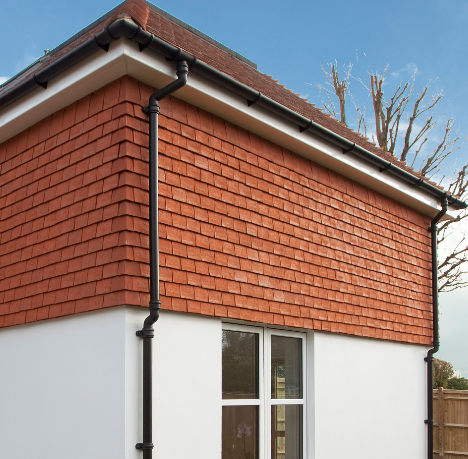
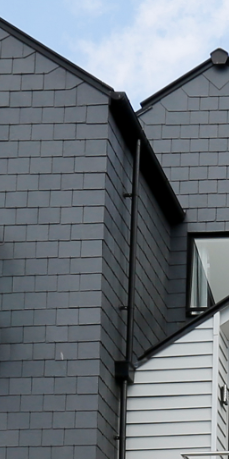
-
Water companies often fit small bore meters as standard. Apparently they are better at recording low flows. If you want a higher flow / larger pipe without the restriction at the meter they often have a much higher standing charge. If you need a sprinkler supply, have it as a separate pipe. Our water company like to fit a meter to these as well, just to make sure you are not nicking their water or leaking. In this case it is well worth specifying a large meter to guarantee flow rate. Fire supplies do no have a standing charge.
-
Splitting the freehold plot - when is best?
Mr Punter replied to Happy Valley's topic in Party Wall & Property Legal Issues
Exactly. You do this by way of a transfer with the land registry. You can't transfer land you own to yourself. You will transfer the existing house to a new owner and retain the plot for the new house.



