Mike
-
Posts
1565 -
Joined
-
Last visited
-
Days Won
9
Everything posted by Mike
-
It may not help in your circumstances, but Passivhaus design is one way of overcoming this economic dilemma. That is, if you increase insulation, and all the other factors, 'enough' (to require no more than 15 kWh/m² of floor area per year for heating and cooling, as calculated using the Passivhaus Planning Package), then you won't need to pay for a traditional central heating system. And that saving then pays, in theory, for the extra insulation and other measures required to achieve the standard. In other words, there could be a world where you and your identical brother spend identical amounts on the build, but you save on your fuel bill each year and he doesn't.
-
Pitched Roof Thermal vs Acoustic insulation trade off
Mike replied to Nye's topic in Heat Insulation
The best way of preventing sound leaking through recessed ceiling lights is... not to have recessed ceiling lights. Do something more creative instead. The second best way is to create a sealed box from one or two plasterboard / plywood for them to sit in, or to use a substantial commercial hood. -
Pitched Roof Thermal vs Acoustic insulation trade off
Mike replied to Nye's topic in Heat Insulation
In terms of tools, I've used the BRE U-value calculator for many years, though it's not free. For sound transmission, AFMG SoundFlow may be helpful and is available on a free trial, though I've not used it. Of course if you have any windows facing the noise, they are likely to be the weak point. -
Tiles with epoxy grout. Although the technology and materials are vastly different now, multipanels still remind me of the tacky-looking plastic versions in that I encountered in the occasional old bathroom the 80s - so probably installed in the 60s or 70s.
-
Multi studio apartment heating/cooling solutions
Mike replied to LuisB's topic in Air Source Heat Pumps (ASHP)
Don't ignore it, check it out! Similar laws already apply here in France, and it wouldn't surprise me if Portugal has them too too - or plans to do so. -
What's more important for comfort U value or 'thermal mass'
Mike replied to Gone West's topic in Boffin's Corner
You would need to find out the fraction of moisture it can absorb According to a study of 3 hempcretes*, 'liquid transfer appears negligible for relative humidity lower than 80%', it has a moisture buffer value of 'excellent' or 'nearly excellent' on the Nordtest classification (from 1.94 to 2.15 g/(m2 %RH) depending on the composition), and high water vapour permeability. Which is pretty good. *Florence Collet, Julien Chamoin, Sylvie Prétot, Christophe Lanos. Comparison of the hygric behaviour of three hemp concretes. Energy and Buildings, 2013, 62, pp.294-303. 10.1016/j.enbuild.2013.03.010 hal-00810372. -
What's more important for comfort U value or 'thermal mass'
Mike replied to Gone West's topic in Boffin's Corner
Turns out they have: Yates T. (2002). Final report on the construction of the hemp houses at Haverhill, Suffolk, client report 209-717 Rev2, BRE, Watford, 2002. I don't have a copy, but the CAT mention key findings in a report: https://www.votehemp.com/wp-content/uploads/2018/09/building_with_hemp_and_lime.pdf Short version - two houses were built, sponsored by the Suffolk Housing Society in collaboration with BRE, who performed a full assessment. Despite having higher U-values (Hemp homes 0.58 w/m2.K Control Homes 0.35 w/m2/k) they performed as well as the standard construction, occupied or unoccupied. This may be partly explained by hempcrete's 'thermal mass', low thermal bridging & airtightness. -
What's more important for comfort U value or 'thermal mass'
Mike replied to Gone West's topic in Boffin's Corner
I visited the CAT, but when it was regarded as a strange hippy commune and eco-anything was generally treated as a joke. So long before the WISE building was built. I must get back there some day. Depending on the time of year: Compare the Climate and Weather in Lille and Winchester - Weather Spark The LGCgE is a University - or, rather, a collaboration by 4 regional universities - so it's already been extensively tested 'for real'. You may not have too long to wait. IndiNature are already producing & selling UK hemp-based insulation (though not yet hempcrete blocks) and have applied for their first BBA certificate. -
MVHR Unit Suggestions
Mike replied to Tumble's topic in Mechanical Ventilation with Heat Recovery (MVHR)
Ideally stick to one of the models independently tested for the Passivhaus Institute: https://database.passivehouse.com/en/components/list/ventilation_small. The 'efficiency ratio' is the overall measure, taking into account heat recovery + electricity consumption. Passivhaus certified units come with a more realistic measure of their performance compared to non-certified units (Paul have a short explanation). -
What's more important for comfort U value or 'thermal mass'
Mike replied to Gone West's topic in Boffin's Corner
-
What's more important for comfort U value or 'thermal mass'
Mike replied to Gone West's topic in Boffin's Corner
I hate to say it, but seems more like hopium than a solution. Is there any proper research as to the long term performance. Yes. The French Réhafutur 1 research project (http://www.rehafutur.fr/) was the initial research project, a collaboration between the housing association Maisons et Cités and the University of Artois, with support from the regional Eco-business Creation and Development Association (CD2E), the French Building Federation, the Federation of Construction Employers Cooperatives, and others. It's 60 miles inland from Calais, south of Lille, so a similar climate to southern UK. The 4 elevations were insulated with different materials: 300mm hempcrete blocks in thin-bed lime mortar, with the gap against the brick wall filled with hemp fibre (so functionally similar to the in-situ hempcrete linked to above) 350mm blown-in cellulose fibre 350mm flax wool 360mm sheep wool There's some brief info here in English - https://www.isohemp.com/en/hemp-solution-heritage-renovation and a video of the insulation here in French: https://www.youtube.com/watch?v=QkR4WATzp0Q The building was monitored by the regional Civil Engineering & géo-Environnement Laboratory (LGCgE) using 80 probes, measuring temperature & heat flow (on the internal surfaces, external surfaces, and boundary between insulation and structure of the external envelope), temperature & hygrometery (in the centre of the insulation), ventilation air flow & internal air quality. Energy use was logged and the external weather measured. Various metrics were calculated including actual -v- predicted U-values, thermal inertia and thermal decoupling; plus acoustic performance, materials wastage, embodied energy, cost effectiveness, environmental life cycle analysis, etc. The outcome of this (and a subsequent pilot) was that the hempcrete was judged the optimal solution for wall insulation. As a result an initial 50 houses were insulated with hempcrete in Pecquencourt a couple of years ago (to be increased to 115), with a plan to expand that to 1,000 by around 2026, and eventually more as the local production capacity and knowledge are developed. There's some info on these plans in English here: https://batinfo.com/en/actuality/le-bailleur-maisonscites-lance-lexperimentation-pecquenchanvre_19931 and a video in French here: https://www.youtube.com/watch?v=7u8gxdJP_pU -
What's more important for comfort U value or 'thermal mass'
Mike replied to Gone West's topic in Boffin's Corner
In a traditional building that is subject to some moisture, one option I'd consider is adding hempcrete to the inner face of the wall, improving the U-value and maintaining breathability without isolating the interior from the 'thermal mass' of the wall. There's an example here: https://lowcarbonbuildings.wordpress.com/2019/09/15/a-domestic-insulation-project-chapter-3-weeks-of-weetabix-walls/ -
Hello - doing a 1970s house refurb to bring it in to the 21st Century
Mike replied to AdamUK72's topic in Introduce Yourself
An interesting project. Consider installing MVHR (Mechanical Ventilation with Heat Recovery) too. -
And here's a photo:
-
There is no hope for energy reduction when people fit that many lights It does depend on the room size, but the power used by a dozen 3W LED lamps is not huge, while often being preferable (visually and in energy use) to a ceiling full of 10 or 12 Watt LED downlighters.
-
So you can switch them all from the door simultaneously (or wherever the light switches are), instead of individually. Not a problem if you only have a couple of lamps, but if you have 6 or 12 of them scattered around a room, it's much easier.
-
These and sockets are still available and I use them for lighting controlled by wall switches (hard wired ones!!,!,) Me too - very useful for that, though better to use a sleeved version. Domestically the corresponding shuttered BS 546 sockets are still permitted for lighting. I wish they had an equivalent in France, where instead the best you can do is to add 2 regular power sockets (confusing) or flex connection plates (annoying) to a lighting circuit. Problem is, there's USB-C and there's USB-C Most laptops, phones etc benefit from >5V for faster charging, but most cheap chargers, inc all those I'm aware of built into UK sockets, will only give 5V Yes, I can recommend USP PD (Power Delivery) power supplies to save space when travelling, if you have a compatible device. They have USB-C plugs on the cables but can go up to 48V.
-
The changes in socket types are why I choose only regular 230V power outlets.
-
electric boilers are cheaper than heatpumps to run
Mike replied to dpmiller's topic in Environmental Building Politics
A load-shedder (such as the Hager 60060) may be a way around this, temporarily cutting the supply to a number of selected circuits if the total load approaches the maximum. -
Yes, that looks right.
-
Vermiculite and Perlite both absorb water, so I wouldn't use them.
-
To check, they should have published the AEV ratings - see https://fr.wikipedia.org/wiki/Technique_des_portes_et_fenêtres#Classement_AEV
-
I'd be choosing sand-cement too.
-
In the UK it's normal to have the double glazed unit on the outside and the sliding secondary window inside, but that's no-doubt because UK windows are normally outward opening. Not the only way. In Europe I seen a full double window used. That is, an inward opening double-glazed window internally, and an outward opening double-glazed window externally - which worked very well, acoustically. If using a sliding window externally, check that the weather sealing will be adequate. I've not come across that as a recommendation and it wouldn't be the case in the normal UK situation. The air is going to be transmitting most of the sound, so IMO it's not necessary.
-
Built-in fridge with ice dispenser
Mike replied to puntloos's topic in Kitchen & Household Appliances
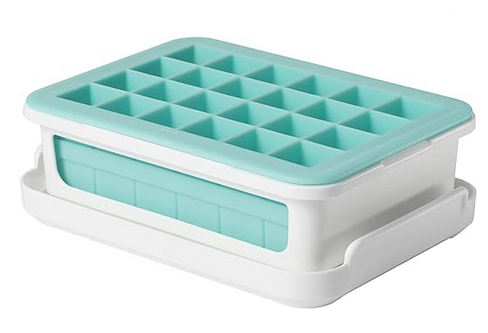
Think I'll stick to these