


Mike
-
Posts
1565 -
Joined
-
Last visited
-
Days Won
9
Everything posted by Mike
-
Face mask advice/recommendation for loft insulation work
Mike replied to Rob99's topic in Lofts, Dormers & Loft Conversions
It is, by at least one company - https://www.indinature.co/uk/products -
Face mask advice/recommendation for loft insulation work
Mike replied to Rob99's topic in Lofts, Dormers & Loft Conversions
For removal I use a 3M 6300 half mask + goggles + elbow-length heavy gloves + paper suit. I'd probably upgrade to a battery-power mask if I had a lot to remove, and I'd buy 3M - their filters have been reliably available for years, unlike some others I've had in the past. For new, I now choose something that's much more installer friendly - recycled plastic insulation on the last job, and a hemp-based insulation on the current one (though not sure if that's on the UK market).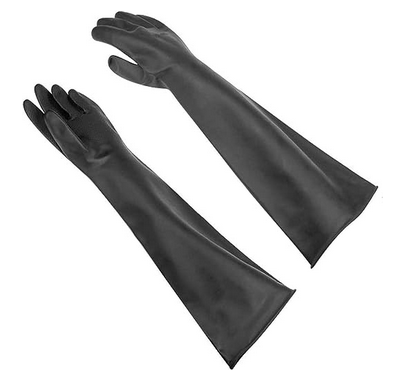
-
using cement board as external cladding
Mike replied to Tom's topic in General Self Build & DIY Discussion
It's a long time since I've come across that, and the problem then was that they were brittle. However technology has moved on and that may no longer be a concern, or be non-critical in your particular situation. If it's keeping the weather away from the structure - hard to know from your description - I'd be wanting a product that has a BBA certificate . As far as I can see, that particular product doesn't have one. -
Ceiling diffusers for MVHR
Mike replied to renternolonger's topic in Mechanical Ventilation with Heat Recovery (MVHR)
If you want something non-industrial that will be noticed, then the Fräenkische Starline range includes the most decorative ones that I've come across: https://www.fraenkische.com/en/product/profi-air-starline-designgitter?context=heat-recovery-ventilation&types=product -
The Grohe 3933900H might fit the bill - just bought one myself.
-
That's what I'd do.
-
Gas boiler lobby obstructing heatpumps
Mike replied to Beelbeebub's topic in Air Source Heat Pumps (ASHP)
Yes - they're more easily stolen: https://www.homebuilding.co.uk/news/how-to-protect-your-heat-pump-from-theft -
That depends on the manufacturer's recommended clearance below the hob and the height of the drawer, but it's possible. That's the way it's often done. Again, check the manufacturer's minimum clearance.
-
I wouldn't choose it. The type of surfacing, at least in a front garden, is a key aspect of 'kerb appeal' which affects the value of the house. To me, imprinted concrete devalues the house as it always seems a poor imitation of what it could have been if the genuine materials been used. I've also seen several that have cracks running through them, which makes them look more fake, apart from being tricky to repair. They can also be slippery when wet. And they still need intermittent cleaning and resealing, so not entirely maintenance free either... If you do choose it, then at least make sure that you have plenty of movement joints.
-
Universal steel beam: scrap value / recycling options?
Mike replied to embra's topic in General Self Build & DIY Discussion
I put a couple of old steel lintels on eBay for £1 a few years ago - they went for £1 after a few weeks. Could be worth a try. -
I agree that it's not worth worrying over. For future info it's worth knowing that you can buy Artex removal gels that prevent dust from forming, as well as making it easy to scrape it off.
-
NEST for the bathroom (zone) to control UFH?
Mike replied to GlanMenai's topic in Underfloor Heating
You can't put it in Zone 3 - there isn't a Zone 3 any more! But you can put it outside Zone 2. You'd have to calculate the distance to know whether you can put it opposite the shower. Worth knowing that the zones normally don't go all the way to the ceiling, so if you don't mind it high up, you almost certainly have more flexibility. Search the web for 'bathroom electrical zones' and you'll find various examples and explanations. -
Solar control glass would have been very useful on my current project - in summer. However I decided against it because it would have cut the light transmission through the window from something like 82% to 54%. I don't want to loose that much light.
-
Standard doors every time. Sliders are noisier and often don't fit well, and pocket doors present additional problems for cleaning and maintenance.
-
An introduction... Renovation + 1950s + subsidence = a challenge!
Mike replied to alfaTom's topic in Introduce Yourself
Partial underpinning / soil stabilisation raises new issues. You need the entire building to act as one structural element for it to remain stable and crack-free. There's a risk that the part of the building that has been underpinned swaps from being the least-well supported part of the building to the best-supported part, which could still cause differential movement. That's not to say that it should never be done, but it does mean that whoever is designing the solution needs to have carried out a full investigation first. Personally I'd be wanting an independent structural engineer to be doing that, not a contractor. -
It's easy to make your own from regular PAR timber for way less than £80. I've also seen them made from plywood. But don't use MDF - it doesn't have the strength to hold the hinge screws.
-
An introduction... Renovation + 1950s + subsidence = a challenge!
Mike replied to alfaTom's topic in Introduce Yourself
Underpinning methods vary, but it's very likely that the floor along at least one side of the internal walls, and quite possibly the perimeter of all the ground floors, would have to be broken out anyway in order to undertake the underpinning, so it's a good idea to replace them entirely. You also need to be sure that the new floors aren't going to move; movement in a floor with UFCH pipes embedded in it could eventually be very problematic. -
An introduction... Renovation + 1950s + subsidence = a challenge!
Mike replied to alfaTom's topic in Introduce Yourself
Agreed; the underpinning needs to be designed to suit the specific building and circumstances. Presumably just a pre-purchase visual inspection? -
Extension Breached Boundary
Mike replied to ExtensionWoes's topic in House Extensions & Conservatories
I once did exactly that, albeit with the neighbours agreement in advance. -
Yes, concrete foundations for me too.
-
An introduction... Renovation + 1950s + subsidence = a challenge!
Mike replied to alfaTom's topic in Introduce Yourself
That's a start but I would expect (though only from the very many press stories on the topic over the years, not personal experience) that it will be for a substantial premium. You may also find it difficult to move to another insurer in the future, leaving you unable to avoid whatever future premium increases are demanded of you. Not to mention the added difficulty of eventually selling it; once a house has been underpinned it's going to be labelled that way for decades into the future, whether or not there has been any movement. And any further settlement after underpinning, while it shouldn't happen, would only add to these issues. Unfortunately I completely agree. Underpinning can almost certainly solve the problem technically, but not financially. Rebuild and take advantage of the opportunity to achieve - ideally exceed - current insulation requirements, and the 0% new-build tax rate. -
Any downsides to removing purlins and using ridge beam?
Mike replied to Digmixfill's topic in Roofing, Tiling & Slating
Nothing that would stop me doing it! Provided your new timbers are correctly dimensioned and you insulate it to at least Building Regs standards, of course. It costs more to build and a little more to heat, and there's a loss of storage space. -
If that's all you're doing, I'd suggest using pencil and paper, unless you particularly want to learn CAD. Personally and I use TurboCAD but, like most CAD software, it involves a very steep learning curve.
-
France has some strict laws on defects liability & hidden defects that kick in once a house is eventually sold - you can't just sell 'as seen'. So, if there's any doubt about the quality of the work or whether or not it complies with building standards I would get a professional survey done so that any issues can be resolved during the completion of the work.
-
Do I relieve pressure in UFH loops while slab going off?
Mike replied to Tom's topic in Underfloor Heating
Yes, I'd have done the same.

