


Mike
-
Posts
1565 -
Joined
-
Last visited
-
Days Won
9
Everything posted by Mike
-
Don't take them out...
-
Here's the official info: https://www.gov.uk/product-safety-alerts-reports-recalls/product-safety-report-mk-electric-mk-essentials-electrical-three-pin-sockets-with-switches-2411-0130
-
Restraint Type Joist Hangers
Mike replied to Paul Sweeney's topic in House Extensions & Conservatories
No, you can just build in the hanger and add the joist later - just drop them in from above. Except where you need the lateral restraint straps too. -
It's in the certification criteria - https://database.passivehouse.com/en/components/#certification-methods-info The effective dry heat recovery efficiency [is measured with] with balanced mass flows at external temperatures of between – 15 and + 10°C and dry extract air (ca. 20 °C) Presumably the worst reading is taken. However Heat Recovery Efficiency, as the name suggests, only measures heat recovered. On that basis a unit with expensive-to-run fans can look better than one with highly efficient ones. The Efficiency Ratio is the key figure that allows you to compare units like-for-like, taking into account the electricity used as well as the heat recovered.
- 1 reply
-
- 1
-

-
Zehnder (etc?) plenums nonsense design..?
Mike replied to Cognis0's topic in Mechanical Ventilation with Heat Recovery (MVHR)
The fixing brackets are reversible, so you also have the option of fixing them to the top of the ceiling - for example on to battens spanning between joists. Not if you're using Zehnder vents - they just push into the plenums. But if you're mixing and matching brands (VRGLs are a Lindlab compnent?) then you'll need to work it out. -
Restraint Type Joist Hangers
Mike replied to Paul Sweeney's topic in House Extensions & Conservatories
Simpson have a few ranges of restraint hangers, such as this one: https://www.strongtie.co.uk/en-UK/products/safety-fast-lite-hanger-solid-joists-sflh -
Is the unit installed the correct way round? Condensation would be expected in the section that exhausts to the outside air - warm moisture-laden internal air sheds water when it's cooled by the incoming air. On the air intake side the cold external air is warmed up, so can hold more moisture, therefore condensation is unlikely.
-
Fine tuning my IWI Solid wall (Warm Batten) design
Mike replied to Annker's topic in Heat Insulation
Almost, but it's necessary to distinguish between the airtightness layer and the vapour control layer. With a perfect airtightness layer, then there will be nothing to drive moisture through the vapour control layer into the insulation - see my text on the 3 purposes of airtightness on page 2. You won't achieve perfection but the airtightness layer is the most important of the two layers. So: - Where air can leak through a VCL into the insulation but get no further due to airtightness layer, the moisture transfer will be limited - Where air can leak through the insulation (through the gaps in or the absence of an airtightness layer) to the outside, the moisture transfer can be dramatic, as per the illustrations above. With time + care + testing, you can achieve very good airtightness. Using service cavities you can likely get a pretty well sealed VCL too, but its positioning means that it's more vulnerable to damage. I meant to comment on this yesterday, but it may also be that your sand is too sharp - try a bricklaying sand instead (or a blend with what you already have). -
Fine tuning my IWI Solid wall (Warm Batten) design
Mike replied to Annker's topic in Heat Insulation
Provided you use semi-flexible insulation batts you cut them a little oversize and compress them a little, so that they push gently against each other from floor to ceiling and wall to wall, holding each other in place when supported by the studwork (at least once you get to 40 or 50mm of thickness). If any additional support is required (for example I had to do a mansard roof + a ceiling so everything was trying to fall in on me), then you can cut them to join behind a stud, and double up on studs to give them extra wide support if necessary. If you're careful, you can use lots of the offcuts, so that there's not much waste. BTW, talk to the manufacturer / supplier about suitable power saws to cut them with - you don't want to be using a hand saw if you have lots to do. Yes, you can certainly create a service cavity that way. However, as mentioned by @Redbeard & @Iceverge, VCLs don't give you a get-out-of-jail pass - not all moisture comes from inside, it's difficult to seal VCLs perfectly and an imperfect VCL can indeed be worse than no VCL. 'Smart' VCL membranes (those that change their vapour permeability from winter to summer) do allow moisture that would be otherwise be trapped by a traditional vapour barrier an escape route, but you still have to be sure that the structure dries out sufficiently in summer, rather than accumulating additional moisture each year - which would be catastrophic. Re the WUFI analysis, the usual computing adage of 'garbage in = garbage out' applies. And getting that right can be tricky too. This is why internal insulation can be difficult, and a key reason why external wall insulation is normally preferable where it's an option. Yes, Intello is a smart VCL. -
Fine tuning my IWI Solid wall (Warm Batten) design
Mike replied to Annker's topic in Heat Insulation
Unless your wall is wet, my recommendation would be to either use flexible wood fibre (SteicoFlex or similar), or a similar product made from hemp (IndiBreathe Flex or similar). As mentioned in my post on the previous page, many natural insulations handle moisture vapour in a superior way compared to others. I'd use metal studwork and position this so that the insulation is gently squeezed behind the studs against the wall, to hold it in place in contact with your parge coat. It may be possible to fill the space between the studs with another layer of insulation; it's safest to ask the insulation manufacturer to advise on the thickness, but potentially that may be two 45mm layers, giving you 85mm thick overall (including 5mm compression on that 1st layer) from the wall to the face of the studwork. The manufacturer may also be able to advise on whether or not a vapour barrier is recommended over the top of this; making the structure airtight + installing MVHR (which will help control winter humidity) + the extent of potential rain penetration through the wall are also factors that affect this. If the insulation manufacturer can't give advice, you may need to commission someone to carry out a WUFI analysis. If you do need a vapour barrier, then you'd want to add a service cavity to the face of the studwork to run pipes and cables in. FWIW, this is more-or-less what I've done on my current project in France. -
Most efficient dMVHR
Mike replied to sonicboom's topic in Mechanical Ventilation with Heat Recovery (MVHR)
If this duct is running from the MVHR unit (or a manifold) to or from a ceiling terminal, and if the duct is on the warm side of the ceiling insulation, they you don't need to insulate the duct. -
Fine tuning my IWI Solid wall (Warm Batten) design
Mike replied to Annker's topic in Heat Insulation
Looks good! HCLs are significantly more vapour permeable than cement-based mortars. To say more would require an analysis of the particular lime brand and mortar mix as permeability isn't directly rated to the NHL classification (which only defines compressive strength at 28 days). Although using a lime putty would provide superior performance I've not heard of anyone using it for the purpose, though there must be some who have. -
And, to return to a debate discussed in the past, I'd run the pipework under the units in the kitchen & utility room too.
-
blauberg KOMFORT-EC-LB-400-S25
Mike replied to sonicboom's topic in Mechanical Ventilation with Heat Recovery (MVHR)
Blauberg are well known, but don't have any MVHR units in the Passivhaus database, which lists models independently tested to more accurate standards than those required in the UK and those used by manufacturers. So it's difficult to know how good it is. https://database.passivehouse.com/en/components/list/ventilation_small -
Most efficient dMVHR
Mike replied to sonicboom's topic in Mechanical Ventilation with Heat Recovery (MVHR)
Blauberg? Just about any ventilation supplier. Yes, not difficult to find. Manrose and Polyvent are two brands, but there must be others. I've seen them squarer (but deeper) sizes, but 25 x 225mm is the thinnest I've come across. -
Practical spiral layouts for UFH with closely spaced pipes.
Mike replied to ringi's topic in Underfloor Heating
Here's one way: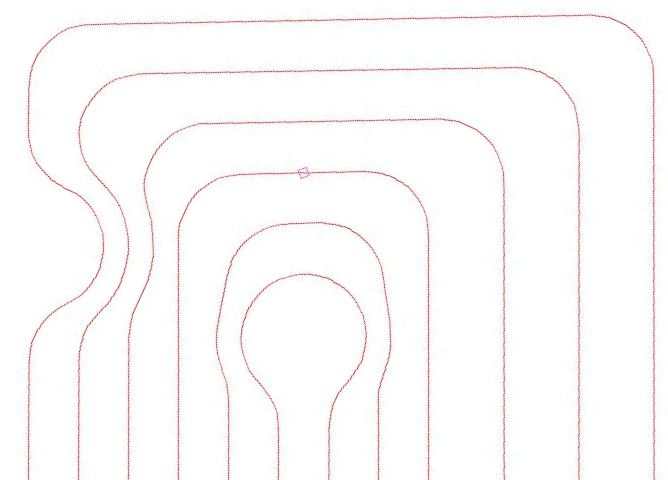
-
It's not a cheap option, and it's applied as a plaster a few mm thick rather than as a paint, but tadelakt is another possibility. It's chalk-based, durable, vapour-permiable, antibacterial, fungicidal, can be tinted almost any colour with mineral pigments, and can be made waterproof (by rubbing it in olive oil soap) for use in bathrooms & showers. And apparently it can also be applied to plasterboard too. Although the materials are relatively cheap, it's labour-intensive, so a premium finish unless you learn to apply it yourself. I'd like to get round to trying it one day.
-
Yes, it was cheap and still common until the middle of the last century. My grandfather used to use it on his cottage.
-
Most efficient dMVHR
Mike replied to sonicboom's topic in Mechanical Ventilation with Heat Recovery (MVHR)
Then maybe 25mm x 225mm rectangular ducting at ceiling level would be acceptable? If you don't like the aesthetics of boxing it in, you could drop the entire ceiling by 25mm, unless you have very restricted headroom. -
Then the latest Government press release may be of interest: https://www.gov.uk/government/news/major-overhaul-of-planning-committees-to-get-britain-building
-
Zehnder Q350 Ducting sizes
Mike replied to Chanmenie's topic in Mechanical Ventilation with Heat Recovery (MVHR)
Add a separate filter box to increase your choice of filter - which can also be larger & so require less frequent changing. I have the Paul / Zehnder Iso-box DN 160 filter box (though not sure if it's still sold in the UK - I got mine here: https://www.econology.fr/zehnder-comfosystems-caisson-filtrant-isobox-dn-160-filtre-a-pollen.html). But there are other brands available. -
Most efficient dMVHR
Mike replied to sonicboom's topic in Mechanical Ventilation with Heat Recovery (MVHR)
Too far out? What's the problem? -
How bad is this brickwork & should I start again?
Mike replied to Tony L's topic in Bricklaying, Blockwork & Mortar
It's not great, though I've seen much worse on the inside. You're clearly not impressed either and can show that it's not up to the expected standard so, if a delay wouldn't be disastrous, I'd take down at least the sections that are bad & will be visible to be redone. It's difficult to know what's above and what's below the intended level. If they're only a few mm off then it's unlikely to cause a crisis. I'd only expect an airbrick in the outer leaf, so imagine that the blocks are bedded on (or resting directly on) the plastic which is, of course, non load bearing. Normally the ventilator would pass through the inner leaf lower down by adding an extension to the ventilator. They'd then have a lintel over the top of them if they need to take a significant load. -
Zehnder (always?) recommend fixing to a wall with a minimum mass of 200 kg/m², so go for the gable wall (if it must be in the loft). However anti-vibration mounts are available if that's not feasible.
-
Not a good idea - unless your flat is perfectly airtight the excess pressure pushes moist internal air through any gaps in the structure, where it can condense and cause problems. Always go for equally balanced.
