Mike
-
Posts
1565 -
Joined
-
Last visited
-
Days Won
9
Everything posted by Mike
-
Just taken a look and "Boulder Developments Ltd ... consists of three businesses; SuperFOIL Insulation, Ventilation Megastore and Treefloor" (here). Ventilation Megastore say that they "supply ventilation systems"; no mention of manufacturing. There are many units that are designed to be installed either vertically or horizontally, but of course they need to be properly designed to do that. If you're looking for a replacement, the Passivhaus database lists models independently tested to more accurate standards than those required in the UK and those used by manufacturers: https://database.passivehouse.com/en/components/list/ventilation_small
-
It could be any of those. It could be poor frame design as it's very unlikely that all thermal breaks perform equally well. There are plenty of PassivHaus certified aluminium frames that are suitable for 'cool temperate' climates (which includes the entire UK climate) which, it seems, are tested at -5°C & 50% relative humidity (though I may have that wrong). I'd be surprised if they would permit condensation on the internal surface. But I've never investigated their criteria in that much detail, nor installed them. But if the thermal break is inadequate, then condensation could certainly occur on the inside face. It could also be because the windows is fitted to a reveal that doesn't have an adequate insulated cavity closer between inner & outer skins. We'd need more information about the wall to evaluate that.
-
Does this mean that Intello type membranes are not worth the cost? Should we be looking at cheaper alternatives instead? The principle is to stop air moving through the structure, limit moisture entering the structure, while making it permeable to moisture vapour to allow trapped moisture to escape. Intello & other 'smart' membranes can play a big role in that (if applied with care and if junctions & penetrations are sealed), but do so by being resistant to moisture movement in the winter (when the risk of condensation in the structure is high) and more open to moisture movement in the summer (allowing moisture to escape). That's generally fine, but if moisture is entering the structure via other means - for example by absorbing external rainfall - then moisture levels can still build up to dangerously high levels. For example, I have a case from experimenting with WUFI (internal wall insulation on a north wall, with MVHR to help control internal humidity) where adding no VCL (but using a parge coat) is fine, but adding a regular moisture-permiable VCL leads to dangerous moisture levels, while adding a smart VCL is even worse. That's not to say that either product is bad, just that they need to be used with care - they aren't a magic wand; follow manufacturer's recommendations and ask them if unsure. But if you were to keep wearing it for the next few hours it should dry - it won't act instantaneously.
-
Maybe it was originally designed for a warm climate (in China?) & they thought that all they needed to do was add a condensate drain to sell it elsewhere.
-
The Passivhaus standard was specifically set at a level that means that no conventional space heating system is required. The idea is that the cost saving by not installing space heating more-or-less pays for the cost of MVHR and other enhancements required to reach the standard (at least in Germany, where it originated). In other words, you are overthinking. Just add an electrical heater - or at a blanked off conduit so you could add one later - in each bath / shower room. Or even embed some UFCH pipework for extra reassurance, but there should be no need to actually use it, so leave it unconnected.
-
Yes, unfortunately that is necessary - though even below the limit your copro might require you to use one as a condition of giving permission.
-
If access is that limited, are you completely sure that it's good enough for the delivery & erection of a prefabricated timber frame? That's certainly possible - micropiles are popular and an obvious go-to method. Helical steel piles may worth looking at - they're relatively easy to install & minimise the amount of excavation. Or, at the other end of the scale, if you can redistribute soil round the site, or remove it via the access road, it may be possibly to excavate a semi-basement and build off a raft, if the slope is the main reason for choosing piles; it may not be cheaper, but you may at least gain some extra usable space for the cash.
-
Yes, either could be done in principle, and the vertical part of the 2nd one could either be constructed in masonry or timber. However once the roof gets steep like that you'll need to check out the maxinmum inclination of the pantiles; either slate and zinc could be used instead & would fit with Parisian style. You'd also need to check & enlarge if necessary the capacity of the left hand guttering, as it will be taking much more of the rainfall due to the longer slope.
-
Fine tuning my IWI Solid wall (Warm Batten) design
Mike replied to Annker's topic in Heat Insulation
No glue required - they're just cut a little over length so that they gently wedge themselves between the walls. Short lengths will stay in place until you put the studs in place, or you can slide the batts behind the studs, or a mixture of both - slide just one end of the batts behind a stud, put the batts in place, then the rest of the studs. It depends on the situation. In this photo there wasn't much space to slide them behind the studs so, as there were walls either side to hold the batts well, it was easier to fix the studs afterwards. Plasterboard and gypsum plaster are vapour-permiable, so no problem. Vapour won't move through them over the course of a few hours, but it will over the course of days, which is enough. But but it is necessary to use a vapour-permiable paint over the top - see https://forum.buildhub.org.uk/topic/41776-breathable-paints -
One thing that would help is to identify are the location of load bearing walls that can be used to reduce the spans, which will make timbers smaller & cheaper, and to think about how using them as supports them affects your layout possibilities. If you want a clear span then you're looking at steel (thinner) or (better for thermal resistance) glulam beams. Yes, it is. It's too long since I studied the the topic. @Gus Potter may have some recommendations? And having a good summer bypass on the MVHR unit intake air - one that detects when summer external air is cooler and automatically passes all (or most) of the air around the heat exchanger, rather than through it, when the outside air is cooler. Yes, sounds like a good plan, if that fits your room layout
-
+1 Not in principle.
-
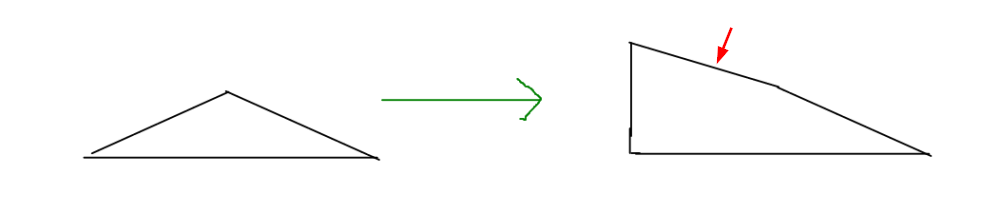
This part - it's now shallower than before. That depends on their minimum pitch - you need to research that. My guess is that they're already close to the limit.
-
Your roof is already fairly shallow, so a key question is whether or not the tiles can be laid at an even lower pitch (I'd guess not), or if there's another tile that can. Otherwise you could go to zinc roofing, which can be laid at a very shallow angle & would be in keeping, but which would cost more than tile (and tend to absorb more heat from the summer sun - so add plenty of insulation). I'd guess that it may be possible to reinforce the other half of the roof, rather than replace it, so subject to the zinc cost, overall I'd guess that this may be a cheaper option. Yes, I would expect so.
-
This would probably be the better option in terms of added value, as it would change the Loi Carrez floor area (the area higher than 1.8m) - worth verifying that with an estate agent? It won't impose much additional load on the walls, but there's a good chance that all the timbers would be under-sized compared to modern standards and would need to be replaced, rather than reused. Of course you'd need a Structural Engineer to evaluate that. I wouldn't want to guess the cost, but >100k wouldn't be a big surprise. Labour is expensive in France thanks to all the social costs.
-
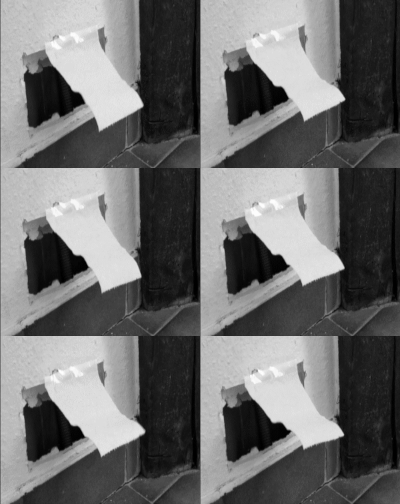
And here's an extreme illustration: - this is what happened when I cut a hole through some plasterboard to rescue a bird(!) that was trapped. The 100mm glass fibre insulation behind the plasterboard was pretty pointless.
-
I've not heard of it, however I've just checked that is more-or less what the legislation says. If you occupy the building then the notice expires after 8 weeks. There is a get-out if you can obtain a final certificate for the part you have occupied, but that's probably only useful if you're occupying a self-contained zone: (6) An initial notice shall not cease to be in force by virtue of paragraphs (2) and (3) because part of a building or extension is occupied if a final certificate has been accepted in respect of that part. However there is also this: (7) A local authority may extend any period referred to in this regulation either before or after its expiry. That doesn't actually say that a private inspector has to hand back the work to the LABC, just that only the LA can extend it. So, in theory, unless there's some other relevant text, your private inspector (or you) could ask LABC to extend the notice, after which you could continue with the private inspector. No idea if anyone has ever tried that, and not sure that the LA would be prepared to do it unless they took it over, but you could give it a try.
-
LED strip causing MCB tripping! Reason?
Mike replied to markharro's topic in Consumer Units, RCDs, MCBOs
On my current project most drivers will be tucked into the corners of cupboards. Where that's not possible they'll be in a secondary consumer unit, next to the main one, with one conduit for the main voltage cables between the switch and the driver, and another carrying 24V to the LEDs. -
It's possible, but what's the advantage over your option 3 (Leave pebbledash in situ, inspect to make sure no cracks etc, fix EWI straight on top and render over)? Just seems to be adding unnecessary additional cost. Then that's another big tick in favour of rebuilding - underpinning isn't cheap and it's presence (especially if because of subsidence) may add to the cost of house insurance and put off potential future buyers.
-
And if you have a woodburner you're at a high risk of carbon monoxide poisoning too, unless it has its own separate air supply. Don't use it until you have adequate ventilation.
-
Though you may be able to add useful m² by building a basement, subject to permission. Theoretically 8 weeks from submission, but you'd need to check out other local applications to get an idea of the reality. Yes, that is a factor, but a difficult one.
-
It's not just the VAT. I've undertaken several deep renovations myself, as well as having managed & priced them commercially, and they always turns out to be more expensive than rebuilding would have been - unless you're doing much of the work & discounting the cost of your labour. In addition to strip-out costs, many things just take more time and/or cost more. For example, building a doorway into a new internal wall is more-or-less 'free' - the extra costs are roughly balanced out by saving 1.5m² of blockwork. On the other hand, knocking a hole through an existing wall, well that's a couple of days work + additional materials. Then there are things you find that you didn't expect that need fixing - walls, floors & ceilings out of level; botched DIY; sagging rafters; dry-rot; lead water mains; cracked sewers, whatever - which also takes more time to fix than fitting from new. And making an old house properly airtight - which is highly recommended - is almost always more complex because it wasn't considered as part of the original design. There are good reasons for not demolishing. Maybe you just want to tart it up & flip it. Maybe you need to live in it because you have nowhere else and a caravan is out. Maybe the building has a particular heritage value (whether listed or not). Or, as with my current project, maybe it's an apartment - which kind of rules out demolition! But if you do decide to renovate then do make sure that includes a thermal upgrade to at least Building Regs standards. Better than that if you're concerned about future energy costs and / the future additional value that it's likely to provide.
-
Fine tuning my IWI Solid wall (Warm Batten) design
Mike replied to Annker's topic in Heat Insulation
Provided you use semi-flexible insulation batts you cut them a little oversize and compress them a little, so that they push gently against each other from floor to ceiling and wall to wall, holding each other in place when supported by the studwork... Just found a pair of images to illustrate the above. This is hemp insulation on a wall about 1m wide x 2.6m high, self-supporting (left) before I put the studs in place (right). The batts here are 100mm thick, but the lowest (out of shot) was sawn through to about half that as the wall behind was out of plumb.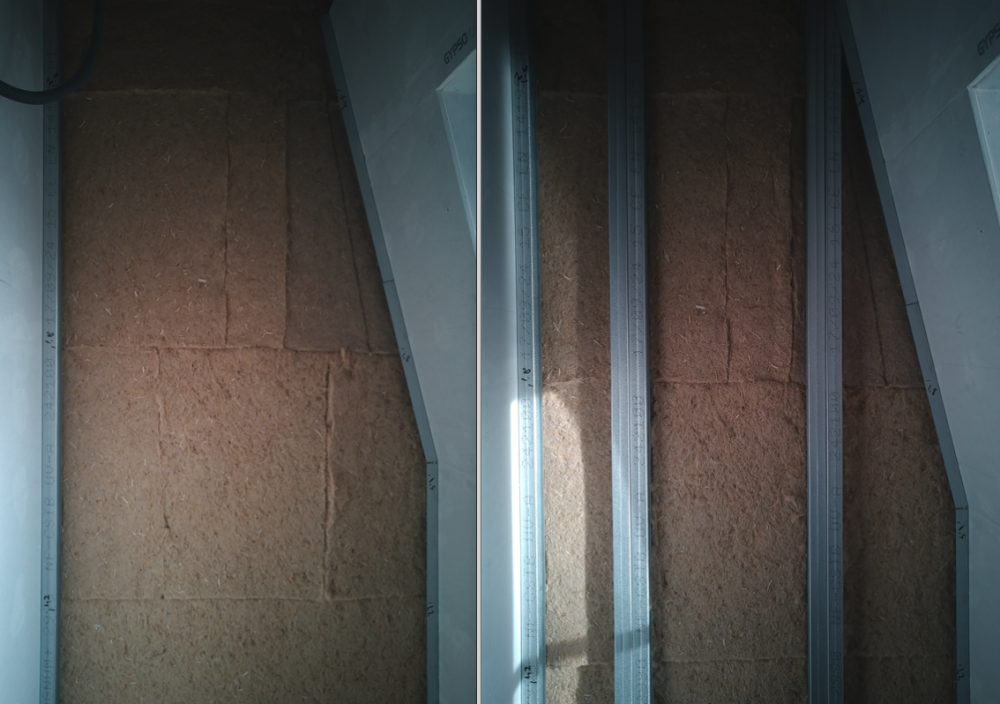
-
This.
-
One of these. Which one depends on the state of the pebbledash - in particular evidence of cracking or sounding hollow. However a deep retrofit will be more expensive and time-consuming that rebuiding. Unless you do lots yourself, in which case it may be cheaper but will take much longer... ...so give this very serious consideration!
-
Anybody and experience of FATMAX battery power tools
Mike replied to MikeSharp01's topic in Tools & Equipment
Stanley Fatmax is a brand of Stanley Black & Decker, who also produce Dewalt. Stanly Fatmax fits between Dewalt (at the top) and Black & Decker and their stacking-toolbox systems are interchangeable. Fatmax & Dewalt share some components, but Fatmax tend to have a lower spec - which may or may not be important, depending on what your nephew plans to use them for. However I've not tried them myself (all my battery-powered tools are Dewalt, as are most of my mains tools) so can't comment on durability.