


Mike
-
Posts
1565 -
Joined
-
Last visited
-
Days Won
9
Everything posted by Mike
-
Yes if he bought them, no if they fell off the back of a lorry. It's also possible that he wants cash to avoid the revenue being visible in his accounts for some reason. Ask for an invoice, buy the materials yourself, or go elsewhere. Preferably the latter.
-
This is my preference, however, as @JohnMo says, you don't want grease in the the MVHR. So it's worth knowing that there is a European 'Grease Filtering Effectiveness' classification that requires hoods to be rated from G (<=45% effective as removing grease) to A (>95% effective). Manufacturers tend to keep quiet about it, but it's usually buried in the specs. Bosch, Neff, Miel & Berbel all have B rated models (>85% effective), but Ikea has the only A rated that I've come across so far.
-
Sleeve the pipes in 28mm tube where they pass through the wall, fill in around them with mortar, then seal the actual pipes to the wall with proprietary seals before plastering.
-
What curves and what brands for consumer unit at modules.
Mike replied to MikeSharp01's topic in Power Circuits
Not an electrician, but when looking into why Type C seems to be used universally in France, a Type C requires a lower earth loop impedance than Type B to trip within an acceptable time. That doesn't seem to be a problem in France (where the independent electrical inspectorate check earth loop impedance for every new installation), but apparently that's not necessarily the case in the UK. TLDR - safer to choose Type B. -
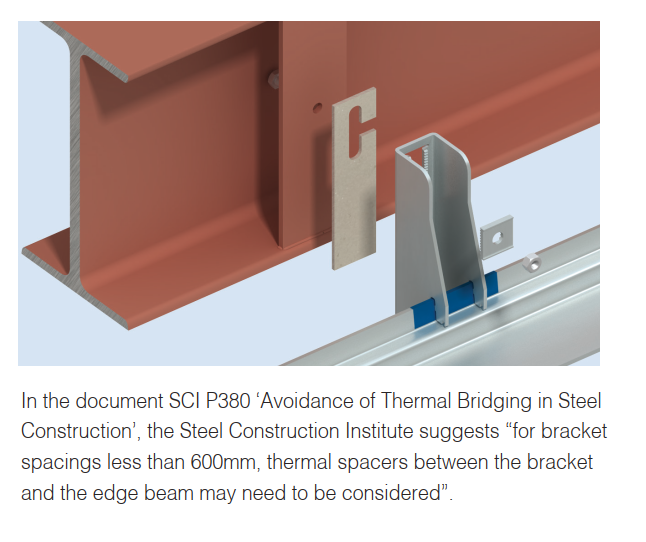
If the outer leaf of the house is non load bearing, then another option could be to confine the steelwork to below the inner leaf, then use Ancon brickwork supports (or similar), which can be fitted with thermal breaks, to support the outer leaf.
-
More MVHR help please!!
Mike replied to AppleQueen's topic in Mechanical Ventilation with Heat Recovery (MVHR)
The positioning isn't ideal as the air doesn't pass through the kitchen. My guess is that the BCO wouldn't question it, but they may. -
More MVHR help please!!
Mike replied to AppleQueen's topic in Mechanical Ventilation with Heat Recovery (MVHR)
Yes, several reasons! It's much more resistant to airflow than regular duct, so the fans will have to work harder (using more energy, so also louder); condensation can gather in the undulations leading to mould growth; it's not very resistant to being crushed, punctured or ripped; due to these problems it can't be really cleaned internally, should that be needed. The only legitimate use is when using a very short length - e.g. 150mm long for 150mm diameter duct - to connect rigid duct vertically to the MVHR unit, though that seems to be rare. -
A wet system is simple and about as future-proof as you can get. It should last for decades and you connect it to almost any heat source, though an ASHP is the obvious one to go for now.
-
indicative cost of renovation - DIY vs builder
Mike replied to johnhenstock83's topic in General Self Build & DIY Discussion
It's certainly possible, but demolition isn't much of a laugh to do and it will probably take you double the time. If more people thought that way, life (and buildings) would be much better :) -
If your they're all happy, problem solved! Just make sure that it's done properly, so that the block is actually supported beneath.
-
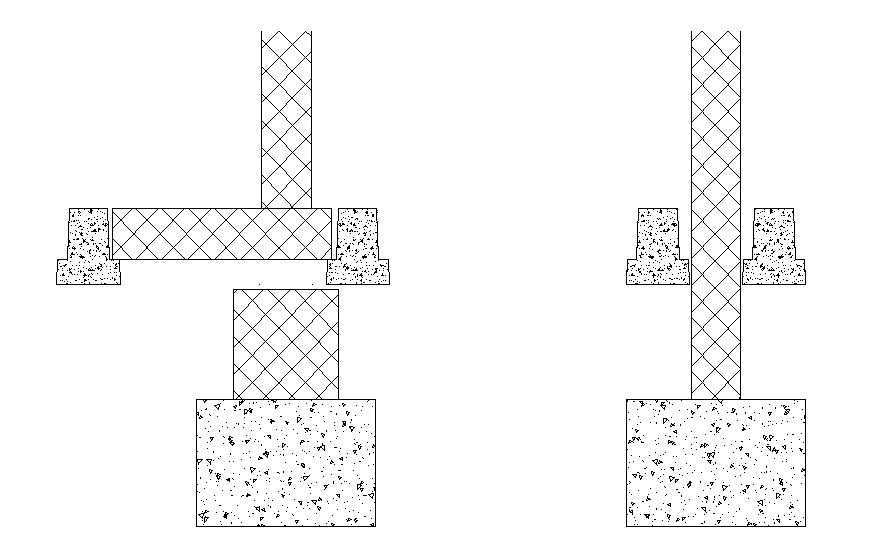
Maybe you can spot the problem from these sketches? This is a vertical section, with the foundation at the bottom. What you appear to have is something like the one on the left. What you should have is the one on the right, or some other variation that supports the load bearing wall right down to the foundation.
-
You're right - In France that seems likely from next summer. According to the Regulator: To take account of changes in the electricity production mix and the abundance of summer photovoltaic production, stakeholders are being consulted on the gradual adoption of summer afternoon off-peak hours from August 2025" Original in French: https://www.cre.fr/actualites/toute-lactualite/la-cre-consulte-sur-le-futur-tarif-dutilisation-des-reseaux-publics-delectricite-turpe-7-transport-et-distribution-pour-la-periode-2025-2028.html
-
From the last story: Gov. Gavin Newsom's advisors and those who manage the state's electric grid say they are working to reduce the curtailments, including by building more industrial-scale battery Storage facilities that soak up the excess solar power during the day and then release it at night. Which is sensible, if overdue.
-
Theoretically that helps, but in practice they may still crack.
-
A non load bearing block partition can be built on top of a beam & block floor if the floor designer has taken the loads into account in the design (often requiring extra beams) A load bearing wall can't be built off a beam & block floor because the loads would (normally) be too great A beam & block floor can be built a load bearing wall and be supported by it (i.e. the wall is supporting the floor, not the other way round). Your builders seem to be making a sandwich of a wall that's vaguely attempting to support a floor that's supporting a wall, which isn't acceptable.
-
Aerated blocks just tend to crack, even when laid in accordance with the manufacturer's instructions, including the correct mortar mix. Better to avoid them if you can.
-
You've got it :) Unlikely - it's a standard construction.
-
This. The floor supplier should have been sent drawings showing the foundation & the position of the piers, and the supplier should have sent back a plan showing where each beam should be positioned. And your contractor should be following that plan.
-
Fine tuning my IWI Solid wall (Warm Batten) design
Mike replied to Annker's topic in Heat Insulation
It's theoretically possible, but may make airtightness harder to achieve and, of course, you loose the benefits of the insulation downstairs. It may be possible to buy the same cornice pre-made and install that, but if not then there are companies that will cast an identical replacement for you. Standard plasterboard is OK provided you don't paint it with regular vinyl paint. -
It's not connected yet, but I've got the Shelly Shelly Pro 3EM - maybe the same one that @SuperJohnG has. In particular I'll be using it to detect when the power to my UFCH Willis heaters is cut by my load sheader*, so that the operating hours of the heaters is extended to make up for the outage. *It temporarily cuts the power to the heating & hot water if the overall electrical load approaches the 45A maximum permitted by the electric meter, to ensure that there's plenty of power for everything else.
-
1950's reno with a history of subsidence - the last 12 months
Mike replied to alfaTom's topic in Foundations
A very good write-up! You certainly came across some interesting finds in the excavation :) -
Fine tuning my IWI Solid wall (Warm Batten) design
Mike replied to Annker's topic in Heat Insulation
Ubakus doesn't help much with any construction. It only shows a moment in time. It's what happens over a period of weeks or months that important (i.e. how long will it stay wet, how quickly will it dry out). -
Fine tuning my IWI Solid wall (Warm Batten) design
Mike replied to Annker's topic in Heat Insulation
Yes. -
Fine tuning my IWI Solid wall (Warm Batten) design
Mike replied to Annker's topic in Heat Insulation
Yes, stopping the movement of air stops moisture (and air) passing through the structure. More-or-less, but there's a graduation of behaviours. In simplified form: Closed cell foams don't absorb moisture so condensation will tend to run down the wall (and the wall-facing side of the insulation if its in contact with the wall). Foil-faced PIR can absorb some moisture from the wall (but not through the room-side foil facing), so some condensation may get absorbed while the rest runs down. Mineral wool is hydrophobic so although some condensation may run into the fibres it won't get absorbed, though some may be held between the fibres (or start to run through them if it gets really wet). Many natural insulations behave differently. Instead of absorbing moisture (taking in liquid water) like synthetic insulations, they adsorb it (take moisture vapour out of the air and bind it within the fibres) before it condenses to to liquid, reducing the risk of condensation. Which is why a real wool jumper still feels warm even when 'wet'. It also dries well by reversing the adsorption process. Consequently natural insulations are the preferred option, provided they're not going to be subject to high relative humidities for extended periods (typically not more than 80% RH for more than 3 months of the year in winter) - which is partly why I'm using hemp insulation on my current renovation in France. However natural insulations do cost more. Also worth knowing that sheep's wool has been be problematic due to the risk of moth attack, though the 'Ionic Protect' process claims to have overcome that. Mineral wool would be second choice. -
Fine tuning my IWI Solid wall (Warm Batten) design
Mike replied to Annker's topic in Heat Insulation
A parge coat is used to make the wall airtight, for three reasons. First, it stops stop cold outside air from reaching the insulation, which would degrade the effectiveness of the insulation and potentially lower the temperature within the insulation to the point where condensation forms - which is why it needs to be on the outside of the insulation. Second, it stops the wind from blowing outside air in and drawing inside air out. Thirdly, it stops air escaping due to the 'stack effect' - that is, even on a day without wind, warm moist internal air is more buoyant than the outside air, so will rise and escape through any gaps, drawing outside air in as it does so. If the building is airtight, the air pressure inside the house and inside the insulation will be more-or-less identical, so there's nothing to drive that warm moisture laden into the insulation. So, in answer to your question, no, it won't. That leaves only differentials in relative humidity as the means by which moisture (moisture vapour) can move through the materials and into / out of the insulation. Which is why, if one has been specified, a vapour control layer will always be on the the warm side of the insulation (or at least not more than 1/3 of the way into the insulation, according to a well-known rule of thumb).

