
Ed Davies
-
Posts
1674 -
Joined
-
Last visited
-
Days Won
1
Everything posted by Ed Davies
-
This is right at the beginning of the installation process, when you've just opened the packaging and stood the frame and sash up ready to separate the two. Way before it goes in the opening. That's a good idea, thanks. Worth a try if they're not just standard call-centre script readers.
-

Registration of a replacement roof window?
Ed Davies replied to vivienz's topic in Windows & Glazing
I think that's normal. A friend had new windows put in in her flat in London, at somewhat mates rates, by a builder who was another member of our gliding club. When she went to sell the flat the purchaser's solicitor wanted a copy of the FENSA certificate or whatever. As said builder wasn't a FENSA member or anything she had to get building control in to inspect. All was well with the actual installation as far as BC was concerned and the sale went through but it did cause a bit of a falling out between the individuals concerned. -
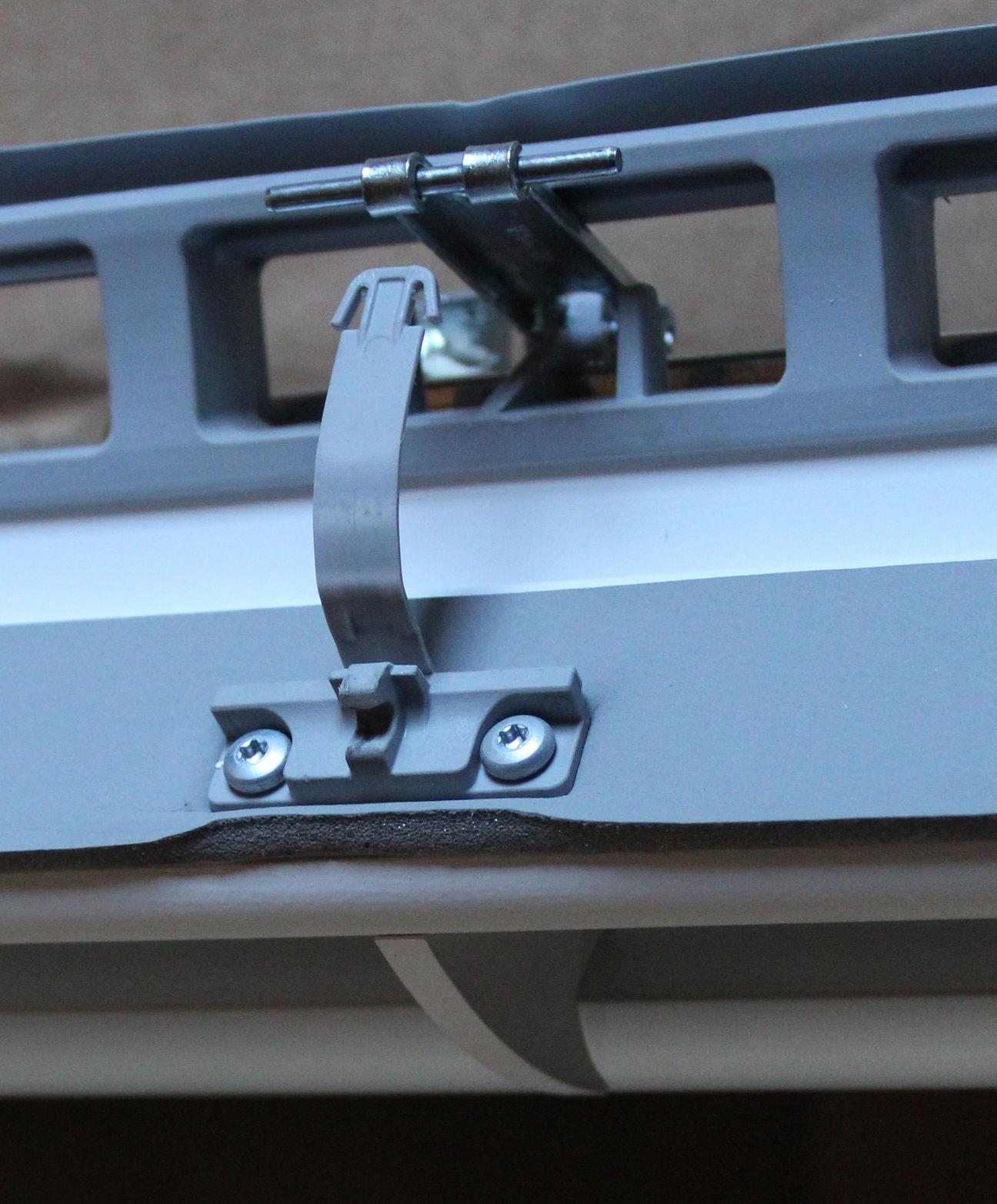
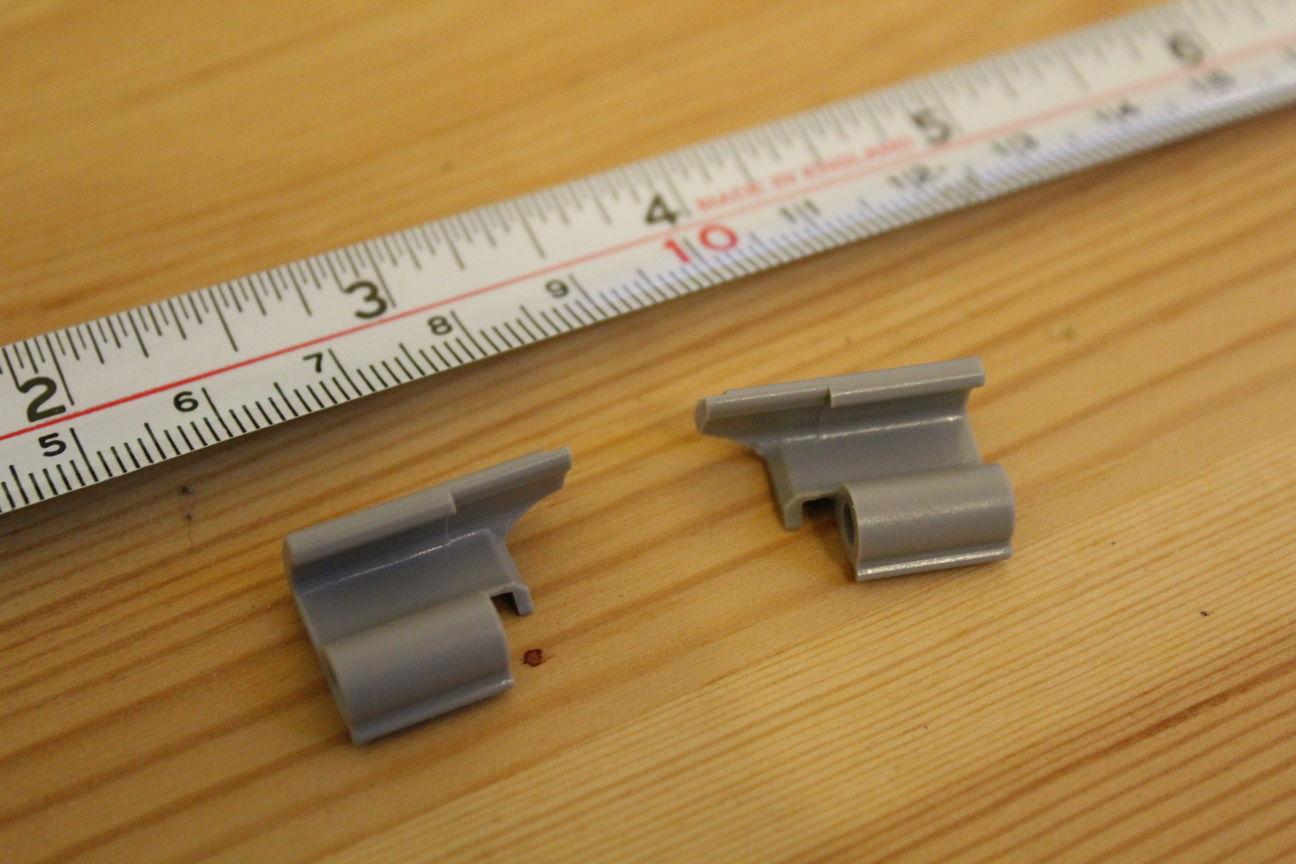
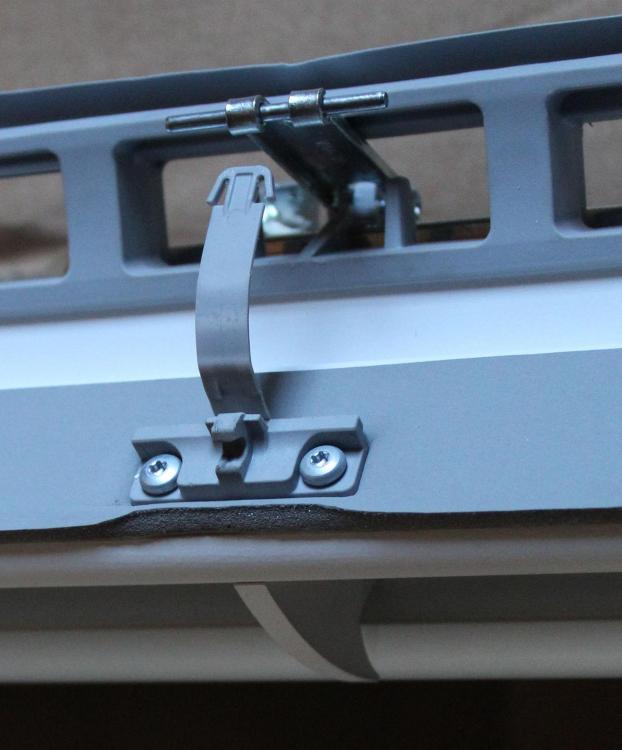
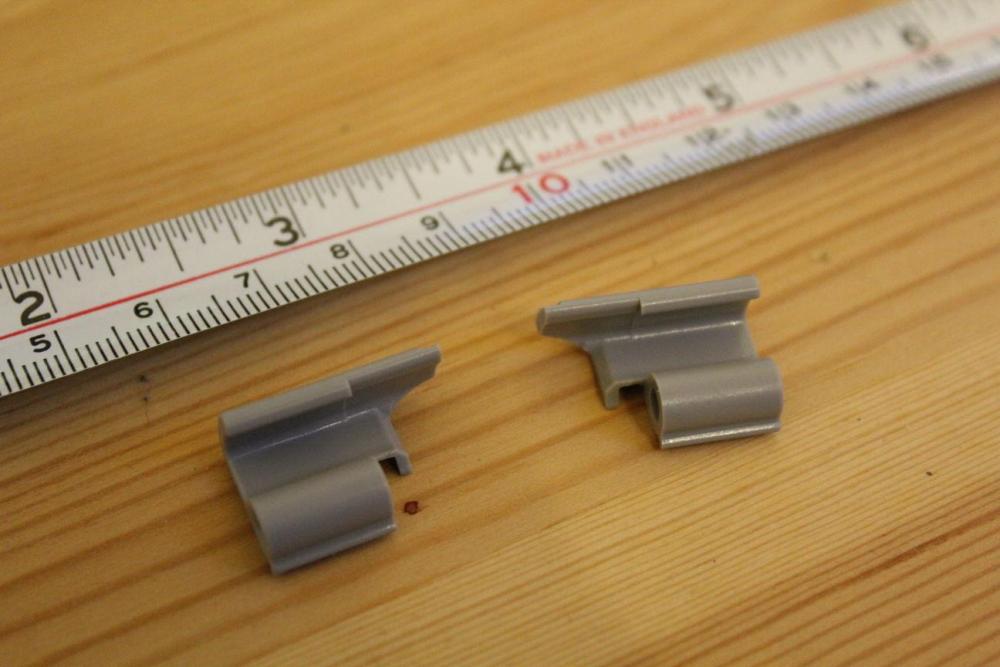
When you unpack a new Velux window for installation one of the first steps is to engage the vent bar (the handle at the top you operate the top latch and open it with when centre-pivoting) on to the latch mechanism. I've not had a 100% success rate with this. The first window I installed I couldn't get the bar to click on to the latch at all. I finished up pressing too hard and broke the plastic bit on the tongue for the latch. Piccies below. For the subsequent 5 windows it all went fine from this point of view. For the seventh window it again wouldn't engage. I resisted the temptation to push harder. On reflection, I suspect that the problem is that the plastic part which is screwed on to the vent bar is screwed on too tight so is pressed into the rubbery material there enough that the other plastic part on the end of the latch mechanism's arm doesn't have room engage under its top edge. I'll have to have a closer look to see if that's the problem. In the mean time, anybody else had this problem and have any hints?
-
Indeed. Just to be clear why, if they're not VAT registered and they buy the materials then they'll pay VAT on them and, because they can't reclaim it, pass the cost on to you but you won't be able to reclaim it either because it wouldn't be a VAT invoice. A bad combination.
-
Yes, but not in that way.
-
DIY Arduino based solar PV dump controller
Ed Davies replied to ProDave's topic in Photovoltaics (PV)
Looking a bit further: http://www.ti.com/lit/an/swra048/swra048.pdf Table 9. It seems that in Europe in this band you're limited to lower power, narrow bandwidth OR shorter duty cycle. I'd obviously only come across one of those options before. I.e., if you want to use the higher of allowed powers and greater than 25 kHz bandwidth then you're limited to a maximum of 10% duty cycle. -
Do the brake lights come on ever when it's doing regen braking only?
-
DIY Arduino based solar PV dump controller
Ed Davies replied to ProDave's topic in Photovoltaics (PV)
Don't the licence conditions for these sort of devices limit their transmit duty cycle? -
Capitalization of units: it usually doesn't matter too much in practice but there is a standard which is followed by all scientific journals, etc, which is worth following to avoid the small possibility of confusion. Most accessibly: BIPM SI Brochure and Wikipedia. For capitalization in English and French the rules are pretty simple: 1) Names of units are written in lower case except in situations where any word would be capitalized (beginnings of sentences, titles, etc) even if the unit is named after a person. So meter, gram, watt, joule, pascal and so on. 2) Similarly, when spelled out, the prefixes for multiples and submultiples are written in lower case: mega, kilo, deca, milli, nano. 3) Symbols for units are written in lower case if they're not named after people (m (meter), g (gram), s (second), h (hour)) but initial capped if they're named after somebody (W (James Watt), J (James Prescott Joule), Pa (Blaise Pascal)). 4) The prefix symbols are lower case for prefixes up to and including a thousand (p (pico), n (nano), μ (micro), m (milli), c (centi), h (hecto), k (kilo)) but initial capped for multiples of a million and larger (M (mega), G (giga), T (tera). So the symbol for kilowatt-hour is kWh (or kW·h). All other capitalizations are non-standard. Some odd cases: It's a “degree Celsius”. The unit is the degree; “Celsius” here is not a unit name but the name of the scale (so a proper noun which, following the normal rules, is capitalized) being used adjectivally to say what sort of degree it is. But a kelvin is a unit so it's 300 K or 300 kelvin, not 300 °K or 300 degrees Kelvin. The symbol for the litre is formally “l” (lower case letter el) but many people and some national standards prefer to use uppercase “L” to avoid confusion of the letter with the digit one. I don't know what the appropriate symbol capitalization for the prefix kibi (x 1024) is, whether it's ki or Ki. I've seen both in use.
- 55 replies
-
- 1
-

-
- acronym
- abbreviation
- (and 4 more)
-
Sunamp UniQ HW+i experience? Charge via ASHP?
Ed Davies replied to oranjeboom's topic in Energy Storage
PCM55 wouldn't be much of an improvement over PCM58 but, yes, something like PCM45 to 50 sounds about right, the lowest temperature that'll deliver satisfactory washing-up water. I assume it's a matter of what phase transition temperatures are available from chemicals which are otherwise suitable. Waxes do have their problems as PCMs but have the advantage of tunable transition temperatures by picking the right mixtures of chain lengths. There were concerns about PCM38 (resolved yet, anybody know?) and also it has a greater cost but how about one of those with an inline electric heater on the output? Particularly if it could intelligently deliver the right temperature water to the shower, bathroom taps and kitchen taps so wouldn't use a lot of power or energy. Showers and baths use a lot more water than washing up but generally at a lower temperature. -
Sunamp UniQ HW+i experience? Charge via ASHP?
Ed Davies replied to oranjeboom's topic in Energy Storage
Adding to what @JSHarris says, most of the time a normal (i.e, PCM 58) Sunamp won't be as cool as 50 °C. It'll only get that cool when it's nearly fully discharged. Therefore it won't normally accept any heat at all at that temperature; if you flow 50 °C water through it the heat will flow from the Sunamp to that water, rather than the other way round. -
Quite a few years ago a US student did a little project on this, measuring the injector operation on a Japanese car idling and stopping and starting. There were a few assumptions (e.g., that the same amount of fuel was used on each injection) but the conclusion was that overall there was a fuel saving for stopping the engine for more than 0.7 seconds. That included the extra fuel needed to recharge the battery after the following start but, of course, couldn't say anything about the wear to the mechanical bits or the battery. AIUI, ambulances have enough electrics running that stopping the engine for long might be a bad idea. It'd be awfully embarrassing not to be able to start again because the defibrillator, or whatever, has drained the battery.
-
Didn't UK regulations use to require that? Or was it just between toilets and kitchens?
-
Any house will need cooling if the outside temperature is above comfort levels for a number of days in a row. But maybe the problem is made worse by too big windows. Large windows can be a net positive for heating over the heating season (though I have my doubts for the worst weeks of the winter) but there are, IMHO, better solutions to getting heat into the house - solar thermal in particular. I think windows should be as small as reasonable for getting light in, outside awareness, means of escape, ventilation (if that makes sense where you are).
-
What is the effect of EPC changes?
Ed Davies replied to Ferdinand's topic in General Self Build & DIY Discussion
Both. But, good point. Maybe not marginal CO₂/kWh. I.e., when PV's exporting it'll tend to be light and warm so less total electricity consumption and more PV generation from others (though likely less wind generation) so lower total emissions (from gas-fuelled power stations) and lower emissions per kWh. But, still, whatever extra is needed is made up by gas generation so if @JSHarris exports another kW it'll the gas power station operators will turn down their generation by that amount resulting in the same emission savings as at any other time of the year. Which brings us back to the question of whether SAP should work for imports on the average emissions per kWh, say 0.3 kg/kWh, or the marginal rate of something more like 0.5 kg/kWh. -
Worth mentioning that, AIUI, ASHPs installed for the RHI ought to have the cooling function disabled which is probably why installers aren't pushing this and wiring systems up for it but that it can usually be re-enabled via a DIP switch or software setting (plus some external control of some sort to call for it).
-
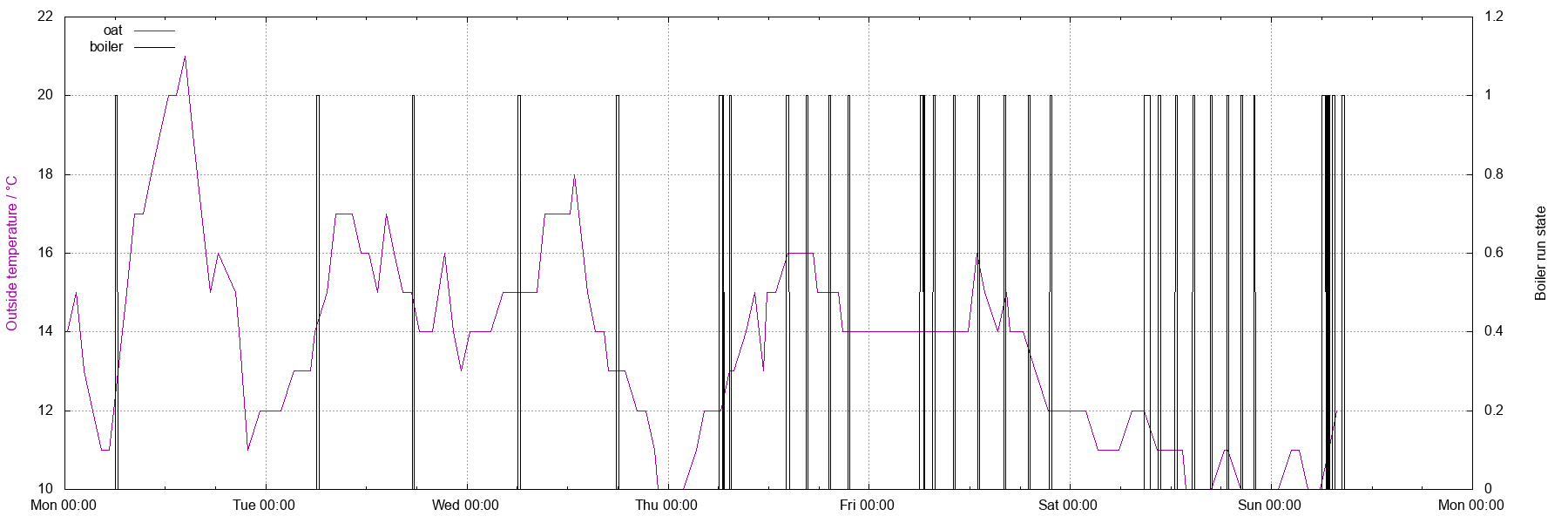
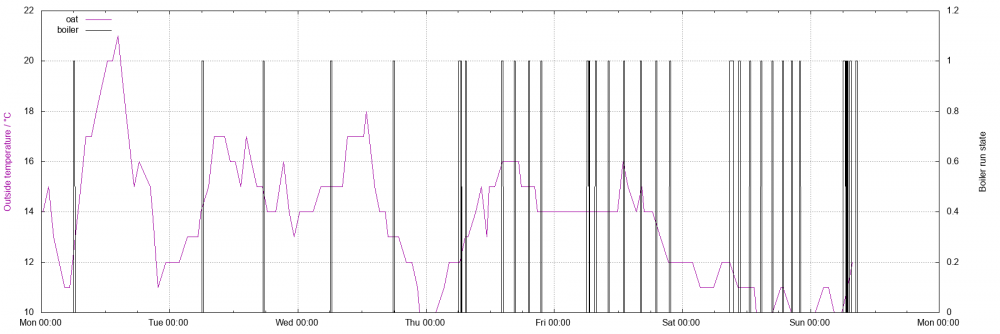
Meanwhile, my boiler runs [¹] and outside air temperature [²] for the last week. The boiler was running 5.6% of the time. [¹] For space heating, sensed by measuring the temperature and rate of change of temperature on the flow to the radiator in my study. Typically it also runs for about a quarter of an hour each day to heat DHW. [²] At Wick airport, 30km away but at a similar altitude and distance from the sea.
-
What is the effect of EPC changes?
Ed Davies replied to Ferdinand's topic in General Self Build & DIY Discussion
Ah, so electricity exports count at a different kg CO2e/kWh from imports? That'd make sense as exports, particularly from PV, would tend to be at a time when emissions are lower anyway. -
What is the effect of EPC changes?
Ed Davies replied to Ferdinand's topic in General Self Build & DIY Discussion
You're a net exporter of electricity. Electricity is now considered to produce less emissions so why hasn't your “negative emissions” decreased (moved towards zero)? -
Typo: 1 kJ·kg-1·K-1 (so a thousand times more).
-
How would you do that? Putting the contactor coil in series with the saw isn't likely to end well.
-
Gyproc detail at window reveal - ICF
Ed Davies replied to jamiehamy's topic in Plastering & Rendering
Good question. My thought is that it's probably better not to because of the flammability of EPS but maybe actual EPS products are sufficiently treated that this isn't really a problem. I'd be interested in a definitive answer. -
Room air temperature/quality sensors
Ed Davies replied to dnb's topic in Networks, AV, Security & Automation
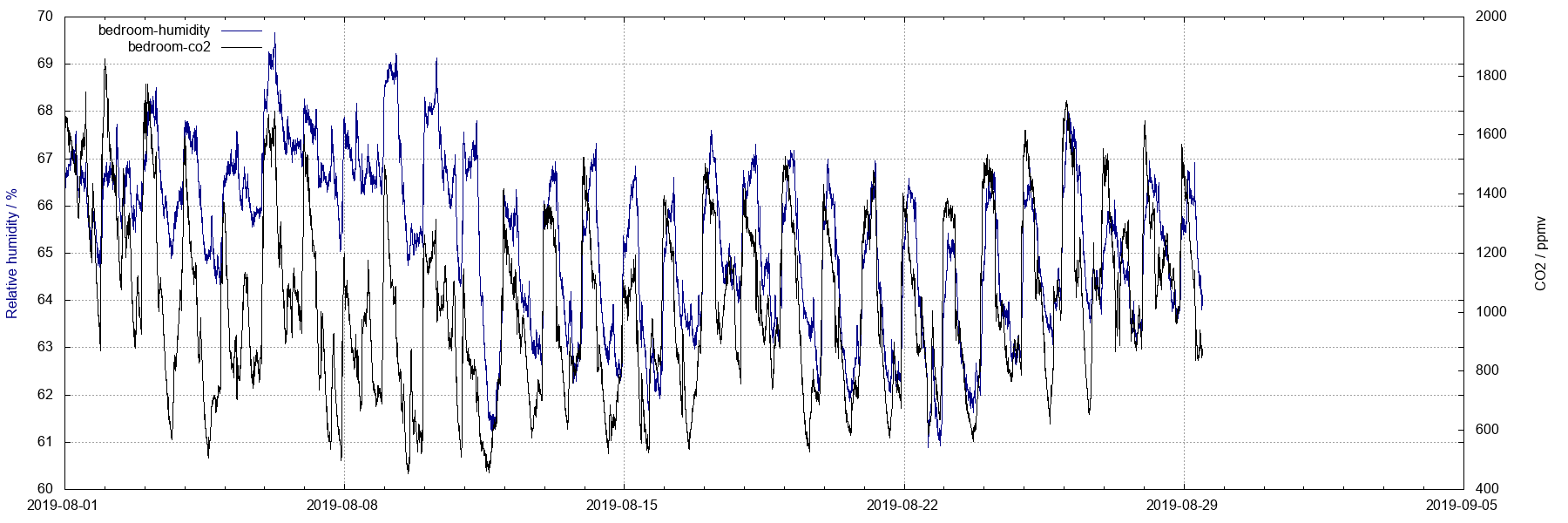
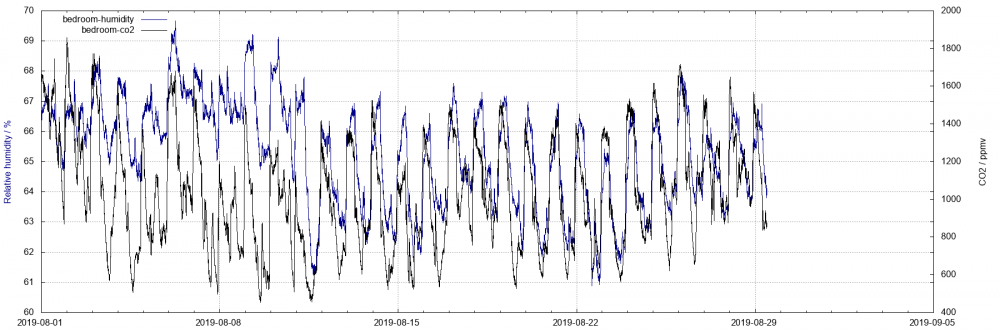
To back up @JSHarris's response, here are my bedroom RH and CO₂ for the last 24 hours (since 12:00Z yesterday) and since the beginning of the month. As you can see, in the short term the CO₂ and RH track pretty well [¹] but longer term the change in outside conditions messes this up. [¹] But not brilliantly, see the largish rise in humidity around 02:00Z compared with the steady fall in CO₂ over that time.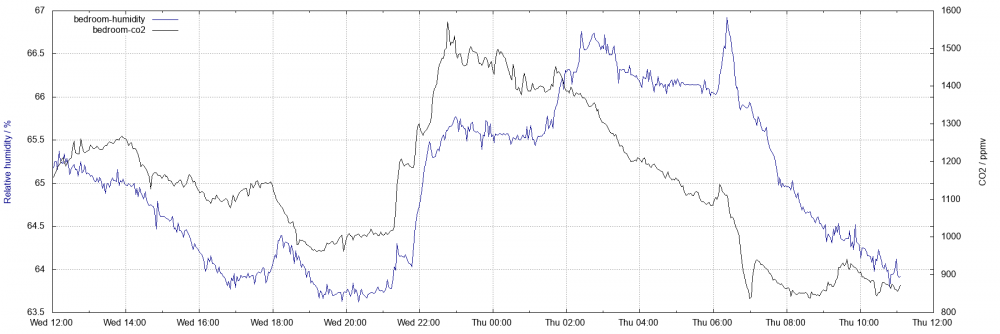
-
You know something the markets don't, then? In the short term there can be overreaction, of course, but that gets fixed pretty quickly as future expected events are discounted; people bet on the assumption of future changes which pulls the current exchange rates into line with what people overall expect. Further exchange rate variation will be the result of unexpected events and internal variability within the market. I think the drop in the pound from ~€1.30 in 2015 to ~€1.10 now sums the whole thing up quite nicely from the purely financial point of view.
-
I did similar calculations on the capital cost of double- vs triple-glazed windows against the capital cost of the extra PV to replace the extra heat loss, taking into account the approximately 1 hour- per-day generation you could expect from PV during the relevant months. It was all very marginal. I decided on triple glazed for the four main-room windows (study, living room, kitchen (PK08) and bathroom (MK08)) and double glazed for the top-hung escape windows in the two bedrooms. The eye-watering cost of triple-glazed top-hung was definitely a factor. The reason for triple-glazed on the main rooms, though, was the comfort of sitting close to them. Though the extra loss in watts for double glazed might be marginal the feeling of them perhaps “radiating cold” swung it. Being able to get them without vents would have been the thing that could have perhaps swung me to switch to Fakro from Velux. I'm wondering if there's a good way of sealing them without causing any other harm.