Iceverge
-
Posts
4487 -
Joined
-
Last visited
-
Days Won
32
Everything posted by Iceverge
-

Understanding insulation options and condensation implications
Iceverge replied to Alan Ambrose's topic in Heat Insulation
Nope! I did a short while of civil eng at uni before bugging out to work at nothing building related. Everything is self thought (occasionally it shows) so please get a second opinion. However when building out own passive house I didn't meet anyone in reality who had more knowledge than I had pulled myself from forums (this one the most) and the internet. With timber buildings there's a lot of info from the USA and Canada. They've been poking around at low energy buildings with 50 years. -
Understanding insulation options and condensation implications
Iceverge replied to Alan Ambrose's topic in Heat Insulation
No problem. Its an interesting topic. It's annoying to effectively double up on structure, but that seems to be difficult to avoid if you want an oak frame that performs well. The expense also annoys me as the modern equivalent of a steel portal building clad with insulated metal panels is one of the most economical build methods. -
Understanding insulation options and condensation implications
Iceverge replied to Alan Ambrose's topic in Heat Insulation
I've reinvented the wheel again haven't I! That pic above very much looks like the oak frame is just for show. The I beam frame is raised first, then plasterboarded and then the oak frame. It'd be a durablen if expensive solution though. If they're done it the other way around it'd be a nightmare airtightening the propassive behind the oak frame and the plasterboard would definitely crack too if screwed between the oak and service batten. Pondering this I wonder would something like a hempcrete wall be an option. Its self supporting but not structural so would tie in well with an oak frame. You'd need 700mm walls to get near 0.1W/m2K though. -
Understanding insulation options and condensation implications
Iceverge replied to Alan Ambrose's topic in Heat Insulation
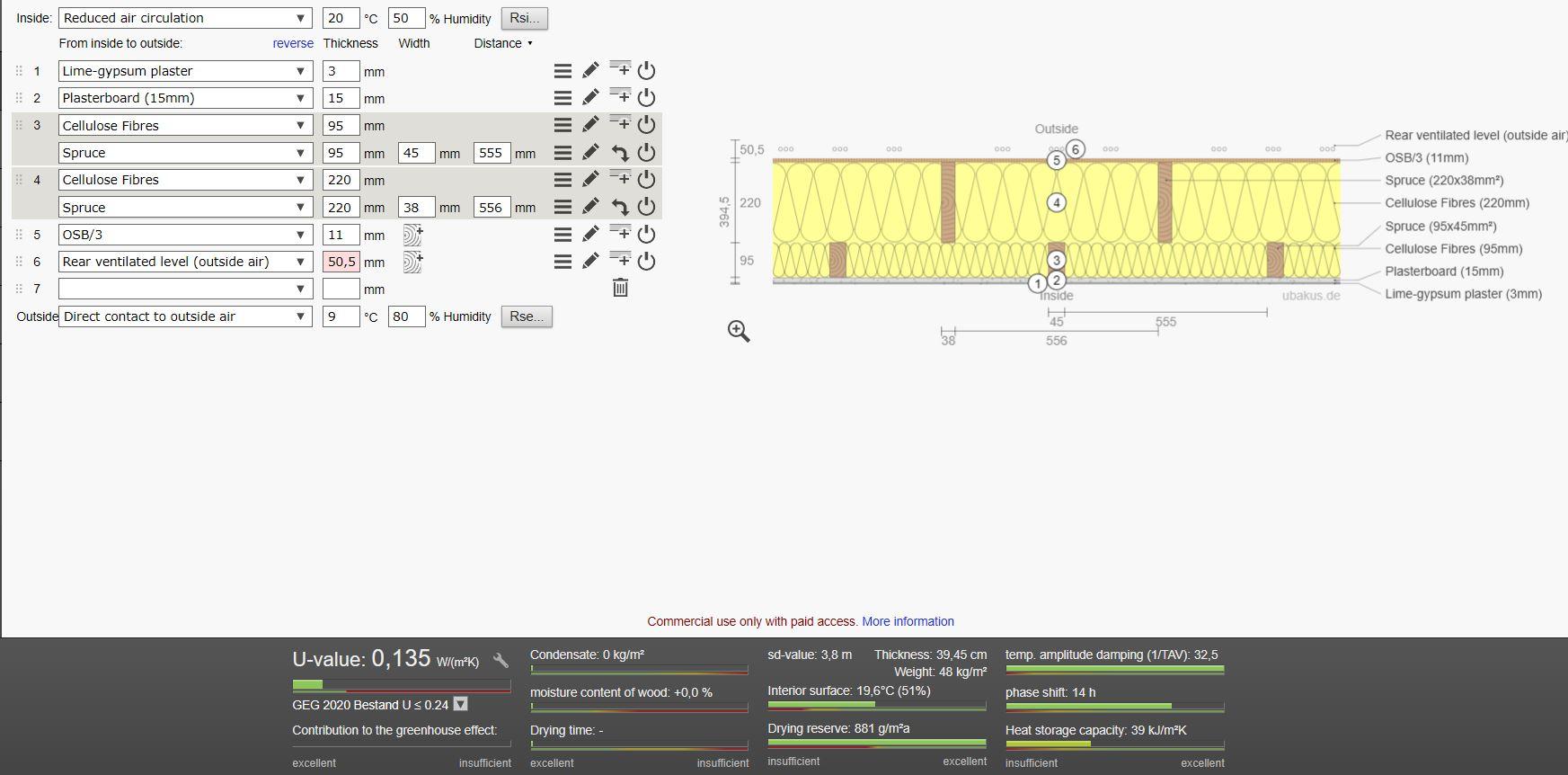
If you were able to guarantee an excellent job taping the external OSB for airtightness I would have no issue with the above. Replacing the 360mm I joists with 220x44 mm timbers and the Egger DDF with 11mm OSB would be much much cheaper and simple to source locally. Also rotating the 95x44mm horizontals would give a little extra insulation thickness for a very respectable U value.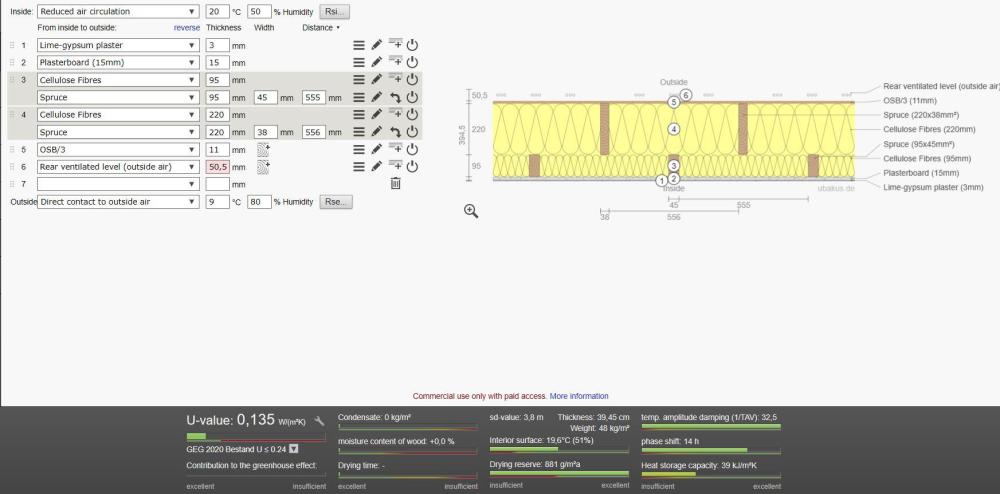
-
Understanding insulation options and condensation implications
Iceverge replied to Alan Ambrose's topic in Heat Insulation
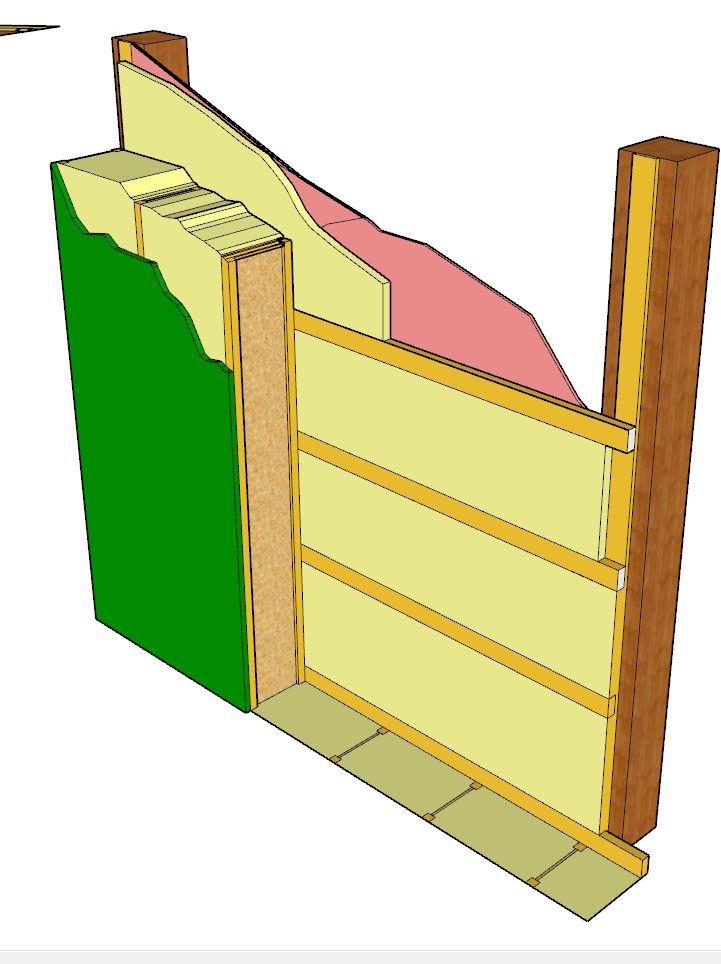
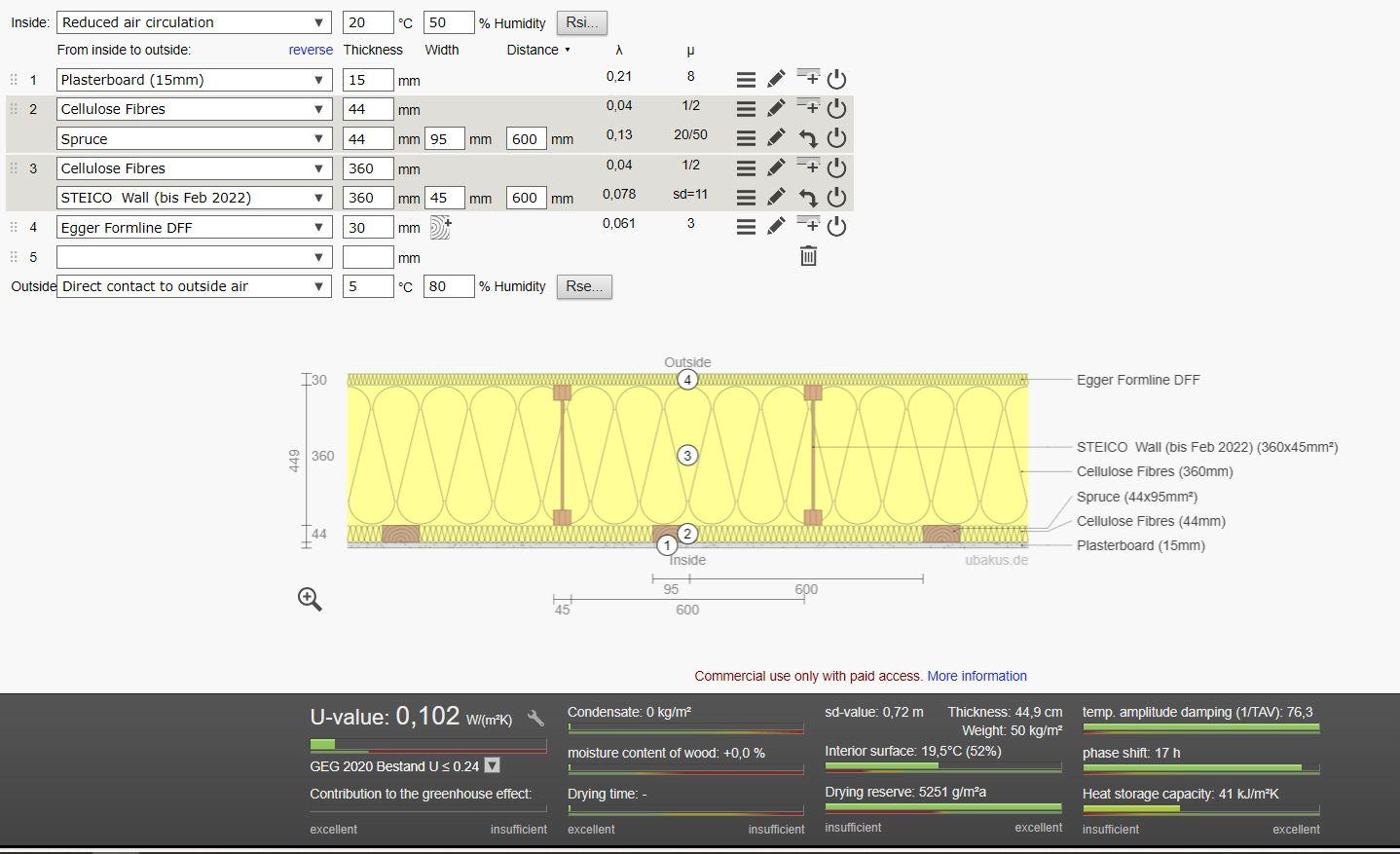
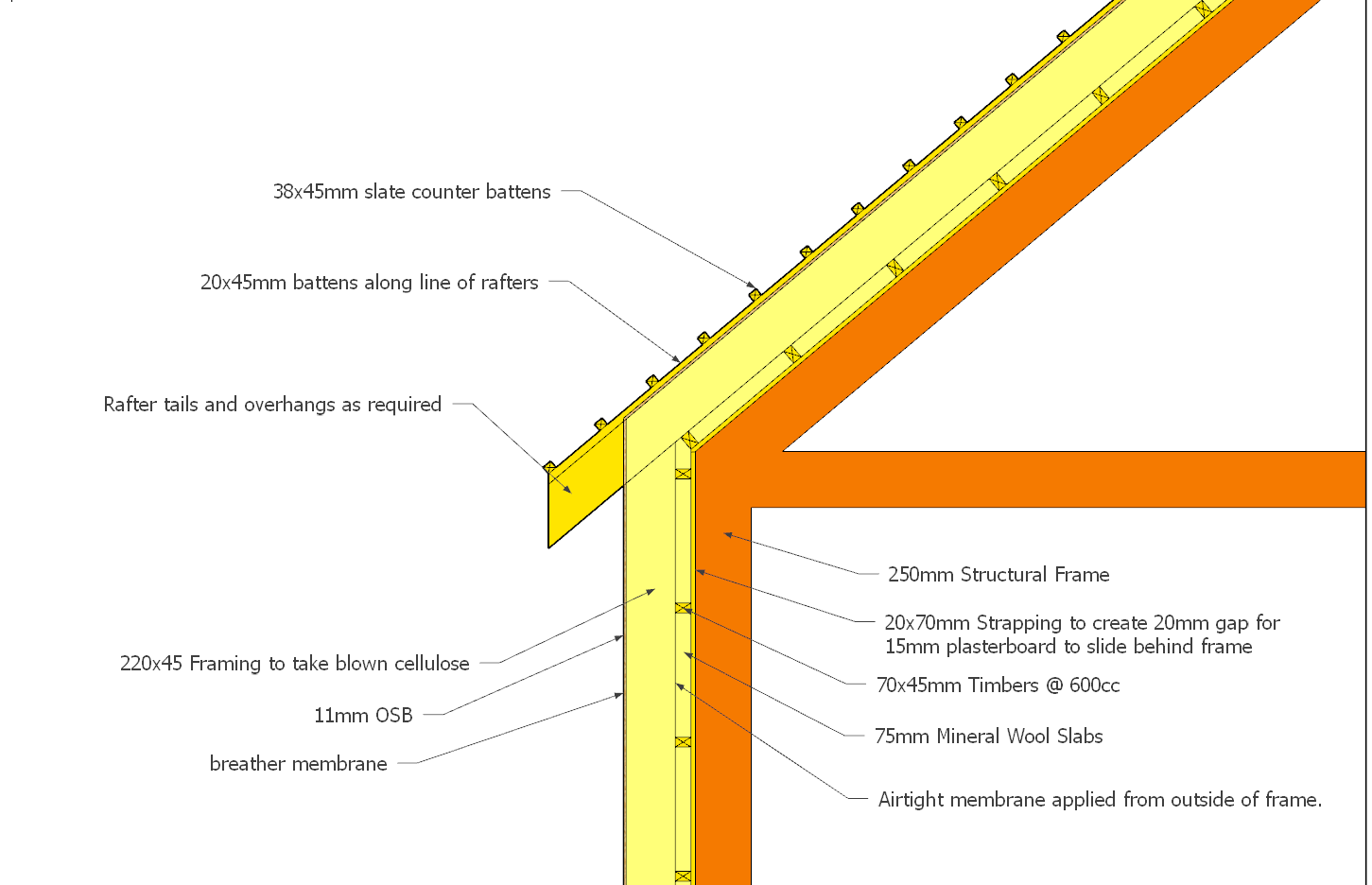
Here's a quick 3d View. From the outside. 30mm egger DDF 360mm i joists @600mm cc filled with densepack cellulose 44x95mm timbers horizontally also filled with cellulose to hang plasterboard on. 15mm plasterboard 100x20 vertical strapping on 250x250mm oak uprights to allow plasterboard to slip being oak.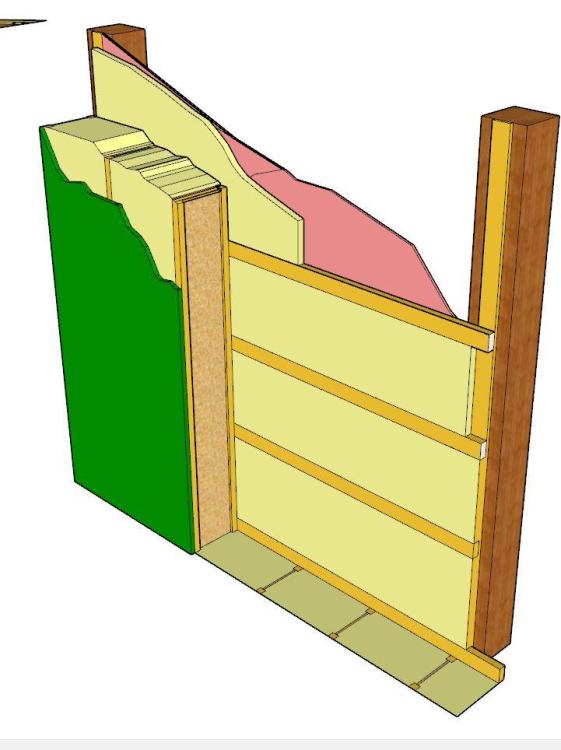
-
Understanding insulation options and condensation implications
Iceverge replied to Alan Ambrose's topic in Heat Insulation
Pro's: All you insulation is in the one place with no waste. Egger DDF offers a chance to externally insulate window frames to some extent. The web of the I joist offers a good chance to take screws for external battens. Easy Airtightness details boosted by cellulose would make a great score possible with some care. Plenty of area to run wires etc inside the 44x95mm horizontal battens. Tremendous decrement delay. (Phase shift) Vapour open construction = very safe long term. All you Oak frame is inside the insulation zone making it completely temperature stable and unlightly to move at all Flexible insulation etc so any small movements make no difference. Floating Plasterboard not connected to the lovely Oak frame. making it simple to fit and unlightly to crack. Con's: You're moving into slightly more specialised and dearer materials like the Egger DDF, if you run a board short you won't be able to buy one locally, you'll have to wait for a delivery. Similar argument for the I joists. They are dearer than cut lumber. Cellulose isn't as cheap as some insulants on a £/U value basis on the face of it. However once you take into the account the cost of fitting and zero waste I think it's good value. We have 450mm in our attic. You'd need to somehow add rafter extensions to the I joists if you want to have an overhang of the roof on your walls. Defiantly recommended if you want have timber siding. -
Understanding insulation options and condensation implications
Iceverge replied to Alan Ambrose's topic in Heat Insulation
Cool, 0.1W/m2K takes a certain amount of thickness and once you get much below about 0.2W/m2K (Educated guess, happy to be corrected) thermal bridges become really far more relevant. In other words just throwing insulation at a notional wall build-up won't make any real difference unless you get your window and door junctions sorted etc. By far the easiest way to do this is some is some kind of external insulation over the frame. However as you are planning on timber siding hung from the exterior wall, there's a limit to how thick you can go as long screws to tie battens back to the frame are not cheap either and may be result in the siding cantilevering too far from the support point. Something like @IanRs wall might be an option. I-Joists full filled with cellulose and an Egger MDF layer outboard taped for airtightness. I think he has maybe the best airtightness score of anyone on here. As you need to hang plasterboard between the Oak frame you'd still need some internal timbers to allow for this as the I joists wouldn't line up correctly. ( Ubakus can't draw these horizontally so you'll have to imagine it)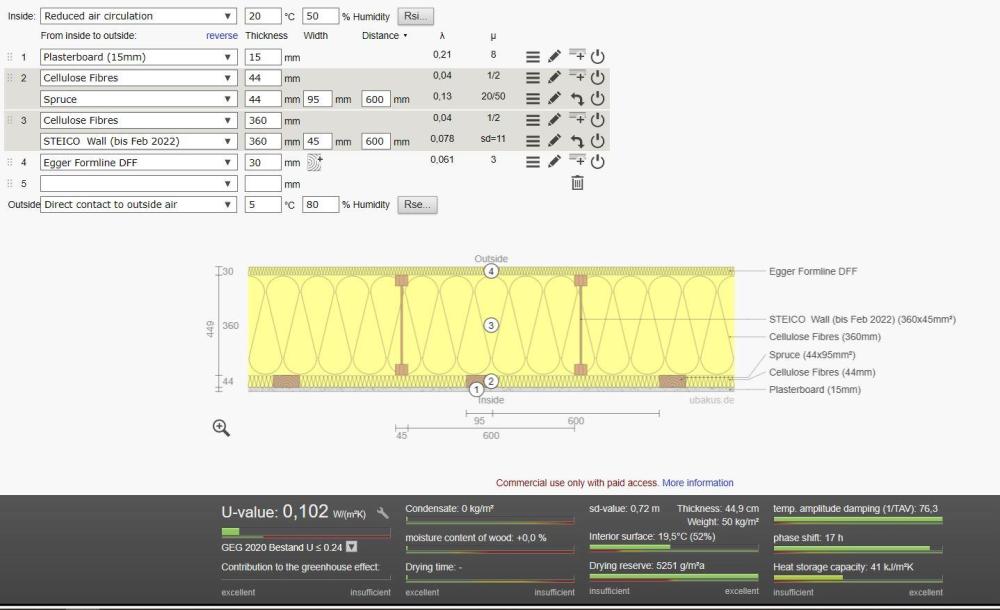
-
Understanding insulation options and condensation implications
Iceverge replied to Alan Ambrose's topic in Heat Insulation
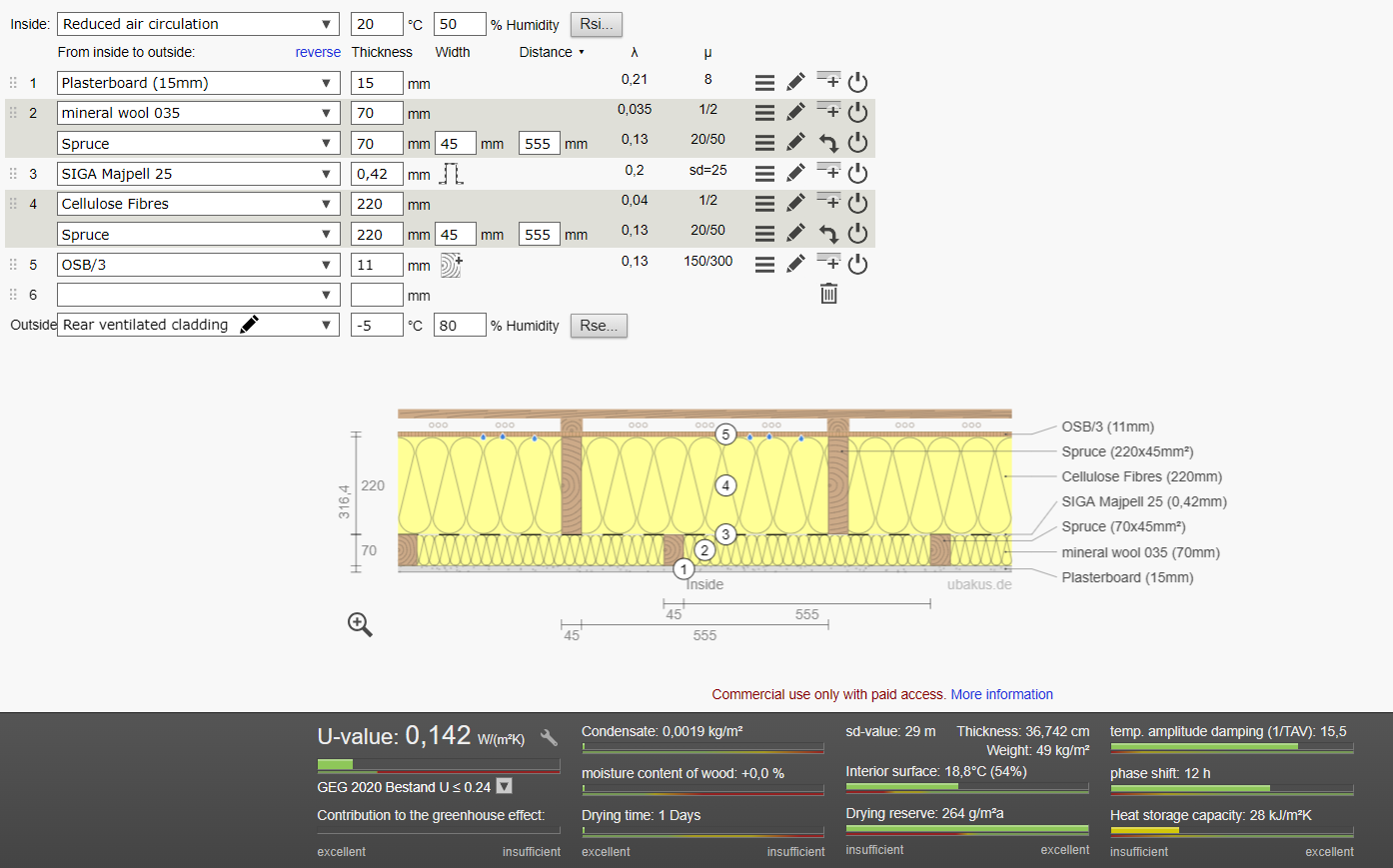
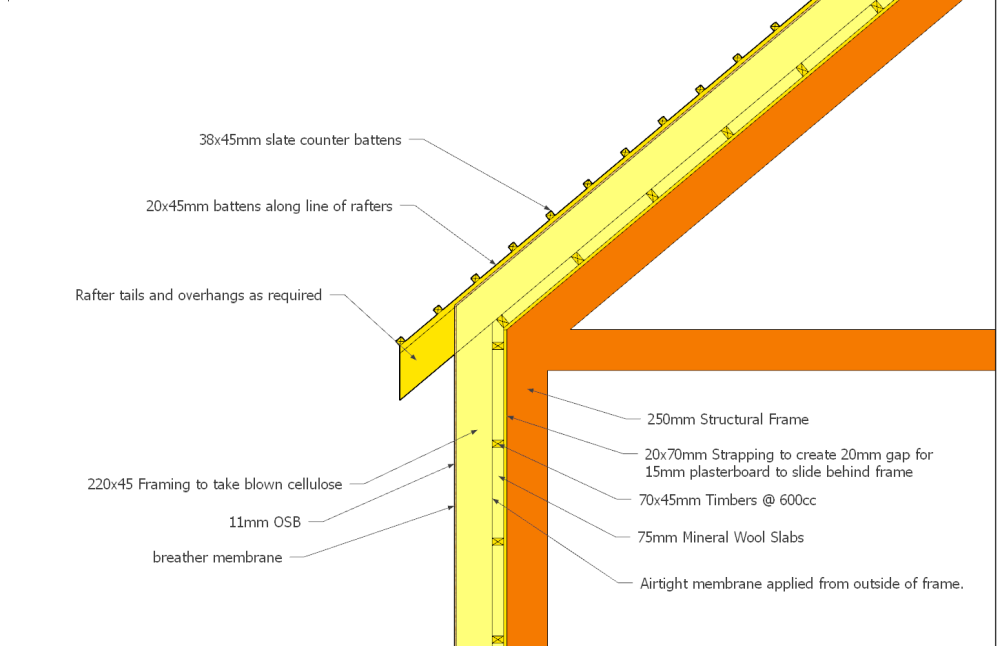
All very buildable. No exotic materials. I didn't bother drawing the external shiplap and battens. You could replace the inner Airtight membrane for another layer of OSB and tape it if for airtightness if you wanted.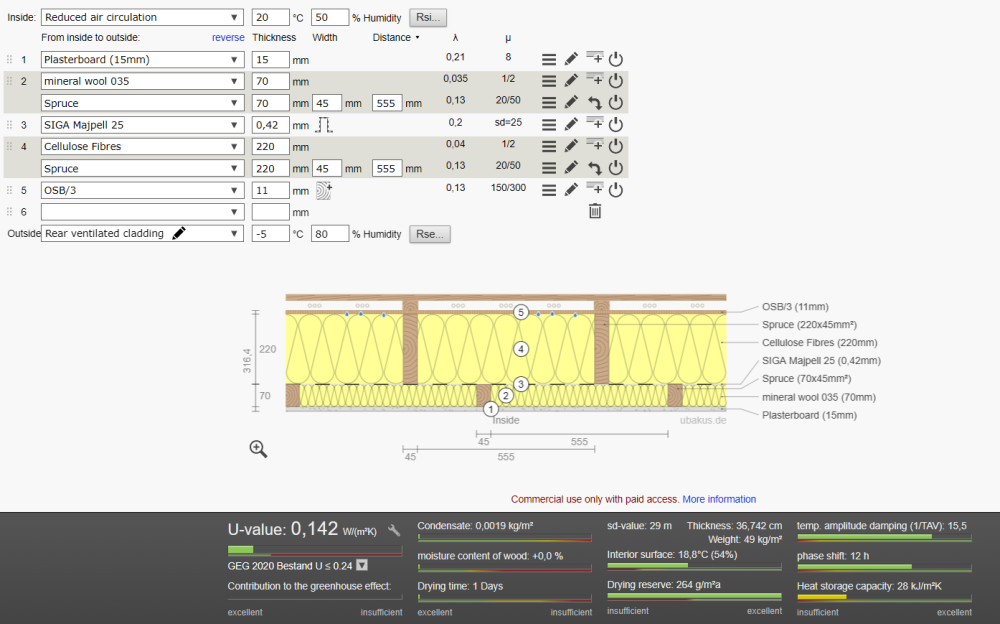
-
Understanding insulation options and condensation implications
Iceverge replied to Alan Ambrose's topic in Heat Insulation
True, you could dedicate a lifetime of study to it. The basics aren't rocket science however. All you need to do is avoid a build-up of moisture. How you do this is the next question. @Alan Ambrose I've put a suggestion on this on March 7th. I'll stick it through Ubakus now. What are your target U values and I'll try to design a cheap and buildable solution. -
Understanding insulation options and condensation implications
Iceverge replied to Alan Ambrose's topic in Heat Insulation
As an aside on your example. 1. You can select "roof" from the drop down wall menu rather than "wall" 2. You have polythene in the diagram but polyethylene in the example. These will have different permeability. 3. PUR insulation is different from PIR. Happy insulating!!! -
Understanding insulation options and condensation implications
Iceverge replied to Alan Ambrose's topic in Heat Insulation
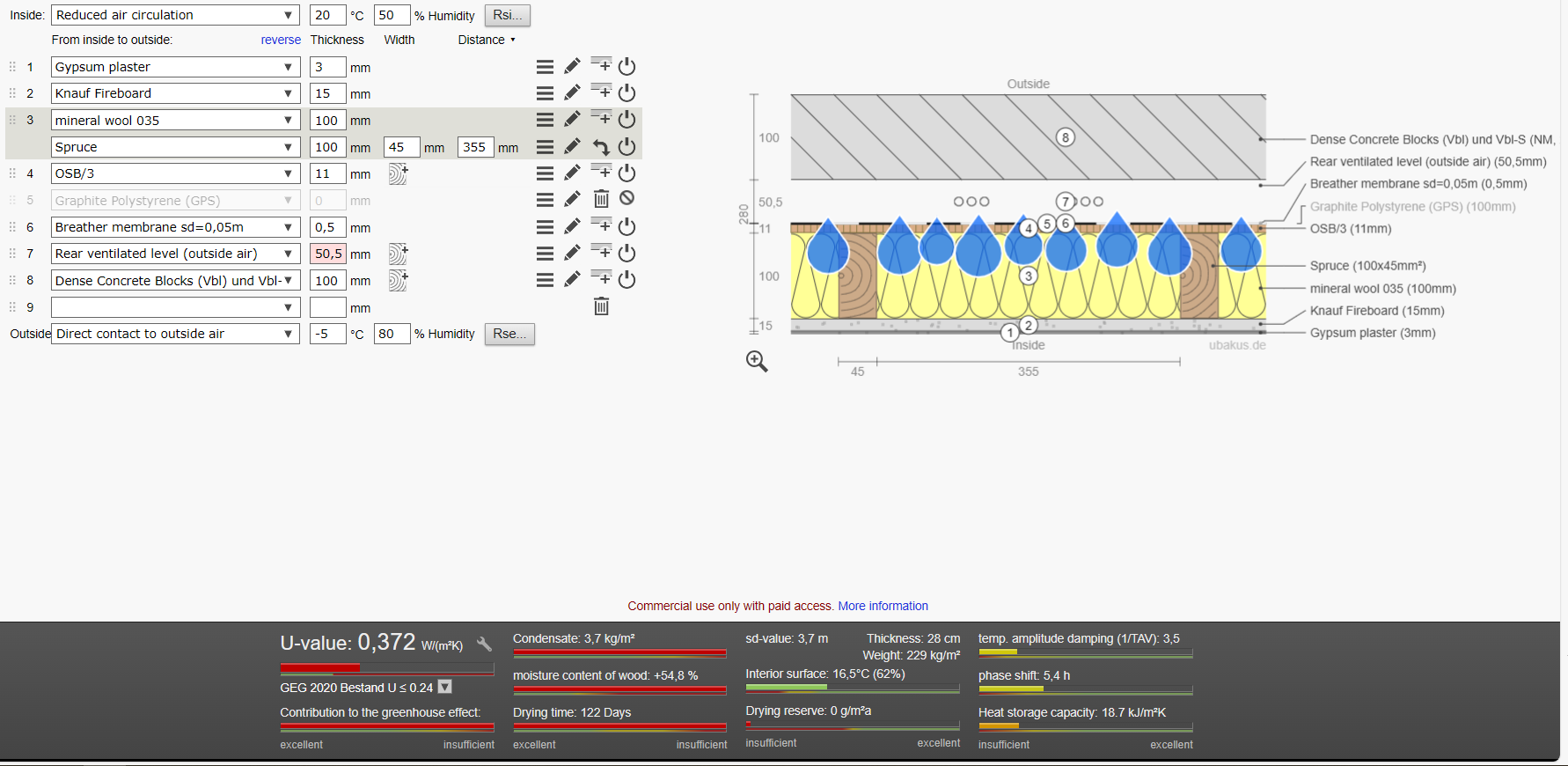
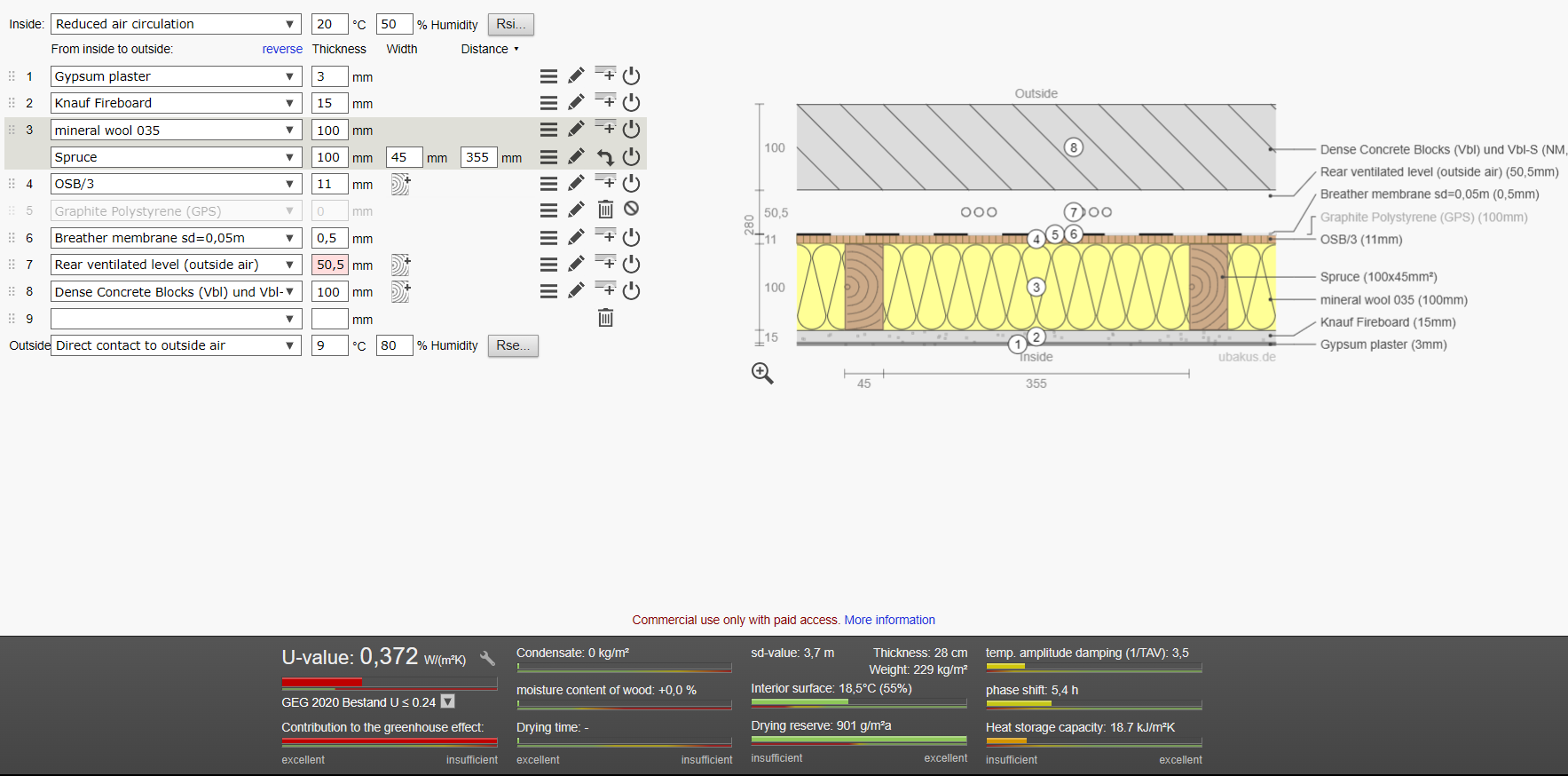
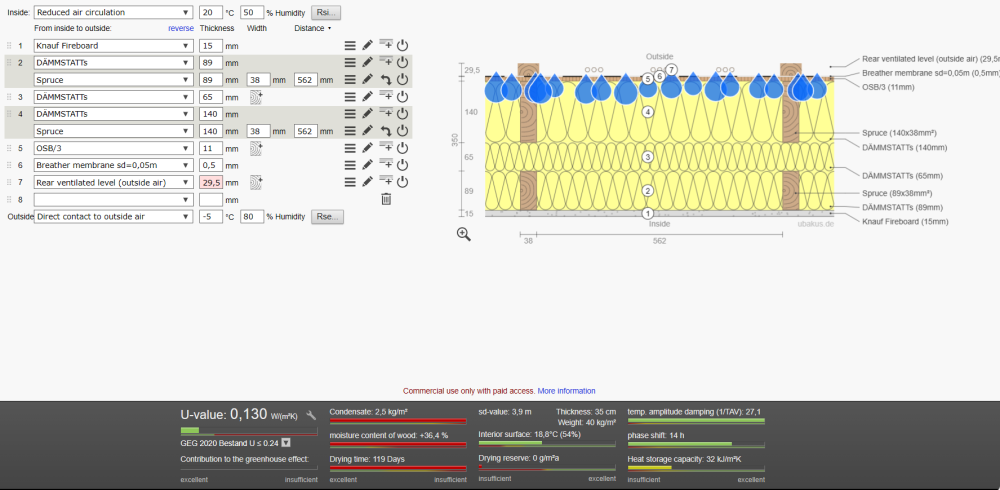
I've spent far too long playing with Ubakus. It's one of my favourite games (sad I know!) It's an excellent tool but not without it's short comings. Here are are a few: If you put a layer of something like PIR boards it assumes that they form an immaculate seal from board to board. In reality unless you diligently tape the foil faces or use an immaculately sealed vapour barrier this isn't the case. Have a look at this. The wall is entirely enclosed at both sides by a vapour barrier. It looks fine but is bad news in reality as the wall can't dry out. The program assumes that there's no failure points in the barriers and the internal construction was perfectly dry from the get go. Completely unrealistic. The above wall WILL have condensation and rot problems in real life. Similarly it assumes that all moisture is via diffusion (where moisture laden air seeps through materials) This is completely unrealistic too. Moisture gets through a structure by gaps and air currents. This is one of the main reasons that airtightness is so stringent in Passivhaus's as it is so important for building durability. Next have a look at this wall. It appears that it should be saturated inside however this isn't the case if a good job has been done with the airtightness layer. ( External sheathing in this case) This guy lives in a very cold area with much greater pressures for the "cold sheathing" problem than the UK would have. If you take care of the airtighness and don't trap moisture in a structure you won't have any issues. The cellulose really helps here. It's much more resistant to any airflow than mineral wool batts etc. Finally here's an example of an old fashioned TF with 2x4's on 16" centres with mineral wool in between and no vapour barriers. Again it looks like a disaster zone . In reality if it was in a location like Northern USA or Canada where -5 Deg and 80%RH is normal then it would condensate and rot out. However these conditions for prolonged periods are really unusual in the British Isles and lightly in a few weeks it'll be warmer again and the whole thing can dry out with no lasting damage. There's mountains of walls like this in perfect structural condition. It's a really tricky concept. The main principals are . 1. Don't trap moisture in the structure. One Vapour BARRIER max. 2. Poor Airtightness is how moisture gets into walls and roofs. 3. If you can't guarantee the airtightness keep your vapour barrier inboard of the insulation to make sure it doesn't have any condensation or else build your wall entirely out of vapour open materials. 4. Having the outer part of your wall below the dew point is ok for short periods so long as it can dry effectively again.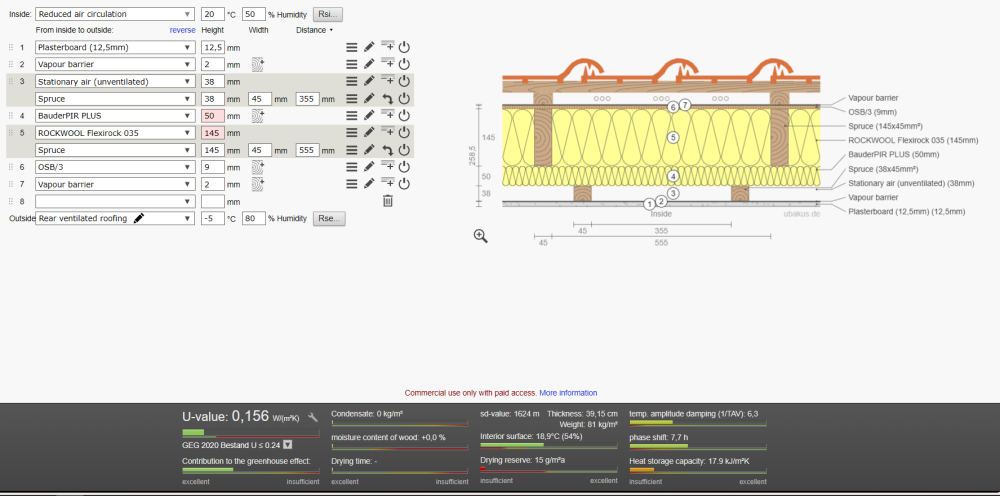
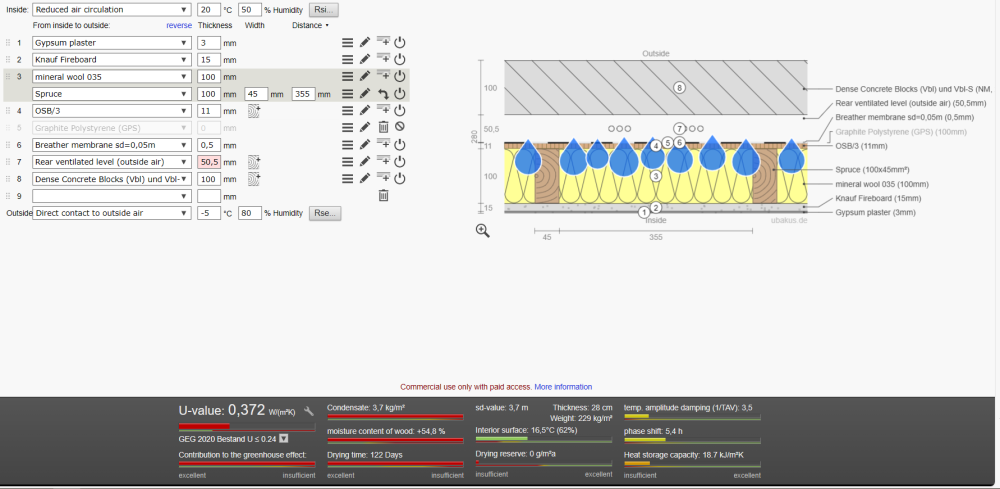
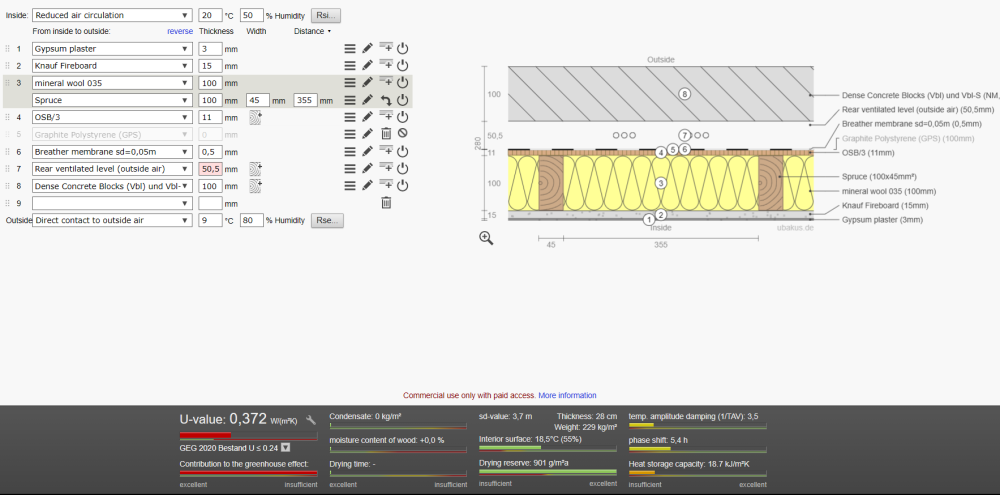
-
First house project, going okay, but..........
Iceverge replied to Southdean's topic in Introduce Yourself
Welcome. Pics, plan and sketches always welcome. -
Yes, Certainly take structural precautions here as you'll loose a lot of strength. You could just insulate between the joists well as normal too. It wouldn't make much difference thermally.
-
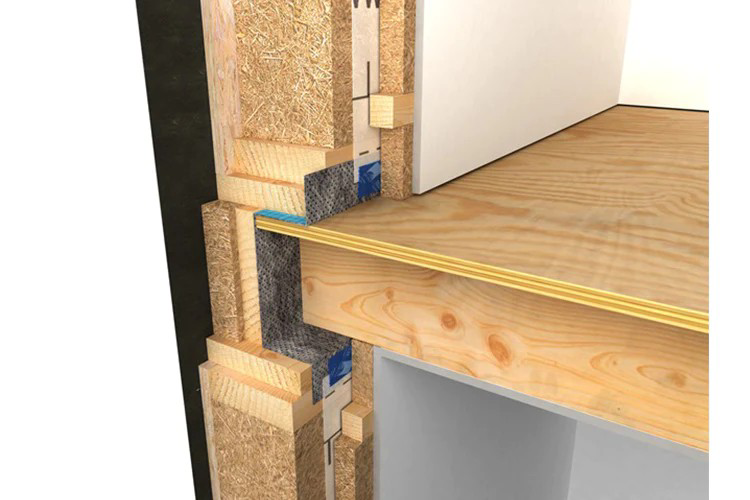
Looks good. @Thorfun among others have the same buildup. It's quite common. I think MBC offer it as a factory spec. The OSB behind the plaster is a cheap enough addition for a much more robust wall. You could drop your service cavity to 20mm using 20*70mm strapping. 20*45mm battens tend to be a bit weedy and split. If you do this you can spec outwards opening windows and wrap the jambs etc and overlap the frames from the inside. One point of care with the airtightness will be the band joist area that will require a membrane wrapped around the end of the joists for the first floor connection. Likewise any buttressing internal wall. Nothing that can't be overcome however. Note the insulation outside the band joist too as this will be a weak spot otherwise.
-
Tilting the rafters would be easy and you'd get a dead consistent fall. Sloping roof wouldn't be an issue.
-
What's your target U value? I'm a fan of externally covering a timber frame in insulation. It keeps the sheathing warm and really deals with any thermal bridging well. Similarly it makes it easy to "over insulate" window frames which are the worse performers thermally in a house. Do your windows open inwards or outwards? I would omit the internal VCL. Along with the foil faced PIR you would end up with vapor two barriers which would be a recipe for trapping moisture. EPS is a more breathable and cheaper material and I would prefer it for a timber frame on that account as external wall insulation. PIR between timbers never sits well with me. Expensive, wasteful. Bad for thermal bypass, noise etc. 50mm cavity is plenty. Moisture gets into the structure through bad airtightness. It gets trapped because of bad breathability. If you do an excellent job in airtighess you'll be fine. Likewise leave the structure to breath(dry) to the inside and it'll be ok. VCL's are typically internal of the insulation to keep them always above the dew point so that if any vapor gets carried into the wall by drafts it wonts condensate. If you can assure that the structure will be very airtight and it can dry inwards (or outwards) if it does get damp then you'll be ok. How about Brick 50mm cavity. Breather membrane. Lapped and taped to all opening's. 50mm EPS graphite enhanced ( GPS) foam between all boards. 11mm OSB sheathing (metric sheets). All joints diligently taped as your airtightness layer. Seal to roof windows doors soil pipes foundations etc. 140x38mm framing at 600mm cc. With batt insulation in between. 15mm plasterboard or 2* 12.5mm Skim U Value about 0.18 External_EPS_on_TF_170100 (1).pdf
-
Can you not make your own fittings from a few 95*44 timbers? 5 of them won't be too dear.
-
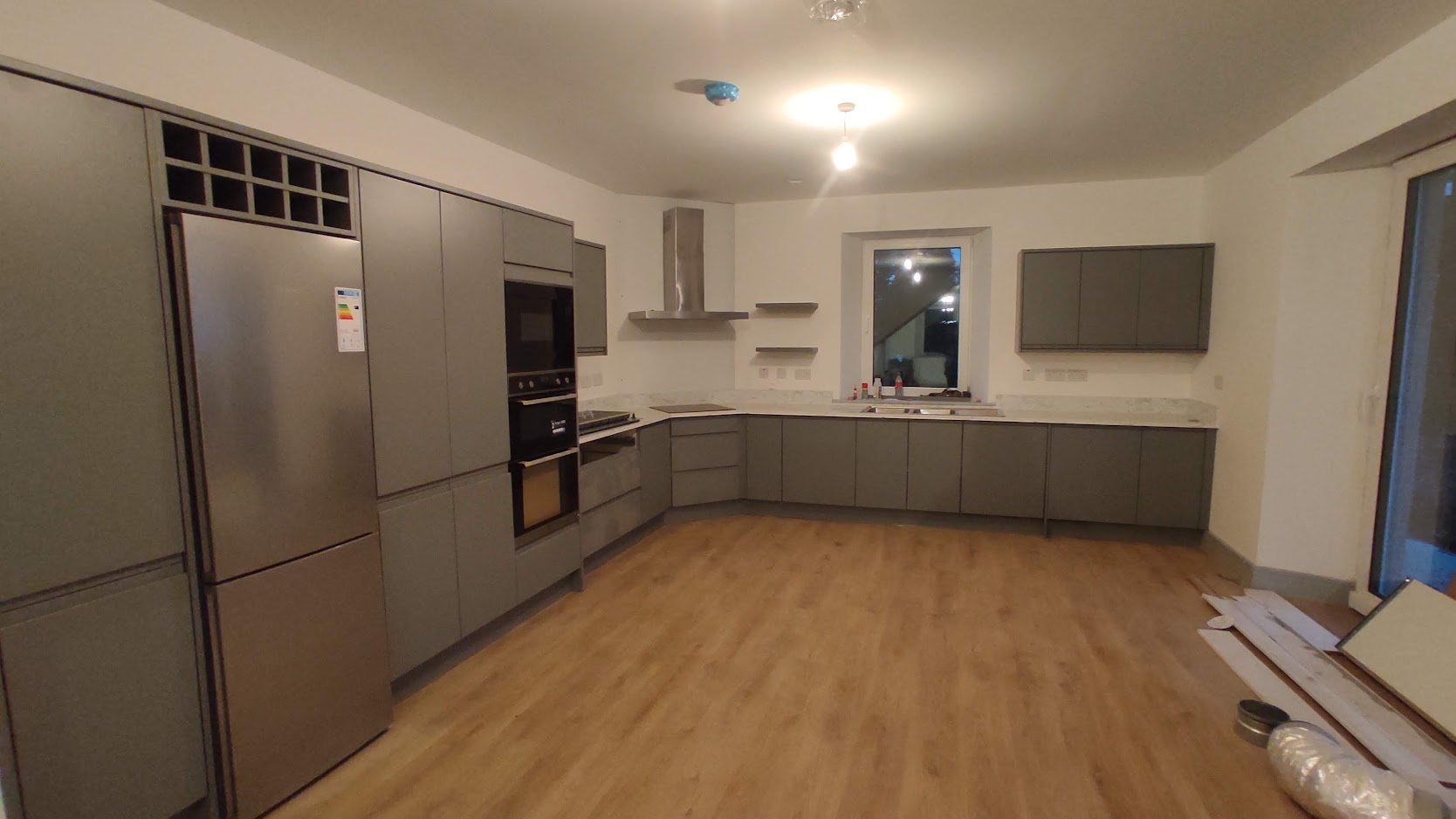
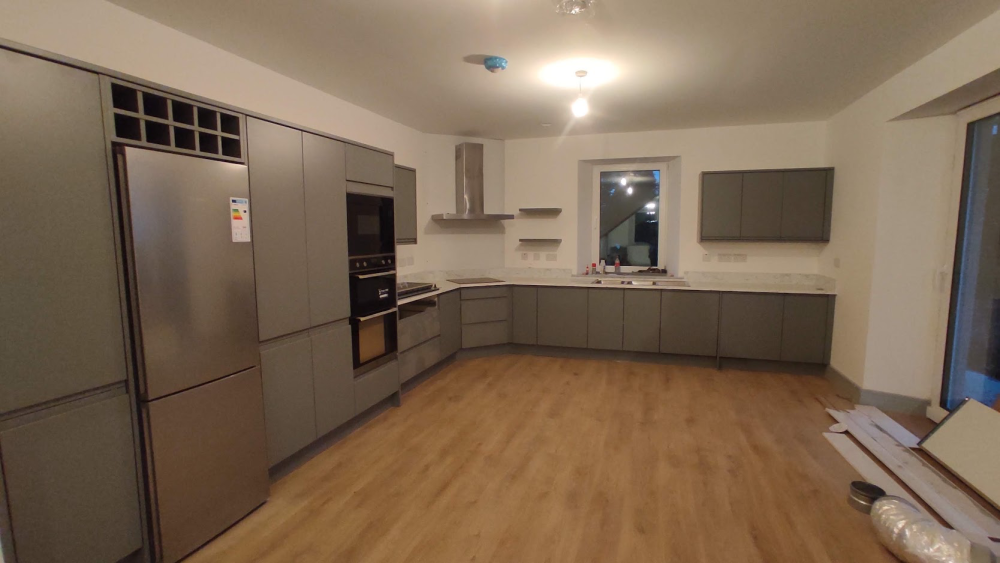
Thats ours just before we moved in. from the left, Here's a 2.5 year report. 1. tall sweeping brush cupboard. ( full of crap) 2. fridge and wine(cordial) rack. works well 3. 800mm pantry cupboard. about 60/40 split of useful food storage/full of crap. 4. double oven. top half used once a year. microwave, very good. 5. wide cutlery drawer. works well. other two full of crap. "Mrs Cupboard" on top. Full of crap. 6. 400mm cupboard, works fine. 7. 600mm induction hob in corner, very pleased, drawers for utinsels and pans work well. Extractor fan mounted on MDF diagonal across the corner makes a drumming racket. Not Ideal. 8. 300mm cupboard full of crap. Shelves for tea and coffee above, super useful. 9. 600mm pull out bin, very good. 10. Ikea 2 bowl and drainer SS sink. Very pleased. 11. 800mm under sink cupboard. contains shoe polish, bulbs and various crap. 12. Integrated Dishwasher. 13. Integrated Dishwasher. Above one cupboard full of crap and two for dishes and cups. 14. 400mm cupboard in the corner. Full of crap. We have too many cupboards and the compulsion is just to fill them. Free standing dishwashers would be better in my opinion. I had some issues with the integrated door on one not closing properly and had to dismantle the kitchen somewhat to fix it. Double oven is a waste for us. A boiler tap would have been nice I think. An extractor with the fan at the far end of a very long duct would be much quieter. We used a Laminate worktop. Quite Pleased with it. 600mm cupboards are too deep. The back of them is too deep to access properly.
-
2 dishwashers for us. Would certainly recommend. Maybe it'd be easier to remember which one was clean if they weren't beside each other. We have no islands, peninsula's. Just a kitchen table. We do have a chaos corner in front of the hob by the kettle where we constantly bash into each other mind you. Not sure that can be avoided.
-
What can NIE give you in raw numbers? They'll be doing their sums on a 280m2 house using 40kw of heating demand and three phase heat pump. If you build properly you'll be less that 10% of that and a small 5kw heat pump will be fine. Have you cooked on induction? I've lived with all. Solid fuel, gas, ceramic hobs and my preference would be induction every time. So clean and fast. Nothing like ceramic hobs of old. Before you commit to woodcrete keep an eye on the U values. They may need lots of additional insulation to meet a good standard.
-
Is this what we're going for? I can certainly see the attraction but I'm not sure £25 will cover it.
-
Having stressed over this lots a soil pipe it turns out is only a minor thermal bridge. Either internally or internally. There is an argument for having it outside too. Far more accessible in the event of blockage etc. I seem to remember one of the senior statesmen @tonyshouse prefers it. In my mind that plan for the ensuite will work. I'm not the most experienced though.
-
Nice. I'm an advocate of proper uPVC windows. Often overlooked because of poor imitations but those should be excellent. The insulation detail will perform well too. I'd be interested to see some thermal images. I'm not sure I'm following on your weak spot, sorry.
-
You may need a stack of you're on a private septic tank. Ours is on the back of the garage with an AAV inside. I think if you're mains then one per street is ok. I stand to be corrected mind you.