Iceverge
-
Posts
4487 -
Joined
-
Last visited
-
Days Won
32
Everything posted by Iceverge
-
Welcome. Welcome. Photos and drawings always help too. It ain't easy this self building lark, thats for sure.
-

Nudura window reveals with timber cladding
Iceverge replied to Andrewb's topic in Insulated Concrete Formwork (ICF)
I would go the other direction. Add a 25mm strip of EPS onto the window reveal to cover 25mm of the frame. Thermally window frames are really weak and should ideally be hidden behind insulation. Render the reveals on the rendered section as normal and render the reveals on the clad section in a colour to match the window frames. You can have a common detail throughout then. -
Right no planning. Been there, mad to get chomping at the bit and start hammering bits of timber together but frustrated by the bureaucracy. You have 2 proper options at the moment. 1. To hell with the planning, move into the hall as is and and ask for forgiveness later. It'll require an absence of grumpy neighbours a pot of ready cash and risks peeing off the planners. 2. Hammer the paperwork now. There'll be enough physical work later for the build. Get your permits in place the.build something appropriate for task and not a compromised stopgap. In my experience nibbling away at a big project with limited funds will burn out your enthusiasm before the dream is realised.
-
Would you consider Rockwool batts and moving the stove further forward? Don't know about aerogel. The UK retailer has a phone number. I suspect it'll be prohibitively expensive for the high temperature panels but keep us posted.
-
You can build a shed under permitted development no?
-
I've had a scan of your blog. You seem to have a couple of requirements/challenge's In no particular order. 1. A place that you can store stuff. 2. A camp out while working on the project. 3. Something that won't be blown away. 4. Something that you can establish without permission. 5. Something that can be used later for an office/workspace. 6. Something cheap to establish. In you location I think unless you can get a local unit it's going to be cheaper to just build something permanent on permitted development. A simple metal framed shed would be fine and last a long time without all the compromises of a container. @Kelvin has one if I remember search his build thread.
-
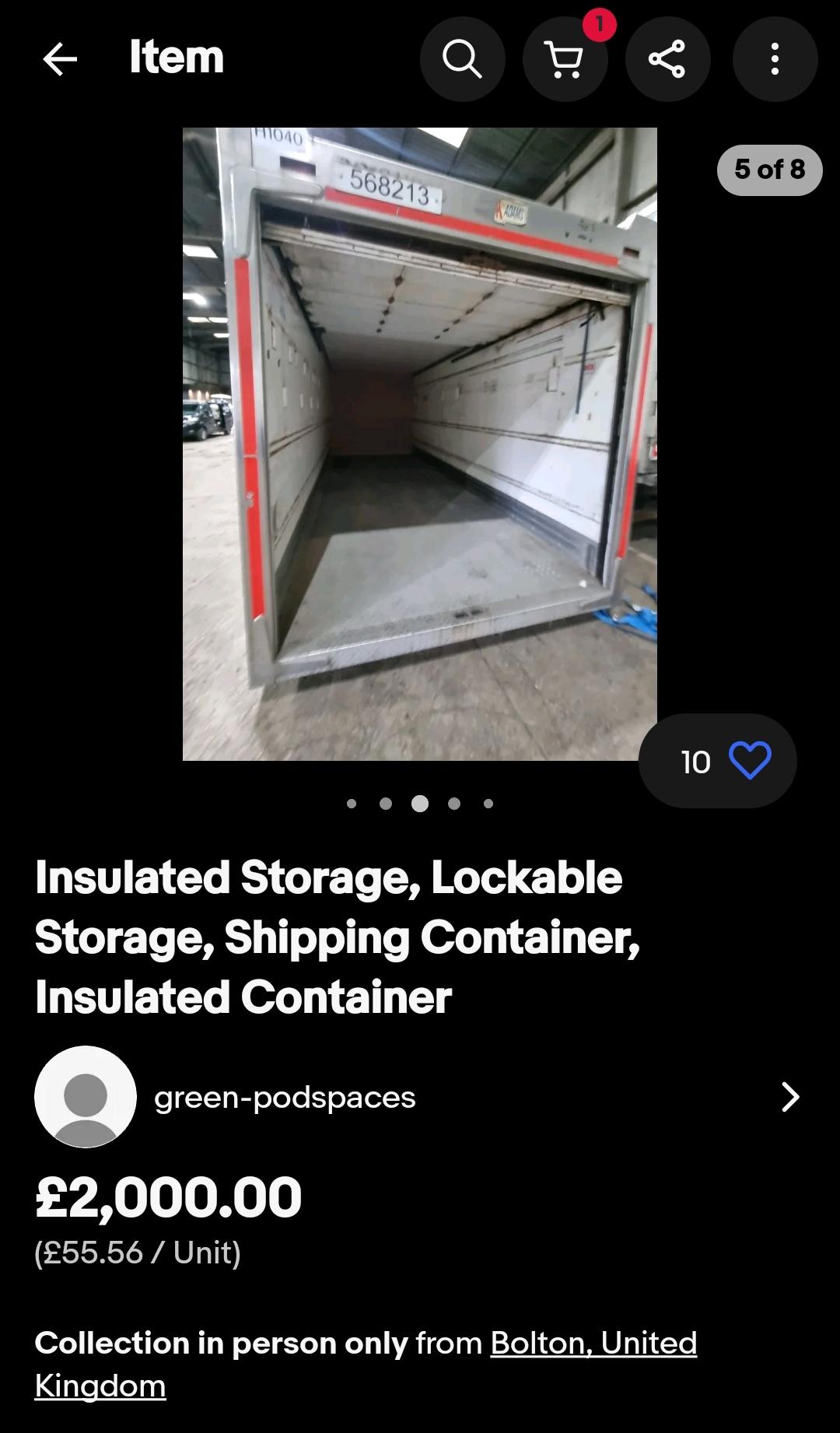
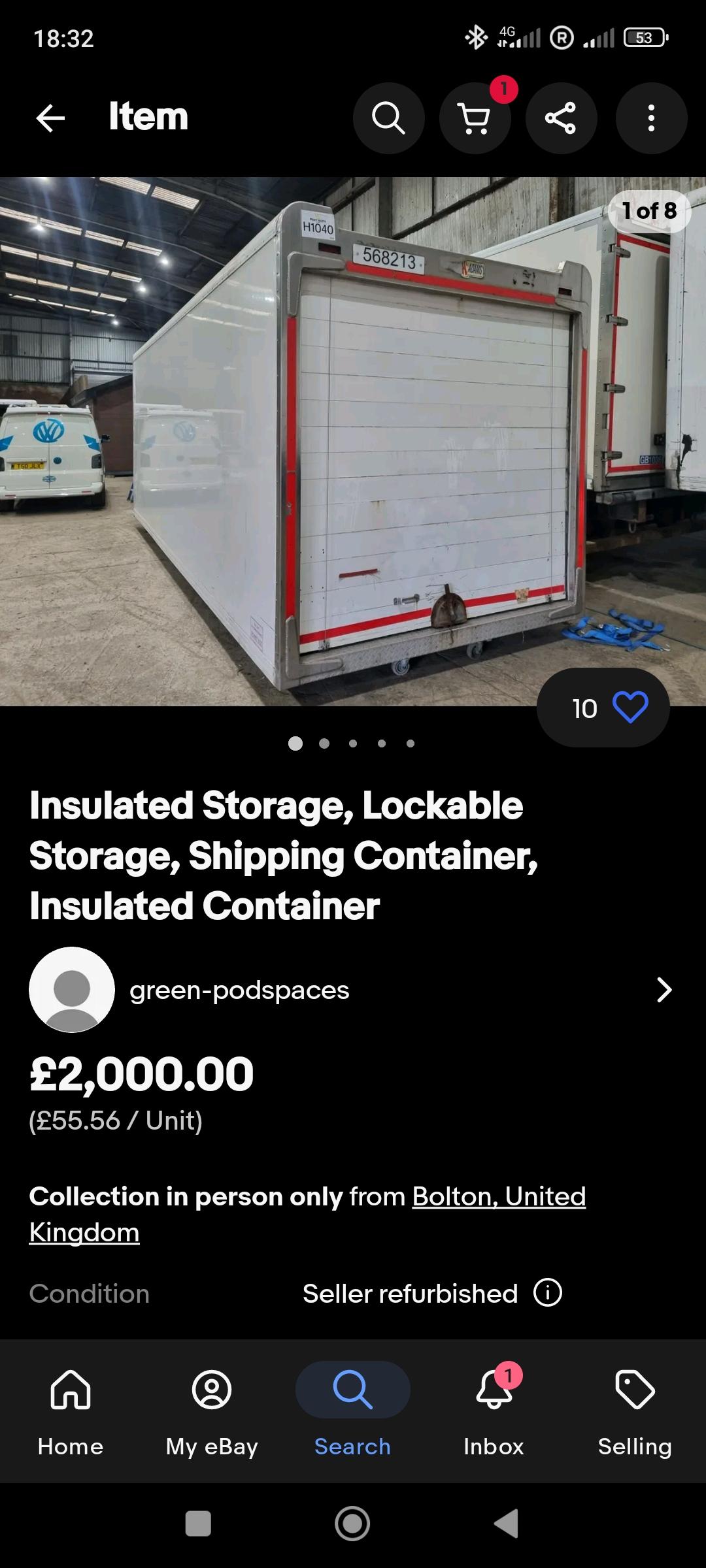
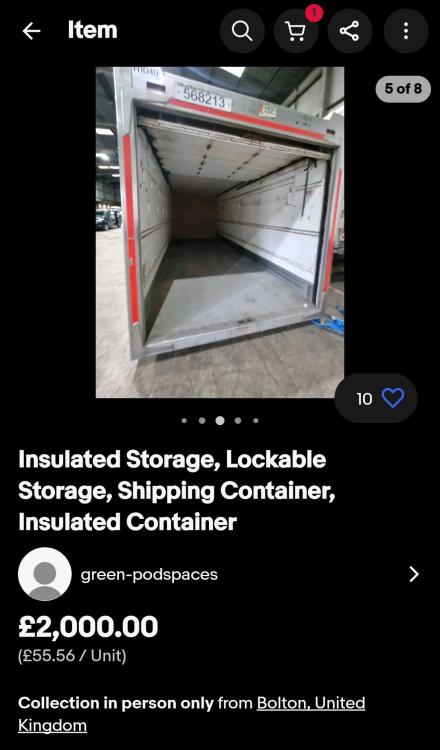
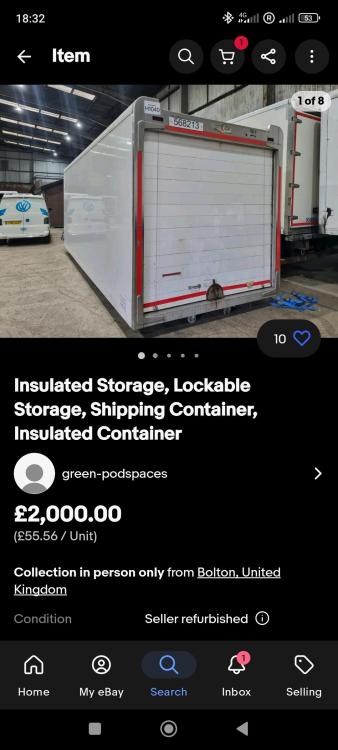
I'm not sure exactly. I think steel frames with polyurethane insulation skinned with light gauge steel externally and plastic inside. You can get Reefer Containers which can be stacked like regular containers so they must be pretty strong.
-
If it's not handy to get you may as well source a 40ft one. The haulage will be similar I'd have thought.
-
That's the one. Frame a uPVC window/door 1m inside the roller door when you want to use it as an office and you'll have a lockable sheltered porch.
-
For a building that is lightly to be occupied constantly I would be cautious if containers. I had a brief look a out 8 years ago. Some of the paints are carcinogenic and the insect repellent used for the flooring is pretty toxic too. Have you considered an old refrigerated body from a truck. Already insulated and used for food so quite safe.
-
Illbruck IL330 is the stuff you want in the foam department.
-
Clean Heat Market Mechanism to incentivise heat pumps
Iceverge replied to LnP's topic in Air Source Heat Pumps (ASHP)
I suppose ultimately it boils down to: 1. Drilling huge holes in the wall 2. Drillings lots of slightly smaller holes in the wall. 3. Accepting the install complexity of an A2A mini split. My impression is the world has already decided.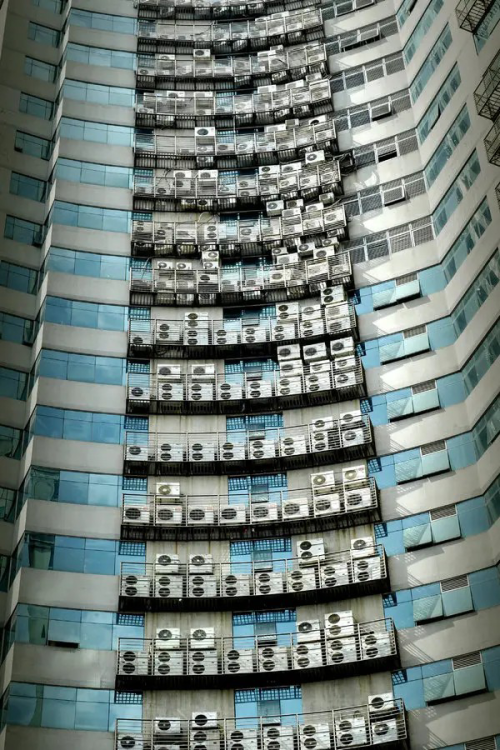
-
If the floor is well tiled and sealed it'll be fine. I would be slow to put any wood on the cold side of the insulation as water vapour might condensate on it and rot. You'll need to if you opt for Wunda however unless you want to use a cement board instead or a thin screed beforehand. If it's lightly to be in an area regularly wetted like near a kitchen sink or a bathroom then you could tank the OSB before tiling. I would consider a floor level drain like a wetroom in the case of a flood caused by a burst pipe etc. I wish we had done it in all the rooms with water in our house. Imagine coming back from holidays and finding a burst pipe has harmlessly drained for a week into a drain. Mop the puddle, fix the pipe and you're done. If it happens in our house it'd flood the entire house until it reaches the level to get into the shower tray downstairs ☹️
-
Clean Heat Market Mechanism to incentivise heat pumps
Iceverge replied to LnP's topic in Air Source Heat Pumps (ASHP)
Actually scratch that. It's the internal unit of a standard split unit that is about 10m3/min not the external unit which I will be far greater than that. Hence all the noise complaints for the above unit with it's 180mm holes. -
Clean Heat Market Mechanism to incentivise heat pumps
Iceverge replied to LnP's topic in Air Source Heat Pumps (ASHP)
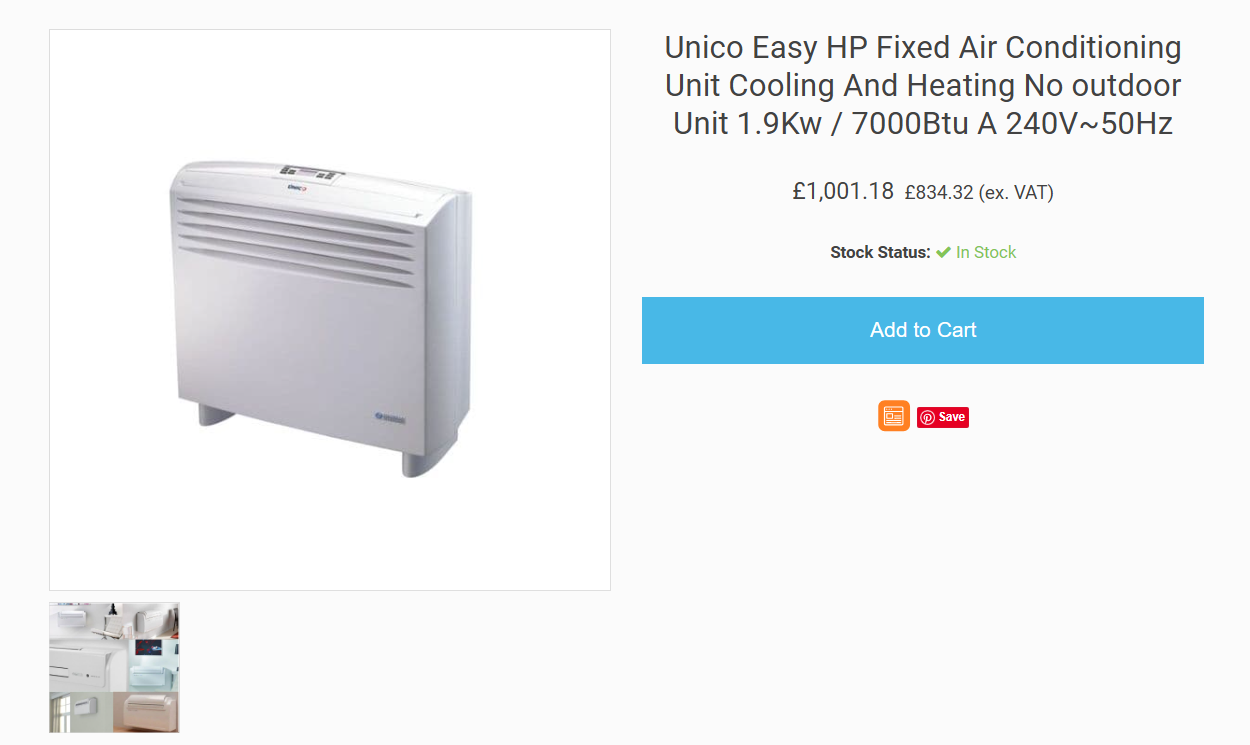
How do existing split A2A units cope with this? Going back to the all in one unit. The main benefit is it's simplicity and as soon as you get to a monoblock coupled to a fan coil you're not much better off than an A2A mini split. Doing some sums........ a 2kw A2A split uses about 10m3/min or 0.166m3/sec so no small change. Assuming we want to keep air flow at a reasonable speed for noise say.... 5m/s then we would need 2 x holes (inlet/outlet) of diameter 200mm ish. Not impossible. That all ties in with this unit which requires 2 x180mm holes for 3.6kw but at a COP of only 3.6 electriQ iQool 12000 BTU Wall Mounted Smart Air Conditioner with Heat Pump - No Outdoor Unit Needed IQOOL-SMART15HP | Appliances Direct Does anyone on here have one? -
Do you have a handle on your annual space heating and DHW requirement? Given your unique use case I think solar PV heated water might be the best. If you have an idea of consumption you can make an informed decision. Reminds me of the opposite of a story I heard where student accommodation installed solar DHW for buildings that were unoccupied from April to October........ For space heating install some pull chord fan heaters. If you mount them on stud walls they'll make such a racket that soon everyone will decide they're warm enough and turn them off again.
-
Clean Heat Market Mechanism to incentivise heat pumps
Iceverge replied to LnP's topic in Air Source Heat Pumps (ASHP)
A2A units do this with a drain to outside. 25mm pipe or so. Trouble with a split A2A is that there's a few tools and a level of competence required that an average jobber might not have. Any donkey (myself included) would be fairly confident of knocking a couple of holes in a wall, patching it up and bolting an external unit in place. -
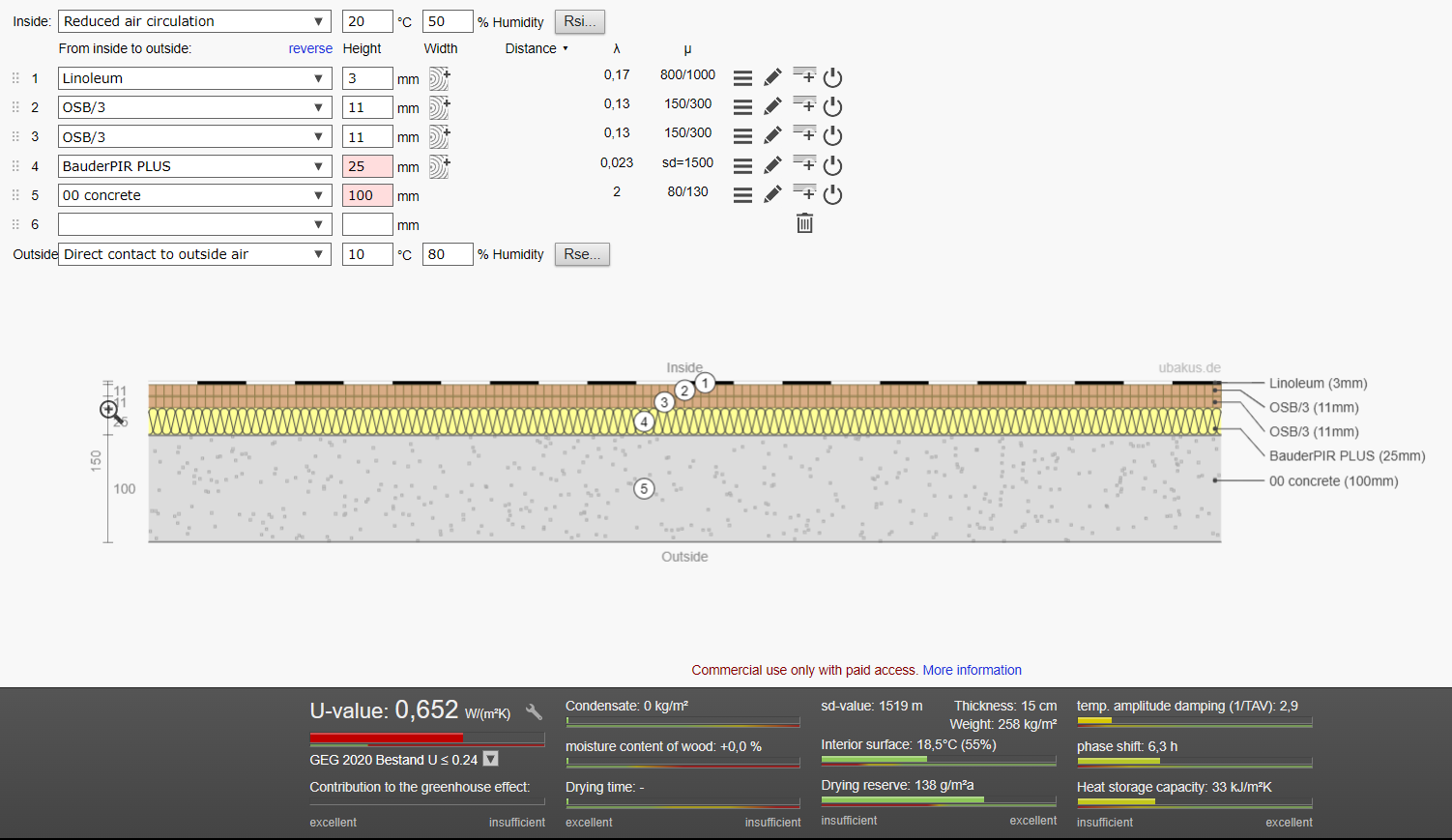
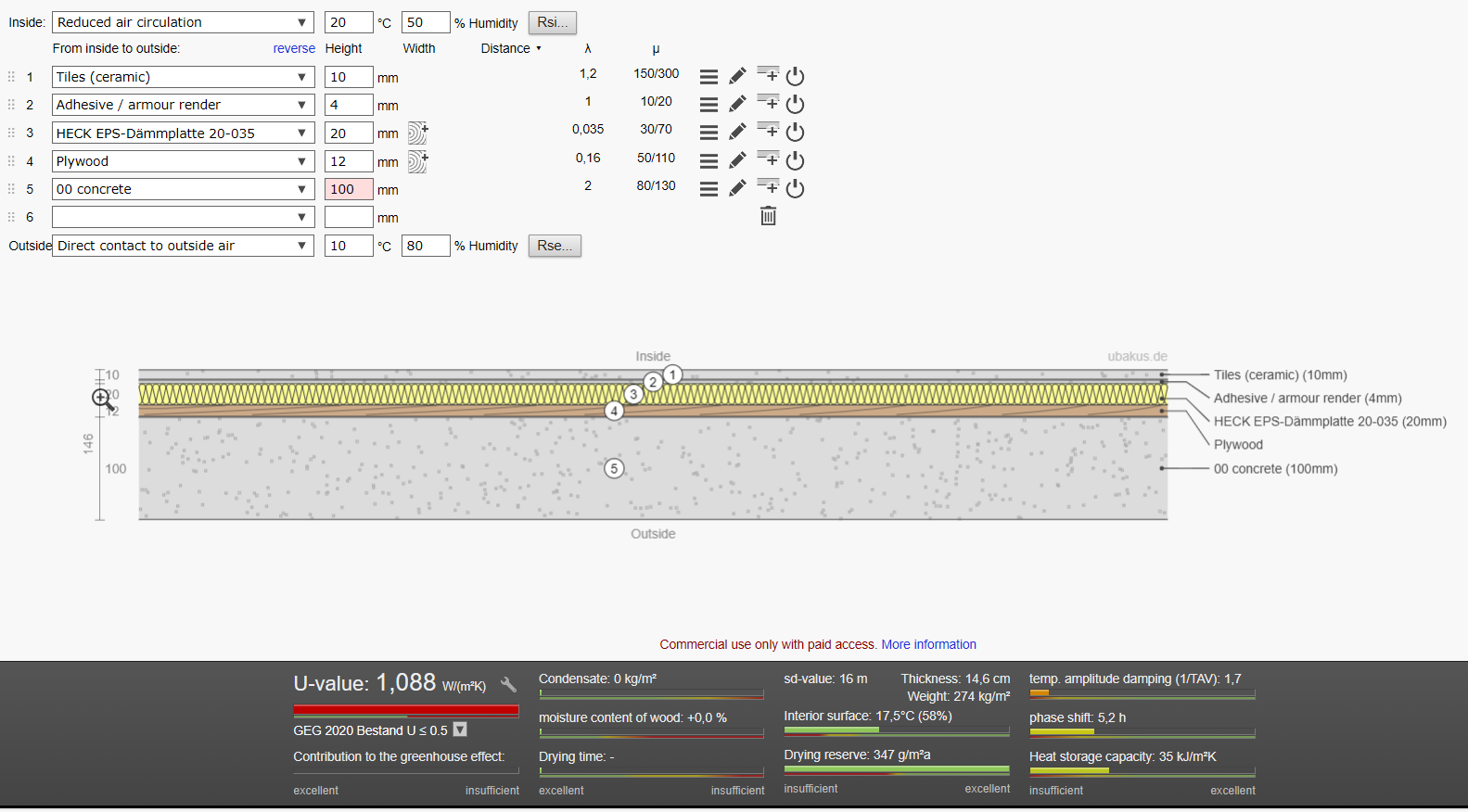
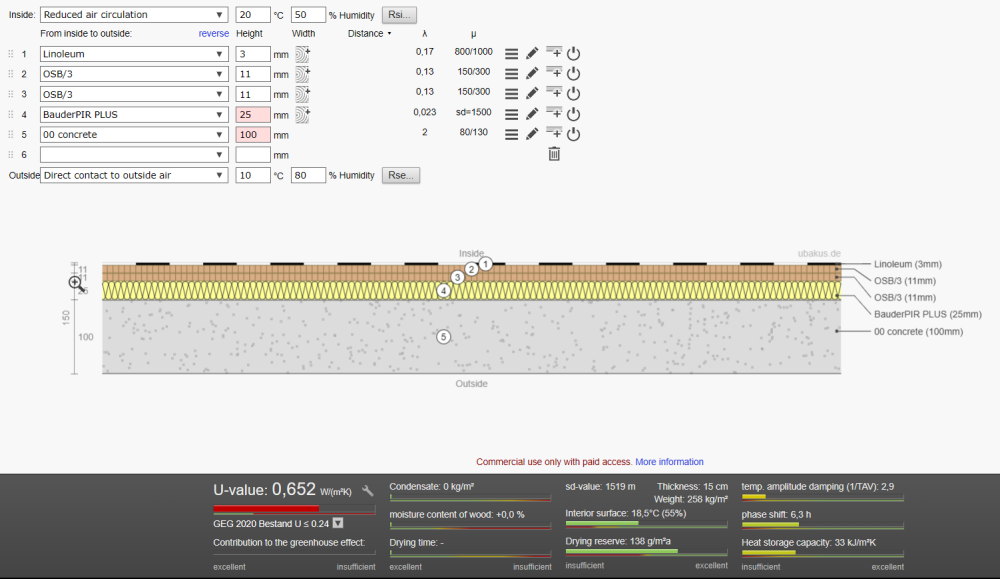
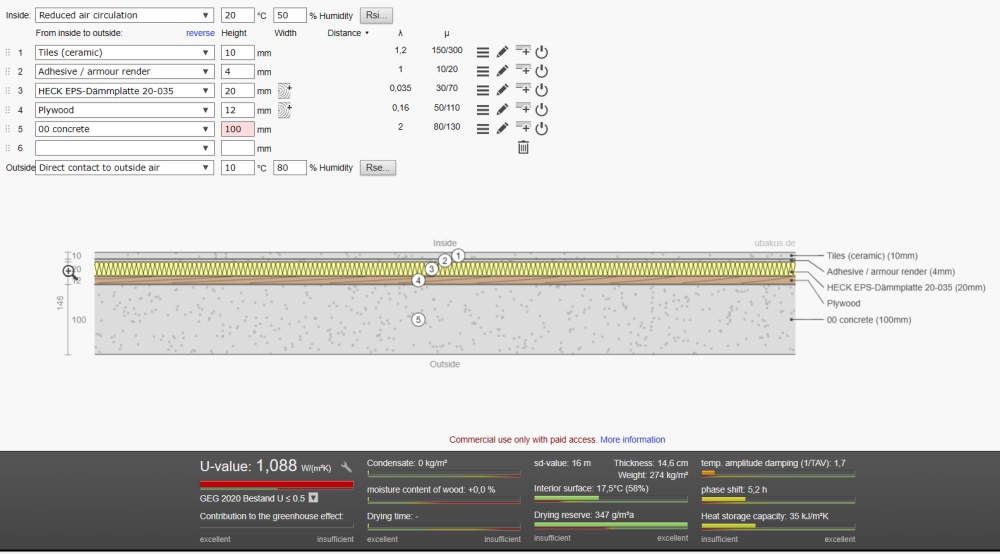
Here's a look at the Wunda system with 12mm ply. 46mm thick, That U value isn't the whole story because where the pipe tracks are there's almost zero insulation under them and they're the greatest point of heat loss. Here's my proposal. Sand cement slurry to fill any large gaps in block and beam. Self levelling compound to level out any big dips. 25mm PIR, all joints tightly fitted, foamed and taped with aluminium tape. Foamed with IL330 or taped to walls for airtightness. Float 2 x 11mm OSB layers , joints crossed, screwed and glued. Then finish with lino or LVT. Total 50mm thick. Much cheaper than the Wunda system and 40% less heat loss. No specialist materials and more solid to boot. Alternatively replace one layer of OSB with T&G engineered flooring glued down. You may need to lay the OSB on a diagonal to avoid any joints lining up. For the heating I would opt for radiators throughout. Easier to balance for this application and with suitable floor coverings you won't suffer from cold feet. Make them as large as you can to future proof for an ASHP.
-
Needs a high temp I think from reading.
-
Sound not too bad. If you were to finish the suspended floor and really work on the airtighess it'd help. Being a similar climate to Ireland I imagine keeping a handle on the dampness is vital. Maybe a PIV or some dMEV fans might make it "feel" warmer.
-
Where are you with the fabric? Given it's mostly unoccupied in the colder months you could surely insulate your way out of both the summer heating and winter frost protection problem.
-
Clean Heat Market Mechanism to incentivise heat pumps
Iceverge replied to LnP's topic in Air Source Heat Pumps (ASHP)
Agreed, as the bulk of the air needs processed is external air then maybe having the unit outside and ducting hot air inside is the answer. Effectively a "monoblock" A2A. Anymore so than another heat pump? A Genvex unit from memory. -
Clean Heat Market Mechanism to incentivise heat pumps
Iceverge replied to LnP's topic in Air Source Heat Pumps (ASHP)
These currently have a COP of about 2.5. Ideally if you could double it it might be a solution.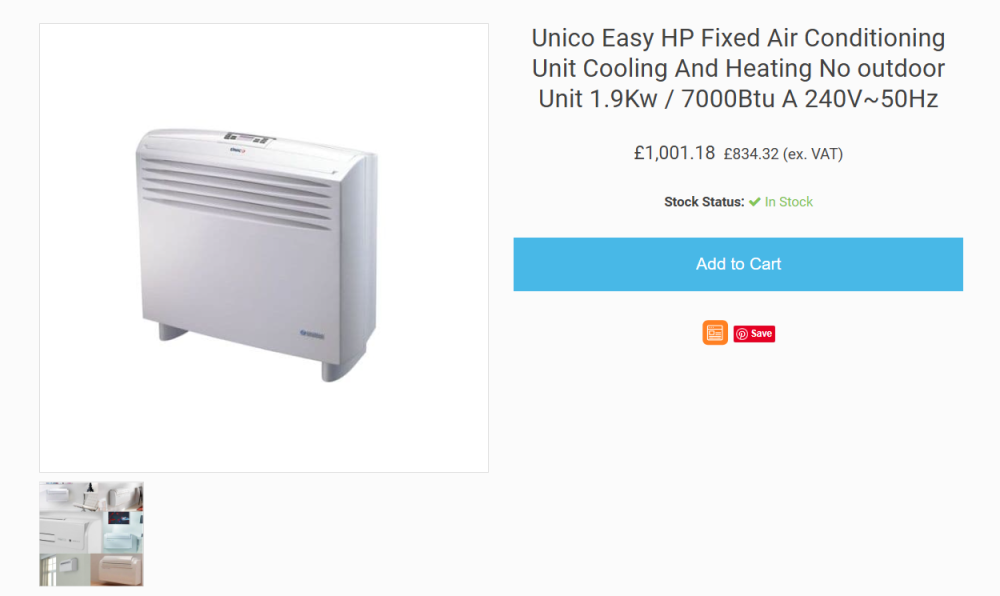
-
I assume you've taken care of the fabric - Airtightness , insulation and ventilation? I would consider throwing any money I had into PV and diverters. As your usage is mainly summer months you can divert any excess juice to the DHW and then the Storage heaters pretty easily. Maybe an infrared heater for the bathrooms on a push 15 minute timer to make showering nicer would be cheap enough too.
-
Does this setup for testing airtightness looks right?
Iceverge replied to Garald's topic in Heat Insulation
Afraid so. The one I used was about 750W at a guesstimate. I had it sealed in the sash of a window with airtightness tape in a sheet of OSB. Proper tight. It would really stick doors closed. Even with that I still needed a candle flame to detect the smallest leaks.