Iceverge
-
Posts
4487 -
Joined
-
Last visited
-
Days Won
32
Everything posted by Iceverge
-
 Welcome to the forum. Hopefully all your dreams come true! Before going any further I'd have a think about the insulation. 1. Are you planning on digging out the concrete kitchen floor? 2. PIR wouldn't be my first choice. Something like this would be superior. Ask The Expert - Thermally Upgrading Suspended Floors | Ecological Building Systems 3. I would try to get under the units. There must be a way! How much space in the subfloor void do you have to play with? 4. How much head height are you able to loose in the rooms, doors and stairs dictate this as much as anything.
 -
Thats it.
-
I have a post on this somewhere. I'll try to find it. From what I remember it's not as good as digging up the floor but it certainly helps.
-
The research evidence on security alarms
Iceverge replied to Adsibob's topic in Networks, AV, Security & Automation
@Adsibob Burglars are like investors. They aim for the best return available with the least risk. Most have little interest in your passports. They're too hard to fence, connect you directly with the crime and get you involved in a much riskier level of criminality. A stolen family's passports might cost you £1000's to replace in time, effort and stress, but for most normal thief's they're not worth the effort. £20 on a window sill is a much better prospect. If I was a criminal I would look for. 1. Someone with cash handy in the house like someone who regularly made an ATM withdrawal for example or with a flash Rolex. 2. Crappy windows or doors that could be easily shouldered in. Remember 10 locks is no good if the frame is made of rotten timber. 3. Someone who made it obvious when they were at home, like parking their car in front of the house in plain sight, broadcasting about their upcoming holiday or leaving the bins out for a week when they're away. 4. A house with a hidden rear entrance that I could work at without observers. An alarm wouldn't make much difference if I could see Mrs Smith's handbag with her pension inside, on the kitchen countertop. I'd be over the hills by the time anyone noticed. The cops would never donate enough resources for a £100 crime to catch me. If the door was unlocked and I just took the cash she may not even report me. A video doorbell or camera can be defeated by a £2 face mask, most dogs similarly with a square of cheese. Things I would avoid. 1. A property that had nothing easy to sell. An owner who didn't use cash or have fancy electronics or jewellery/watches. 2. A house with a door that would take an axe to break down or make a racket doing so. 3. A house that I could never be sure if someone was at home or not, a radio on a timer for example. 4. A house that any nefarious external activity would be observable. 5. Having no easy escape routes, like an isolated county house down a long lane or a top floor flat. -
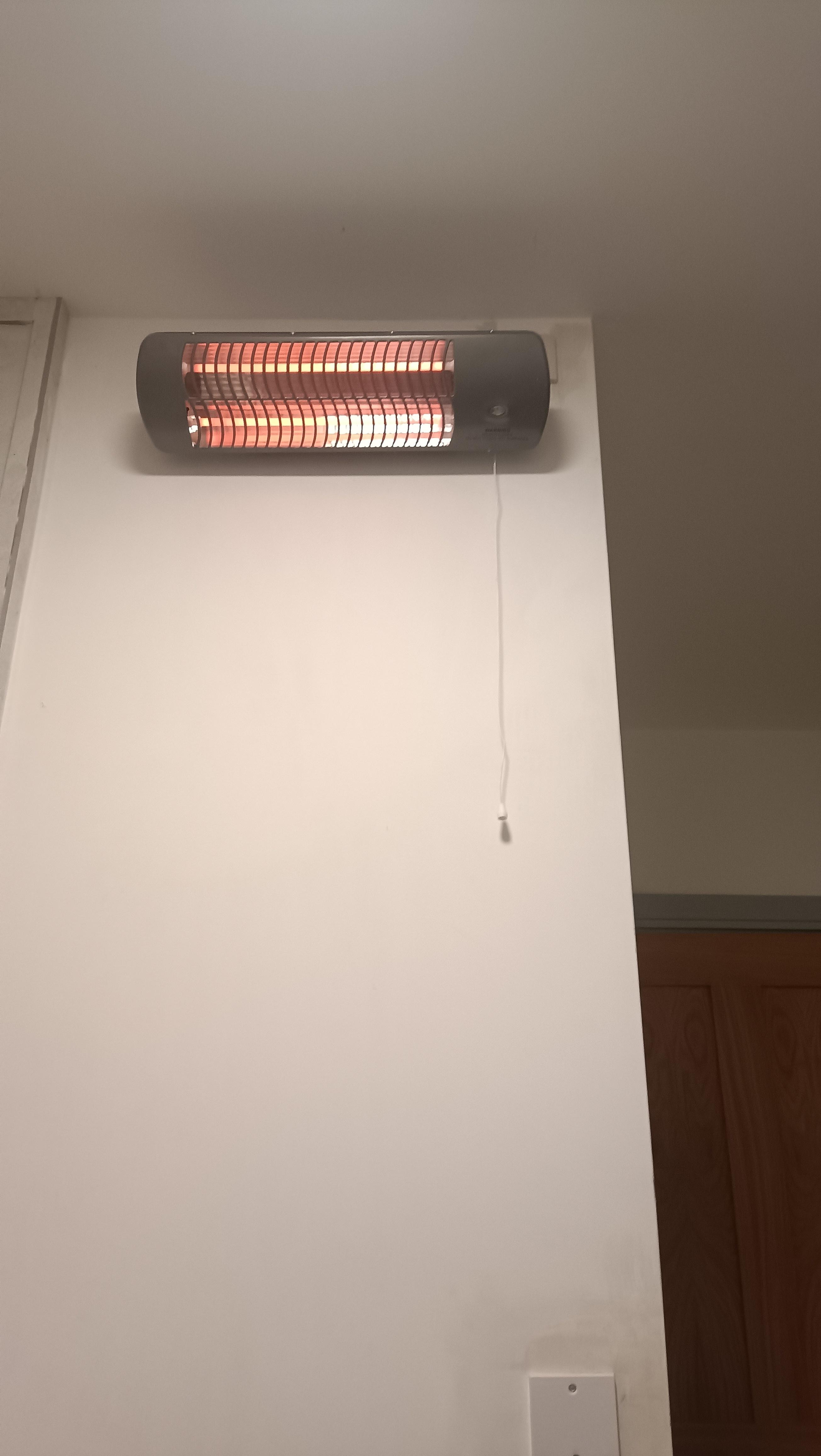
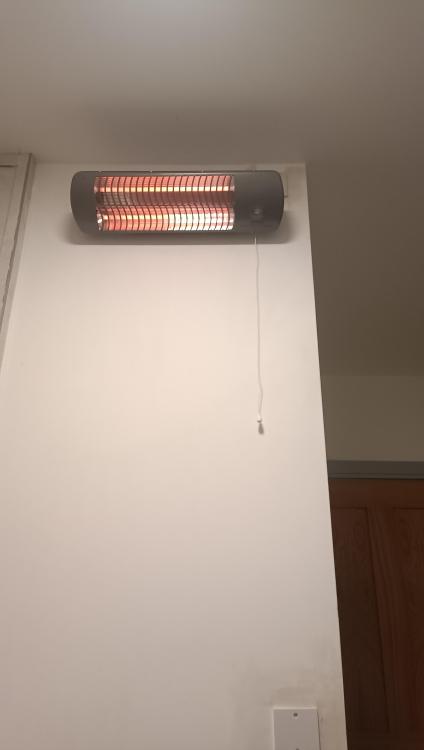
There it is in all its shiny 1.2kW glory. A cheap as "gone off chips" wall hung quartz heater. I'm going to test it's dechilling powers out on my small children later. Let them be blasted by all radiative goodness and judge the response.
-
Clean Heat Market Mechanism to incentivise heat pumps
Iceverge replied to LnP's topic in Air Source Heat Pumps (ASHP)
The trouble with retrofitting is that it runs out of road very quickly and starts to get very expensive. Attic insulation might save 10% of your heating bill for £500. Then Cavity wall insulation for another 20% for £4k. Then what? Dig out the floors and insulate for £20k maybe with a mountain of destruction? New windows for £20k? MVHR? How exactly without ripping the house apart again? Airtighess.........forget getting down to anything sensibly like 1 ACH. You took great care in your new build with knowledge and dedication to get there. Getting below 5ACH won't happen in most retrofits. Maybe an ASHP system at £15k. Redecorate after all this messing and you'll soon have spent £60k+ on an average 150m2 house and probably halved the energy usage. Where do you go then as you've still got an inefficient building. -
Clean Heat Market Mechanism to incentivise heat pumps
Iceverge replied to LnP's topic in Air Source Heat Pumps (ASHP)
Oh, you personally for the rebuild would still be stuffed@Roger440, sorry. This applies to those who undertake a big renovation of an existing property but a full rebuild cannot be done because someone thinks their leaky pile is nice too look at it or will delay it by years with red tape. -
Clean Heat Market Mechanism to incentivise heat pumps
Iceverge replied to LnP's topic in Air Source Heat Pumps (ASHP)
If I was dictator for a week I would: 1. Tackle planning reform with a sledgehammer. Make it very easy to build wind farms and solar PV installs, pumped storage and grid upgrades. 2. Reform house planning. I've said it before. A walk-in, same day service to rebuild your house. Trying to retrofit old houses is a waste of time. With enormous cost you might get an existing houses to enerphit standards. Much cheaper to knock and build a new passivhaus of an economical design. That's where we need to be. 3. Then build as much renewable electricity generation as possible and sell it at a cheap rate to compete fossil fuels out of the market. 4. Build houses well above historic flooding levels, well above sea level, able to cope with months of heatwaves and low water supply levels. Tropical downpours and hurricane wind levels. Climate change is here. No point in pretending it's not. -
Clean Heat Market Mechanism to incentivise heat pumps
Iceverge replied to LnP's topic in Air Source Heat Pumps (ASHP)
There's another thread for that!! -
Clean Heat Market Mechanism to incentivise heat pumps
Iceverge replied to LnP's topic in Air Source Heat Pumps (ASHP)
How about a second hand MVHR unit. Should keep a good handle on humidity even without a heating? -
Clean Heat Market Mechanism to incentivise heat pumps
Iceverge replied to LnP's topic in Air Source Heat Pumps (ASHP)
Agreed too. The less money you have, the shorter your "return of investment" horizons are. If you only have a couple of £ per month spare you simply can't afford to tie it up for years not to mind decades. Have you considered a patio heater just over the work bench in the garage. No point in heating the whole shed if you don't need to. I think @joe90 did something similar. -
Build the extension first. Isolated from the old bit as much as possible. New power, water etc direct in there. Keep all your new wet rooms and kitchen there. Then move in there and renovate the old bit afterwards into bedrooms, offices and living rooms. Then knock through and join them up.
-
I've had this leak on my UVC after a year. I prefer Hemp and plumbers compound. It's old school but so long as you roughen the male threads beforehand I've had zero problems.
-
Fixing 10mm and 15mm feeds for kitchen sink
Iceverge replied to markharro's topic in General Plumbing
This is exactly what we have. 10mm hot and 15mm Cold. No issues balancing the flow with a mixer tap. I tried insulating my way out of large dead legs previously and it's a waste of time. The resulting flow rates are about half way down the post. -
Can you raise funds for a complete rebuild? Doesn't have to be grand designs (infact it's better if it's not)
-
Clean Heat Market Mechanism to incentivise heat pumps
Iceverge replied to LnP's topic in Air Source Heat Pumps (ASHP)
I electricity became plenty cheap, say 10p/kWh and gas doubled in price would you consider spending £1500 on an A2A unit to do the baseload of your heating? -
Personally I think you should be allowed to rebuild a house as it was without planning permission. It would save a lot of messing and we'd have far better housing stock as a result. I have seen the cost of a new house poured into a renovation to end up with a compromised heap of junk once or twice. However that's neither here nor there in this situation. You have permission for a renovation that as far as I know they can't retract. It sound lightly that as you were permitted to renovate the existing house to such an extent then you'll be able to rebuild as it must not have been of great architectural value to begin with. Perhaps some photos of the existing building and proposed floorplans would help crowdsource ideas.
-
If you're in the UK you can reclaim the VAT on a new build. It may be worth considering.
-
Clean Heat Market Mechanism to incentivise heat pumps
Iceverge replied to LnP's topic in Air Source Heat Pumps (ASHP)
@Roger440 Yes the financial case for heat pump conversion from fossil fuels is almost impossible to justify. Oil and gas are just too cheap. To then levy them disproportionately at the point of use is hard to morally justify unless you provide an affordable alternative and stop generating electricity with them in the first place. I was trying to argue for the removal of the standing charge as it penalises those who use, and wish to use electricity efficiently. As an aside, financial cliff edges in policy, whilst easier to administer, do foster some very strange behaviour. Income tax banding, means tests etc. more often than not, discourage productive economic output to foster a furthering of state dependency. -
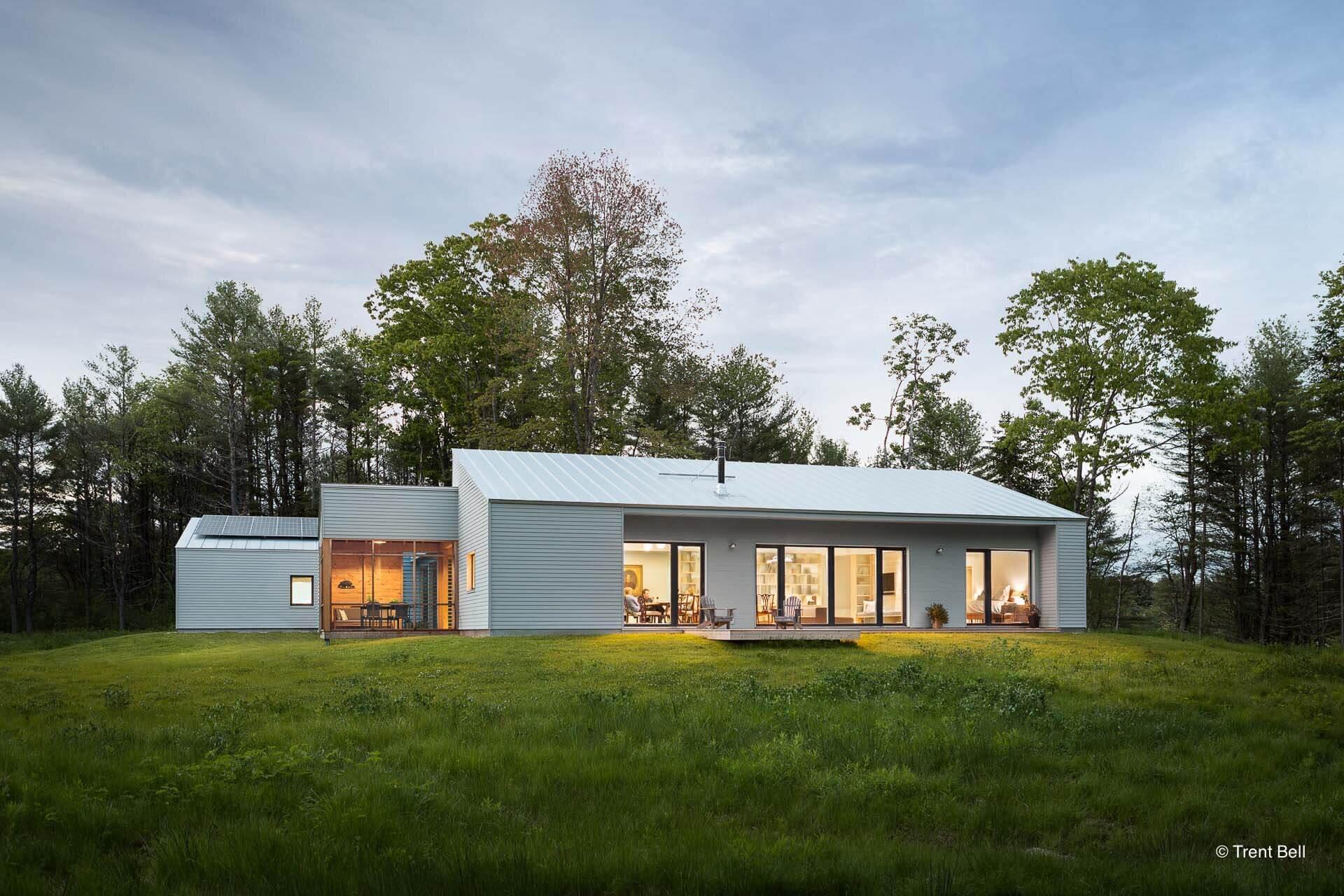
Not to everyone's taste for sure. There is a see through bookcase creating a semi corridor if you look at the pics on the website.
-
1700 Model — GO LOGIC For a small single story house I really like this. Just square out the two notches in the rear of the heated envelope to make it easier and cheaper to build.
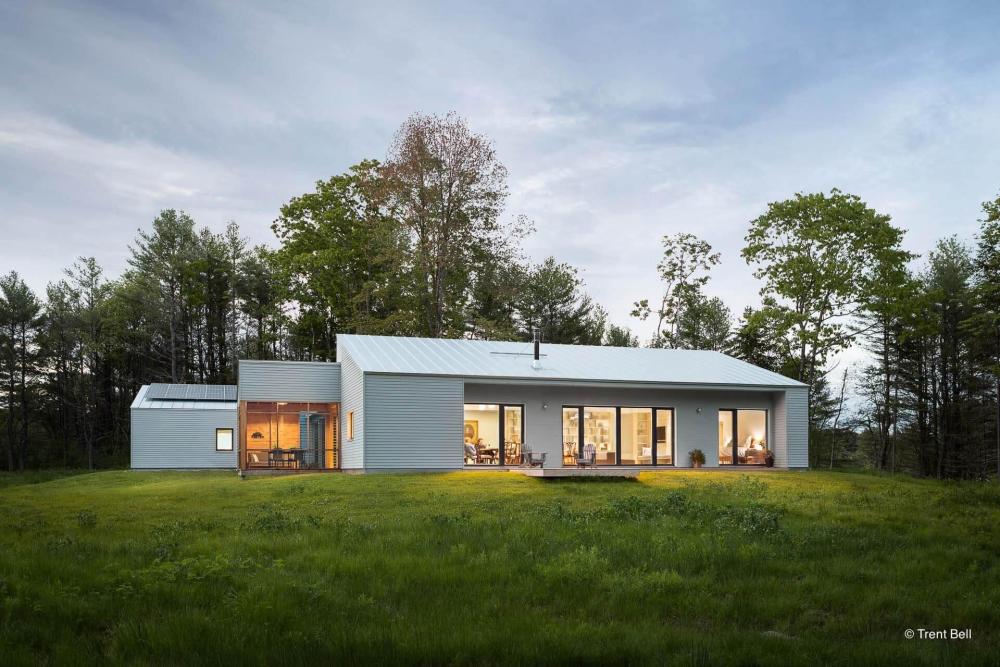
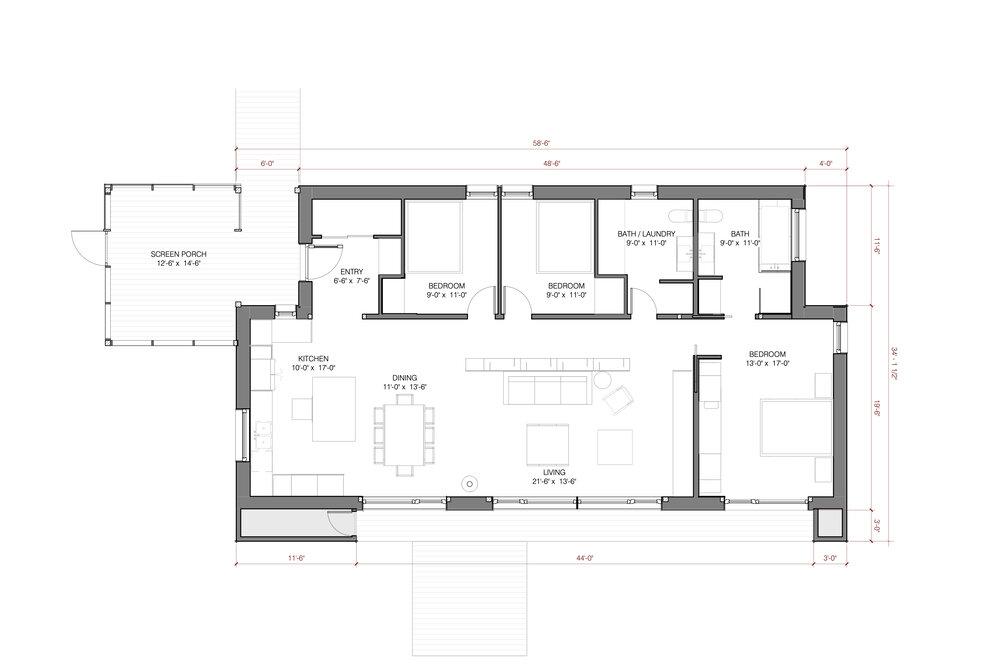
-
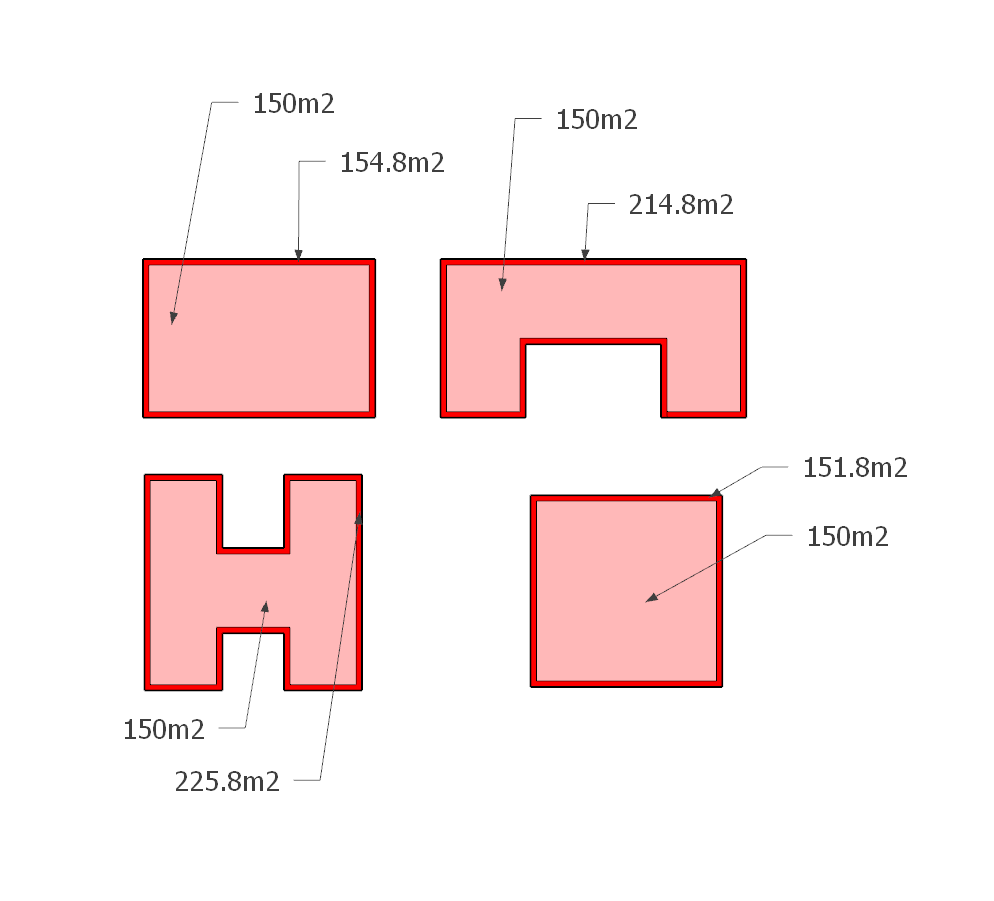
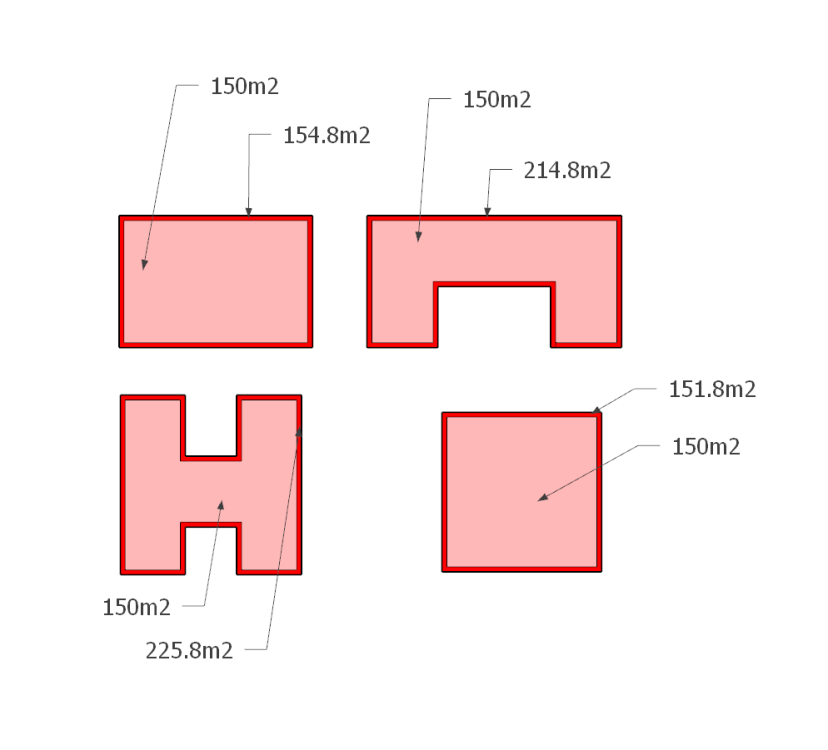
It depends on who's paying I suppose. Lets work an example. Here's a quick sketch of 4 options and assuming a 3m high external wall. At say €150 per m2 of external wall there's over €11,000 of difference in build cost. That's before you account for the old blocklayers adage that every corner ads €10k to the house overall in added labour, waste and complexity. The "H" costs €80k more in that case than the plain square. Maybe not exact but I would be surprised if I was too far off. Departing from the perfect square isn't too terrible or even an "L" but once you look at other funny shapes they costs really escalate.
-
Clean Heat Market Mechanism to incentivise heat pumps
Iceverge replied to LnP's topic in Air Source Heat Pumps (ASHP)
Completely agreed. The government here are just tacking another subsidy onto the bill for a few months over the winter. Nothing done to stop the problem of high energy prices or reliance on imported fossil fuels, or insecure supply, coming back the next winter or the next crisis or the one after that..... The problem in the UK (and Ireland where we seem to copy all your unsuccessful policies) is that it's impossible to build anything of scale. Take HS2 or the Dublin Metro. Planning reform is a politically touchy subject and until it's tackled, needed infrastructure will be impossible to deliver economically. An issue with the building of building wholescale renewables is that we the funders, don't get to reap the direct benefits of a windy day or a sunny month. The price we pay at the meter is independent of renewables generation. We have no personal incentive to buy into them other than panels on our own roof which leaves suboptimal installs without any economies of scale. (You do save on transmission losses I guess). -
Clean Heat Market Mechanism to incentivise heat pumps
Iceverge replied to LnP's topic in Air Source Heat Pumps (ASHP)
Real numbers here. Electric Ireland tarriff. Say 3000kWh annual usage for a small flat with an ESHP and an A2A unit. €1448/year or 48.3c/kWh The same flat with direct electric @9000kWh pays €3699 or 41.1c/kWh. A capital cost of €5000 for an A2AHP and an ESHP would pay back in 5000/(3699-1448) or 2.22 years. Next take a larger house at 9000kWh €3699/year (41.1c/kWh) with a heat pump or the same house at 27000kWh = €10843 (40.2c/kWh) To install a heat pump at €15000 would pay back in €15000/(€10843-€3699) 2.09 years. Now take the scenario where you have a flat rate of 42c/unit and no standing charge. (This would more than cover the standing charge in this example) 3000kWh = €1260 9000kWh = €3780 27000kWh= €11340 Payback for the flat upgrade is 1.98 years. Payback for the house upgrade is 1.98 years too. The standing charge: Punishes lower users disproportionately buy making them pay more per unit. Punishes lower users by making the economics of upgrading worse than higher users. Makes the payback for all users to upgrade longer than it should be. Note: These figures are done with historically high per unit prices. If the electricity price drops then the differences will be even more stark. -
Clean Heat Market Mechanism to incentivise heat pumps
Iceverge replied to LnP's topic in Air Source Heat Pumps (ASHP)
Correct. Keen to make the most of it folk would use a plug in rad or tumble dryer for an hour. Maybe extract 3kWh of useful energy. Word would soon spread that if you bought an A2A unit for £1000 you could probably get 12kWh of heating for free. Spread the cost of the usage across the other 23hrs of the day. The nett cost would be 0. Head into your local pub just after opening time and you'll have a line of men who can manifestly not tie their own shoelaces but can figure out a complex social welfare system with incredible accuracy. People will crawl over broken glass to get something for free. Like standing charges it's a disincentive towards energy efficiency. Can you imagine going to the petrol pumps and paying £4/litre for the first 20 litres and then £2/litre there after. The guy with the eco buggy subsidises the cost of the petrol station for the gas guzzling barge. I'll work an example maybe..........