Iceverge
-
Posts
4487 -
Joined
-
Last visited
-
Days Won
32
Everything posted by Iceverge
-

TF Internal PIR, to the sole plate or beyond?
Iceverge replied to Thorfun's topic in Heat Insulation
Trim it back flush IMO. -
TF Internal PIR, to the sole plate or beyond?
Iceverge replied to Thorfun's topic in Heat Insulation
Not that I can see. -
This sounds similar to your predicament. Off grid is completely feasible provided you are happy to burn something in the winter and compromise your on grid living style. Your energy demand, how far North you are and the amount of cash you plan to spend will determine the extent of that compromise.
-
TF Internal PIR, to the sole plate or beyond?
Iceverge replied to Thorfun's topic in Heat Insulation
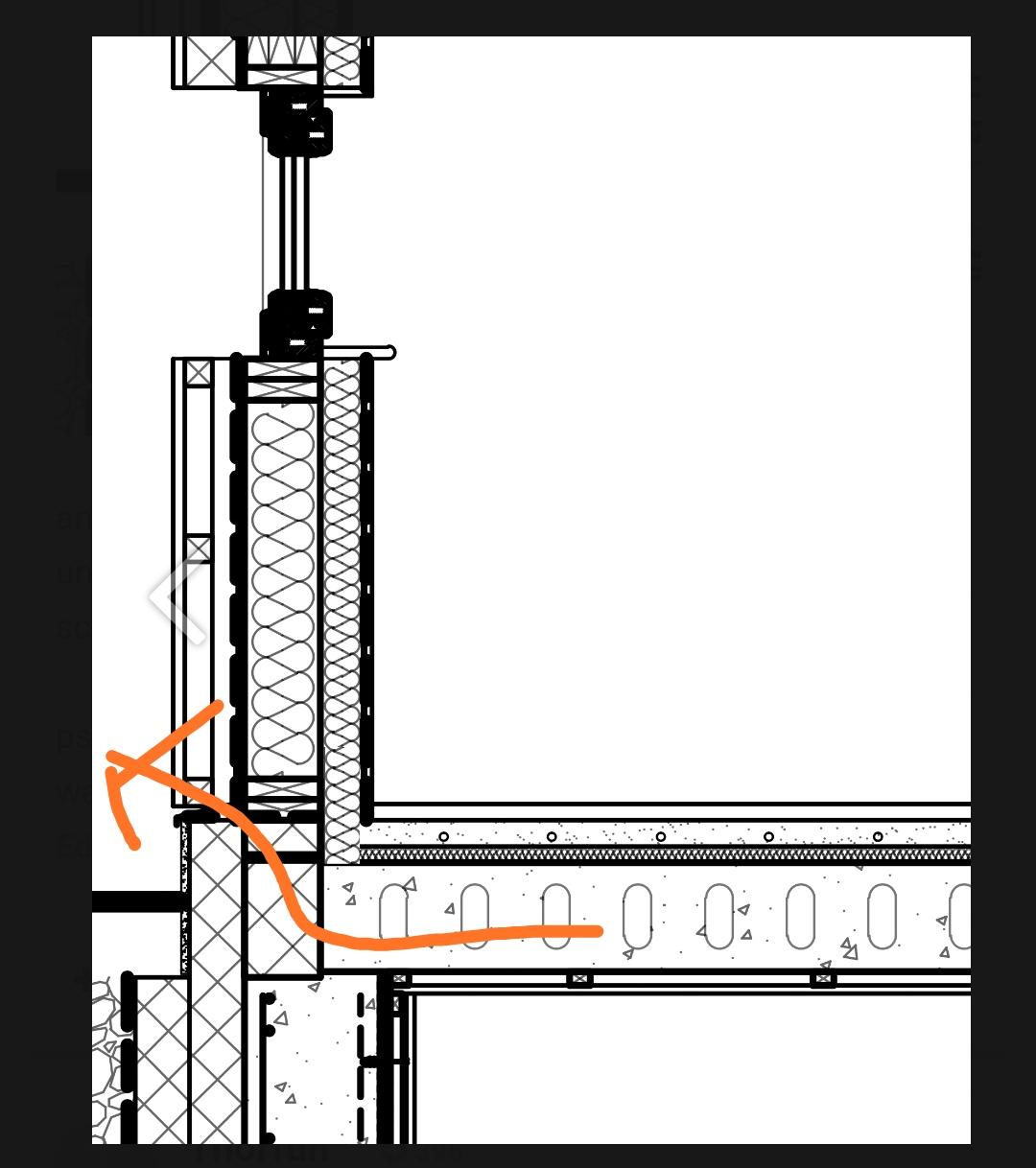
TF over basement if I'm reading the drawing correctly. Install PIR lower is better re the soleplate What is the material sitting on top of the basement reinforced concrete wall below the sole plate. This will be your main path to heat loss. More importantly do you have a robust plan for airtightness at the junction. It's more important than thermal bridging.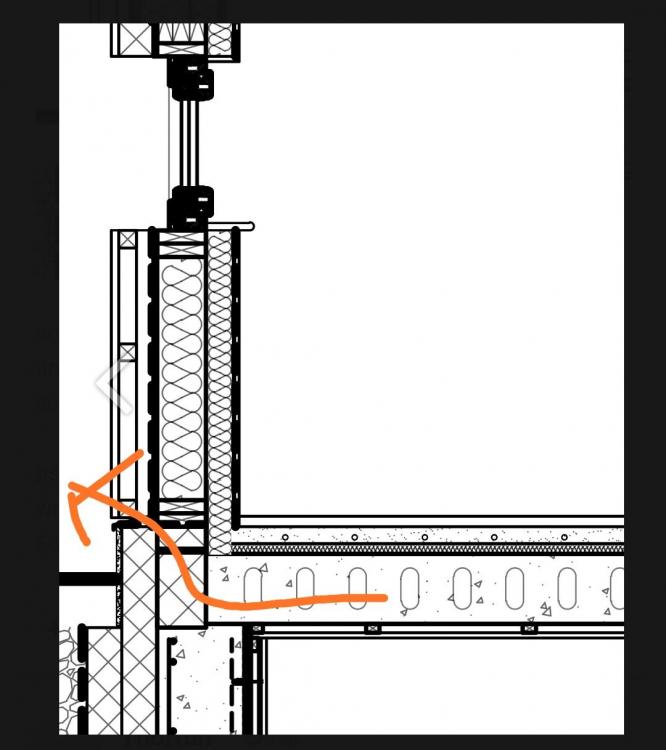
-
What fittings do I need to connect to my shower mixer and heads?
Iceverge replied to Conor's topic in General Plumbing
Eeeeekk...... I was working on the principal that less joints were better. I have 5 of these. All accessible. It's been about a month. All ok so far. I'll keep an eye on it. -
Architect wants to charge me for finding surveyors…
Iceverge replied to jno's topic in Surveyors & Architects
Pick up the phone to your architect and ask. They may be more than happy to offload the donkey work of sourcing other contractors or may have a hit list of who to avoid. Alternatively they may give you good reasons why using their preferred suppliers will make the path quicker smoother and cheaper overall. Either way it's no harm to remind everyone there's a budget to be worked to. -
What fittings do I need to connect to my shower mixer and heads?
Iceverge replied to Conor's topic in General Plumbing
Yes. Get everything back to Hep2o as soon as possible in my opinion. Recently having played with these exact fittings I would recommended getting a hacksaw blade and roughening up the thread of the male insert, much like the blanking plug that you took out. Then using something more fibrous than MDPE tape to wrap the threads before screwing them together. Hemp + Boss White or Loctite Pipe Sealing Cord both worked fine for me. I failed to make a few joints seal brass to brass with MDPE alone. I did use 22mm compression fittings with Hep2O and an insert too without problems. -
https://www.primelocation.com/for-sale/details/photos/59720670/ It’d be a shame to demolish it if it might actually have gotten planning permission. l quite like it and goodness knows theres plenty of people looking for housing. Some kind of financial penalty on the sale price would be enough. However, the council are quite within their rights to pick it out as an example. Avoiding all correct permits and selling up without ever occupying is cheeky. Maybe they should compulsory purchase it cheaply and give it to the shanty town occupant.
-
We Installed one of these. Seems to work ok. https://www.naber.de/en-thermobox-150-s13027/
-
It's tempting to substitute airtightness products for others when you're building. The difference is only apparent months later. The flexible airtight sealent I used, (blue from a sausage) never really truly sets. Its like chewing gum, nasty if you get it where you don't need it or try to remove it. My brother looked over the scaffolding one day and declared it the worst thing he'd ever worked with such was its limpet like adhesion. Also for airtight tape. It seems to completely weld itself to any well prepared surface. Not instantly, but after a few weeks trying to remove it is almost completely impossible. I was so convinced I used it to seal our shower tray and bath. No leaks so far. I'm sure someone will tell me off....
-
Defo cover them up. The Blue film blocks a lot of light. I'd use the clear stuff if I was to do it again. Also consider taking the handles off and/or hiding the temporary handle. Our windows were inexplicably used by roofers and plasters to cart up materials to the upper scaffolding with the subsequent wear and damage to windows and seals. I can't figure out why they just didn't use the telehandler.
-
Double those numbers! Have a look at @tonyshouse blog. http://tonyshouse.readinguk.org/ and the Denby Dale House. 0.31ACH50. However you're right, it took at least 100 man hours DIY to get this. Probably more. Timber frame, blown cellulose, tapes and membranes for me if this shack ever gets blown away. Also factory built can be rubbish too. Depends on quality control and onsite installers.
-
Very low risk really. You'd still be installing a heating system. No difference in performance between a 6kw willis and a 6kw heat pump. Have you read this? Otherwise just but a big ASHP, a big UVC and forget all about it. Physiologically it's much easier to pay £50 extra on the mortgage every month rather than £50 on electricity.
-
Ubiquiti +1
-
Pondering heating systems can be like pondering how to climb Everest from base camp for self builders. Its impossible to know the exact best route without first knowing the best route. I gave nights upon nights considering this. I came to the conclusion that there is no two houses alike and even if there were, no two sets of occupants would behave the same. Calculations and modelling only go so far. Objective data is impossible to find, every consumer with a novel system thinks their own goose a swan. Every installer is prejudiced by familiarity and margin on installation. Every salesman only wants to pander their wears. I got so fed up with all this going around in circles I decided not to install any heating at all. Bold, rash, stupid, maybe, but if we were going to part with heaps of our cash I wanted to be sure. We built to passive house standards, a little beyond in theory. Put a direct UVC for DHW on night rate electricity. I borrowed a 2kW electric heater, plugged it in in the hall, and got to work regularly recording the electricity meter and feeding the results into a spreadsheet. Over a few months it was possible to isolate the DHW usage and now I'm working on the space heating. By March I'll have a full year of data of exactly our usage, to the kWh. No guesswork, no modelling estimates, just two numbers. DHW and space heating. So far DHW 10kWh/day for 2 adults and 2 small children. Space heating is broadly in line with PHPP, maybe slightly more. I must get a thermal imaging camera to check for any weak thermal spots. Also it's been very dull. I'll know more soon. I have aims for an A2A heat pump and solar PV. When I have my exact usage I'll be able to estimate if they're worth it. In hindsight I think we should have installed UFH pipes and run them from a Willis heater. While my current radiator was free, anything that I'd actually like to look at in the house permanently certainly isn't. Also , half our heating is on expensive day rate electricity. With UFH and a willis heater we could shift it all to cheap night rate with the slab as a storage heater, like @TerryE It wouldn't have been much hardship to get an UVC with a heat pump coil to futureproof also. TLDR: 1. Pathologically minimise your heating demand in design and construction stage. 2. Install UFH + willis heater and a heat pump compatible UVC. 3. Run your house for a year on E7. 4. Use the data to make the best decision.
-
Do i need to go overboard on cavity closers (fully filled cavity)
Iceverge replied to Moonshine's topic in Heat Insulation
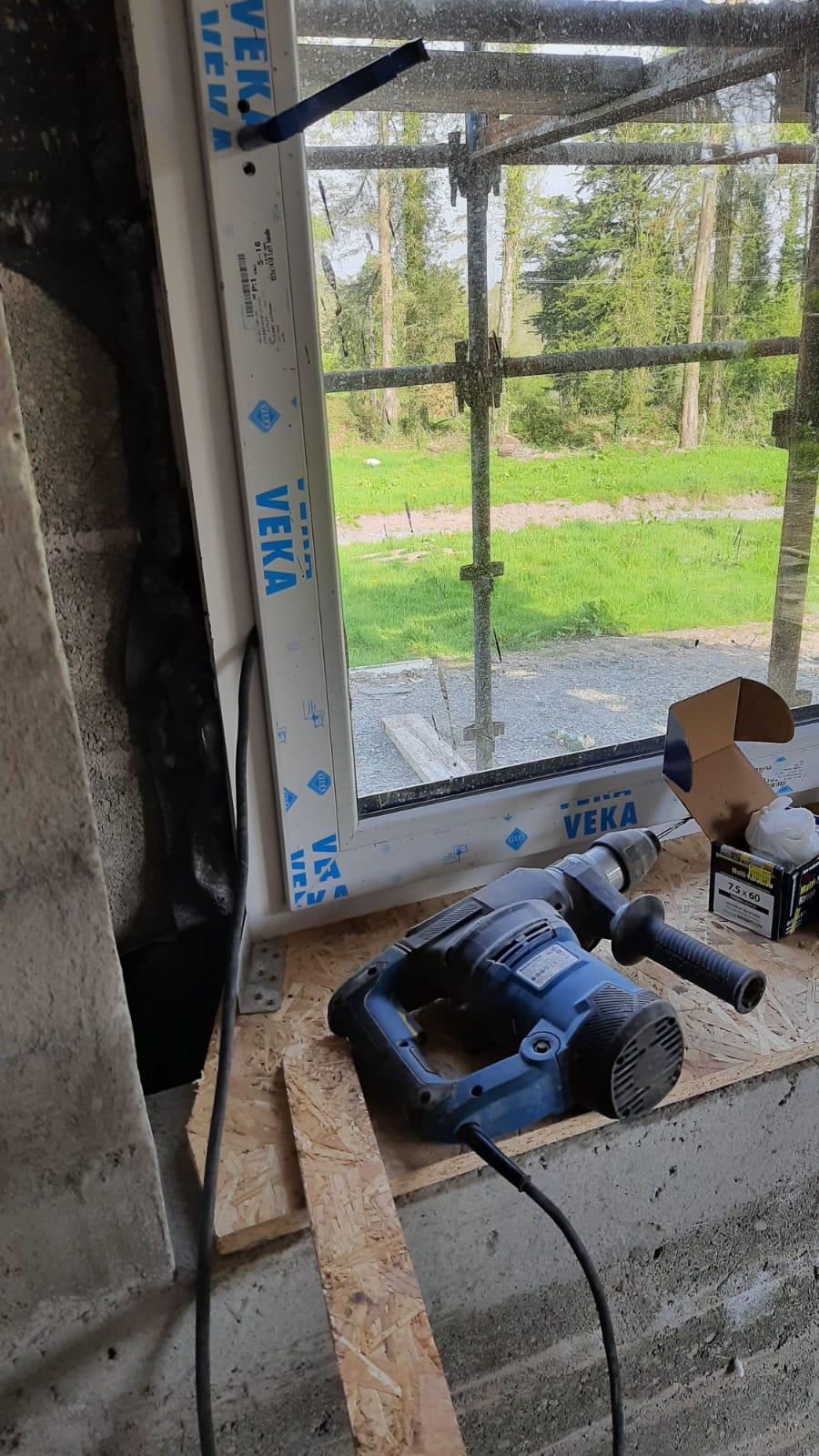
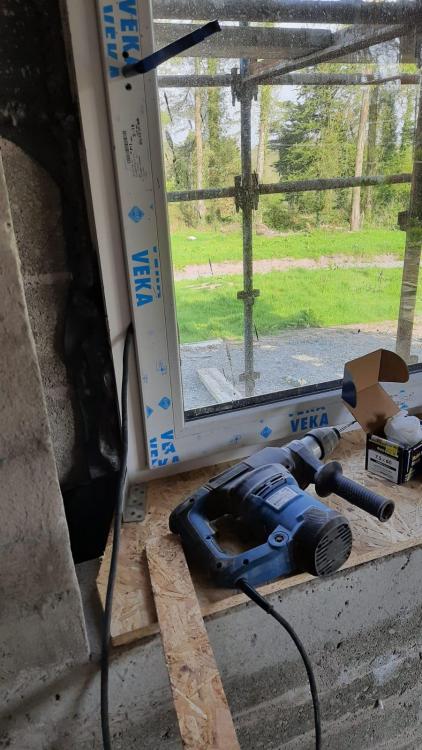
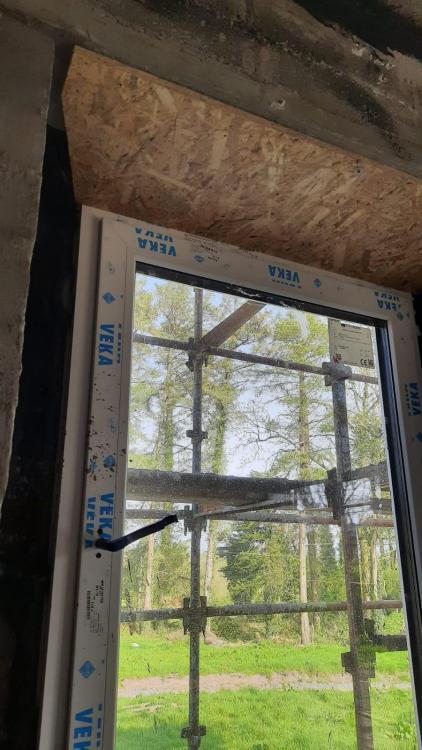
Made an OSB sill and header. Then concrete screwed them to the inner leaf. Then added OSB reveals, again concrete screwed to the reveals. Used galvanised angle brackets to join them in place once finished. The boxes are not supporting the windows just themselves. They extend about 5mm beyond the edge of the window. Our windows are 82mm thick so there is still 77mm gap from the OSB to the outer leaf. I taped the window to the OSB. Used flexible airtight sealant and airtight paint to seal to the blockwork and the internal corners. Sorry about the photos. It's all I could find.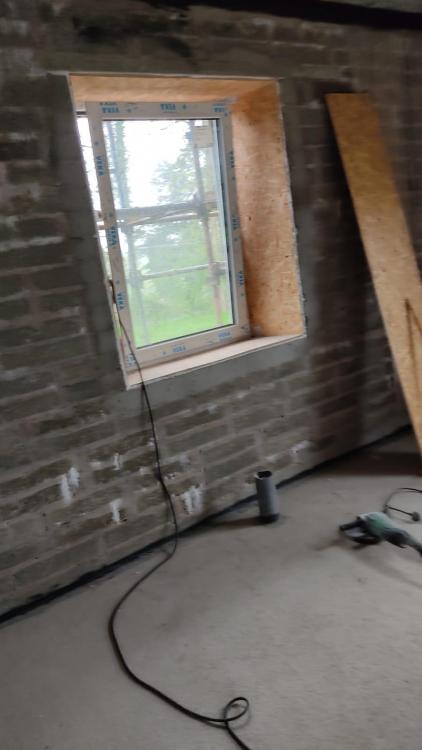
-
Cement board won't do to take any weight. We rested ours on the external concrete sill and bolted them with angle brackets to the outer leaf. The sill and the window reveals were then added from OSB afterwards.
-
We're in Ireland, terrifically damp. Airtight with non enthalpy MVHR. RH typically 50-60%. Airplanes suffer from chronically low humidity. As low as 5% RH, which is a real stressor on health. I've seen a 500mm bottle water poured into a pillow in a effort to raise local humidity while sleeping on an aircraft completely dry in 90mins. The Boeing 747 was fitted with humidifiers originally to combat this but the airlines didn't like the weight so threw them out. The 777 is notoriously super dry. The humidity, cabin altitude (6-8000ft) the stress of travelling, disrupted sleep (very important), diet and dehydration put flying in a different league to domestic MVHR from a health perspective. As an alternative to ERV, MVHR with some house plants can nudge up the RH when you need it.
-
AVCL vs Taped PIR? and is off-gassing really an issue?
Iceverge replied to Thorfun's topic in Heat Insulation
A proper VCL won't break the bank if you want to do the job well. You'll need some for details and window reveals anyway. We paid about €1.15 per m2. You'll save a chunk of tape too which is much more expensive. -
A larger hot water cylinder is a pretty cheap battery. 2 adults 2 kids here. DHW 3650kWh/year. Space heating looks like (its our first winter) about 2000kWh/year ,185m2 passive class house, direct electric heating. Everything else 2920kWh/year. We plan on solar PV at some stage and should be able to use everything a 3kw array produces on DHW , about a 7 year payback. With a bit of careful timing of appliances 4kw should be easily consumed.
-
It was fan noise for us.
-
insulation of old barn roof polyurethane foam vs wool
Iceverge replied to Jon H's topic in Heat Insulation
That would work well, you seem to have a good grip on the principles. Take care to seal to the airtight layer to the outer walls and you're home and dry. You can get dedicated plastic faced OSB for this but regular OSB should suffice. We used 18mm on our window reveals. -
So what you're all saying is I should get another loan........
-
A DIY blower door can be rigged for £30. Then get a length of rigid electricians conduit and ram a candle in the end (avoids having to being a step ladder to check all the high up junctions) The flame is incredibly sensetive to any tiny leaks. The back of your hand is also very sensitive. We got to 0.31ach using this method.
-
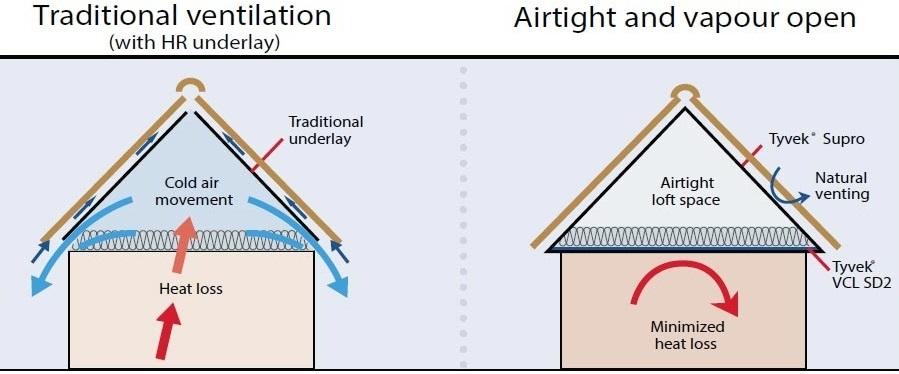
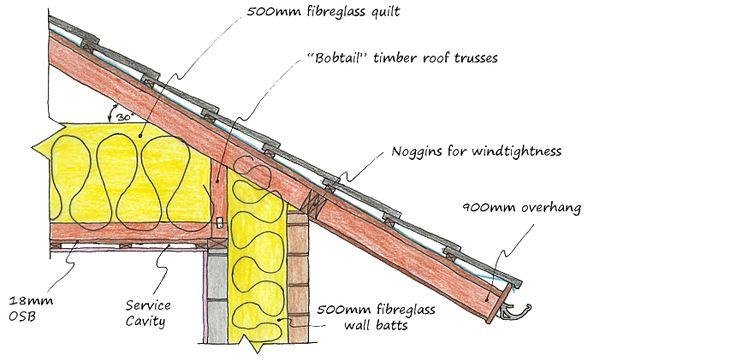
Cold roof here but following tyveks Sealed roof guidance. Thermal bypass is a problem otherwise. Trussed roof with raided heals aka Denby Dale. 400mm of blown cellulose over the top. Pros: Minimal thermal bridging and smaller surface area for heat loss. Very very simple to run a membrane and service cavity under the trusses. Cheaper. Cons: you can hear the roofing membrane in the wind as it billows. Only works really for a non habitable roof space so perhaps not for you.