Iceverge
-
Posts
4487 -
Joined
-
Last visited
-
Days Won
32
Everything posted by Iceverge
-

Insulating a pebbledash solid wall and damp concerns
Iceverge replied to Ben Weston's topic in Heat Insulation
The more I read the more I'm thinking "bulldozer renovation time." Unless you have a specific sentimental attachment or its of particular architecture or historical merit and you are willing to throw cash at it hand over fist. I don't like knocking down old stuff on principal but in this case it'll be unrecognisable anyway with EWI. Save yourself years of heartbreak, a ton of VAT and demolish. -
Central heating systems required for 1 storey new build
Iceverge replied to Adam NT's topic in Central Heating (Radiators)
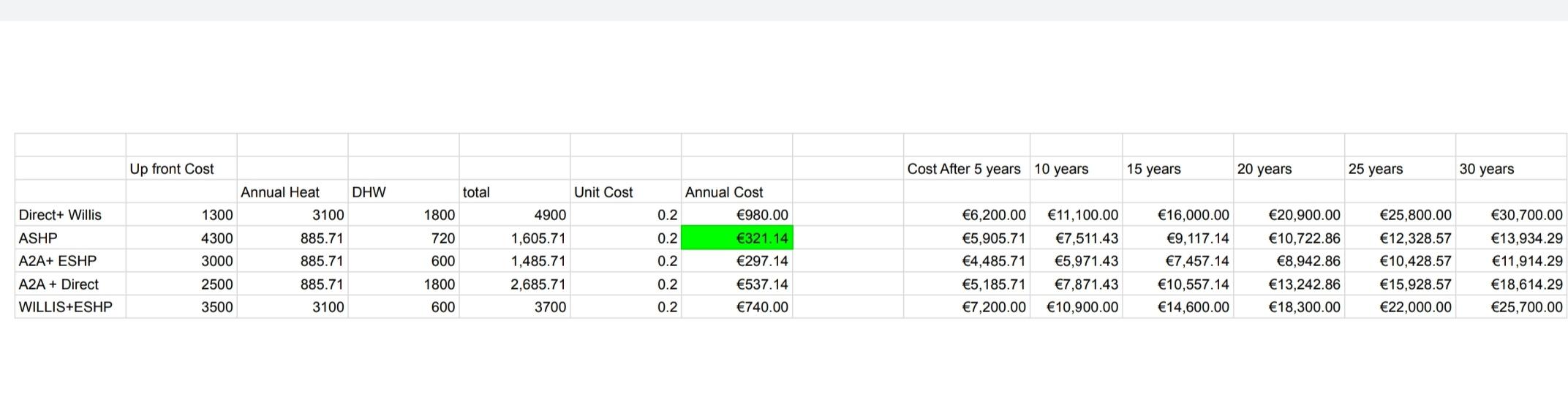
If you can buy an ASHP at a reasonable price it's the best option. I looked at a friend's similar project recently, almost exactly the same size for space heating and DHW. U values 0.12 ceiling, 0.18 walls 0.16 floor. 0.6ACH airtightness, MVHR and good airtightness detailing. Annual heat demand about 3000kWh. He is able to get an ASHP for €4000 through work so that's what I based my calcs on. I compared direct electric, an exhaust source heat pump, an A2A heat pump and an immersion and various combinations. The A2A + ESHP was the cheapest overall but could risk some rooms being too cold in a bungalow as it depends on air movement to heat the house. The ASHP was a close second, combined with UFH in a thick concrete slab would allow cheap overnight heating with the slab as a storage heater as well as excellent comfort. Forget renewables until you've got a structure that is as efficient as possible. Insulation has a far longer lifespan than any PV panels or wind turbines.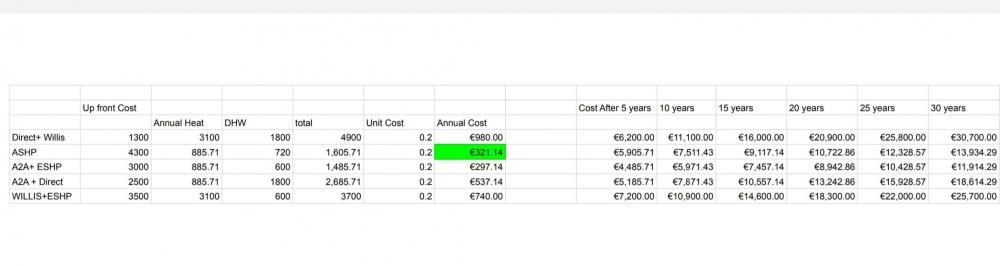
-
There's an elephant in the room here. The ground floor plan is very compromised. If you build it as such it'll always feel like an extension that someone couldn't afford to do properly. The door through the kitchen and/or the utility is going to make it feel like two houses. In my opinion you have 3 options. 1. Drive a proper hallway along the south through the living room like my first drawing. 2. Relocate the stairs as per @LaCuranderasuggestion. 3. Make a new entrance and hallway along the north side of the house that ultimately goes through what you have labeled Utility.
-
New build floorplans - opinions welcome
Iceverge replied to Indy's topic in New House & Self Build Design
@indy. I'm glad you're not a troller. How about you just press pause for a few days. Have a solid think about your budget. Get a de- identified Google maps aerial shot and a few anonymous Google Streetview pics of the existing street and throw it open to the forum to have a look and make suggestions. Most of us are really enthusiastic about self builds and just want to see others getting as successful a project as possible. -
New build floorplans - opinions welcome
Iceverge replied to Indy's topic in New House & Self Build Design
Someone is certainly been led up the garden path here. If you are genuine, I think you've either constrained the designer so much on your criteria they can't do a good job or else they're just swallowing your cash in the full knowledge that you're only going to learn by buying your education. -
Another case of people think they own everything they can see. Alas they made it clear “business is business” when they objected to your planning. None the less, they’ve come back to the table in a reasonable manner.All you need to do is think of a price. You can’t loose really.
-
To reiterate the posts above, I priced this for our house an it was a shade under 4 times the cost of EPS beads. About €18000+Vat IIRC. However that was for a product with no agrement cert. Walltite or Icyene would have been dearer. Not remotely worth it to reduce from a K value of 0.033 to 0.026W/mK. The beads worked fine. Very comprehensive full fill. In your case you could add a parge course internally and some insulated plasterboard or a battened service cavity if you wanted to bulk up the insulation levels. If you added a 50mm battened mineral wool insulated service cavity you would get a U value of about 0.21 W/m2K. 50mm of pir backed plasterboard about 0.16 W/m2K.
-
You could forgo the PIR and batten out a service cavity with Rockwool or similar to insulate. More thickness but more bang for your buck. Also better for fire and sound proofing.
-
Timber frame vs ICF vs Traditional masonry for a new build
Iceverge replied to Indy's topic in General Construction Issues
@JohnMo I guess the woodcrete ICF doesn't have a continuous concrete core for airtightness like a polystyrene so depends on the internal render? Can it be plastered with sand and cement externally? -
Why didn't they install the internal side of the split ASHP where the boiler used to live on the ground floor. It would have been much easier to plumb I would have thought.
-
New build floorplans - opinions welcome
Iceverge replied to Indy's topic in New House & Self Build Design
You're going to build an uncoolable unheatable monster if you're not careful. Have a proper energy model done before committing to this. After planning is too late. Can you confirm your architects credentials please. Beginning to have my suspicions. They seem to show a poor appreciation of natural light re south facing windows. As I understand they can be frosted if needed for privacy. -
I'm convinced that hydrogen is just greenwashing by fossil fuel companies. @Tony K12kW is a pretty large ASHP. What is your max heating load?
-
Timber frame vs ICF vs Traditional masonry for a new build
Iceverge replied to Indy's topic in General Construction Issues
Masonry build here. It becomes micromanaging torture or a lot of self labour to get things the way you want them if aiming for passive standards. Probably a package MBC style if I was to do it again and save a lot of heartache and wanted to save my time for other elements of the build. I like the woodcrete ICF systems too if my heart was dead set on concrete. If I could convince a team of picky joiners to stick frame a house that would be the dream...... -
Keen to get started! If only I could find an architect...
Iceverge replied to jno's topic in Introduce Yourself
Tradespersons are much less of an issue in my experience. They are happy to build whatever is drawn for them if they have the skills. In fact many take pride in the attention to detail a passivhaus build takes. Architect's, engineers, and other designers are harder to come by with the knowledge. Beware the terminology here. Passivhaus is the German company who developed the standard. They control PHPP and certification of buildings and professionals. They own the passivhaus name. "Passive" doesn't really have any official designation but many of us on here use it to describe our houses. For instance I put mine through PHPP ( you can buy it for about £150) and built the house to perform as such. It's quite doable with a bit of reading. However I wouldn't call ours a passivhaus as it uses too much primary energy by direct electric heating. Passivhaus has limits on the amount of non renewable energy used as well as total energy. Secondly ours wasn't designed and supervised and certified by a Passivhaus accredited professional. Many adapted the tag "Passive" about ten years ago in Ireland. They bunged in walls with u values less than 0.15, triple glazing and huge south facing windows. The results were predictably haphazard. Lots of overheating in summer. High energy use in winter ( poor airtightness and thermal bridging) and disappointed clients. "Passive solar"is a seperate term from America which aims to construct a giant solar oven of a House! With my mates aforementioned bungalow it'll cost too much money to get to passivhaus levels. The most economic result overall was an annual heat demand of 30kWh/m2K as he's committed to installing an ASHP anyway. For ours we designed and built to 8W/m2 heating load which saved money by allowing us to omit central heating. If a house is designed with PHPP and constructed using passivhaus techniques it will perform as designed, even if those standards are above or below the passivhaus targets. -
Keen to get started! If only I could find an architect...
Iceverge replied to jno's topic in Introduce Yourself
Sadly during our build process I found building professionals very poor in understanding the effects of form factor, glazing, overheating, airtightness, thermal bridging and insulation. These will be incorporated right from the start of any design. Many people have tried unsuccessfully to bolt on passiveness to late on and found big issues with the required insulation amounts, buildability, airtightness or overheating. The issue isn’t with reaching any specific target re energy use but the performance gap between design and final house. Almost all houses are designed on a best guess method, with extra mechanicals thrown in to ensure comfort, to hell with the running costs. Of all the methods I’ve researched nothing comes close to passivhaus. Simply put, they perform closer to the design that everything else. I’ve put a mate’s proposed straightforward bungalow through PHPP recently and saw that it not only used more energy that our house despite being half the size (poor form factor and use of glazing) but also suffered lots of overheating due huge westerly facing french doors. He has planning permission and is going ahead as is but if he had simply swapped a few windows to an adjacent wall during design stage the house would be much much more comfortable. -
maybe a tag for #middleofnowhere
-
Keen to get started! If only I could find an architect...
Iceverge replied to jno's topic in Introduce Yourself
Don’t write off getting a far away architect to do the design and a local to do the planning app. -
What are the best ways to save money ahead of a demolition
Iceverge replied to LaCurandera's topic in Demolition
Copper is making about £5 scrap at the moment. Windows and doors may be resold, everything else is probable just landfill TBH. -
Death of MHRV unit
Iceverge replied to DaveAndAnnaUK's topic in Mechanical Ventilation with Heat Recovery (MVHR)
These units are for air quality and comfort. Anyone who tells you anything else is talking nonsense. In fact the building industry is guilty of mis-selling on a compulsive level. Even on our DIY install roughly with €3000 in parts and about 4 days in uncosted labour the energy saved per annum is only marginally above the cost of filters and electricity. There is lightly to never be any payback. However we’re very happy with the result. Still looking at your unit i’m not convinced there is anything fundamentally wrong with the install. My guess still is that there was a lot of dirt clogged up the filters and it couldn't cope. It’s not your fault as home owners if you weren’t made aware of this. All terminals should have been dust sealed on install, and filters inspected and changed regularly until all building dust had been removed. Then back to the regular maintenance cycle. However all being as it, you’re situation is far from un recoverable. I would pursue the install company for a remedy at their cost. Make it clear that you weren’t told of the post install requirements if you weren’t. Maybe up to the point of publicly naming them or legal action. I suspect this would be sufficient to get them to move position and replace the unit. If you don’t get any joy from them you can choose how far you want to pursue the case. Thats up to you but in my opinion life can be too short to waste sometimes. I would get a trusted local tradesman with knowledge of ventilation systems to have a look if you are unable to do it yourself. My personal guess is that a set of filters and a new part somewhere will have you up and running. Run the unit on full blast while you’re out of he house for a few days and the ducts will be surprisingly clean. By the way , some cheap car pollen filters fit MVHR units. I currently have some from a fiat Van for €7 each in ours. it’s working fine. Best of luck. As an aside I’d be very surprised if the unit couldn’t be electrically isolated. It surely has a standard 3 pin plug or a fused spur? Failing that a dedicated trip-switch? -
Affordable energy and food prices, are a prerequisite of political stability and avoiding civil unrest. A wise politician playing the long game would work to reduce the national energy demand as much as possible and secure the needed energy supplies at a guaranteed tarrif. This subsidy is obviously just plastering over the cracks short term.
-
Just a guess but i suspect that there may be some residual moisture content in the OSB smartply. That can't dry out because it's trapped between the Celotex and GRP. The freezing causes it to expand. Perhaps the screws being right through the material to the warm side of the house are conducting enough heat to prevent the OSB getting cold enough to expand locally.
-
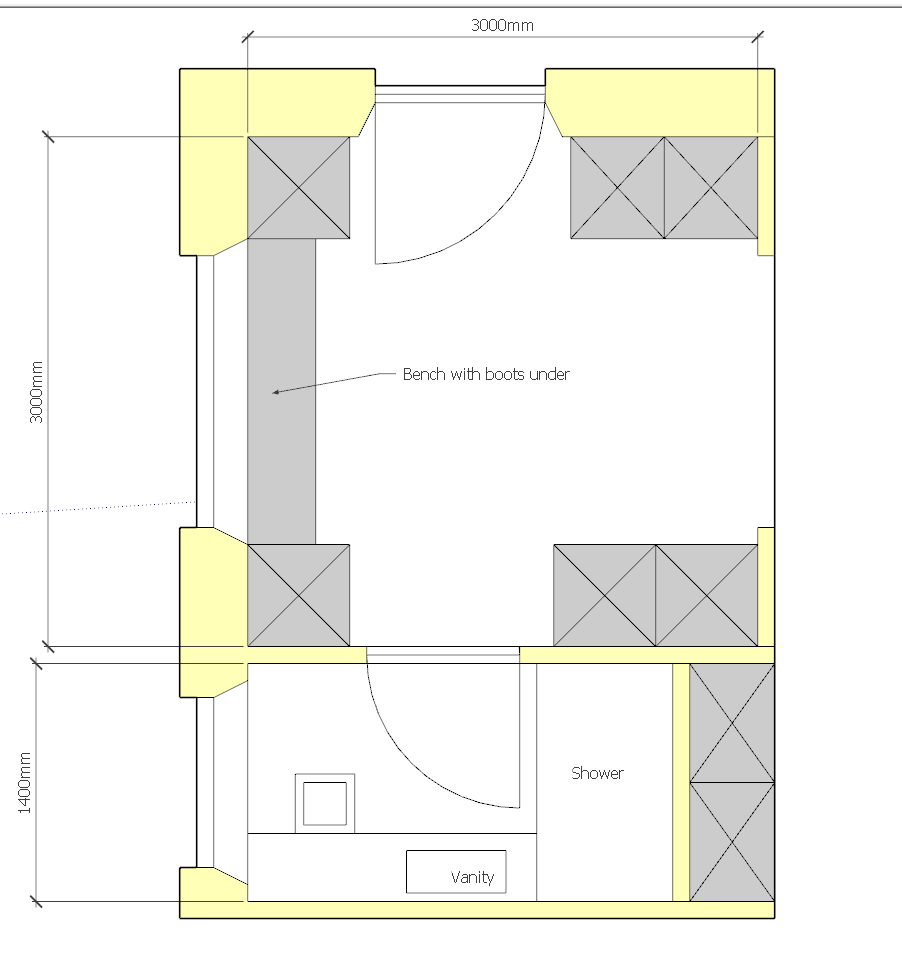
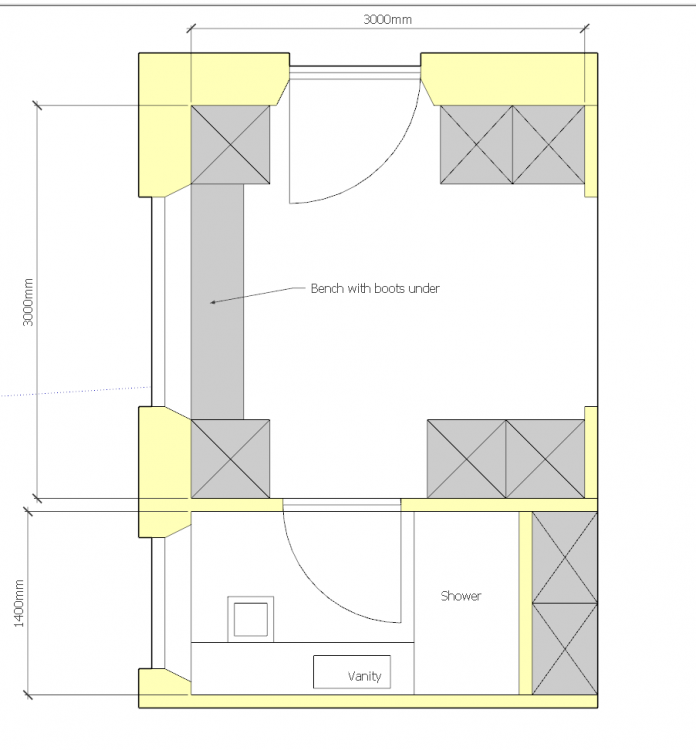
That's much better. A few suggestions just on resizing the boot room/porch. You could have a window with a 500mm high sill. It would be lovely. Are you happy with the transition from the back to the front of the house? You will still be treking the long way round through the utility or through the kitchen and the snug. These will effectively become hallways.
-
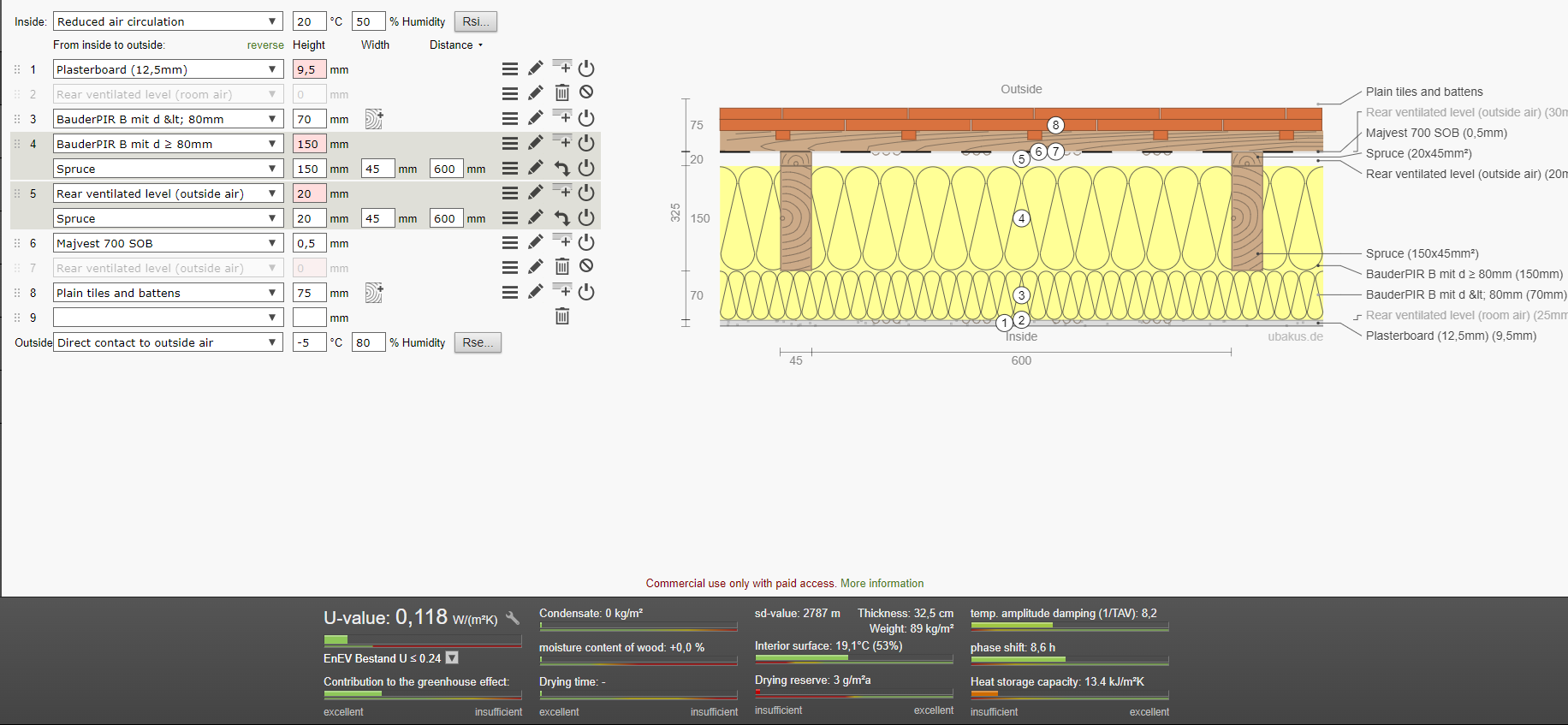
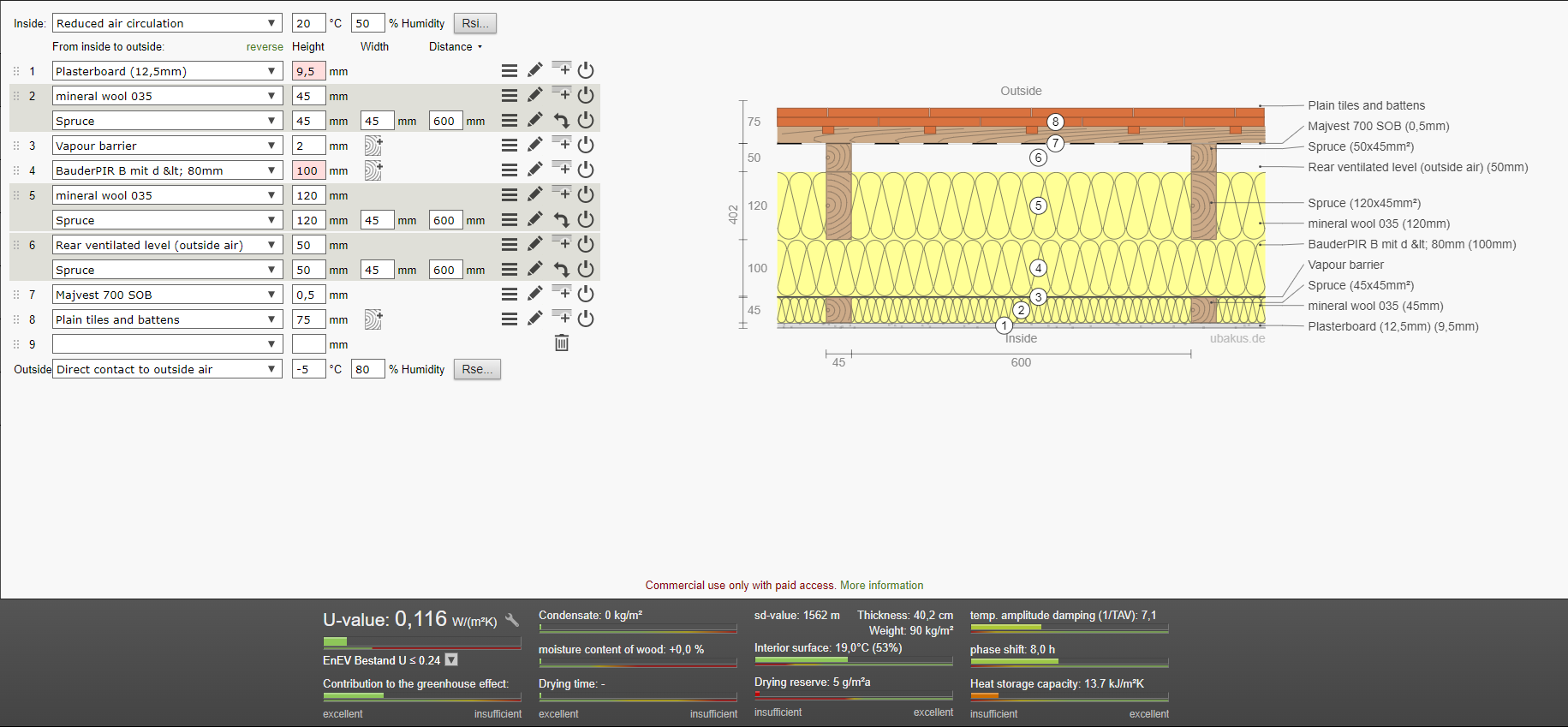
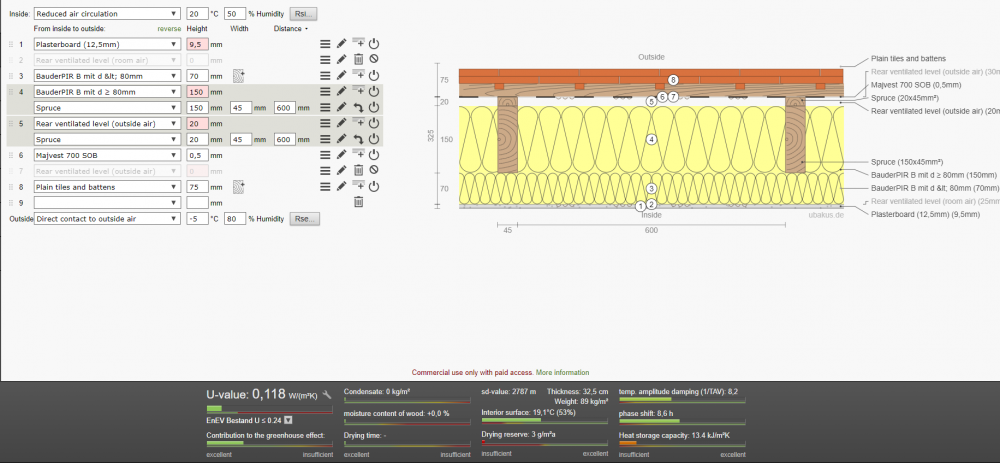
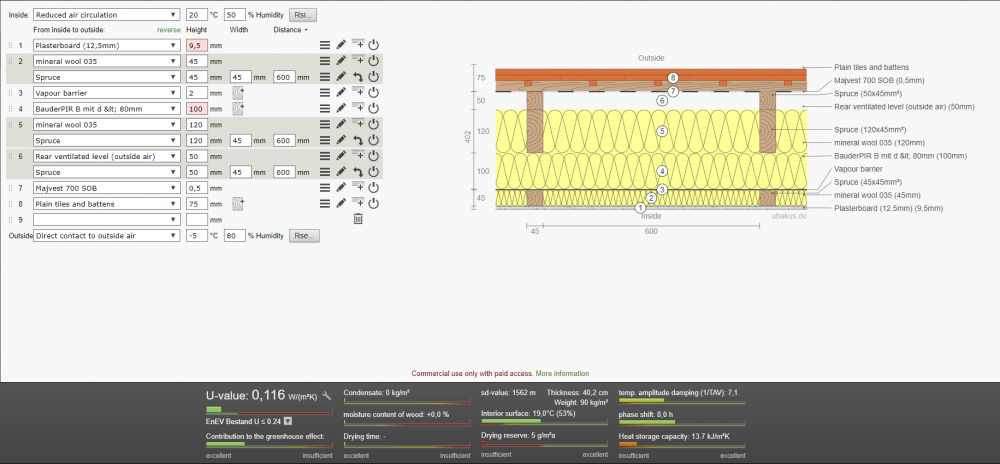
Correct. Your current option. Insulation materials alone ex fitting ex VAT £48/m2 Alternate option. Roof is thicker by 75mm. Not sure if that will effect you. Insulation cost + battens + vapour control layer + plasterboard. is about £44.30 per m2 so not a huge saving. It'd be easier to get good airtightness and fit services however.
-
Cool Cool, A couple of things I've figured out along my house journey ( and a couple of things I wish I'd known before) BTW a good architect will have these sorted but sometimes they get curtailed by the existing building and the clients requirements. (i) The main entrance should be into a dedicated welcome space, ideally with some natural light shining into it from in front or above or beside. It is pleasant to have a sense of "opening up) once in the door, A vaulted ceiling or a view up a stairs to a large window can do this. (ii) This should include discrete storage or be very near to a coat/boot room. (iii) A WC should be close at hand. (iv) Think of the flow through the house like a road network. For instance, the kitchen and stairway will be big paths for traffic. These should be accessed directly and via large "trunk" roads. If there is a circuitous route and narrow doorways and hall's it'll be a pain to live in. (v) Natural light is super important, if well designed for it can give the impression of a much larger space without any of the actual cost or hassle of building it. (vi) Light from the South is ten times better than E/W and 100 times better than Northern light. (vii) Tricks to get it into a house (a) South facing windows and glazed doors (obviously!) (b) glazed internal elements to suck some light into the inners. ( fan lights, glazed internal doors etc) (c) Atrium style skylights to get it into the centre of a fat building. (d) Clever use of mirrors and colour to reflect it inside (viii) You cannot have too much storage (ix) Natural light entering a room from two directions can make it feel much bigger. (x) The ratio of ceiling height to room size is important. My parents with 2.65m ceiling in their 4m*4.5m kitchen feels much taller than ours at 12m*4.5m and 2.7m high. I'm sure there's more.
-
@matthyde83 Apparently it's ok to use EPS for staples so long as you get long ones. That would let you use all EPS and no PIR. Hurrah! @OldSpot Would you put a layer of plastic above the EPS to stop the wet concrete drying into the EPS or is it worth bothering with? Personally I don't like trapping any material between two layers of impermeable material but my fear is that concrete juice would go between the boards and also the boards might float?