Iceverge
-
Posts
4487 -
Joined
-
Last visited
-
Days Won
32
Everything posted by Iceverge
-
Get him to commit to a a fixed price contract regardless of what he finds wrong with the old building. While you're at it throw in that it must meet 1.5 ACH50 or better. That'll make him get down to brass tacks pretty quickly.
-
Studwork will be rubbish if it's done badly. Better if it's done well.
-

Keen to get started! If only I could find an architect...
Iceverge replied to jno's topic in Introduce Yourself
Design your house as a passivhaus using PHPP and then decide if you can afford the extra insulation to reach the 15kWh/m2/annum and 10w/m2 heating load limits. Even if you can't and you end up at 25kWh/m2/annum and 20w/m2 heating you'll still have an excellent house but you'll need some conventional heating. Triple glazing is better for many reasons not just thermal performance. Thermal comfort, eliminating condensation, and noise reduction are just a few. I'd include this regardless. -
Keen to get started! If only I could find an architect...
Iceverge replied to jno's topic in Introduce Yourself
https://passivehouse-database.org/index.php?lang=en#s_37e0180462e73879604f2efcaeba53b3 Have a look at this for a start. You can filter down the results further if you like. Also if you drive around the locality and simply knock on doors of any new house you like and say "I love your house, who was your architect and would you recommend them?" People will be mostly probably happy to share. -
@irishbo Are you comfortable with the distinction between absolute and relative humidity? If air is 99% relative humidity at 10deg and you bring it into your house and heat it to 20deg the relative humidity will drop to about 50%. The absolute humidity will stay the same, about 9g/kg of water vapour. I short you need a combination of lower absolute humidity (outside air is almost always lower absolute humidity) and heat to dry out your house.
-
Hi @jno not my project but reading the article they must have ended at 0.66m ish walls. Boxy is best.
-
Checklist: Insulation
Iceverge replied to puntloos's topic in Energy Efficient & Sustainable Design Concepts
They don't -
New law on modifying cars, mowers and...
Iceverge replied to Temp's topic in General Self Build & DIY Discussion
Good luck enforcing that one. I assume this is in response to some specific instance of someone somewhere taking something too far but the legalities of the situation prevent politicians from pointing a finger directly. Does anyone know what that instance was? -
Noise insulation pitched roof / vaulted ceiling
Iceverge replied to Bosi's topic in Sound Insulation
PIR between rafters, sorry for your troubles ?. Anyhou we is where we is innit. Airtight membrane next religiously sealed everywhere. 45*45 counter batten with rockwool acoustic batts. 15mm or more soundboard plasterboard with acoustic sealant to all joints. Maybe 2 layers all joints staggered. Skim.- 14 replies
-
- 1
-

-
- sound
- sound insulation
- (and 5 more)
-
I did. Edited ta
-
Sorry I was referring to EAHP for DHW like @Thedreamer uses. For what it's worth I did endless calculations on this for our passive house, over 25 years. (3650kWh/annum DHW and 2650kWh Space heat predicted). A2A HP and E7 cylinder supplemented by solar PV was the best theoretical option but only marginally ahead of an ASHP. The trouble with the ASHP was that although it has the lowest running costs the initial price was too high. It would have needed to work without fault for almost the full quarter of a century to justify the cost. I didn't think this was realistic. With higher heating requirements it would have paid back sooner. At the moment we have E7 and a cheap electric rad. I'm tracking the real energy usage to decide on the best option.
-
It'll amount to much the same thing in an airtightness house with MVHR. Heating the supply feed will heat the bedrooms/living rooms first but the hot air will need to travel through the house to get to the bathrooms/kitchen. Putting a heater in a central hallway will heat the air locally, then it will travel to the bathrooms/kitchen and back to the MVHR where most of the heat will be recovered and be distributed to the bedrooms. Get a cheapo plug in heater and experiment if you're unsure.
-
It really is a piece of string question. Totally dependent on projected electric prices,(I used octopus energy new tariffs) cost of initial set up (I ballparked a figure based on another buildhubber) cost of servicing (assumed it was the same as an e7 cylinder). Lifespan of the ASHP(assumed it would last as long as the cylinder) and interest rates (assumed 2.2%) and energy usage. Within these variables it isn't difficult to come up with a multitude of correct answers. Have you considered an A2A setup or an EAHP. About 2k each plus install.
-
Welcome welcome! Sounds like a nice project. Plans and pictures always add enthusiasm and can draw helpful (mostly!) insights. I assume this required some carbon accounting. It'd be interesting to see details .. I wish I'd given more thought to this, now forever doomed to live surrounded by 200t of concrete.
-
I have no idea. Maybe get a quote if they're in your area. We DIY'd ours. MVHR is lightly to be disappointing if it is installed by cowboys so, like everything else, cost should only be part of the equation.
-
Quick sums. DHW 3000 kWh + Heating 6000kWh/annum. Storage heaters + immersion £2000 upfront. E7 @18p per kWh. 20 year cost £34400 ASHP COP of 3 for DHW and COP of 4 for Heating Electricity at 22p/kWh to account for some day heating. ASHP + UFH initial outlay £11000 20 year cost £23000 Cost of £10000 credit over 20 years @2.2% = £2400 Total £24400 ASHP cheaper by £10k over 20years.
-
Unvented Cylinder Installation. Spot the Problem!
Iceverge replied to Iceverge's topic in Boilers & Hot Water Tanks
Sorry, I think we're crossing wires here. The house wasn't plumbed very well by the plumbers. I'm attempting to fix it. the original was 26mm and 16mm MLP to the kitchen tap. I intend to replace it with 10mm Hep2o. Do you think my layout for the UVC is ok? -
Well done. Just stick an A2A unit somewhere. In such a well insulated building the heat will find it's way around anyway. I like the look of this one. COP of 5, Wi-Fi control and summer cooling too. https://www.orionairsales.co.uk/daikin-air-conditioning-rxm25r-ftxm25r-wall-mounted-25kw9000btu-inverter-heat-pump-r32-a-wi-fi-15085-p.asp Maybe next year once I see our kWh usage for the winter.
-
Unvented Cylinder Installation. Spot the Problem!
Iceverge replied to Iceverge's topic in Boilers & Hot Water Tanks
I have it detailed in earlier posts. 26mm to a manifold then 16mm the remaining distance. All multilayer. -
Energy savings are obviously one aspect. Don't forget the thermal comfort aspects and the protection of the structure you're achieving. Payback only on energy costs are a very narrow window through which to view thermal upgrades.
-
Unvented Cylinder Installation. Spot the Problem!
Iceverge replied to Iceverge's topic in Boilers & Hot Water Tanks
They're already fitted. I have no idea why, I assume because they came in the box with the toilet, although that didn't stop the plumbers chucking every other part I supplied. "it wasn't in the box mate" "Funny that cause I just found it in the skip" Anyway I've been fiddling and neither open fully or throttled fully seems to be the quietest. Riddle me that batman. ( Should that be Bathman ???? !!) Also because I'm edging closer to ripping the house apart have you any objections to my diagram? -
Unvented Cylinder Installation. Spot the Problem!
Iceverge replied to Iceverge's topic in Boilers & Hot Water Tanks
It's a remedial situation so I'm stuck with 16mm multilayer pipe for 90% of the runs from the manifold. It's the layout of the UVC I wanted to be sure of. I'll be using Hep2o everywhere until i connect to the 16mm pipe. Everything is 10l/min except the basins which are 4l/min and the cisterns will be throttled to be quieter at terminus anyway. -
Good Guide here. https://www.paulheatrecovery.co.uk/mvhr-guide/ My pointers in no particular order. 1. Locate MVHR unit within heated envelope or build a dedicated insulated enclosure if this is impractical. 2. Don't be afraid to mix and match suppliers of ducts, units etc. 3. Locate Inlet and Exhaust terminals on an exterior wall but not by a bedroom window (noise). 4. Place room vents over a window opposite the room door. (avoids obstruction by furniture and is unlikely to cause a draft on a bed/chair) 5. A radial semi rigid ducting works well, ease of install, minimal cross talk, cheapish. 6. Don't forget about a condensate drain. 7. Locate the unit where you can service the filters. 8. Consider the noise of the MVHR unit. Suspend it by wires or rubber mounts in the attic. Bolt it to a solid wall or sit on a concrete floor to reduce vibrations. Leave plenty of space for rigid silencers (or DIY them). 9. Forget about meaningful cooling or heating form MVHR. It is really only a ventilation system. 10. Don't get carried away with smart controls/remote switches. We just set ours to 35% and rarely touch it. 11. A higher capacity MVHR unit will run quieter. 12. Don't be afraid to DIY the design. It's not rocket science. 13. Don't use floppy ducting anywhere. Semi rigid is fine. 14. Insulate the Exhaust and Intake ducts for condensation.
-
Unvented Cylinder Installation. Spot the Problem!
Iceverge replied to Iceverge's topic in Boilers & Hot Water Tanks
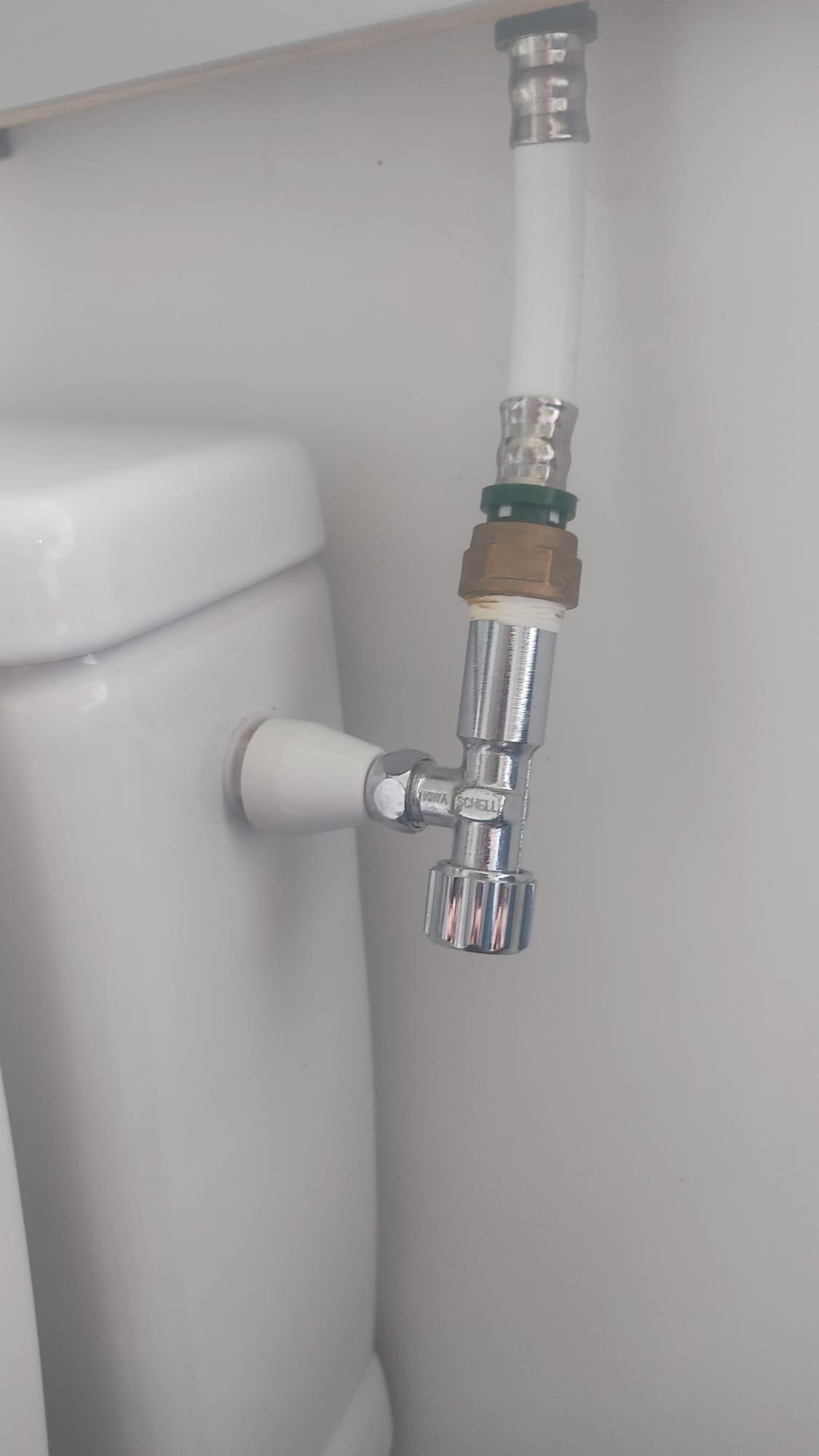
Sorry I didn't mention. I'll be joining into existing 16mm pipe for a everything except the new pipes to the kitchen and WC downstairs. I could run 10mm but it would only be for the first 2m to join to the old pipes. Also all our toilets have these throttleable valves fitted. Will this override the need for 10mm pipe to the cisterns?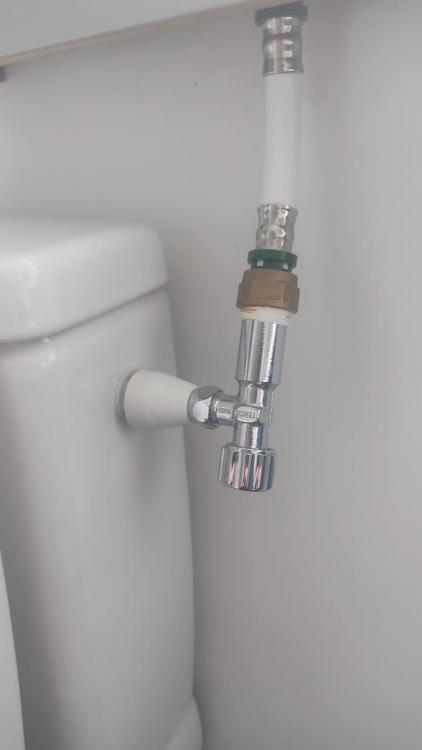
-
Unvented Cylinder Installation. Spot the Problem!
Iceverge replied to Iceverge's topic in Boilers & Hot Water Tanks
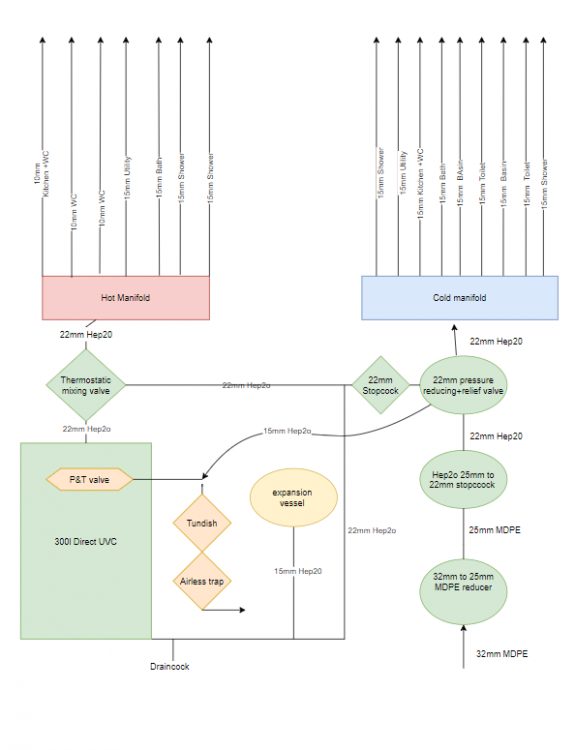
Right, I'm back at this eventually. I've spoken to the builder and he's happy for me to take it on (at his cost) and plumbers are impossible to come by at the moment in Ireland, not to mind ones who will actually follow MI's and Bregs. I've made a sketch of my proposed layout for the UVC and Manifold. Can peeps with more knowledge please have a quick look and critique please. Maybe @Nickfromwales and @PeterW. I've opted to use 10mm for the kitchen tap as the run is 13m. A reduced flow will be the trade off for a speedy delivery of hot water I hope. I'm opting to remove a separate pressure reducing valve as I hope the Multibloc will do all. As I'll need to run new pipes downstairs ( with the associated hacking of our new ceiling) I'll be using a branch layout for the kitchen and downstairs WC and a radial layout elsewhere. Have at it!!! Plumbing.pdf