Iceverge
-
Posts
4383 -
Joined
-
Last visited
-
Days Won
31
Everything posted by Iceverge
-
I would say 2 layers of 11mm would be fine. Screwed and glued. Kingspan recommend 18mm T&G but I feel properly overlapped sheets would be stronger. Don't forget to leave enough space for expansion and contraction. https://www.kingspan.com/gb/en/knowledge-articles/a-guide-to-constructing-a-floating-floor/ Here's a project from the states. https://youtu.be/NbC-EfQ_u3E
-
 Proair 600li. No problems so far. Bought direct from Proair in Galway. Played with a Vent Axia in my mates rental flat once. Wasn't too enticed with the build quality. No other experience.
 -
Using EPS will be more forgiving to bumps than PIR. Cheaper too if you have the height to accomodation the extra depth for the same U Value. You could mix some cement into the sand like a biscuit mix to prevent it moving when the boards go down. Alternatively. DPM, Insulation boards in 2 layers. Slip membrane Pumped screed, this can be as little as 35mm AFAIK and will remove any small undulations of the floor .
-
Why the joists if you have a concrete base? Level with sand. 2 layers of insulation crossed. Then 2 layers of OSB crossing all joints and final flooring.
-
Good solutions for service voids and ....ing plasterboard
Iceverge replied to Alan Ambrose's topic in Electrics - Other
I'm with you @Alan Ambrose. It would be nice to be able to add extra wiring and or pipes at a suitable point in the future with minimal disruption. Occupants needs change , tech changes, it's impossible to foresee everything from day 1. Dropping from the top down via a service void is very handy, for example in a bungalow with vertically battens. Everything can go up to the attic and then across and down. Just a small hole in the plasterboard to make and fish out your wire . This is more of an issue in a two story as you're faced with either pulling up the floor or pulling down the ceiling. A suspended ceiling with push up tiles is the obviously solution off the shelf but they are ugly.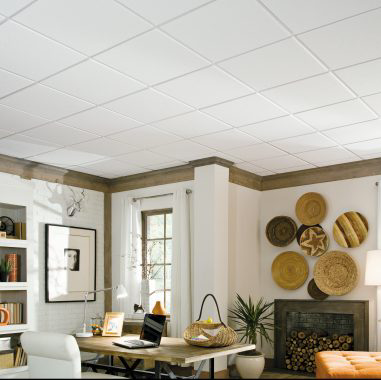
-
I think there's no G3 requirement to service it annually either saving a few quid per year. Also the heat loss from sunamps are less than the equivalent UVC. The balance of sums still seems to be in the UVCs favour however like you say.
-
Provided all joints were taped adequately the 1200 guage membrane will be fine as a Radon barrier.

-
Correct. Combining the two is fraught with compromises. A2A for space heating, ESHP for DHW and ventilation and solar PV to assist I think is a good combo. Low capital investment, excellent COP for both as each is doing a dedicated job. You get the energy recovery aspect from the ESHP so you might achieve passivhaus running costs even without the same level of airtightness. Occupant comfort might not be as good however.
-
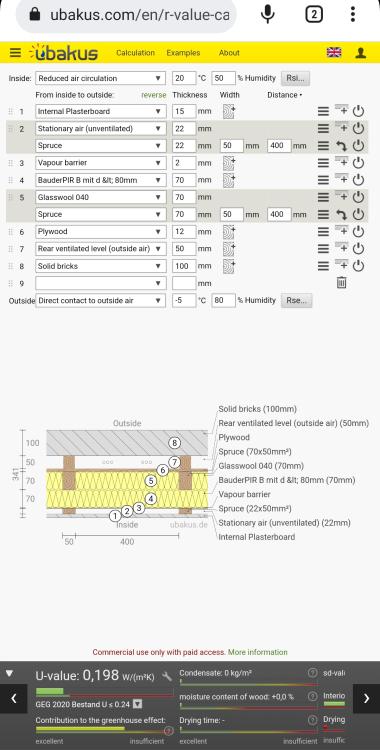
@Steve450 Welcome and seasons greetings. Do you have any photos to share please, they always help. Sounds like fiber glass batts in the wall as is. If they're ok I'd leave well enough alone. Put the 70mm PIR cross the studs then VCL and then service cavity and plasterboard.
-
I have a chepo Flir One. Not sure how it compares to better models but it's been relatively informative for us. Will post some pics if I get back to the computer today.
-
This annoys me, I can live with maybe a +/- 30% variation in costs as different merchants will have different overheads and the honest ones may be expensive on one item and cheap on another. Doubling or tripling of cheapest prices is price gouging and leaves a bitter taste. The prices will no doubt trend this way but reps have called me at the end of business quarters with such catastrophic news before. The timing of the news tells a lot IMO.
-
New member - stuck for what to do next to warm the house
Iceverge replied to Sparrowhawk's topic in Introduce Yourself
Tremendous investigation and reporting, well done! Consider making a DIY fan to recreate this windy weather for your remediation efforts. As I detailed in the below post. Then you can go room by room and start sealing. You can temporally tape up an internal door to make a "cell" that can be airtighted from the inside out. You won't go far wrong using the illBruck i3 system. Others are available of course but I found their FM330 better than other foams i tried. -
Aqua wet wall panels vs tiles for the shower room
Iceverge replied to Gow's topic in Building Materials
There's a big difference between the multipanel solid core type and the PVC hollow core ones. I don't really know why but they're much nicer. We have Kerradeco and they're probably somewhere in the middle. -
Very important this. People will only hide things if they think there's a b*llocking coming and in fairness nearly everyone is very diligent. " Do your best and if there's any holes let me know and I'll sort them out". We had none in the end AFAIK apart from when I put my foot through it from the attic.
-
Maybe so but if you've got hatchet men erecting them you can end up with a ball of chalk too. I've heard of TF kits being 100mm out of plumb over 10m during the construction boom here in the 2000's. Similarly on a TF site I saw the crew had torn the airtightness membrane in several places. Maybe it was going to be patched up later but it didn't bode well.
-
Insulating under block and beam floor with perlite
Iceverge replied to Patrick's topic in Heat Insulation
Have you a properly sealed DPM/radon barrier or is this an old house? -
You're selling it.
-
I went on a similar voyage of mathematical discovery myself. Airtightness is the big 'un so to speak. Nothing else makes as much difference. Also it's cheap if planned properly.
-
This was @Nickfromwalessuggestion some way back. I haven't had an original though in years!!
-
I commend this approach. Passivhaus is the finish line in terms of insulation, airtightness, occupant comfort and health and building longevity. Also it's very simple to understand Vs Bregs. When you know where you're going why not skip straight to the end. Industry will drag it's heals and complain, it always does. Then it'll adapt and the best companies will do well and the worst will die. Pain enroute, of course but probably better to have all that pain in 10 years and good houses forevermore rather than spread out over 50 years and 5 changes to the Bregs in the meantime.
-
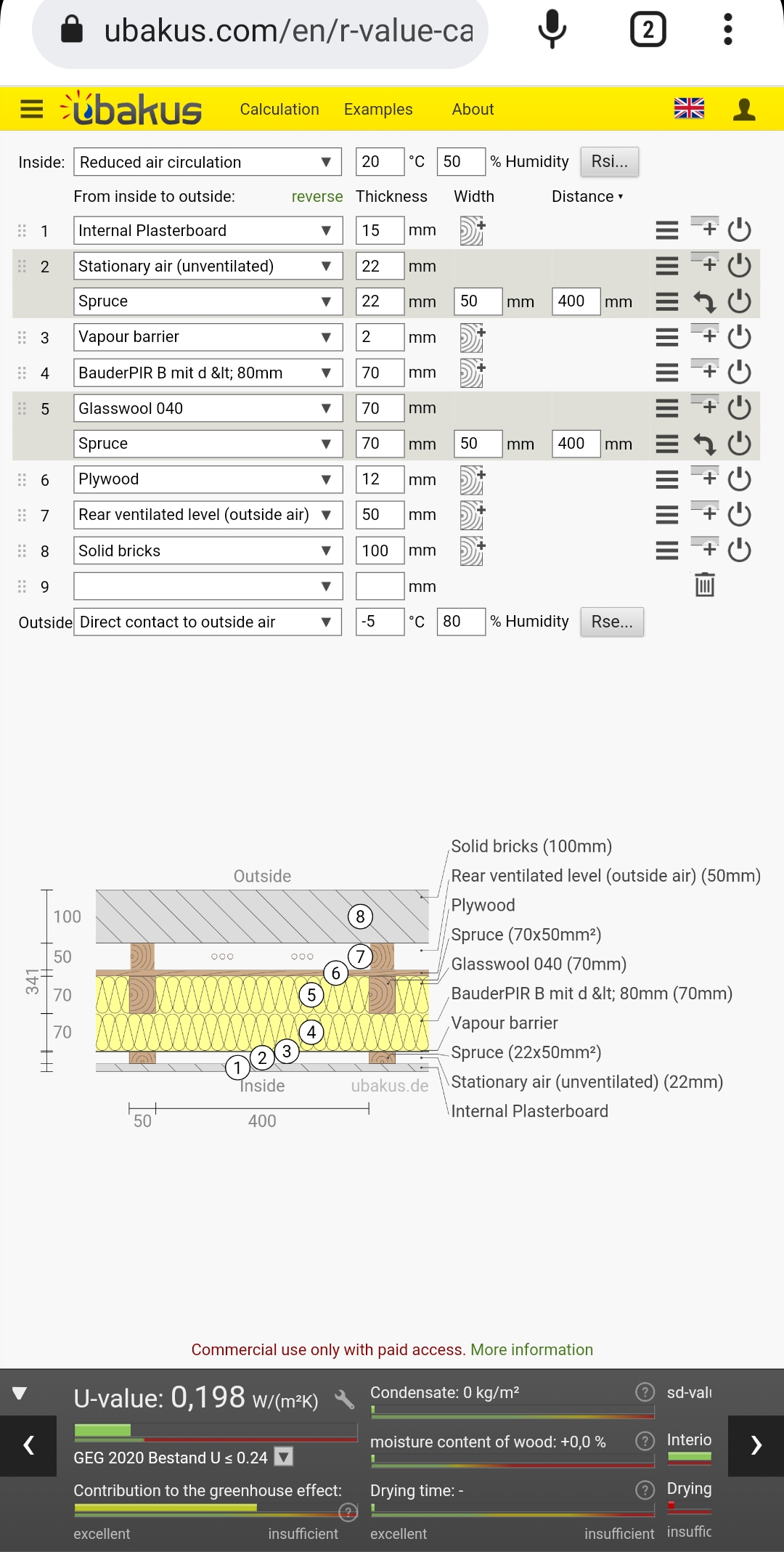
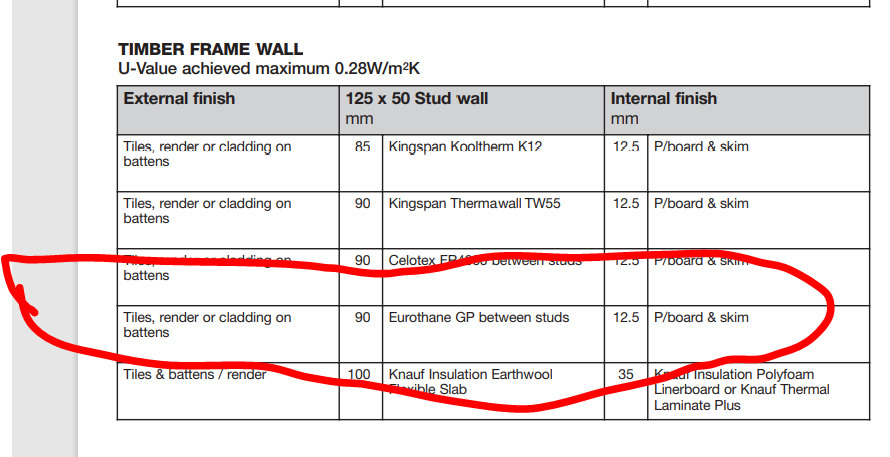
@Gus Potter I agree. I hope my use of cheapest didn't imply poor quality. Maybe I should have emphasised the "proper" bit more. The above wall is very buildable while being economical and fast to build. It's possible to ensure a full fill of all the insulation visually and lightly to be much quicker to get a snug fit of mineral wool batts rather than PIR. The continuous vapour control layer and insulated service cavity is a very robust airtightness method. A well detailed external breather membrane will be an excellent wind tightness layer. Running the service cavity battens horizontally will cut repeating thermal bridges through the studs. 15mm sound bloc plasterboard will be ok at 600cc and provide better tear out capacity for picture screws as well as sound protection. Using 3x2s rather than 2x2s for the external ventilated cavity will prevent splitting. Better still use blown cellulose and widen the studs to 170mm or 220mm. Bellissimo! For a thin wall that would lightly not perform anywhere as well in reality and just scrape past the regs some thing like this from the LABC might be a suggestion.
-
This is about the cheapest proper job but a bit thicker. All nail gun compatible. No cutting PIR boards and foaming etc. 265mm_TF_wall.pdf
-
I commend you on your ingenuity. Bravo. As the place is being demoed have you considered doing the void under the floor. It would be a tremendous energy saver and suspect would confirm my suspicion that timbers on the warm side of insulation will not rot.
-
Looked back through your posts and found this. Drawing it out I reckon the total outside surface is 429m2. A nice compact shape. Assuming an average envelope U value of 0.25w/m2k and an average nighttime outside temperature of -5 deg your steady heat loss should be 429m2*0.25w/m2K *Delta T of 25deg = 2681w. Plus MVHR @ 75% efficiency ventilation losses will be about 200w. Add some ventilation losses and 3kw isn't far off the mark. From your first post here you used 20kWh in 9hrs so 2.2kw of power drawn by the heat pump. 3/2.2 = a COP of about 1/4 or 140% efficiency in heat pump salesman language.
-
Looked back through your posts and found this. Drawing it out I reckon the total outside surface is 429m2. A nice compact shape. Assuming an average envelope U value of 0.25w/m2k and an average night-time outside temperature of -5 deg your steady heat loss should be 429m2*0.25w/m2K *Delta T of 25deg = 2681w. Plus MVHR @ 75% efficiency ventilation losses will be about 200w. Assuming your airtightness is as good as you say 3kw isn't far off the mark. From your first post here you used 20kWh in 9hrs so 2.2kw of power drawn by the heat pump. 3/2.2 = a COP of about 1/4 or 140% efficiency in heat pump salesman language.