Iceverge
-
Posts
4487 -
Joined
-
Last visited
-
Days Won
32
Everything posted by Iceverge
-
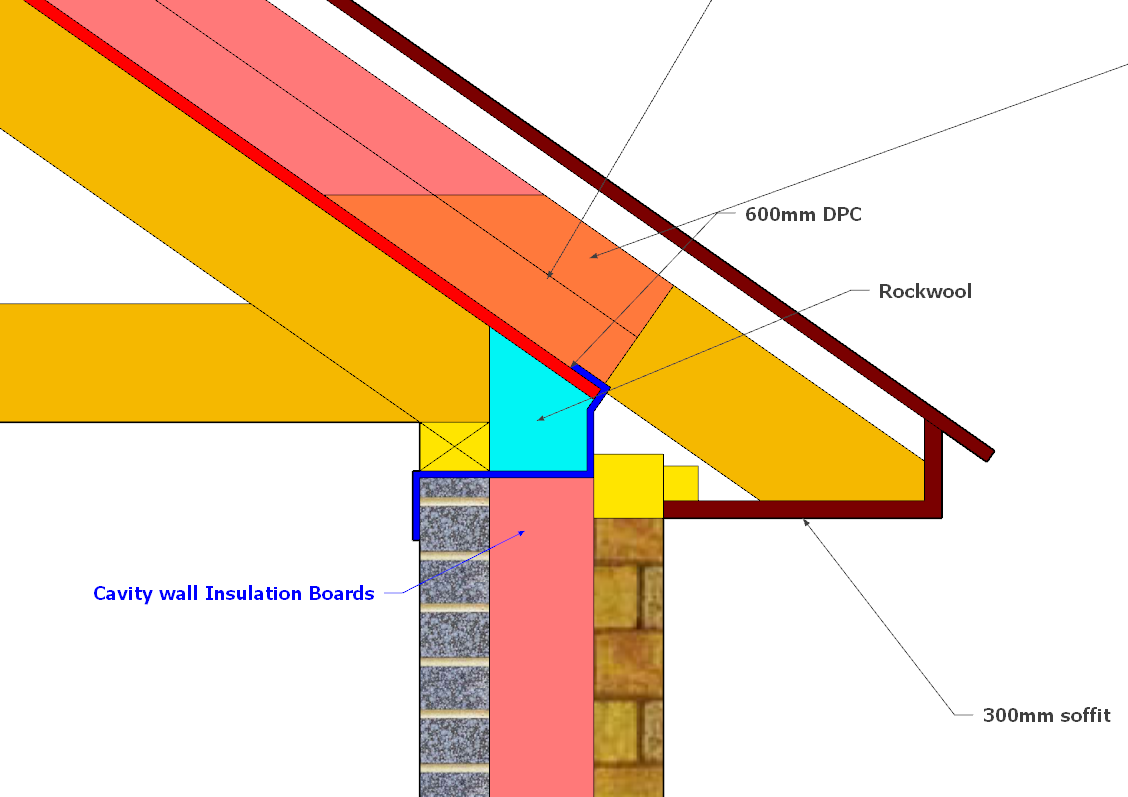
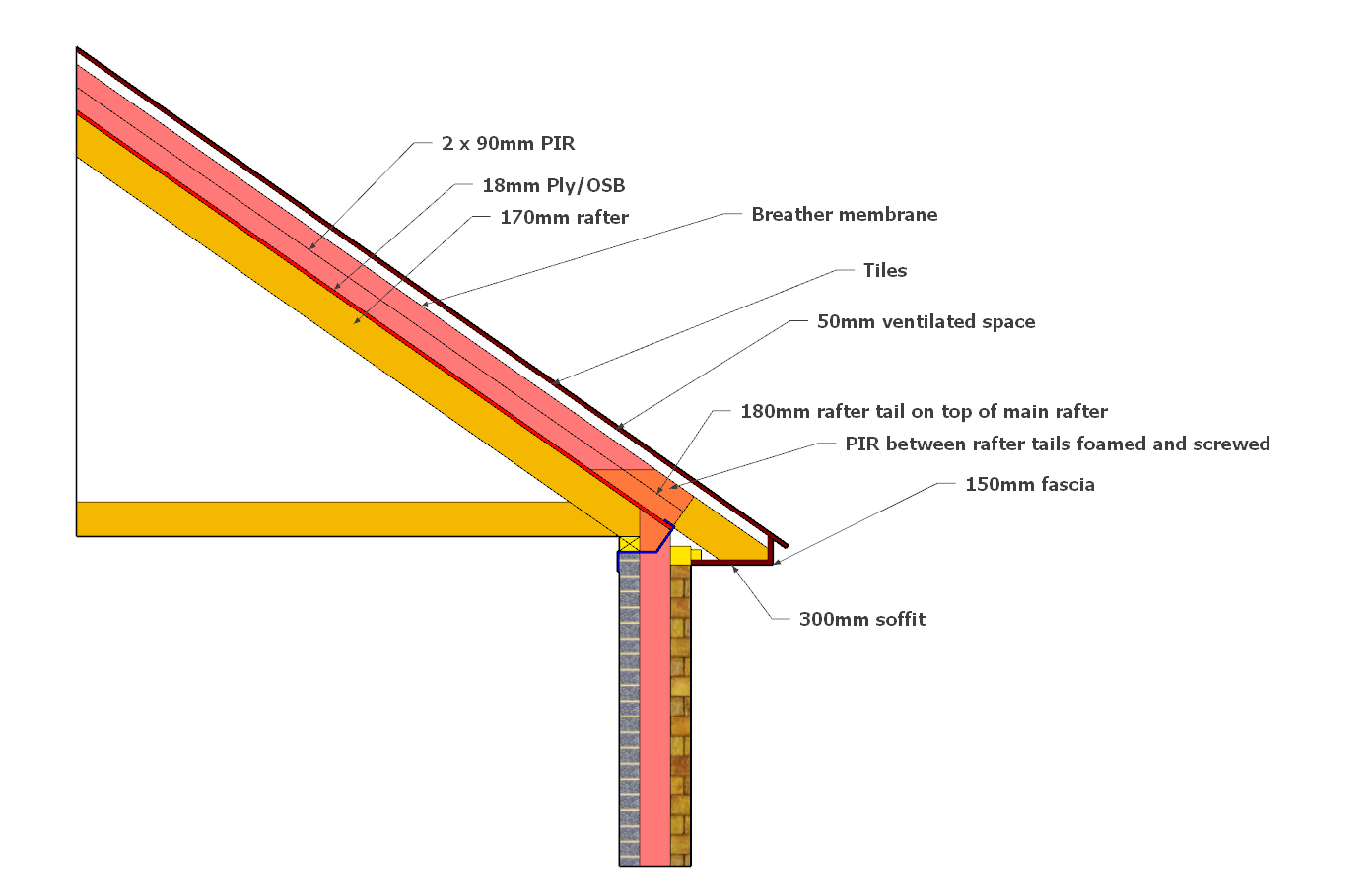
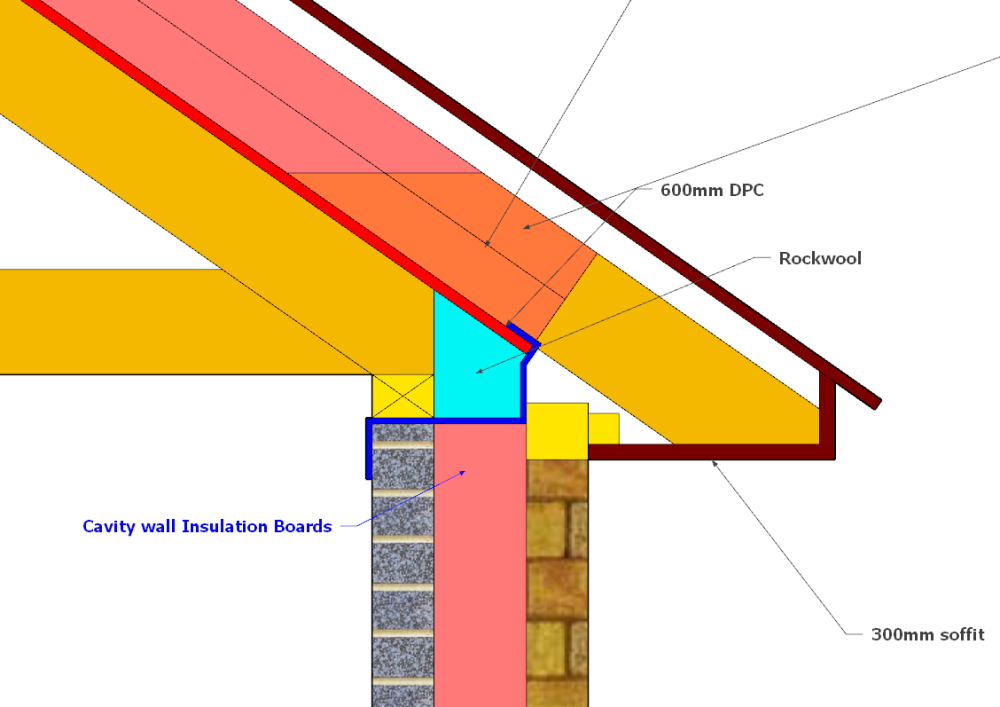
For air tightness use a 600 mm strip of DPC under the wall plate on the inner leaf. Mesh it and plaster into your inner airtightness layer on the blockwork. Then wrap it around the end of your rafters and tape it to the top of the ply. Tape all the ply deck together and you'll have a really robust airtight layer and simple to execute.
-
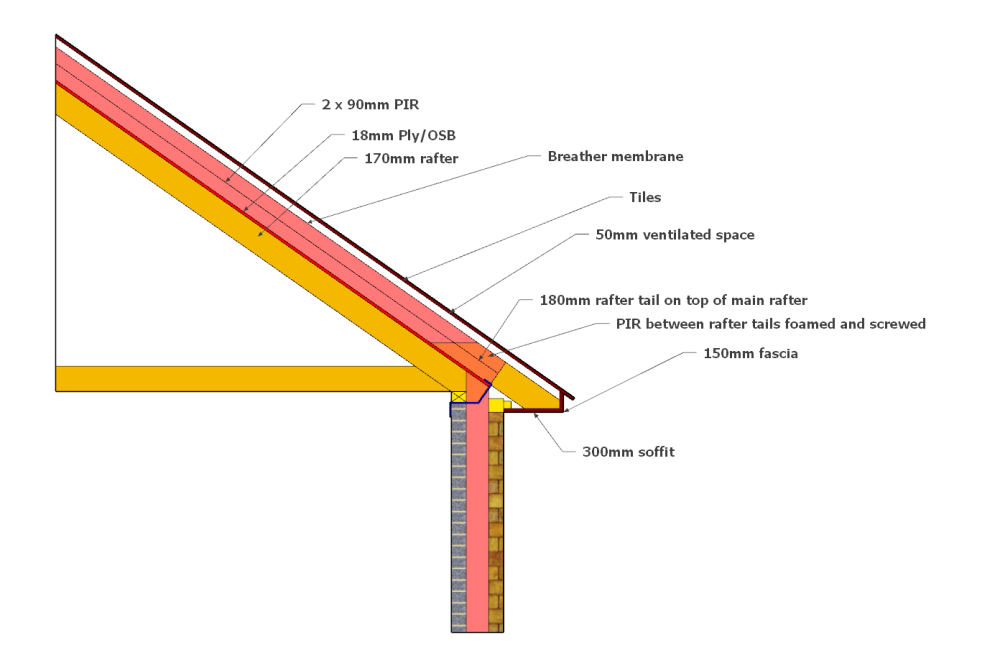
If you can draw it you can build it! Here a quick sketch I did. Just attach some rafter tails on top of the rafters and fit the PIR around them. Your builder is a sadist if they think it's a good idea to put PIR between rafters!! Matt shows how to do it here.
-
Slightly different as you will need battens to hold the tiles and can do without the top layer or ply/osb. You would need to ventilate behind the tiles also. Do you have a cut roof or a trussed roof? Have you many overhanging eaves/gables etc? In fact do you have any drawings of the roof as planned?
-
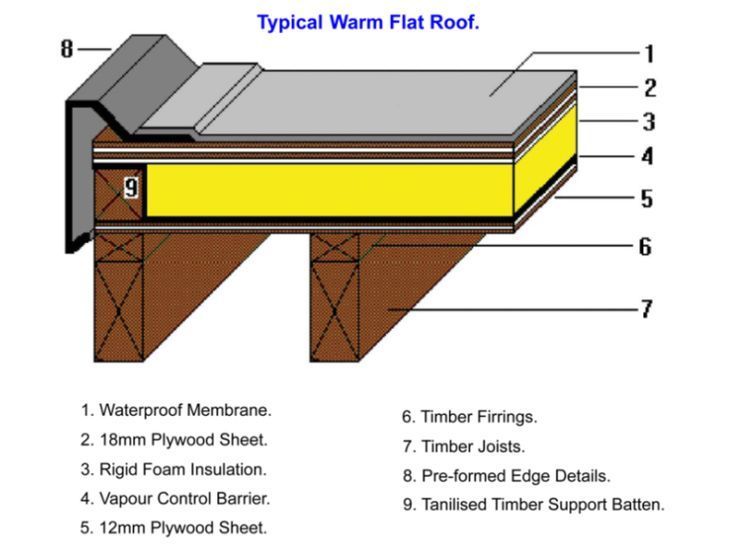
There's mis match of terminology here unfortunately that regularly gets confused. A "warm roof" has the insulation above the rafters. This will naturally result in a "warm loft" where the attic space is inside the conditioned space of the house. This can also be done with a "hybird roof" (insulation above and between rafters ) or insulation between and below the rafters. (sometimes called a "cold roof") A "cold loft" is naturally where the entire cold loft is cold and all the insulation is placed above the ceiling. In your situation I suspect you are better off with a "Warm Loft" You just need to decide on a 1. Warm Roof 2. Hybrid Roof 3. Cold Roof
-
If you use something like caberdeck flooring over the joists and are careful to glue all the joints with foaming glue this will do fine as a VCL. Use a flexible mastic at the perimeter. If you want to be belt and braces make an insulated service under the caberdeck and then a taped VCL.
-
It's a top idea, every room in a house with pipes should have one I think. Consider an airless trap as a wet one will dry out quickly with no regular filling.
-
Ah ok. Unvented cylinder, as large as you can comfortably fit. Aim for 300l at least. A vastly nicer system to use. Mixer taps+showers work properly, no noise etc. No need for any tanks in the attic. A cold water accumulator may be called for if your dynamic pressure (I think) is too low. Beware high bills with an ASHP unless you have a very low flow temp heating system and a low heat loss house.
-
Can you describe your situation as is please @mike2016? New build/refurbishment? Heat source? Gas ASHP etc? Regularity of water outages? Modifying an existing system or installing a new one?
-
+1 to the above. Stick a water butt under in the garden for watering the plants and as a emergency flush for the toilet.
-
What's your buildup for the overhang as is? Have you considered batt material instead of the PIR between the rafters. Easier to fit, cheaper and no thermal bypass or gaps with shrinking timber.
-
I would live in the house for a year. Mend the Rayburn boiler. And track the energy usage. You never know. After a year it might not be as cold as you think or you may want to knock it to the ground.
-

Kingspan v Knauf (or phenolic boards v glass mineral wool)
Iceverge replied to AChristie's topic in Heat Insulation
EVERYONE, STOP PUTTING RIGID BOARDS IN CAVITY WALLs!!!!!!!! It's a terrible idea. Use mineral wool or EPS beads. If you need a thin wall use timberframe or SIPs. Architects please can you get your heads around simply drawing thicker walls rather than updating your 1980's 300mm thinking with a very expensive and not very workable solution no doubt provided by the insulation manufacture.- 16 replies
-
- 2
-

-
- phenolic
- mineral wool
- (and 1 more)
-
Yup, ours is in the utility and you can heat it in there. Ok with the door closed.
-
It's unlightly you'll need to underpin for a 50 year old building. Your plan sounds good with a couple of points. Marvin has it nailed. 1. Airtightness. Very DIYable and the most bang for your buck in terms of energy saving and comfort. Make a DIY blowerdoor fan. 2. Ventilation. Needs to be mechanical, continuous running and best of all with heat recovery. 3. Floor insulation. Dig out and start again. If possible consider using the opportunity to make the already small rooms taller if possible. You'll be disrupted anyway by the dry lining. No need for UFH means you can do it a room at a time. 4. ASHP. Proceed with caution. They do not play nice with high heat loss houses. 5. Windows. "A" rated unfortunately can mean little. Good spec triple glazed UPVC with multiple compression seals won't break the bank. Make sure they are continuous with the insulation layer. Again you can do one room at a time if needed. Good luck!
-
Yup Galway I think. I would include a silencer on the house supply side of the unit and put it somewhere you can't hear it in the bedrooms but I imagine these are common issues to most units. No problems otherwise.
-
Given the COP of an ASHP is proportional to the temp difference of the coolant and the ambient air is there a case for always doing a little bit of the heating via the ASHP in a hybrid setup. EG if electric is 3 times the price of gas per kWh then allow the ASHP to operate only when it's beating a COP of 3. (Ignoring inefficiencies etc) For instance if your desired flow temp is 40 Deg, your return temp is 20 deg and on a cold day a COP of 3 is reached at 30deg. Then let your ASHP do 20-30 Deg and the gas boiler do 30-40 Deg for minimum cost.
-
Proair pa600li. Bought it directly from them but DIY'd the ducting. Radial rather than trunk and branch. Wouldn't shy away from using them for the full install either however.
-
How about bonding an electric UFH mat onto the underside of the tub backed by some roll insulation. You might even be able to avail of a thermostatic function, should work for those who like to read entire novellas in the tub.
-
Most lightly not unusual in your location. Contact some local groundworks companies and they'll soon give you chapter and verse.
-
hi @Furnace, a belated welcome. Really nail how much money you have to spend. Similar situation here. Passive house on a farm. Tricky access. Went through 3 sets of planning while dealing with some very slow and expensive land registry issues. in hindsight maybe 4 would have been even better! Spent the time getting to grips with PHPP, thermal bridging, airtightness, costings etc. I came to the conclusion a simple passive house was the cheapest to build so long as you avoided an expensive heating system. We went from a double house like yours to a simple square farmhouse shape, no valleys to leak, no difficult thermal bridges to deal with at single vs two story intersections. Cheaper to built and less costly to heat etc etc. It went from 200m2 to 225m2 to 185m2. The budget was fixed at €300k as the bank wouldn't give us a cent more. Had we tried to build one of the first designs we'd have run of cash or ended up super stressed and with a poor finish. As it was we ended up with everything spent but also with curtains hung and beds dressed. It's a nice design but I'm thinking £500k might not finish it out.
-
ICF Pricing and ease of use questions
Iceverge replied to IATM's topic in Insulated Concrete Formwork (ICF)
For what it's worth at Ubakus.com anyone can make a free account and play around with it. I actually quite enjoy it, but then I'm a bit sad! -
Best way to cut semi-rigid ducting?
Iceverge replied to jayc89's topic in Mechanical Ventilation with Heat Recovery (MVHR)
If you're careful with a Stanley it works fine as the grooves keep it centred. -
Why not have it outside the house in a visible location. Guarded by mesh to prevent scalding and discharging into a gutter? I believe so, MIs>BRegs
-
Watching with interest. @Jenki used this I think....