Iceverge
-
Posts
4487 -
Joined
-
Last visited
-
Days Won
32
Everything posted by Iceverge
-

MVHR Loft Installation - Inspiration
Iceverge replied to richo106's topic in Mechanical Ventilation with Heat Recovery (MVHR)
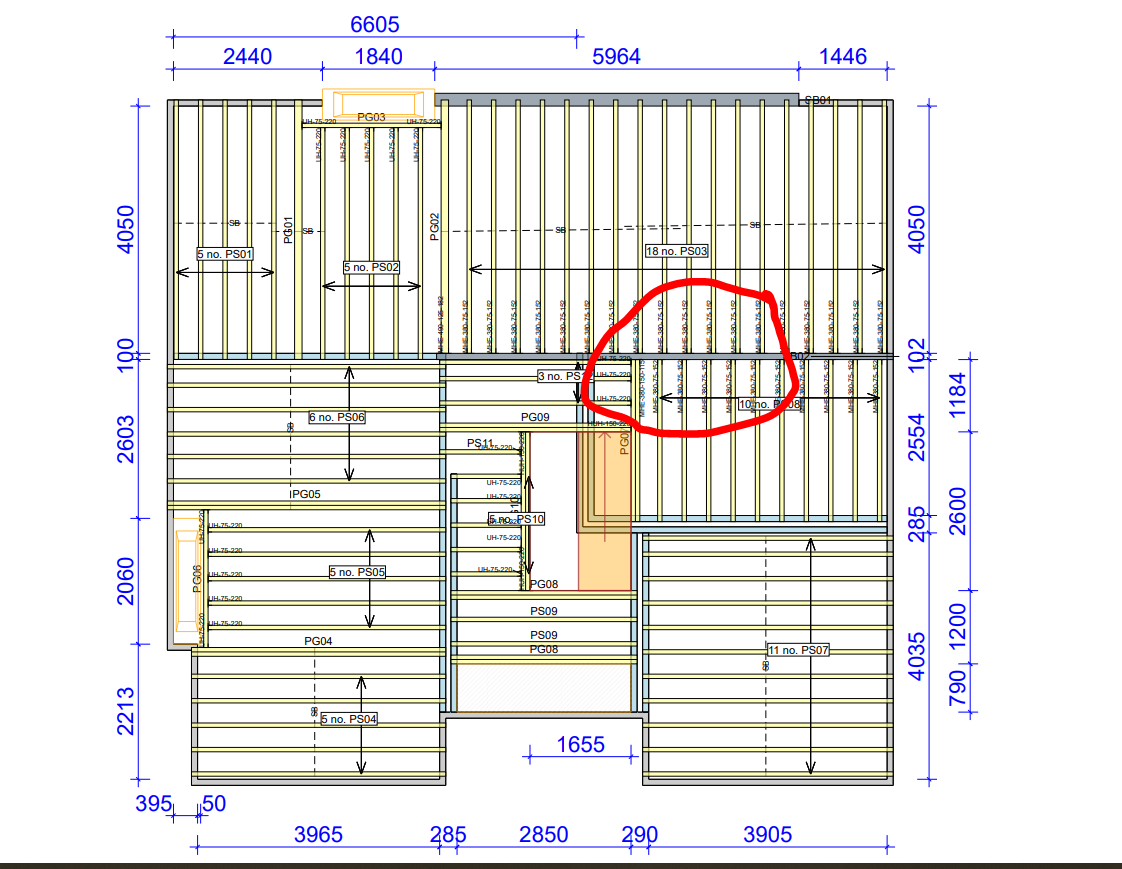
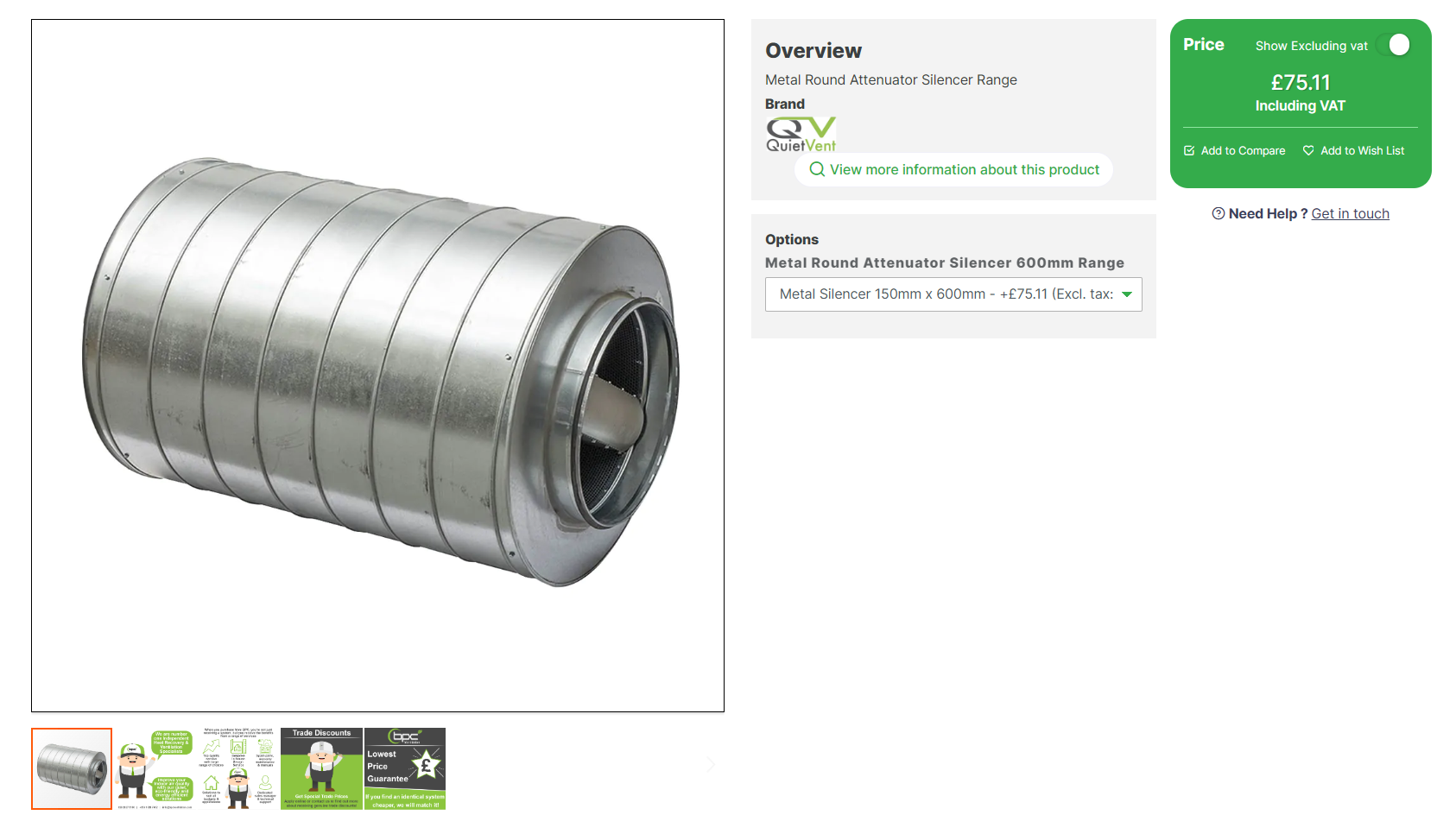
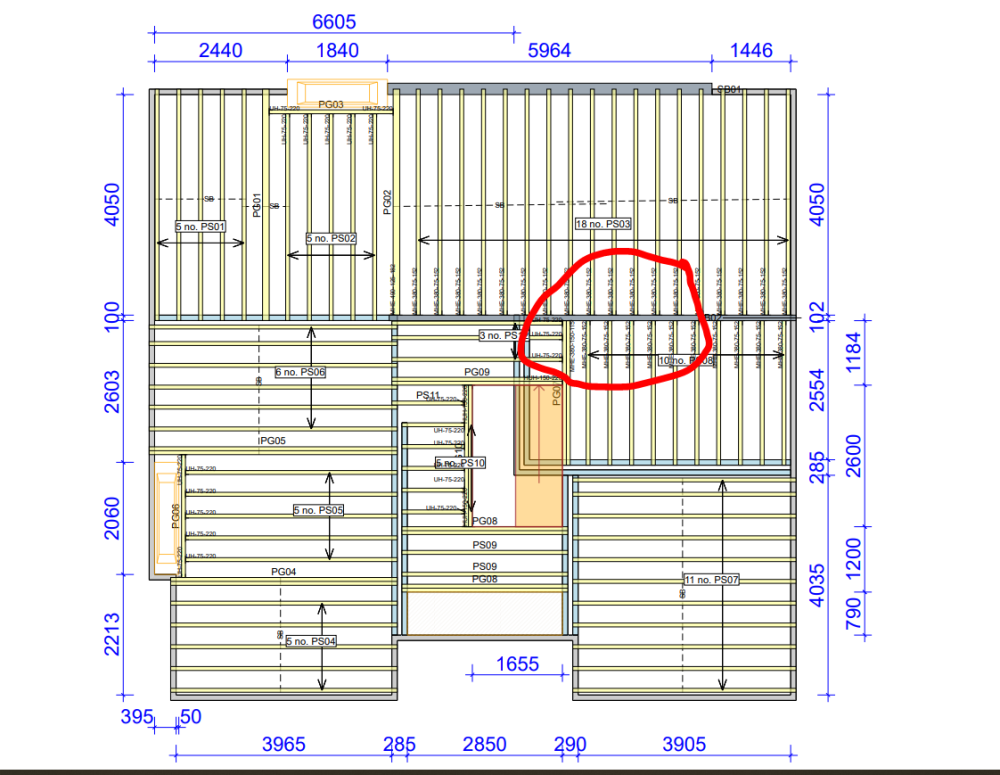
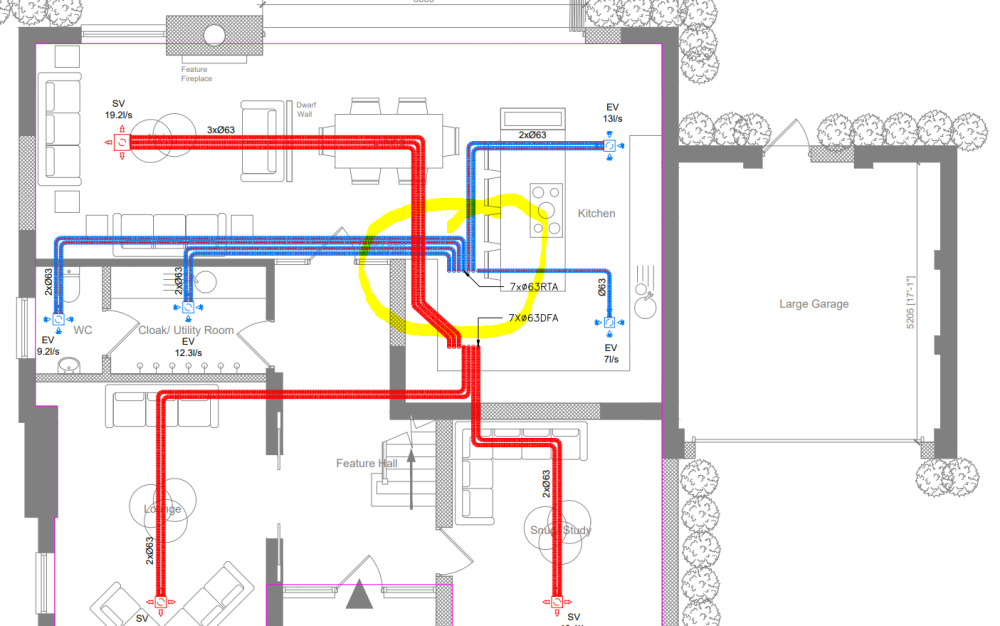
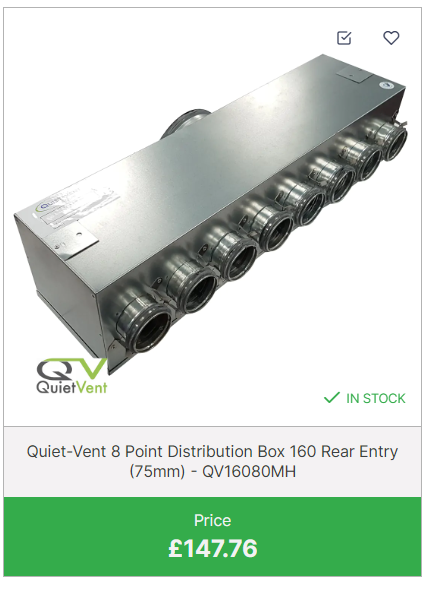
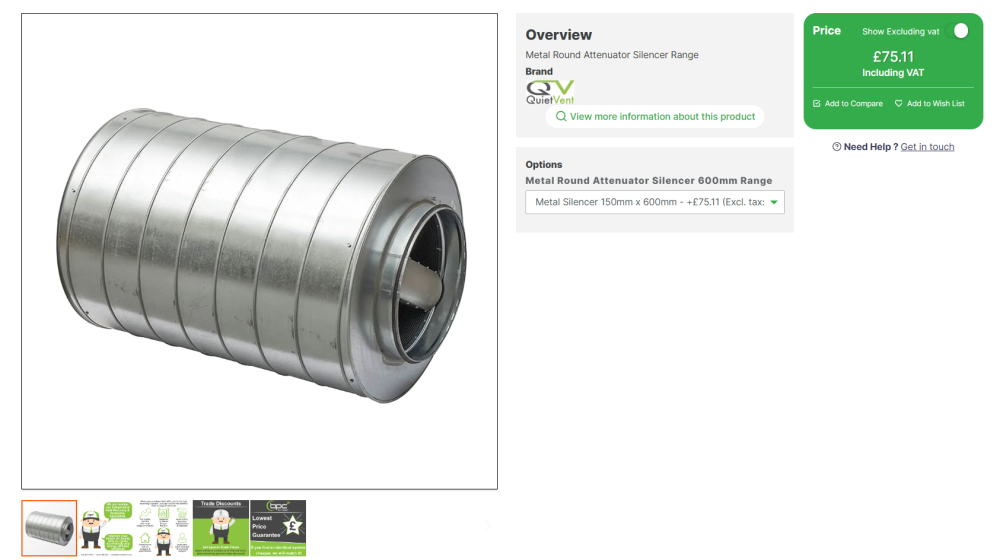
I've been thinking about this all day. All the above options are good but they will attract more cost unfortunately. The more I look at this the more I'm unsure if the MVHR is the right option. There's a section on the ground floor where you have 7 ducts crossing through a 225mm joist. Then what looks like 9 ducts passing through a steel beam. You're going to end up doing some serious boxing out here to get it all hidden, as well as a myriad of extra elbows in the ducts. The main purpose of any ventilation system is to provide top quality indoor air. The MVHR adds the heat recovery part to save some energy. It's debateable if it actually saves any money given the cost of filters and initial outlay. Something like demand controlled ventilation or continuous extract ventilation would also mean high indoor air quality but would be much easier to plumb in. You need not go to the hassle of making the loft a warm space either. I would run 8 ducts from a central unit placed in the loft, 2 to the ground floor W/C, 2 to the kitchen, 2 to the ensuite and 2 to the bathroom via 8 port manifold in the loft and silencer. Times 1 X Times 4 X Times X 1 Times X 1 A variable speed controller and some ducting, a few wall inlets and vents and you're home and dry. Probably less than £1000 and very simple to install by comparison. You could pair it to an ESHP like of these for about £2,500 and you'll get all then energy back you would have done from the MVHR as well as a COP of above 3 on your DHW heating. Also, something has been niggling me, airtightness hasn't been thoroughly planned in from the start. No great problem for 3 ACH maybe, but it does mean that you'll have lots of small holes. The big risk is moisture from the house finding it's way into the structure and causing rot. Running a continuous extract system would ensure that any small cracks only let air in from the outside and not visa versa by running the house at a slightly negative pressure. Any damp air is taken by the ventilation system and dumped safely outside. With diligent caulking (flexible caulk) around all penetrations you could probably avoid the need for airtightness membranes etc too. Have a think and I'd like to know what the collective thinks also. I have some other thoughts about the build too looking at the pic but one step at a time!!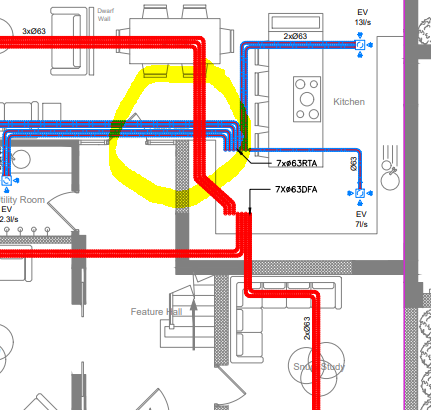


-
MVHR Loft Installation - Inspiration
Iceverge replied to richo106's topic in Mechanical Ventilation with Heat Recovery (MVHR)
It might help if you posted full section drawings of what is proposed so far. It sounds like you may have some insulation on slope as is buy it's unlikely to be a warm roof. You may want to blank out any personal details. Good news is that you're somewhat ahead of the curve here. Budget wise you'd be advised to get a hold of things as soon as possible and start designing out some expense now if you can. -
MVHR Loft Installation - Inspiration
Iceverge replied to richo106's topic in Mechanical Ventilation with Heat Recovery (MVHR)
Ok, will still need care however. No wrong answers, just a learning process! Don't panic! It's only a house after all and most of us are first timers. Just do the best you can. Yup. Maybe that cupboard with all the ducting on the first floor. Yes, however it may be too late and not worth the hassle. Do you have any pics of the roof as is, including the area to put the unit? Can you include a few of where the internal walls meet the first floor ceiling. What is your central heating system and how do you plan heating your hot water too? At 3 ACH the benefits of MVHR may be marginal and you could save yourself a whole lot of hassle and cash if you were maybe to opt for another ventilation strategy, and your supplier was willing to take the MVHR as a return. -
MVHR Loft Installation - Inspiration
Iceverge replied to richo106's topic in Mechanical Ventilation with Heat Recovery (MVHR)
Sorry more questions. I take it your kit is onsite and ready to go? Is it a trussed or cut roof? What is your airtightness target? Do you have an airtightness detail for the first floor ceiling? You have a couple of issues here, 1. The MVHR unit should be installed inside the thermal envelope. The radial ducting similarly as they will be moving warm air around. Otherwise you will risk condensation and maybe mold in your ducts and unit as well as cold air being blown into the rooms. 2. You have over 20 penetrations through the airtight layer, not impossible to solve but tricky and impossible to get a good result without a solid strategy. 3. The unit needs to be accessible for servicing. 4. The unit is very near to two bedrooms so taking care of noise must be a priority. -
MVHR Loft Installation - Inspiration
Iceverge replied to richo106's topic in Mechanical Ventilation with Heat Recovery (MVHR)
Hi @richo106 A couple of questions. 1. Can't see your attached files I'm afraid . 2. Is it a warm/cold loft? 3. Is it a radial or trunk and branch layout? -
What size digger do you wish you'd bought?
Iceverge replied to janelondon's topic in Tools & Equipment
Whats the budget for the digger? I had a 7,5t tracked Sumitomo excavator and now a Massey 860 backhoe. The 7.5t was fine for everything apart from digging big holes in the ground. It got particularly good at bursting hoses ,pinging seals and throwing off tracks towards the end. The backhoe is awkward and slow for any back actor work but the front loader works fine. Beware any soft ground however. It goes down like the titanic. It too likes bursting hydraulic hoses. Is it an option to get a tracked excavator + tree shears and operator on hire to take to down the trees? Cheaper, faster and much safer for all involved.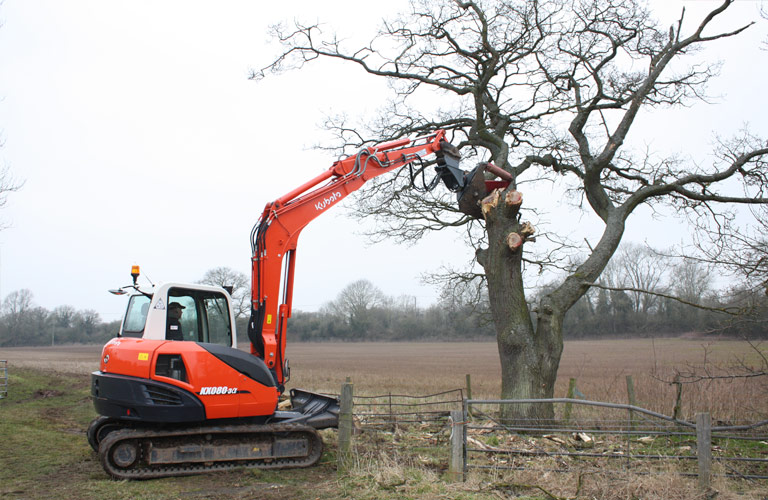
-
And Worked the best for me on threaded fittings. Scrape the thread with hacksaw roughen it. Wind on appropriate amount of hemp. Butter on jointing compound and tighten. You tube told me PTFE was just a lubricant for tapered threads. 🤷♂️ Then again youtube regularly gives me advice that would see me dead and bankrupt in days.


-
Calculating ducting size
Iceverge replied to jayc89's topic in Mechanical Ventilation with Heat Recovery (MVHR)
About 15m was the longest one via some sweeping bends. From memory about 30m³/HR was the rate I planned for it. -
What can go wrong with an immersion water heating system?
Iceverge replied to LeanTwo's topic in Boilers & Hot Water Tanks
I've just installed a vented thermal store for my parents. It's working well so far. Balanced pressurised hot and cold is vastly superior to gravity fed. For your situation it might be simpler and cheaper to install an exhaust source heat pump like @Thedreamer if you have much pipework to revisit. Use the immersion via solar in the summer and the heat pump to harvest excess heat from the stove in the winter at a COP in excess of 3. -
Calculating ducting size
Iceverge replied to jayc89's topic in Mechanical Ventilation with Heat Recovery (MVHR)
Yikes, we used 75/63mm ducts everywhere on a suck it and see basis apart from the kitchen which is doubled. Seems to work fine. -
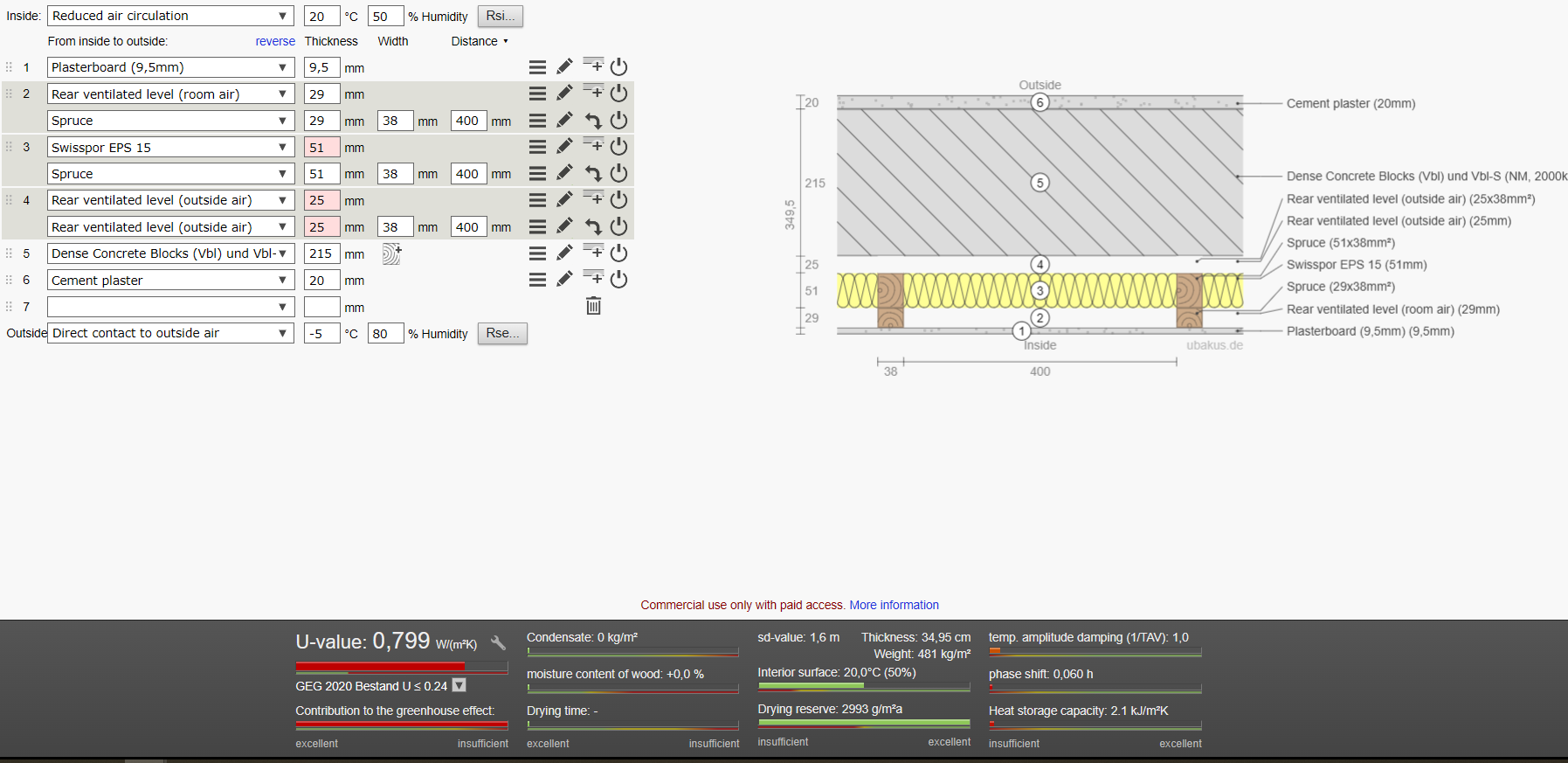
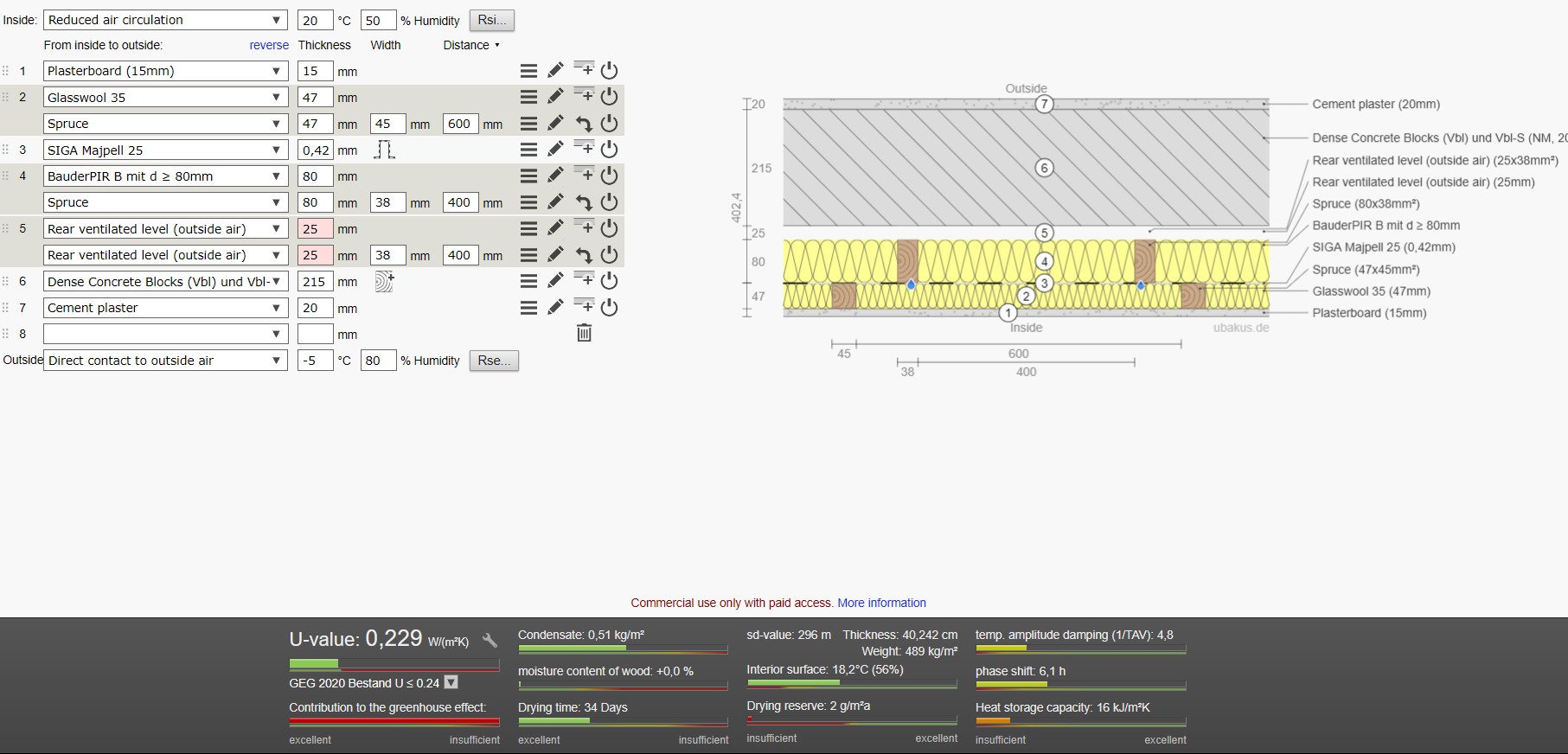
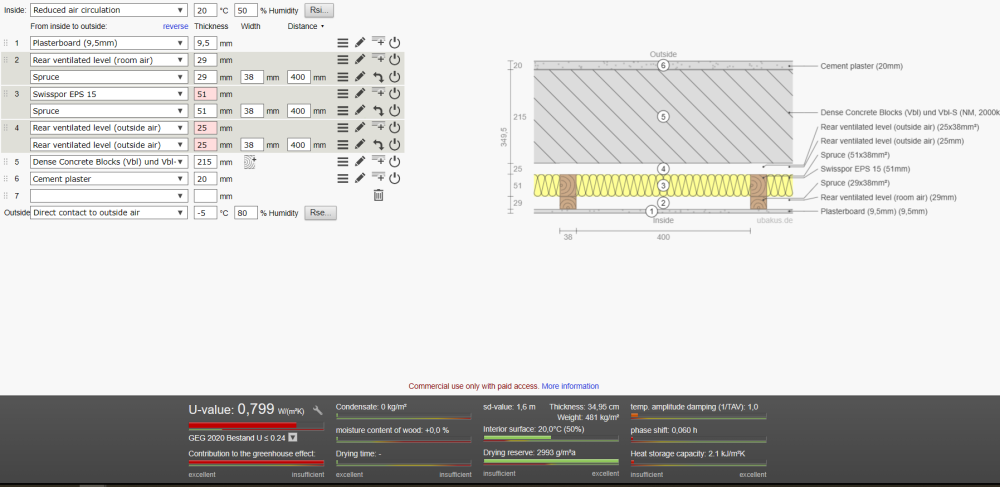
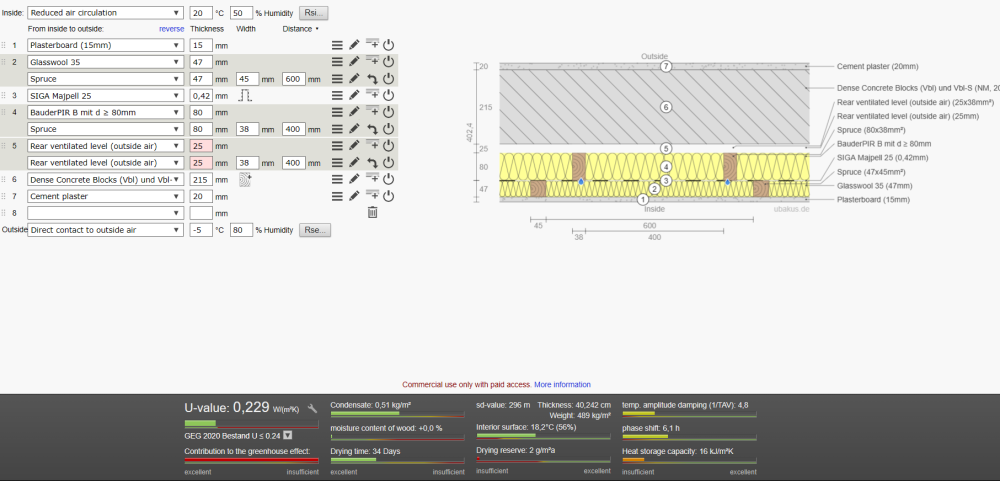
@Space Race Is there any way you can get a look inside the walls? At meter boxes, broken plasterboard etc? If not perhaps just measure the overall thickness of the wall as accuratly as you can at a window or door opening. I hadn't thought of it as @Gus Potter suggested. A solid walled house with a TF inside just to provide insulation. These days the TF takes the loads of the house and the blockwork is largely there as a rainscreen. For my own interest I put the original spec into Ubakus for a gander. It's unlightly to perform anywhere near this as the aeroboard is unlightly to be a tight fit. If you were to go room by room refurbing, pull out the EPS, and replace with PIR cut and foam in place. Then add a taped vapour membrane. Then a 45x45mm counter battened service cavity with 0.035W/mK mineral wool infill and 15mm plasterboard You could have something like this. Much more respectable in comfort and energy terms. Tons of work however.
-
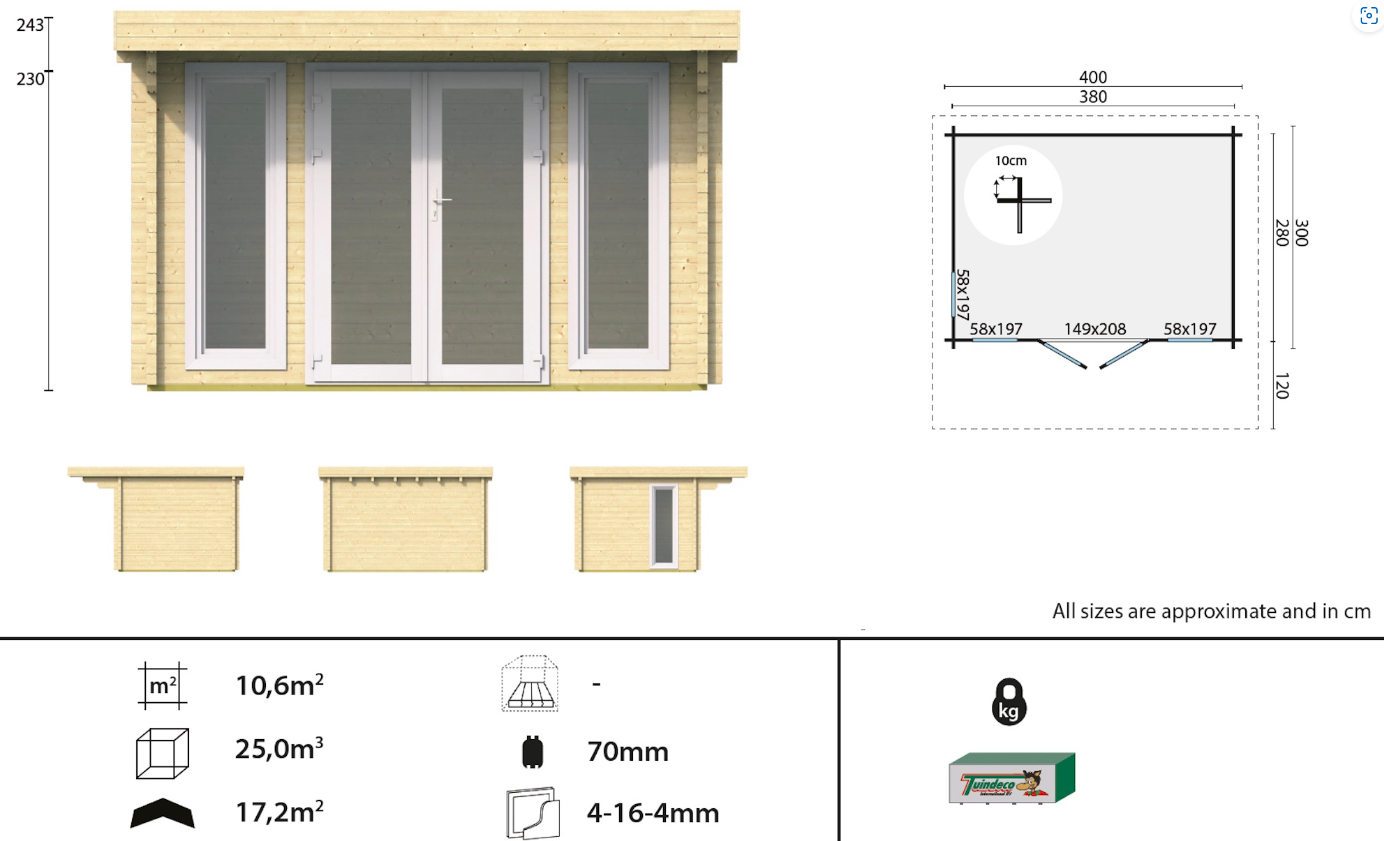
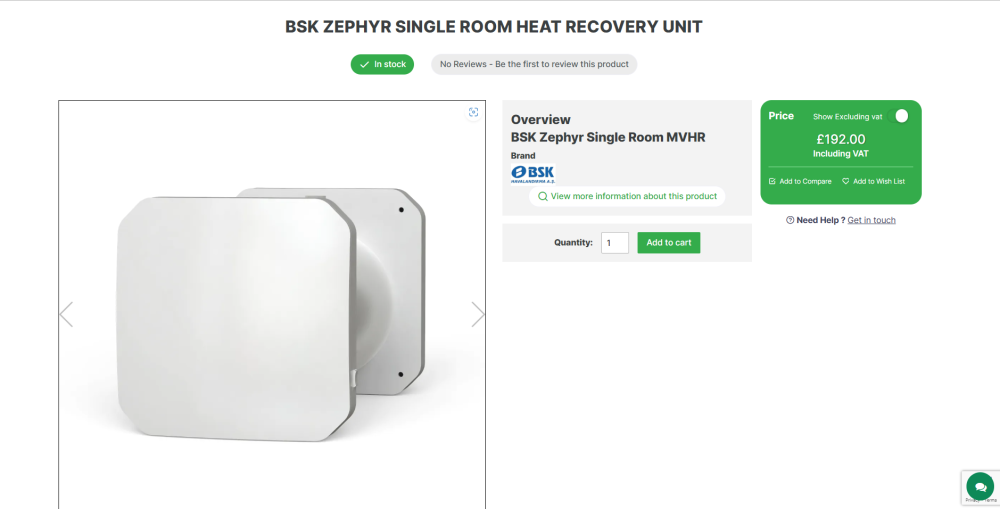
Ok how about something like this. For the walls from the outside in. 70mm log construction. Chicken mesh stapled to the inner surface to prevent moisture being sandwiched between PIR and timber and to stop any water moving via capillary action. 50mm pir screwed through to the logs. Vapour barrier taped to all edges or PIR boards diligently taped together. 45x47mm battens with 50mm mineral wool 0.032W/mK infill. Good as a service cavity also and no drilling of logs. Plasterboard. Total thickness about 180mm including logs. U value about 0.25W/mK Roof construction sounds fine so long as you are diligent to ensure the vapour barrier is continuous from the walls to the roof. Assuming it is well orientated (south facing) it should need almost zero heating if it is small and you install MVHR.
-
Ok I think I know where you're at. You've bought something like the below off the shelf. It needs a base and a roof and you're planning on a thermal upgrade to boot?
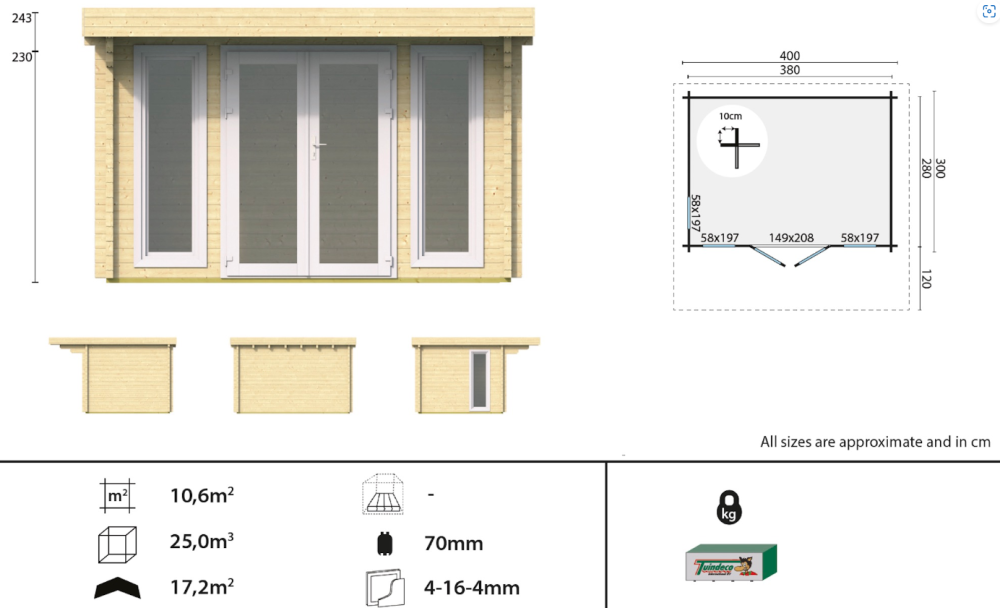
-
Do you have many electrics? Do you want them hidden or are you happy with conduits on the surface? Have you considered insulated roofing panels instead of a flat roof? It may be less labour?
-
How on earth are they justifying a 3m stack?
-
Thermal bridge of vertical metalwork
Iceverge replied to MattMiller's topic in House Extensions & Conservatories
@MattMiller It sounds like a whole chunk of heartache. What will your budget allow? Can you provide any pics of the outside structure etc? In the short term I would get a dehumidifiers and let it in there 24/7 and stop bathing/showering too if possible. You need to stop putting any more moisture into the structure ASAP. What kind of ceiling height do you have to play with internally? Maybe there's a cheaper solution than stripping the roof and starting from scratch. -
Unless you have an enormous volume of air or the alley is severely enclosed it should be fine. Hard to say without seeing it. Any chance you have a section through the build showing the alley and dimentions?
-
Can we dig into this? Various trades onsite and designers can be all too happy to solve their problems by doing the easy thing and shoving the problem to the next guy. Do you have any plans + pics to post and maybe the collective here could come up with some clever ideas for routing the MVHR? Rectangular ducting, combined external terminals etc all offer flexibility that your MVHR designers may not be aware of. Avoid holes in the roof if possible!!
-
It's there to ensure the airflow to allow the framing to dry to the outside. I think 50mm is normally specced as a minimum with external clockwork just to give a greater allowance for any mortar droppings. 25mm is fine from a ventilator perspective and it is lightly any big problems would already have made themselves know. 215 block externally may have been the originals plan. As the timber frame has no sheathing it's possible the engineer was counting on the external wall for racking strength. Maybe @Gus Potter would be more knowledgeable. As for insulation like @ProDavesays insulated plasterboard is probably the easiest win. Worth costing this I would say.
-
What can go wrong with an immersion water heating system?
Iceverge replied to LeanTwo's topic in Boilers & Hot Water Tanks
Have you an unvented DHW system or an open vented one? -
Is it for hanging shelves etc from? 9mm is a bit thin IMO. You might save yourself a lot of money and Hassle using batt insulation between the studs than cutting PIR too
-
Holy Moly!!! Congratulations and welcome! This is not a project for the faint of heart but a very interesting one. Step 1. Deal with the water. Fix the roof. Did all around the walls right down to the foundations (carefully with a small digger) and install a french drain. Step 2. Obviously make it liveable you will need to do some serious insulating. As the external has such lovely stonework and proximate buildings I would suggest internal insulation. Two choices here. Breathable insulation stuck to the inside of the walls or a box within a box. Given you have no shortage of floor space I'd go for the latter. Here's a nice project for inspiration. https://www.greenbuildingstore.co.uk/technical-resource/cre8-barn-stirley-farm-enerphit/
-
Do you have a laser level? I did my garage with a cheap one from Lidl. Just attach it at one side of the site onto something solid that won't move. Use a story pole ( like a 3x2" stick) to take a measurement of a known height (eg the floor) and hey presto you can transfer all heights around the site.
-
With that budget I'd consider EWI. Then all the interstitial problems go away. Also it is important that you have a proper ventilation strategy. Suckling out or blowing in continuously at a small volume. It'll really help control moisture in the house.
-
Practical experience of ceiling acoustic performance sought
Iceverge replied to dnb's topic in Plastering & Rendering
What kind of joists are you using?