Iceverge
-
Posts
4487 -
Joined
-
Last visited
-
Days Won
32
Everything posted by Iceverge
-

Correct heat pump sizing for passivhaus
Iceverge replied to markharro's topic in Air Source Heat Pumps (ASHP)
Those numbers suggest you have lots of windows that are not facing south. Is your overheating spec ok? -
Generator to supply power to static caravan?
Iceverge replied to Ejfraz's topic in General Self Build & DIY Discussion
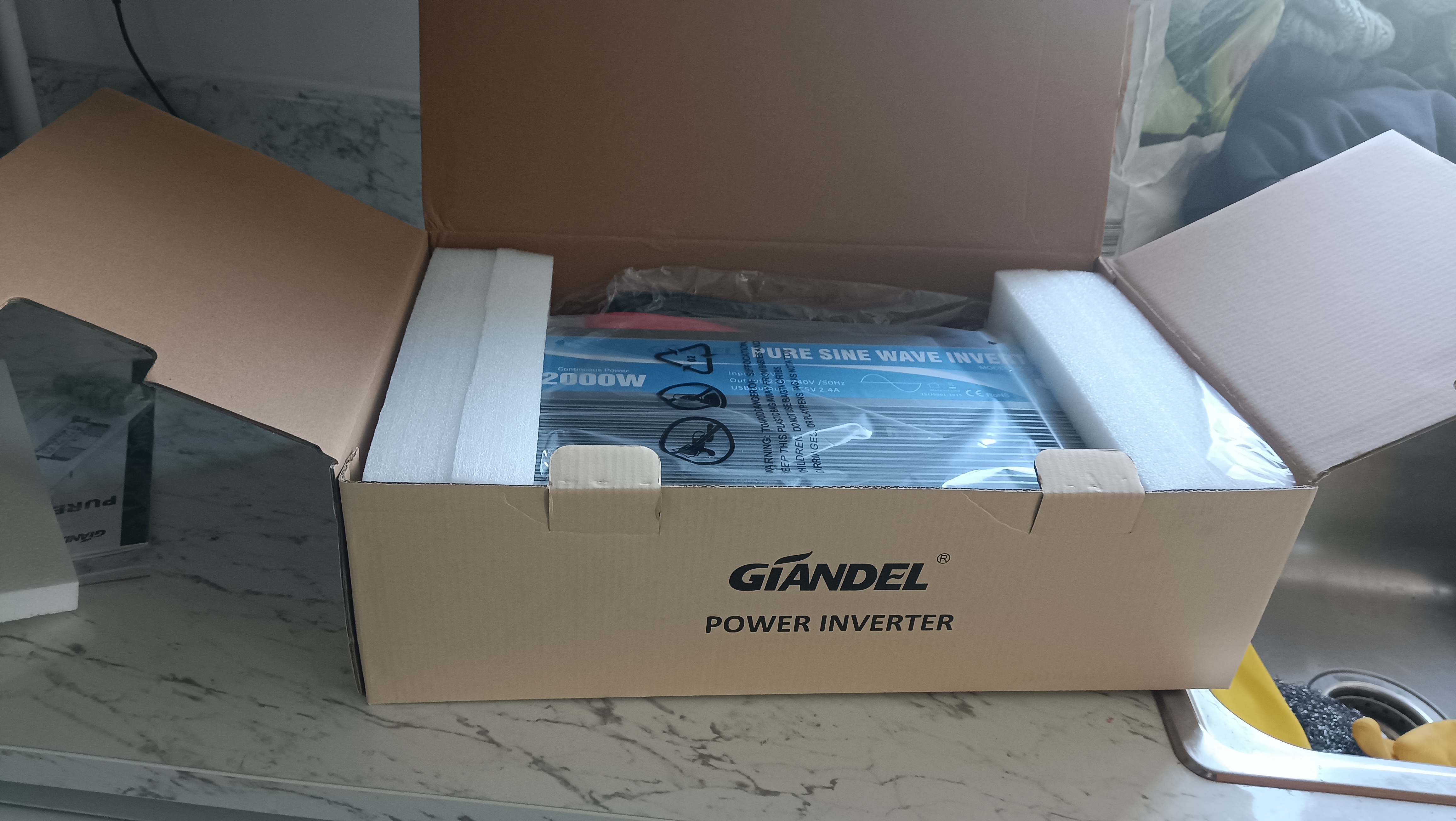
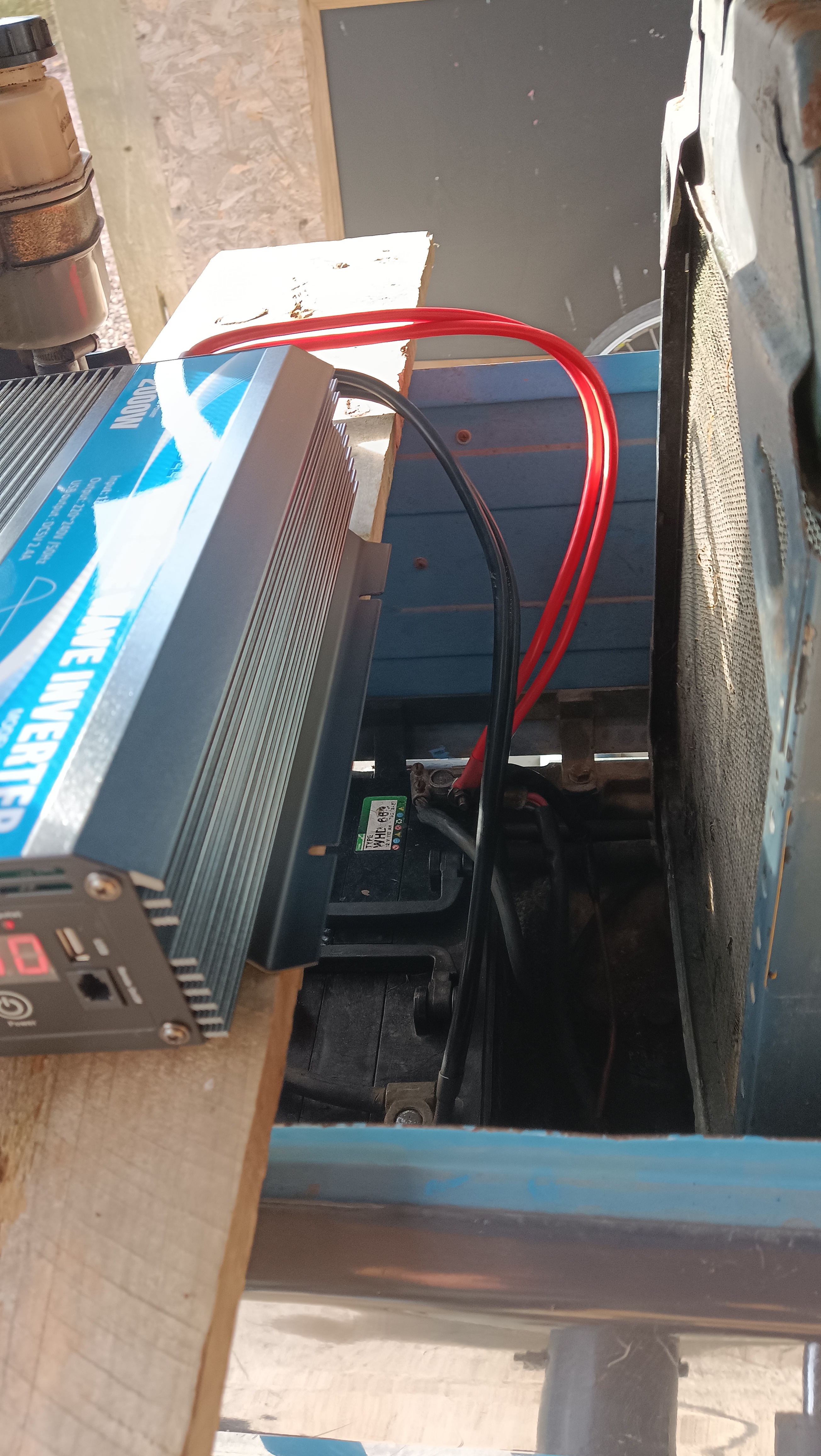
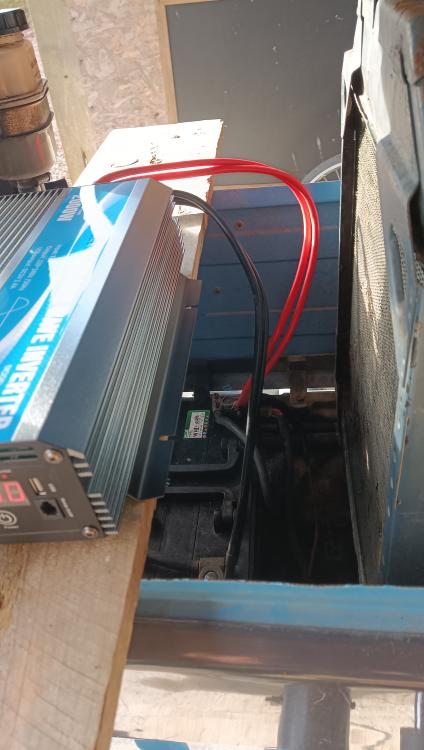
Reporting back. I wired up the inverter today to the tractor. Nothing . Tried the car too but the same story. It wouldn't power a 40w soldering iron via the 230v AC outlet. It did make one brief flash of a worklamp when I plugged it in on one try. The 5A USB outlet was working fine. The input voltage was a constant 14.4V. I think it's bust so it's heading back to Amazon. Annoying for €300+ With a billion 5* reviews I assumed it would at least operate for a while. Reading the 1* reviews it doesn't appear to be an isolated problem. I am often suspicious of the Amazon reviews system, now even moreso.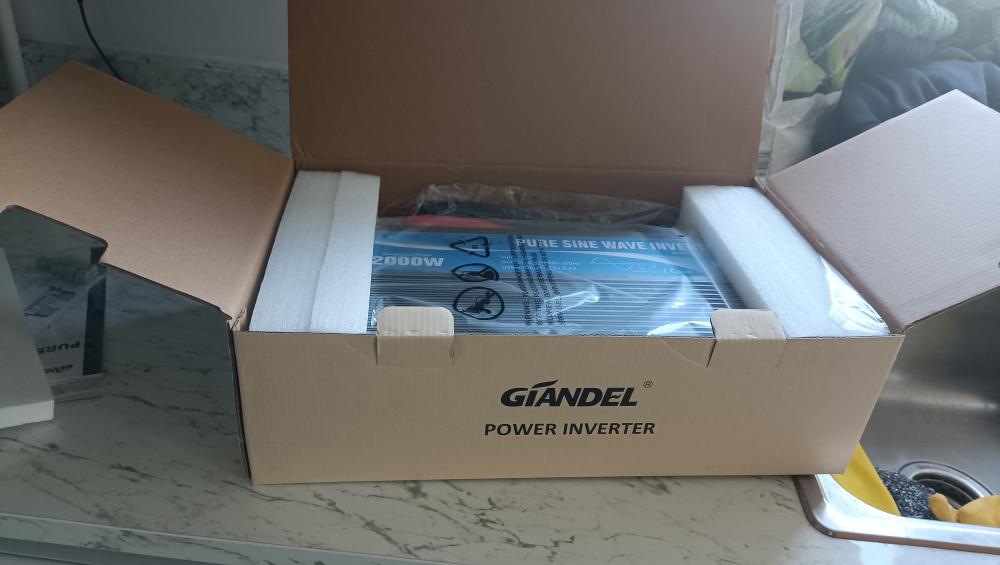
-
Mould on inside of block shed roof, advice please
Iceverge replied to coldfire3000's topic in Garages & Workshops
No problem. Please report back as to how it works out. We'll be a little wiser. -
Vaulted roof insulation condensation risk?
Iceverge replied to LinearPancakes's topic in Heat Insulation
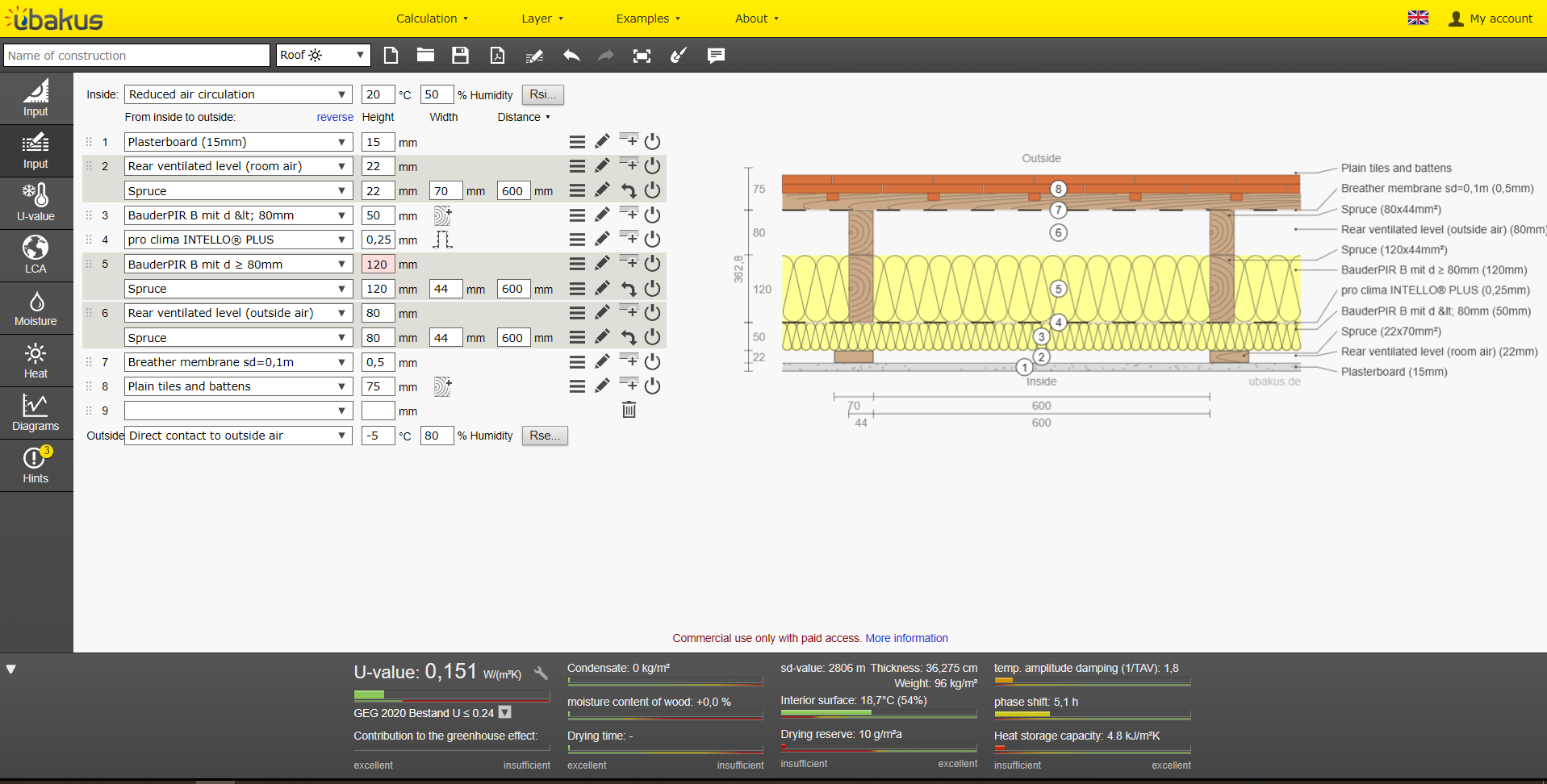
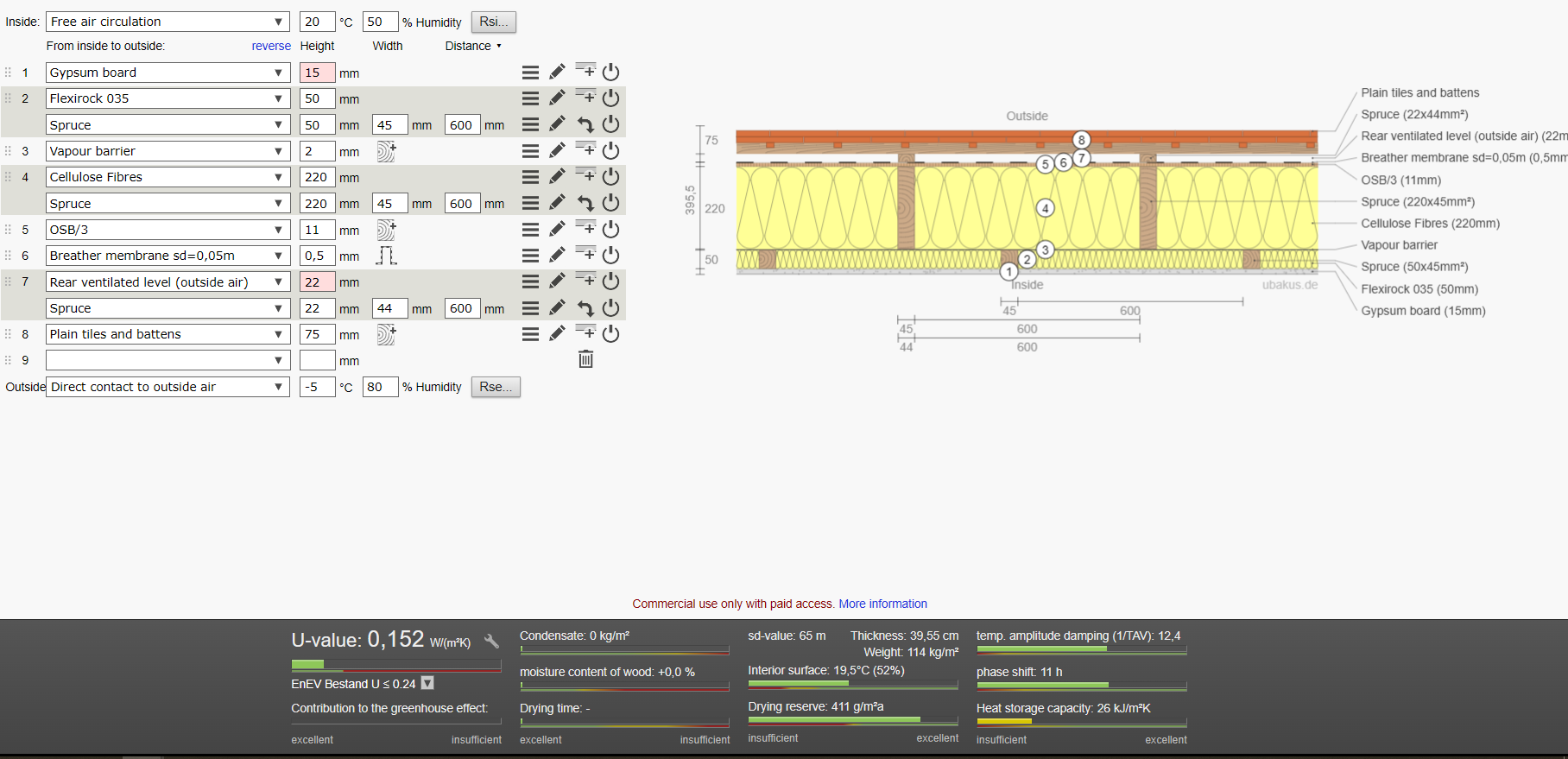
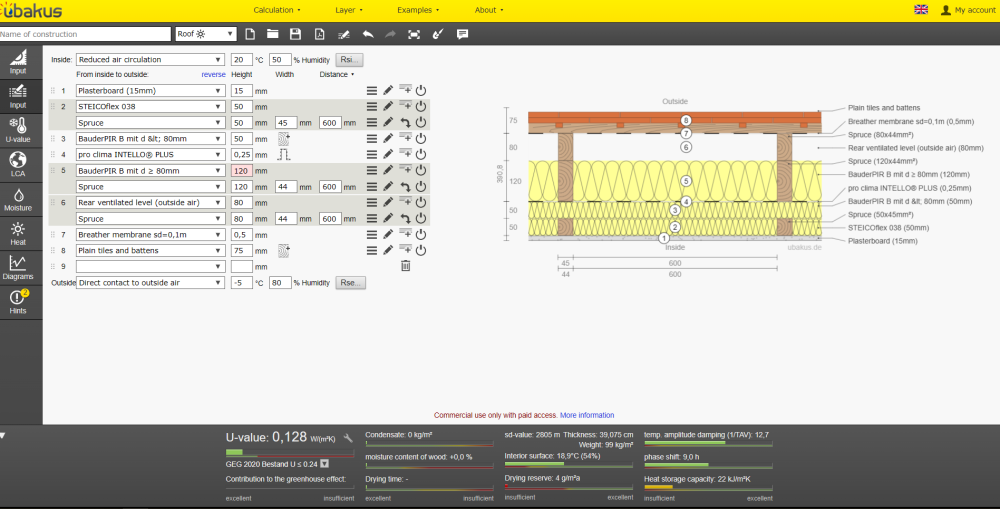
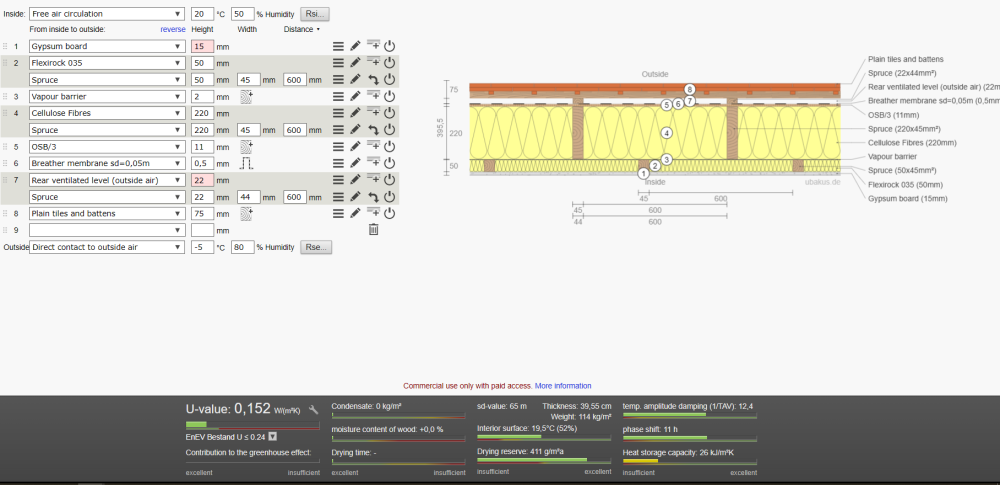
No it'll be fine. I still wouldn't run cables in the same layer as the PIR it'll be a pain. Attach the 50mm PIR to the rafters as a continuous layer using 70x22mm battens in line with the rafters below the 50mm PIR. Minimum 120mm screws. Foam all the boards where they are butt jointed with low expansion foam. This will create an unbroken layer of insulation and allow you 22mm to run cables etc. No worries about cable heating etc and there'll be space for 35mm downlighters if you want any. If you go for 15mm plasterboard you'll be able to use 600mm centres on the battens and it'll help with noise too. If you wanted to boost the heat protection aspect for summer you could swap out the 22mm gap for 50mm of woodfiber batts. The program has its limitations though and won't model the effect of the tiles on the roof accurately however so it isn't as bad as it looks in the above screenshot.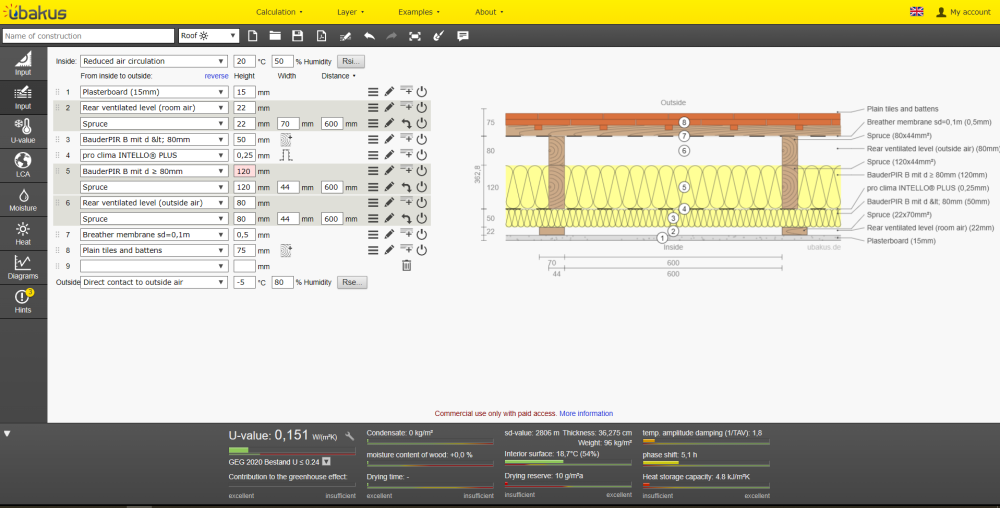
-
Vaulted roof insulation condensation risk?
Iceverge replied to LinearPancakes's topic in Heat Insulation
Play with Ubakus and cost up the materials on a m2 basis and you'll have an informed decision. By the way I couldn't show the battens perpendicular to the rafters so I just offset them to get the same thermal break effect. -
Vaulted roof insulation condensation risk?
Iceverge replied to LinearPancakes's topic in Heat Insulation
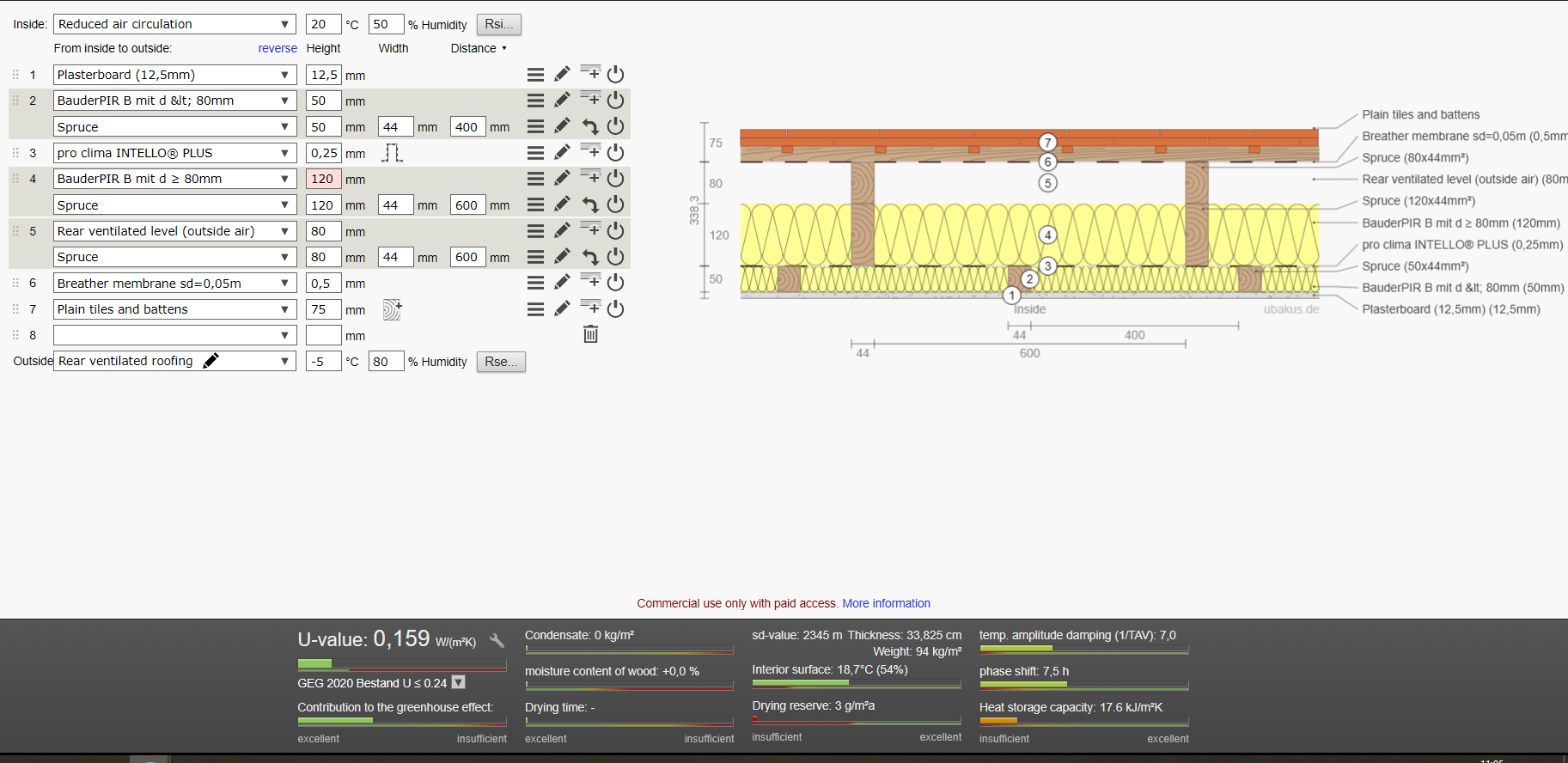
Should work from a condensation point of view. It'll be a pain cutting all that PIR however and getting it to fit snuggly. Not great from a noise perspective or heat protection aspect either. Running wiring behind the PIR will be tricky as you'll need to compress it or cut the PIR where it crosses the rafters. This setup would be better in my opinion. If you can't get cellulose then blow in mineral wool would have the same ease of labour, probably a bit cheaper. It wouldn't be as good for summer heat protection, airtightness, wind tightness or noise however.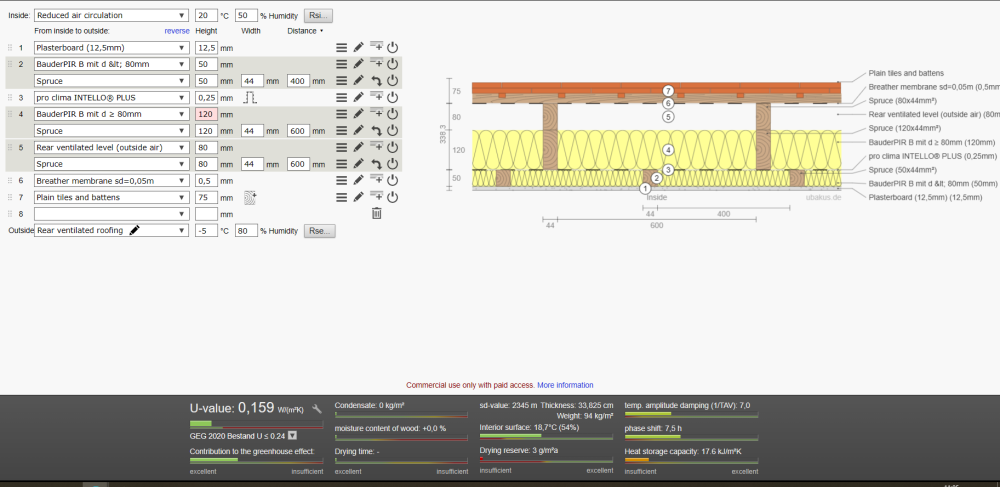
-
Recommended spacing between ground mount array rows
Iceverge replied to drcarrera's topic in Photovoltaics (PV)
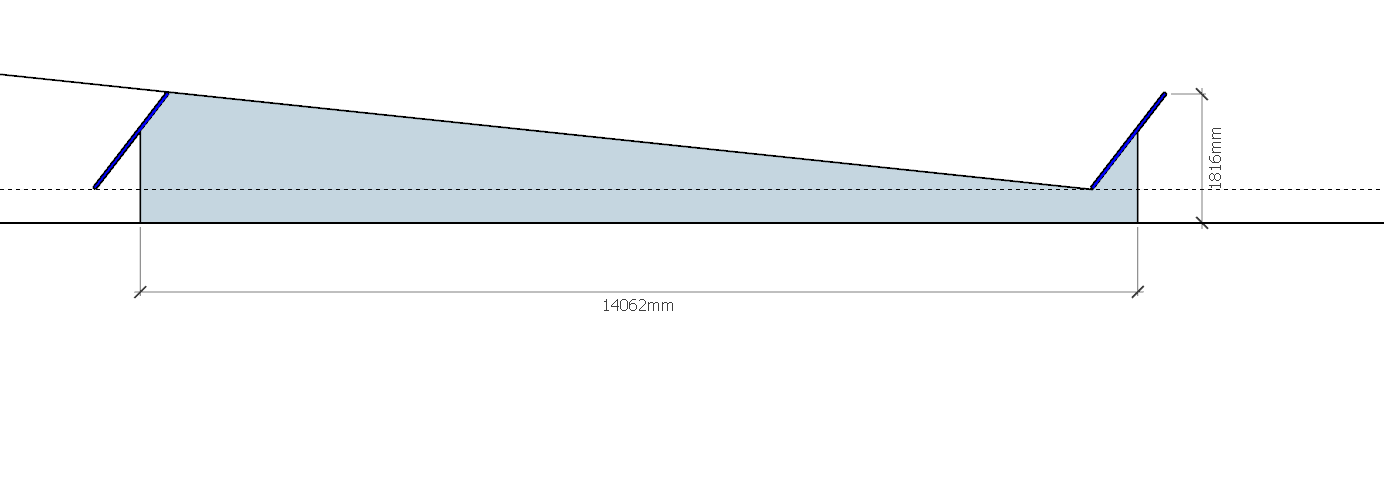
The sun it at about 6 deg elevation the Sun - Interactive Sky Chart | TheSkyLive.com from this website at 9am on the 21st of December. Sketching it out to scale it appears that you would need to have 14m spacing to ensure that the rearmost panels are not shaded by the first. You need to decide if your goal is maximum self use of the electricity or maximum annual production. The economics depend on your feed in tariff, the capacity you have to self use the power and your cost of bought in electricity. For maximum production 35deg works well in SE England, this enables closer spacing (especially on south facing slopes). Also an azimuth of true South is optimal. This is what commercial solar farms do. For domestic self use the equation changes somewhat. An angle of 35 would give 9.2MWh annually but only 338kWh in January. An Angle of 70deg would drop annual production to 8.3MWh but the January output would be 424kWh. Similar juggling can be done on a daily basis by splitting the array East/West giving more power in the house at times you will use it at the cost of total production. Search for @ProDaves henhouse on here. These daily fluctuations can be buffered somewhat if you have a battery or a load that can be timed from say 11am to 1pm. My rough guess on this is you'd be best off with a single array of 24 panels in landscape, 2 high at about 60-75 deg pointing due south.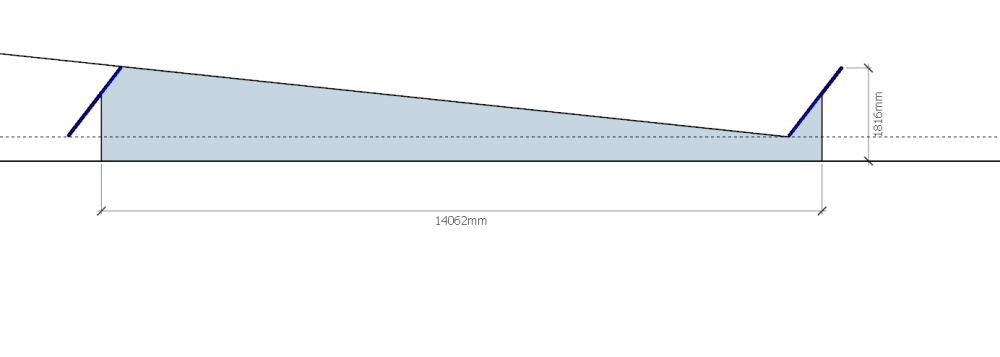


-
Mould on inside of block shed roof, advice please
Iceverge replied to coldfire3000's topic in Garages & Workshops
Correct Ideally you would have no penetrations at all in it but those that are there would need to be adequately sealed. It should be returned to the wall and sealed here too. Then some ventilation above it. "Natural" ventilation (hole in the wall) relies on convection from heat differences or else the wind to move air. If the building isn't heated you won't have much convection although if it does get heated via sunlight a high and a low level vent will should help. Similarly the wind needs to be able to blow through the building. Vents on a wall facing the prevailing winds and the opposite are best. I don't know. Mould relies on moisture to grow. You might risk trapping moisture inside the ply as this will only create a skin on the surface. A penetrating treatment that will soak in would be better. Get the ply as dry as you can (maybe wait for summer or use a heater/heating) and then try painting on some solvent based wood preservative that will soak into the wood. Be careful of your eyes and ventilation when doing this. Try a small test patch and see if the mould returns. Yes, you could lay insulation over the felt and refelt again over the top. -
Mould on inside of block shed roof, advice please
Iceverge replied to coldfire3000's topic in Garages & Workshops
Ply has a habit of doing this. In winter temperatures the air inside the shed will be slightly warmer than the outside, hence able to hold more water vapour. Once that damper air touches the cold ply, boom you get condensation and a small amount of mold. Insulation outboard of the plywood would keep it warm and solve the issue. Otherwise just ventilate away as much of the inside air as you can. You could go down the line of installing a really robust vapour barrier inboard with ventilation below the ply but I don't think it's worth it. -
Some cardboard (seriously) with the hollow core has pretty decent insulative values for the thickness of it if you wanted to try something cheap (free) to get a feel if it would work or not.
-
Cost of airtightness retrofit?
Iceverge replied to anonymous's topic in Energy Efficient & Sustainable Design Concepts
Should be. The bigger the better I say. Maximum attack!! One point I would note is that the flange area around the edge seems minimal. You would be left trying to cut a very accurate hole and tape to the bare minimum the remainder. Something like this would be twice as powerful and easier to fit. Just get the seller to include the plug and a few cm of wire when posting it.
-
On the inside of the door.
-
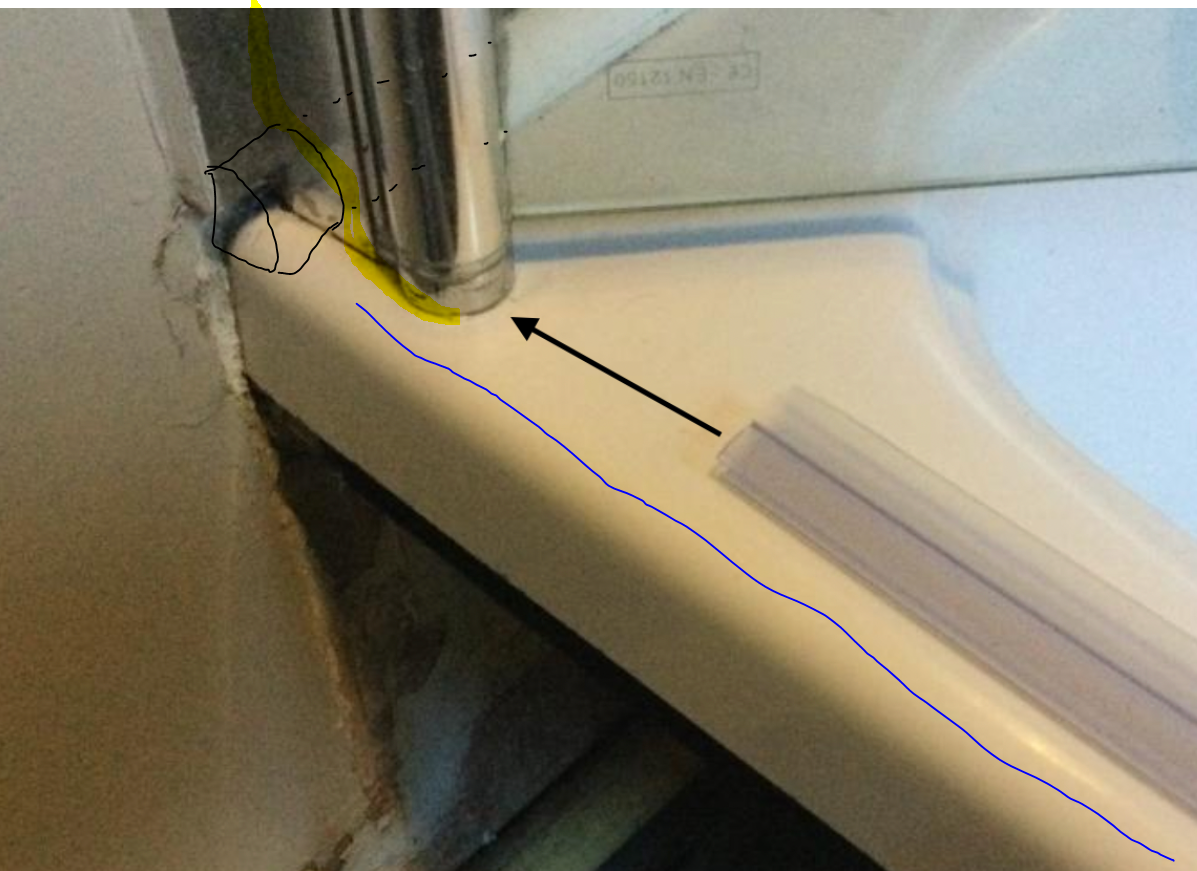
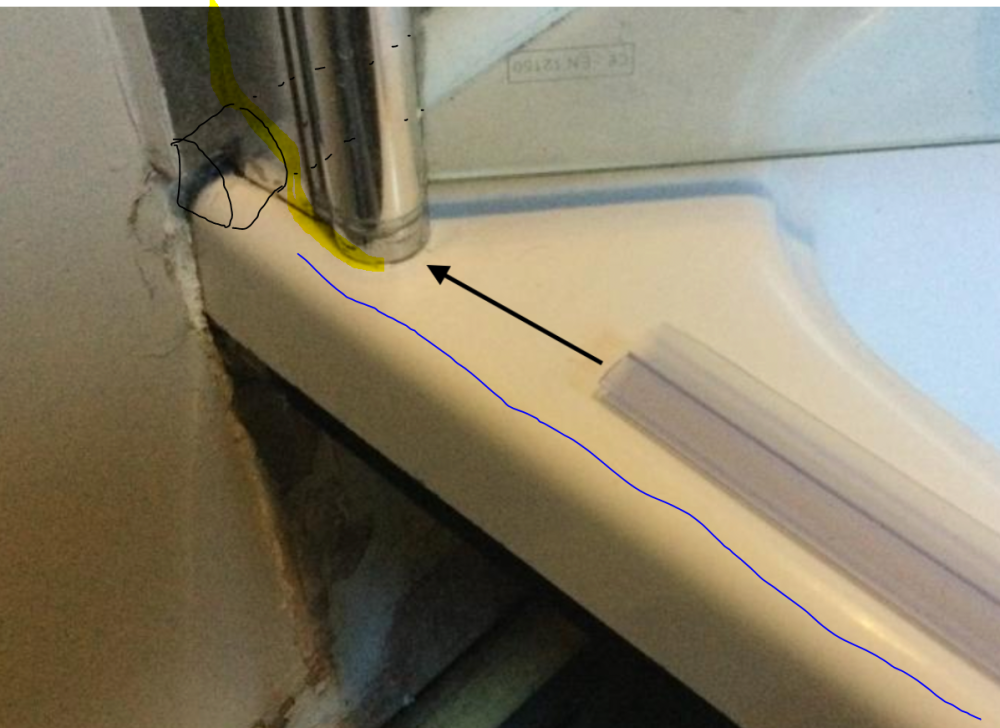
These seals are indeed rubbish. I would remove the screen. Make sure the bath to wall seal was continuous right out to the edge of the bath. It may require cutting an arc out of the shower door as shown ( notice my hi-tech 3d renderings!) or doing some inventive siliconing. Then running a band of clear silicone where the yellow is at the outside of the screen only ( ask me how I found this out! Then attach some kind of dam where the blue line is. Maybe a strip of PVC? It may prevent the screen from moving outboard but should help any drips work their way back into the shower. Alternatively those curved shower curtains are actually not too bad. They don't tend to get all damp and clingy like that uninvited affection we've all had with shower curtains of yore.

-
Could you glue some ply faced PIR on to the internal face and get your joiner to make trims to make it look good? One slight (maybe overthinking it) worry I would have is getting tangled in the curtain in a fire escape situation.
-
Cost of airtightness retrofit?
Iceverge replied to anonymous's topic in Energy Efficient & Sustainable Design Concepts
Get some simple ventilation going. So long as you have some air somewhere being mechanically pushed into or drawn out of the building 24/7 it'll make a noticeable difference to humidity levels. Low humidity means everything feels warmer. In our old rental cottage I used to leave the kitchen extractor on and the internal doors open while we were out for the day. It ensured that any damp stale air was well diluted and removed from the house. It made a noticeable difference. -
Self Build Novice - Navigating Minefield of Options!!
Iceverge replied to Lucasgrantmaw's topic in Introduce Yourself
Welcome @Lucasgrantmaw You can build almost any style or type of house out of anything but some styles lend themselves to different methods. Do you have planning permission? Do you have a budget to work to. Do you have any special requirements for the house? We used block and block. Strip foundations. Passive house spec. One small heater keeps the house comfortable. pros 1. Cheapest option 2. Ready supply of materials and skilled labour. 3. Easy to insure, engineer, and explain. No educating professionals or searching for specialists. 4. Low risk of suppliers defaulting. 5. Very quiet. 6. Weather tolerant 7. Durable. Cons, 1. Messy 2. Slower 3. Huge embodied carbon. 4. Not nice to install services or drill holes .- 11 replies
-
- 1
-

-
- isotex
- eps foundations
- (and 1 more)
-
Need advise on roof Insulation with 7cm rafters
Iceverge replied to GlanMenai's topic in Heat Insulation
Do some calculations is my advice. MF is largely oversold IMO. The insulant values are typically small. If concerned about heat protection I would sway towards denser insulations like woodfiver and hemp and even rockwool. Google "decrement delay" for an explanation. The ventilated cavity above the insulation will above an effect on the amount of radiated heat absorbed by the roof too. I echo @redbeards concerns about the weight of the build-up. Those rafters may be at the limit of their load capacity as is. I would look into making a bigger rafter by putting a 50*50 or 70x50mm battens below the purlin on line with the current rafters connecting it to the 2*3 battens with plywood gussets or plates essentially making an I beam. Then filling between the rafters with 250mm of insulation batts. 50+mm of. Insulation over the top. Wood wool and lime render to finish. -
Welcome welcome. Pics always appreciated.
-
Generator to supply power to static caravan?
Iceverge replied to Ejfraz's topic in General Self Build & DIY Discussion
I'm waiting for a pure sine wave inverter to arrive from Amazon as a backup for the house via a changeover switch. Wired to my car alternator of 150A it should be able to power the lights, TV, fridge, borehole pump without too much trouble. I tried did try previously with a cheap modified sine wave inverter but it didn't play ball with the LED light bulbs, induction hob (ok that was pushing it) and the electric fence energiser. It worked perfectly for any electronics's with a built in adapter/rectifier (TV laptop) and any dumb appliances like incandescent lightbulbs. It even had a good attempt at the 2kw kettle although when I tried this it must have really "squared" off the sine wave because all the LED bulbs went haywire. @markocosic came up with the idea here if you want to read more. https://forum.buildhub.org.uk/topic/24440-back-up-generator-advice/?do=findComment&comment=375675 I will report back in the next week or so hopefully. -
What can go wrong with an immersion water heating system?
Iceverge replied to LeanTwo's topic in Boilers & Hot Water Tanks
You can get exhaust air heat pumps for DHW only. In fact the exhaust air heat pumps for space heating are a bit like trying to invent perpetual motion. The energy needs to come from somewhere! Here's an example of a DHW ESHP. You get excellent COP with the elevated temps that the heat pump can harvest. A2A or stove heating the air means you'll get air to water heat pump running costs without all the plumbing trouble and cost.
-
MVHR Loft Installation - Inspiration
Iceverge replied to richo106's topic in Mechanical Ventilation with Heat Recovery (MVHR)
Nothing major, Just that I noted PIR boards in the cavity. Expensive and tricky to get right. It looks like a 100mm cavity, I would consider switching to mineral wool full fill batts. Cheaper and they will work much closer to their design insulation value in reality. A parge coat and then insulated plasterboard would give you the required U value and help deal with some of the cold bridging inevitable with a renovation. -
Is the washing machine unable to cope with a large volume and pressure of water and so has to cycle the solenoid to throttle the flow? Maybe some kind of inline flow reducer would work? No huge knowledge here. Just spitballing.
-
Where is South please? Do you have any elevations/ pictures of the house to give an idea of how any new roofs might tie in.
-
How deep is your hallway coat cupboard/wardrobe?
Iceverge replied to Adsibob's topic in New House & Self Build Design
Hooks, hooks are the way to go. We're all manically busy people, nobody has the time to fiddle with hangers in the 21st century. Put a few rows on the back and side wall. 300mm depth would do you then. -
No, I'll be the same regarding insulation. concrete thickness makes almost no difference to the heat loss value and none when there's a ventilated cavity inside it.