
Nickfromwales
-
Posts
30353 -
Joined
-
Last visited
-
Days Won
297
Everything posted by Nickfromwales
-
A SA relies on an expansion vessel too, and if not regularly inspected and maintained, and it failed causing the SA to fail, you'd be outside the warranty criteria. If you cannot do that test and inspection ( drain down the cold system, read the pressure and adjust / top-u as necessary ) and then refill the system, annually, then you're resigned to paying someone to do that for you, ( so a SA is not "fit and forget" either ). I'm fitting UVC's in highly insulated homes, ( my clients are building all the way from airtight and well insulated, all the way throuhg to one we did recently which exceeded PH certification and attained ZEB credentials ) and, to date, no reports of major side-effects at all. Any issues at yours @ProDave? I design all my clients plant spaces to have MVHR extract point(s), to manage the stagnant heat normally found from the DHW device, but also any other equipment which emits waste / latent heat ( albeit as well as MVHR will allow you to ), and to capture that heat for re-distribution to the house via the HR element of MVHR during winter. In the summer, with the elevated incoming cold mains temps, you can easily revert to a lower set storage temp ( al-a @ProDave and others ) to minimise the impact. Bear in mind also that modern UVC's are VERY well insulated and have quite low standing losses ( around 1-2oC per hour max ) which reduce further when the stored temp is closer to ambient. @Jeremy Harris only had issues from excess waste heat when he chose a thermal store with an open F&E header tank ( a combination store ) vs an UVC......which he then swapped out to reduce losses. However, I imagine that the annual service ( inspection ) of a SA would be cheaper than a full G3 UVC inspection, but once you ask a professional to attend ( a call out ) then you're already into that fee regardless, so I cannot see the differences ( savings ) being huge. It would be more cost-effective if you had, say, a boiler or an ASHP service person coming out annually anyways and they were asked to check either 'whilst they were there'. I imagine fees would differ dramatically dependant on postcodes.
-

Where is the kWh price heading in 2022?
Nickfromwales replied to epsilonGreedy's topic in General Self Build & DIY Discussion
We're being taken for a ride with wayyyy more than just bloody energy prices. Just puppets dangling from the strings of the elite............ -
Specifying the correct unit for the application is paramount to successful ( and economical ) ownership. Then the type of controls you marry up to it and how you heat and discharge it requires a lot of understanding of how the units 'behaves'. I got called out to a property to see why a SA "approved installer" project was leaving the homeowners without DHW. The capacity was decided at 'size 12' ( aka Thermino 300 ) on paper, but the installer allowed himself to deem it fit to install 2x 6's instead. Same capacity, so what can go wrong? One unit was on grid and the other on excess. Great in the summer, but when PV generation went to the floor they were running on a 6, eg one not huge bath and one shower and zero DHW left. More a problem there with design vs the product itself there, but an example of how ( even at the time when the internal controls were inn play, so not an early unit ) there was still a huge void in the correct design and implementation of these units. Sadly for the homeowner, they ran with this design and finished the house. That meant no opportunity to get electrics and plumbing altered, so both units needed to be changed to a 12 IIRC, ( plus a lot of money ) to resolve . What they should have had was 1x 12 ( core DHW ) + 1x 6 ( pre heat unit on PV ). The 'problem' is with a SA you cannot add a second immersion and 'super-heat' with PV excess, you can only heat to its stated max PCM temp capacity and no more. An UVC is able to take an additional 30-40+% of 'additional' charge ( dependant on what your minimum / set-back temp is set to ) which makes it great for use as a heat capacitor / battery with zero detriment to longevity. Cost uplift is just the cost of the second heater, and no additional footprint, or major plumbing / electrical works. CONSIDERABLY cheaper option with better results too, imho. With 400-500% cost increase to consider, its just too expensive a trinket for most now.
-
Sadly the inevitable cost of replacement pumps will push you even further back on the breakeven. As you say you've already got the system anyways, be mindful then to maintain it and keep the sump strainer / filter clear and routinely check the cold feed sensor to make sure the pump NEVER EVER runs dry. That's instant suicide for the pump and bye-bye money.
-
You struggle to get discernible answers about gas combi boiler features in the plumbers merchants TBH. Drop the words "phase change material" in and watch the poor buggers melt......
-
But SA are still not selling to the public then. They’re purposefully divorcing themselves from the mammoth number of enquiries and deluges of email regarding their products, and that then falls to the “approved” folk.
-
Insulation between floors - top or bottom?
Nickfromwales replied to SuperPav's topic in Sound Insulation
Yup. And less pressure on you to out-perform the guys waiting to close the areas off later downstream too -
Height of flush on concealed toilet
Nickfromwales replied to Mike_scotland's topic in General Plumbing
Unsure how the plate can be so low if the 1148was used. -
Variable temperature boiling water tap
Nickfromwales replied to SimonD's topic in Kitchen & Household Appliances
I'm sorry, I'm not familiar with Kelvin. Only Jeff, and Tom. -
Insulation between floors - top or bottom?
Nickfromwales replied to SuperPav's topic in Sound Insulation
We're opposites again lol. As the top chord of the posi-joists takes up a good 50-60mm depth or more which is dead space anyways, I always recommend putting the insulation up in between, tight to the underside of the upper deck, and to hold it up with either fishing line or a nylon string and a staple gun. Then we run all the services underneath the insulation. Helps a lot with keeping most of the service void open and clear, and I prefer that for electrical etc so you're not cutting or compromising insulation where there are MVHR vents / downlights / speakers and so on. The insulation can go in early and be done with, and IMO it's a far easier install all round. Much of a PITA when the insulation fitters have pushed a cable off point and you need to go digging through acoustic insulation to find it. -
Variable temperature boiling water tap
Nickfromwales replied to SimonD's topic in Kitchen & Household Appliances
Pretty much. -
Variable temperature boiling water tap
Nickfromwales replied to SimonD's topic in Kitchen & Household Appliances
Quooker is the ONLY true boiling water tap which stores boiling water at ( just over ) 100oC. All the others store at "really close" to boiling. The Combi iteration allows temp selection of between 40-60oC but after that its boiling or chilled. The problem with the others is you'll be hit and miss eg if you've drawn water just before the stat kicks back in, just after it has shut off at max, and the variability of that stats hysteresis. -
Height of flush on concealed toilet
Nickfromwales replied to Mike_scotland's topic in General Plumbing
They do an 840 and a 990, as well as the 1148 Check exactly which one you have? -
Height of flush on concealed toilet
Nickfromwales replied to Mike_scotland's topic in General Plumbing
Product Details Brand: Duravit Product Code: WD1020000080 Dimensions: (H)1148 x (W)500 x (D)155mm Self-supporting For drywall construction Suitable for panelling with plasterboards Powder-coated frame Suitable for pans with a projection of less than 625mm Adjustable feet 0–240 mm Mechanical front actuation Tool-free assembly of the transparent service opening plate Concealed cistern CE tested in accordance with EN 14055 Maximum flush volume 9l Marking of filling height Dual flush technology Adjustable flush volume Insulated against condensation Throttle for adjustment of the flushing flow Scope of delivery PE-wall-mounted toilet connection bend DN 90/90 PE-wall-mounted toilet connection set DN 90 Wall-mounted toilet fastening set M12 Mounting accessoires for lightweight construction PE-wall-mounted toilet reduction DN 90/110 for outlet bend 2 cover caps Pre-installed toilet frame for wall-mounted toilet *Adjustable feet, so the height of the pan AND the flush plate raise and lower, not either independently from what I can read from the description. I only fit Geberit, and the cistern height and flush plate location are fixed. Pans are sometimes required to be installed much higher, to what is called "comfort height", normal for elderly or disabled for eg. I prefer them up at that height tbh, but I am 2 away from the big 5-0 lol. -
Yet they wont sell directly to the public, so completely academic. Only approved installers can by these units. Ergo the warranty criteria is then down to those who have made it onto their "approved installer" list and whether they tick that box or not. Or even worse, the employees under the one representative that scraped through the 1-2 day SA training camp to gain the companies accreditation. In 4 years of being around them they were still coming out of infancy, and evolving ( aka learning by trial and error ), so it's a bit difficult to fathom how someone who's been on a 1-2 day course can walk away fully trained in the selection, sizing, design and correct implementation of such a device. It took me months, and umpteen long and detailed phone calls with SA technical staff to become fluent. Installing one is a couple of pipes and an expansion vessel, that's the easy part............
-
Height of flush on concealed toilet
Nickfromwales replied to Mike_scotland's topic in General Plumbing
And why do pasties taste so damn good when dipped in brown sauce? -
Height of flush on concealed toilet
Nickfromwales replied to Mike_scotland's topic in General Plumbing
You have an 820 frame then? And not the 1148? -
Height of flush on concealed toilet
Nickfromwales replied to Mike_scotland's topic in General Plumbing
Yes, so the position of the flush plate is set in stone as the max height of the pan governs where the flush plate will reside. You cannot have the WC height at one level and the flush wherever you like with a fixed frame. FYI the height is perfectly normal for a WC. WC and basin vanity units are max 830mm factory height off finished floor level, and the flush plates are usually in the front so at around 700mm off FFL. When discussing bathroom layouts with clients, I mark out the top of the basin and the top of the bath and they all shriek "that's wayyyyyyyyy too low!!". Then they go home to the house they've been living in for 20 years and realise that's exactly what they've had all that time. Top of bath at ~540mm of FFL looks like a high shower tray, even more so when you mark it on a wall in an empty room. Once your pan, seat and flush plate have been fitted, this arrangement will look perfectly normal. -
Height of flush on concealed toilet
Nickfromwales replied to Mike_scotland's topic in General Plumbing
picture? -
Bathroom underfloor & towel rail wet or electric?
Nickfromwales replied to Tadpole's topic in Bathrooms, Ensuites & Wetrooms
With MVHR the towels tend to dry off without even turning on and heating the towel rads. My clients often remark at how well this happens and how effectively the MVHR removes the damp / humidity also. Those would be big towel rads though, so you'll need space for them that's all. I would deffo just go with the simplicity of electric UFH, which is what I routinely fit on each project. Wet UFH on such small circuits is a PITA to install, control, and would see the ASHP / boiler having to fire up just to keep these warm when perhaps the heating would not otherwise be coming on. It would also need a separate dedicated manifold and pump to give higher flow rates temperature than the UFH would typically see. That adds to fatigue of the heat source, so has less than obvious side effects to consider also. Those costs will buy an awful lot of electricity, outside of what your PV will be producing, so KISS here is a no brainer. Electric UTH and electric towel rads would be my recommendation here. -
Good points, indeed. Excavating slowly and carefully to expose the cable all the way to the boundary will identify what the position of the cable is, the available length, and the options for any required service alteration. If it can just be pulled out and reinstated on the outside of the front facing garage wall, without needing extending, then that would be my preference for sure, but we've boxed in and covered so many over the years I've lost count. Usually a metal shield of sorts was sufficient to offer mechanical protection, like a length of 5mm steel C channel or similar. Any service alterations I've ever needed from the electrical grid have been relatively simple to request / have executed, and were not that expensive tbh.
-
A bit like check * trade and others, where some sites even allow negative reviews to be removed and often places where bogus positive reviews can get added by friends and family etc, or even by the person / company themselves!! Pure revenue earners afaic. If your workmanship speaks for you that's often enough to keep you busy anyways. For completeness, I have never been on ANY company's "approved installer" list, ever, as I'm usually doing them a favour not the other way around...... Back in the day, when JSH and others installed their own Sunamp units and the sale team was ~2 blokes, SA didn't actually even have an approved installer list.
-
MVHR system in new build
Nickfromwales replied to deuce22's topic in Mechanical Ventilation with Heat Recovery (MVHR)
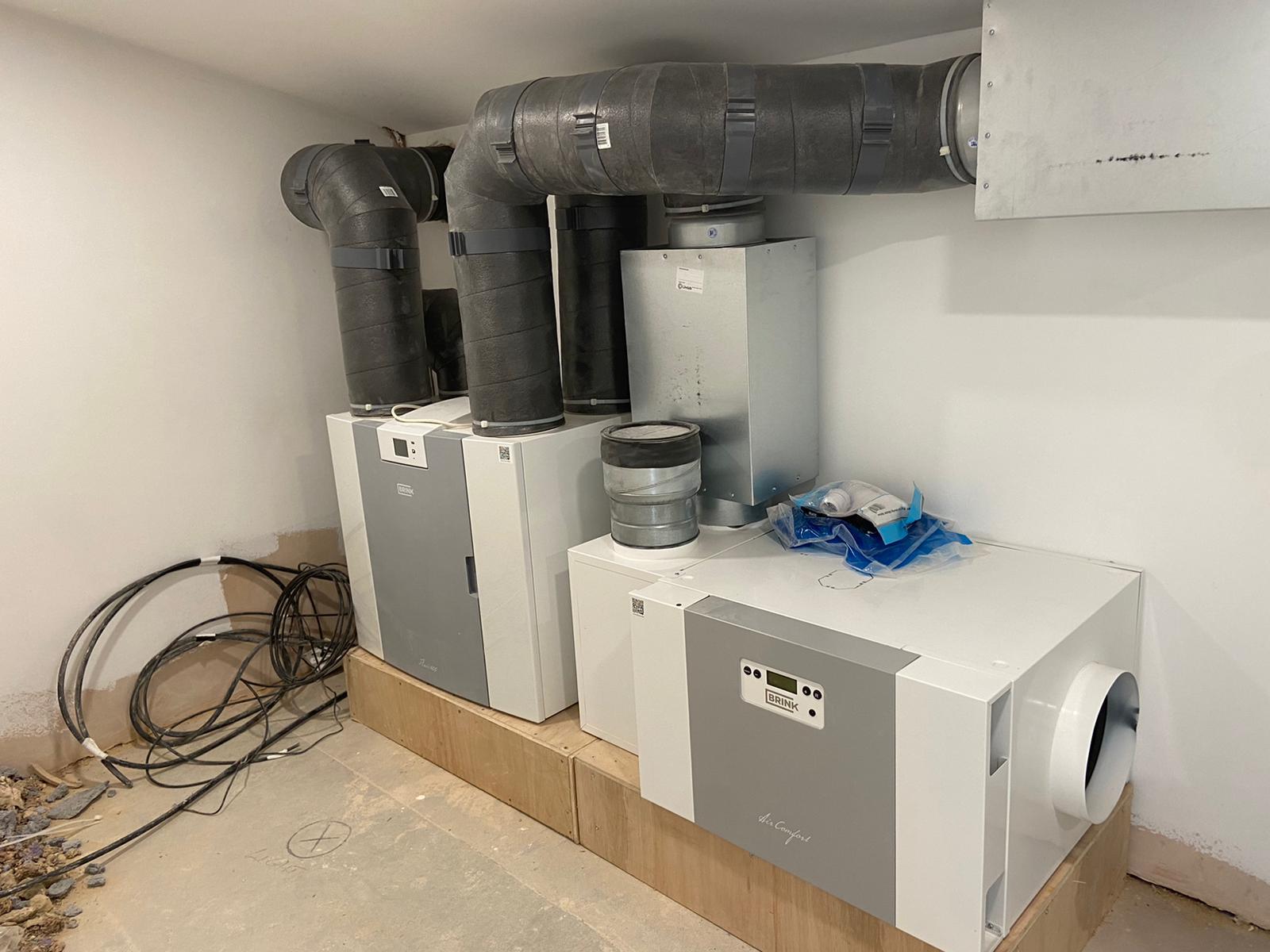
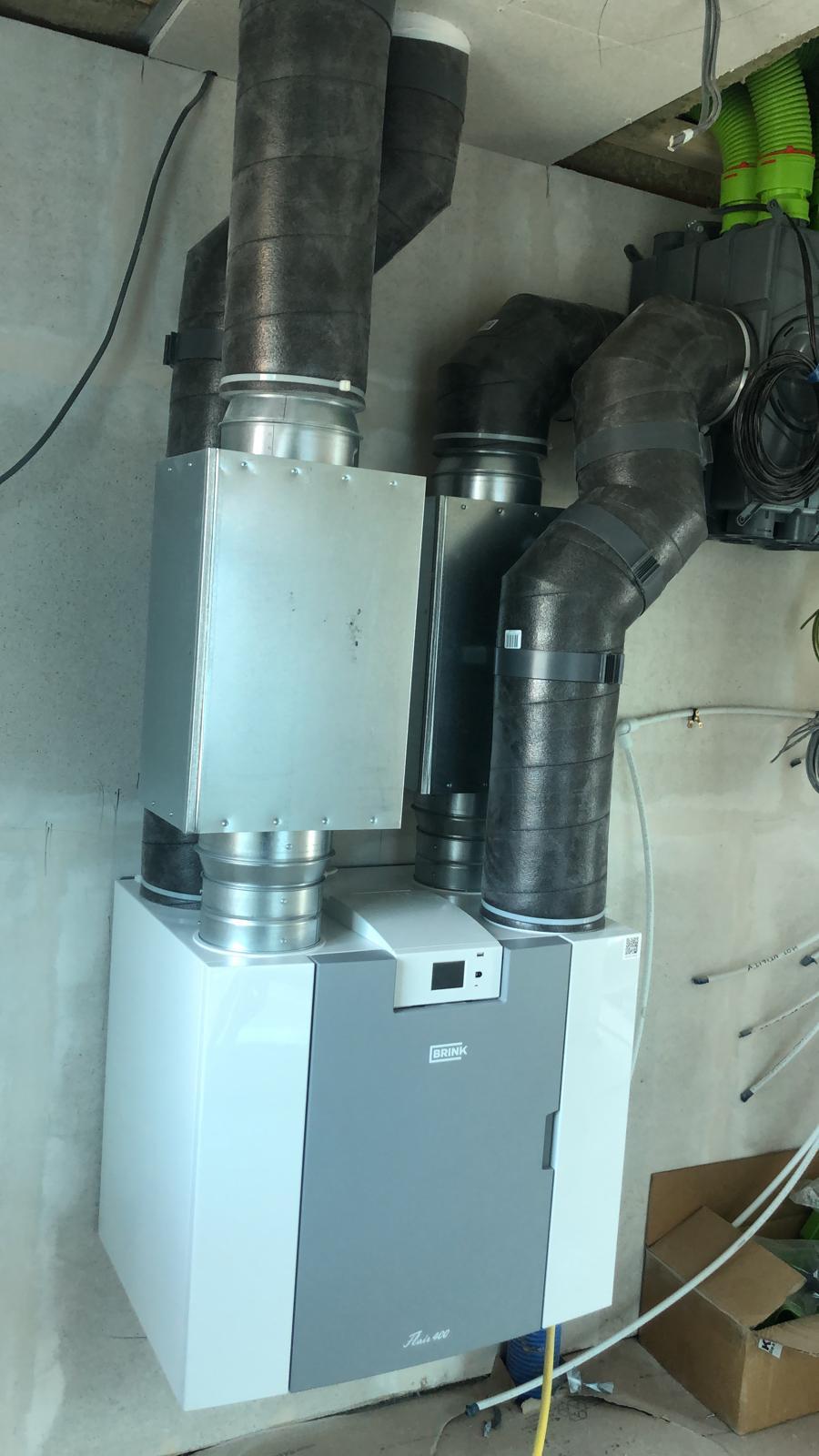
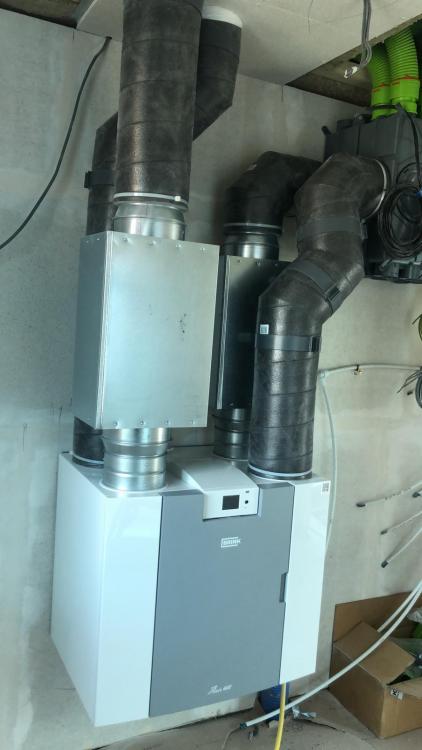
Yes, a manifold for each. The only thing missing from your line up would be the attenuators. The silver boxes in the image. I never do an MVHR install for a client without them tbh, as my focus is always on having a system which is inaudible on trickle rate and that starts with a design where such things are considered and factored in early on in the build process ( eg so the required plant space can be realised, as that is often under-estimated ). One such current project has needed the plant space increased to almost twice the original size allowed by the architect!! Nearly half the utility room had to be sacrificed or we wouldn't have got everything in. It still surprises me that self-builders ( and their architects ) will apply an allowance that they deem is 'sufficient' for plant space, and not engage earlier with an M&E consultant to get this fully understood before finalising plans. Having a mechanical system which is running 24/7/365 says it should have your undivided attention from the get-go, even more so when it is a system with the second largest bore distribution ducting after the soil pipework and may require penetrations through steels etc. I've also now started installing the Brink Air Comfort units too, which are supplied with either warm or cold water from the ASHP to give active post heating / cooling. These take up quit a bit of space though, but are a great companion to the Brink MVHR units. They're basically an intelligent FCU where the fans speeds get matched ( the Air Comfort has aits own integral fan to alleviate any stress on the MVHR unit fan which balances itself to the correct pressure / flow rates ) Nice bits of kit tbh. Attenuators on that install also. These installs really do need some thought and planning, but the results, as @TerryE's calcs demonstrate, can be very well worth the capital investment of such a system, purely in the knock-on costs they may negate eg not needing heating on 1st & 2nd floors because of the heat recovery element factored into the MVHR design. I'd rather spend money on a system that will save me buying fuel for heating, plus gives me an option to integrate cooling ( where an ASHP is present ), plus any money saved can be deducted from the supply and fit costs of the MVHR. Add to that the constant fresh air supply to all the rooms, 24/7, plus the ability to go mad with airtightness to vastly minimise ventilation heat loss, the biggest issue any dwelling would have, ( more so than having great levels of insulation ), as also stated above is a complete no-brainer.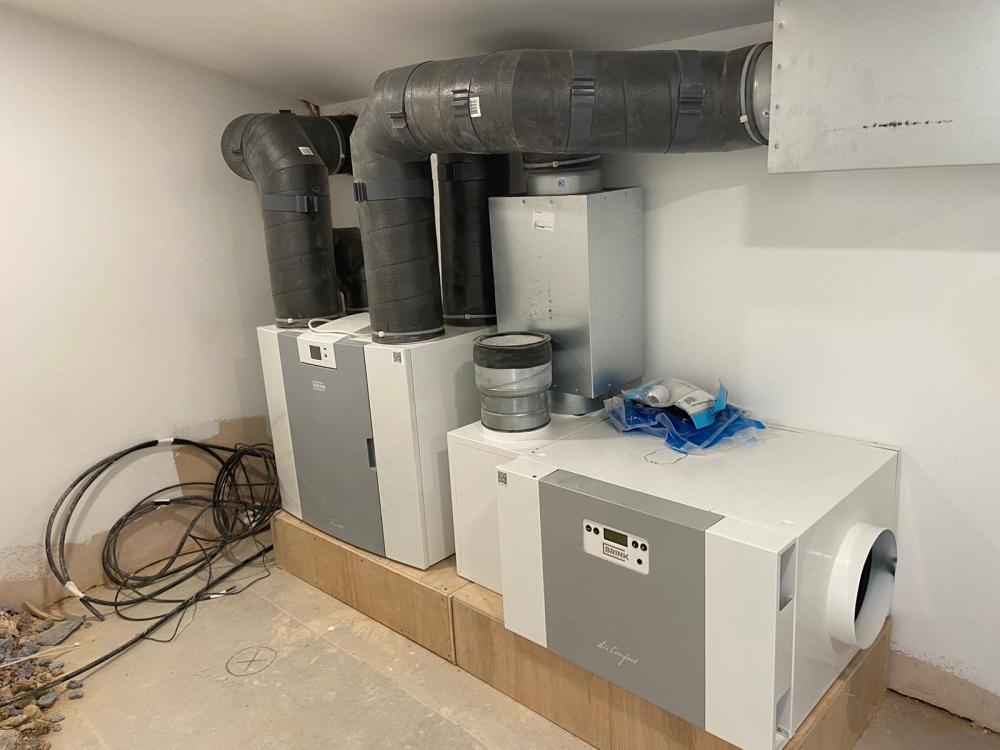
-
Sorry, my mistake! Yup. Trevor has never let me down. @lakelandfolk, Did you get the price off the website? You will do better if you contact him directly and see what he can do for you. Just mention my username and the forum and he should look after you.
-
IIRC @PeterW uses Gledhill a lot, but I've used Telford for as long as I can remember.