
Nickfromwales
-
Posts
30306 -
Joined
-
Last visited
-
Days Won
295
Everything posted by Nickfromwales
-
 Yup. Done a few with both types (sprinklers and mist) of automatic fire suppression systems. This was what I did on an MBC PH TF client project. I made top hats out of membrane and tape, using an off cut of the 125mm duct (or something round etc) and then set them in to give the required depth. Did the same downstairs when I did the prep for the cinema room speakers to go in (Dolby Atmos ones in the same type of ceiling, under the balcony). Easy enough to sort without adding more battens, if you know beforehand what’s going in etc. I got MBC to specify holes in glulam and steel beams to allow services to get about the superstructure with ease. Makes 1st fix a breeze!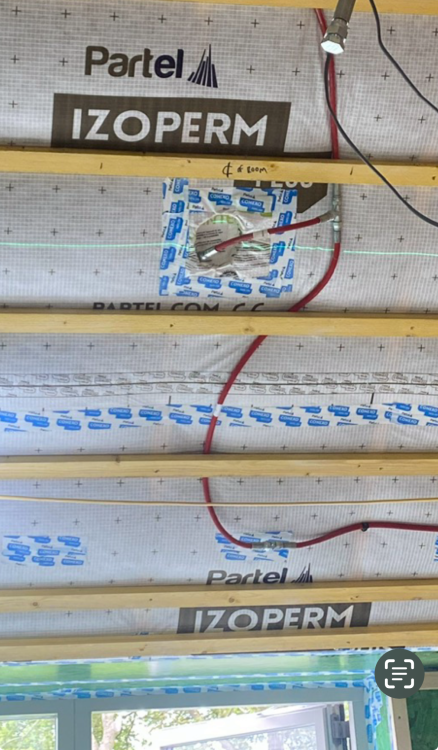
-
Beware how you create the opening, as if it is the thin / old / frail brickwork then disturbing it can be the beginning of a long journey. You may very well need to line this with timber stud frame, and then dress the doorway into that, to give strength back locally to the cut brickwork (drilling fixings into each course, and possibly bonding too). Some pics would help.
-
My thoughts too, , was just trying to be gentle but yea, agreed, go buy some bends and GTF on with it. @hauntedicecreamvan, have you allowed for some attenuators to keep operational noise down at the terminals?
-
The unit you’re buying is a totally different beast to the “bread & butter” Nuaire unit.
-
Look closely at AeroBarrier for getting the airtightness dialled in. If this is a refurb of an existing structure then this can offset a lot of time, labour, and expensive products in one swoop. Just had them on site on a masonry refurb and got a high 0.1 ACH, so deemed a rock solid 0.2. Damn them for not having two decimal places on their software!?! 😤 Oh, and congrats. 🥳
-
Glass balustrade fixing to Glulam beam
Nickfromwales replied to BotusBuild's topic in Windows & Glazing
All BCO’s I’ve ever seen just give it a poke / push and smile, possibly just wind, and move on to the next item. Glaziers were more concerned about size (length) of the glass, thickness etc and wanted lots of info before they’d even let me place the order! Good guys, and very conscientious tbf. -
Time for some new Makita goodies- any good deals on?
Nickfromwales replied to Crofter's topic in Tools & Equipment
FFX is where I bought 4 x 5ah batts and 1 dual fast charger in a deal. Had my plunge saw there too, but try CNS and see what they’ll do. -
Brink and Zehnder stuff is very well made and PH certifiable, so are very quiet and quality bits of kit. Why are you worried about adding the 45° bends? Just mount on the masonry wall and save all this trouble!!
-
Time for some new Makita goodies- any good deals on?
Nickfromwales replied to Crofter's topic in Tools & Equipment
CNS power tools are near me, but sell a lot online. Put together an order and email them for their best prices. Not sure when their ‘makita’ deals are on, but usually a great time to get discounts. Give them a try. FFX is good too. -
….and that’s where we bring this to a sober conclusion lol. No fecking fans under plinths!!
-
Joists have dropped - sister joists & ply??
Nickfromwales replied to dan_cup's topic in General Flooring
22mm P5 is used in every new build, so yes, it’s perfectly fine. Listen to the LVT installers and not the builder, he’s wrong and they’re right. You need the plywood binder as the final prep before the LVT goes down. Go 22mm + 6mm, and then ask the LVT installers to level (aka feather) the self leveller over the concrete section to suit. Don’t let the builder do it. -
Types of central heating pipework
Nickfromwales replied to SilverShadow's topic in Central Heating (Radiators)
You should have treated yourself to a HRC loop, and enjoyed zero inconvenience and annoyance; this needs to be removed from the bean-counting of most, as it's just not expensive enough to give two hoots about afaic and adds huge value / comfort. Add in the water meter whizzing around and it's a done deal. Add in solar PV and it's pretty much a zero cost. Stop being tight-arses, people -
For the obvious "kitchen / utility units will always at least be there forever" areas, yes, reduce the UFH according to basics. Most medium sized islands I will always pipe under, but more significant sized rooms don't need the 'help' so you can avoid if you choose to.
-
Nope.
-
https://forum.buildhub.org.uk/forum/58-structural-insulated-panels-sips/ Post there, and we can get the information flowing I'd disagree with your architect.
-
Joists have dropped - sister joists & ply??
Nickfromwales replied to dan_cup's topic in General Flooring
Concrete screw the last joist into the concrete floor to lock them to each other. -
Joists have dropped - sister joists & ply??
Nickfromwales replied to dan_cup's topic in General Flooring
If you have room for 22mm P5 boards, then do the base layer with that. Then go over with a thin layer of plywood as the binder for the LVT to go on to. Set the plywood binder to be higher than the concrete, and then feather the concrete into that with the SLC to get you snooker table flat; you need to be spot-on for LVY as it shows everything when the light is on it. Yes to sistering to get the joists ready for the P5, and use glue and structural screws to do this link, inserting them at a slight angle to use the whole length of the screw. Use resin wood glue, plenty of it, to join the two together forever. -
Hi, and welcome aboard! Please post a new thread in the SIP's / timber frame section, and then I can ask you "why SIP's and not TF, or ICF".............
-
Legend.
-
If you don’t want to lose the extra inch, you could use resilient bars. If there’s a floor above you’ll kill two birds with one stone; levelling and avoiding the humps, and getting sound sound deadening. Defo not a good thing to try and screw PB to two different levels, with screws so close together. The screws will just keep breaking through and the plasterboard stands a chance of snapping too. Resilient bars will drop you about 15mm iirc.
-
You’d convert MDPE > copper in a straight fitting, then go into a hep2o 90° bend. Not convert with a bend. I’ll watch the vid shortly. 👍
-
Amen. 🙏
-
How to attached studwall with cavity with no ceiling connection
Nickfromwales replied to Bruce's topic in Heat Insulation
Don’t use those, they’re massive cold bridges. https://www.travisperkins.co.uk/wall-and-frame-ties/ancon-staifix-stf6-timber-frame-cavity-wall-tie-box-100/p/252293?srsltid=AfmBOoofEZbj_x_ZnYybhpBGqkrwLBomudNsJ_VFHDfzfUP3PiK7j8et_Zk -
@-rick- Firstly, a warning! If this is a block of flats and you’re not on the ground floor, this could be disastrous if you feck it up. Just saying that so I can sleep later Is it easier for you to cut out the elbow and convert to copper where it’s accessible there, then just run 28mm copper to where it currently converts? No need for spanner’s and grips, nuts and olives, PTFE etc or other faff. You only need Hep2o 28mm fittings then, including being able to cut off the nut and olive at the existing copper tail and push a straight Hep2o coupler on to that. Much more DIY friendly route, and less tools / prep etc. Just needs a 28mm pipe slice. A Jnr or Snr hacksaw will cut the MDPE if you can borrow one. Cut it square, and use a £2 sanding block from one of the sheds to apply a very slight chamfer to the pipe before pushing in the insert. The conversion from MDPE to copper can be Plasson push fit, just needs an insert to go into the MDPE pipe (no inserts required in copper) and that’ll be right for life. Give the rubber O-rings the slightest smear of Vaseline, just a whiff, to ease pushing the MDPE into the fitting. Remember to measure the depth of the stop inside the fitting, use a pencil / other depth gauge, and mark this onto the MDPE before pushing it in, so you know it’s fully home. All copper cuts made with a rotary pipe slice will automatically be ‘chamfered’ and do not need to be ‘de-burred’. How’s that sound? Re my ‘warning’, I’d do the repair DIY, and recommend that you switch the mains off for the next few days when you head out to work. Then have it on and be using it whilst you’re there, until you are fully confident that the repair is kosher.
-
Skimming a wall with wallpaper/skim substrate
Nickfromwales replied to jfb's topic in Plastering & Rendering
You can buy patching plaster etc in the likes of B&Q in much smaller ‘hobby’ sized bags. Get the wallpaper off!!!!! Why do you think this failed ? Remember if using PVA on any surface you must plaster on to it when it’s still wet. If you let it dry it’ll have the opposite effect. Run a Stanley knife down each corner (a good few times) to stop the plaster breaking away from the side walls too.