
Nickfromwales
-
Posts
31381 -
Joined
-
Last visited
-
Days Won
346
Everything posted by Nickfromwales
-
@Walshie Room in roof or warm attic?
-
You didn't have to reread it furiously lol . Just wanted to check.
-

Boiling water tap - Quooker alternatives
Nickfromwales replied to canalsiderenovation's topic in General Plumbing
Kinetico are more for single appliances like a drinks dispensing fridge or filtered drinking water tap. With the hardness you state and the amount of caretaking you have to do(!!) I'd expect the to jump directly to the recommendation of a proper, whole of house water softener. -
Defo should have an additional layer of PIR going over the rafters to the room interior, to stop the quite adverse repeat cold bridging; (25mm to 40mm thickness for this layer, depending on how much head height you can sacrifice?).
-
Typo (75mm should read 175mm?)
-
Chimney removal and joist need replacing/sistering
Nickfromwales replied to moe's topic in General Structural Issues
No need! Details are what we need to be able to help you best. For the one 9" away, over the LB wall, you can simply add a section on the end, supported by say a 1800mm long new section sistered alongside, making as you sat a 6x7 there. For the other side you can do the same again, but this would ideally need to be the full length, and would be subject to the condition of the timber (at the end opposite the chimneys) being in good order. If in any doubt there, you'd need to cut a new pocket alongside the existing one for the new timber to slide into; if it were my own place I'd do this first as last to be sure. You probably cannot get a full new timber in as the new timber would be longer than the width of the room. The piece 3" from the wall is a simple swap out for a new piece afaic? -
Boiling water tap - Quooker alternatives
Nickfromwales replied to canalsiderenovation's topic in General Plumbing
Ah. Crossed with your reply. But yes……it’s a no. -
Boiling water tap - Quooker alternatives
Nickfromwales replied to canalsiderenovation's topic in General Plumbing
There’s a WWIII type thread on here from when the good folks from Halcyan tried to get these snake oil type devices ‘green lighted’ here. They left defeated. To not beat about the bush, these things are all shite. You need a proper, water SOFTENER, and with the level of hardness you have there’s no way around it. Eventually this will cost you in damaged / perished items so better to bite the bullet and just do this properly. -
Chimney removal and joist need replacing/sistering
Nickfromwales replied to moe's topic in General Structural Issues
You just answered your own question. Pics please!! -
Composite Cladding intersection with brick plinth
Nickfromwales replied to Lincolnshire Ian's topic in General Joinery
Not really... In a nutshell. Look where the rainwater, if any, would end up, well away from causing you any harm. The membrane outside the TF extremal skin would brush of any storm-driving splatter, for the occasional storms, but at the size of the gaps and the overhang, it's a non-issue in real world terms.- 1 reply
-
- 1
-

-
@gambo
-
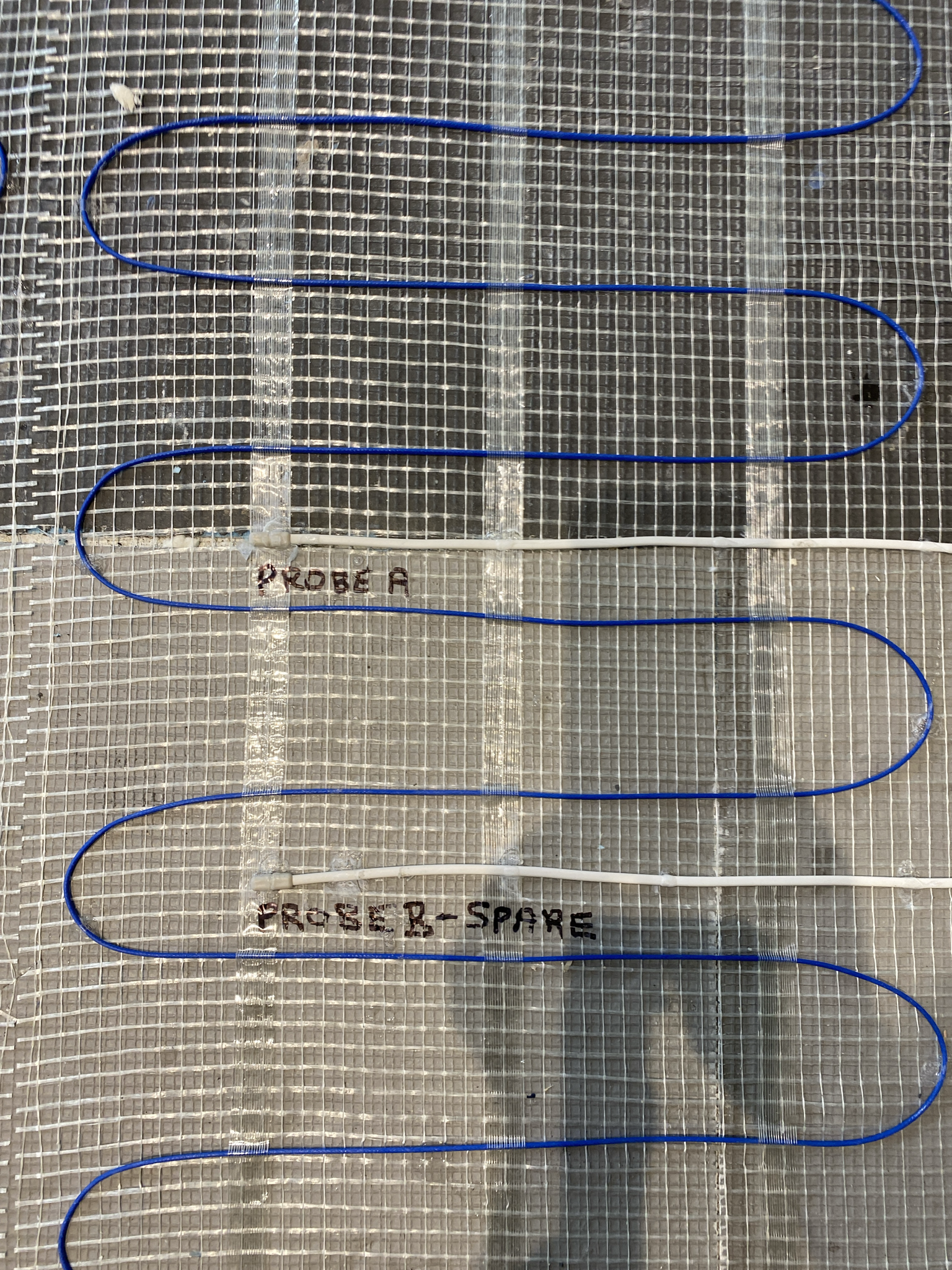
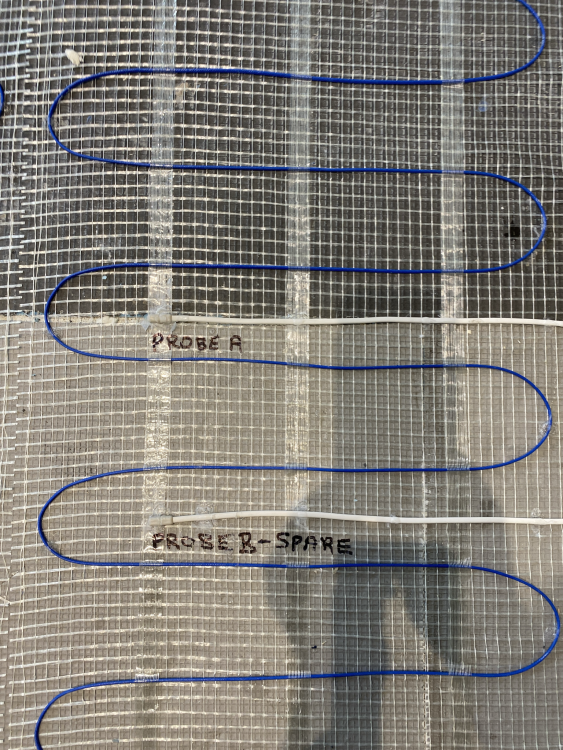
Yup. I always fit 2x thermo probes if I can't install the conduit to change them out at a later date. I'm not able to advise as I've never used Schluter, so it may be better! Have you a link to the one you are considering, or at least just get the spec sheets alongside each other for comparison. The benchmark for a good unit is a bit of self-learning for setback.
-
Ok. With a compression fitting you need to completely disassemble it, and put the removed parts on to each piece of pipe. So you slide the nut on, then the nylon / plastic slip ring (skinny plastic looking washer), and then the conical black rubber washer. The cone side of the black rubber washer has to be facing the coupler, dito the other side. Push the black rubber ring up the pipe about an inch or so, and then push the coupler on. You may need to give it a wiggle to get the rubber to be as far up the pipe as it needs to be. Slide the nut and the slip ring down to meet the coupler and tighten only hand tight, an angry hand tight (not the angry where you've hit your thumb with a swift hammer blow, but the one where your child has pissed you off and you want to strangle the little bastard, but can't due to recent changes in legislation), and you're good to go. Caveat, if you've bought Chinese fittings off Ali-kebab-express//sweat-shop-R-us, then you're on your own. They prob also sell big towels though...... coincidentally, lol. Are you very sure that you had the rubber conical washers the right way around during previous flood events?
-
Run some water into the shower tray and get a big towel ready in case you have a gusher. TBH, you'd have to go miles out to get that to leak.
-
Wall cracks, advice very much appreciated
Nickfromwales replied to Mike Hawkins's topic in Brick & Block
Same happened to my mothers house, same era of shit building / shit quality steel that rusted and burst all the bricks out exactly as per the OP case. My money is on rusting / expanding lintels forcing the brickwork up / outwards. -
Boiling water tap - Quooker alternatives
Nickfromwales replied to canalsiderenovation's topic in General Plumbing
Time to get one fitted............ -
21o (formerly the Green Build Store) stock it in strip form.
-
If that worried just use 2 runs of Compacfoam (20mm) to give 40mm of thermal upstand, instead of the PIR, as that's rock solid and can be bonded without any risk of future movement.
-
Wall cracks, advice very much appreciated
Nickfromwales replied to Mike Hawkins's topic in Brick & Block
Is it worth getting someone to stich this façade and re-point, with lateral bars to tie it back together? -
Boiling water tap - Quooker alternatives
Nickfromwales replied to canalsiderenovation's topic in General Plumbing
Why hasn't your plumber advised you to fit one? At a certain PPM all your manufacturers warranties are voided for shower valves and taps etc etc. Get one fitted el-pronto!!! -
Wall cracks, advice very much appreciated
Nickfromwales replied to Mike Hawkins's topic in Brick & Block
I’d bet the split in the brick is exactly where the end of the lintel is. Prob best to bite the bullet and get the lintel exposed and checked, and replaced if it is the offending article. Obvs it’s very hard for us to say with any certainty, over the internet, so a builder would better advise on site I expect. I’d say you’d have cracks much further down the wall if it were subsiding, and possibly inside too. -
It’s fully welded at the butt joint, as well as additional mechanical fixing. It’s also now plated that side, and also on the reverse, for belt + belt + braces. Needed adapting (beefing up) as we moved the point where the crown sent the load down to founds, on to the smaller width RB2 vs the original wider RB1 that it was first placed with. Originally RB2 just sat alongside RB1 with zero connection. We also introduced a connecting plate at the underside, to accept the rising post, which we drilled and bolted and then also continuously welded too, for more braces. If this moves even 1000th of a mm I’ll buy the drinks. SE will get pics, and sign it off accordingly, and BCO will inspect and nod / smile / shrug shoulders and so on. Loads are small, just a simple (now) roof, so if anything it’s ott.
-
Timber frame internal vapour layer up wall onto warm roof?
Nickfromwales replied to hotnuts21's topic in Timber Frame
Ok. No, it does not need 2 x pink FR plasterboard. That's your BCO taking crack, after a week on the Jack & Jill's. The steel requires 30 mins fire protection, and that is adequately provided by 1x 12.5mm regular PB with skim coat applied. Go back and ask your BCO to show you the written regs and where this requirement is born from, and watch them shrink like my hotnuts when I jumped in the pool in the resort in Antalya last year. "When two becooooooome one" -
Wall cracks, advice very much appreciated
Nickfromwales replied to Mike Hawkins's topic in Brick & Block
Looks to be very much associated with expansion at the lintel, so likely caused by the lintel. When these corrode and expand, they have a lot of force/ energy to get rid of, so the resultant cracks (linear) are characteristic of this type of failure. You can simply keep re-pointing this, and pass the issue on down the line. -
One simply knows when two pieces of metal have been fused together sufficiently. Given the 2 adjoining ridge beams were firstly, at my request, fully welded together (ahead of the fitment of the 2x plates (front and not visible rear)) I am more than happy with the results. Before you fail them, maybe it would be beneficial that you'd perhaps better understand the overall situation, and after those facts are in I will take your punches squarely on the chin Until then, no dice old boy