AliG
-
Posts
3211 -
Joined
-
Last visited
-
Days Won
11
Everything posted by AliG
-
Rationel go up to 2337mm for a double french door, this would give a learance of 2100-2200 I would guess. So certainly you can get doors that wide. I wonder if UPVC frames have a lower width limit. Like @PeterW says though I wouldn't expect it to be long before someone tries to put a brick through them. Indeed I did away with any door other than the garage door in my garage. Around here almost all burglary is driven by trying to steal cars.
-
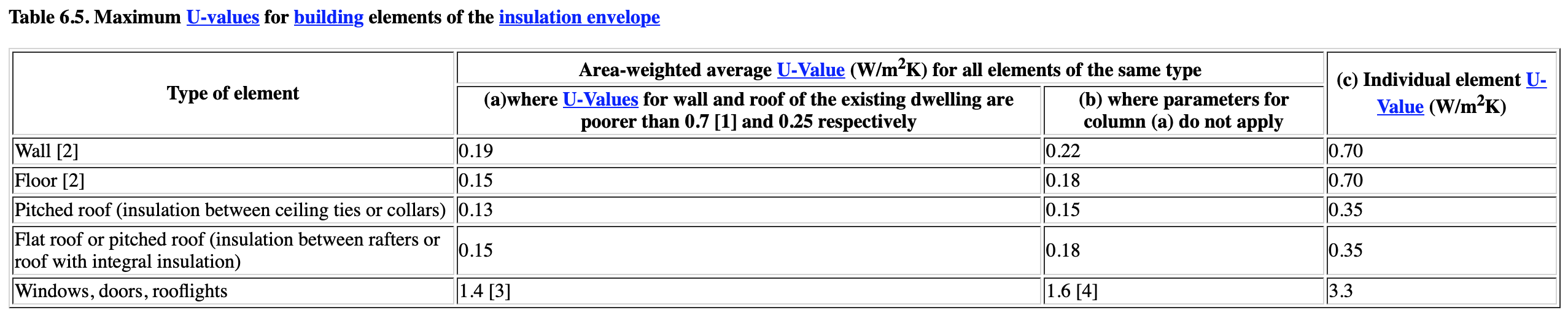
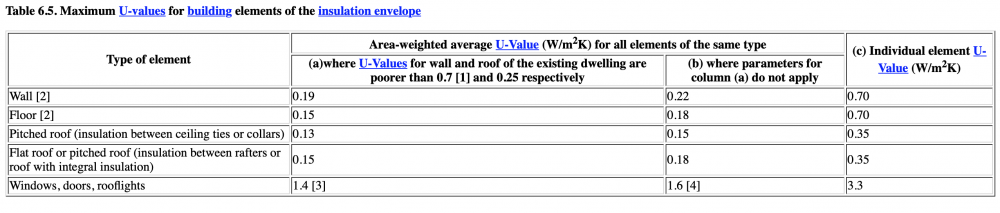
These are the figures from the building regs. Assuming that the house you are extending has a decent level of insulation the limit for a flat roof is 0.18. This can be varied if other elements are better than the limits.
-
As @Ferdinand says, you cannot sign a greater than 20 year lease on a residential property in Scotland. Even if you could it would be so unusual as to render a house very difficult to sell/mortgage. Frankly I think the entire system needs abolishing in England, but that is another matter. The landowner could keep a percentage ownership in the property equivalent to the value of the land, so that your friend doesn't have to pay for the land and the landowner effectively owns it from a financial perspective. However, I suspect that his real issue may be that he does not want the house sold to someone else in the long run and lose control over his estate. I suspect that he needs some kind of buyback clause to cover this, so that he can eventually buy the house at market value ex the original value of the land. Of course this affects the value of the house also and would be off putting to future buyers, he might have to buy it back and then rent it out. Ultimately this kind of deal annoys me as people want something for nothing and they get themselves all tied up to try and achieve something that isn't really feasible. If the owner wants long term control of his estate then he should keep ownership of it. If a house can be built, he should build it and rent it out. I know he is trying to be nice, but what he suggests is actually a great deal for him. He doesn't have to get planning permission but would benefit from it in the increase in the value of his land. Then he wants it to revert to him on a 99 year lease. It would actually be an awful deal for your friend as he would be building a house that would depreciate in value. Luckily the Scottish legal system has protected him from this. A buyback clause would be fairer but it would mean the landowner being on the hook for buying back the house eventually. I would be interested to see if he would go for this. Even then I do not know the legalities around it in Scotland.
-
For some reason architects love to specify Kingspan K7 which has conductivity of 0.2W/mK versus Celotex GA3/4000 or Kingspan TP10 at 0.22/0.23. The Celotex is between 2/3 and 1/2 the price of the K7, the U-value would be around 0.13 instead of 0.11 for the roof. You would get a similar saving and 10% worse U-value using Celotex GA3/4000 in the floor. There are other makes as mentioned above, generally any PIR insulation with a conductivity of around 0.22 will do. The Kingspan is considerably more expensive phenolic insulation which I would only pay for if it was absolutely necessary that it was a little thinner. You can also sometimes buy seconds of these which are cheaper again. The other thing I would note is that you cannot get 175mm insulation, you will need to buy 100mm and 75mm. This adds a bit to the cost and labour, although I am guessing that you are doing it yourself.
-
When I looked into ICF this was exactly my question. The ICF companies I spoke to said that you would stick on thin stone slips, but I was not convinced this was the right way to go and it was one of the main reasons for not using ICF. When I have looked at pictures of ICF houses they are mostly rendered right into the window reveals with little detailing, I have seen some with stone clad walls, but not the detailing I was looking for. I would love to know if indeed you can do this with ICF.
-
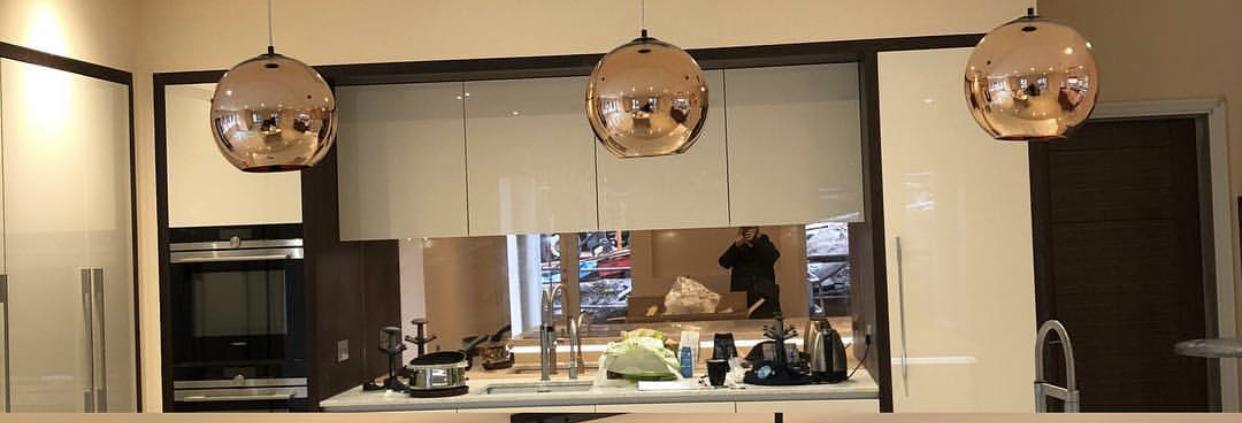
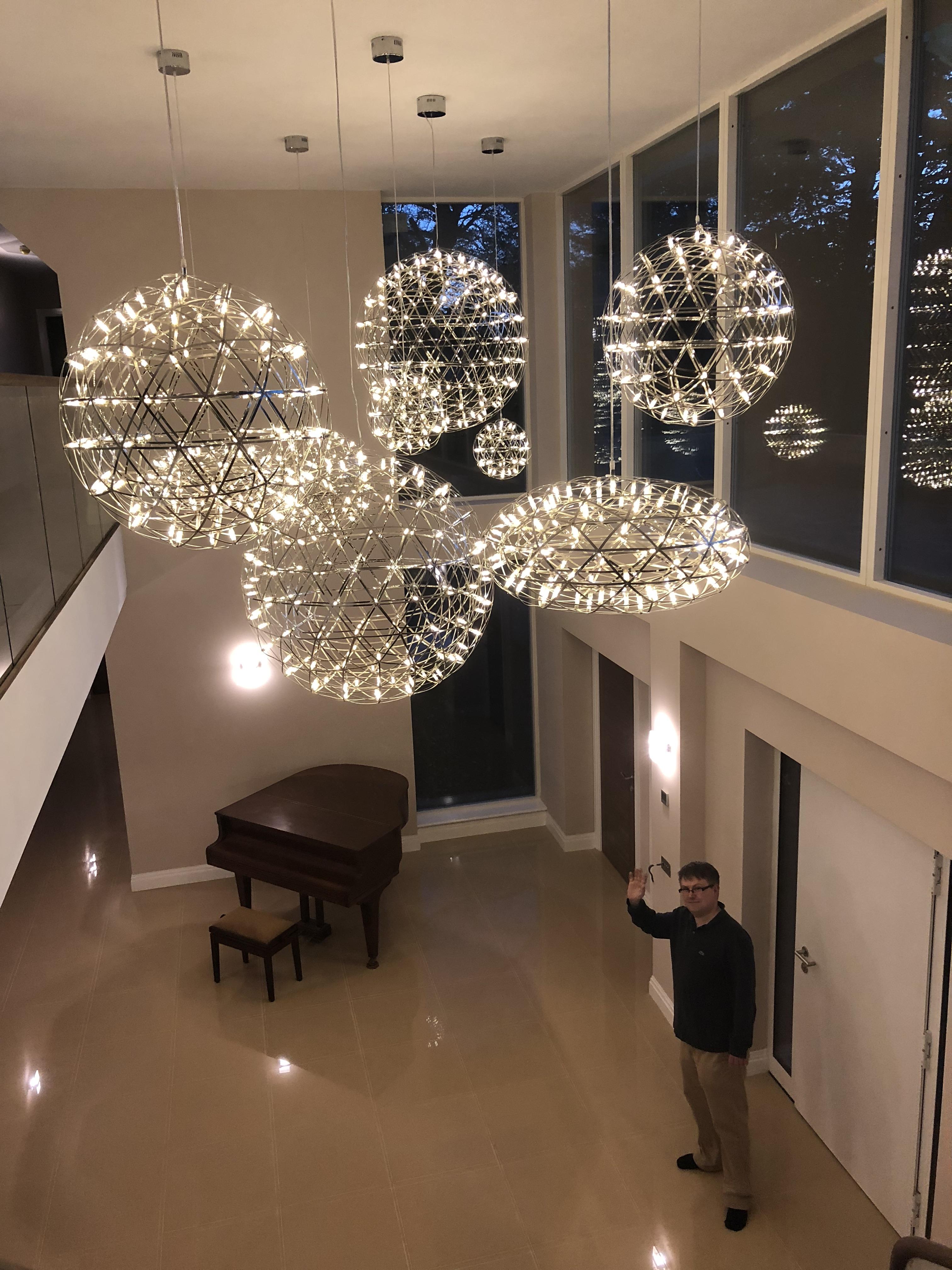
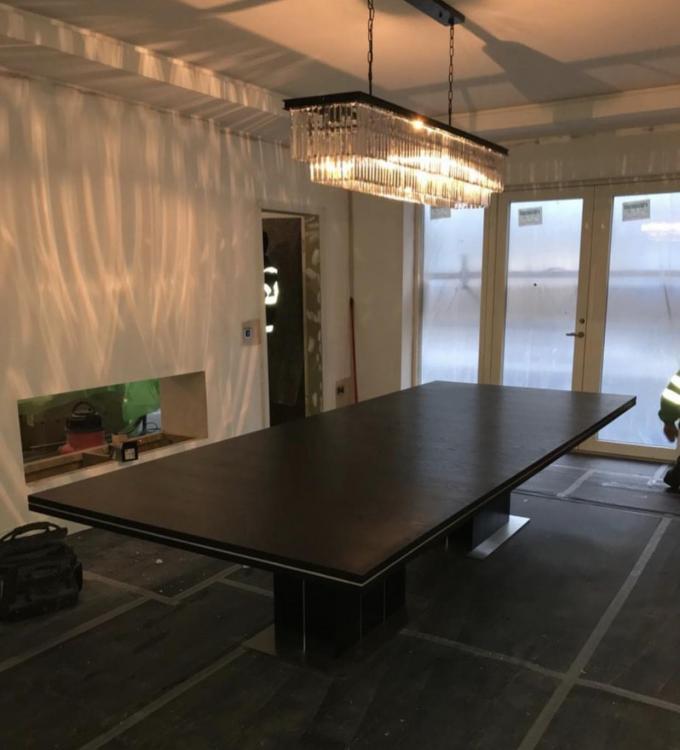
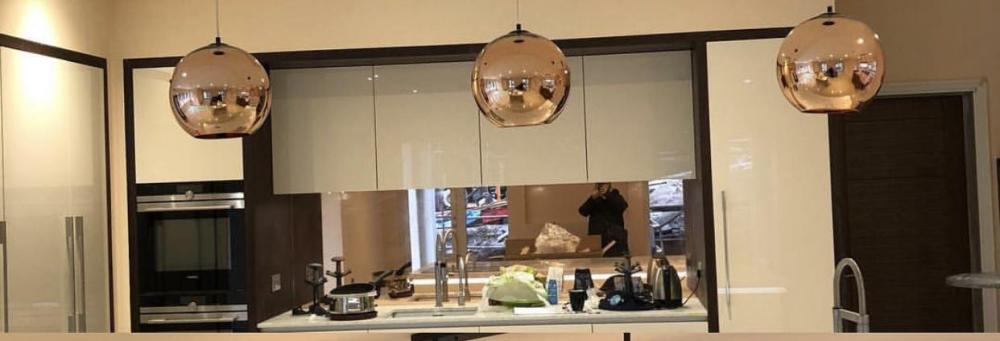
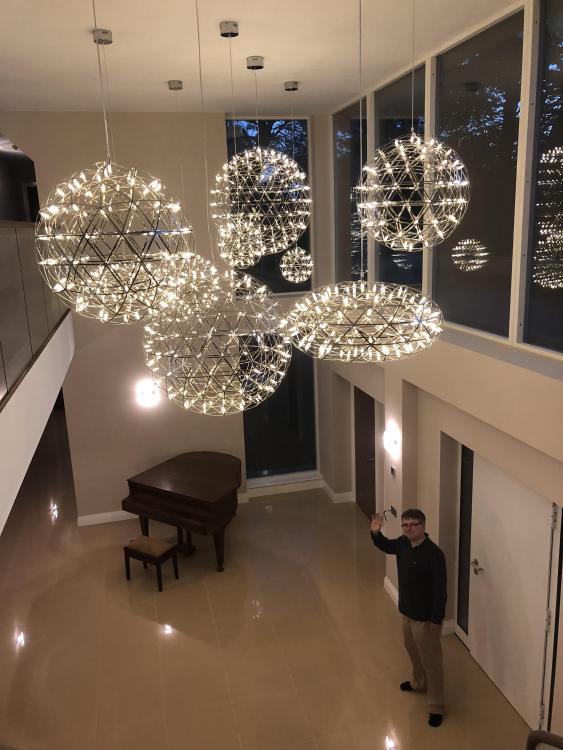
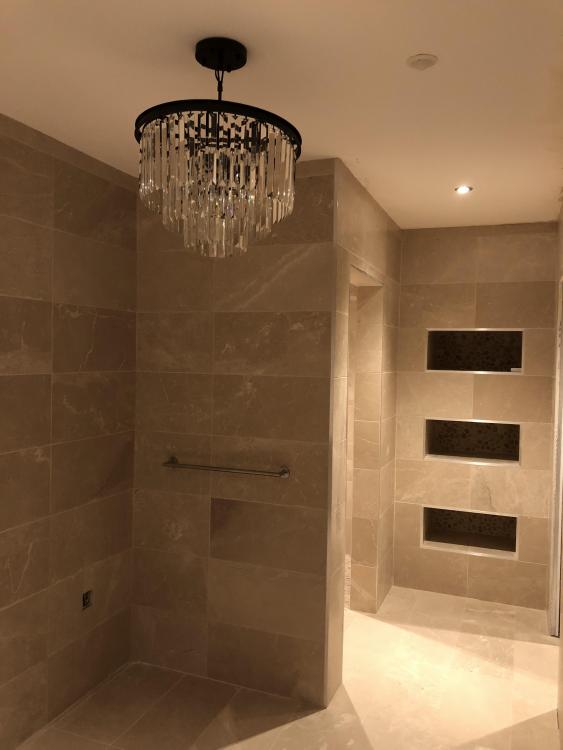
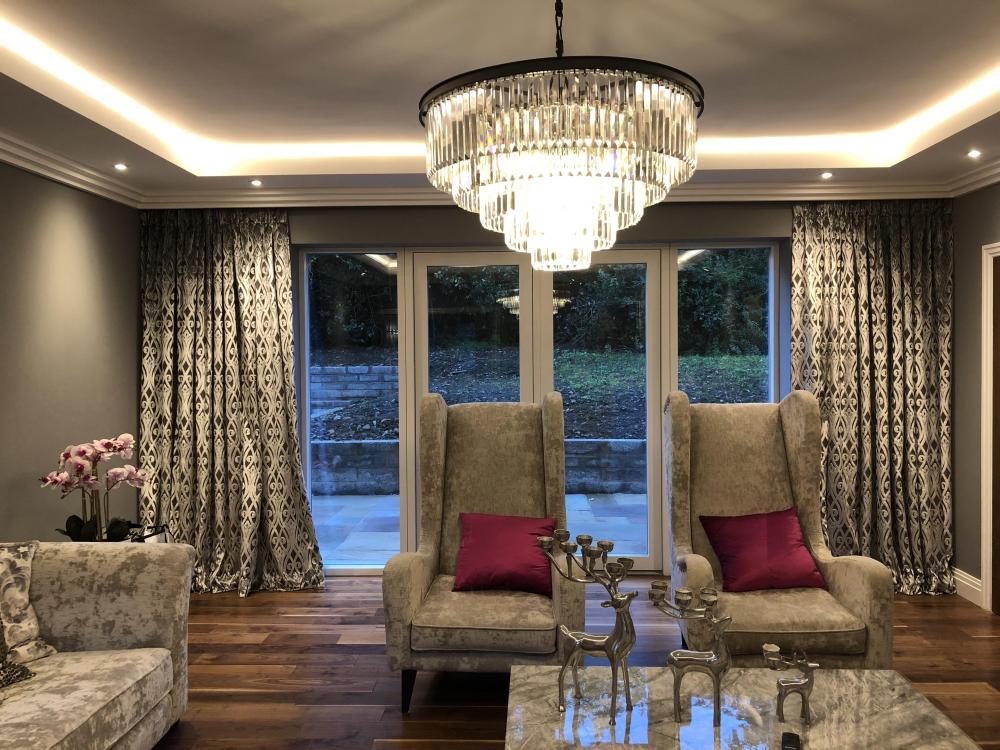
Indeed I have many lights imported from China all up and running and working nicely. In fairness to @JSHarris though most of these are simple ceiling light fittings. The LED bulbs I bought here. There is a lot less to go wrong on an indoor ceiling fitting, you can see straight away if it is wired up correctly. In the past when I have bought cheap sealed unit PIR LEDs from EBAY they have proven pretty unreliable. All our GU10 LEDs and LED strips were from UK suppliers The lights in our hall do have integrated LEDs and drivers and they were the only lights we had trouble with. They had the option of wireless dimming, that I chose. They didn't work properly until we removed the wireless dimmers, it seemed like multiple units on the same circuit interfered with each other. All the pendant fittings in these pictures came from China via Aliexpress. We have more that I could not find pictures of. Generally they were 1/3-1/4 of buying them locally. The other benefit was that as you were dealing with the manufacturer I was able to ask for adjustments to be made, e.g. the light against the brick wall background, they made it longer as it went into a double height room. People were very responsive to emails and it all worked as easily as any supplier I have worked with here, often easier.

- 14 replies
-
- 2
-

-
- aliexpress
- dhgate
- (and 2 more)
-
Intumescent paint for protecting beams
AliG replied to MJNewton's topic in RSJs, Lintels & Steelwork
I got intumescent paint from these guys http://www.steel-fire-paint.co.uk Tell them the size of the beam and they will tell you how thick the paint needs to be. Saved me £5k versus quotes we had from socialist paint companies. Their calculations and certificate will be good enough for the BCO. Then paint it and just run the normal ceiling under it. -
No need to feel stupid, my system isn't labelled and I would be totally guessing what a lot of things are.
-
Hi @Gary G just noticed this. Welcome to the forum. Someone else here mentioned designing the house around the kitchen. We went and got our kitchen designed before finalising the house plans and realised we had to slightly alter the kitchen. I think you are past this point. One issue might be that the drainage is already in for the sink, although it looks like the architect has allowed for drainage to the island if required. Kitchen designers will help, but in my experience no one other than you knows how you will live in your own house, the architect is probably the worst person to design the kitchen out of those three options. Did he put in those curved cupboard for example, that would limit your options for units. For our house the kitchen people did the main design, but eventually I had to go and draw it out almost to the millimetre to make sure items were in exactly the right place relative to doors, windows, walls etc. Unfortunately that design is poor. Not only are items spread out too much but you would constantly be walking from side to side in the kitchen with the island in the way. For example the sink is actually in front of the island towards the family room. I would also say that you have just too many kitchen units and too much worktop space. It will make the kitchen more expensive than necessary, stone worktops would be very expensive and you would also end up with multiple joins in the worktop. Also it will be very difficult to use the space in front of the island for a table as it would end up quite close to the door. Part of the problem you have is lack of wall space/too many windows. Generally you do need one flat wall to put fridge/freezer/ovens on and the only wall is over in the corner away from everything else. This assumes that the fridge and freezer are tall and the ovens at eye level. If you put them all under the counters you it would help a lot with organising the space, but they are much less practical to use. If possible I would actually want to lose window W9 and have the oven/fridge/freezer there. This would be by far the best idea if doable. Assuming that you cannot do that, the fridge/freezer/ovens might be better in the 2m space between W8 and W9, but this would not be the most elegant look, tall items like that are probably better kept at the end of a row. You could then move the hob to the island, I like that so you can look out into the room whilst cooking. I spend a lot more time standing at the hob than the sink, you of course may be different. Another thing that you could do is put the ovens and fridge on the wall next to the sink and turn the island around and put the hob on it. You could then fit a kitchen table in the area between the island and the utility room with no cabinets in that area. TBH I could come up with dozens of things you might do and I think the best option is to go to a kitchen designer as they will have seen lots of different layouts before and have a better idea of what works and what doesn't work. Sorry if I sound a bit down on your design. I spent hours on this trying to think about everything that I found annoying about using the kitchen in our old house and eliminate these things in the new place. Hopefully you can get a kitchen you love to use.
-
I think it is almost certainly the immersion, if you have a smart meter or one of those dongles the electricity companies sometimes send out to track electricity usage you could immediately see the 3kW power usage that @Ed Davies mentions above. Even just watching the meter tick up faster which show you it was on. Have you been using an unexpectedly large amount of electricity? Hopefully it hasn't actually been using the immersion to heat your hot water. The plumber would not have installed a circulating hot water system without you specifying it, they are quite unusual and usually only in very large houses.
-
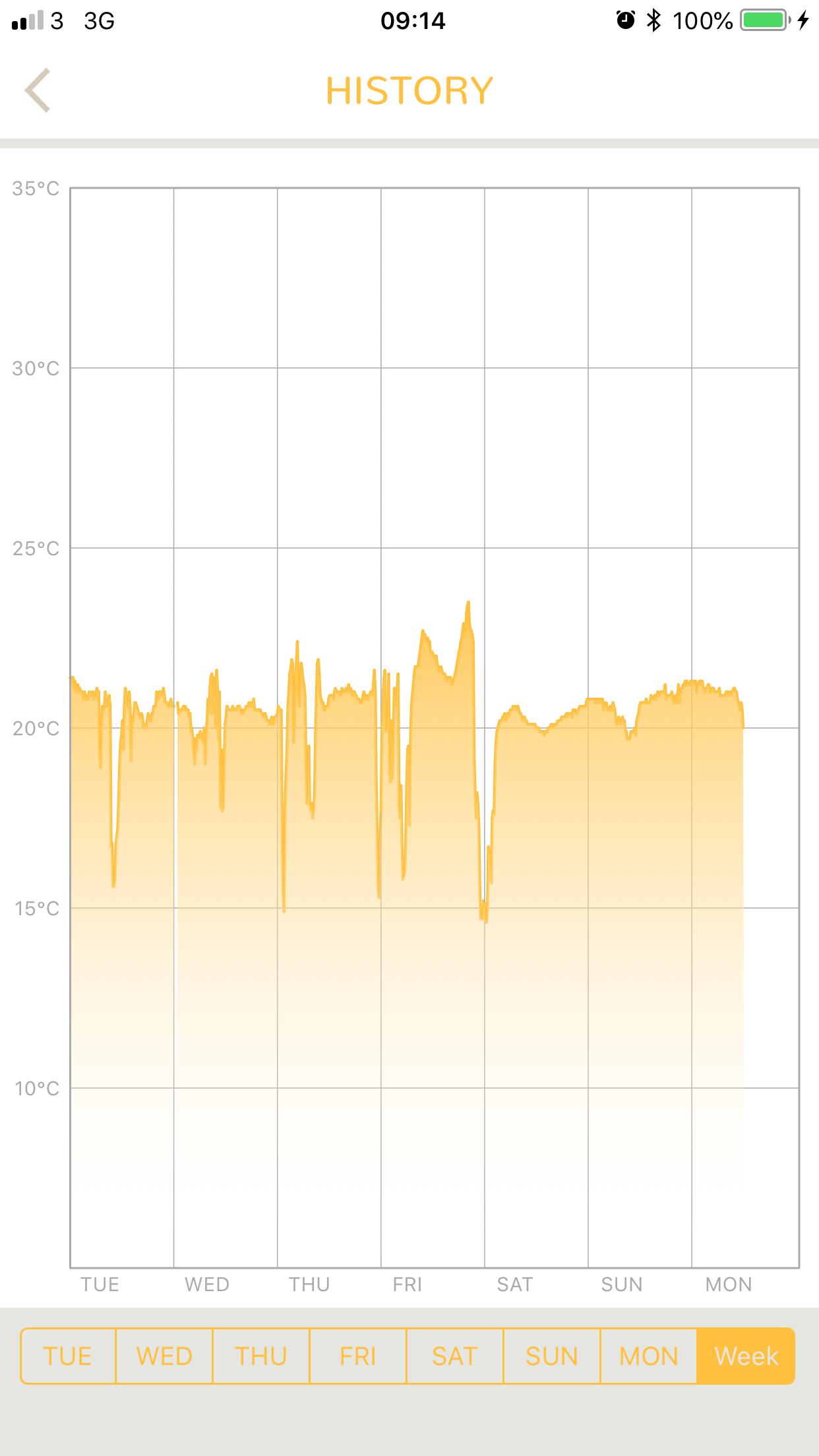
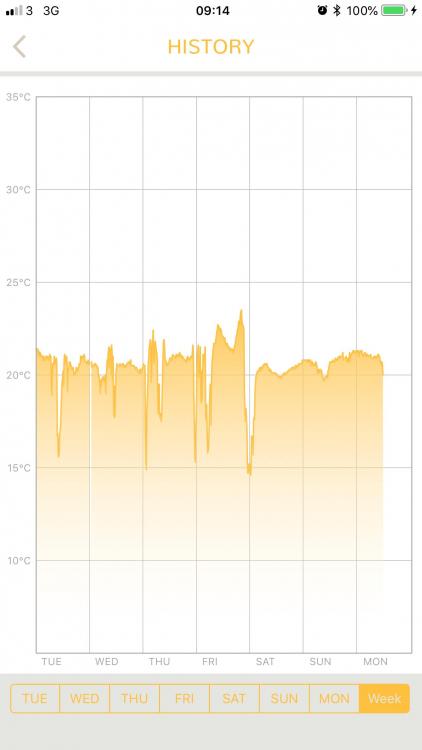
I agree, I have the Heatmiser system and it is fantastic for seeing what is going on and quickly programming multiple thermostats. I can call my wife and have her tell the builders to close the door when they leave it open as I can see straight away the temperature dropping in a room. See below for the utility room over the last week. It was the Heatmiser that helped me to see the heating wasn't working correctly as I can see the temperature ramp up on the charts that it provides when the heating comes on and that wasn't happening in some rooms. Floor and air sensors are unusual in a wet UFH system. Presumably you just set the room temperature so the installer must set up the floor stats to limit the floor temp relative to this.
-
I have one shower that does that, but I decided it wasn't worth worrying about. If you want to fix it, why not just move the light further from the shower head so that the beam doesn't hit the top of it. Not a big job, just fill in the hole.
-
New build - heat and energy considerations
AliG replied to Tyke2's topic in New House & Self Build Design
I have set the thermostats at 21C, seeing if I can get away with that or have to go to 22. -
We just had some issues with our system when we started using it for the first time. You may have to get the installer to come back and have a look at it if people have been messing around with it. The thing that looks like a TRV should be a mixer valve that controls how hot the water flowing through the UFH is. I would expect 30Cish in a MBC slab. The big gauge at the top is a combined temperature and pressure valve I think. It seems to be showing a flow temperature of just less than 30C. I think the small gauges are showing the temperature of the water flowing from the boiler, it looks like it is coming in at about 65C. So when a thermostat calls for heat (flame shows as you said), you should see the boiler light and valve light come on on the Heatmiser wiring centre. I must admit I am not sure how it works with a floor sensor, all of ours are air sensors so you simply set them relative to the temperature in the room. Assuming though that they are calling for heat - You will also see the light come on corresponding to the thermostat calling for heat and this will be connected to the actuators on the bottom side of the manifold, one thermostat could be connected to more than one actuator depending on the size of the room. as it may have more than one pipe circuit You will see the top of these rise as they open the circuit and the little float in the flow meter at the top should drop showing that water is flowing in the circuit. Looking at the fifth picture, I see two actuators open but the flow meters above them don't seem to have dropped. This suggests to me maybe a pump problem. Does the pump on the manifold run when the thermostat calls for heat. Another possible issue is that the pin is stuck in the mixer valve as can happen in a TRV. In my system we were having the same issue and there was another pump closer to the boiler that sent hot water to the manifold. It wasn't kicking in when the manifold called for heat. I am by no means an expert on these systems, this is just what I found trying to figure my system out. I did find that it is quite hard to feel the pipes for water flowing as it is not that hot, the flow meter is what you should look for. As for the Living Room, if no circuit light comes on and no boiler or valve light either then the thermostat is not correctly wired to the wiring centre or there is something about how it is et that is stopping it calling for heat.
-
New build - heat and energy considerations
AliG replied to Tyke2's topic in New House & Self Build Design
That's an interesting chart., presumably issued by a radiator manufacturer. The radiator is not getting more efficient, it is just outputting a higher percentage of its rated heat output, hence why "efficiency" can get to over 100% -
New build - heat and energy considerations
AliG replied to Tyke2's topic in New House & Self Build Design
@AliMcLeod It really depends on the heating requirement of the room the radiator is in. The hotter the water, the more energy you are putting into the room. I was looking at our UFH the other day and some of the manifolds only run at 27C as we don't need that much heat. Assuming your insulation is good, 40C might work for the radiators too, especially as upstairs will benefit from heat rising from down the stairs. I have the same issue as you in Edinburgh where the heating kicks in early in the morning when it is colder. I have Heatmiser thermostats in every room. If the rooms are occupied they are set at 21C. The house is well insulated, at the moment the south facing rooms never get below 21C, they may in the winter, the west and north facing rooms tend to drop to around 19C during the night. The heating then kicks in in the morning. However, if I leave the heating off they might well get up to 21C later in the day due to solar gain, heat from cooking etc. Indeed I can tell which rooms are occupied or where people have left lights on as this is enough to affect the temperature when I look at the Heatmiser app. So ideally the heating wouldn't come on in the mornings as the house will heat up on its own, but for comfort reasons the family want it to be 21C when they get up. -
What is the best way to get the most natural light in a room?
AliG replied to a topic in New House & Self Build Design
Our kitchen has windows on three sides, but none of them allow light directly on the kitchen worktops and I wish I actually had another window that directed light there. We actually still end up with the lights on a lot of the time. As said, roof windows allow a fantastic amount of light and i would incorporate them if possible. I don't think that you can have too much light, unless it is so much it causes overheating. However, I would focus the natural light on places where you spend the most time. We probably spend 50x more time in the kitchen than the dining room, and I don't really notice how much natural light there is there. It may be that you want a small cosy room (a snug) where you wouldn't have large windows, but in a kitchen the more the better (assuming that you have enough wall space) -
As mentioned shophouses will likely have what is contemporary today. We have lots of wood effect Porcelanosa tiles which we very much like. We dealt with the Edinburgh showroom, but had to drive to Glasgow quite a few times where they have a much better display. One thing I did was go through catalogues then do a Google image search on the specific tile name to see pictures of it in situ. Google images was by far one of my biggest resources in designing things. For example - https://www.google.com/search?q=porcelanosa+oxford+castano&client=safari&rls=en&source=lnms&tbm=isch&sa=X&ved=0ahUKEwiI7pjor5_dAhXoCsAKHcGrDrsQ_AUICigB&biw=1280&bih=737
-
Feel sick with worry about escalating build costs
AliG replied to Jude1234's topic in Costing & Estimating
Those figures were a 25 year repayment at 3%, I just plugged those numbers in to get a rough idea. -
Feel sick with worry about escalating build costs
AliG replied to Jude1234's topic in Costing & Estimating
I'm sure you have everyone's sympathy Jude. It seems from a lot of the replies that in many cases a self build is very much one person in a couple's project. In my case it was mine and I know that my wife has fund it a lot more stressful than I have. You may as well get it over and done with telling your husband, painful as it might be. I don't think the contract makes much difference, I never actually signed off on a contract with the builder. I had an estimate like you but builders aren't quantity surveyors and often just don't have enough information to make accurate estimates. They are also notoriously optimistic. Then of course you only know about the rising cost once it is too late. It isn't really clear how much you are committed to in the build, it sounds like you are pretty far gone. In a way that might be good in that at least costs shouldn't be able to rise much more. I looked back at some of your earlier posts re oak stairs and PV, these wold clearly be places that money could be saved. However, if the issue is simply keeping the mortgage smaller, the return on PV is likely larger than the interest on the mortgage to pay for it. Two suggestions I would make for saving money - 1. Have you just specced things like he bamboo floor, door handles etc and left the builder to source them. Builders want fast access to things and credit to pay for things so generally just order it from their normal builders merchant. Often you could cut costs if you know what materials are needed and you source them yourself. So if any expensive materials still need to be ordered get quotes from the builder and see if you can beat them. BTW if that £18,000 includes an expensive electric sectional door, Costco are doing insulated sectional doors up to 5m width fitted with electric opener for £1995. 2. If money is really tight, you say that you don't have much capability at DIY, but anyone can paint. Indeed, looking at the job done by the first painters we had, anyone can paint better than many painters! Professionals often get things done a lot faster, but with less attention to detail. You also mentioned having teenage sons. Get them some rollers and get painting! If you paint before floors are down then it doesn't matter too much if they make a mess. One thing I would have a serious look at is landscaping costs. There wasn't much in our quote for these as they hadn't really been specified when we started. Driveways, retaining walls in the garden etc can be very expensive, but they can also be done cheaply and improved later. I think in one post you did mention keeping the mortgage to around £100k and that was 20% of the cost of the build. I don't know if this is still the case. I am in your husband's camp of keeping debt as low as possible, but increasing your mortgage for example from £100k to £125k increases the monthly payment from around £475 a month to £600. Maybe that puts it into perspective. -
I think unfortunately it was shown as a bedroom on the plans. We could argue about it with BC and claim an amendment I guess but the pool is pretty noisy so I think the sound insulation is necessary anyway.
-
I checked the building regs for England and Scotland and the 40dB reduction only applies if the room can be used for sleeping, our gym could be classed as a bedroom. The regs also do not apply between an en suite and a bedroom and in England a wall which also has a door in it.
-
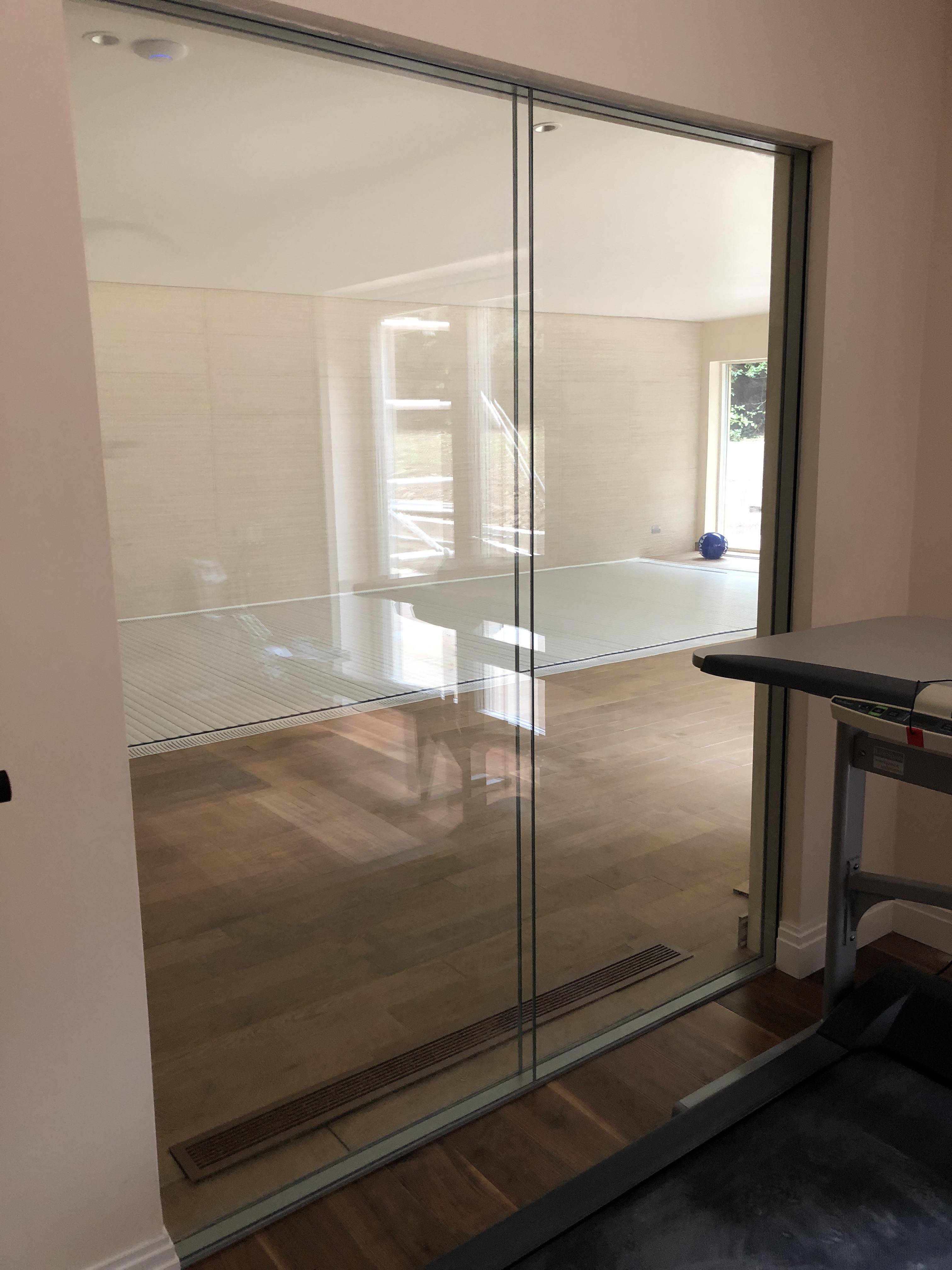
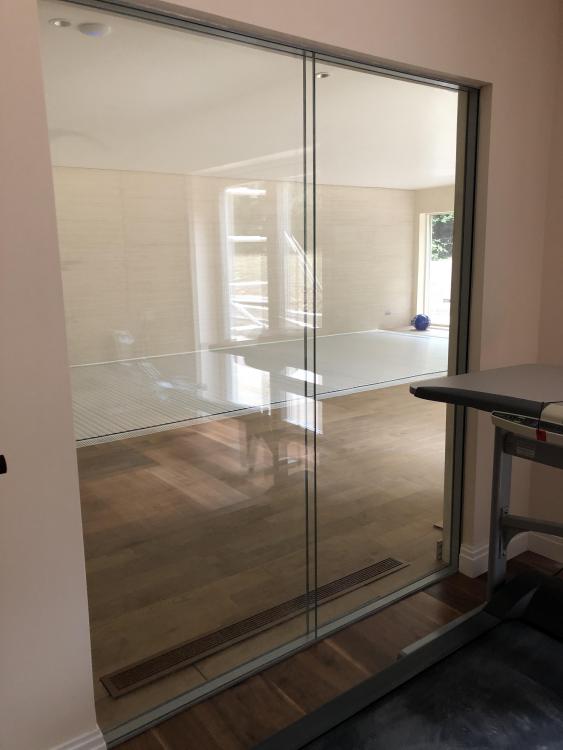
We have a glazed wall between the pool and the gym. I am not sure that this applies in England, but in Scotland it had to meet the requirement for walls between rooms to cut sound by at least 40dB. It is roughly 2.3x2m, we were quoted some insane prices to get the acoustic qualities, I think the highest quote was £4000. Eventually we got a place to do it, the quote said a single unit, what it didn't say was that in their small print if the glass is over 1.2m wide then it will be more than one pane even though it is a single unit. So £2000 and not what we wanted or specified. There is some argument about who is at fault for this, it seems ridiculous to put this in your T&Cs not the actual quote. It is 2 layers of 11.5mm laminated glass. It does provide fantastic sound insulation, much better than a stud wall. Anyway, my wife wants it taken out and replaced with a single unit, all the people who do glazed screens said they cannot supply it, then I realised that our hall windows are almost the same size. We have contacted Rationel and they say that they can provide a double glazed window with 40dB of sound reduction, I think they can go up to 42-43dB in triple glazing. I reckon this will be about £1000-1500. We had reservations about using an outside window as the frame wouldn't look right which is why we contacted people who do glass screens, however, we are now looking either into hiding the frame in the wall or getting the cheapest frame and then taking the double glazed unit out and putting it into a channel in the wall.
-
Assuming that you are in a large well capitalised bank I would not worry about the £85,000 limit. Banks are considerably less risky than they were 10 years ago. I would consider National Savings as not only is your investment 100% guaranteed if that bothers you, but also interest rates tend to be higher than at large banks. If you want safety and don't need the money for a while I would consider a long term fixed rate account such as Tesco 5 year saver at 2.5%. Personally I don't consider the extra 0.1-0.2% from a riskier bank with perhaps worse customer service to be worth it. You would think ISAs would be ideal due to the tax saving, but often the rates are lower so the saving seems to go to the bank not the customer. Coventry BS seem to have a 5 year fixed ISA at 2.3%, better after tax than Tesco, but of course there is a limit on the amount you can put in. You can also now earn £1000 of interest tax free without an ISA. Don't forget to spread savings between you and your partner to maximise use of your tax allowance. After that you go to financial products, bonds, equities property funds etc. You would need to take advice on this and of course they are riskier. I would recommend that you take advice here and be careful of the fees that could wipe out any supposed higher returns.
-
I think you are right there. When I Googled flat roof windows I noticed they all sit above the roof. Roof windows are either on sloping roofs where the water runs away or raised above the roof. By building around the window water will be much slower to run away and also able to rise in level which increases the chances of breaching the seal. Maybe a band of pebbles around the window to improved drainage would also help, but it wouldn't look as neat.