AliG
-
Posts
3211 -
Joined
-
Last visited
-
Days Won
11
Everything posted by AliG
-
So. I went around checking the pipes when I started this thread. For some reason one of the cisterns had a screwed on plastic cover behind the flush plate instead of a plastic twist like the other ones have. I didn't check that one as I couldn't be bothered getting a screwdriver at the time. Of course that one blew two days ago. Luckily I got up really early and heard it. It was dripping through the ceiling, but just needs repainted. I think it had maybe only blown half an hour before I got up. Of the nine of these that I have, I have replaced four, another four seem fine and I need to check the one today in my daughter's bedroom. Two of them would probably have blown within the next year. We have stopped leaving Toilet Duck in the cisterns, I will report back in a while to see if this has stopped the corrosion. I also, however, have to replace three or four of the connectors between the inlet valve and the pex pipework in the house. I am hoping that now I have figured out there is slack in the pex, I can just pull it through into the cisterns to change the flex pipes over. But I suspect it won't be that simple as the pex often comes up from below and the hole in the cistern is in the top, so the pex won't bend enough to come through the small holes and I will have to cut the holes bigger. I have ordered nylon coated flex pipes for this, so that they cannot corrode in the wall unseen.
-
I am looking for Traditional Raised Panel aluminum door in black
AliG replied to raja22835's topic in Doors & Door Frames
We don’t allow people to advertise or sell on the site but someone might be able to suggest a supplier that you can contact. -
Does the UK really have the most expensive electricity in Europe?
AliG replied to SteamyTea's topic in Boffin's Corner
I believe we have the highest industrial prices or thereabouts. As said that is important for the economy and our competitiveness. But not the highest consumer prices. Most of the complaining you hear on line is regarding consumer prices. The UK consumer price of electricity is close to the average of large Western European countries. The recent 3.5p cut in electricity prices was due to the government taking on some subsidies and having them paid by the taxpayer. So what you were paying for electricity you may now be paying in tax. In reality they only did this because these subsidies were close to coming to an end. The price of electricity would have fallen on its own, but they get to take the credit by bringing it a bit forward. Not taking a party political view, that is certainly a smart way to play it. Money Saving Expert explains it well here. About a third of the saving is from the end of the Great British Insulation Scheme which was ending this year anyway. The other 2/3 is from the Renewables Obligation Scheme which was due to end in March 2029. https://www.moneysavingexpert.com/news/2025/11/energy-bill-cut-renewables-eco-martin-lewis/ -
For people interested in the serviceability of these hidden cisterns. This one has also had a dodgy flush valve that sometimes kept running if you didn't push the flush plate long enough. I had put off fixing it assuming it would be a pain to do. I bought a new flush valve as I had disconnected it anyway to fix the pipework. It took roughly five minutes to replace the flush valve. You literally just pull it out and push the new one in. It bends to fit through the flush plate hole. Taking off the front plate and putting it back n tight actually took longer than replacing the flush valve. It was an unusual instance of a job actually being as easy as it was supposed to be.
-
Thanks. It is very rare any standards get mentioned or the grade of stainless steel.
-
The pipes are the original ones that come with the cisterns. They are Porcelanosa/Noken. No specification for the pipes is given even when you buy them separately. It is very rare that anyone gives a spec for these pipes and I am sure they are made down to a price.
-
Good idea. Might try that
-
I usually go for 10% as you are going to really annoy the tiler for a small saving. If they charged you a couple of extra hours to come back it would more than offset any saving. BUT I always measure it myself and allow for baths, doors etc. I have seen bathroom fitters just measure the room and ask me to order tiles to cover er the whole room, even though a door takes up almost 2 square metres. So I would tend to measure the actual area being tiled and add 10%. I also try and make allowances for the size of the tiles and likelihood of cuts being required. If I think it is a flat area and a small number of cuts will be required I might go nearer to 7-8%, if it is complicated and needs lots of cuts I might go 10% or even a bit more. Another thing to consider is how easy will it be to get an extra box. If you can nip down to Topps for another box fair enough, if you have to wait two weeks for them that is another matter.
-
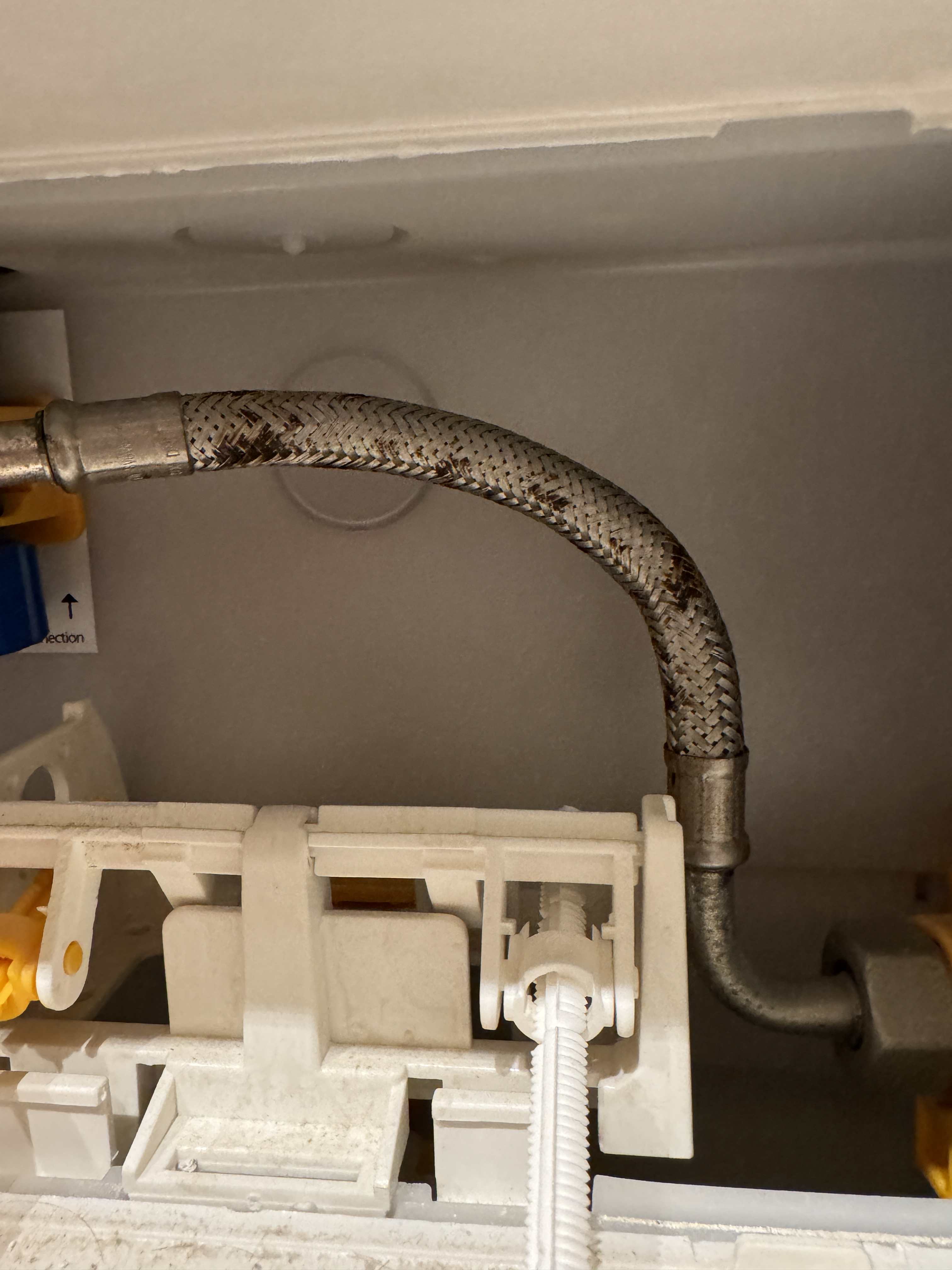
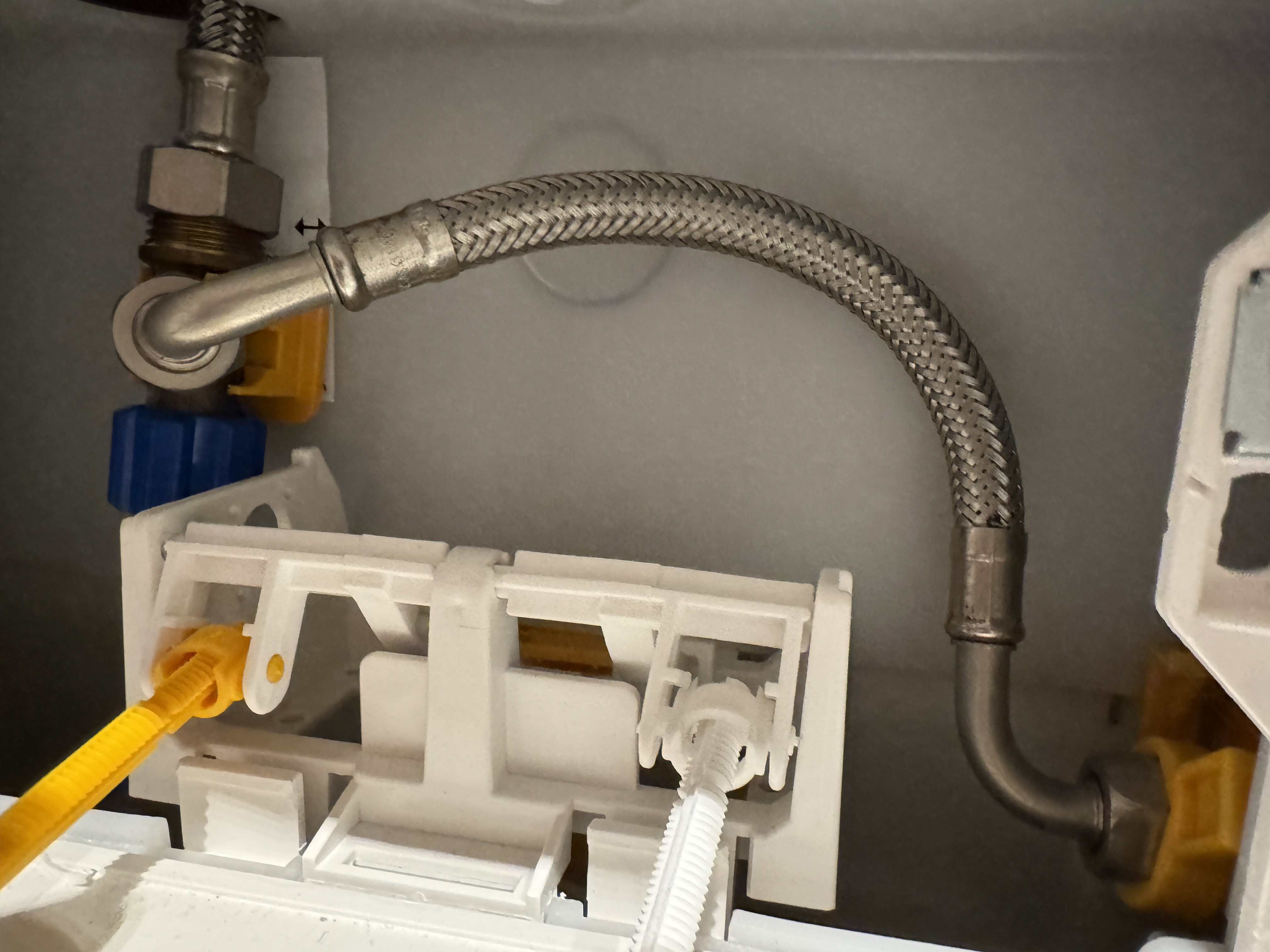
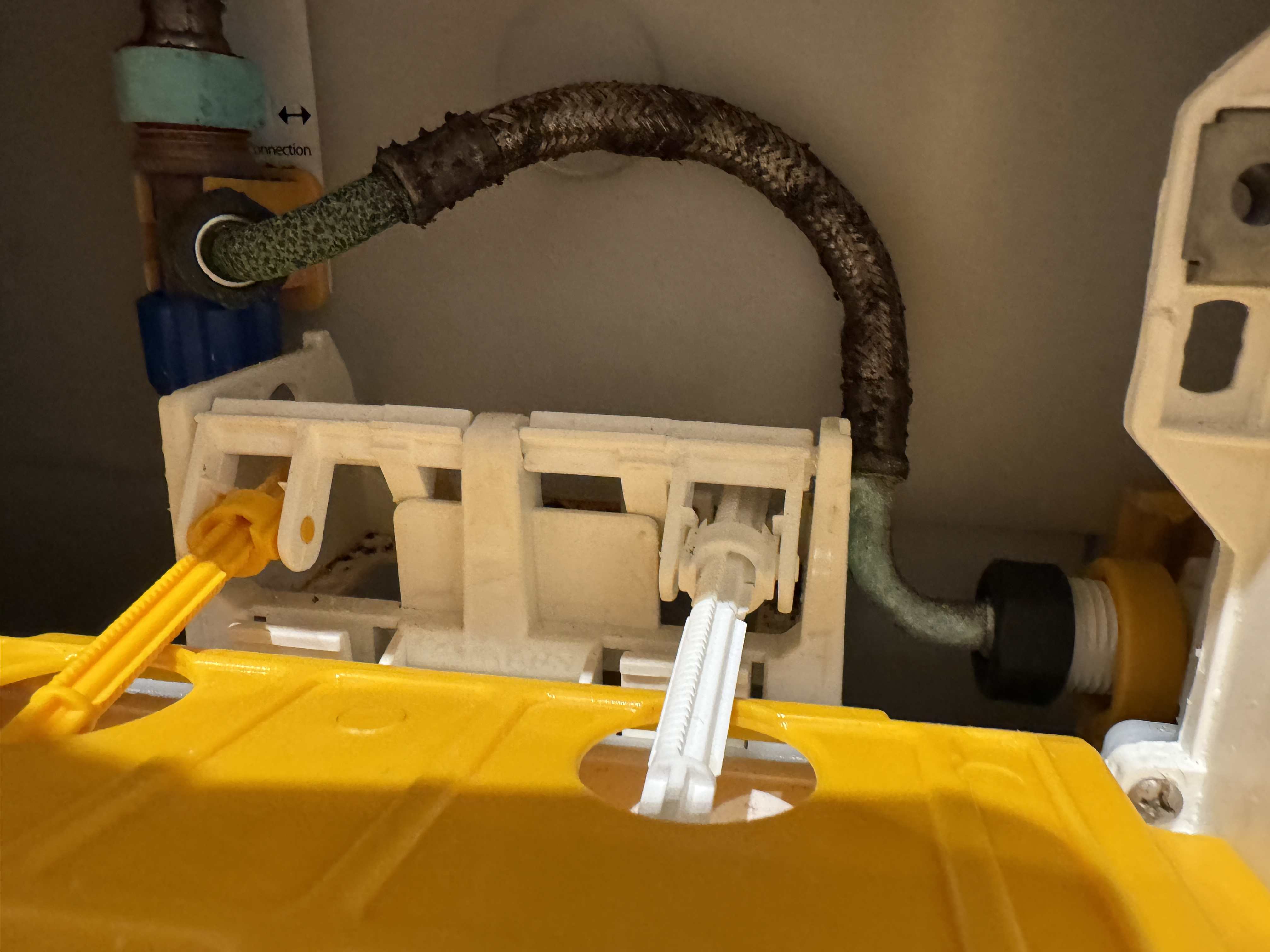
I just started to go and check the other bathrooms. The first picture, the cistern is on an outside wall and the second one on an inside wall. I thought my theory that the outside wall spaces are cooler and water is more likely to condense on the pipes was proved. The third picture is a bathroom right next to the second one. Both on inside walls, both basically the same room and the mirror image of each other. The difference is dramatic and frankly hard to understand. The third one will be getting replaced tomorrow. Even though this seems crazy, the cleaner likes to use Toilet Duck, it only goes in the bowl, nowhere near the cistern. But the rooms with issues are the ones that are used more so get cleaned more often. Could it be that Toilet Duck left in the cistern is producing fumes that are damaging the pipework, or travelling a little bit back up the flush pipe. A pattern might be clearer once I have checked them all.
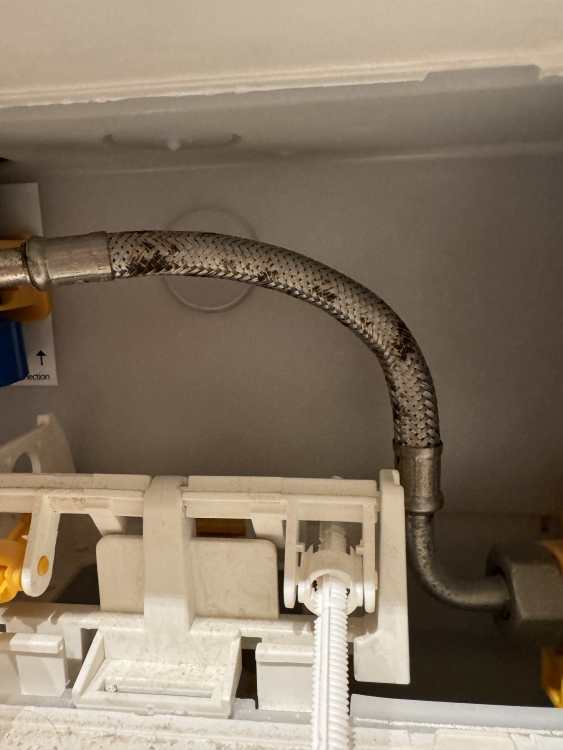
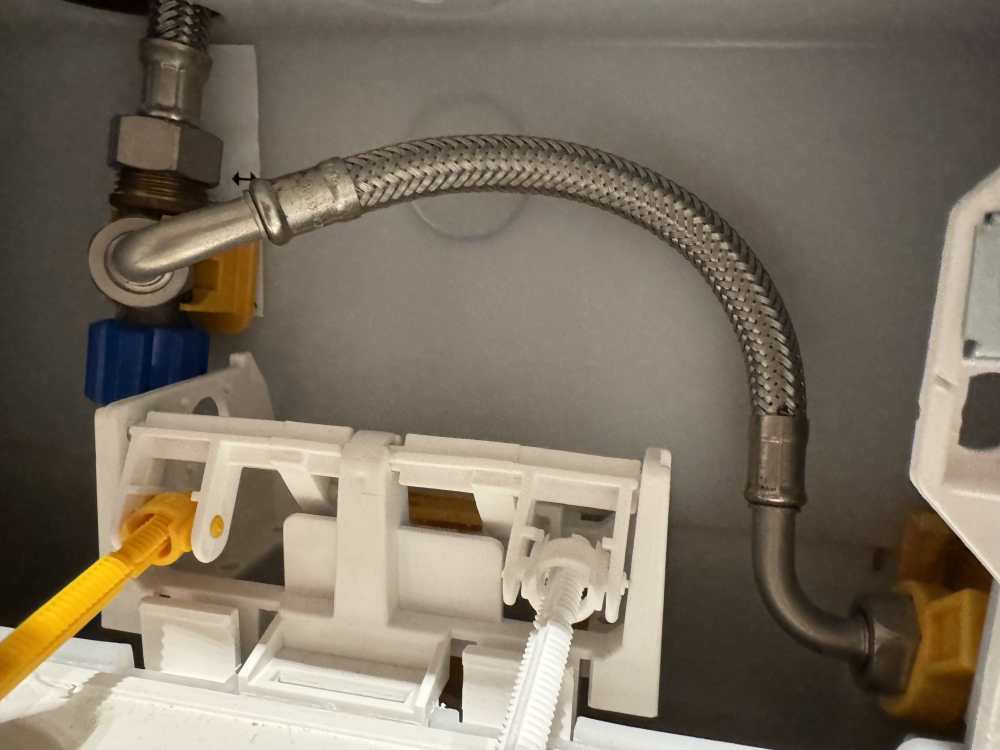
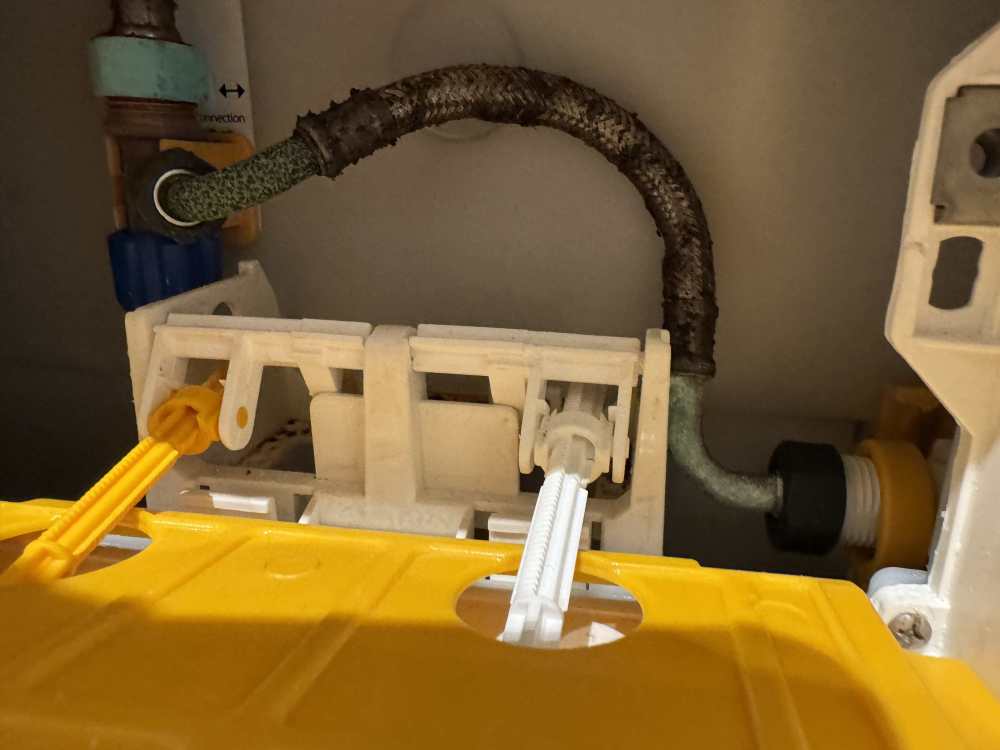
-
The pipe I have ordered is from the US, it claims to meet their standards. I couldn't find a nylon one here for the 3/8 to 1/2 connection. I was able to buy a 15mm to 1/2inch tap connector in nylon here, but It doesn't mention any standards. My thinking is to try it as it is nylon braided and so shouldn't rust. From what I can see nylon ones might be a bit less strong and easier to pinch, but that is pretty much irrelevant as they won't be moving around. One of the ones that failed after just a few years I think might have been twisted during installation. Some places do indeed recommend replacement every 5-10 years. Virtually no one must be doing this in reality. I will certainly check the other pipes in the house, I did this last time I replaced one. Last time I checked there were no other issues and it seemed isolated to certain rooms, it seemed to be all the places where the cistern is on an outside wall and colder, although the cold water coming into the house is pretty cold. It was also the most used cisterns and again I think these have more water running through them so are generally colder.
-
Yes Australia, typo fixed thanks. We have a 28mm hot and cold loops in the house with all the fittings connected to this using 15mm pipe. The loop was put in months before the bathrooms so I think they did this as they weren't connecting up the toilets. They just brought the mains close to where the toilets would would be.
-
The pipes inside the cistern can be replaced just by taking the flush plate off. All of the inside of a concealed cistern can be removed through the flush plate. This was more difficult as it was a second flex connector connecting the valve inside the cistern to the mains. I used metal cutting scissors to cut the top out of the plastic cistern. Then I pushed my arm up into the wall, getting it all scratched up. Yesterday I did this with a small screwdriver to shut off the valve while I waited for a new pipe to arrive so I could turn the water back on. Today I was about to give up because there was no way to get enough purchase on the pipe inside the wall to unscrew the compression fitting. Then I wondered if I could move the 15m PVC mains pipe, I remembered how flexible they are. I pulled it out of the clip holding it to the wall and was able to pull the pipe out through the cistern. Then I could easily unscrew the compression fitting and replace it before putting it back into the wall. The new nylon flexipipe presumably won't rust. Our last house did not use flexi pipes but the builders had put isolating valves in all the fixed pipes entering the cisterns. After around 10 years these all began to fail and we and multiple neighbours had floods due to this as the cisterns were all concealed and you didn't notice the slow leaks until the ceilings started to drip. The flex pipes burst under pressure so you can often hear straight away when they go.
-
It’s the hose that fails. The stainless steel rusts and breaks then the pipe pops. If I look at the pipes the rust seems to be mainly on one side which fits in with my belief it is caused by water condensing on the outside of the pipe. I have PVC piping and then they have used 15mm tap connectors at the end of each piece to connect to the fittings. This is the first time one of those has gone. The main problem seems to be the ones inside the cisterns. They are not under water just at the top of the cistern. All concealed cisterns seem to use a similar connector.
-
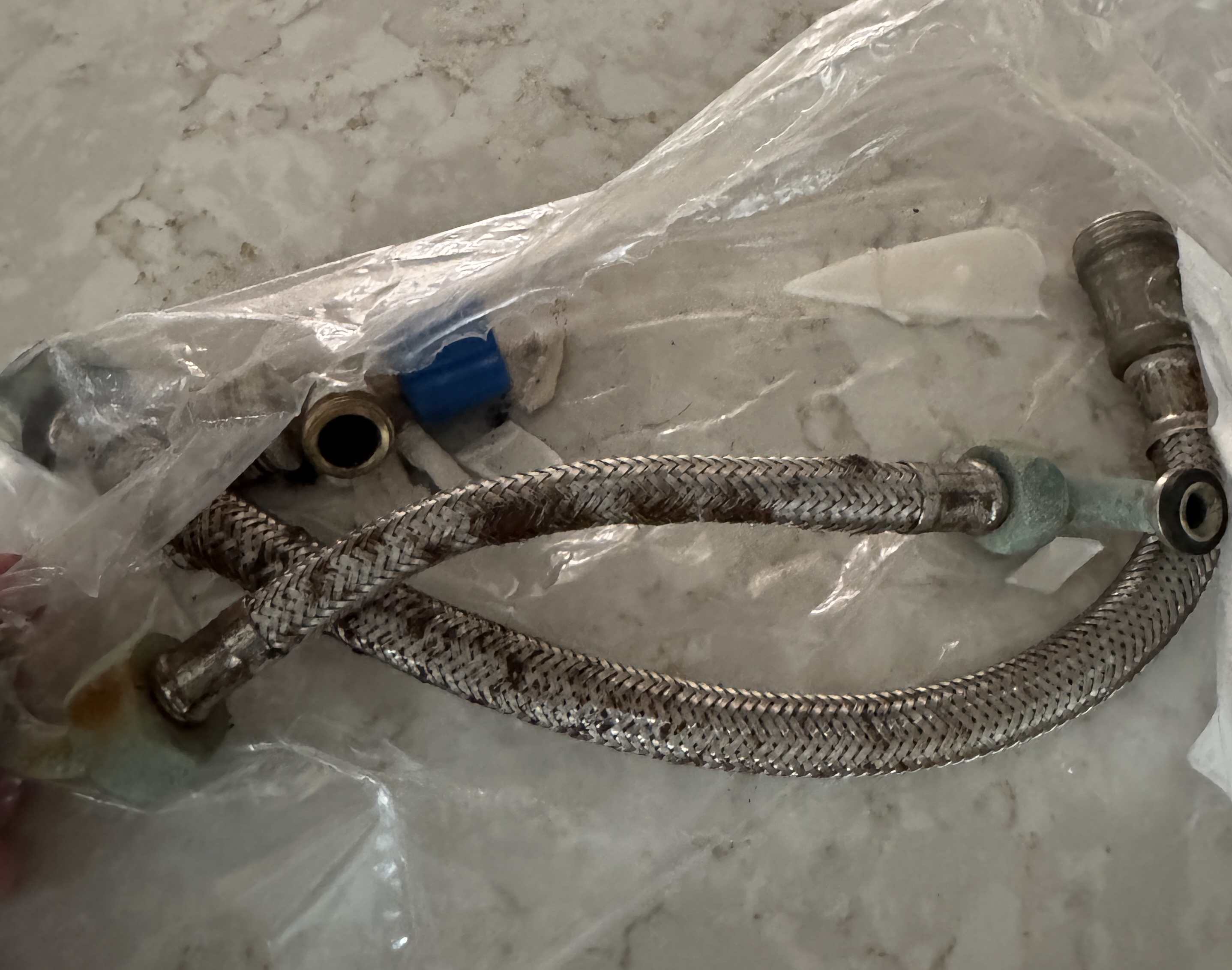
We have multiple concealed cisterns in the house. They have stainless steel flexipipe as shown here connecting the refill valve to the water supply. https://www.bathroomspareparts.co.uk/porcelanosa-flexi-kit-100306654-189163-p.asp As far as I can see all the makers of concealed cisterns use almost identical pipes. We just had the fourth one fail. One of the four failures causes quite a bit of water damage, the others all failed draining into the cistern. I bought a load of replacement pipes and plan to check them more often to see if they look like failing. Some of them seem to rust quite badly. My suspicion is that the incoming water is quite cold and they are all sealed inside unheated spaces. This causes water to constantly condense on the outside of the pipes and they rust then fail. The local water supply is also very acidic. When you Google flexipipes you get some research from Austrlai that says they are the number one cause of household flooding and account for 20% of all cases of water damage. The one in the bathroom connected to our pool has failed twice. I believe it is because the humidity is higher in this room so more water condenses on the pipes. There is no chlorine. Yesterday it was the flea connector to the mains inside the wall. I managed to replace it with a lot of effort without having to cut the wall open, I did cut the top of the cistern away inside the wall. My arms are pretty scratched up! I found a nylon tap connector and have used this as a replacement as hopefully it is unlikely to rust. https://www.bes.co.uk/flexible-tap-connector-1-2in-x-15mm-x-300mm-17439/ I am considering replacing some of the fittings in the cisterns with these. I will buy one to give it a try. https://www.amazon.co.uk/ARCORA-Attachment-Bathroom-Kitchen-Compression/dp/B09PFZ6PL8?th=1 It made me wonder why do these normally use stainless steel and not nylon? It seems like nylon braided ones are a lot more popular in the US. The extremely thin and cheap stainless steel in these is always likely to corrode. It also gets dangerously sharp when it does rust and break. Picture of the two pipes I replaced -
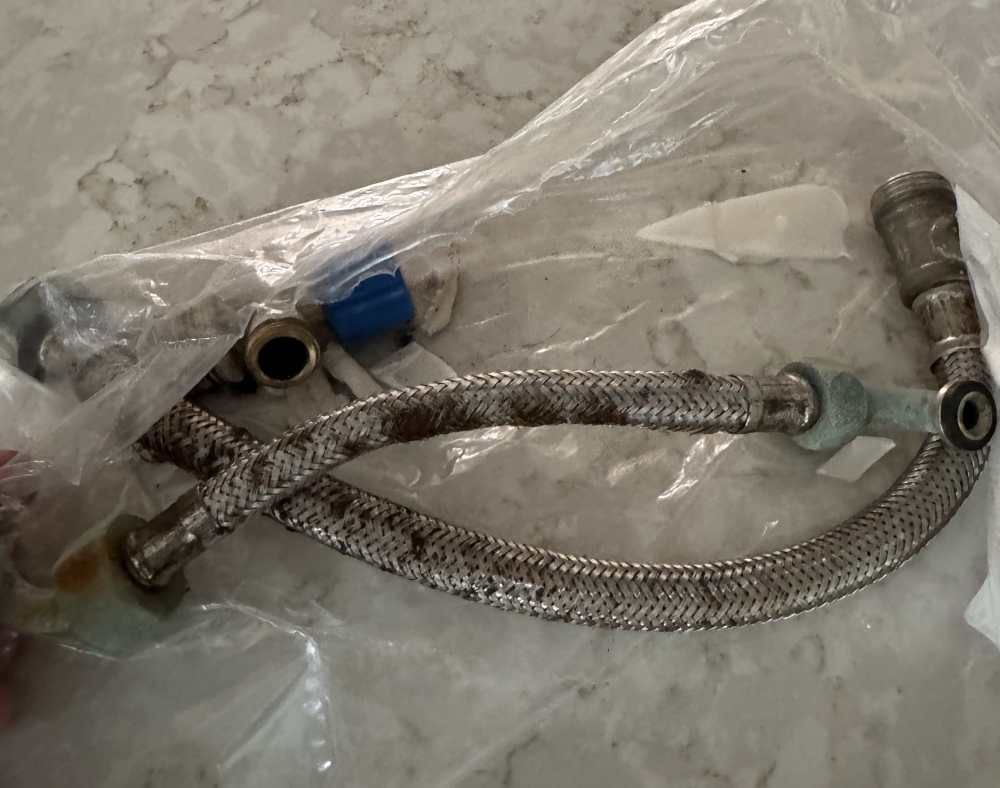
-
I have an EV9 and looked into this when I got it. At the time, the first announced charger was the Quasar 2 and it is still not available. It is listed at £4000 plus fitting. At that price you'd be as well getting a battery. The Sigenergy one appears to be available at a much more reasonable £2000 and sounds like a good piece of kit. But again, a 10-15kWh battery can be had for not much more. Most car batteries are good for 1-2000 cycles. So 2-400,000 miles. Usually more than the useful life of a car. If you charged and discharged 10kWh a day, then you are using 40-50 cycles a year depending on the size of your battery. In practical terms this is unlikely to impact the useful life of the car. But if you started to do say 20kWh a day every day, if you had an ASHP for example, then I would be worried about the life of the battery. You'd be using 10% of the car's battery life per year for battery storage. Of course you could keep a car for three years doing this and then sell it and no one would ever know. A car with LFP cells would be better for this as they have around 5000 cycle life. If the V2G/H happens using AC I would be worried that the AC charger in the car would go. This is a lot more likely than the battery itself going. The Sigenergy unit appears to be able to do DC charging which would be a big positive, it would also be a lot more efficient.
-
I think the proximity of the substation means it's way too risky to do it yourself. I have a local company that comes all the time to do stuff like this. It's £50 per hour per man plus VAT. Your half day estimate seems about right. Getting rid of the wood can be a pain unless someone wants it for firewood.
-
My mum did this and I found this was what was needed. This is for a Porcelanosa wall hung toilet. I would think it works for others, but you can probably look up a different make. https://www.bathroomspareparts.co.uk/porcelanosa-large-zip-toggles-100125027n499816968-179334-p.asp I assume that you still have the bolt otherwise you need this. https://www.bathroomspareparts.co.uk/porcelanosa-mood-toilet-seat-fixing-kit-100125026n499816970-179330-p.asp?utm_source=google&utm_campaign=&utm_medium=cpc&utm_content=&utm_term=&device=c&utm_prodid=ebaths2179330&gad_source=1&gad_campaignid=22543615678&gbraid=0AAAAADreFuGWtF-V_WS2BsGksAOavlQv6&gclid=Cj0KCQjws83OBhD4ARIsACblj1-zxAkTQbL6K8xWSnCoftyZHxQFRWot1YcoyoW_WkbDYtAjwZRKctQaAmNBEALw_wcB For future reference, you probably can just remove the seat by tilting it up at a 75 degree angle then pulling it straight up, don't unscrew anything like my mum!
-
I have been expecting this to happen but no sign so far. Daytime demand is still roughly 50% more than overnight. I have tended to use 10-15p price differential to account for some closing of the gap over time when I do calculations. Some tariffs are at 25p differential at the moment.
-
I have been looking at this and running the numbers. It looks to me like you would get a better return on investment by just having a plug in battery and time shifting from overnight to daytime with around a 20p/kWh price differential. The overnight electricity is so cheap that the extra cost of panels and inverter don't seem to pay for themselves. However, if people do this it doesn't really help with part of the point of these systems which is presumably to add more distributed generating capacity.
-
Low points: and how to get out of them
AliG replied to ToughButterCup's topic in General Self Build & DIY Discussion
Thanks for your kind words and donation. TBH the real work is done by the guys who look after the website. I’ll look at the donation tab, I’m not sure who was responsible for it. Maybe they took it down after the last push for donations. -
I haven't seen the figures, but I would guess that self build numbers have fallen recently due to build costs. Land prices do not seem to reflect the increase in costs. I know one person who was planning to build, owns land and had estimates pre COVID. They then looked again post COVID and decided it was too expensive.
-
A lot of the people quoting here seem to be doing a lot of work themselves. Last time I spoke to my architect at the end of last year, he said builders were quoting £4000 a square metre for a main contractor build. I'd say that is the opposite end of costs, no work yourself, architect managed, high spec.
-
Keep on topic please
-
Is it worth having a gas connection for self build house?
AliG replied to Wadrian's topic in Central Heating (Radiators)
With the right programming it is quite easy to get your average electricity cost down to 11-12p per kWh using cheap overnight tariffs so you only need a CoP of 2 for a heat pump to be cheaper to run than a boiler. My parent’s system is programmed to heat all hot water at night and I have set the thermostats artificially high overnight so that most heating demand is overnight also. This would be harder in an older less well insulated house. The bit about the electricity/gas price ratio increasing over time is nonsense. It should fall over time as renewables are cheaper to run. Only the weird historic contracts have prevented this happening. There is also a chance they put a carbon tax on gas to push people to using ASHPs. When I built my house electricity was more than 5x, the price of gas and there were no ultra cheap overnight tariffs so I went with gas. On today’s tariffs an ASHP would probably be cheaper to run. Th cost of installing gas is way higher than the connection charge. You have costs to put in pipework, the meter and so on. Gas work is incredibly regulated. It’s very difficult to run any gas pipes inside a house. The average total cost is likely to be closer to £2000 all in. -
I’m not very familiar with CIL as we don’t have it in Scotland. To be fair Scottish local authorities, hopeless as they can be, at least don’t seem out to get one over their council tax payers if they can. So we have a lot less in the way of litter wardens etc. ScotRail also does not operate a penalty fine system like the one that now seems to be abused in England. Many government functions seem to have lost any sense that they are working to provide a service for people.