AliG
-
Posts
3211 -
Joined
-
Last visited
-
Days Won
11
Everything posted by AliG
-
Funny the architect said that this might be a solution
-
Hmmm that might be at least worth a try. I might buy a sample. My wife is quite undecided and now says she might prefer something more rustic tan render like this. She also wants it fixed as quickly as possible. It is very difficult to know how it will look finished. I am worried about having too many materials and colours.
-
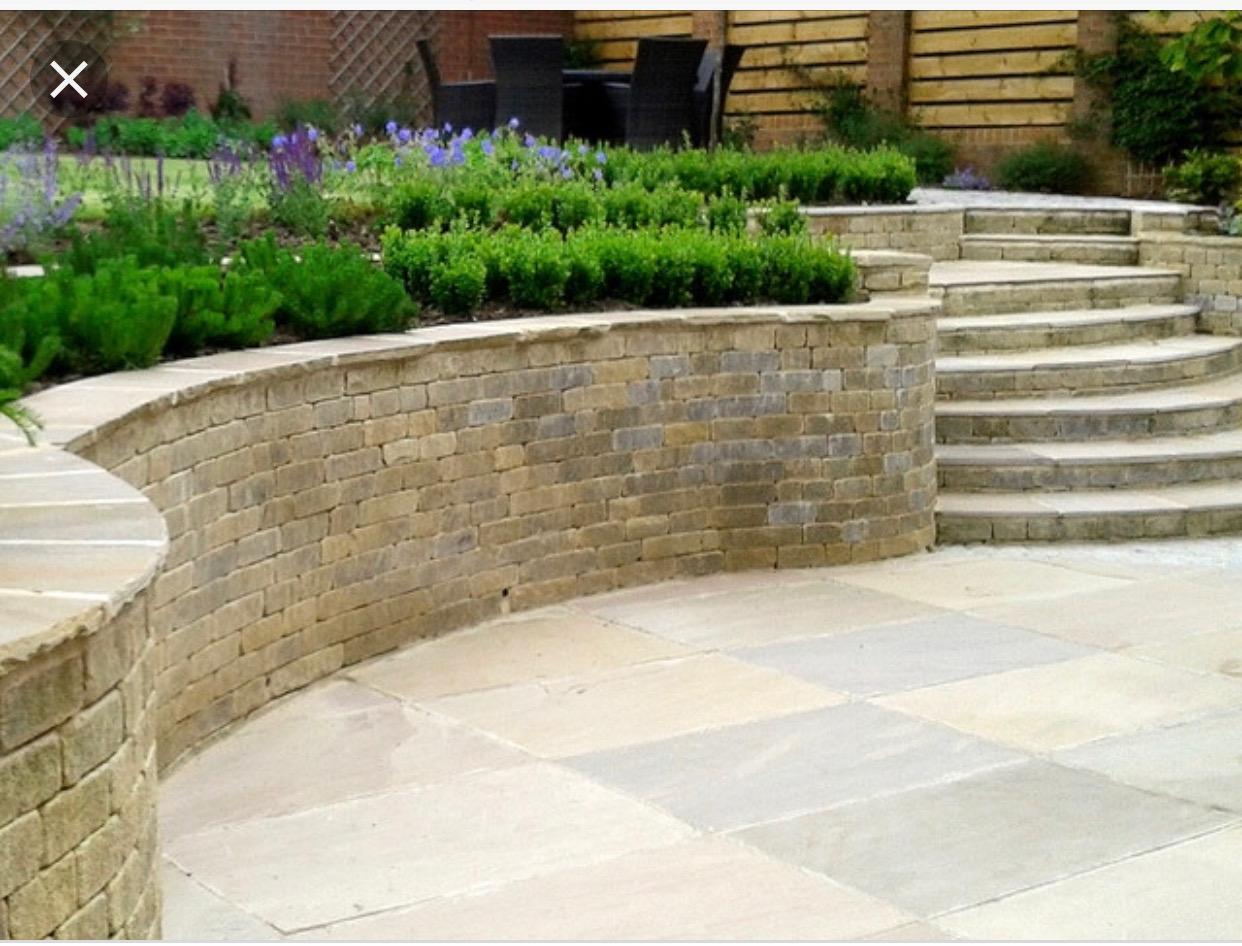
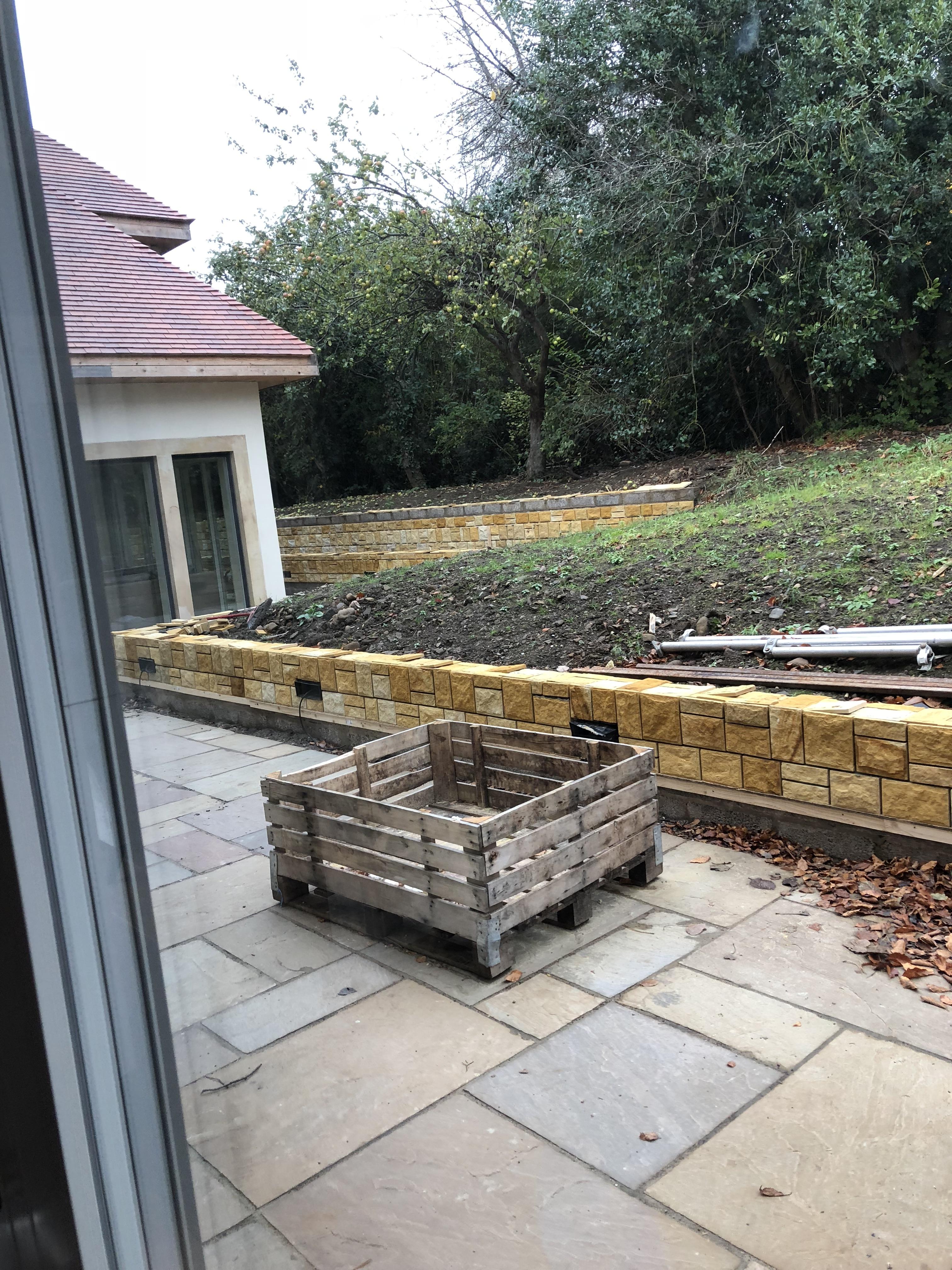
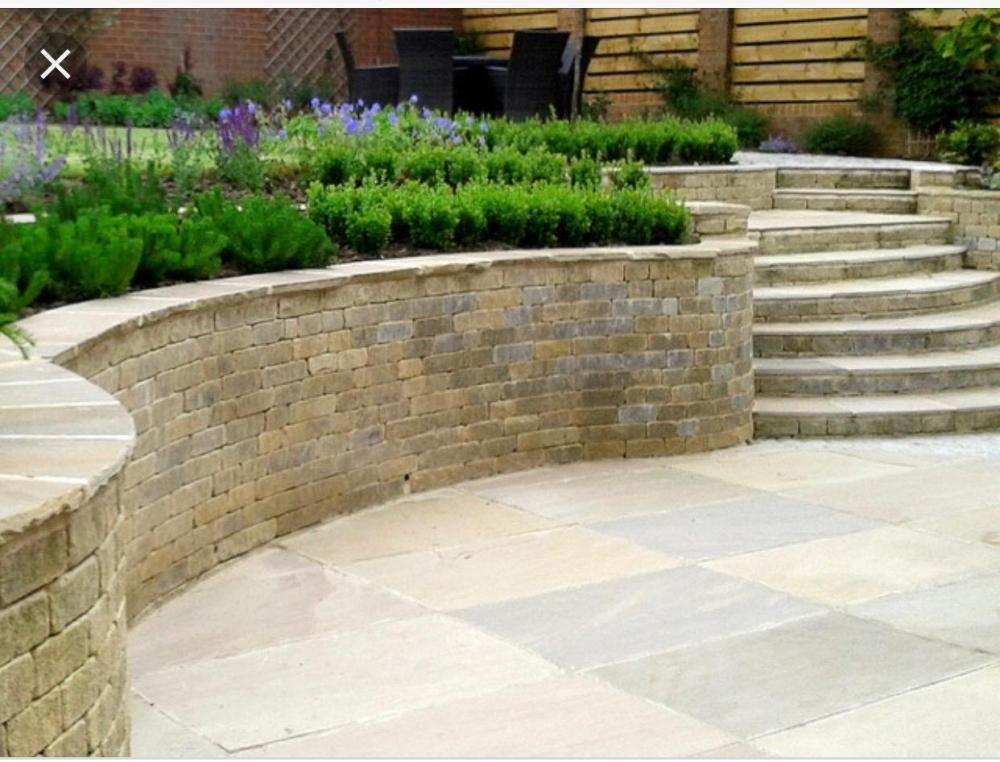
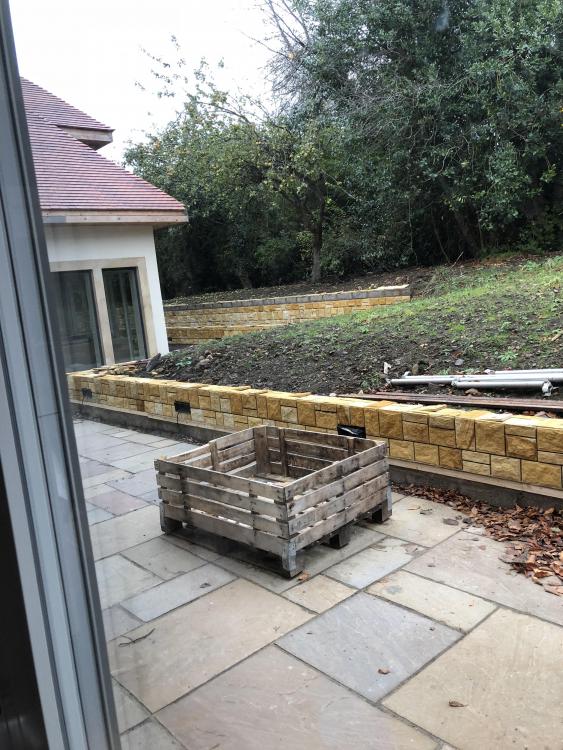
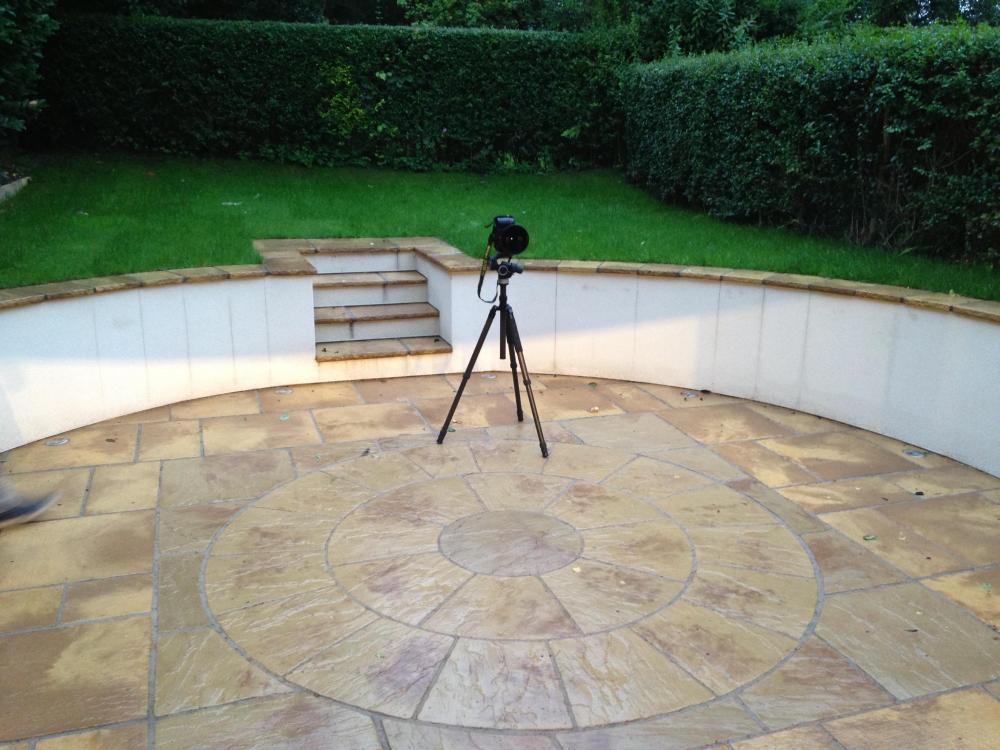
We have a long retaining wall in the garden which we wanted to clad in stone. The architect recommended a drystane effect but neither my wife nor I liked that idea and we wanted something less rustic. We ordered coursed sandstone and the builders have started to put it up, but the stone that came is just very very yellow. My wife has decided that she doesn't like it and I can see her point. She thinks the issue is that the sandstone pavers are not uniformly yellow. We thought they were going to be yellow when they were ordered but they ended up being mixed sandstone. For some reason getting proper samples out of people seems to be an ongoing issue. Last week we refused to let the driveway get done in resin bound stone until we had an actual sample that we liked and a full bag of it, not a 2 inch square sample in a box that bears no relation to the actual colour. Anyway, having looked at it I don't think the pavers are the problem, I think the problem is that the colour is too yellow and that it is too many different finishes. I suggested changing it to ashlar stone to match the house, however, having spoken to the architect he suggested rendering it with a sandstone cope to match the house. This I think would look the best but has issues with staining which is why we didn't do it to begin with. I have a picture of the part complete wall and a picture of a rendered wall with staining issues which we want to avoid. Thoughts would be appreciated.
-
That seems a lot better. i was actually thinking the dining area would be part of the kitchen and the lounge separate or maybe with connecting doors. I haven’t checked the dimensions but ideally you’d want an eating and informal sitting area in the kitchen then a separate lounge. It looks like there is probably space for this. Then I’d have a door to the lounge in front of the stairs. The WC would be better accessed off the hall.
-
I think this is quite an old fashioned design, especially if you are looking to sell. I cannot remember the last time I saw a house with a long lounge/dining room like that. A lot of the issues are around whether or not the stairs have to be their to allow a room in the roof. Clearly that will need cleared up before you proceed as to maximise value you should either be building that room or not have it impacting the design, so to some extent we have to ignore that issue a bit for the moment. I would look to have a large kitchen/dining room across the back of the house facing south. This would need the stairs a little further forward, but I think would still allow a second stair above them to access the roof. There are a lot of things you could do in terms of turning the stairs etc depending on the final layout. I would then have a lounge on the north side, possibly with doors opening into the dining area that is part of the kitchen. This would then allow a study where the dining table is currently shown as part of the kitchen, or a family area in a large l shaped kitchen/dining/family room. The WC could either cut into this space or go across the hall window at the front. You could get light into the hall from glass doors into the kitchen which would benefit from facing south. This effectively gives the house an extra room, either a study or family area (probably the most sellable option) in the kitchen with a separate lounge. At the moment too much of what is a modestly sized house is given over to eating space, a family would prefer two separate relaxing spaces. Downstairs I would be looking to have an actual separate utility room. It won't need a window, so can be positioned towards the back, maybe where the cupboard is.I would want a larger wardrobe in a master bedroom, you could do a walk in in that awkward space which probably adds value(again stair position dependent). I would look to add wardrobes to the other bedrooms, indeed the house does not have enough storage, you could put wardrobes on the wall between the other two bedrooms and a cupboard next to the utility room at the back. Basically I would move all the doors in the downstairs hall as far forward as possible and utilise the dark area at the back for storage//utility room(I'd check you can get the gas flue out though) Design wise, this is just personal preference, but that style of bay window is very old fashioned. It would also add costs to the build, I would just make the house longer and square it off or do something more contemporary. I would also want a lot less roof if I wasn't using the space under it.
-
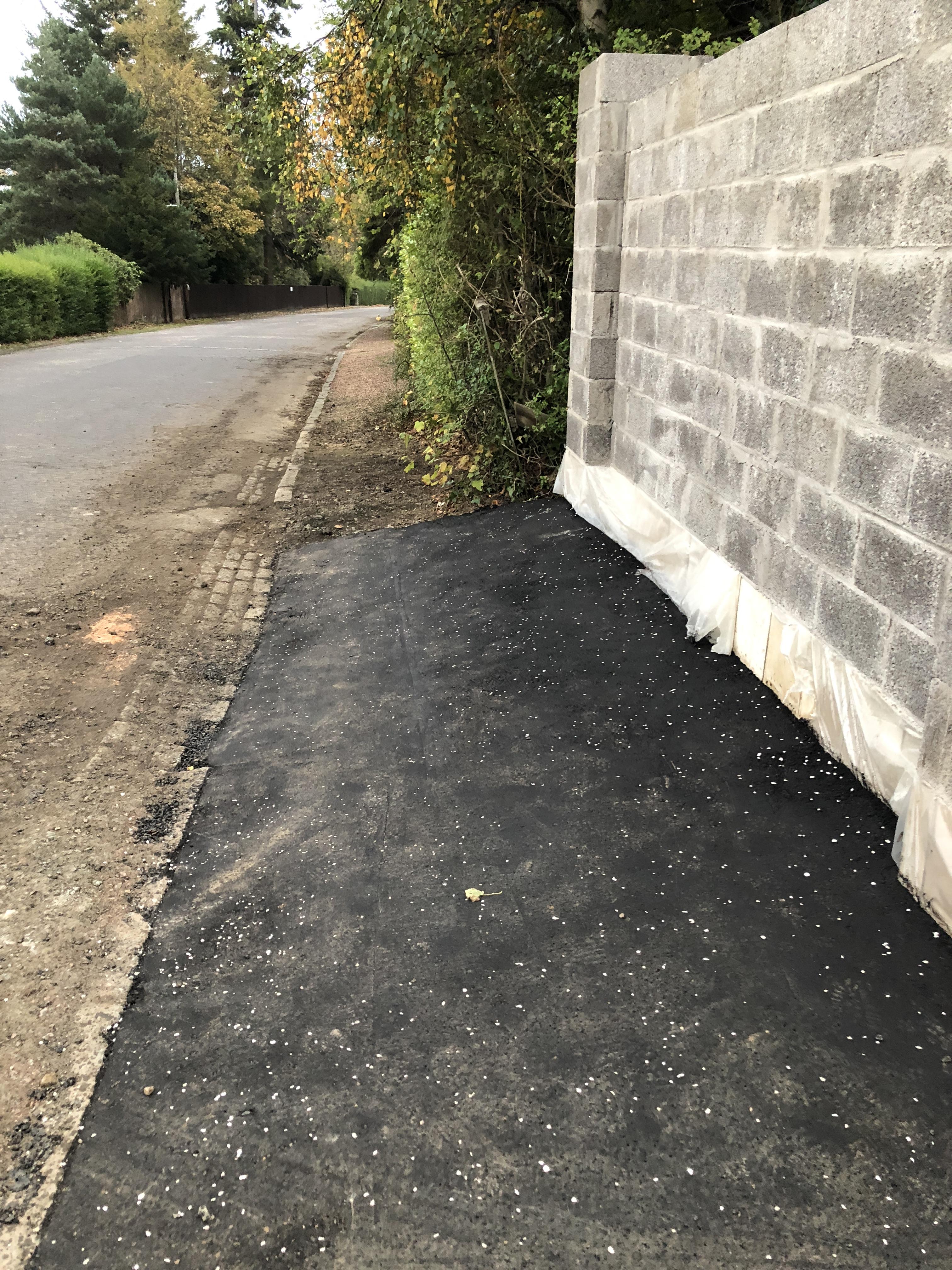
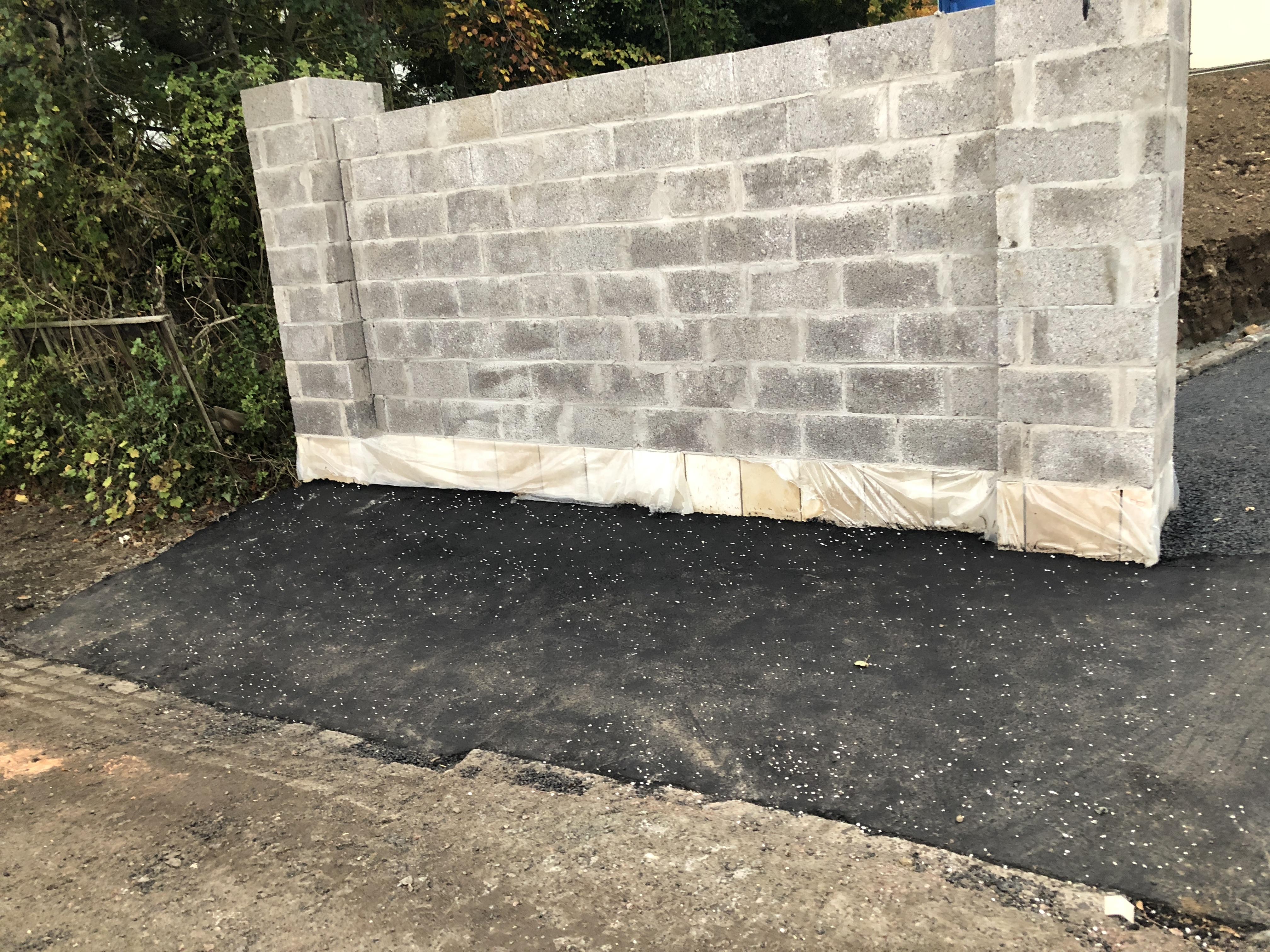
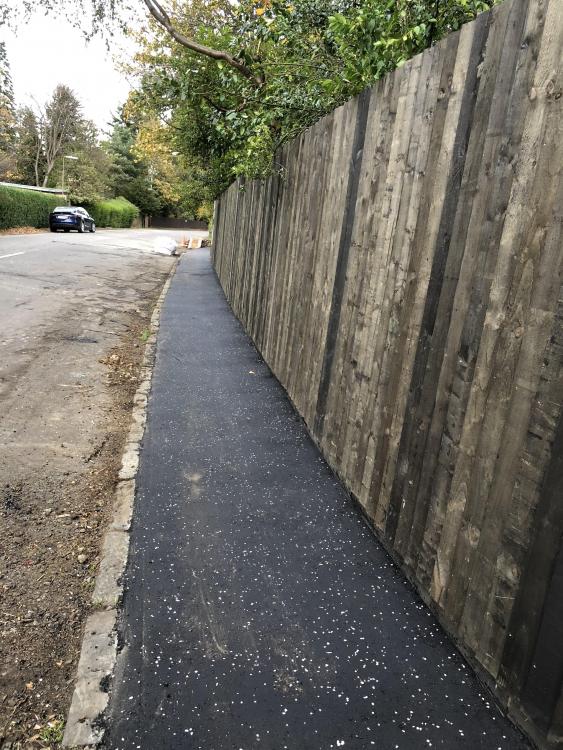
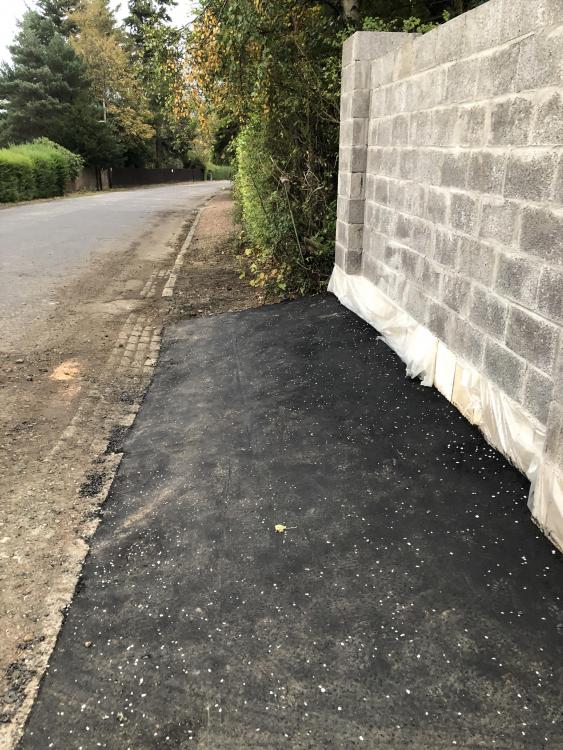
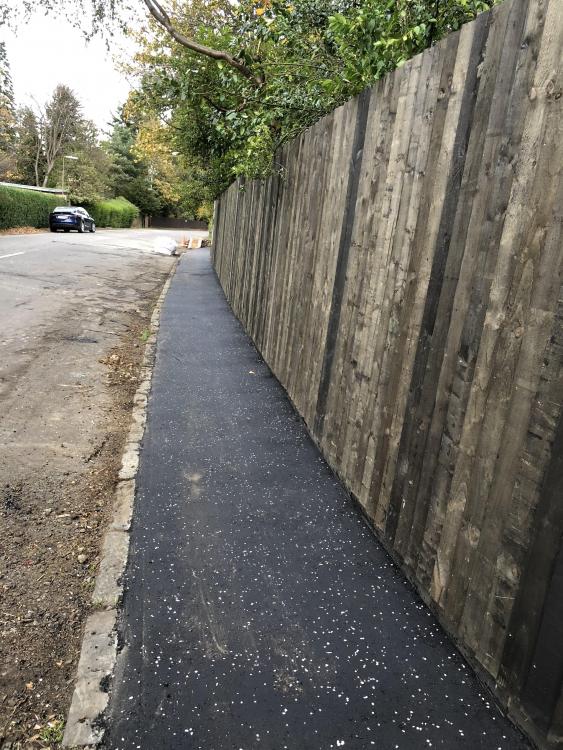
We had another look at it this morning, we are going to ask the builder to raise the kerb and then top up the tarmac. That should create a flatter area over most of the width of the pavement. It will still be bit steeper close to the wall, but there will be a fence and hedge past the wall that tends to push people away from it. The flat area will be the area people walk in. Looking at it, the area of missing kerb is I think where the services come onto the site, but there are some kerb stones there so I don't see why we can't reinstate the kerb, maybe even a little higher than it was to flatten the pavement.
-
I was thinking of taking the gravel board from the fence that goes in after the wall and continuing it along to make a planter, I would then maybe angle it in to the dip in the wall before the pillar. The planter itself could be a trip hazard, but I think it is so obvious that it's OK. The gravel board of the fence on the other side makes the back edge of the pavement, it is hard to see on the picture here, but we used two strips of board below the fence so the bottom one would be pretty much buried. It was covered in dust and grit before we filled it in, I didn't know the kerb stones were missing. The pavement is made up of all kinds of rough surfaces along the street, but none have the slope that we have.
-
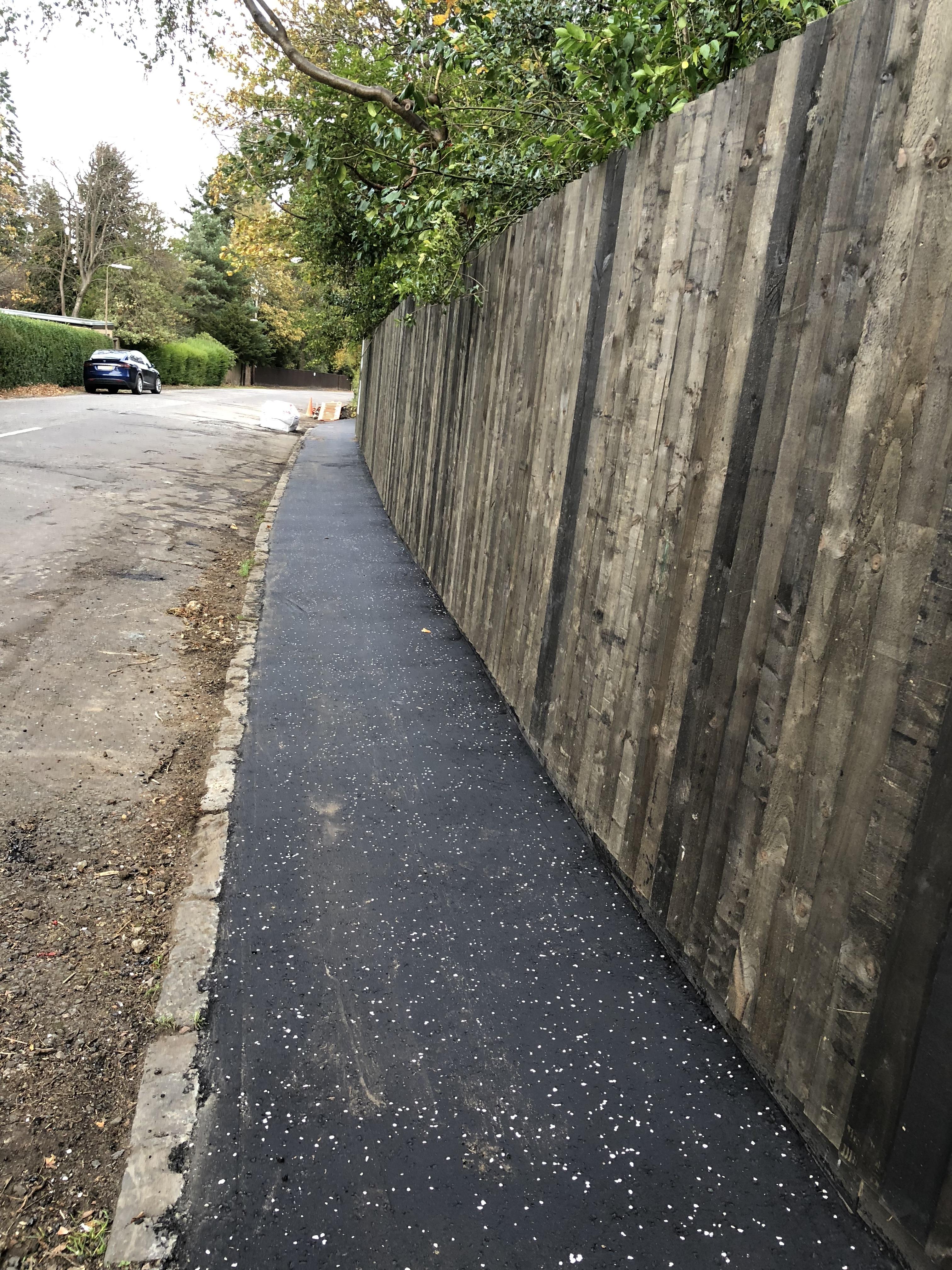
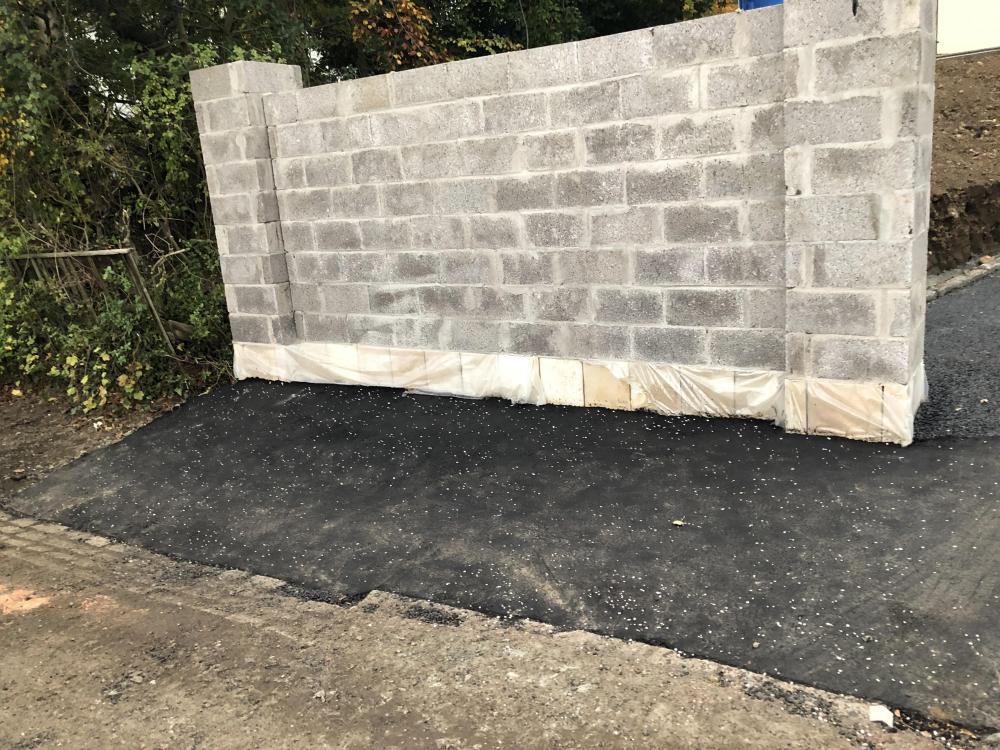
The builder called me on Friday to ask me what I wanted to do about the slope in the pavement that he thought might not be safe. Previously the pavement ran downhill across the front of the house, they built the wall that our gates will be in level otherwise it would look odd. The trouble is that when they them put the tarmac in front of it, that a drop of maybe a foot that used to occur across a length of 7 to 8 metres now occurs across 1.3m from the wall to the kerb. Looking at it, some of the kerb is missing and putting it back and raising it would help a little, but it is still very steep along the back. My initial thought is to build some kind of small planter box where the rear of the pavement is currently so that there is a step down at the front of it and the pavement is more level. It would just out a bit, but there will be a small bit of fence in line with the hedge you see past the wall, so we cold just make it in one with that. Annoying with the pavement just having been laid. I should add, that the street is in an odd situation where the roadway is adopted, but the pavements are not. The streets off the side of our street are private roads. Hence the various missing kerbstones and the strange arrangement where the kerb is level with the road. Would love to hear any other solutions.
-
I'd probably be more Stan and Ollie!
-
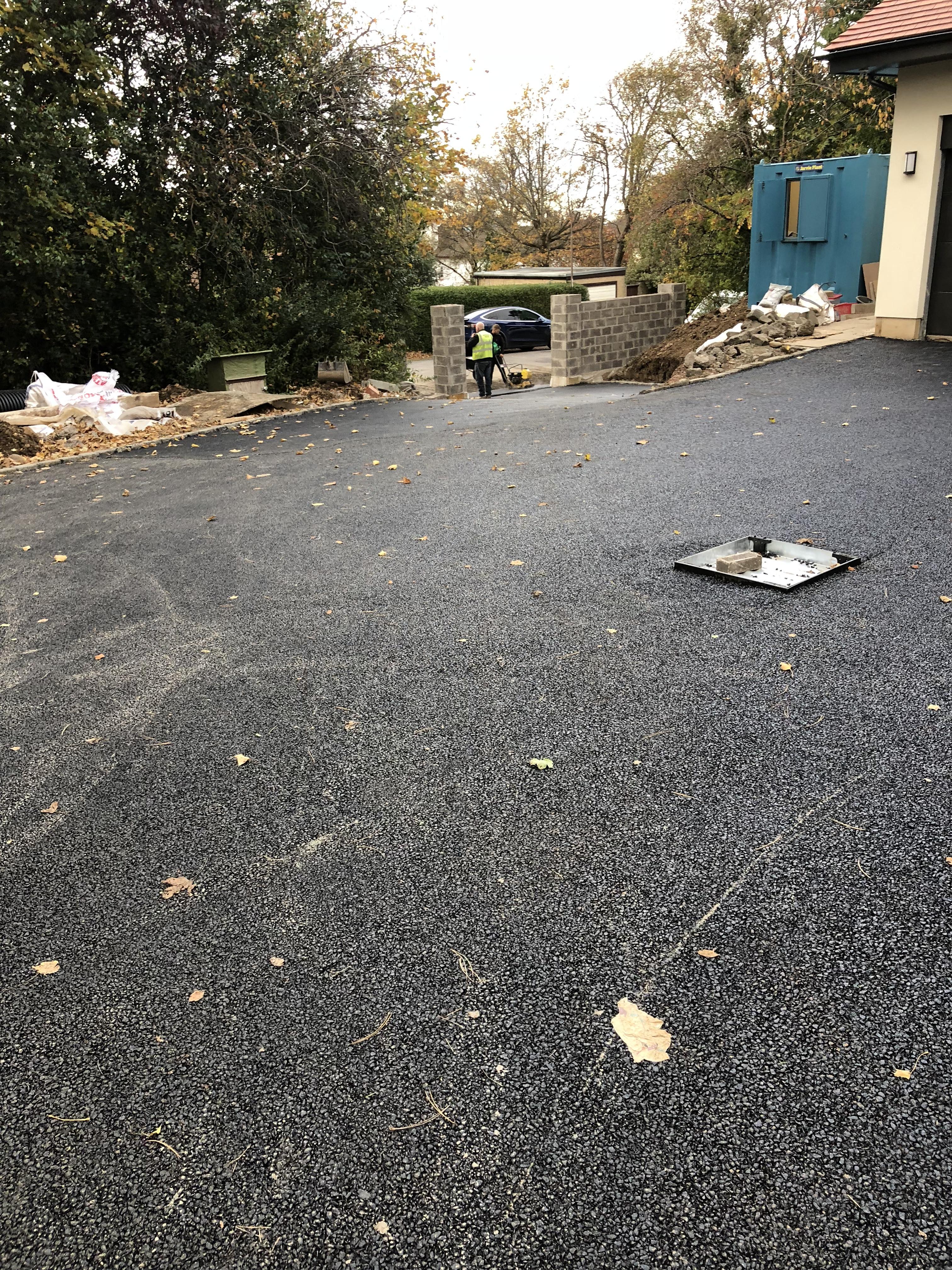
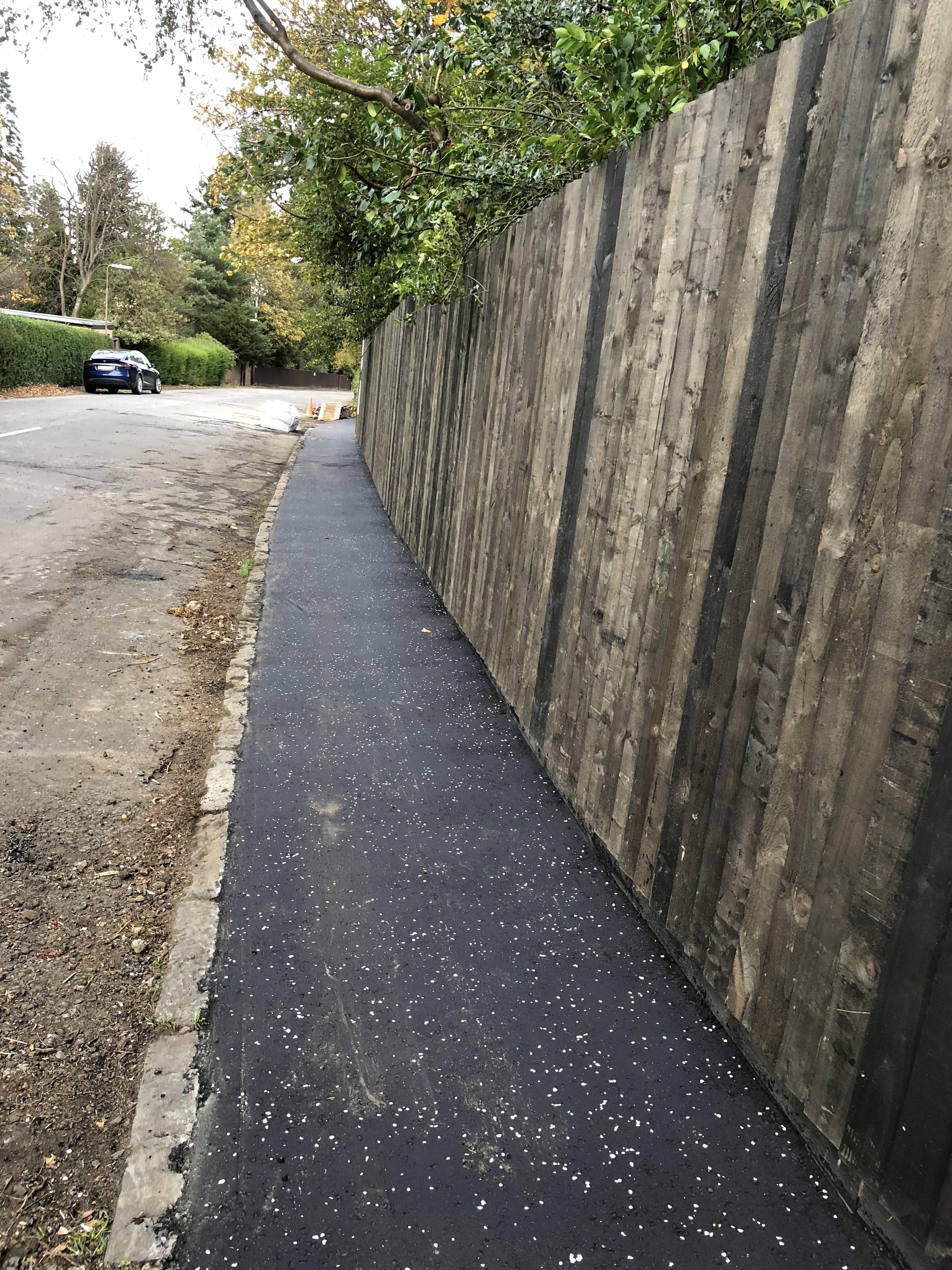
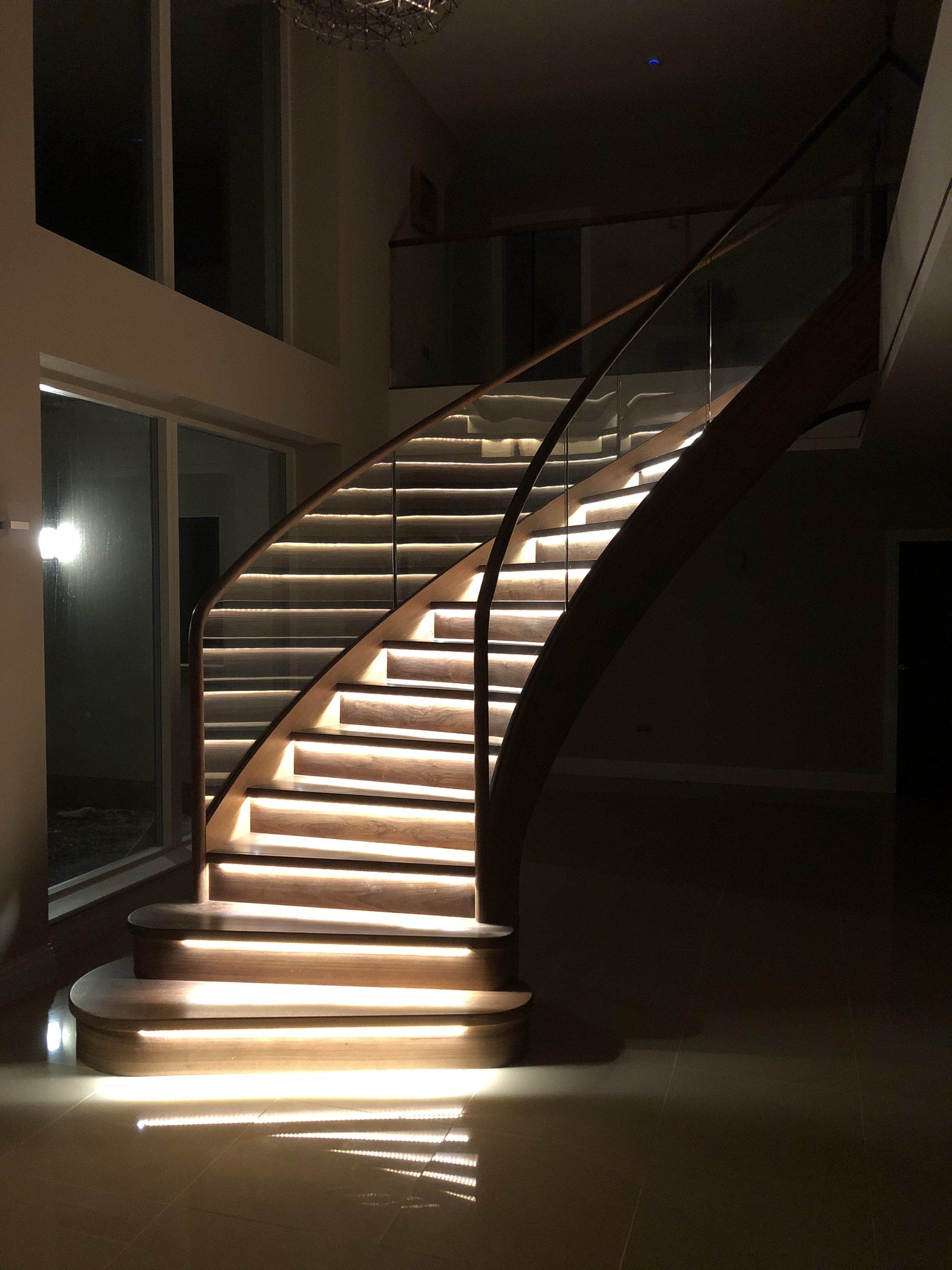
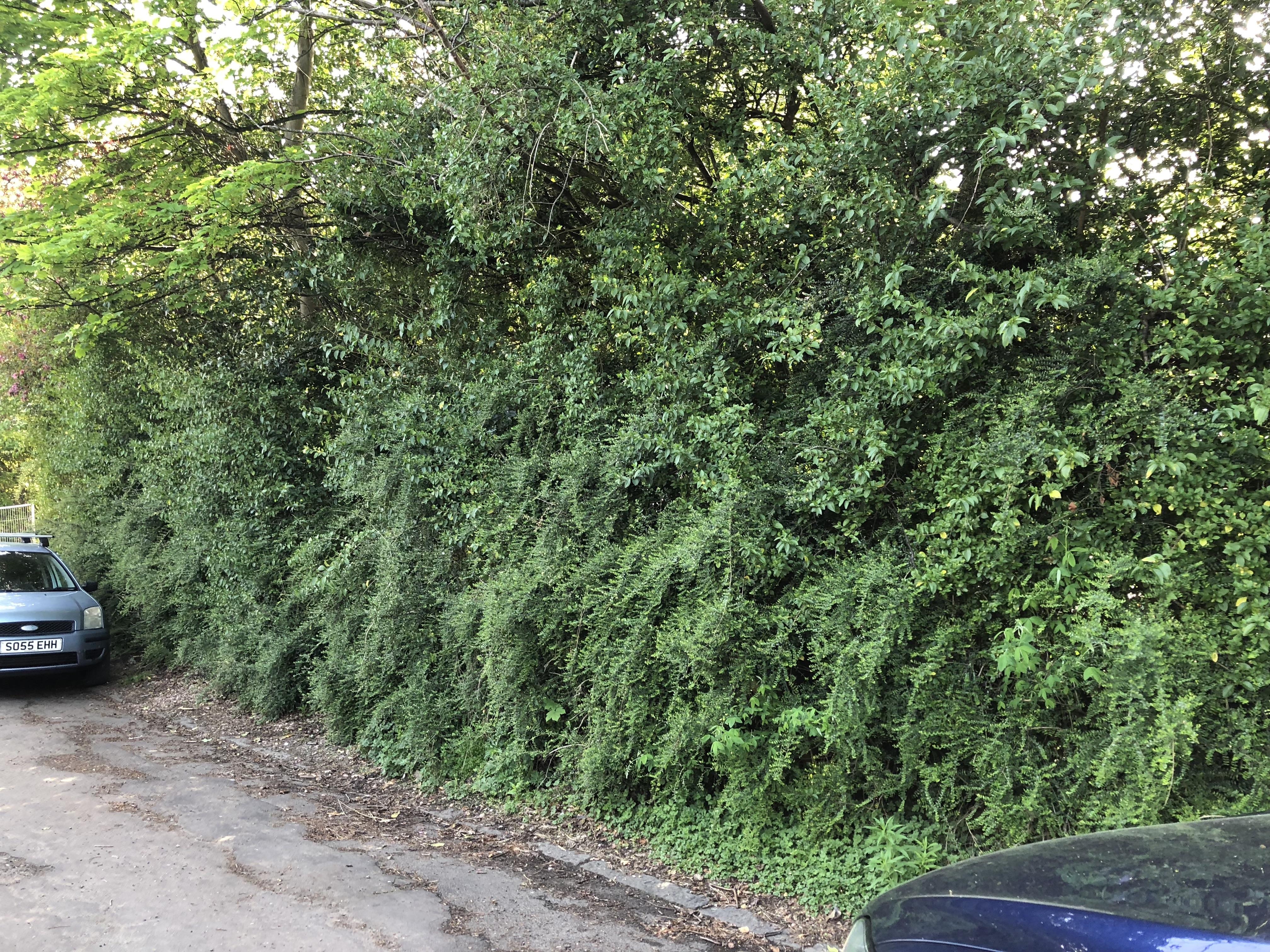
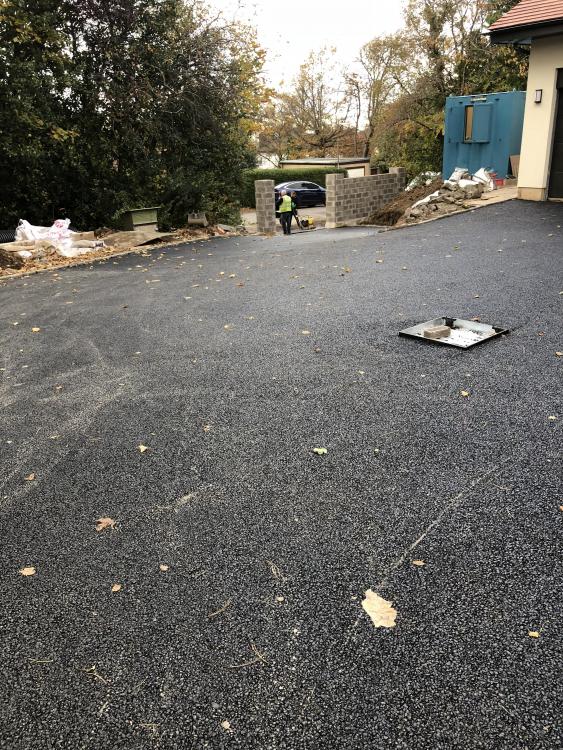
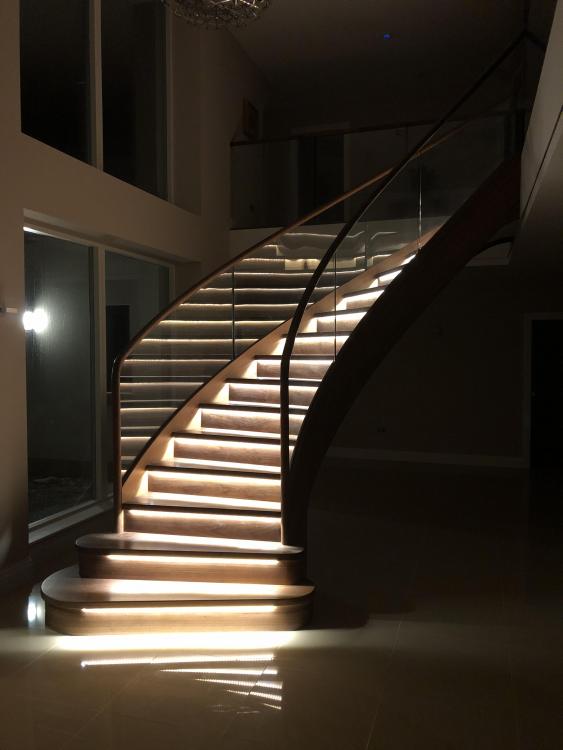
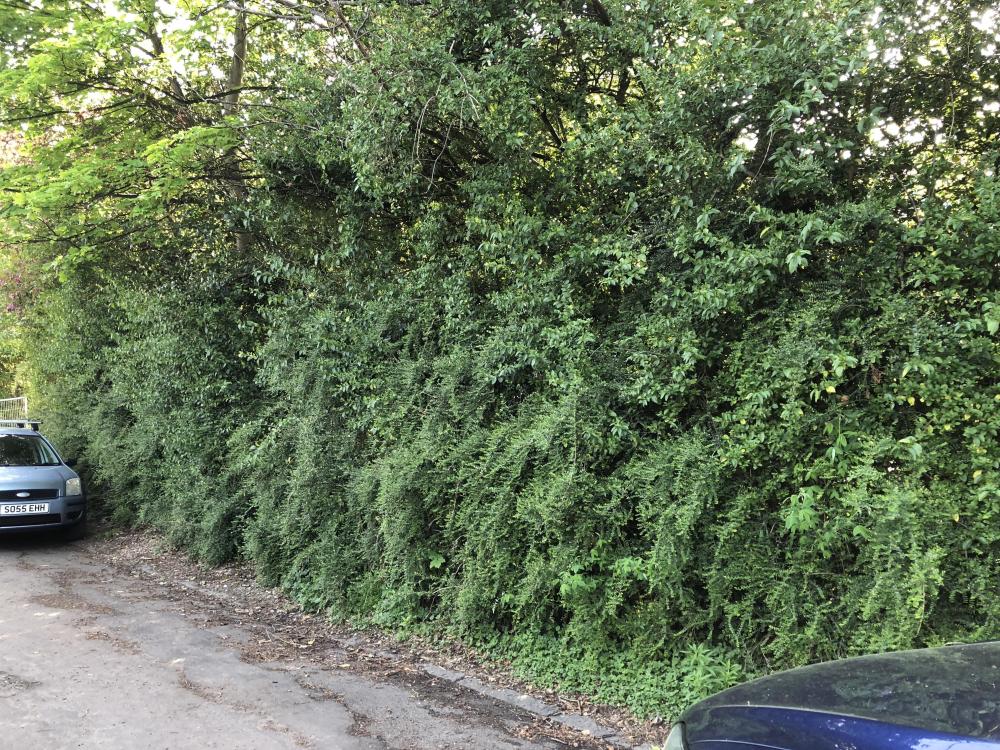
I had hoped we would be finished by now and I would do a photoshoot of the house, but it is dragging along. We are mainly doing landscaping and snagging. We finally have a driveway, the resin bound top still has to go on. They seem very intent on us taking a specific colour and we are suspicious that is just what they have readily available so have refused to install it until we see more samples. I hated the untidy bush along the road in front of the house, I thought it really let the place down, so I applied to build a new fence and then we tarmaced the pavement. Hopefully the neighbours are enjoying their nice new pavement. The lights are connected up on the stairs and I think they just look fantastic. Driveway, gates are also going in. Pavement and hedge before we tidied it up New pavement and fence Stairs
-
Yes @ProDave that's exactly how our old house was built. I had a UFH thermostat on an outside wall in the hall that I had to set 3 or 4 degrees lower as the draught blowing in behind it meant it registered a lower temperature than most of the room.
-
Good news I found a house nearby in exactly the same situation. B-listed house splitting up garden, new house is 22% of the plot. It is also considerably larger than the listed house and 1.5 storeys. It looks like it will be approved next week. This is the second instance of a listed house splitting its garden and permission being granted for a larger house than the original listed house in the last 4 years.
-
We got caught out that the Frametherm didn't cover the MVHR ducting which we then had to go up and insulate. This wasted a lot of the saving on the PIR. If you are doing PIR between the rafters, 200mm is probably cheaper than 190mm as 90mm is an unusual size. You can also try to get 200mm Celotex which saves on the labout, although some people prefer the staggered joints of 2 layers. I was worried about it fitting badly, but it was cut with a band saw and fits very neatly.
-
I think that we will put in a little larger than we need and then offer to reduce it. Also I think there is a good argument that it would be better to have slightly more coverage of the land and better insulation. The plot is newly created so the area should be exact unfortunately.
-
I tried to figure out where you could and couldn’t do full full cavity in Scotland before. I thought that Edinburgh was theoretically ok as it is in the moderate zone but I wasn’t convinced that BC would allow it. Historucally Edinburgh had a guideline that for building in the garden of a “villa” in a conservation area you should limit yourself to 20% site coverage. Theoretically we can include the whole sites bf the original house which allows us to go over 20%. Theg also have a guideline not to build more than 150% of the original footprint but the 20% rule seems to have been more relevant. My current place is more than 2x the size of the previous house but 20% of the plot. There are quite a few examples of this locally we will be using in our application.
-
The standard seems to be a 35mm cavity plus 12.5mm plasterboard for services. If all that is in there is switches then the cavity can be reduced to 15mm probably or you can uses a layer of 19mm plasterboard chased out. I think an alternative is that you use a thinner stud then insulated plasterboard straight onto it with sockets then fitting into the depth of the plasterboard. I am not sure though if this has an issue with the VCL being partly behind the insulation. If we have brick outer skin I think that 320mm ish is about as thin as we can go. I note that most timber frame companies seem to suggest that U-Values are worse with a clad outer skin than a brick outer skin so that you lose some of the gain in having to make the insulation thicker. Interestingly despite timber frame supposedly being more space efficient, a full fill (with PIR) cavity block wall wet plastered would be as thin or thinner.
-
It's likely that most of it will be rendered as it's the normal local finish, but you're right, if we go for wood cladding anywhere there is a big space saving. Not sure I'd want a SIP with no cavity at all, doubt they'd like that in Scotland.
-
I preferred it to last week's, I think they had hidden the pipework and the electrics seemed better integrated.
-
Architect has set to work on sketch design for my parents' house. We are trying to limit ourselves to 20% of the plot area, which is 153square metres. I thought that this was quite comfortable until I calculated the area taken up by the external walls. We were looking for 140-150sq metres internally including a single garage, single storey. However, when I calculated the wall thickness required for around 0.15 U-Value, I realised that with 370mm thick external walls they will take up over 20square metres. This is a big chunk of our area to give up. This assumes 100mm external blockwork and a 50mm cavity then 140mm SIPs/timberframe with PIR insulation plus a service cavity. So what's the best build up to limit the wall thickness. I am guessing that we will have roughly 150square metres of floor and roof, 110 square metres of external wall and 40square metres of windows/doors. So the external walls are less than 25% of the external envelope. There is pretty much no limit on the insulation we can get in the roof and floor and we would use 3g windows at around 0.7 U-Value. It appears from @JSHarris heat loss calculator that the difference for example between 0.15 and 0.2 U-Value walls will be negligible assuming good insulation elsewhere. I did suggest that we could use render board but the architect wasn't keen. This will massively reduce the thickness of the walls. The other issue I notice is that most timber frame/SIPs systems show a cavity between the panels and the interior, if we keep all switches internal is this really necessary? Or we could use the minimum amount of insulation in the panels as it doesn't affect the overall insulation of the house much. Appreciate any thoughts, and what are the downsides of various solutions, such as external noise? I think we might just go to 22% of the plot to give us a bit of leeway but I would rather have the most efficient use of space possible. I am not too fussed about the cost as again, the external walls won't be a large percentage of the build.
-
True, I was mixing the various properties. I don't actually know if the air tightness membrane is moisture permeable. The insulated plasterboard underneath which is then plaster skimmed is considered adequate as a vapour control layer.
-
I am in Scotland and have full fill with 200mm of PIR between the rafters, then insulated plasterboard below. Instead of sarking boards we have sarking planks with a few mm between then a breathable membrane on top. The ventilation is between the membrane and the tiles(clay), we do not have any ventilation at the ridge or eaves into the roof space. I don't see whether clay or slate would affect ventilation. We have airtightness membrane below the PIR then insulated plasterboard below this. I think one of the key things is to have air tightness below the roof so that moisture does not get up into the roof, thus ventilation is less necessary. It did seem that it was not clear if you could use Frametherm and still have no ventilation gap above it. I tried hard to find out if you could and I think it is probably OK, but it seems there is little information available. As said with Frametherm you would need maybe 50-100mm of PIR below the rafters to get acceptable insulation levels, I didn't look into this more as it would have reduced ceiling heights in some areas. The other issue was we just could not get Frametherm 32 or similar a couple of years ago, but it seems a lot more widely available now. As @Thedreamer did, where we were not using the roof space and had a flat ceiling we changed the 200mm of PIR to 400mm of Frametherm as it was much much cheaper.
-
If you want to use it as a basement you shouldn't need to tank it as it is a swimming pool so should be water proof. You could insulate the interior, it wouldn't need much as it is underground, but putting some kind of roof on the part outside the foundations would not be easy. It would probably have to be at least 200mm thick so would either reduce head height or stick out above ground level. Plus it would need to support whatever landscaping you wanted to have. Are your foundations not dug down a few hundred mils into the ground? If so they will go right through the middle of it reducing head height to well below 1m. You will also have to knock out the sides where the foundations sit. I would think just filling it in with hardcore to give a good base for the foundation is the best solution. Even if the foundations could sit on top I would still probably do this. A SE would probably want to look at it. A pool should have plenty of load bearing capacity, but I would think they want it confirmed.
- 23 replies
-
- 1
-

-
- structural
- foundations
- (and 1 more)
-
It is not recommended to heat a garage if you keep a car in it, it is not considered to be good for a car. TBH a modern car can be left outside happily for years, so it doesn't make much difference. Realistically a garage door is not well insulated or sealed and heating a garage is going to be an enormous waste of money, especially if you actually use the garage and regularly open the door to let the car in and out. My current and last house had integral garages with the same insulation as the house in the walls, but no insulation under the floor. Then an insulated sectional door. The garage tends to stay at around 10-11C when it is around 0 outside. This makes all the difference when you get into the car in the morning. A better idea is to make sure that the door to the garage is well sealed and insulated, use the saving from not buying the Celotex below the garage floor. It is no different to all the other doors and windows in the house that have the cold outside on the other side, indeed it will still be warmer in the garage than outside. Heat loss is driven by the temperature differential which won't be that high between the house and the garage. My last house just had a normal room door between the garage and the house with intumescent seals, the hall this was in lost a lot more heat through the side door to outside. One slightly awkward thing is getting an insulated fireproof door that you need for an integral garage, but it is doable.
-
Just watching this, se18ep5. I quite like the outside of the houses, despite the unusual choice of corrugated steel. I also liked what they did with the setting. But I hate the plywood interiors. I am surprised that Kevin didn't have much to say about it as he hated the house a few years ago when they did the same thing. Wish I had been able to get my steel for that kind of price, that was a lot of steel for £42,000. How did they start with a budget of £850 a square metre and end up at £1400-1600. They were a bit vague about it at the end. As ever, despite money supposedly being tight they ended up with what must have been scarily expensive bespoke kitchens. The houses will be very very hard to sell.
-
Cheap but good looking vanity worktop
AliG replied to Jude1234's topic in Bathrooms, Ensuites & Wetrooms
I hadn't looked at the Mistral top on EBAY, that seems perfect, a new piece of solid surface would be around the same £200 as you were quoted for quartz.