AliG
-
Posts
3211 -
Joined
-
Last visited
-
Days Won
11
Everything posted by AliG
-
Bad Airtightness Test Result
AliG replied to AliG's topic in Mechanical Ventilation with Heat Recovery (MVHR)
I made a start after work. Took me two hours to seal around 25 linear metres of skirting board to the wooden floor below it. If I seal it all up I think there is 200m to do ? I will need to order more caulk as I have already used 1.5 tubes. -
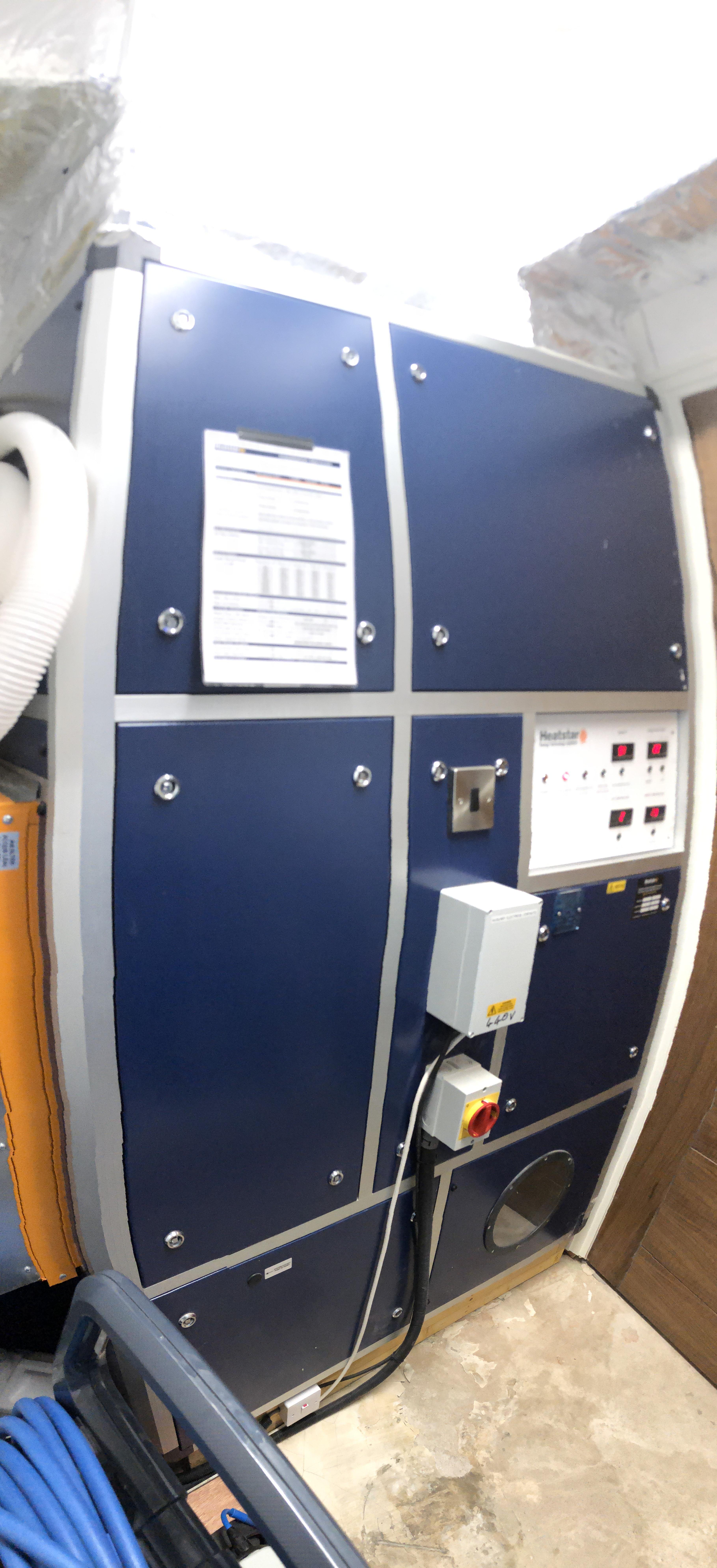
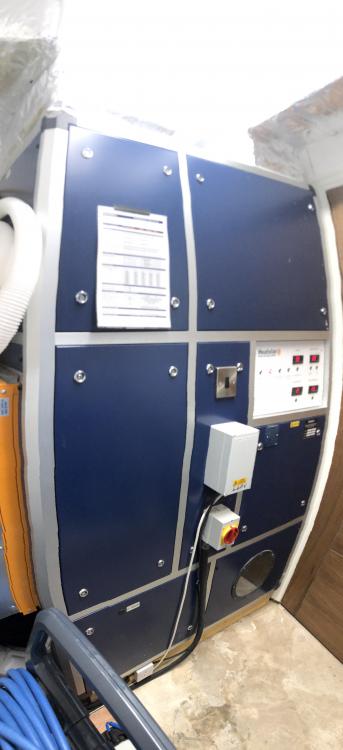
Yes, the pool is covered as the first thing to do is try to limit the evaporation. Then there is a massive Heatstar machine which sucks humid warm air out of the room above the pool. It feeds the heat back into the pool and cool air out into the room across the windows. It also kicks in to heat the room up very quickly with hot air when you open the pool cover. So this keeps the heating costs low but at the cost of £20k of machine and ductwork. It also uses a lot of electricity, but it is hard to isolate exactly how much.
-
I just realised looking at the above, if you have an ASHP then the electricity usage is correct in carbon terms, but as electricity is currently around 6x the price of gas then a very low kWh number for an ASHP heated house won't necessarily give that large a saving. In fact it might cost more before the RHI is taken into consideration.
-
I just meant I am not sure it is worth dividing these costs by the area of the house as they are fixed and unrelated to the size of the house. The heating cost for the pool is actually quite low (Around 2200kWh/yr or £500), however the dehumidifier and pump use a lot of electricity. Between them and the Tesla my electricity bill is larger than my gas bill.
-
Bad Airtightness Test Result
AliG replied to AliG's topic in Mechanical Ventilation with Heat Recovery (MVHR)
I have a rough list of things that I want to do. My suspicion is that they will have negligible impact on my gas bills, but a big impact on the airtightness test. They might also help with noise transmission which I am always keen to cut down. I have a load of foam, sealant etc ordered up. I might be doing the 12 days of airtightness. I am sure it is things that other people would have done as they went along whilst building. I suspect many of the things I am looking at could be applied to any house no matter the age. Whilst that area in the roof was def a big part of the bad test result, the air was blowing through very fast even though in normal circumstances I hadn't noticed any draughts, the other thing I think considerably impacts the test result is various cable and pipe runs that end in the loft and are not sealed at the top, so I will be getting them sorted out where I can. There are two places where I suspect to properly fix things I would have to cut a hole in the ceiling which I would rather not do, but lets see how it goes. -
My heating cost use is roughly 50kWh per sq metre per year. I am not sure it is worth putting hot water and the pool into square metres, you water cost would fall as you house gets larger. I also would struggle to split these two out, but at a guess we use around 14000 kWh a year for DHW and 22000 kWh for pool heating. If I added the DHW and heating I would get around 70 kWh per sq metre per year. Our hot water usage is a little heavy due having a circulating hot water system and also a wife who often takes more than one bath a day or a shower then a bath! My old place which was a pretty standard early 2000s timber frame developer house used around 125kWh per square metre a year in heat - Biggest contributors to this were probably a draughty raised timber ground floor and a large double glazed conservatory. Before we bought the new place we looked at a late 1800s stone built 600sq metre house. It was coming in at I think 4-500kWh/metre/year from what they said their gas bill was!
-
Bad Airtightness Test Result
AliG replied to AliG's topic in Mechanical Ventilation with Heat Recovery (MVHR)
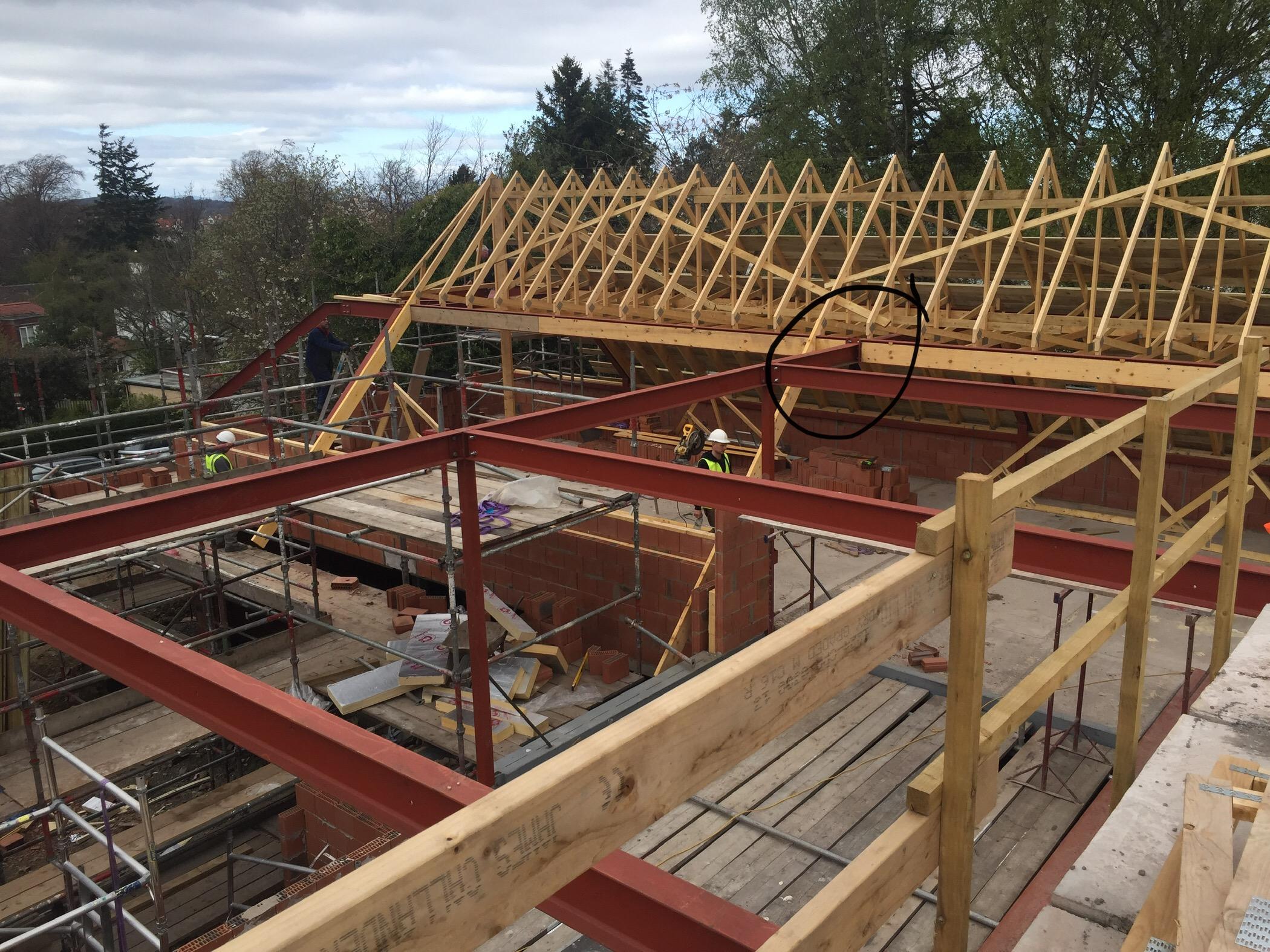
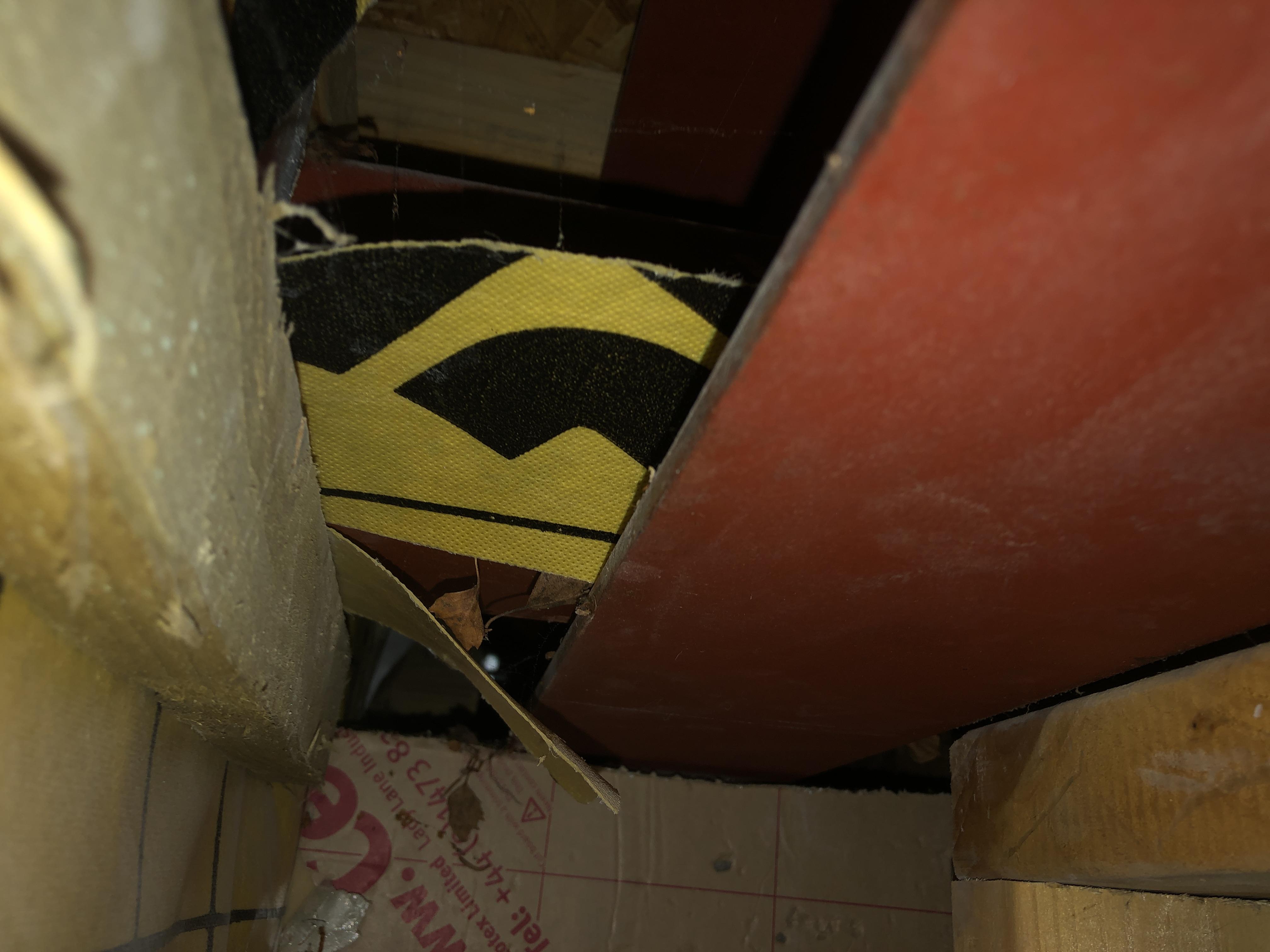
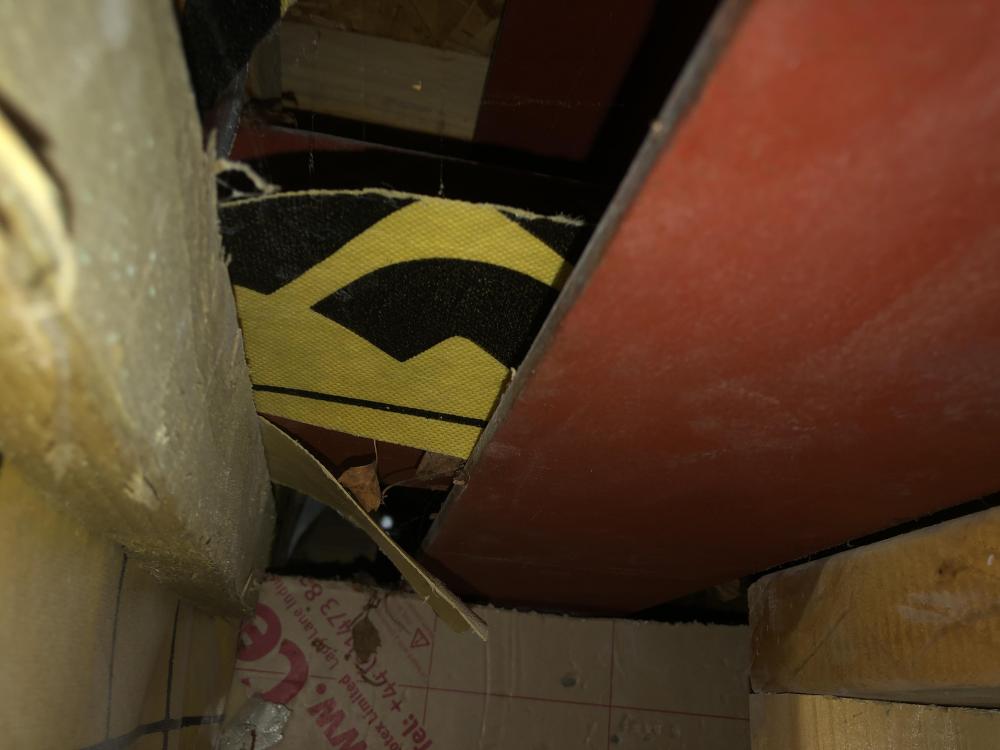
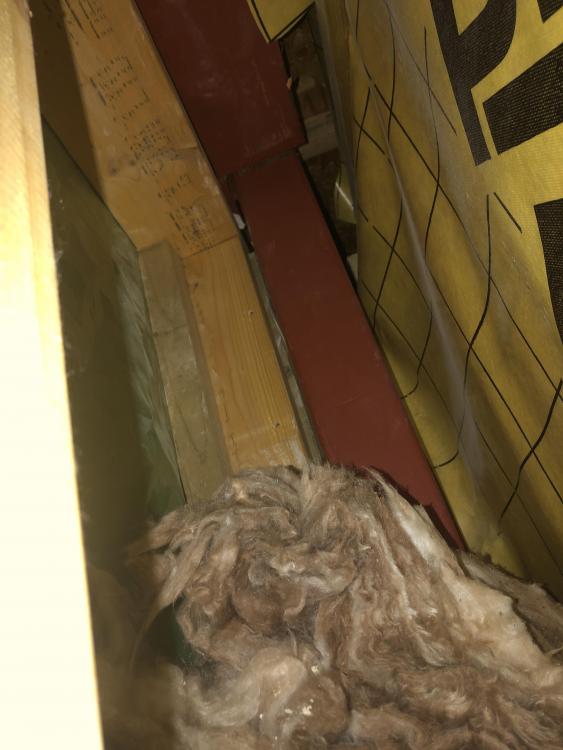
I have been through all the pics I have of the build. The problem area is marked up between the end of the roof and the steel. It just seems there was never any thought given to the point where they meet. Now I have these it looks like the vertical steel I can see in the space has Porotherm blocks on the far side of it so I think I can safely seal it to them with foam. The issue then is sealing the top area. There is a point where I managed to get a picture showing some light and there were leaves in there so it is def open to the outside.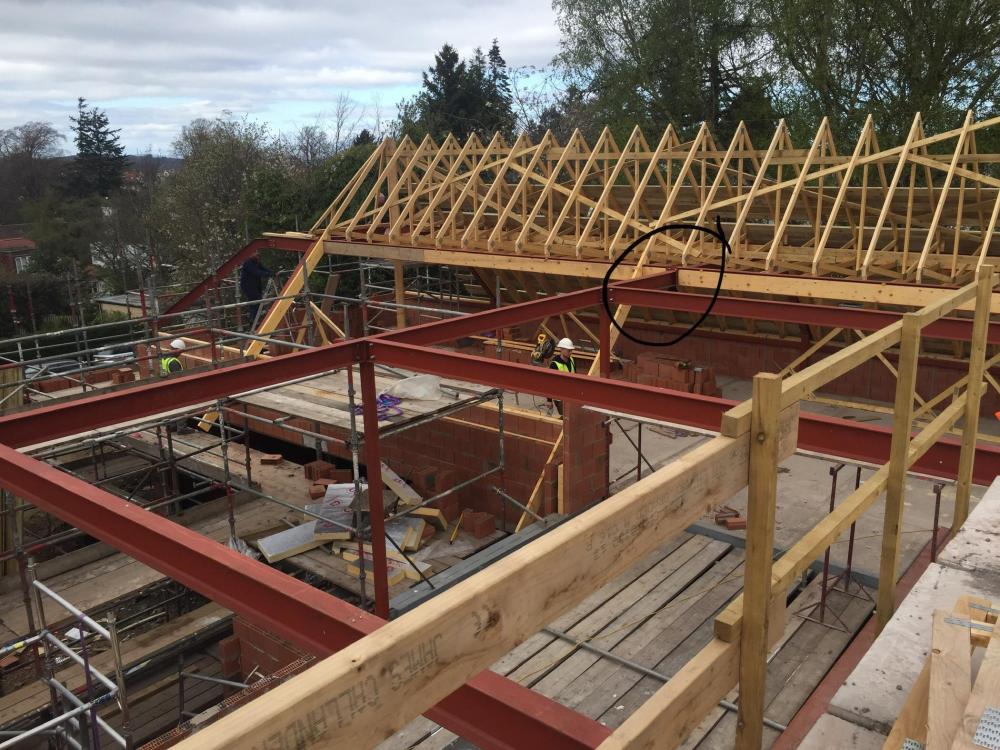
-
It is quite a small order relative to a whole house and so I am not clear how that impacts the price. I would guess that 5-600 a square metre fitted might be more the range for this size of order and with the slider being a large part of it - You have 16.3sq metres there so £8500-10000 maybe.
-
Bad Airtightness Test Result
AliG replied to AliG's topic in Mechanical Ventilation with Heat Recovery (MVHR)
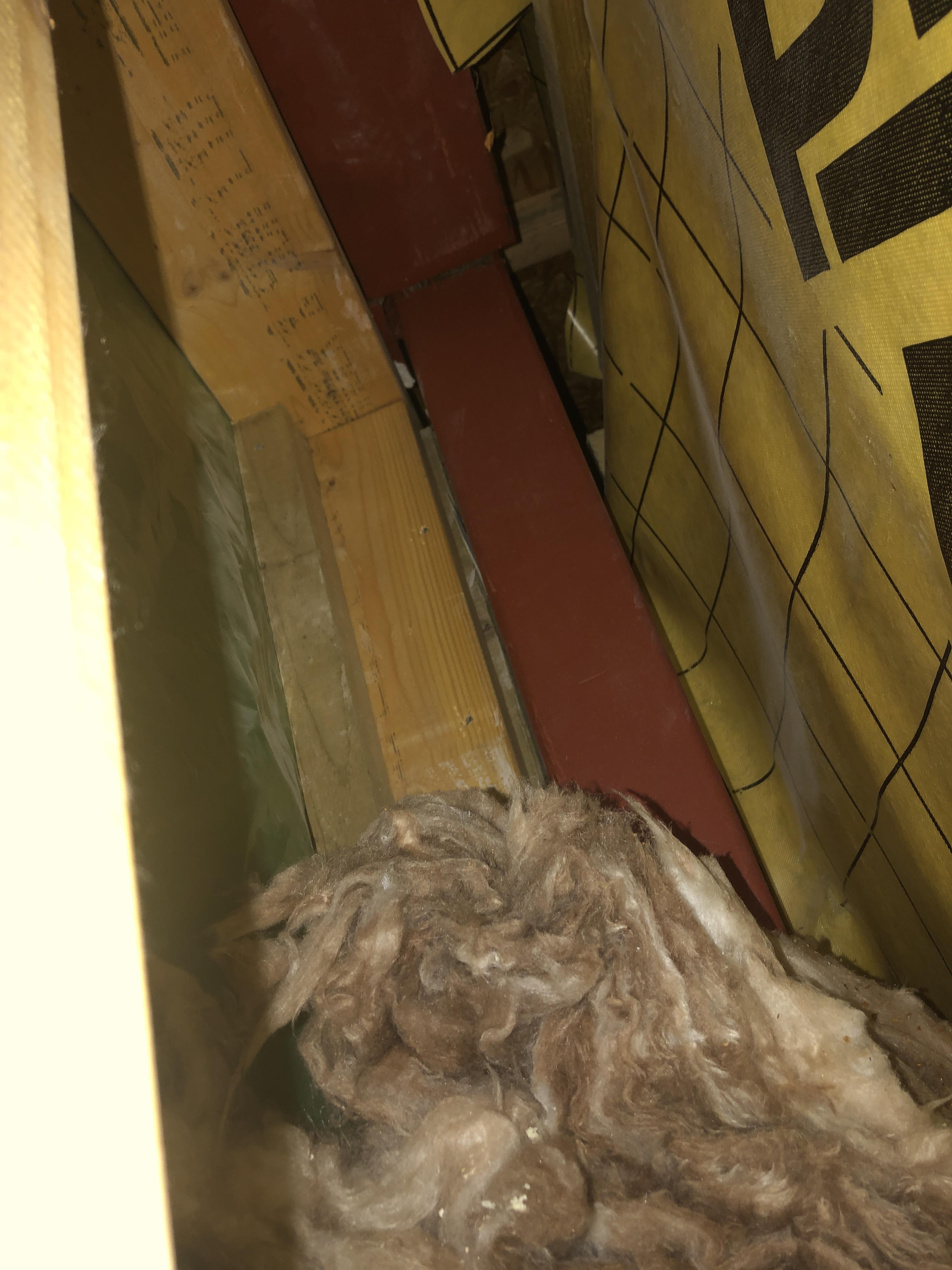
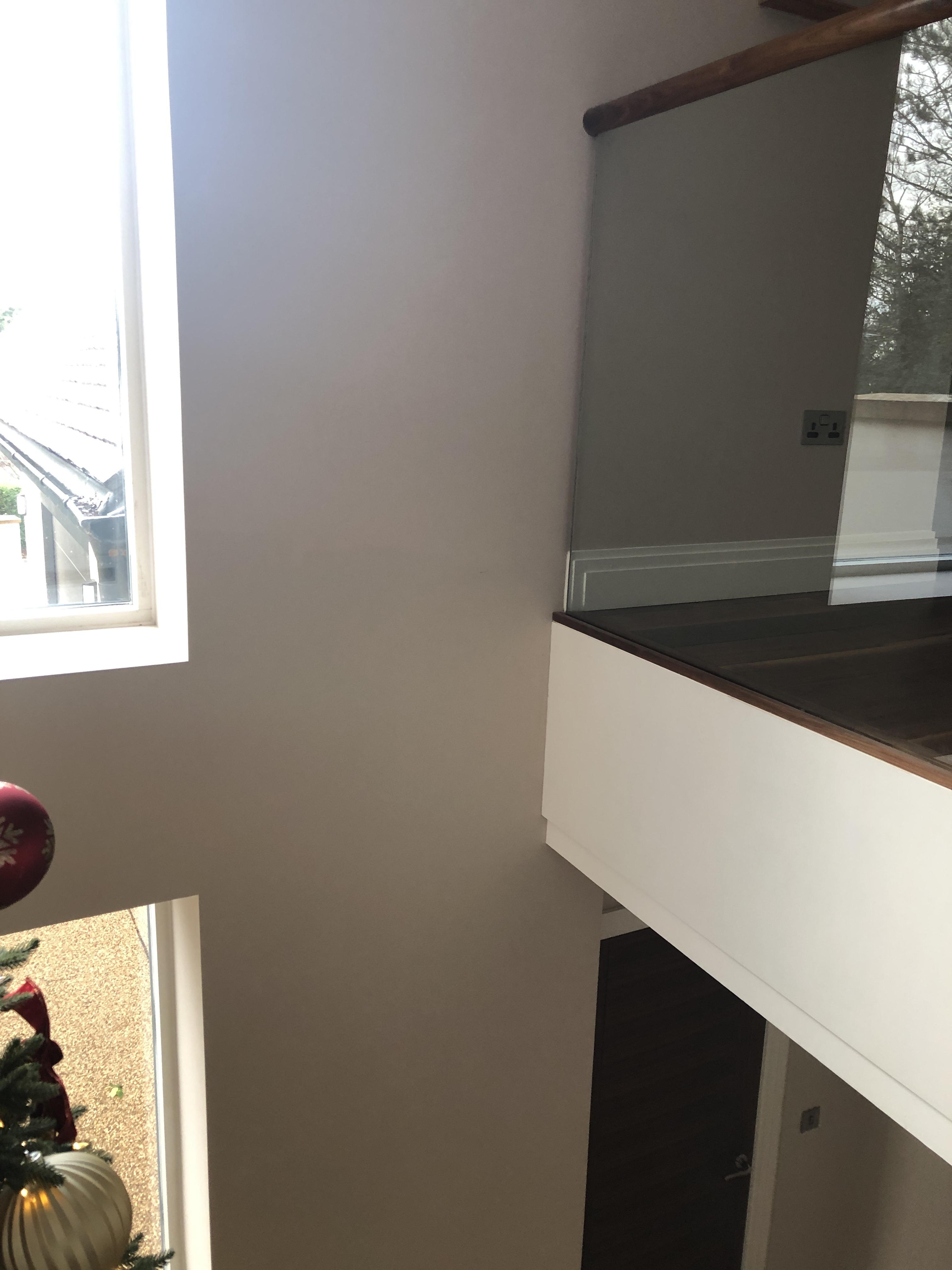
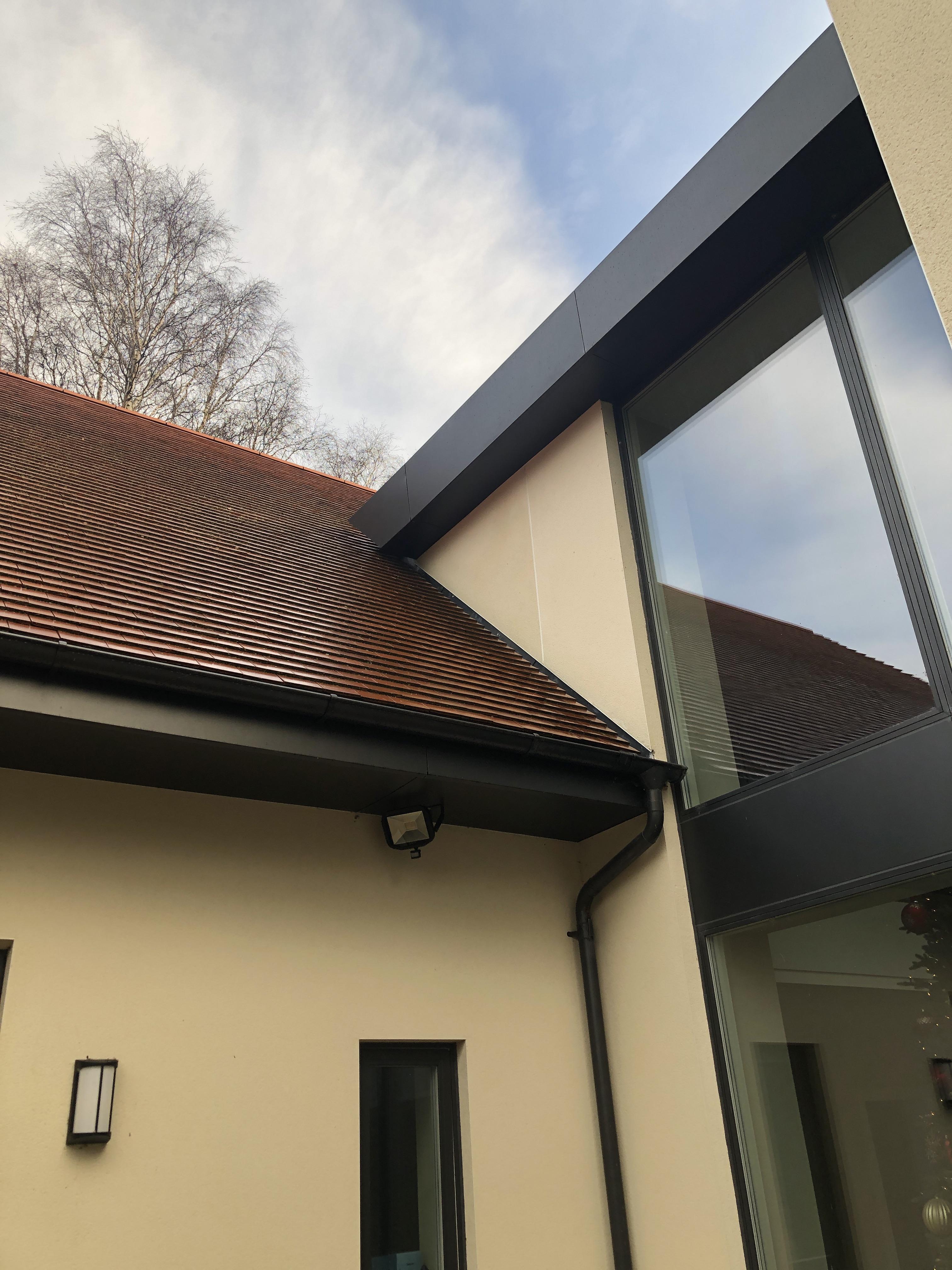
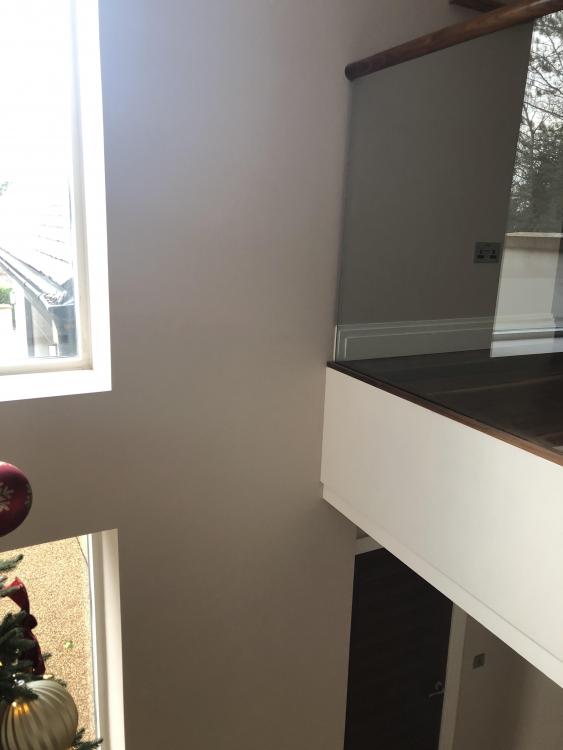
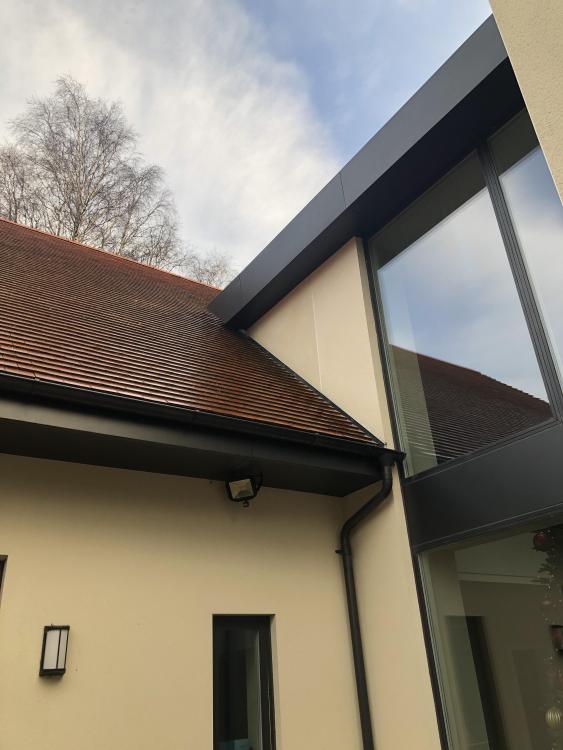
If I exclude the area of the pool room as the pool heater also heats that room, I am getting around 40,000 kWh a year to heat 800 sq metres, or 50kWh/m/yr. This does indeed suggest that the airtightness is not having much of an impact. Having rooted around a bit, my suspicion is that in lots of places the builders have stuffed gaps with rock wool, which is enough to stop normal draughts/wind, but not for the air tightness test. So I opened up the area that I had found was an issue after we moved in and asked the builders to fix. Basically they had filled the partition with rock wool and put a layer of plasterboard on it, but not sealed the actual area where the air gets in. The problem is that this area connects to the area where the MVHR is above the ceiling on the ground floor and thus impacts most of the house. I took some pictures but its s had to see. f you look at the picture from outside, we have an area where a sloped and flat roof meet. If you look at that area from inside the hall you see a cross. There is a vertical steel in there that you can see from the pictures taken inside the offending area. So if you look at the pictures where you can see the airtightness membrane, that is on the end of the sloped roof, but the area of render board is not airtight and is open behind the plasterboard cross own the hall which connects to all the downstairs ceiling and the MVHR run to the WC. Effectively if cold air gets in here it can get all over the house and the unsealed area is large. Now how do I seal it? 'the gap between the end of the roof and the stud work is only around 100mm wide, effectively this is where the builders had sealed it, they foamed in some plasterboard (They also put some odd bit of plasterboard inside the studwork when they ran out of insulation!), but all the air above this could still get into the walls and ceilings. The only thif I can think of is firing spray foam up to the top of the gap all around the steel to seal it in. I don't like filling a massive void with foam, but there is not way to physically get up into the space and seal it up.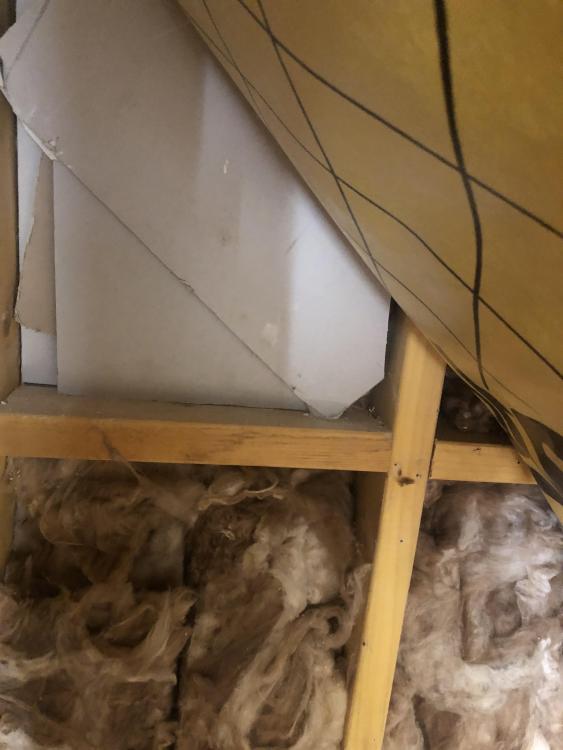
-
Bad Airtightness Test Result
AliG replied to AliG's topic in Mechanical Ventilation with Heat Recovery (MVHR)
Is there any reason you want to stay with Octopus? I just switch every year to the lowest tariff. Have never had an issue with any provider. Sometimes i even switch more often if I get a better deal. You could probably save about 10% on your electricity and 20% on your gas by switching. -
Bad Airtightness Test Result
AliG replied to AliG's topic in Mechanical Ventilation with Heat Recovery (MVHR)
I will be, sadly I think it will take me more than a day. I am happy to do most DIY jobs but I do hate stuff where things stick to my hands such as working with foam and mastic. I have a bit of touch up painting to do, so I am going to try and get this done all together. I will make a room by room list of areas to target. The guy doing the test thought there was a problem in one quite specific area near where we found the gap at the eaves that was letting cold air straight in from the loft. There was an area where I found I cold get my phone in and see the underside of the roof which was exposed and uninsulated or sealed. I asked the builders to fix it and they plasterboarded the area. However, I don't think they sealed the area first, so the air was getting sucked in behind the plasterboard and then able to get in behind the wall in that area. I need to remove the plasterboard and have a look. Luckily it is inside the eaves storage so it hasn't been taped or plastered, I just need to take the screws out. -
Bad Airtightness Test Result
AliG replied to AliG's topic in Mechanical Ventilation with Heat Recovery (MVHR)
The target number was 4. I think though that we only need the 10 BC maximum. I have not had this confirmed yet. -
Bad Airtightness Test Result
AliG replied to AliG's topic in Mechanical Ventilation with Heat Recovery (MVHR)
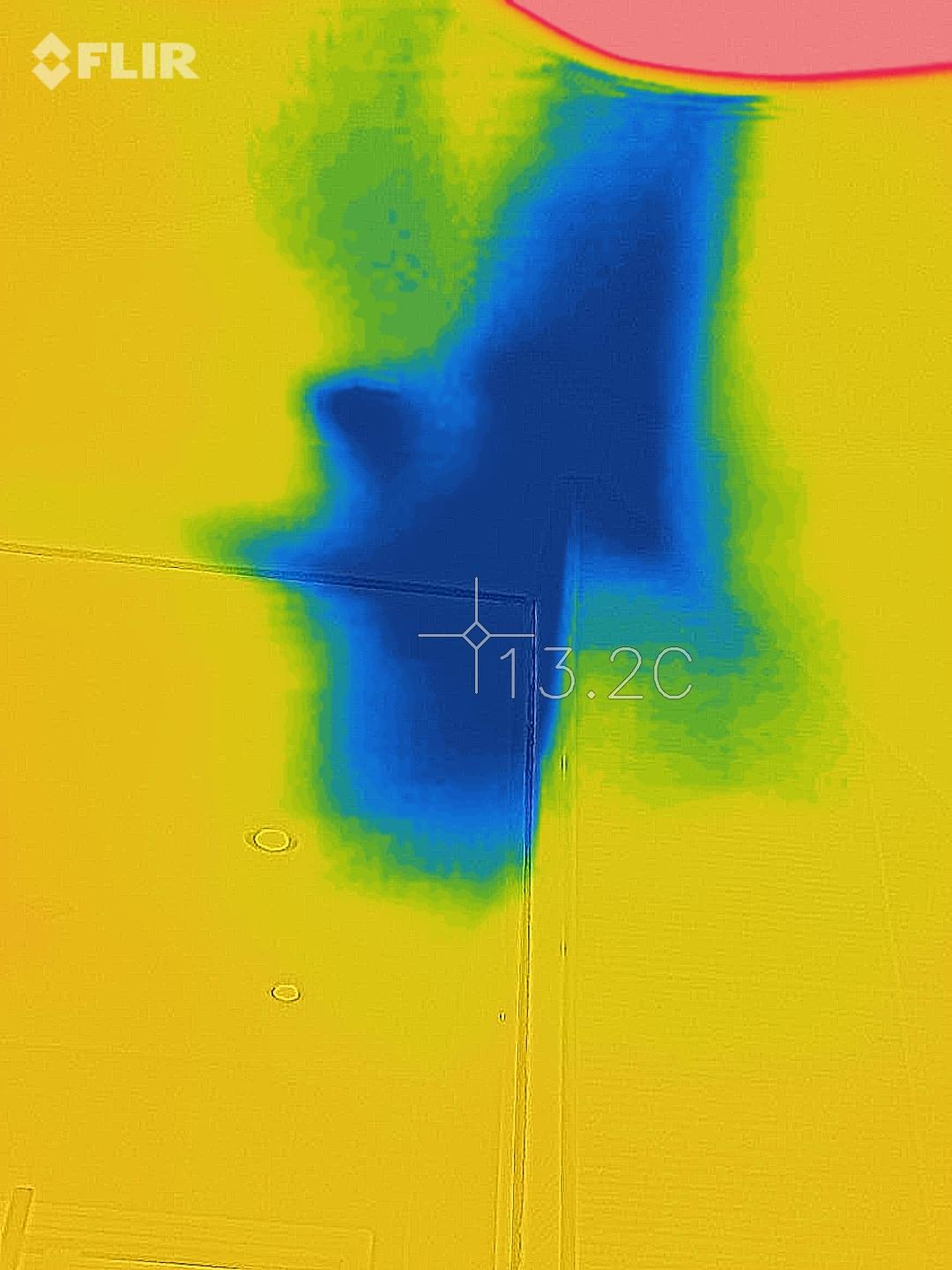
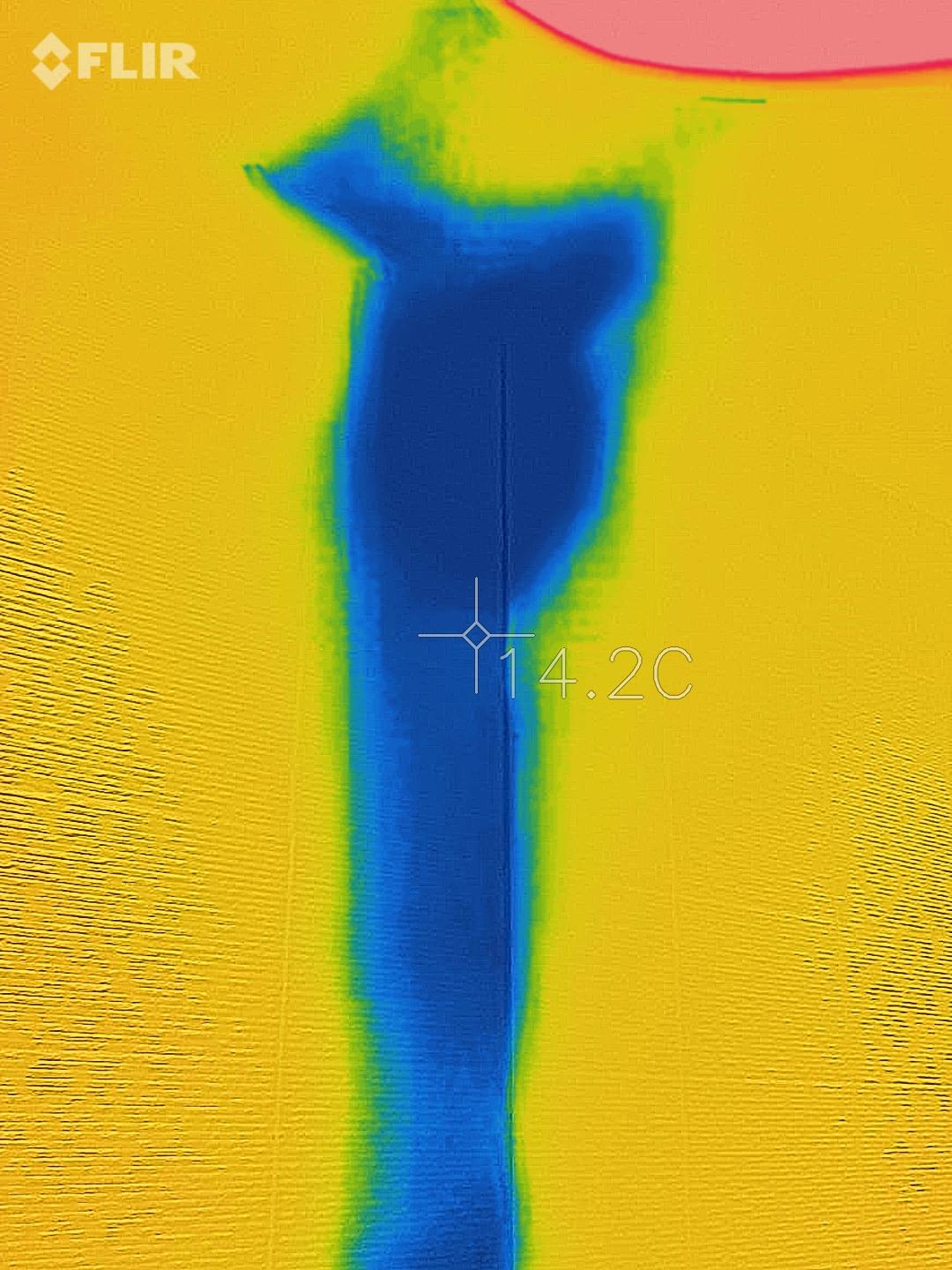
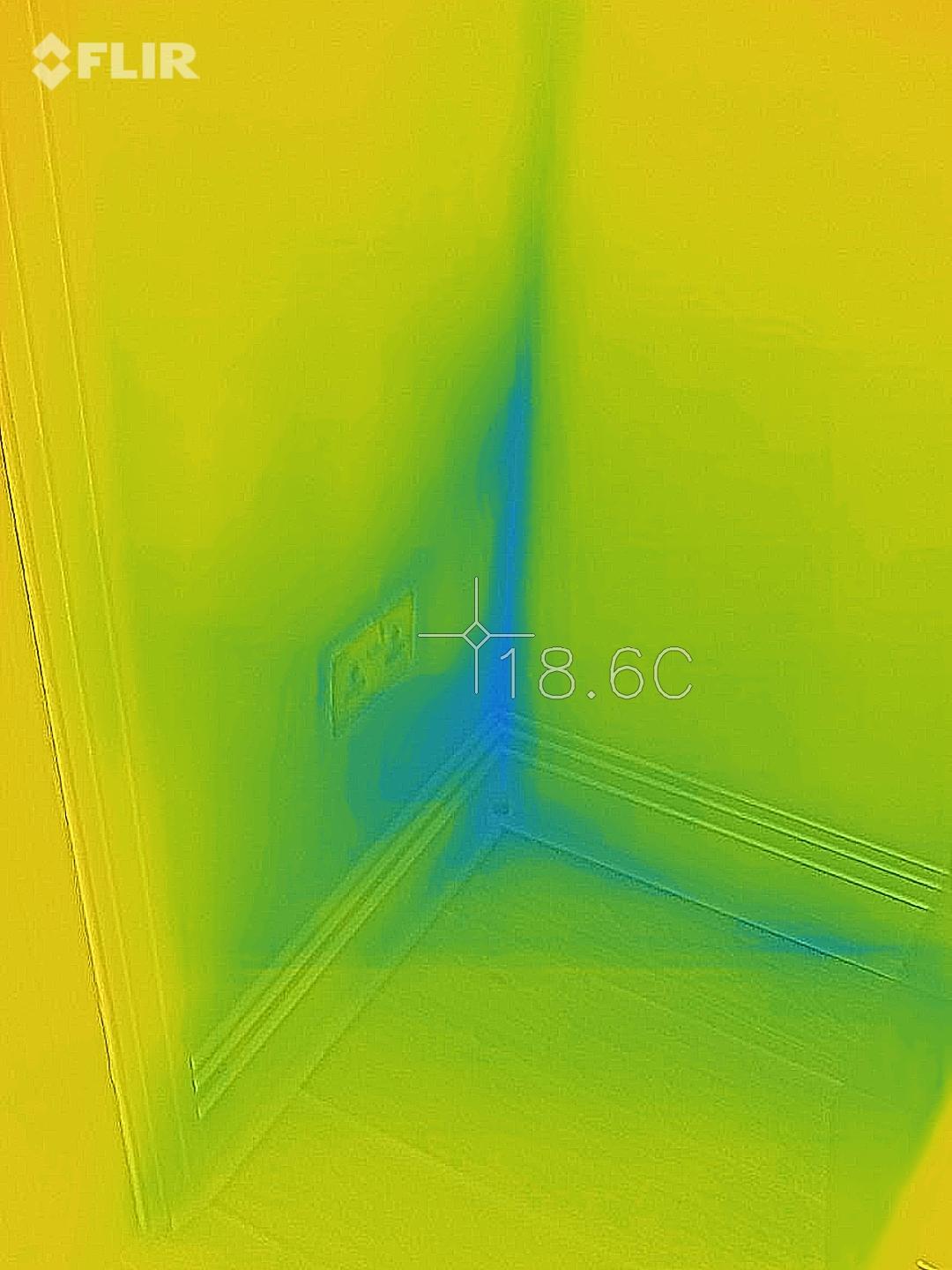
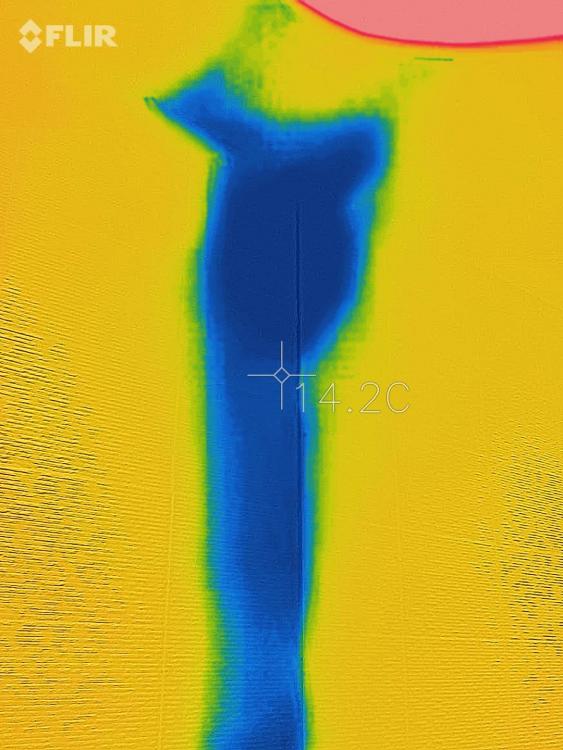
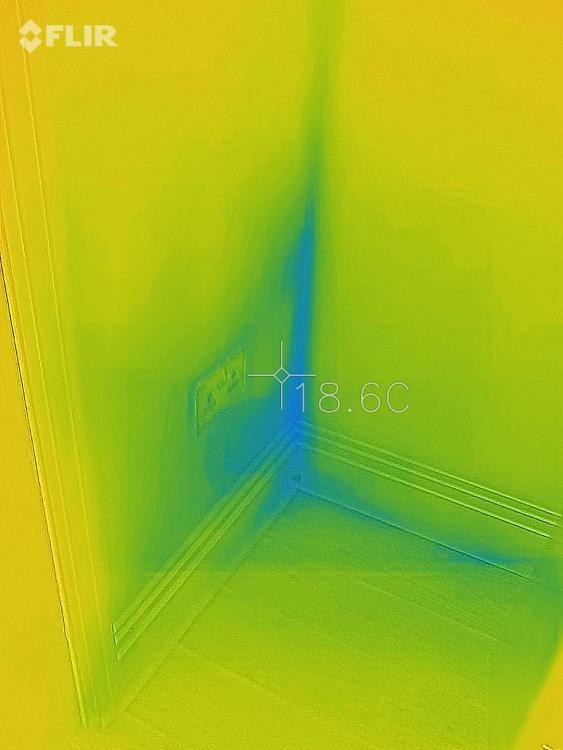
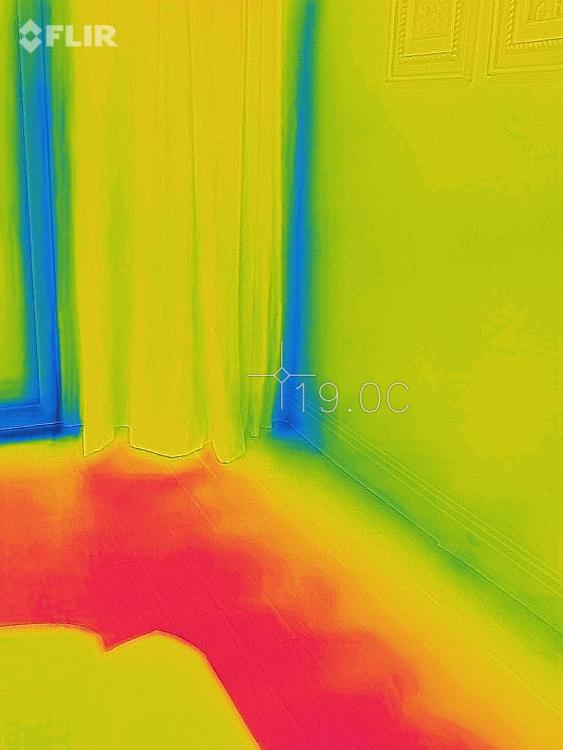
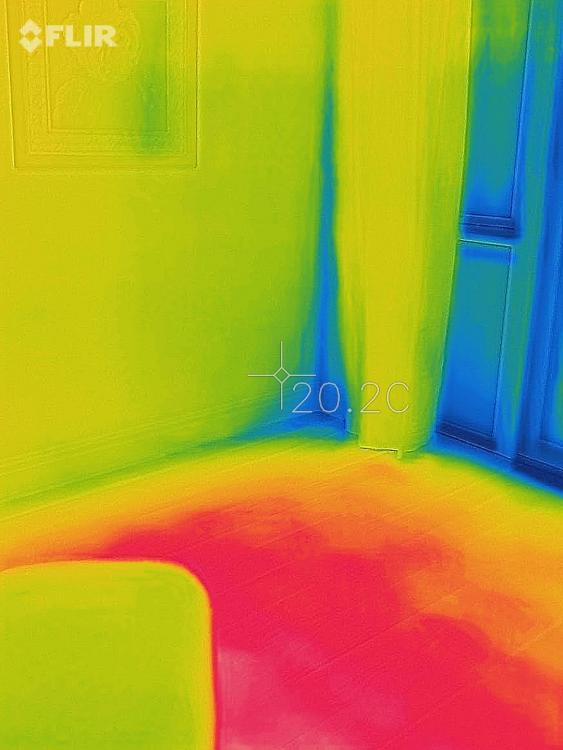
I should have mentioned that, I reckon we use around 10% more gas on a windy day than a calm day, considering that around 40% of gas use is hot water/pool heating then that means heating is costing around 20% more. I am not sure I can get much more accurate a reading than that as the temperature might vary a bit etc, but we do definitely use more heat when it is windy. It is dot and dabbed (not what I wanted but I was told it would be too difficult to attach all the plasterboard to the Porortherm with screws), luckily the floors are concrete up and downstairs, so there are less paths for cold air. In the main it was coming out under the skirting on outside walls or walls that were attached directly to the outside walls, as you got further from the outside walls it diminished a lot. There was some air coming out from wall lights in the hall, but very small. All the sockets and light fittings seemed fine, however, I did notice that the sprinkler heads in the roof may be an issue, they are just in one room. We did use my FLIR camera to check the walls and ceilings after the blower had been on for 2.5 hours to see how much cold air was being sucked in behind. There were thankfully few issues where so much was being sucked in that the wall was getting cold. They tended to be right in the corner of rooms and not extend out(see pictures). The only exception to this is the kitchen, where even without a blower test I had noted that the corners of the square bays were cold above the ceiling using the IR camera before. This time the ceiling started to cool down and you could see the strapping. Here is the offending soil stack inside a wall in an ensuite, taken from both sides. As I say this has never been an issue. When I went up into the loft I had to remove a few hundred mils of rock wool to actually find the hold in the ceiling, so it may be that cold air doesn't get in at normal pressure levels. Also the cold isn't showing up over a large distance inside the wall, so it may be that air was getting drawn into the stack via plug holes and not actually via the roof. I suspect that in the kitchen I need to drill small hols in the corners of the ceiling and inject a little foam up behind the strapping if I can to seal the corners. I have been hoping not to have to do it as it will be messy.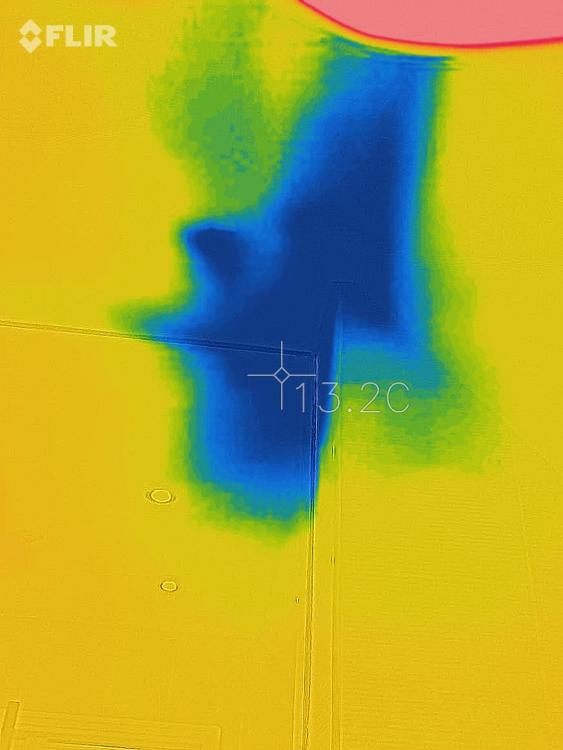
-
Bad Airtightness Test Result
AliG replied to AliG's topic in Mechanical Ventilation with Heat Recovery (MVHR)
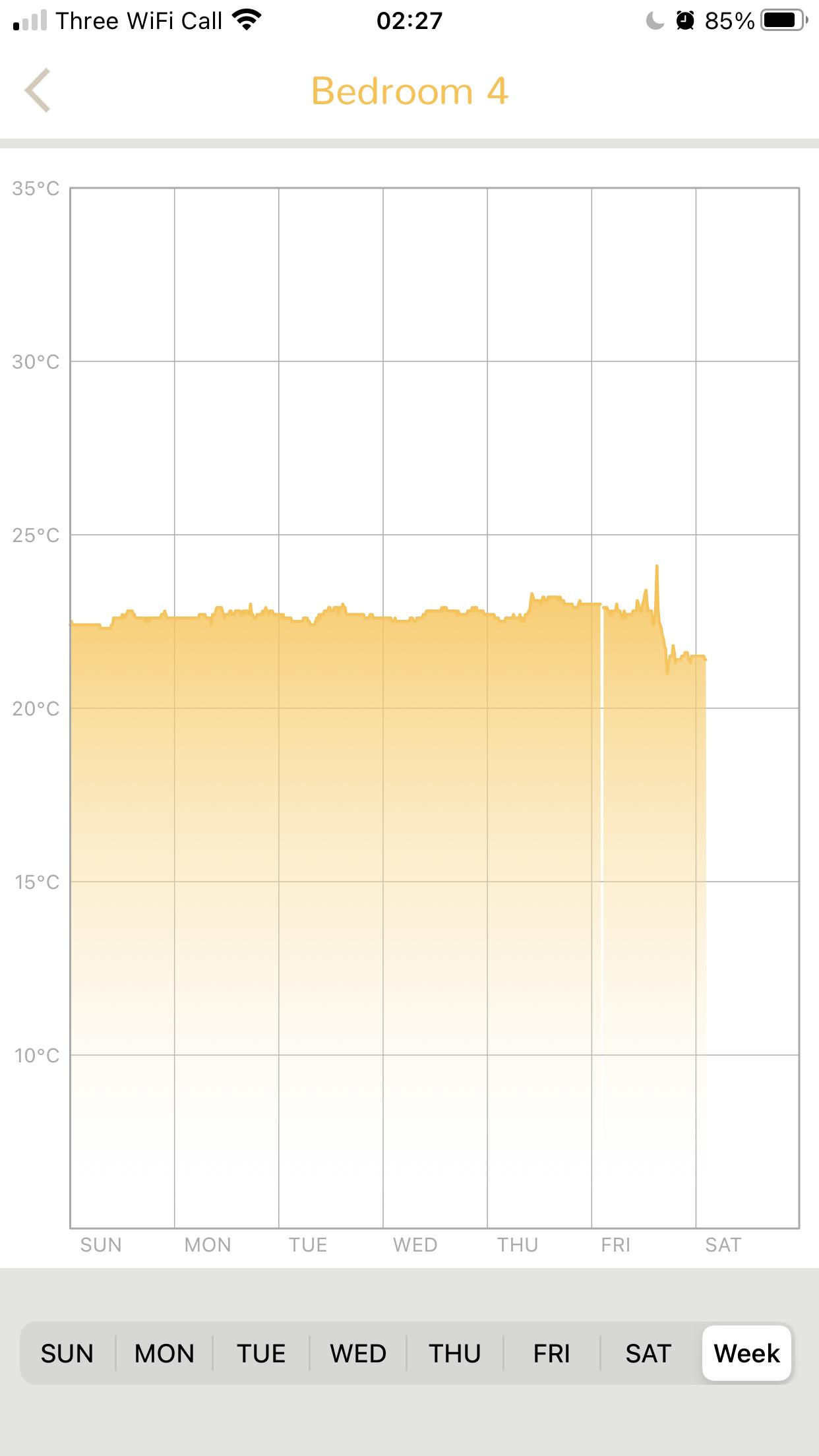
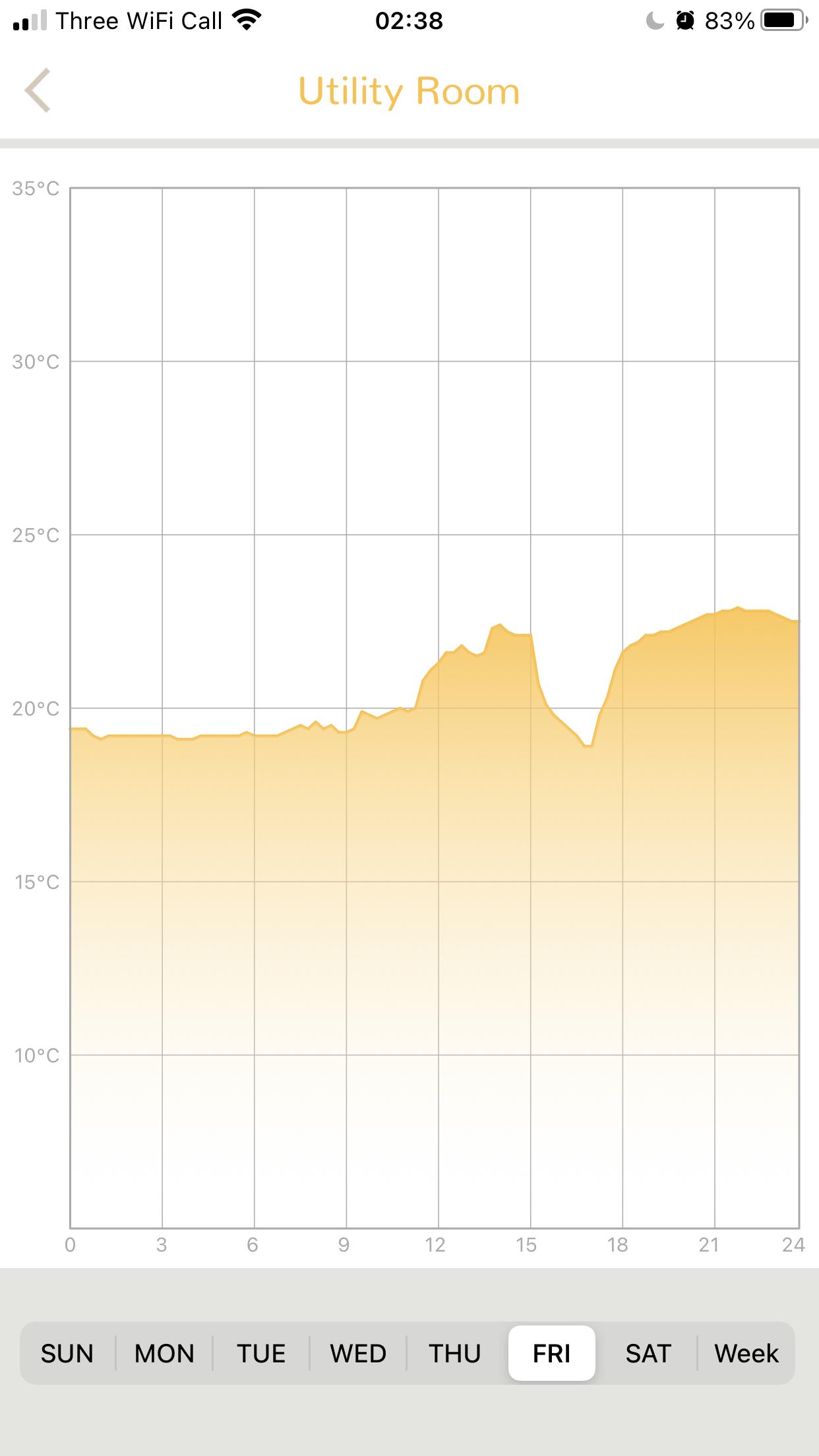
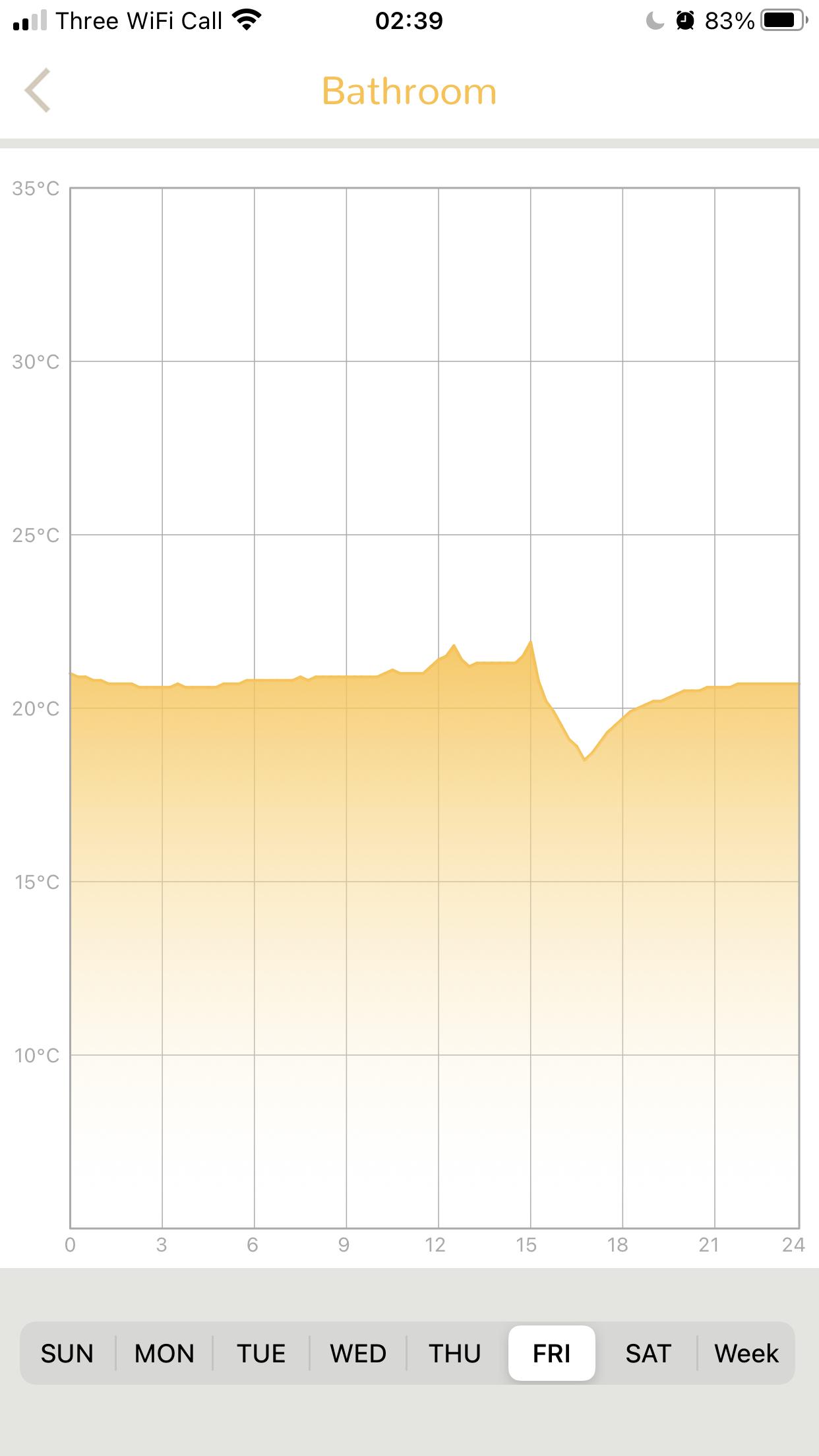
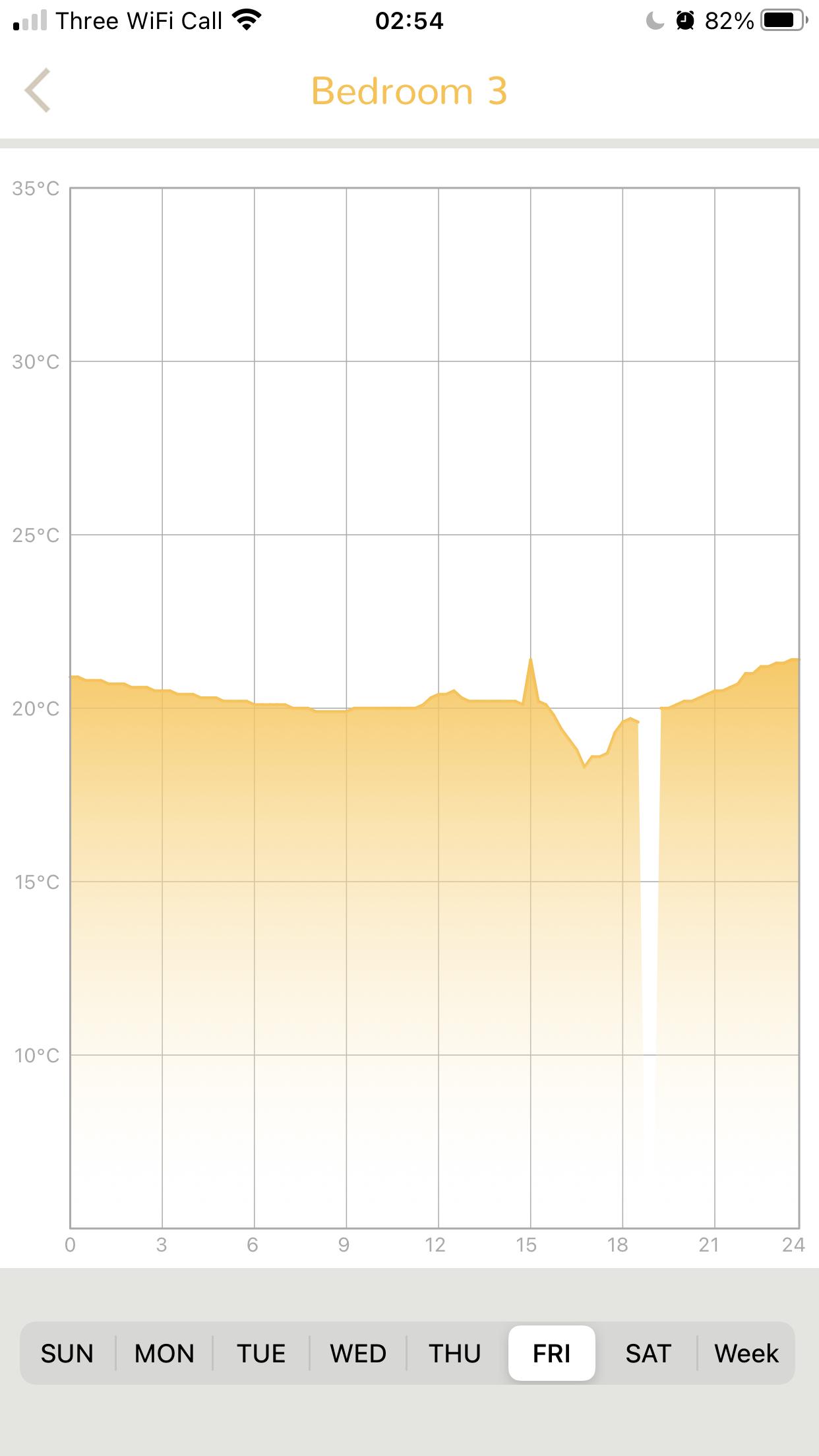
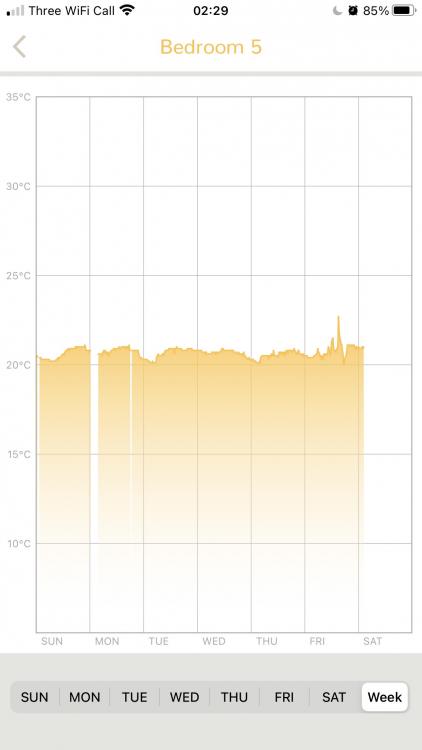
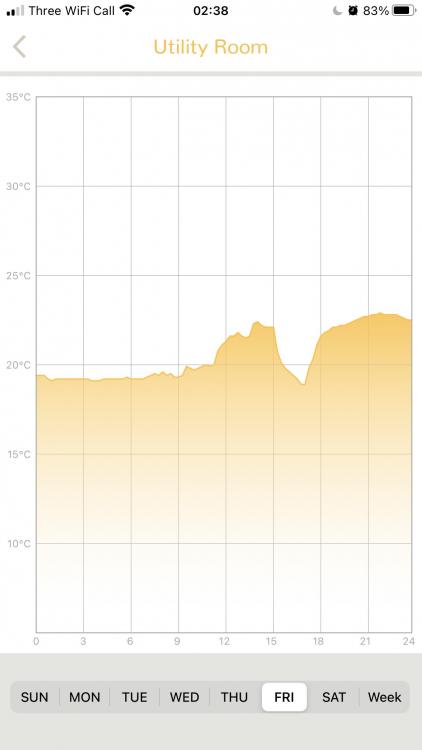
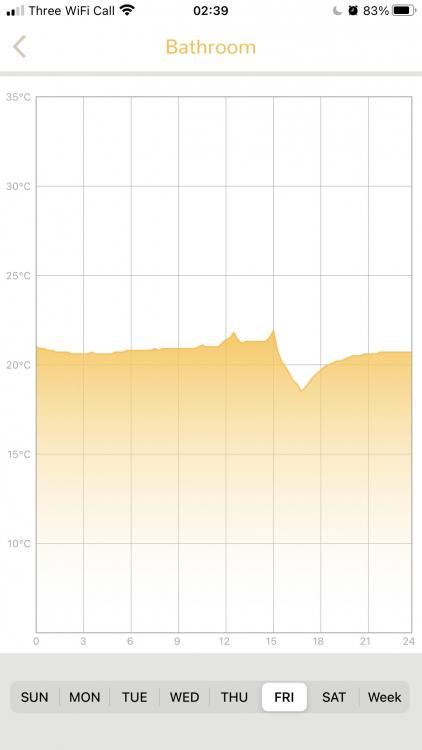
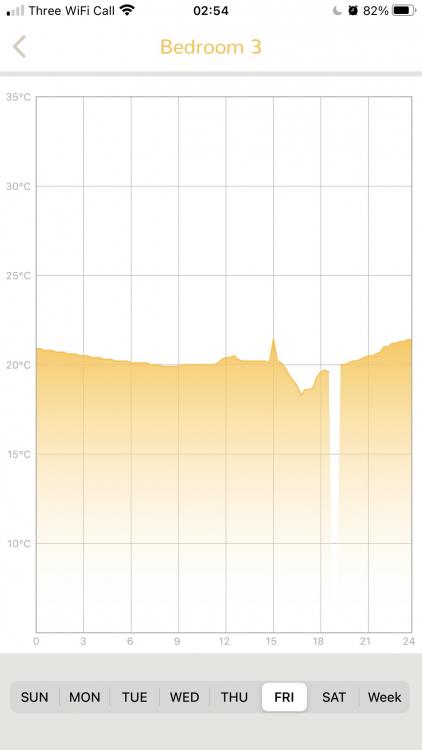
Thanks @SuperJohnG just woken up by a second round of the "thundersnow" Yes, the house is big, it is just under 900sq metres, so the heating bill is very low for its size. We considered buying an old stone built house in Edinburgh before we built this and they were coming out at roughly 6x as much to heat for what were smaller houses. I just renewed my gas at 2.1419p per kWh. Is your system updated with your actual cost of gas, as you are coming out a 3.655p which would be crazy high? Most of the best deals for gas are less than 2.5p per kWh. TBF when gas is this cheap it doesn't necessarily pay to have your house as energy efficient as possible. I also just switched over to having the heating on all night. Previously I was running a 2C setback during the night. In most of the house the temperature wouldn't drop that much during the night so the heating would be off and then rn for a while in the morning to bring it back up to temperature. Having studied the gas usage on this versus a 0.5C setback, gas usage was the same, but there is the added bonus that it is toasty when for example the thunder wakes you up at 2am. I think the 0.5C setback is a good idea as I do like there to be a bit of extra heat for comfort when you wake up, so it is nice to have the heating running then. It does feel that part of the issue is that there are areas where there are gaps/holes etc covered up by insulation or roofing membrane which isn't airtight. In normal weather, however, these stop cold air flowing, so I don't feel any air movement in the main loft, but when you use the airtightness blower it gets air moving through the roof membrane and through the rock wool into the voids where the stacks are. No harm in sealing where I can but I am not sure how much difference it will make to actual real world gas consumption. A good example os the two spare south facing bedrooms. The heating is never on in these rooms and the temperature never really varies. In fact I can attach the Heatmiser charts for these rooms where you can see the temperature stays in a steady 0.5C range. The warmer room does have a eating manifold in the cupboard which provided a bit of heat. In both rooms when the blower was on you could feel cold air being sucked in under the skirting board. It was a nice cold night so easy to feel. Normally I have never felt this and it seems to have no impact on the temperature, but you can see what happened in one of the rooms where the temperature dropped during the test. Where the pipework comes up through the floor to the manifold, a hole has been made in the slab and it was very draughty, so I will get it sealed. Actually this has now made me realise I can use the Heatmiser charts to see what rooms have issues.What I can see looking at the charts is that the rooms with pipework in them tended to drop around 2C versus around a 1C drop in rooms without pipework and the main issue was the rooms where the pipework leads into the cold roof, so this is the area to get fixed. Bedroom 3 is where the gap in the eaves was found. The thermostats showed a massive drop in the hall and pool, these are the only two thermostats on outside walls, so I suspect a little cold air was getting drawn from the wall messing up the reading. There's a thermostat in the upstairs hall and it didn't show the same drop at all. I have mentioned this before as I had this issue in my last house. In general putting a thermostat on an outside wall is a bad idea unless your house is very well insulated and airtight as the reading will vary much more than the actual room temperature.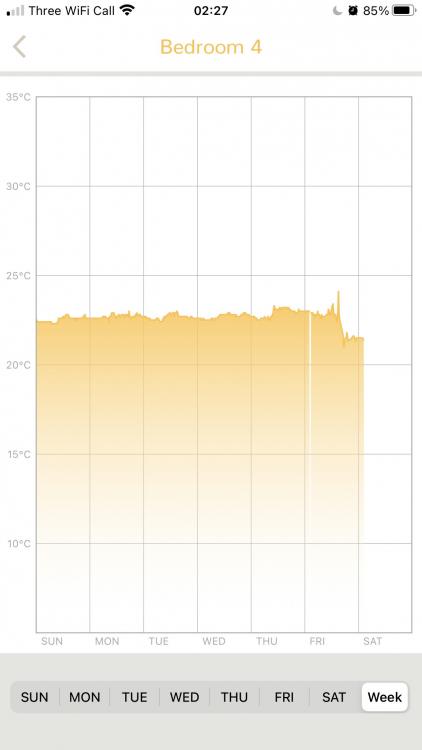
-
Bad Airtightness Test Result
AliG posted a topic in Mechanical Ventilation with Heat Recovery (MVHR)
Ok. This is embarrassing but here goes. After some considerable time I finally had an airtightness test done today. I wasn’t expecting a great result because it seemed almost impossible to impress upon the builder and architect what was required and working away during the week I just couldn’t be on site enough to see what was being done. Anyway the guy turned up today and we got a number just below 8. I did notice that we had missed dealing 3 of the MVHR vents so maybe the number would have been 7.5 if that was done. We tried sealing them by sealing the MVHR filters but that didn’t work. I was t expecting 1 as a result but expected a lot better than this. The weird thing is that I have sealed most of the obvious draughts and gone around with an IR camera. I keep a very close eye on our gas consumption. Hot water and the pool use 100kWh a day. When the temperature is around 8-11C outside we use 150kWh for heating and at the recent temps of around 3-4C that goes up to 250kWh. This is giving me gas consumption for heating of around 40,000kWh a year so £900. This is less than my last house which was half the size and 15 years old. So by no means high. So considering the gas consumption and no draught issues maybe I shouldn’t worry but we went around to find the worst draughts. A few things surprised me. The walls with stacks in them got very cold. After he left I check in the loft and the holes in the ceiling were not sealed. They go into a small area of cold loft. The insulation covered them and the loft is not ventilated so I can’t usually feel any air movement up there. But once we depressurised the house air was flowing and getting pulled in around the pipes. I can easily seal this. We also found one gap I had missed sealing in the eaves where there was a gale blowing. The other surprising thing is that we have wooden floors upstairs. When we moved in I checked everywhere for draughts. They were only in a couple of places and I sealed them. But again with the house depressurised it drew cold air through the join in loads of places there has never been an issue. The last big issue I think is two small areas of cold loft off our bedroom. I have been in one of these areas and it is the only place in the house where the top of the cavity is exposed and you can feel wind in the loft. I wonder if air was being drawn through the cavity then into walls and roof spaces connected to these areas. It might have accounted for a massive amount of the rest result. I will speak to the architect on Monday but I suspect that the top of these cavities should be closed irrespective of the impact on the test result. There is also one area where the WC is where I have had the builder take down the ceiling and seal stuff as there very obviously seems to be air getting in behind the walls but I have never beeen able to find the source. This was very obvious when we did the test So I have a poor result but yet heating bills are reasonable and there are no draughts. I will seal the stacks up next week and will have to mastic the skirting to the wooden floors which I had suspected would need done. But I think I need to get those cavities closed, annoyingly there is no access to one of the two areas. Moral of the story is do a test after the shell is built as it is quite difficult to fix now. I suspect I can get down to 4 or 5 but that will be it. -
There is an enormous amount of information on regs and wall/ceiling performance in these documents from Gyproc. White-Book-C04-Partitions-Section.pdf White-Book-C06-S06-Floors-and-ceilings-Loadbearing-Timber-Joist-Floors.pdf
-
That is a good question to which I don't think I have a good answer. I think you just have to look at where the beads are being injected and see if any areas appear likely to be missed.
-
I am no expert on visibility splays, so will let others comment on that. It will be hard to make visitor spaces and turning areas without paving over almost the whole garden. I would be looking at the local minimum requirements. Looking at the design of the new house, on the street elevation it appears to be considerably higher than the existing cottage which would definitely be an issue, however- Is the drawing correctly scaled? If the eaves of the new house are at 5m on the drawing, then the cottage would have an eaves heigh of 3.6m. Are they really that low, the roof of the cottage is basically level with the eaves of the new house? I'd be looking at doing something 1.5 storeys to bring the heights into line, but I would be checking that the plans don't make things look worse than they really are.
-
Exactly. They even make wifi connected dishwashers. What's the point! Edited the quote as I hadn't really read it
-
We have two of the Siemens ovens with the pulse steam function, it has never once been used. We only have them because the kitchen company had some old models they were doing a deal on so we got them half price which was cheaper than the lower spec oven we planned to buy. The value in anything depends on how much you will use it, if you think you'd use a steam function then it might be worthwhile. We have an Instant Pot that gets used almost daily and covers some of the functions a steam oven might be used for. The function our Siemens ovens do have that is useful to us and I don't see elsewhere(outside of Siemens/Bosch/Neff) is that they are full size ovens with microwaves. Previously we had a compact combo oven/microwave and a full size oven. This enabled us to have two full sized ovens which is much more useful. 99% of the time our ovens get used on the standard fan setting, I occasionally use the pizza setting. That is it. Then they also operate as a microwave. All the other functions are entirely superfluous. We also use the pyrolytic cleaning that I would not be without. My view is get a good quality basic oven with pyrolytic cleaning and anything else has little value. If you look at Siemens list prices the cheapest pyrolytic oven is £789, you can then go all the way up to £1469 with steam pule and wifi for basically the same oven. It is £1549 with the microwave function and £1999 with microwave and pulse steam. We got the microwave and pulsteam ones for £699 as they were the old model without wifi! I think it was the only true deal I got in the whole build. You can knock about 20% off the lost prices buying online, at this price I would probably only have had one microwave one.
-
Integrating ASHP into existing heating system
AliG replied to Fly100's topic in Other Heating Systems
I don't think you need such a large ASHP. If your house is well enough insulated that 40C flow temperature works and you use 1200l of oil a year, which looks like around 13000kWh then a 12kw ASHP would probably suffice. A 12 kw ASHP running 24 hours a day is going to put out 288kWh of heat. This is equivalent to around 25l of oil, maybe 30l allowing for boiler efficiency.You might want a 16kw to allow for lower output on days wells below 0. You can get these as single units, although they are the big two fan units, maybe this is what you were thinking of by 2x 8.5kw. Unless you have days where you use over 30l of oil then this would seem large enough. I guess I would be wrong if you let the temperature fall a lot overnight, but it seems unlikely from the figures given. -
Yes, but it hasn't been done yet and I keep asking the architect to get everything signed off so I can get a completion certificate. TBF we were in for almost a year before everything was finished. Unfortunately two of the MVHR vents go up through the roof and two are in the eaves which are 6m up so not easy to block them up.
-
I am having my test done next week. I just got a checklist through and they want the MVHR system sealed. As some vents are in double height ceiling internally or in the roof/eaves externally this would not be easy. Can I seal them by sealing the filters inside the units?
-
What cost per m2 can we REALISTICALLY achieve?
AliG replied to Mulberry View's topic in Costing & Estimating
I think it is partly important to design a house that will be cheaper to build. As mentioned on the windows, we are about to star a 195 sq metre place for my parents. There are 75 sq metres of windows, so straight off we are going to be almost £200 a square metre for 3g alu clad windows. If I had thought about it, I might have asked the architect to do less glass. -
I have some even rough Porcelanosa tiles and they are a real pain to clean as they rip apart most cloths and you need to use a scrubbing brush.These don't look quite as bad. The real thing to watch is that all the grout is cleaned off them when they are installed as it is a nightmare to get it off these rough surfaces one it has fully hardened, I had to use a wirel brush on the rough ones, nothing else would shift it.