AliG
-
Posts
3211 -
Joined
-
Last visited
-
Days Won
11
Everything posted by AliG
-
Extending integrated garage to neighbours wall
AliG replied to NandM's topic in House Extensions & Conservatories
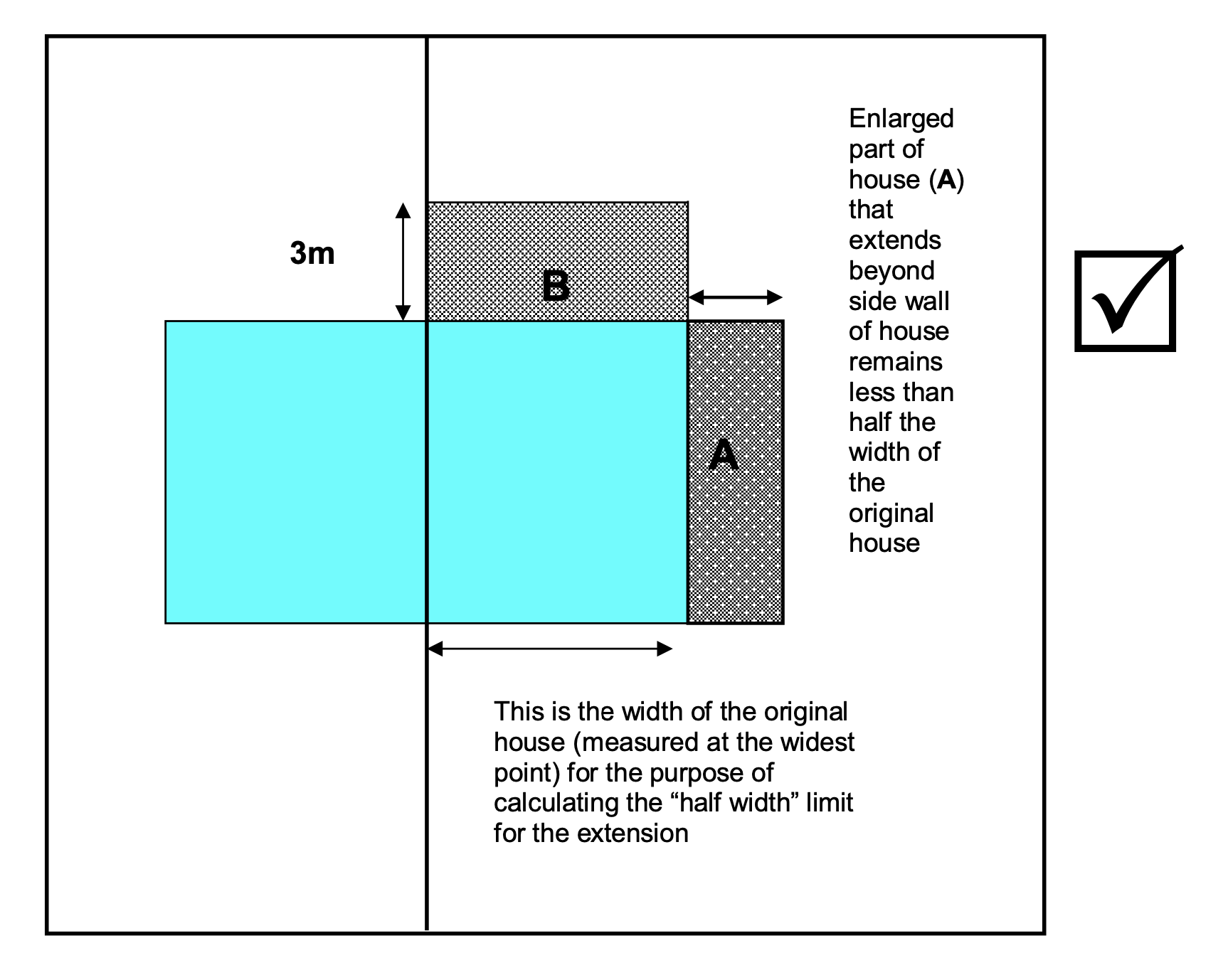
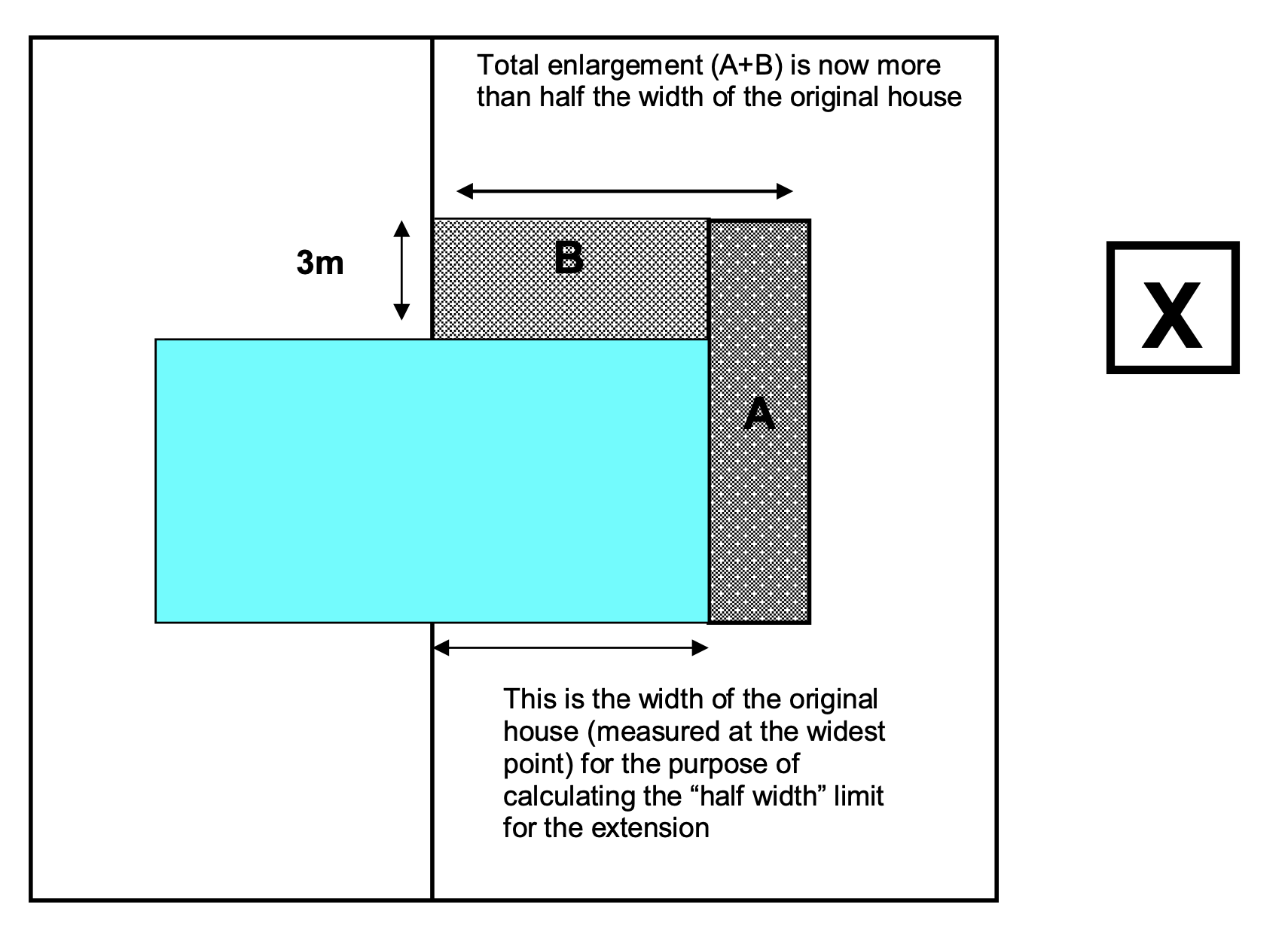
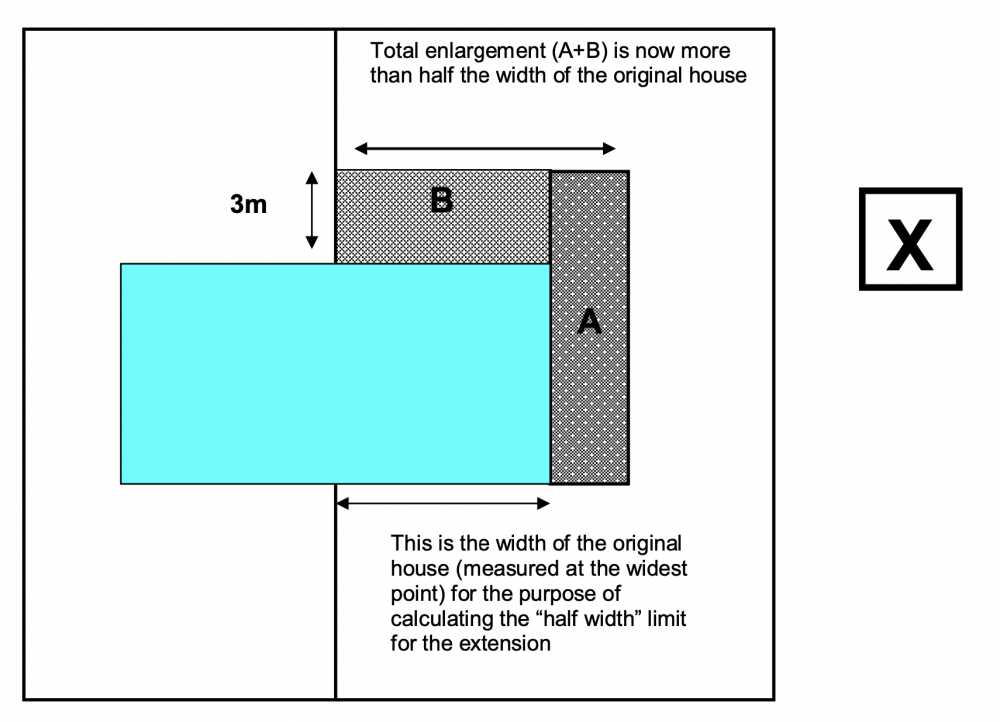
It is indeed. It seems crazy to have such long gardens and then the houses so close to each other at the sides, but it is what it is. I like the idea of that plan, I am not a fan of rooms much longer than they are wide, they are hard to use. A smaller room at the front and wider lounge at the back would work well. You will want to keep within permitted development rules, so no more than 4m back which it looks like you are within. Is that utility area actually a roofed extension as it would affect the ability to do a rear extension under PD, see these pictures. If not under PD you will have issues with the 45 degree rule. As far as I can see a side extension would also be within PD, so it is very much up to you if you think the cost is worth it, you will need a lot of steel. I think moving the garage wall and WC is a lot of work for a very small benefit, the garage will be around 3.2m wide without this. Keeping the front pf the garage stepped in a little as shown would be a good idea. The thing that would make the biggest befit to using the garage is a wider door which you would have room for.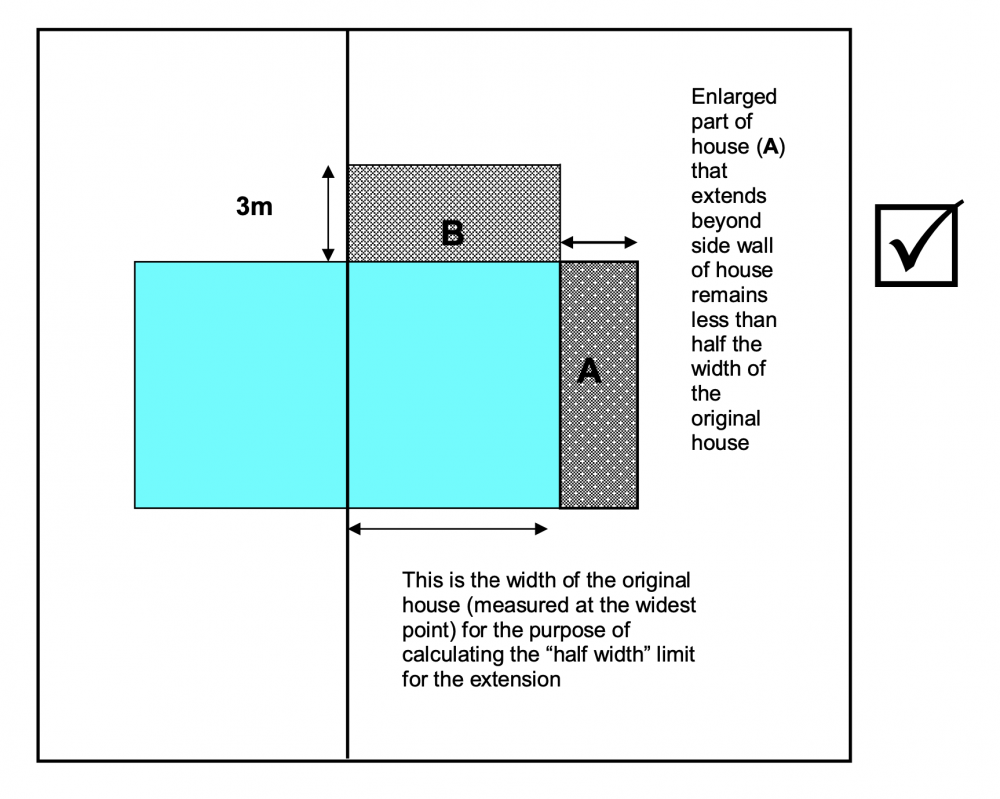
-
4 months was for our first responset back from the council. They blame COVID, but I don't see how this slows them down at all. They cannot do site visits.
-
Extending integrated garage to neighbours wall
AliG replied to NandM's topic in House Extensions & Conservatories
I assume that the car is close to 5m long if it is that wide. If you are comfortable driving it through the door, I would want at least 2.5m for that width of car, then a simpler solution might be to take down the side wall where the pantry and side door of the garage are. So like a car port from the side but looks like a garage from the front. You would just need a beam to support the wall at the side. The walls between the house and garage would need to be insulated which they already should be as the garage is effectively outside space. As said by others a front extension is unlikely to be approved unless there is a building line there, so you would need to extend the garage back the way. Use the money saved from building to the side for a rear extension and bigger kitchen. Probably combine the kitchen and dining room and storage area at the back into one big room. It looks like the kitchen access is very awkward at the moment. -
We just had one take around 4 months in Edinburgh
-
Should be all good. You can grind down cement based screed without too much difficulty
-
Bad Airtightness Test Result
AliG replied to AliG's topic in Mechanical Ventilation with Heat Recovery (MVHR)
This is why I didn't bother asking them to come back and do these jobs. They are quite small and they just wouldn't do them carefully enough. I don't think they understand air tightness really. -
Bad Airtightness Test Result
AliG replied to AliG's topic in Mechanical Ventilation with Heat Recovery (MVHR)
Every house I have had previously they only laid the kitchen floor up to the feet of the kitchen units, I thought I was being smart asking for the whole floor to be done. -
If you can do this it would be nice and easy. I am assuming that this cannot be done, it would go down like a lead balloon with my wife.
-
Bad Airtightness Test Result
AliG replied to AliG's topic in Mechanical Ventilation with Heat Recovery (MVHR)
Working ob this now that I am on holiday! I have a laundry room and small kitchen upstairs. Both of them have pipes through the wall to a small eaves space. I have taped these up. I thought I was being smart having the rooms fully tiled before the cabinets were fitted as this would seal everything up. But I forget the ingenuity of builders to avoid any small amount fo work if they possibly can. So although the rooms were totally tiled, I never told them to also grout them. Therefore they waited until the units were installed and then just grouted the area you could see leaving a nice gap along the edges where the plasterboard meets the floor. Depending on the access I have either taped or foamed these gaps. It would have taken minutes extra to grout the entire floor versus hours for me to clear everything out of the rooms, remove plinths, vacuum under cabinets, stretch into corners etc. So if I was giving any tips, don't just tile before fitting skirting, kitchen cabinets etc, also make sure it is totally grouted, not just the areas that can be seen. I have the same job still to do in the main kitchen. I can feel a draught from under the island, I have only noticed it recently with the temperature close to zero. I think there is a conduit from the island to one of the soil pipes as the hot and cold water run in the space. Shouldn't be too hard to seal. Tape is much much better than foam, the only issue being that you are limited to the length of your arms. Not only is spray foam nasty messy stuff but in this kind of situation you are not guaranteed it expands into the gap, it can easily expand away from them. -
Things we need to know - 1. Is it screed or concrete? Concrete can be ground down, screed probably has to be removed. 2. Are there UFH pipes in it? This will make removing it a lot harder. If it is screed the faster it is removed the easier it will be. You need to get the guy on the phone. This will be a lot harder to fix after new year.
-
Calculating heating and thermal transferrance per room
AliG replied to Jeremy's topic in Central Heating (Radiators)
We cross posted there - Yes, but gas costs around 2.5p/kWh and electricity around 14p, currently electricity is 5-6x the price of gas (On my tariff it is 2.14 vs 14.29, so electricity for me is over 6x the price of gas, you will lose a little bit of the benefit in the efficiency of a gas boiler being less than 100%) -
Calculating heating and thermal transferrance per room
AliG replied to Jeremy's topic in Central Heating (Radiators)
This is the heat loss calculator provided by a previous member of the group. It gives a good idea of heating requirements for a house. I personally would allow for as built performance being worse than calculated performance so add something on for this. https://forum.buildhub.org.uk/applications/core/interface/file/attachment.php?id=18333 With your U-Values it will be very difficult to run UFH in a suspended timber floor and get enough heat into the room. I tried this in my last house which probably had around 0.25 U-value and had to run the flow at 60C in the kitchen for when it was cold outside. This gives you an idea of the COP of a heat pump depending the flow temperature and the outside temperature, ideally they are run at 35C or less for heating. At 45C flow you are looking at a COP of 3 or less which means that it will cost almost twice as much as gas for heating, but with less carbon. However, if you can get registered for the RHI then you will get more than the extra cost back.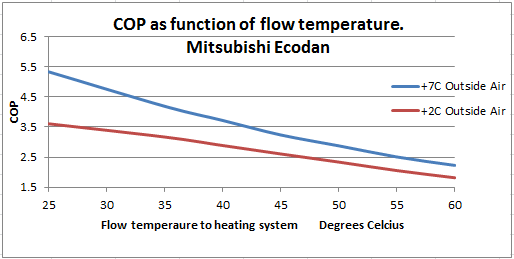
-
Calculating heating and thermal transferrance per room
AliG replied to Jeremy's topic in Central Heating (Radiators)
I tried having the hall a couple of degrees cooler than the rest of the house on the grounds it is a big space that you only rarely spend time in. But as you say because of the differential in temperature it was too noticeable. I find more than about 1.5C quite noticeable and so have all the rooms in the house set between 20.5 and 22C. That cold spare room no one ever goes into so I just close the door and let it get cold -
Calculating heating and thermal transferrance per room
AliG replied to Jeremy's topic in Central Heating (Radiators)
That is unpleasantly cold. I have a spare room that the heating is never on in and gets little solar gain, it sits at around 17.5C and feels freezing compared to the rest of the house. Does the house have access to mains gas? If you have to heat the water above 45C in the ASHP the COP is going to suffer and it will be materially more expensive to run than a gas boiler. I would also be concerned that with those levels of insulation you are going to have problems dealing with sudden changes in outside temperature. One of the things I notice in a well insulated house with 3G windows is you cannot really tell what the outside temperature is, as it impacts the temperature inside the house quite slowly. I fear that you will not be in this position, an ASHP is good for providing a steady modest amount of heat, but if the sun goes down and the wind gets up and it suddenly gets much colder outside, it might be that you struggle to get enough heat into the house quickly to keep it comfortable. I would use the JS Harris calculator to find out the total house heating requirement which takes into account heat passing between rooms and so on. You will need a room by room requirement to size radiators, but I would start off with the whole house number and look at the instantaneous requirement at below 0 to see if this can be supplied reasonably by an ASHP. -
Bad Airtightness Test Result
AliG replied to AliG's topic in Mechanical Ventilation with Heat Recovery (MVHR)
Yes, it is absolutely fantastic for checking things over. I managed to get a refurb one so got a reasonably good deal on it. It is very sensitive and you can see quite small temperature changes. -
Architect Invoice Much Higher than Expected - Options?
AliG replied to greido's topic in Surveyors & Architects
I think you have to go back to him and say that 15 hours is not a "few" hours and that whilst you understand he may have done more work than expected you need him to adjust the bill to be closer to what was quoted. Maybe 10 hours would be a good compromise, this is still more than most people's definition of a few. If he also said that he would produce these drawings with the express purpose of coming up with a lower cost option and has not achieved this he really has not done a great job, especially as it sounds like it was his suggestion. In my real life experience as well as from watching the various building related TV shows architects are just not good at estimating building costs. Renovating an existing house where there are more unknowns probably exacerbates this issue. I am in Edinburgh, I hadn't seen your original post, welcome. Frankly a lot of the loft conversions on these older bungalows are awful, you end up sleeping with you face a couple of feet away from the roof. The trouble you have in replacing the roof is that it will be very expensive for little extra space. I would guess you are looking at around £40k to remove the existing roof, build the new roof, tile and insulate it. By the time you then fit out bedrooms, add windows, en suites etc this would rise to more like £70k. I am assuming that you are covering a ground floor area between 120 and 150 sq metres when I think of the floorplan of a typical Edinburgh bungalow. And of course as a renovation you have to pay VAT. Actually if you move the roof you will also have to redo the guttering and soffits which might add a bit more again to the cost. Adding extra ground floor space likely has a lot better return. -
Quookers use a lot of flex pipes in their connections. https://www.quooker.co.uk/media/wysiwyg/i/n/installation_guide_combi_e_uk.pdf This is a link to the Quooker combi installation instructions. If you look at P16, picture 3, I think that bolt in the top of the copper pipe is the one shown on the top of the mixer valve in the picture, it doesn't seem to connect to anything. Is that pipe actually connected to anything at the other end or is it being used as a strange support for the mixer valve? If it was an actual connection, water would gush out. So the leak is probably somewhere else and you still need them to come fix it, but hopefully the manual helps.
-
Bad Airtightness Test Result
AliG replied to AliG's topic in Mechanical Ventilation with Heat Recovery (MVHR)
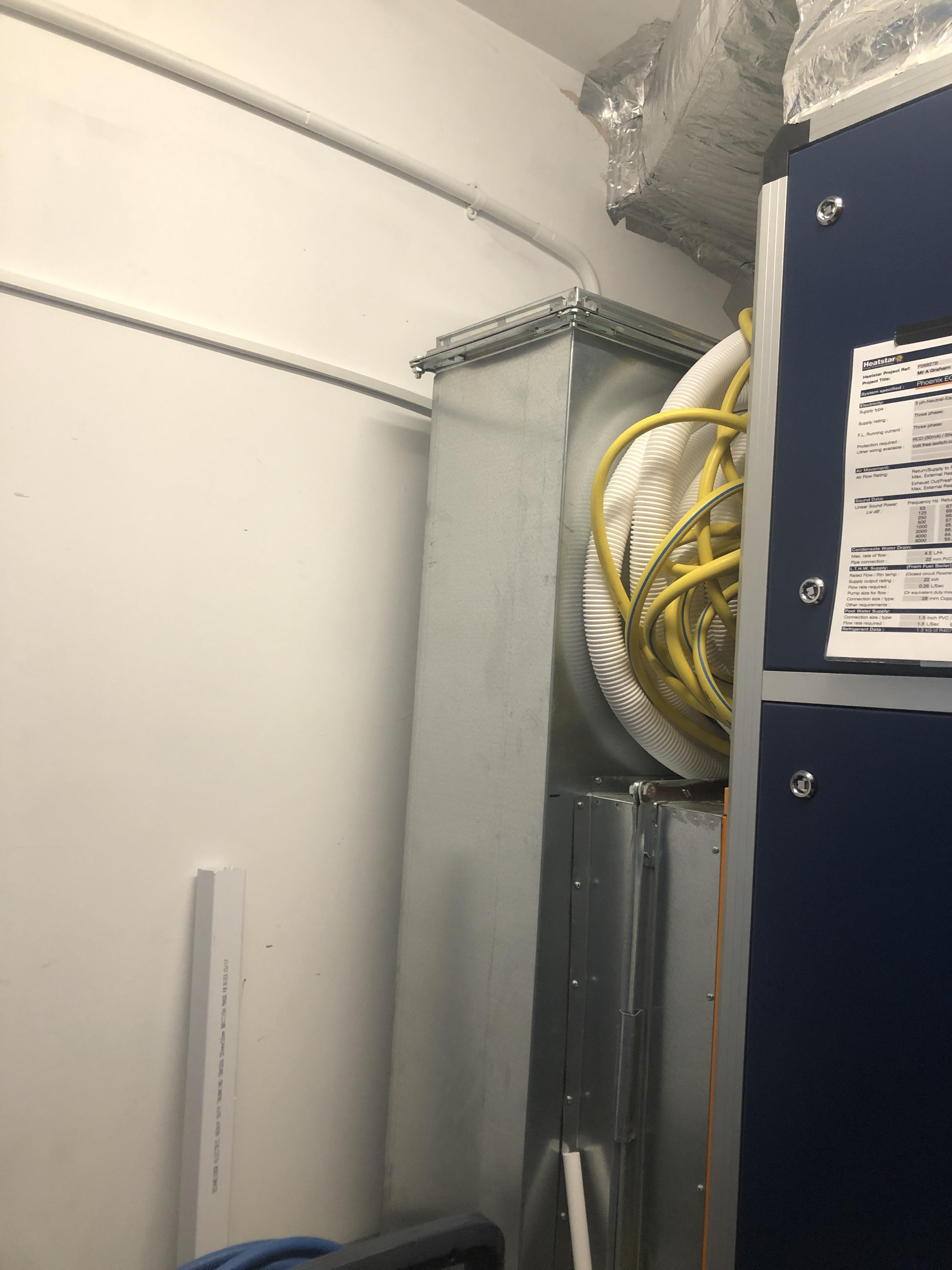
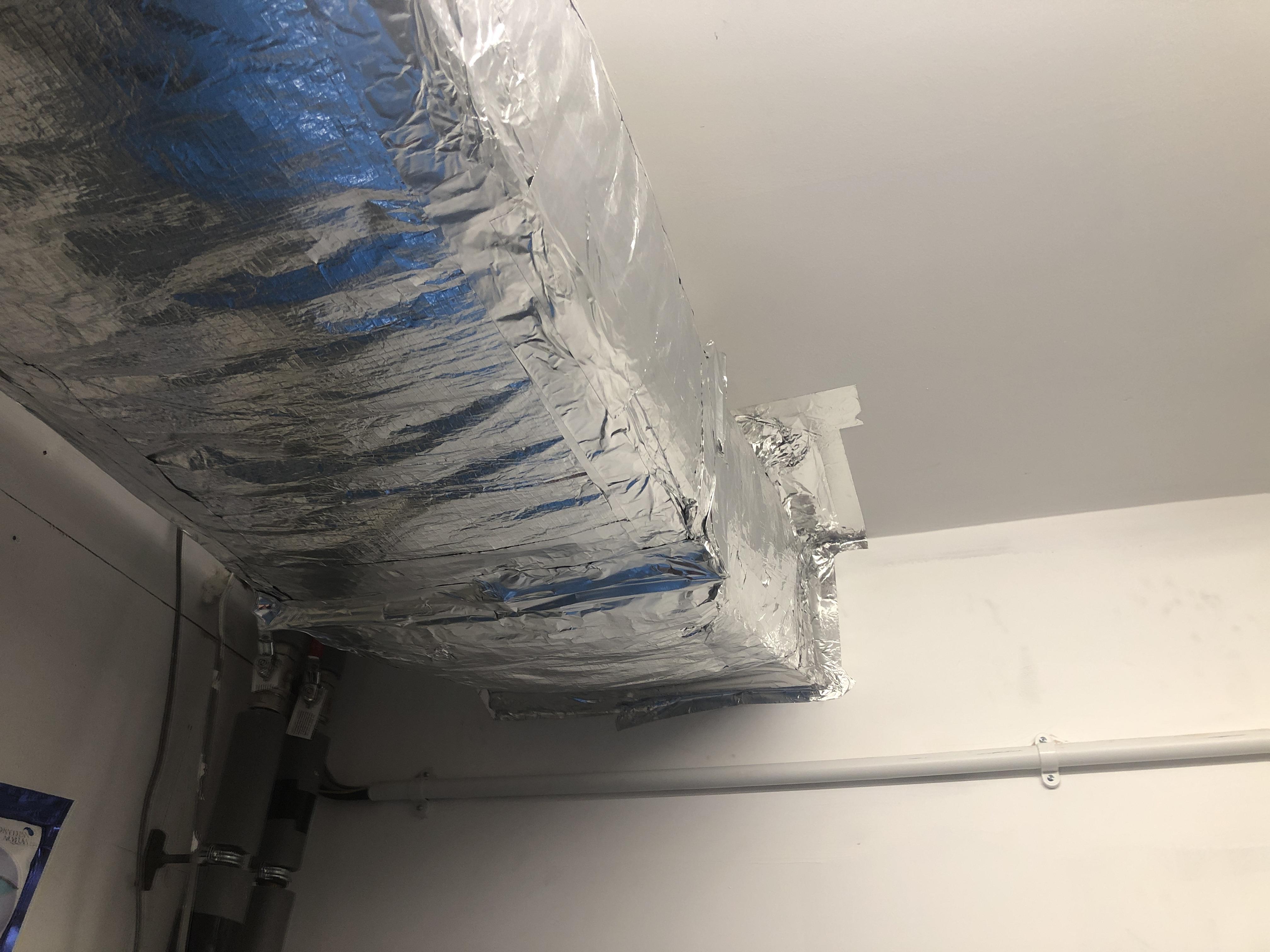
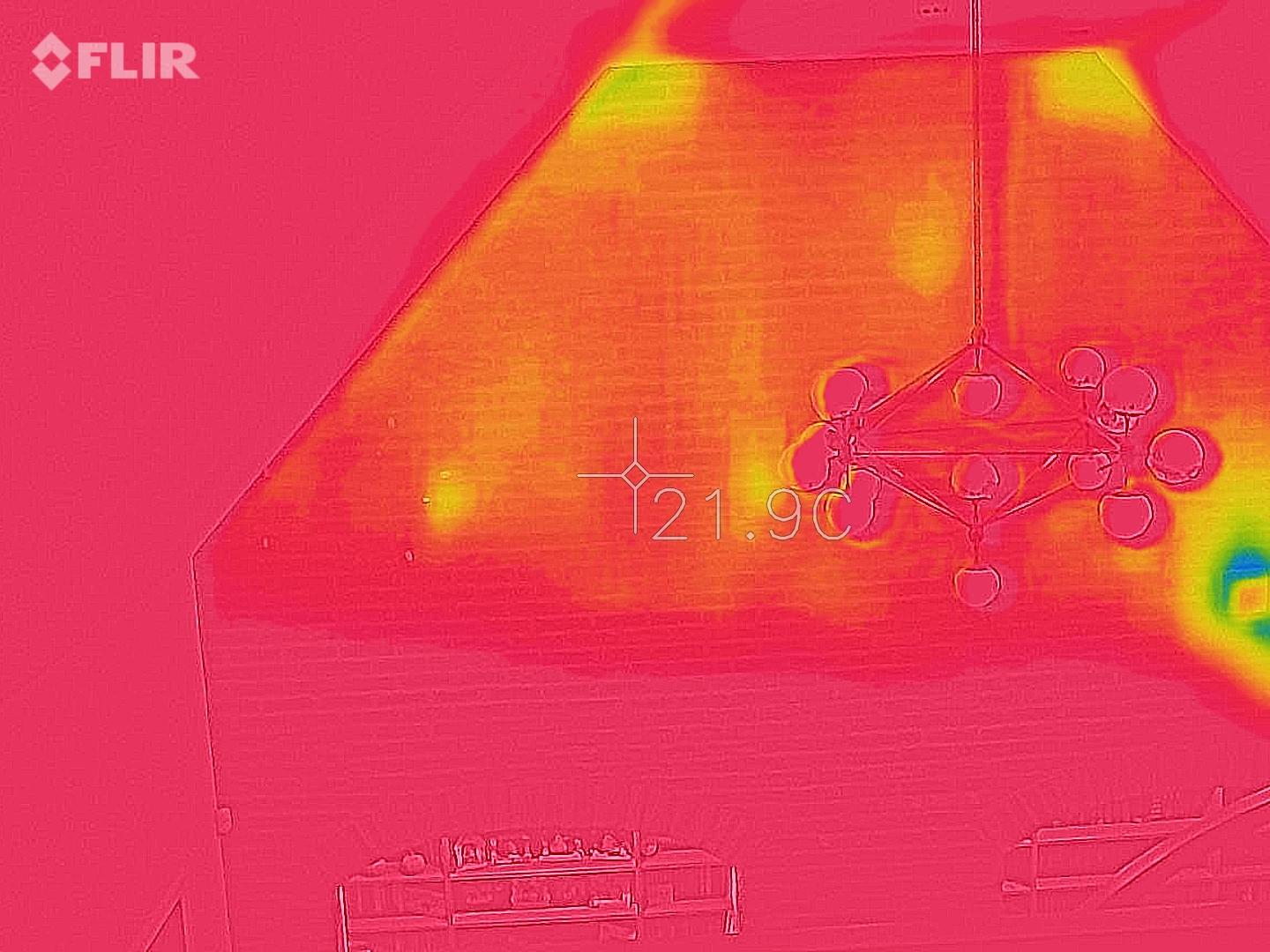
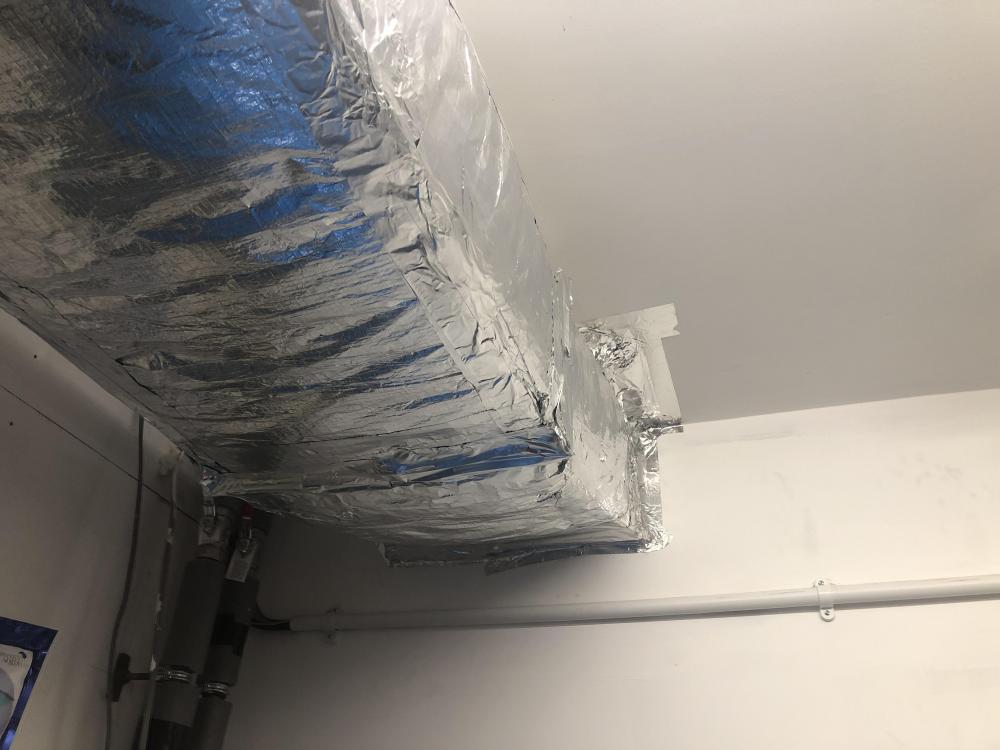
Continuing to work on sealing things up. When the test was done the ducts for the pool dehumidifier had insulation filling the gap as they went through the wall but it was not taped up so I did that. I discovered that one of the ducts was not sealed up on the far side as to do this required me climbing on top of the ducting, which thankfully easily took my weight, and lying in my back up in the air to tape up the space above me. My hope is that 5 or 6 areas like this we have identified as quite big gaps are the main culprits in the low airtightness score. I did also discover another thing. There is an area of about 15 sq metres of wall that seems like an interior wall but is above the loft insulation so should have been insulated. It is currently landlocked in the join of the T in the roof so I think just no one noticed it. I have attached an IR picture where you can see the area of wall that is a couple of degrees cooler. IMO having started this work. Tape is the way to go to seal stuff up. Foam is nasty stuff that works well if you have a narrow gap but often just falls out of holes and goes everywhere.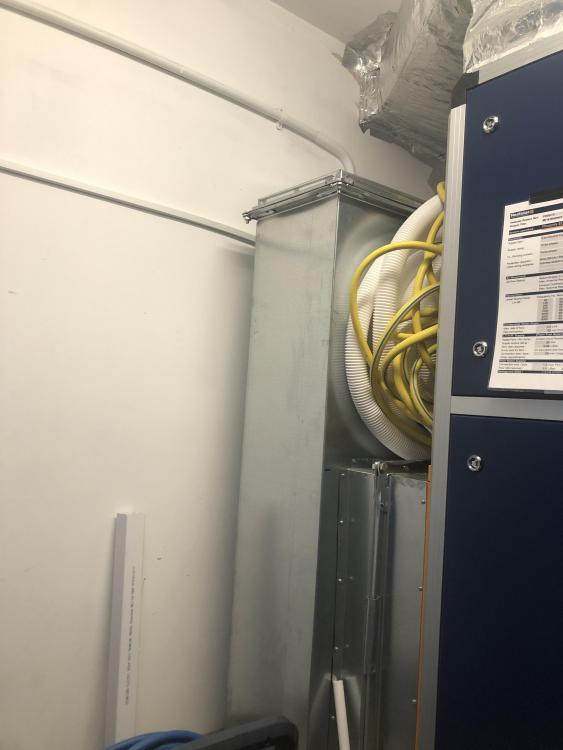

-
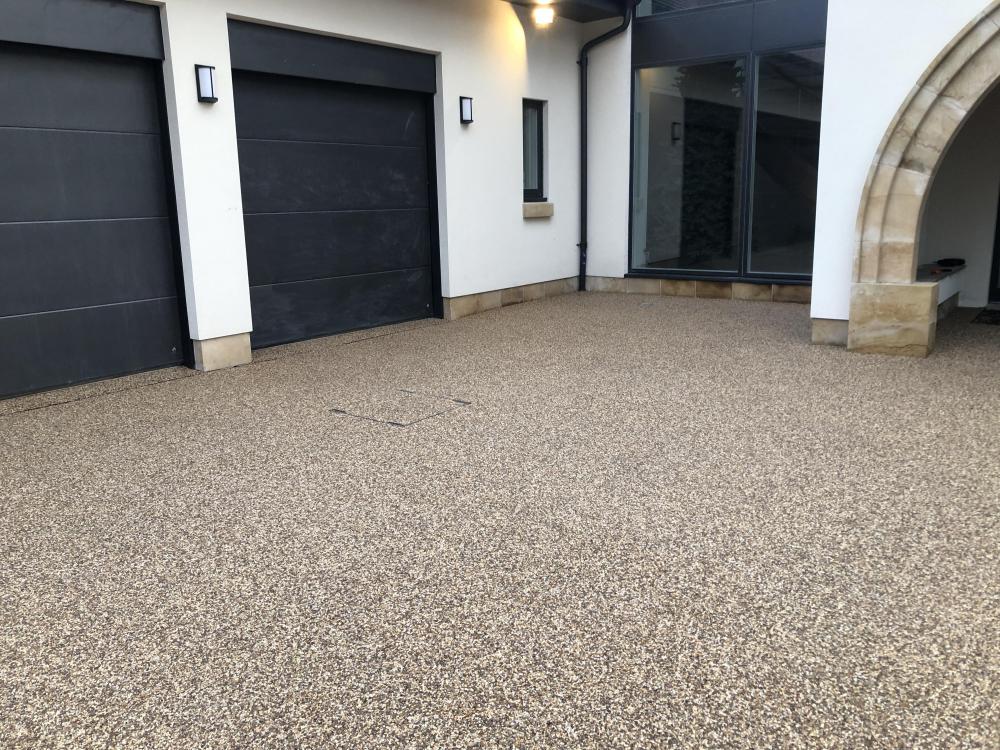
Granite black here. Bizarrely we knocked down a house that was white with a red roof and black windows then built one that was exactly the same colours. Worth noting that black expands in the sun. I believe that Hormann recommend you do not use it if your garage doors face south.

-
Tanking would seem like an over the top solution for a bathroom floor. It is more for areas that are constantly getting wet. Simply tiling it and sealing around the edges with silicone would suffice to stop large splashes getting into the ceiling.. TBH though vinyl is waterproof, you could just seal the edges with silicone until you plan to redo the whole room as to do it properly you would need to remove the WC and basin pedestal. You are right about guests. We stayed in an Airbnb while our house was being built. We had not issues, but friends came to stay and flooded the bathroom floor which was not sealed so it went through the ceiling to the flat downstairs.
-
I think some of the comments are pretty harsh. I rather like the house compared to some of the absolute shockers I have seen on here. On the outside the thing that doesn't sit well is the unequal roof pitches from the sides, but if that cannot be changed I could live with it. I personally like the front elevation. Assuming we are commenting on the second set of drawings. 1. I always make this point, but I would do away with the vestibule/porch. It is too small a space to be useful and the hall will feel much more open without it. 2. Is there a cupboard under the stairs, otherwise there is no storage downstairs other than the utility room? 3. I am not a fan of the 45 degree wall in the hall. I know there are some comments about making the hall smaller to get larger rooms, but in fact this can often make a house feel smaller. It is hard to change that wall and keep the island, maybe if you pushed it 2-300m back to the end of the stairs so that the width of the hall doesn't change so much. 4. I would work to make sure that you like the kitchen design that fits into that space. The current position of the island means that if you put the hob on it you will be facing no mans land whilst cooking. I would think about spinning the island round to face the table and windows. 5. The window arrangement around the dining table will be expensive. Also the sliding doors will be hard to get to. 6. Upstairs you have now got a very long and narrow corridor. The master en suite is also now quite narrow. 7. Move the doors to bedroom 1 and 2 500mm towards the stairs to that the open against the wall. Now you can make the en suite 500mm wider and reduce the length of the hall by 500mm. Currently the little spaces behind the doors are wasted. I would consider putting a fitted wardrobe in the rooms opposite the beds. 8. Move the linen cupboard end wall back in line with the top of the stairs and put the door facing bedroom 3 creating a wider centre to the hall. 9. I would be tempted to make the bathroom and dressing room a little smaller also so that the hall is 1.2m wide. 10. I would probably steel 200mm off the width of the master bedroom and add it to the width of the ensuite. You are likely to need a bulkhead in there for pipework and it is quite narrow already. 11. Maybe make the dressing room walk in as the door will get in the way on a small room like that. 12. An alternative plan is - Make bed 4 the master bedroom, by taking the dressing room window into the bedroom. A dressing room doesn't need a window. Then you have a bigger room, bigger dressing room and much bigger en suite. The hall will also be shorter. Then you can make the current master smaller and take the space where the storage and en suite are drawn and have two en suites and probably room for a wardrobe too as the bedroom could be quite a bit smaller now. Then you don't need a family bathroom.
-
Bad Airtightness Test Result
AliG replied to AliG's topic in Mechanical Ventilation with Heat Recovery (MVHR)
I think that is true @ProDave The only issue that I have is the loft has numerous corners, dormers, changes of height etc and I am not convinced that the the builders would have actually managed to seal it all up either way (as you might see from their efforts to seal around the SVP) We'll know once I have sealed everything up and we redo the test. The architect is getting the builders back in as he confirmed that there should be a cavity closer on the cavities that are open to the roof. There is roughly 10m of this, I am not sure if it impacted the test result. -
Bad Airtightness Test Result
AliG replied to AliG's topic in Mechanical Ventilation with Heat Recovery (MVHR)
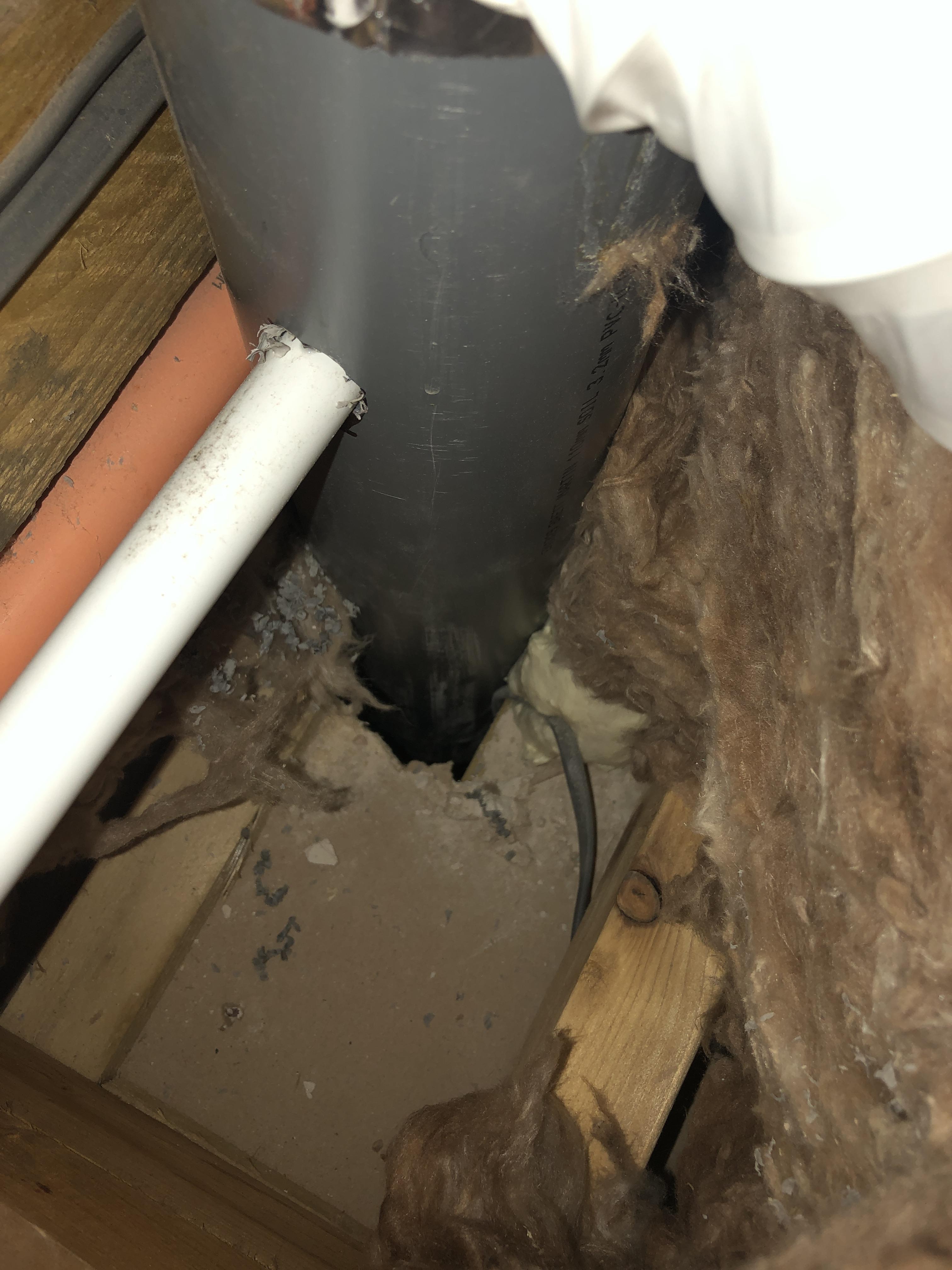
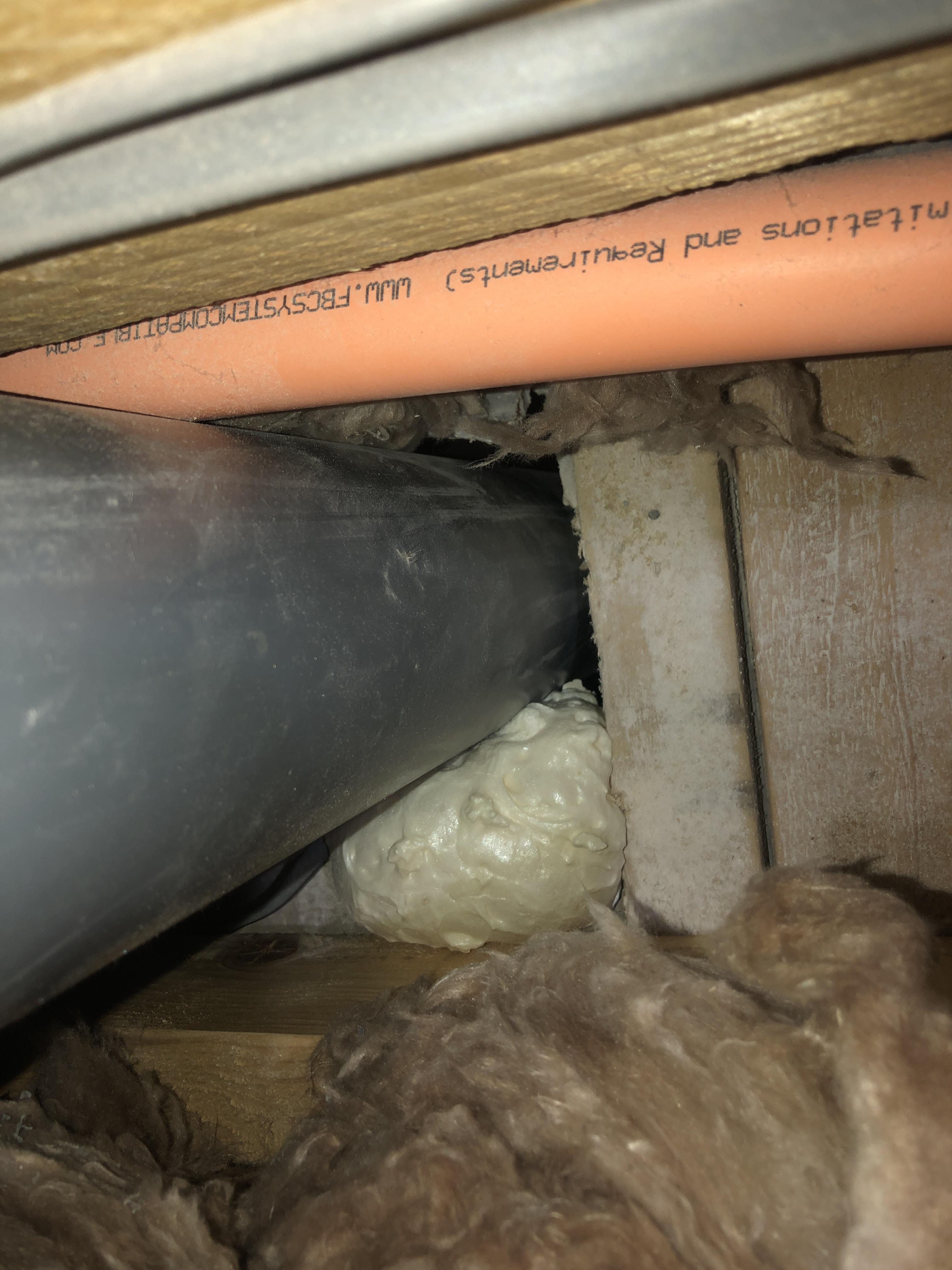
I thought I should clarify that the feeble effort at foaming up the hole was not me. Thanks for the website. The whole ceiling was done before the partition walls so the only thing to seal up is the pipe and cable penetrations of which there are probably around 20. It would have been a lot easier before the insulation was down. When the plans were drawn up this was shown as a warm loft. I did consider was it my fault for changing to a cold loft as it was a lot cheaper. I certainly think it shows that you are a lot less likely to have issues with a warm loft. However due to the very complicated roof shape of the house I don’t think the full loft could have been easily made airtight and it might have been even worse in my case. I would have had an even larger heated space with lots of holes. But it is certainly something to consider. -
Bad Airtightness Test Result
AliG replied to AliG's topic in Mechanical Ventilation with Heat Recovery (MVHR)
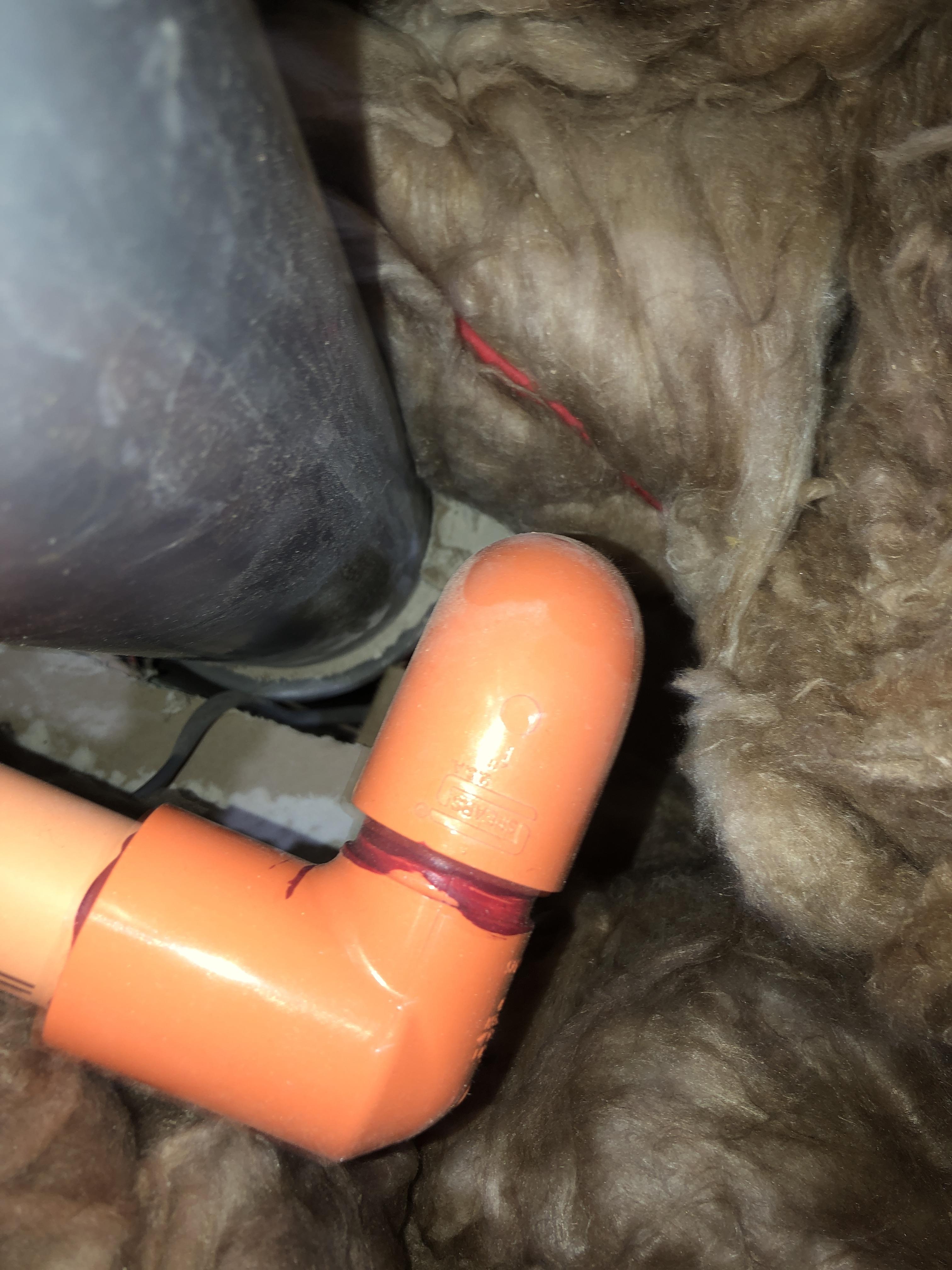
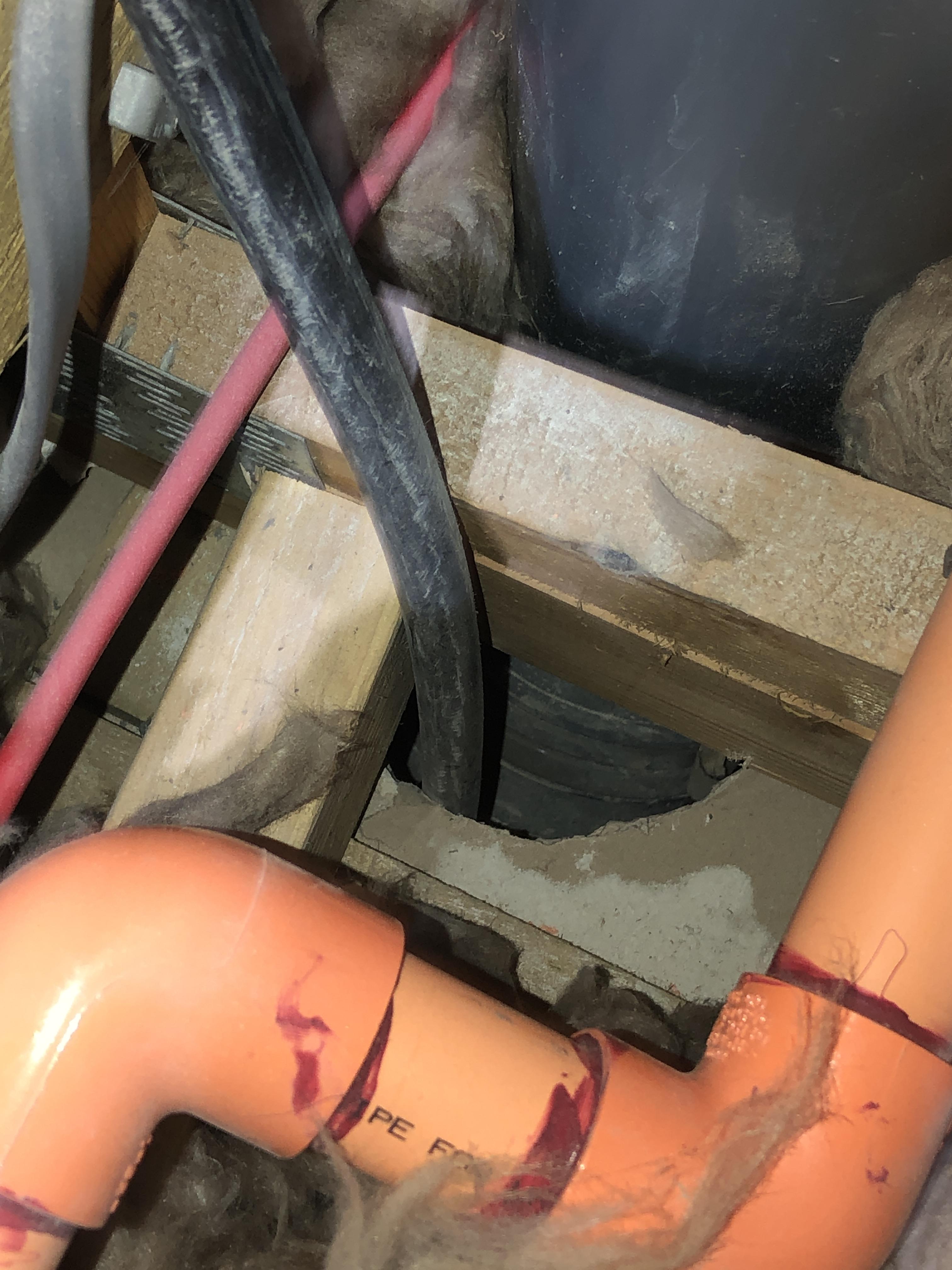
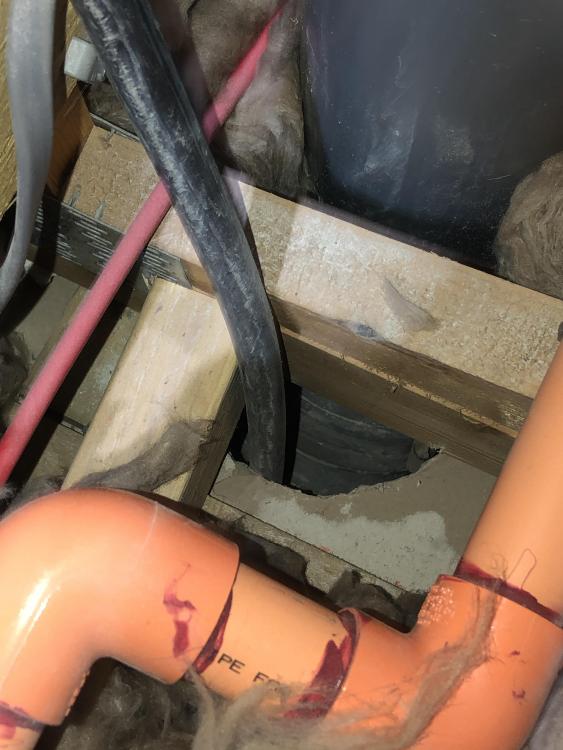
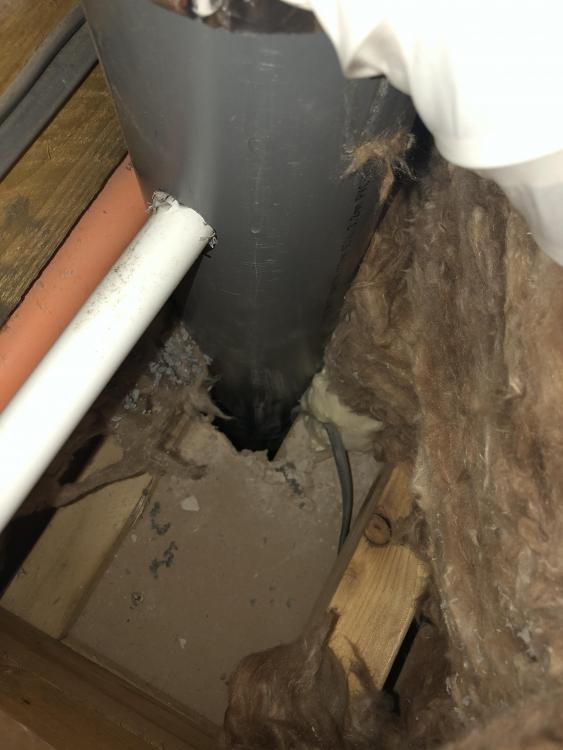
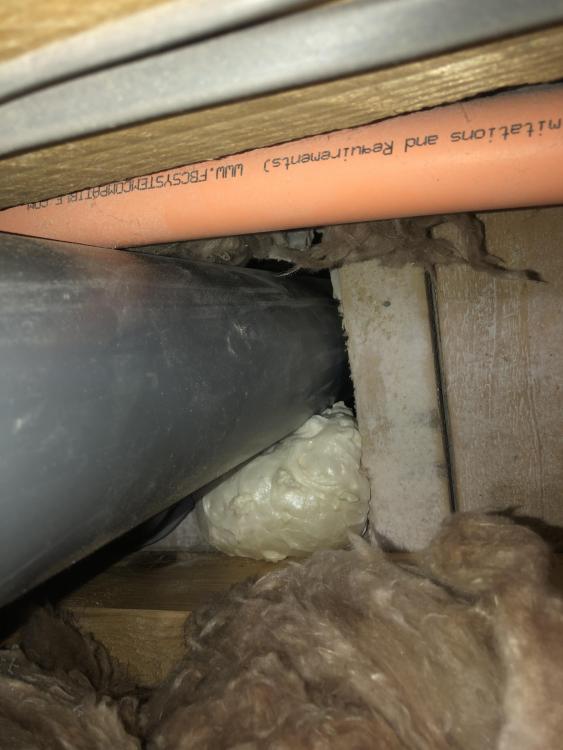
That’s a good point. I have spent the last hour up in the loft investigating where there are holes that I can seal up. Around the stacks and other pipes that come up from the ground floor once I pulled up the rock wool the bottom layer of it was warm. At least this is a relatively easy fix. Someone had made a feeble effort to seal one of them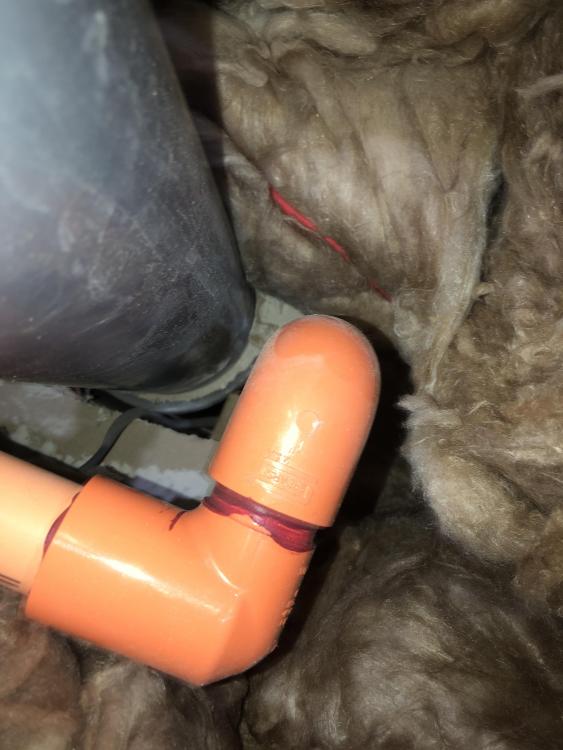
-
Bad Airtightness Test Result
AliG replied to AliG's topic in Mechanical Ventilation with Heat Recovery (MVHR)
Oh I know skirting is not the most important job, I just don't have the stuff to do the other jobs. There was an absolute gale blowing through the space in the eaves during the test and then there was a hole from the eaves into the ceiling of the ground floor where some cables went through. Sealing all this up will make a big difference. Funny thing is I had identified this area and thought it was fixed. I am not convinced that the test result is representative of the real world other than on a very windy day. Most of the places where you could feel cold air coming through I have never felt any cold air at all nor have I seen anything when using the IR camera on a cold and windy day. I will be up in the loft sealing the top of the soil stacks once my tape, foam etc come. This is the other job that will make a big difference. I suspect that I can get a considerably better result in the air tightness test. Whether it saves more than 5 or 10% off my heating bill I would be very doubtful. However, I don't like things not being done as well as at least reasonably possible. Clearly doing this when the shell went up would have been ideal but I cannot go back and do anything about that.