AliG
-
Posts
3211 -
Joined
-
Last visited
-
Days Won
11
Everything posted by AliG
-
It is not, looking at a few of them, I think they have maybe set them back a bit so that the strike plate is not too near the edge of the frame.
-
I have Ubiquiti hardwired access points. I am not the only person I think. Wireless boosters use some of your bandwidth and slow down your internet, so it is better to have access points wired back to the man router. The most efficient solution is to run ethernet cables to a few places and then have wireless access points there. Ultimately we put in ethernet to everywhere there is a TV as then you can connect up a Sky Q box or the TV itself and then in most rooms a second ethernet cable for an access point. Other than TVs most devices that accesss the internet do not get plugged into it anymore. Only two or three of them actually connect to a backplate, the access points are mounted on the ceiling as that gives the best signal, so the cable just comes through the plasterboard into the back of them. In a house with concrete upper floors and block walls we needed a lot more access points than you would need in a timber frame house. Two or three should do most people.
-
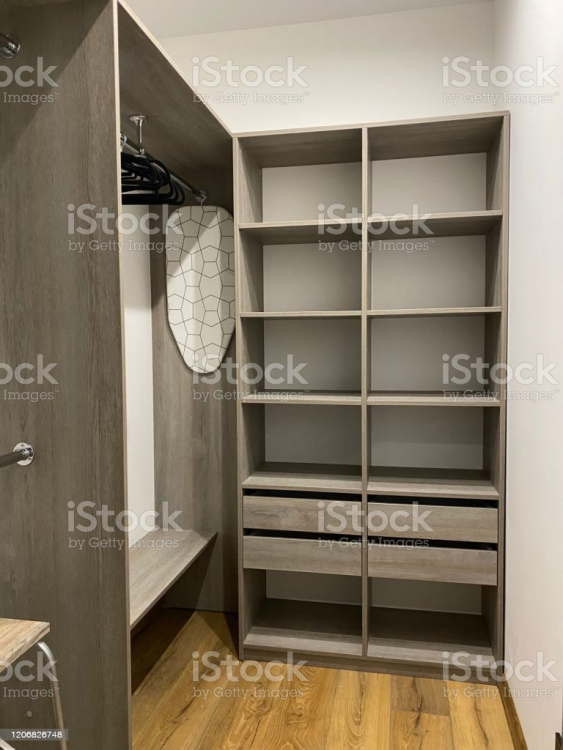
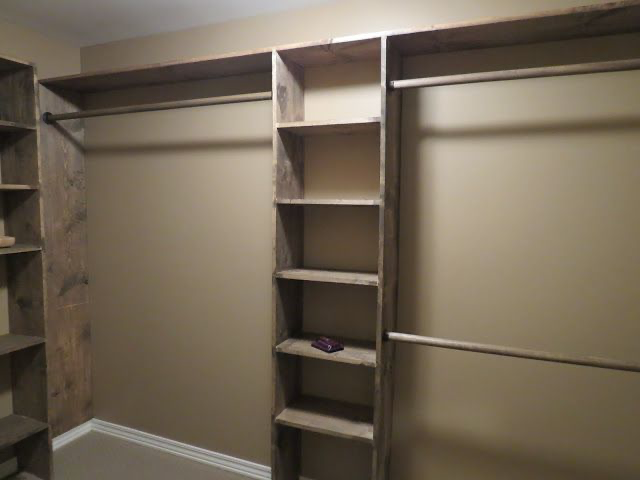
Is there another way to go other than diywardrobes.co.uk and similar. I used diyhomefit and bought units which we then made up and installed, but they cost hundreds per unit. In a lot of developer showhomes I see something like this - Do they just buy furniture board and cut to size then build it on site, especially if you didn't need the drawers?
-
2-3C is decent drop overnight. In that case it might be better to set the thermostat back one degree during the night which will have the heating coming off and on all night but not running so hard to get back up to temperature in the morning. Ultimately I think all you can do is try different permutations and see which is most efficient in real use. this does require a lot of trial and error. One thing I found was that in rooms with wooden floors 40C wasn't getting the floor warm enough to heat up the room. The floor might only come up to 22C and then the heating might be on for four or five hours to warm the room up. I turned up the flow to 44ish so that the floor temp was 24-25C and the room heated up in an hour or two. Now it might be in this situation you could run a lower floor temperature constantly versus a higher floor temperature for an hour or two. My feeling is that there is a point where the heating ends up being on considerably longer at only a slightly lower temperature so it may not be more efficient.
-
I have experimented with this and continue to do so. On the one hand, previously I set my heating back 2-3C during the night and it was running for a long time in the mornings to get back to temperature. Having changed the night time set back to 1C, which basically means the heating comes on occasionally during the night if it is very cold it seemed to get more efficient. So running a more constant temperature seems more efficient. But during the day I was running lower flow temperatures for longer periods. Rooms heated up at quite different rates and the boiler would be running off and on for short periods for 3 or 4 hours. I have raised the flow temperatures so that the house heats up faster in the morning, trying to run al the zones at once. This reduces short cycling of the boiler. As the floor gets warmer, the house then stays a nice temperature most of the day and the heating only comes back on if it is quite cold. This seems to save on gas usage. So some ways running a constant temperature helps and some weight running a higher flow temperature and shorter runs on the boiler helps. I suspect that a gas boiler that is oversized for heating requirements may work better with a high flow temperature for short periods than an ASHP, but that is a guess. Maybe as an experiment I should try not setting the temperature back during the night and just leaving the heating on 24 hours a day, that is the one thing I have not tried yet. The trouble is there are a lot of settings to change to try these things and then you need similar weather to compare heating usage. I have been monitoring gas usage the last few days after making a few changes. I will try turning up the nighttime temp tonight and see what happens.
-
In option C it would be difficult to have the toilet there as there is nowhere to put the stack downstairs. You would have to put a shower in that space and the WC where the bath is. I would go option 1 with a small change - As the master bedroom has a large dressing room it doesn't need a wardrobe as well. I would move the door to bedroom 3 up a bit to make the landing larger and then use some of the wardrobe space to have a cupboard off the landing. I would also put a skylight over the landing.
-
I was worried about that, but you use so little heat in a small flat it wasn't much of an issue. I think the electricity bill went up about £20 a month when the boiler was changed, but it was a few years now. I was only in the flat 4 nights a week. When the bill is low saving one standing charge makes a decent difference. My electricity fix is almost up, the best deal I found today was 2.19 for gas and 14.29 for electricity, a 6.5x ratio is the worst I have seen. You will get a bit back in efficiency in the electric boiler. It won't be easy to move people off gas boilers with those figures.
-
I'd replace it with an electric combo then. My landlord did it in my flat in London. Went pretty smoothly. Electric combi had a small tank inside it, I found that it was fine for a shower, but if you wanted to run a bath the hot water would start to run out just before the bath was full. Fine for a 1 or 2 bed flat
-
@ProDaveI think he means that it is a combi gas boiler and he wants to replace it with a small hot water tank and different kind of boiler. I guess I would ask the question of why? It is going to be quite involved to replace the combi with a tank and boiler and expensive. You are going to need a minimum tank size of 100l which is not going to fit in a kitchen cupboard easily. It might fit into a larger cupboard, but that is a lot of space in a small flat. If the issue is not wanting gas in the flat I would replace it with an electric combi. That will be a bit more expensive to run.
-
The uninsulated DHW pipework will be acting like mini radiators around the house. I think under Scottish building regs hot water pipework all has to be insulated, but I may be wrong. It is all insulated in my place and I can still use an IR camera to see where all the pipework in the ceilings is. Luckily it will be relatively easy to fit, other than for the stuff behind plasterboard. I think what we are trying to figure out is does the system pump hot water around the bathroom loop when the other loops are off or is it only when the other loops call for heat that the water is hot? In the pic you posted earlier the bathroom loop had flow, it would seem unlikely that it has flow when the ASHP is not switched on, but maybe it does. The temperature gauge will tell you if the flow is hot and there is probably a light somewhere that shows if heat is called for from the boiler. The other easy tell of course is the bathroom would be way warmer than everywhere else.
-
Weird that it is so neatly fitted yet no insulation. There will be a lot of heat coming off the cupboard which in itself will be boosting temperatures in the house. Not sure what the reason for having a loop without an actuator is. Is the system calling for heat to this loop even though all the thermostats are off?
-
Heating design, calcs and process - ASHP/UFH
AliG replied to SuperJohnG's topic in Underfloor Heating
If your wife is anything like mine this information will be irrelevant -
I had that, one room got to 27C before we figured out what the problem was.
-
Heating design, calcs and process - ASHP/UFH
AliG replied to SuperJohnG's topic in Underfloor Heating
I am just looking at similar question on my parents' place with the ASHP quote coming in. The heat load calc is similar to those shown. Thus I was considering specifying a 5kw ASHP. However the heating guy pointed out you might want 9kw for faster DHW heating. He also pointed out that the ASHP cannot supply DHW and UFH at the same time although with a buffer tank and low heat requirewment I am not sure if that is an issue. The other thing I am looking at is the number of zones to have. We have two south facing rooms with large windows. My solar gain calculations suggest that the heating may never come on in these rooms. Thus I feel it is better to have rooms on different zones. But if the floor temperature is close to ambient, maybe that is not an issues and we should heat the whole slab. Annoyingly the house will be quite close to passive levels, so the heating starts to feel expensive for what it is. I have done away with upstairs heating as a waste of money. As to the comments on feeling cold above, my wife started to complain in what I was calling the cusp period - where it starts to get colder outside, but not cold enough for the heating to come on. So in the summer the house stays at 22+ and the heating never switches on. In the winter the heating needs to come on, mainly in the morning to get rooms up to 21-22. In the autumn you have days where it might be 10/11 outside and 21C inside so the heating isn't on and it is the same temperature as it is in the winter. But with no heating on the floors are colder and there is no radiated heat in rooms, also there is not a nice warm feeling of a big temperature difference when you come inside so it feels colder. -
View (glass) vs energy efficiency (walls)
AliG replied to WWilts's topic in New House & Self Build Design
I'd actually have the tall window, it looks better, it just doesn't have to be a door. But if you'd use a door go right ahead. Not a big difference between a tall window and a door. Also it is opposite the room entrance door, so again will be nice for the sightline into the garden. Reduces the number of corner cupboards in the kitchen which is always a positive in my book. -
Through the power of editing that never happened
-
Hi @MarcelHoldinga The first thing to eliminate is whether or not the heating is on by mistake. In a well insulated house, if the temperature gets up to 23C and the thermostat is set at 18C, the heating would take days to come on unless it is very cold outside. Thus I would be surprised at your floors being warm. The coldest room in my house today is 19C and the heating hasn't been on there in weeks. Thus although your flow temperature seems high, I doubt that is what is causing the issue., although it could still need adjusted. I guess if the house cools down slowly, the floor would also, so it could be the flow, but the simplest start point is to make sure the heating is off and not pumping warm water through the UFH loops.
-
View (glass) vs energy efficiency (walls)
AliG replied to WWilts's topic in New House & Self Build Design
I think option A (black and white picture looks better) In practical terms- Windows are cheaper than doors. Doors cause more of a cold bridge at floor level and eliminating them will help. Unless you really think you would use the second door in the kitchen area and the study door, the windows are a better option. We have three doors out of our kitchen, one has never been opened, and we use one of the other two 95% of the time. The study is a small room where a door will limit the ability to position furniture. Window D4 is marked as bifold on the plan. I would just have French doors, they are much cheaper and as it is only two doors you can have exactly the same size of opening. Also if you plan to have the design of windows in the picture then they will all look the same. North facing is not a big issue. If you plan to sell you probably won't get the money back on 3G au-clad windows that most on here use. I would probably just stick with decent quality 2G UPVC. This is what almost all developers use. You can get 1-1.2 U-Value in these. You can always price up different options to see what makes most sense. -
Choosing MVHR - energy consumption angle
AliG replied to Olf's topic in Mechanical Ventilation with Heat Recovery (MVHR)
When looking at the costs and payback, something to remember is that you won't need any extractor fans to bathrooms, kitchens etc. This could run to a decent percentage of the MVHR cost. The cost of these can add up, but also I find them annoyingly noisy and the MVHR much quieter. There is also the fresh air benefit and the lack of dust which is a surprisingly nice benefit. I recently took a reading on my Dantherm MVHR and it seems that it runs to less than £20 per year, per unit. I run them on speed 1 for most of the time and find that entirely adequate, indeed running them on higher speeds in winter increases heating costs as it brings more cold air into the house. I change the filters once a year. The filters cost more than a year's electricity. -
I think architects in general have only a vague idea of how much things will cost. They will aim high and then you have to come back and say can we do something cheaper. I was considering whether a similar large overhang would have still worked at the ground floor level. We'll never know. It was the massive wide steps that seemed out of proportion to me, the architect did say that was the idea. As well as having to walk up to the front door, you also have to walk back down to the kitchen once you are inside. Maybe they actually come in through the garage. In our house the front door is basically for visitors and parcels, we usually leave via the garage. My mum has always said imagine having a baby and having to get up and down to the front door with a pushchair. TBF we never used one, I thoroughly recommend a baby carrier instead.
-
It is a separate expansion vessel. I am almost certain he let the pressure out when servicing the boiler and forgot to top it up. Thinking back, the weird noises from the heating started a few weeks ago after the service. No sign of it falling since I topped it up yesterday, but I will keep an eye on it in case it is something else.
-
Thanks @Nickfromwales I got an email back from the installer and he said it was very odd for the pressure to go to 0 and it was probably something the guy did when he serviced it. He asked me to watch it, but it seems to be holding now. The whole thing started because I thought my daughter's room tended not to heat up as fast as other rooms. The flow was set at 38C there, but that was only giving a floor temp of around 22C which heated the room up very slowly. There is a floating wooden floor in the room with a thin foam underlay. I turned up the flow to 42C and not only did the room heat up faster last night, but the floor was holding more heat and so it didn't seem to cool down as quickly. I got the FLIR camera out and most of the floors in the house seem to run around 24/25C when the UFH is on, so I think her room was set a little low, it is now warming to a similar level. I discovered previously when trying to maximise the efficiency of the heating that the best thing to do was to have as many rooms warming at the same time, so even if there was a room you might not be in until later in the day, just heat them up in the morning with the rest of the house so the boiler doesn't run for as long a period. Thus often her room was taking way longer than others to heat up and the boiler would be running just for that one room. When I did check the floor with the FLIR camera the loops were clearly warming up, but as you got to the middle of the room they were 2C colder, I am not sure if that is just the water cooling as it goes through the loop or their could be some air in the loop. I will give it a while and check again.
-
Loved the interior of today's house and the rear extension. Still not convinced by the staircase/porch at the front.
-
I never used to watch this show, but have been enjoying it. Will be interested to see how today's ends up. It looks nice but I am always against having loads of steps to the front door of a house. I don't understand why they didn't move the entrance to ground level.
-
Success, all working now. Checked all of the manifolds they seem good. No more weird noises and flow restored. I do have the original drawings, but they don't mention what different items do and how you should set them up. In some cases I think they don't want people messing around with the system, but a lot of it is quite simple once you know how it works. I always worry that my wife would have no idea how these things work if I wasn't around and have to constantly get people in. Not that she couldn't figure them out, she just isn't interested. The things I have learned that I think I should have been informed of. 1. The end valves on the manifolds are automatic air bleed valves - I had guessed this but wasn't sure. Some of them were closed. 2. The pressure on the low loss header has to be periodically checked and topped up. The taps to top it up were fairly obvious, but only because it looked like my old system. I surely should have been told this. As I said no one told us in our last house either, we also stayed in an Airbnb where the boiler kept tripping out and I eventually figured out it was due to low pressure in the system and fixed it. 3. The things that look like temperature probes on the manifolds are exactly that and if you turn the flow temperature above 48C they will cut off the power to the pump. I am going to label the low loss header for topping it up. Now we are heating with gas!