AliG
-
Posts
3211 -
Joined
-
Last visited
-
Days Won
11
Everything posted by AliG
-
Meter Readings Panic and Electricity Costs
AliG replied to canalsiderenovation's topic in Electrics - Other
This just popped up on my screen. Imagine their UFH bills-
-
Meter Readings Panic and Electricity Costs
AliG replied to canalsiderenovation's topic in Electrics - Other
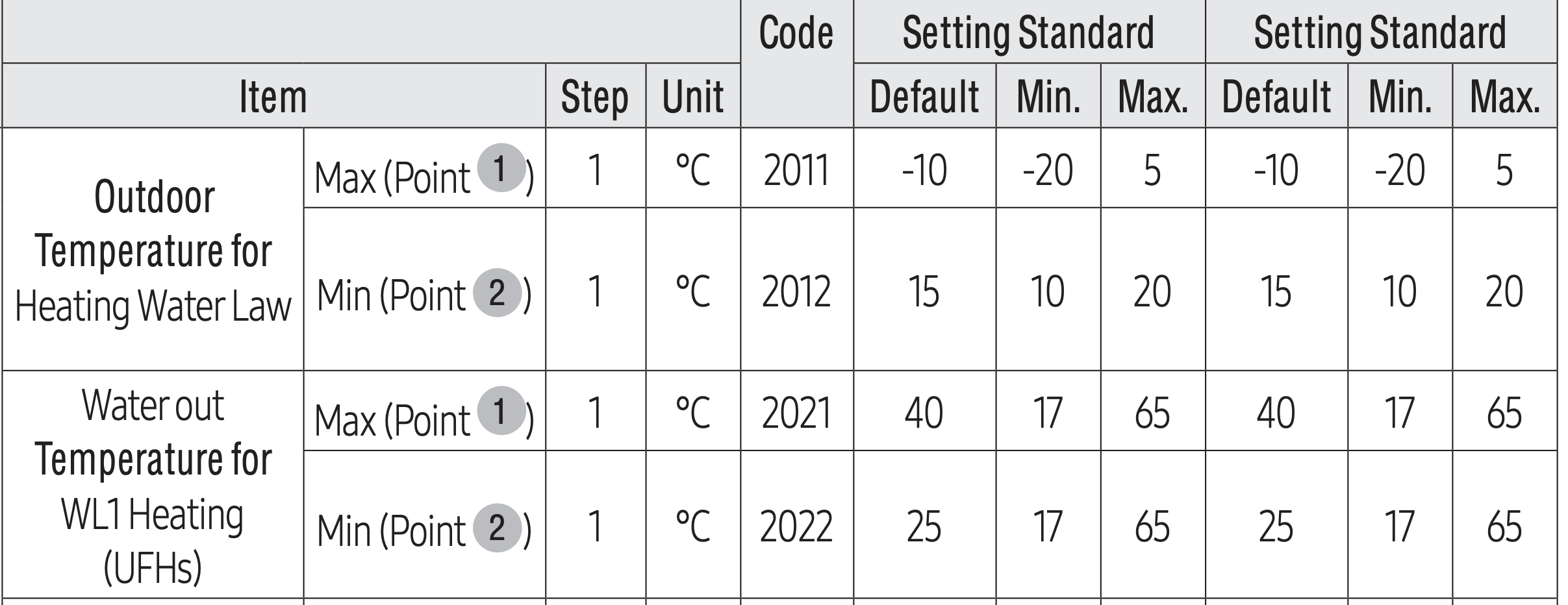
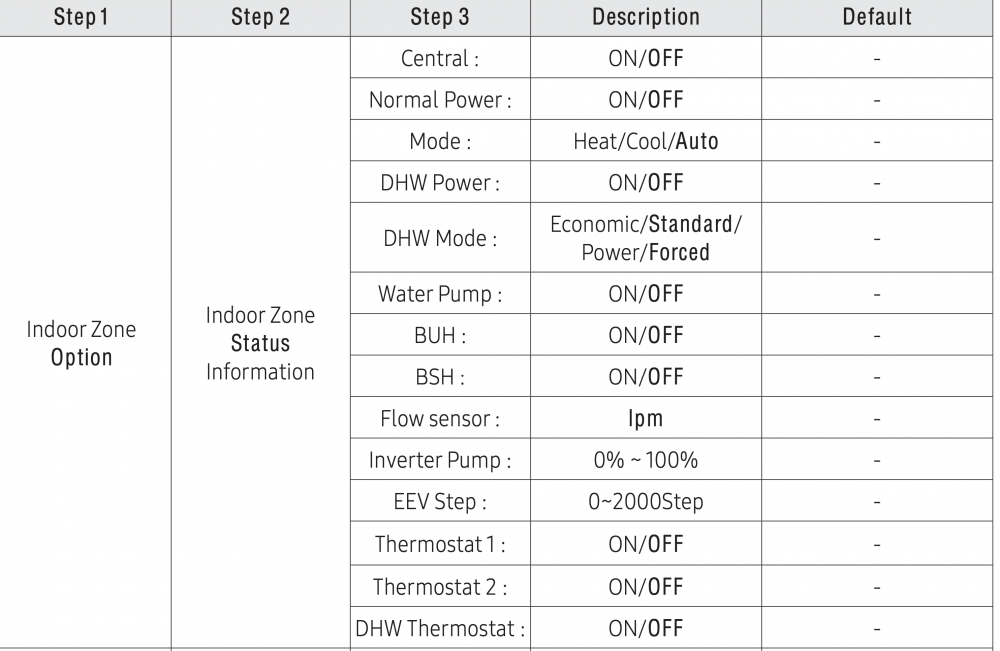
20** are the Water Law settings. You could look here to see what curve they have programmed. 2021 is the max Water Out temp 2022 is the min Water Out temp 2011 is the outside temperature where the max temp is hit 2012 is the outside temperature where the min temp is hit I would guess that they have considerably raised the default temperatures. If you think about it, they don't want hassle after the system is installed. People will notice a lot faster that their house doesn't get hot than they are using more electricity than expected and so the tendency is probably to set flow temps too high. As ASHP owners have said, theoretically weather compensation would cut your bills. Ideally you are always using the lowest flow temp required to heat the house which maximises your COP, but this would need careful setting. However, you use a lot more energy when it is very cold than when it is say 7-10C, thus setting a fixed flow temp that works when it is cold is probably the easiest way to start. As @ProDave said you could then set this as the flow temp at the low end of the weather compensation curve and a lower temp at the high end of the curve but this would require a lot of experimentation. Edited - 2041 is UFH/Radiator setting not WaterLaw off or on Now that you are in installer mode you should be able to change the mode from Water Law to Heat as shown on P18. First I would be interested to know what the flow tempsthey have set in 2021 and 2022 are.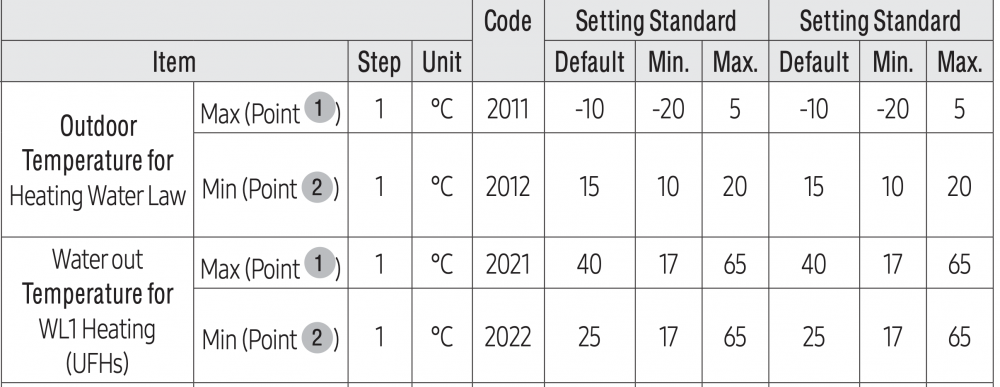
-
Meter Readings Panic and Electricity Costs
AliG replied to canalsiderenovation's topic in Electrics - Other
Alarm companies etc love to do this. I have the manager code for our alarm and without this would have had to call them numerous times to change settings. We just had a gate controller put in. They said if I emailed them phone numbers etc they would programme the gate. I got the manual out and did it myself, if I didn't do this how would I ever change the settings after it is installed. I think there must be a lot of cases where people simply stop using things because they can't change the settings. -
Meter Readings Panic and Electricity Costs
AliG replied to canalsiderenovation's topic in Electrics - Other
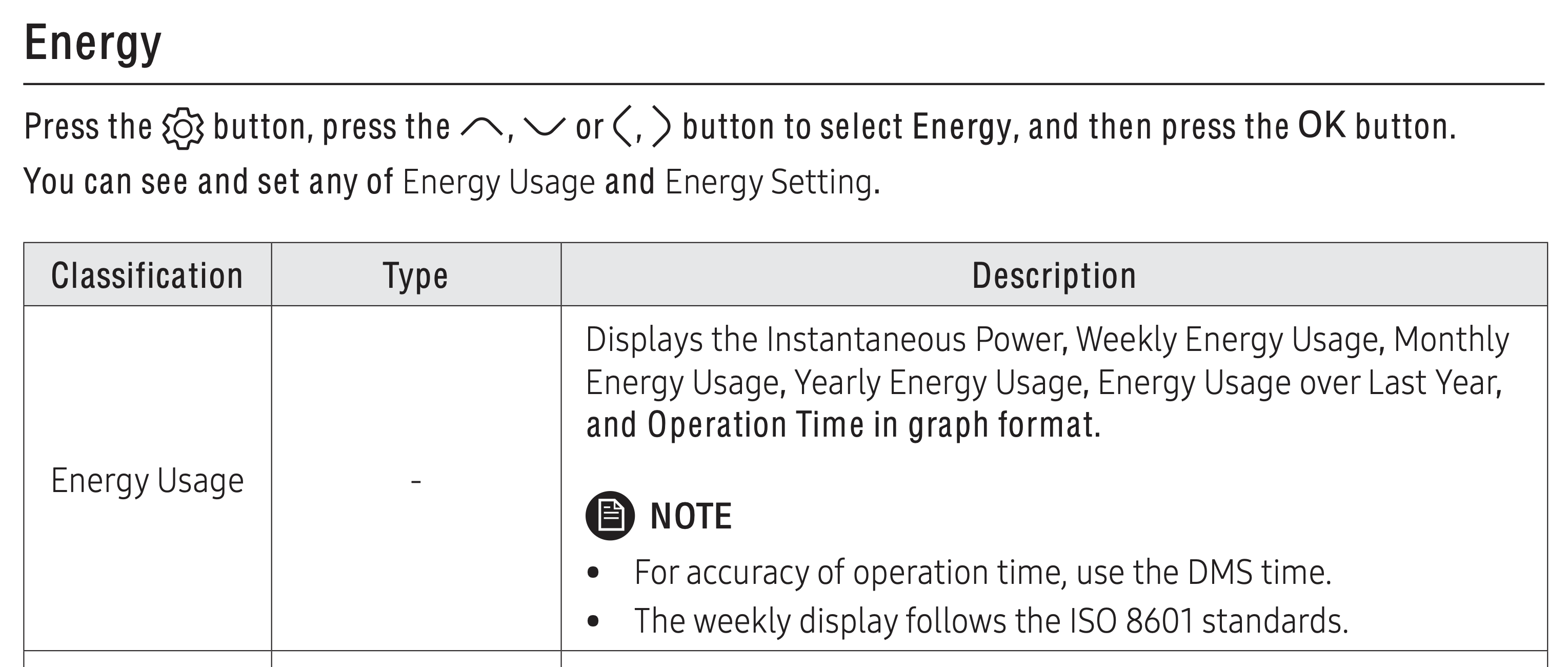
I have had a further read of the manual. P11 gives instructions on showing the ASHP's energy usage. perhaps you can use this to see how much electricity it has used in the last week. You should be able to turn off "Water Law" from the zone page and change it to Heat mode where you can set the Water Outlet temperature. If it is locked and you cannot do this, p13 of the manual describes how to remove the function lock that may have been switched on by the installer. Before messing around with it and changing lots of settings, I would like some input from other owners of ASHP as to whether they think you would be better to run in weather compensation mode or with a constant flow temperature. It could be that you should run weather compensation mode but the installers have set the flow temperatures too high in that mode. This will be even more true once your EWI is installed and you need less heat input. Looking at the documentation provided for expected energy use, which is pretty close to my guess earlier on, you are using more than I would expect for heating by maybe 20 or 30%. This is not drastic and could be due to sub optimal set up, the lack of EWI and quirky cold weather conditions. There is what seems to be an error to me in the expected energy use chart, I think it is just the way it is set to averages over the year whilst January will give the worst performance. It suggests the house needs 3000kWh in January, which was my guess, so call it 100kWh per day. It then applies a the seasonal performance factor which is a COP of 3.63 to get just over 800kWh of electricity usage in January or around 27kWh per day. But with an outside temperature of just above 0 and a flow of around 50 you can see from the Ecodan chart I sourced that the COP would be closer to 2.2, so ASHP energy usage would be more like 45kWh per day. This is an average so 50+ would definitely be possible on a cold day. Reducing the flow to the high 40s might cut energy usage by 10-15% as the COP would rise to the high 2s, but the 25kWh per day shown on the chart is quite misleading.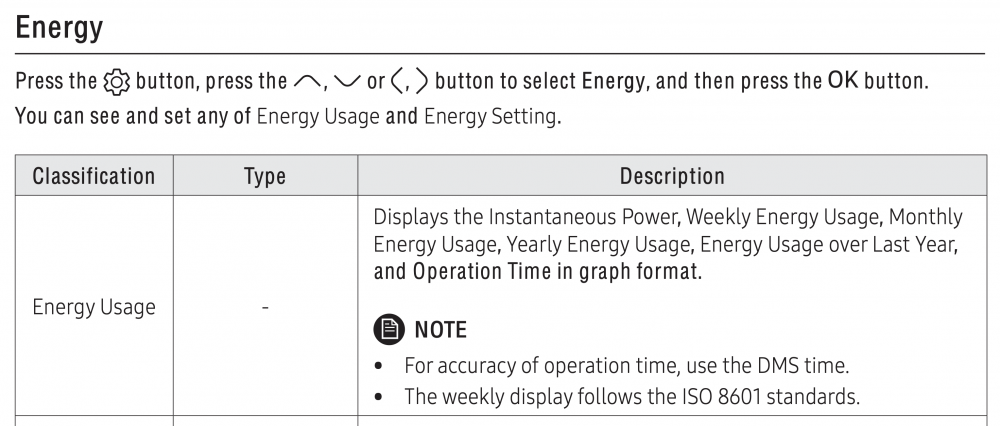
-
Meter Readings Panic and Electricity Costs
AliG replied to canalsiderenovation's topic in Electrics - Other
The flow temperature will go up and down depending on the outside temp. It seems a lot lower than it was earlier. I think quite a few people don’t like the weather compensation option because of this but someone with an ASHP can probably answer better. Nevertheless setting it at -5 will have it running a bit cooler which should mean a better COP and is a start. -
Meter Readings Panic and Electricity Costs
AliG replied to canalsiderenovation's topic in Electrics - Other
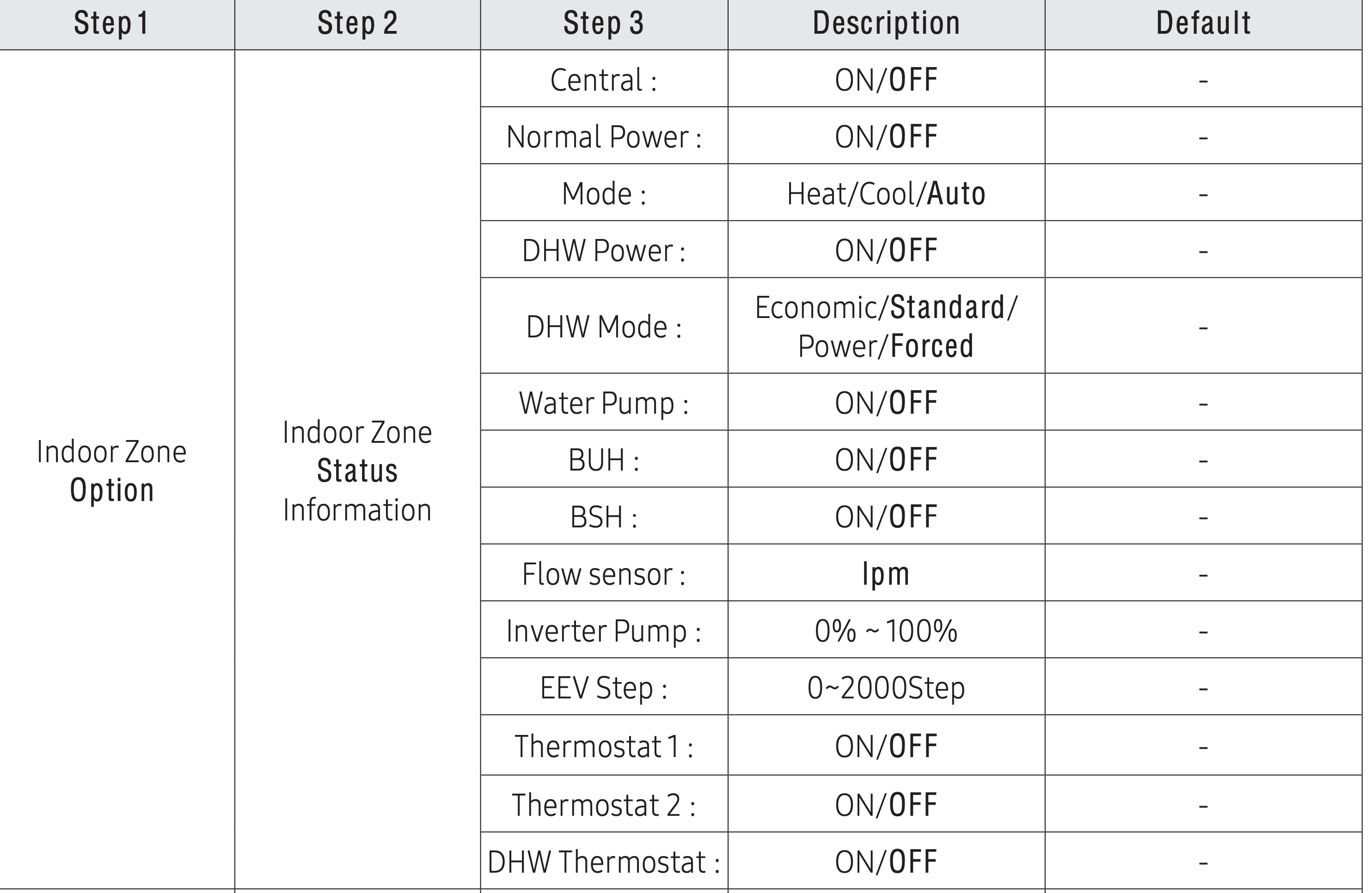
48 looks to malice the DHW temperature which is OK. You can see it is hot water in the top left hand corner. However, Water Law seems to be Samsung's catchy name for weather compensation. This is switched on and it looks to me like your UFH flow temp is running at 56C currently (water outlet on the water law page). I am not sure how to switch it off and just set a flow temp. I tried reading the manual but it is not easy going. The Water Law setting that you have at 0 I think adjusts relative to whatever temperature the weather compensation has been programmed to give out. I believe from Google that this can be set between -5 and +5, but you can see what it will let you set. Thus if you set it to -5C then your flow temp should drop by 5C. Reading the manual it would be quite involved to change the weather compensation settings. It looks to me like they have been set with a very high flow temperature when it is cold outside as at the moment. There are options to set a range of outside temperatures and then a range of flow temperatures dependent on this variable. You can see them on p27, the unit seems to have been set somewhat higher than the default temperatures. -
Bad Airtightness Test Result
AliG replied to AliG's topic in Mechanical Ventilation with Heat Recovery (MVHR)
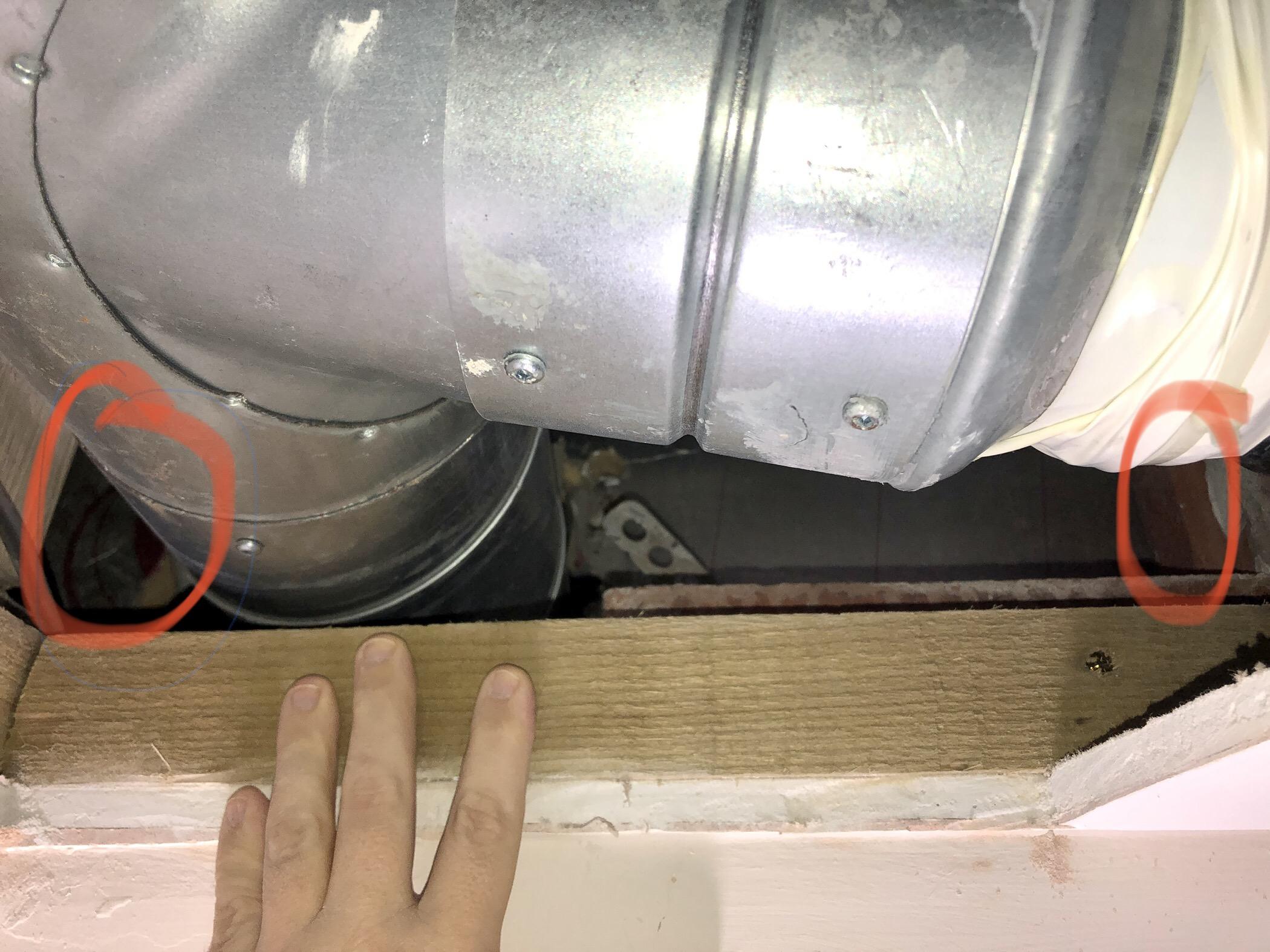
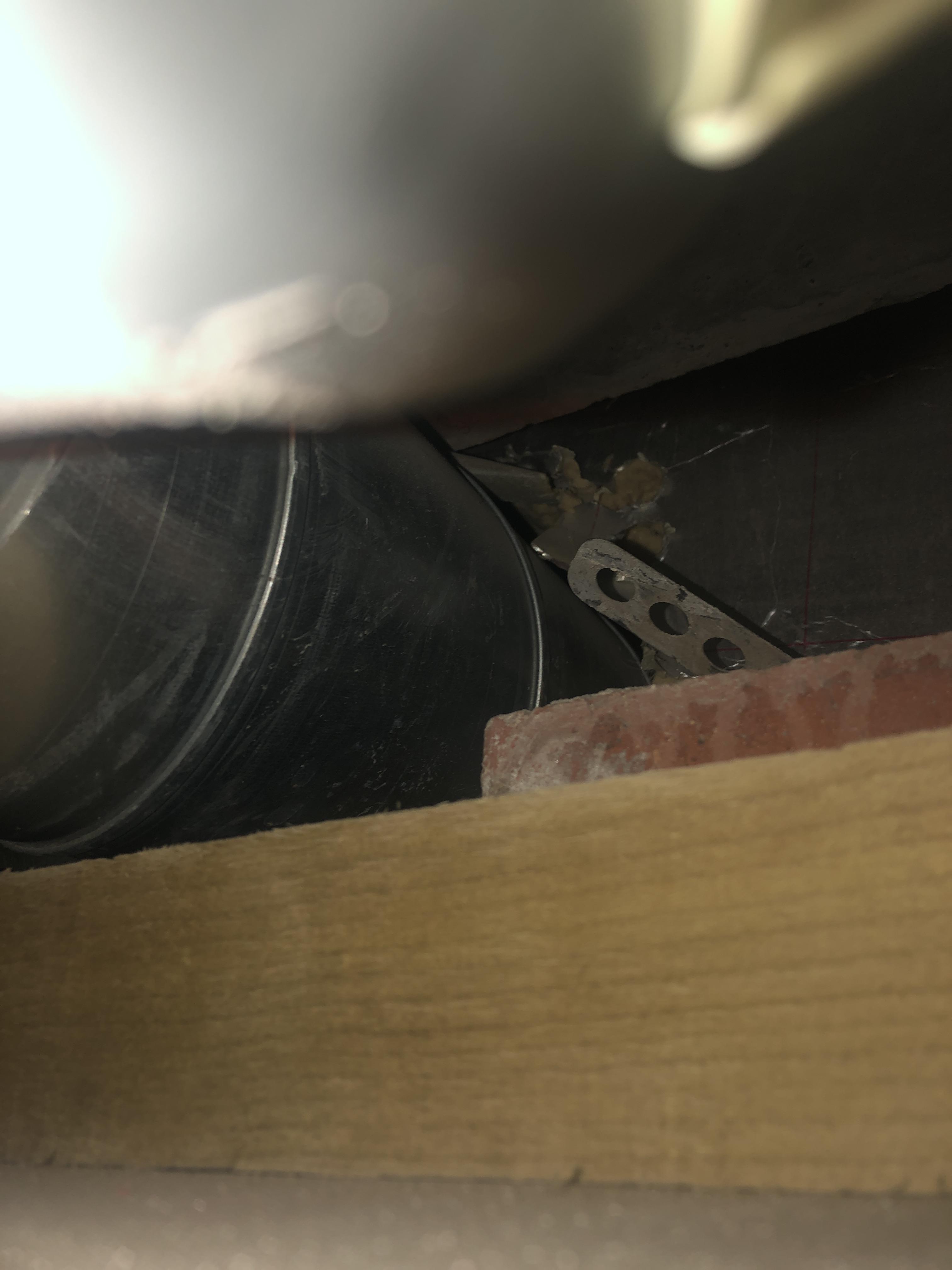
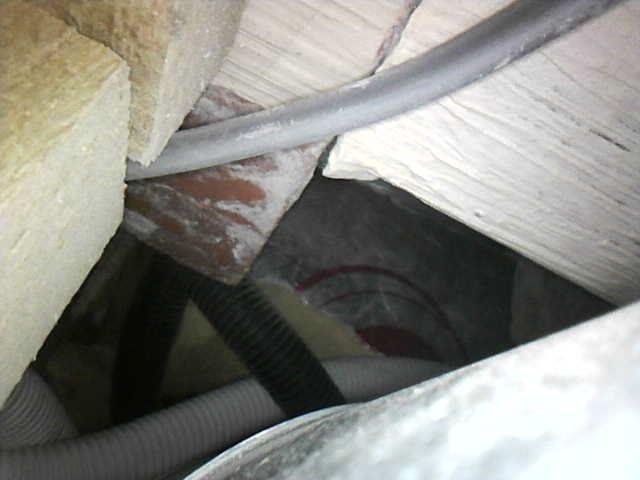
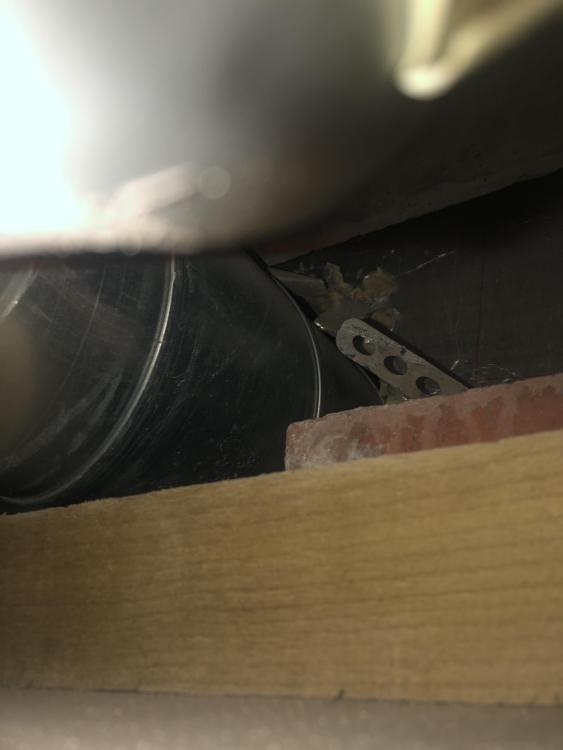
I had to cut a bigger hole to get at it all and have started to fill it in. I have started with expanding foam right at the back where the pipe comes through the PIR and where the PIR goes around the corner behind the wall to the side of the MVHR duct. My plan is to do it in two layers, one sealing up the PIR and another one in front inline with the missing blockwork. I have made a start on the rear layer and am going to let the first can of foam expand and dry before I see if I have missed anywhere. I have bought 10M of 6mm ID 8mm OD pipe to attach to the foam cans as I have had the issue elsewhere that you cannot get the can close enough to where you need to fill. The is exacerbated by the cans needing to be upside down. If you attach a couple of feet of flexible pipe you can keep the can out of the way. The first time I did it I thought I would clean out the pipe but that was pointless, so I bought 10M from EBAY on the grounds that I will use about 60p worth and just bin it each time I need to get a can of foam into an awkward space. I also recommend proper disposable latex gloss and not the thin ones supplied with cans of foam. The foam comes through these as they have little breathing holes. I took a picture with my hand to give you an idea of the size of the hole in the inner blockwork. If you look at the pic you can just see the block to the left of and in front of the ducting and the edge of the block to the right of the ducting. This whole section of inner leaf is missing. It was above the ceiling but the ceiling has various penetrations for lights etc and also connects to the area behind the WC where the cistern is. It must have had quite the impact on the airtightness test I assume. Between the cupboard and the WC there are 5 lights, 2 sensors, 2 sockets, the WC wall fittings and the WC flush plate all where air can get through.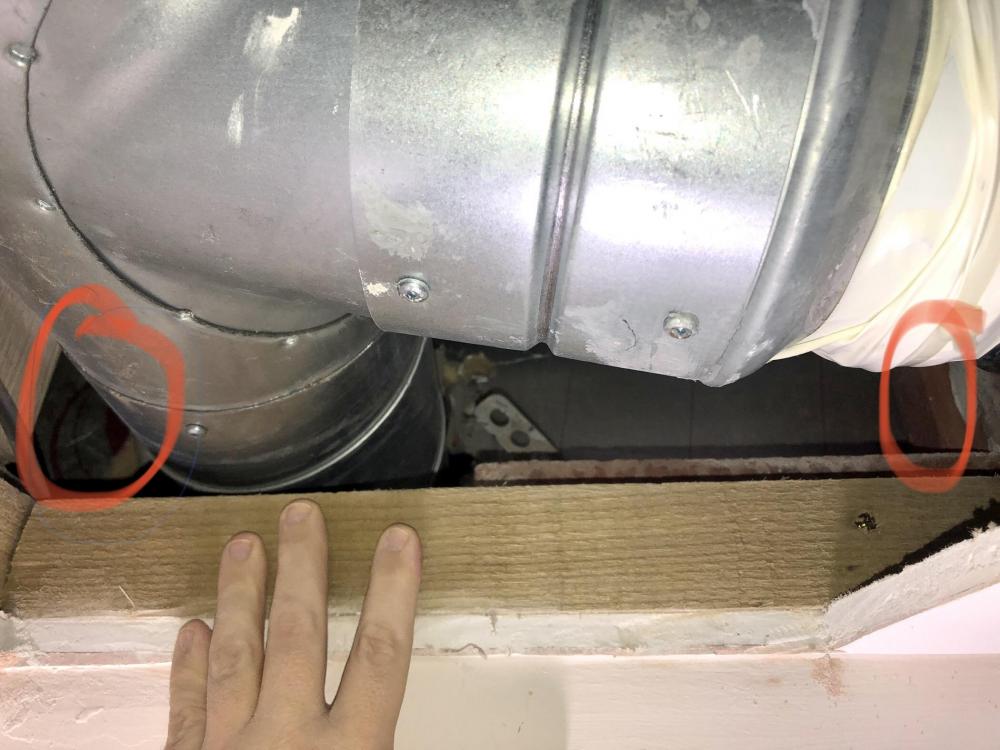
-
Meter Readings Panic and Electricity Costs
AliG replied to canalsiderenovation's topic in Electrics - Other
There is another thread discussing a Samsung ASHP where the owner has been told to reduce the flow temp https://forum.buildhub.org.uk/topic/14093-samsung-ashp-water-isnt-reaching-temp-goal/ I cannot find the user manual for the Samsung ASHP anywhere online, I found an installation manual. Maybe someone else with one can advise but usually there is a DHW temperature and a heating temperature set. The documentation says they are both set at 50C. Usually the heating temperature is lower. I would have thought your floors are getting pretty toasty at that flow temp. -
Meter Readings Panic and Electricity Costs
AliG replied to canalsiderenovation's topic in Electrics - Other
Much as this cannot be done in this case. If you ignore environmental concerns, electricity is considerably more expensive than gas. On my tariff I am paying 2.14p per kWh for gas and 14.29p per kWh for electricity, so electricity is 6.6x the price of gas. Thus with an 85% efficient gas boiler and an average COP of 3.3 an ASHP would be around 70% more expensive for heating than gas. People are perhaps being sold ASHPs as a cheaper way to heat their homes. They are absolutely not cheaper than a gas boiler if you have mains gas available. However, you get a generous RHI payment for an ASHP and you save on putting a gas supply in and on having two standing charges. So this evens things out, especially the RHI which will make the ASHP cheaper for the first 7 years. -
Meter Readings Panic and Electricity Costs
AliG replied to canalsiderenovation's topic in Electrics - Other
These charts are very helpful. The efficiency of an ASHP falls with both the flow temperature and the outside temperature as you can see below. This is for an Ecodan ASHP but it will generally follow for any ASHP. You can see a COP of maybe 2.2 for 2C outside and 50C flow versus maybe 3.2 for 35C flow. This is why ASHPs often don't work well when retrofitted in poorly insulated houses. This drives the chart that shows the effect of flow temp on heating costs that you have been provided with. The interesting thing is that by setting the flow temp at 50C you are getting a higher RHI payment and a higher heating cost. However, there is nothing stopping you turning down the flow temp as long as it is still enough for the house to reach your target temperature. Looking at the room by room design, the system has been designed to be capable of providing 8594W of heat. This is a very large amount of heat for the size of house. You could easily turn the flow temperature down to 45C and once your EWI is in probably closer to 40C. This will reduce your heating bills but not your comfort. There would be a riot in my house if I turned the thermostat down to 19C, assuming you found 22C comfortable before I wouldn't be turning it down much. You can also see the impact of cold temperatures. The COP falls, so you need more heat when the ASHP is least efficient. But hopefully this will only be for a few weeks of the year when the temperature is as low as it has been. It will be much better at even modestly higher temperatures.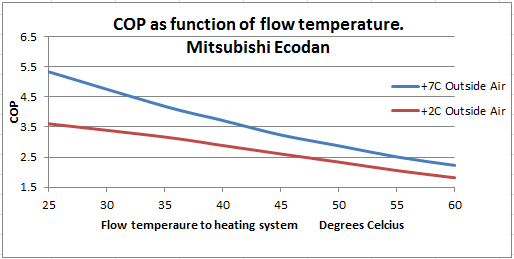
-
Meter Readings Panic and Electricity Costs
AliG replied to canalsiderenovation's topic in Electrics - Other
I do agree that this seems quite high and I would go through a process of trying to find what is using the electricity. The easiest thing to do first would be turn off the heating and to water see how much electricity you are using without these. Then experiment adding in just hot water and then the heating. There have been a few threads on here recently re heating costs. I have tried to estimate how much of the year's heat demand someone will use in a cold spell. The heat demand given for a house covers give or take 7 months of the year. The rest of the year the heating won't be on (Depends on your insulation and ability to withstand cold) I then reckon that the coldest point of the year, usually January, will use just over 20% of the year's heating demand(from studying my own usage and calculation on my own house) So if your heating demand is correctly calculated at 15000kWh a year. Then you would expect to use just over 3000kWh in January, give or take 100kWh a day when the outside temperature is cold. You could run the numbers but I think this is a good guesstimate. Now what then alters things is using an ASHP, as the COP falls when it is cold, so your heat use will be even more skewed to colder days. Although the average COP is stated at 3.3 in the calculations, looking at the info on various heat pumps it could be close to 2 on a day when the outside temperature is 0 and you are heating water to 50. Thus you might expect to use around 50 kWh of electricity for heating on a cold day plus 5 for DHW. So 55 kWh a day for heating and hot water when the outside temperature is zero as it has been recently. You seem to have used around 72 a day for the last 8 days, so this does not seem quite as crazy as it first appears. Even an increase in temperature to 6 or 7C would see the COP rise and heating usage fall and electricity usage fall considerably. Edit - Come to think of it. The reason you would get a very low COP is the flow temp. 50c is way too high. If I knew your pipe spacing etc I could get an idea of what it should be but assuming you have UFH everywhere you would only need about 25W a square metre at the most and you will be running way above this. The high flow temp will kill your COP and raise your heating costs considerably. -
My parents wanted to downsize to an apartment with a separate lounge and kitchen/dining room. It is now almost impossible to find these in new developments. It is certainly a matter of personal choice and I too do not like combining them all into one room whilst others do. I certainly prefer the l-shpaed design above to one large room as I like the spaces to be well defined within the room. For new developments, however, it seems to be a matter of space efficiency/money. You eliminate a lot of hallway and walls and thus get more room space in a smaller building.
-
Bad Airtightness Test Result
AliG replied to AliG's topic in Mechanical Ventilation with Heat Recovery (MVHR)
This is what I am grappling with. For a modest area I don’t mind using foam but the area to be filled here is around 400x250mm with the duct through the centre of it. Most likely it will never be seen or touched again so I should just get spraying. I just need to think about it. The builders have actually parged the blocks and sealed the edges with foam just along from here. Seems rather pointless when you have left a gaping hole right next to it! There was a bigger gap in the eaves that I had to fill. There I cut pieces of PIR and then foamed around them so I am considering that option. Access to do this would be difficult though and even without this I am considering that I might need to bite the bullet and take down more of the ceiling. Because the ceiling is suspended and the duct is in the way it will be pretty difficult to make sure I have got everywhere filled. -
Bad Airtightness Test Result
AliG replied to AliG's topic in Mechanical Ventilation with Heat Recovery (MVHR)
I have know there was an issue here for some time. Other places where the MVHR is taken through the Porotherm it was sealed. Here, however, I think the builders thought it was an inside wall so left it, but it connects to the outside cavity. -
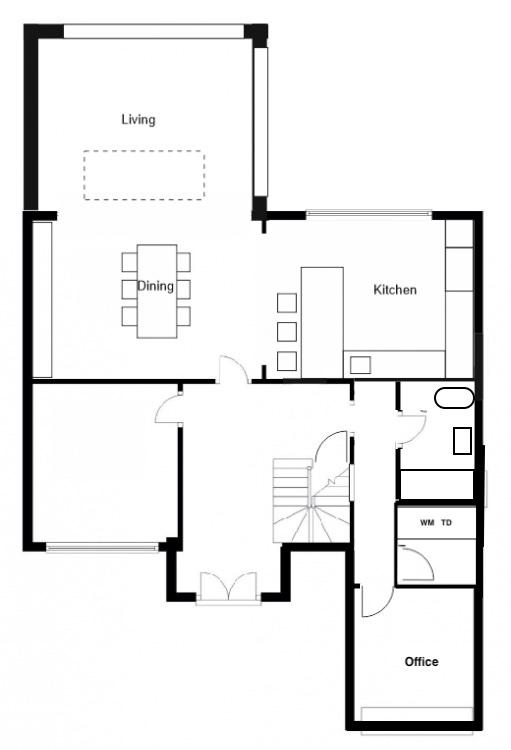
You could have a totally separate laundry doing this but it gives you a long corridor and the laundry is only 1.25m wide. It would allow aside door if you wanted. I didn't perfectly scale the rooms but you get the idea.
-
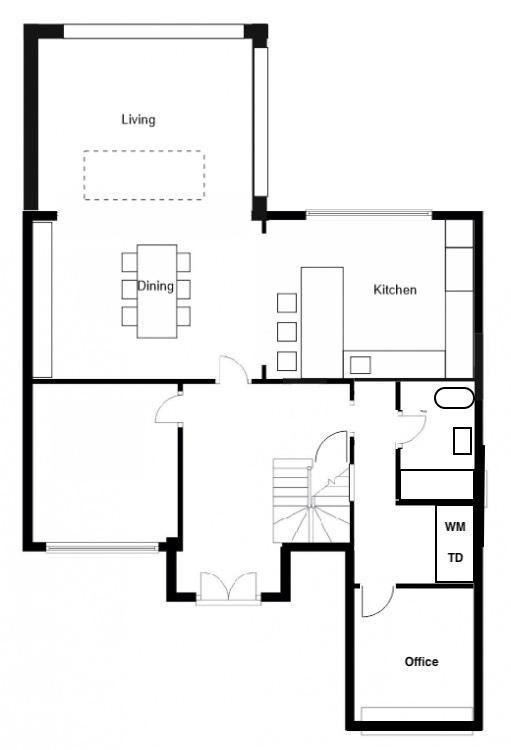
OK, last try. This is probably only possible if you are building an extension to the front. I liked what @Mr Punter posted for the rear as much cheaper and easier to build. Also it gives windows both to the south and west which are the best directions. But I thought I could do better with the garage area, so I came up with this, I don't think there is enough headroom under the stairs. The WC door becomes an arch into a new hallway. There is a shower room off this. There is then a utility area where you could put the washer and dryer into a cupboard and walk past them to the home office. Not ideal, but it is very hard to fit a utility room in downstairs without more extensive work (I would push for the upstairs laundry as this is where all the washing is anyway)
-
Bad Airtightness Test Result
AliG replied to AliG's topic in Mechanical Ventilation with Heat Recovery (MVHR)
OK, got my hole saw. Scary thing to use as the blade keeps turning after you stop the drill and even more scary using it just above your head. I stopped with the hole 90% cut and finished off with a knife. Found the issue. I also ordered an inspection camera for £30 off Amazon and that is helping. The MVHR has to come round a sharp corner and through the Porotherm wall to get from the hall to the WC, it runs above head height in the space between the ground and first floor windows.. They took out the two corner Porotherm blocks and assumed that the PIR behind them was enough to stop draughts. But of course it is not tight in any way. Trouble is, it is such a massive hole, I am not sure how to fill it.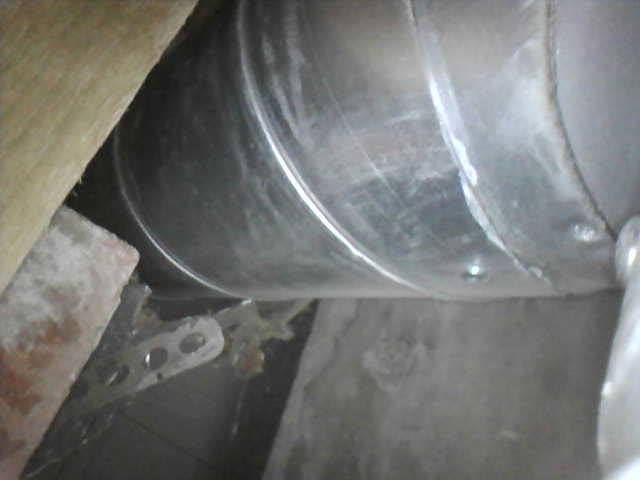
-
We just had a garage demolished by a large demolition contractor that is approved to do asbestos removal. Much as it seemed unlikely that there was asbestos there I paid them to do a survey. They surveyed the garage and did not find evidence of asbestos but when they demolished it they found some sheets buried underneath that they were suspicious of so they bagged them up and disposed of them safely just in case. It seemed clear to me from speaking to them that although care is required with asbestos a modest amount of asbestos is not a large problem and should not dramatically increase the cost.
-
The garage at 2.48m wide is too narrow for most modern cars so you are as well using it for living space. Although it looks like the size and value of house where people might expect a garage. However, your suggested plans will not work. You cannot split that width ways into two rooms. The laundry room will not be wide enough to have cabinets/washing machine/dryer in it. Also you would need to insulate and plasterboard the walls on the interior which would lose you at least another 150mm plus you have the thickness of the wall between the two rooms. Thus you would need to fill in the space between the garage and the porch if you want to pursue this idea. The problem then is that you would lose the bottom of that nice arched window on the half landing. This is certainly doable but would be expensive and considerably change the front of the house. The easiest/cheapest option would be to make what you have marked as laundry simply a corridor to the home office and the bathroom a little wider. Then you would need to cut out a corner at the back to the kitchen for the laundry room, or maybe between the old dining room and new lounge area, which is not ideal in itself. Is there a reason fro wanting a full bath/shower room on the ground floor as there is no bedroom there? It might be better to keep the WC, have a lager home office with a shorter corridor to it and then lose bedroom 2 to make a full master suite for bedroom 1. Or if you like the top floor reconfigure it to be a master bedroom and en suite. You could probably also move the laundry room upstairs if you do this. This is a better place for it anyway unless you like to hang laundry outside. If what you are wanting to do is bring the house up to more modern standards, adding an en suite would be pretty much key and more useful than adding a larger ground floor bathroom. If it is for access issues then that is different. Unfortunately though if access is the issue, it will be very hard to use the home office as a useful bedroom as it will only be 2.3m wide once insulated and boarded out.
-
Sorry I was a bit rushed answering this. In fairness Roof Maker can make sloping roof rooflights which you could use instead of Velus windows, perhaps that is what your architect had in mind. So- 3700x100/0 - I would check the cost as it is an unusual size. If the cost is prohibitive can the size be changed? 3G for noise, insulation and less solar gain, but if it has to be the very large size it may have to be 2G for weight issues. 1. 3G for noise and insulation. No need to open as you can open the normal window. Opening is very expensive on a flat roof window. 2. These would probably be Roof Maker style sloping roof lights. They come 3G as standard I think. Opening is an extra £295+ extra cost for electrics etc. If there is no other opening window in the room I would make one of them opening otherwise I would not bother. 3. Seems like this should be a Velux window perhaps as you could reach it and open it manually.
-
It sounds like some of these are roof lights on a flat roof and some are Velux type windows on sloping roofs. If you look on this website you can price up various options - https://roof-maker.co.uk/?_quoting_tool_version=2&utm_expid=.VxwcUnfvQKuUhOW5HQUrpA.1&utm_referrer=https%3A%2F%2Froof-maker.co.uk%2Frooflights%2Fflat-rooflights%2Ffixed-flat-rooflights%2F Suffice to say that an opening roof light is roughly 2x the price of a fixed one. I presume that you mean 3700x1000mm for the fixed light. That is enormous and will be very expensive. The company above will only quote up to 3m, I would check that 3.7m is not a massive increase in price. Similarly the sloping roof lights would likely be Velux windows. these come in numerous standard sizes and a sensible architect would have drawn the windows to one of these sizes not a much ore expensive bespoke size. We have a few Veluxes and are about to buy a couple of the flat 3G lights for a new project. For me the main reason was that roof lights are noisy when it rains and the 3G was quieter. They do offer useful ventilation, but if the room has other openings in it then that should suffice. Normal windows are barely any more expensive if they open versus being fixed. An electric ceiling mounted window will be very expensive by the time you include extra electrics etc. If there is a window you can just open easily that will likely provide all the ventilation that you need. So I would only pay extra for opening windows where you need them. As to the MVHR that is nonsense, the suggestion you need Zhender for it to be quiet. We have a much cheaper Dantherm system and cannot hear it. Nevertheless it is not cheap and it will not provide enough ventilation to cool your house. I doubt it is worthwhile in a 1930s house, especially if you still have windows with vents them in the rest of the house.
-
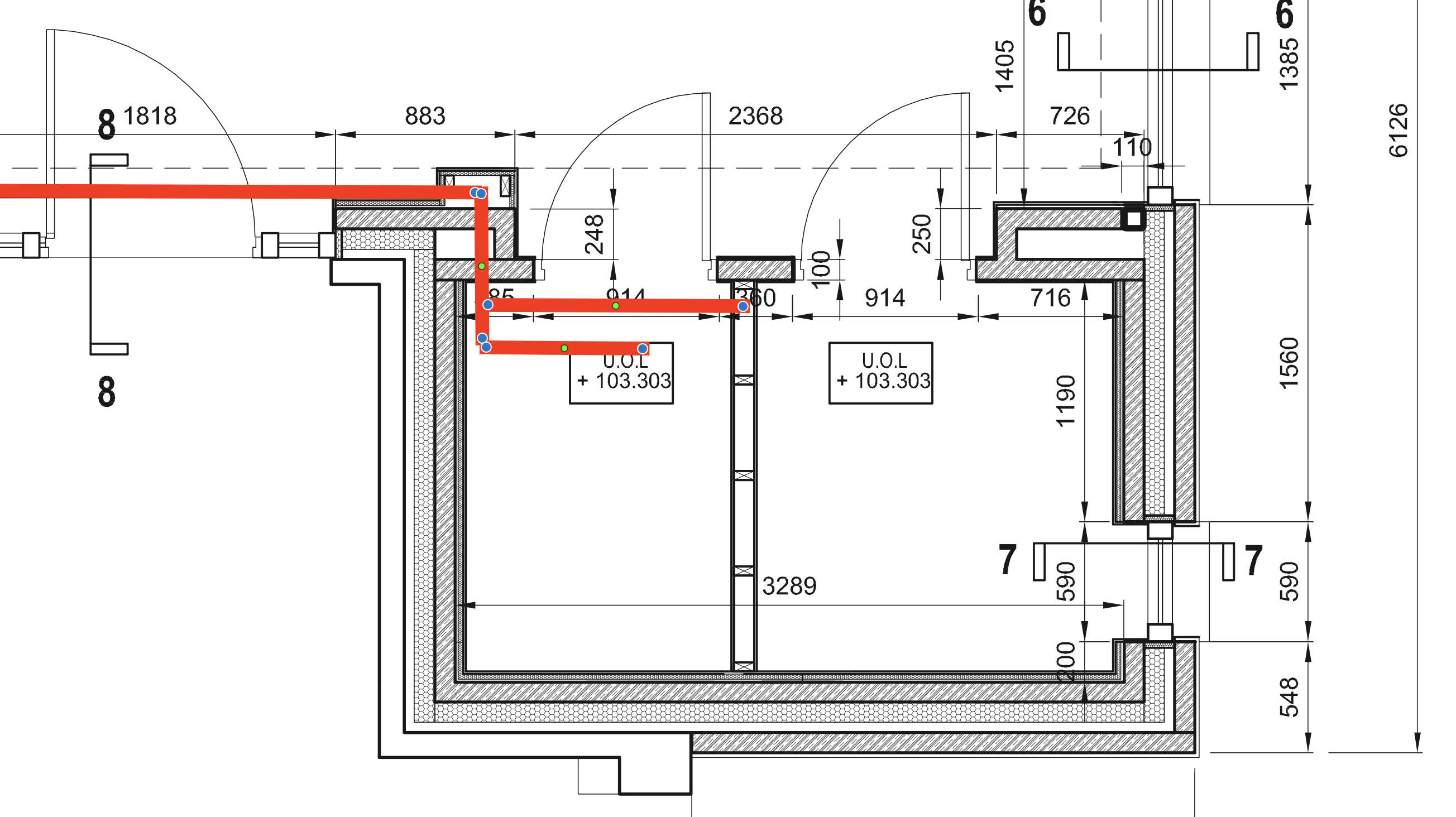
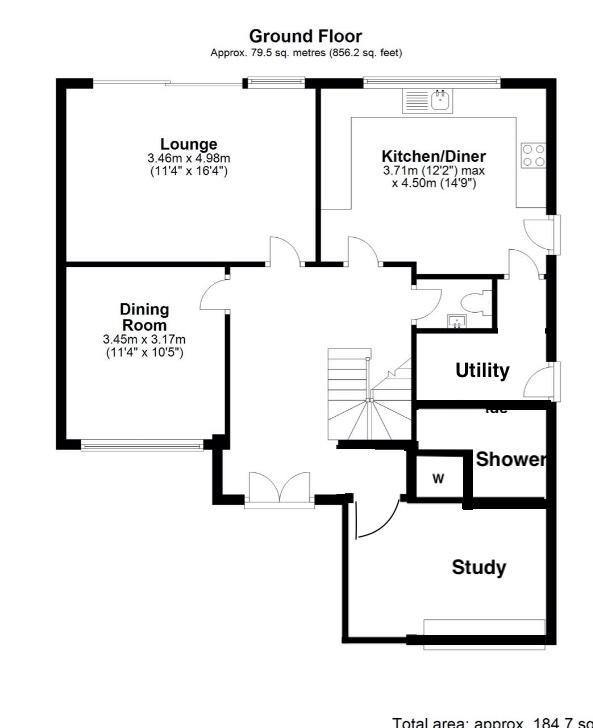
This arrangement would have the absolute minimum of changes to current walls and be the cheapest. Extending out to the back is easy assuming there are no overlooking issues etc so I have ignored this. Your suggested layout would be quite expensive for what you would achieve, I have tried to change as few existing walls as possible, so kept the side door as the utility rooms door, kept the WC, kept the door into the kitchen, kept the front door and so on. I tried to keep the garage wall but it is already pretty narrow and it would need insulation, so I made it wider. This arrangement allows you to keep a WC for guests and have an extra en suite bedroom or study. I assume you can have a cupboard under the stairs, the wardrobe I have shown could have a door into the study or into the hall depending on what would be most useful. Ideally more information would allow people to have a better idea of what is possible, I am not clear why you wanted to move the stairs which would be very expensive and change upstairs as well unless you want to achieve something that we cannot see upstairs.
-
The frustrations of on line ordering (rant)
AliG replied to ProDave's topic in General Self Build & DIY Discussion
Wish I had seen this earlier. Always remember to check Quidco when buying online, 3.2% cash back at B&Q -
When you say you were using 1.5 units a day in the old house did you ever check that on a daily basis when it was cold? You’d be surprised how much gas usage for heating goes up as it gets colder. I use about 40000kWh a year for heating and 14000 for hot water. So I average 150kWh a day. However this is actually around 40kWh a day for 6 months when the heating never comes on. This rises to around 200kWh a day when the temperature falls to 6 or 7 degrees and over 300 kWh a day recently when the temperature has fallen below 0(it’s a big house) So if you have been using readings in the last few days when it has been about as cold as it gets nowadays then you will be using much more gas than normal. If you are only using 3units in the coldest days of winter that seems like a pretty good result. That’s less than a pound on the coldest days of the year. Your gas bill would be under £500 a year. It sounds like you were maybe using electricity for some hot water in the old place as really you’d expect to use that amount of gas just for hot water never mind heating.
-
Could part of the issue be that your old gas meter was imperial and the new one is metric. 1.5 units on a metric meter is 17kWh of gas. That is give or take 40p of gas. I very much doubt your old Victorian house only used 40p worth of gas for heating and hot water over a day in the winter. That would be the usage for just hot water. However, 1.5 units on an imperial meter would be 47kWh, so more like £1.15 worth of gas. Could the old house have had an old imperial meter. 3 units of gas in a day in winter on a metric meter, i.e. 33kWh or 80p would be still a pretty small amount of gas to use on a cold day and a good result. You should be able to tell from the conversion from units to kWh in your bill if the meters were different.