


SteamyTea
-
Posts
23853 -
Joined
-
Days Won
200
Everything posted by SteamyTea
-

Beyond the Green Light Signal
SteamyTea replied to DamonHD's topic in General Alternative Energy Issues
Which way did your province vote in the referendum. I feel I should fully embrace our separation, but then my household emissions will go up. And that is more important to me that sovereignty. -
Beyond the Green Light Signal
SteamyTea replied to DamonHD's topic in General Alternative Energy Issues
Got around to reading @DamonHD's bit, the interesting bit was the https://carbonintensity.org.uk/ new regional map. I am in a region that is currently producing power at 55g/kWh, even lower than Scotland's 141g/kWh Damon is in a region that is currently producing 308g/kWh. Nearly 6 times greater. Going to have a deeper bath and drive out for a coffee as I feel very virtuous now knowing that I am not a grubby bugger. -
Not the underheating that is the problem, that can be cured with a bigger heater, it is the problem of just throwing the energy out the door and making the MVHR not so efficient.
-
Beyond the Green Light Signal
SteamyTea replied to DamonHD's topic in General Alternative Energy Issues
Yes, I use 100 millionths of the nations electricity. And I want to use less, and at times of most RE generation. If I used the same amount to charge an EV, I would probably get about 40 miles of travel from it, not far off half what I do in a day at the moment. According the the RAC, in 2019 the UK sold 30 billion litres of road transport diesel. So taking my 2,270 litres a year, that would be 0.0000075667% of the nations supply. Round that up and it is, oddly, about the same 100 millionth again. So my conscience is pretty clear, even if I do drive, on average, 70 miles a day (the downside of living in Cornwall, everything is miles away). Interesting that the sale of gasoline has decreased while diesel has stabilised since the VW cheating, and we are lead to believe that no one buys diesels anymore.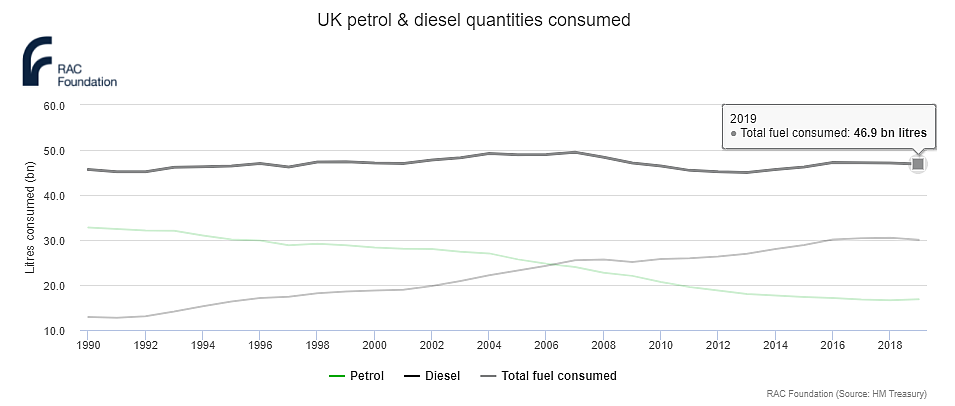
-
Basalt fibre reinforcement bars - working with them?
SteamyTea replied to kxi's topic in Foundations
This was the case with carbon fibre chassis in the early days. To get around the problem they incorporated some Kevlar. Not for adding strength, but for when the inevitable failure happened, it failed less catastrophically. Since the early 1980's better weaves and resins have been developed and the knowledge base is now huge and, you only have to watch Romain Grosjean's crash through the barrier at Bahrain to know how things have moved on. -
Does it work
-
Beyond the Green Light Signal
SteamyTea replied to DamonHD's topic in General Alternative Energy Issues
TL;DR But I am still keeping records of my usage, and since the beginning of the year, I have used 0.000001 of the grid capacity This does rise to 0.0000110% at 3AM for an hour. Ten times my mean usage. This year, so far, at 3AM, traditional and low carbon generation has been pretty equal.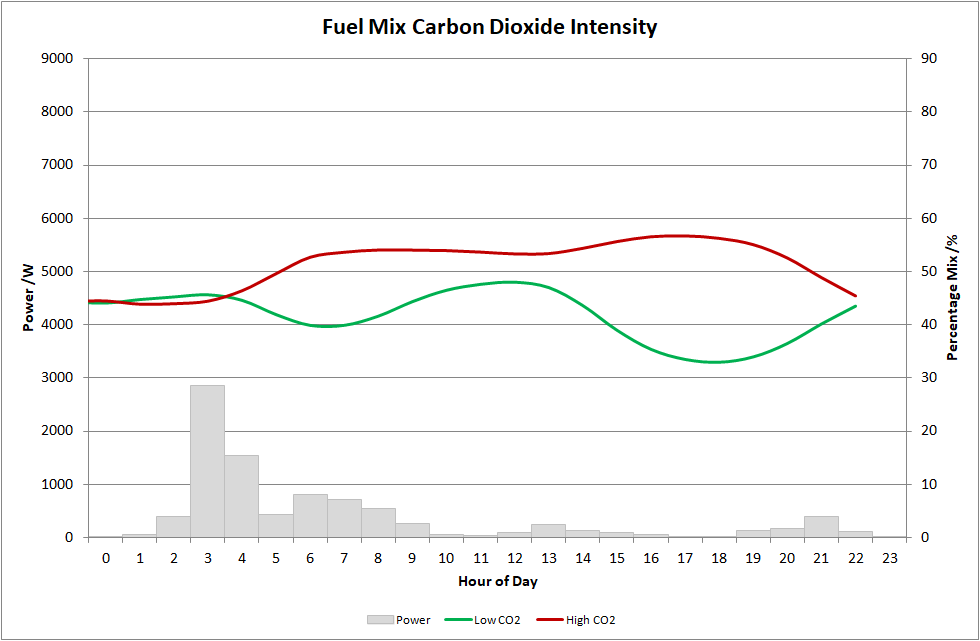
-
ICF construction is it?
-
I shall just put on my thicker socks.
-
I am sure I posted up some other stuff.
-
Suggestions for a new heating system
SteamyTea replied to Edders's topic in Boilers & Hot Water Tanks
Plenty of posts showing that a properly designed system does not have the zombie myths you have heard about. -
Lighting Heating Timer Audio (multi room if batteries fitted) Life is sorted.
-
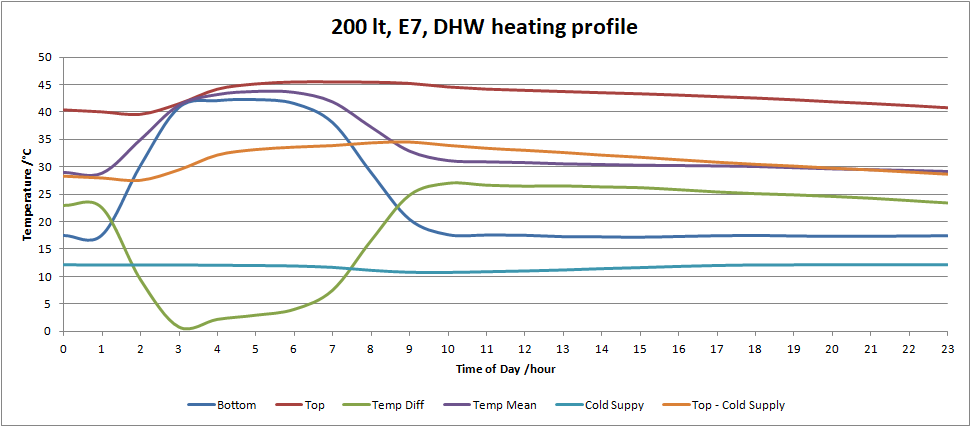
I have never been sold on this type of design. I think there has to be compromises along the way. I suspect they were originally designed for sub 40 m2 flats in Tokyo, rather than larger detached houses in Scotland. Below is the heat profile of my very basic cylinder. The heating element is at the base, the heating window is limited to 1AM to 7AM. Generally I have finished using lost of hot by 9AM, then it is minor stuff and a shower in the evening (I work the later shifts). You can see that the cylinder 'settles out' by 10AM and then gradually cools during the rest of the day (there is usage in this time) So short of 'churning up' the water, there is little headroom to draw of a constant low temperature for space heating, without reducing the DHW temperature. Note that the bottom of the cylinder is about 18°C by 10AM. But while it is being heated it get to about 42°C (probably higher as all the probes are just taped to the exterior pipework/copper cylinder, except the cold supply with is in the loft tank water itself, why it rises a bit during the day, ~1.4°C, since the mid Feb, so will rise more as the year gets on). So if you look at the mean temperature line, most of the day it is only 30°C, which gives you about 100 litres of water holding about 2 kWh of energy. Now the temperature of the whole cylinder can be raised until the top is sitting at around 65°C, but the bottom will still be at around 18°C or so, that would be a mean of 42°C, so the bottom half is only 12°C higher, not enough to make much difference (shade under 4 kWh). These calculation do assume perfect stratification, which does not happen. It is also late, so my sums may be wobble, and I have broken my glasses, so even @Onoff is starting to look good.
-
No it don't, it has a reasonably high specific heat capacity when wet. About a third of what water has (as long a sit is not frozen, or steam) From here: https://www.engineeringtoolbox.com/specific-heat-capacity-d_391.html Units are J.kg-1.K-1 Soil, dry 800 Soil, wet 1480
-
It is most useful in ICF and TF construction You do it as soon as the exterior walls, roof (can be tricky with a cold roof), doors and windows are in, but in the case of TF, before insulation is in. The idea is that you can seal any gaps in the external wall before it is insulated (that just gets in the way) and boarded out (which has the VCL behind it). There is probably no 'one time suits all builds', the idea is to test before everything is closed up, as as I explained earlier, the VCL is not the airtight layer, it is on the warm side of the building.
-
Ah, why would you do that. Space heating and DHW are different things, they work at different temperatures, and different times. Have you actually done an analysis of your DHW needs?
-
Does not have to be. That is usually a symptom of an undersized unit, or one that has had the kids bikes thrown against them too often.
-
Our old mate, Jeremy Harris, made up his own water treatment system for his borehole. Was basically a sand filter and then bubbling ozone though the the pressurised part. I think he found out most of his stuff from the USA, where they use boreholes a lot. Can you get enough rain that is storable in reality?
-
See Nick's reply higher up. Seems an easy solution.
-
They are for bolting the extra sturdy manacles.
-
They will soon make a mess, they put more on the floor than anywhere else.
-
0.001167 kWh/litre.K / kW
-
Are you going to get an interim airtightness test before you close everything up?
-
Get the airtightness sorted. All the rest becomes a smaller problem.
-
FFS, you can calculate that.

