


Marvin
-
Posts
2389 -
Joined
-
Last visited
-
Days Won
3
Everything posted by Marvin
-
Also the trenches are not really deep enough to avoid being affected by the surface temperature.
-
@Iceverge recently pointed to@TerryE 's blog "Heating the Slab- an overview" which made me think. TerryE has a concrete floor that he is using as a giant heat sump, heating up overnight with the warmth slowly emitting from the floor during the day. Such a simple design when the maths is right! @SteamyTea pointed to a report about boilers and ASHP's which had various recommendations. Having installed an electric meter for the ASHP the effect of changes can be measured on the amount of power used during similar weather days. Also having used bottle gas for 3 years there are records of how much energy was used before the ASHP was installed for heating and hot water combined. So I've decided to try various changes to see what energy efficient improvements can be made. When using the inverter ASHP the heating temperature was set at 35 degrees as apposed to 50 and this kept the home warm enough and used less power. (During mild days) The report recommended having buffer tanks in certain installation. Ours was one of them because we have thermostatic radiator valves (TVRs) so I was glad I took the manufacturers advice on having a buffer tank. Another item was the relatively high thermal loss from both a hot water tank and a buffer tank. The existing design is being upgraded at present with additional insulation to both tanks. The 28mm pipes from the ASHP to the tanks has been additionally insulated. The 35C heating water temperature was a little low so now using the ASHP's most economical setting which adjusts the temp related to the outside temperature. So it's currently running at 40C whilst outside is about 10C. The temperature setting rises 2 degrees over 40C before stopping and I have adjusted the starting temperature down to 7 degrees below. This has made the heating cycle last over 10 minutes which is what the report recommended. The controls will be altered to make the ASHP go into heating off mode between cycles ( I think that's right. It's not off, off. Just off.), and various other controls will be added to manage the cooling aspect of the system, hopefully. As for results it's very difficult to state anything precise because of the mass of variables: Going round the bungalow there are many heat contributors, including cooking, hot water tanks, fridges/freezers, the sun ? through the windows, people, washing machines and so on. Also it's not as obvious where the heat is coming from because the MVHR runs the warmth through the building. I am of the opinion that almost all electrical energy used in the building is converted into heat one way or another. I will start logging results once all the alterations are complete. Good luck with your project. Marvin.
-
Well the ducting is all buried under a foot of insulation in the loft. The coil boxes have also been covered more since the photo. Noted the temperatures of the incoming air at the inlets in the ceilings against the outside temperature. Inside 20C ish, outside 7.8C, incoming air 20C ish. By my calculations this seemed to good to be true and I realised, eventually, that the air was being warmed up as it passed along the ducts inside the thermal envelope of the building. When I get a moment in the next week or two I will try measuring the temperatures just before and after the MVHR unit to find out what the efficency is. I'm hoping for about 80% The 100m2 floor area bungalow requires 30 litres of air a second in and out the building and running at that volume it's now using about 15 Watts an hour, which is about 135kWh a year. However, working on the cost of the PV system I estimate that 1kWh costs us about 15 pence half the time (daylight hours) so running cost is about £30 a year. The coils definetly work. Ran one briefly as a test and the inlet air was 25C. Will need to wait for a much colder day to test them properly, but basic result was 14 litres a second gave a temperature rise of about 7C between coil on and coil off. The pump for the radiators and coils has been set to maintain the same pressure as the flow increases and reduces as the TVRs open and close. The flow to the coils will need to be adjusted as the return temperature is too high. A rather large amount of controls still to be wired in to finish off the MVHR side of the work.
-
True. The only thing left for me is to stick it on the outside... ?? Wish I'd done a warm roof....
-
Definitely a consideration when deciding to either spend more once on insulating and/or airtightness, or running costs for as long as your in the building..... https://www.bbc.co.uk/news/business-59760331
-
Definitely a consideration when thinking about PV to reduce running costs on a new build.... https://www.bbc.co.uk/news/business-59760331
-
Watt? Oh! Jimmy Whatt. Got you.
-
Your right. 7kwh. I'll try to be more of a pedant in the future....
-
This is a bit misleading. We heated the 200 litre hot water tank and the heat from that leaks into the building, as do many other devices in the bungalow. But the point I was trying to make was that as a result of the work to improve the thermal efficiency and air tightness we now need a lot less additional heat; we used about 7kw for the 24 hour period (I have a meter on the power for the ASHP), and that an EPC doesn't necessary reflect the real picture on heating a home.
-
Hi SBMS Having renovated our bungalow 4 years ago and installing an LPG boiler at the time, and then converting to an ASHP this year, I would say that if you are going to "leave the door open" for a future ASHP you'd better do a dummy run of the requirements before hand and prepare, because retro fitting one through your new building could be a right pain in the backside. @joth is of course completely right. Your only fighting to keep the heat in. If the building is resistant enough you can get away with very little heat. The additional cost of insulation and airtightness versus the cost of installing and running heating means that as my brother says either way you pay. But the difference is if you stay to reap the rewards. The ASHP, MVHR, PV and EV combo suits us.
-
We spent £500ish a (6 bottles) year for heating and hot water, easily measured each year for 3 years. But now we have an ASHP, and I would not change back. The PV, ASHP, MVHR and electric vehicle combo works for us. Its especially good on the heating because the ASHP runs at a low level in the background. The boiler needed 60C ish to run at best efficiency and so when the heating came on we got over heating as the TRV take about 20 mins to respond and the rads were full of 60C water which is an overkill in our home
-
It was a while ago, but it did include the heating of the 200 litre tank of hot water.. Our LPG was £85 a bottle...
-
Yes. Out side air tempreture. Bit damp, cloudy, fairly light wind. Not bad for the Isle of Wight, in December. Oh and internal temperature about 22C.
-
The assessment score was discussed at great length. As soon as you mention LPG 47kg bottled gas you've had it. Worse than electric heaters as far as EPC concerned. As for the thermal efficency, I think I wrote it up in my blog, but basically anything higher than about 8C and no heating required. Today no heating from 8am until 7pm and temp today about 8C.
-
It has not been assessed because it was neither a conversion or new build but we had to have an EPC for the ASHP and PV. Needless to say the EPC failed the government PV scheme.
-
Partially, the shape makes a difference the nearer to a cube the better result (or a globe if you want to be padantic). But the calculations are based on many items including method of heating. We installed 200mm rigid insulation in the floor, 150 in the walls and 400 fluffy in the loft and a MVHR but had a very low rating because we had to use bottled gas for heating and hot water. Result EPC an F.
-
And the roof...
-
Disabled access ramp.
Marvin replied to Russell griffiths's topic in General Self Build & DIY Discussion
Lots to consider.. Top square in front of door 1200 by 1200mm, but off set so wheelchair user can reach lock. edging to stop wheelchair rolling off and handrail. Ramp design depends on the height difference between the level access at the door and where the ramp terminates and how long the ramp will need to be. If it is very steep then the design will change. AND everything else I have got wrong or omitted, which someone will correct me on... -
Disabled access ramp.
Marvin replied to Russell griffiths's topic in General Self Build & DIY Discussion
Sorry that you haven't found enough info. Does this help? https://www.oxfordshire.gov.uk/sites/default/files/file/adult-social-and-health-care/part1accessibilitybydesign.pdf Marvin -
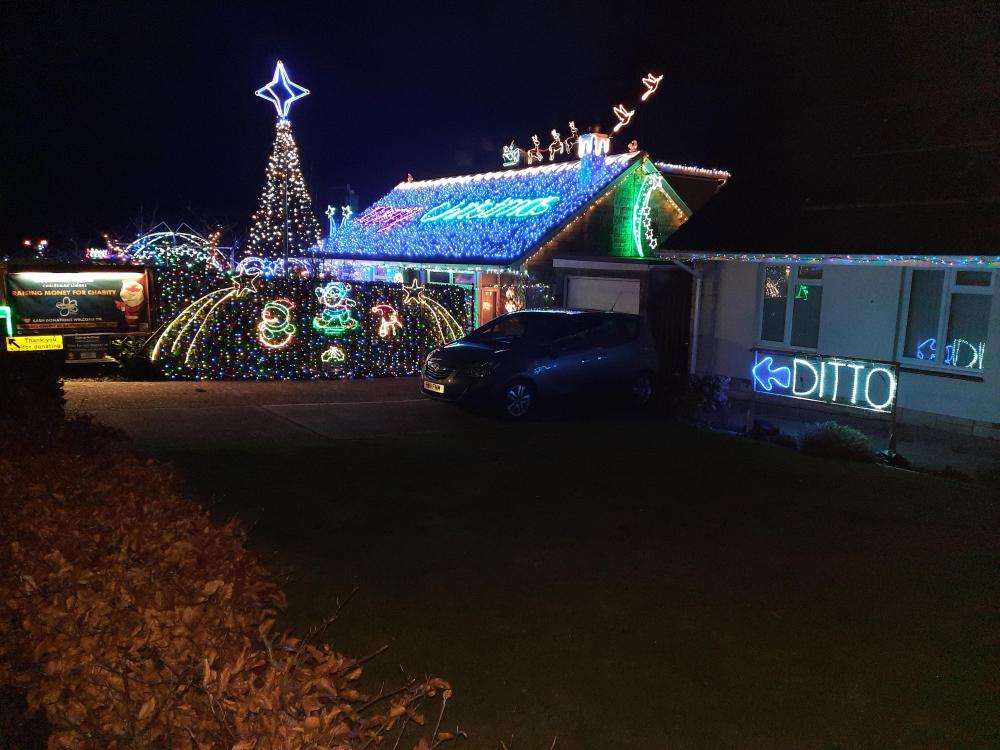
Yes, @ProDavethere's one of those too: Apparently the cat is not wired to the lights: I used a flash.

-
Quite right,.
-
You could read the info as it discusses buffer tank sizes and I think hot water tank sizes as well.
-
Quite right. But hopefully you'll read the info about the effects of the volume of water and modulation.... Good luck. Marvin
-
Always best to time how long it takes to fill a bucket and measure out the contents in litres. This gives you a better indication of your flow rate.
-
I used 11mm OSB behind my plasterboard in the kitchen and all units fixed fine. Unless you have something very demanding if your using 11mm OSB should easily be OK.




