saveasteading
-
Posts
10067 -
Joined
-
Last visited
-
Days Won
82
Everything posted by saveasteading
-

Chapel Conversion - wall design again!
saveasteading replied to RJHumphrey's topic in Barn Conversions
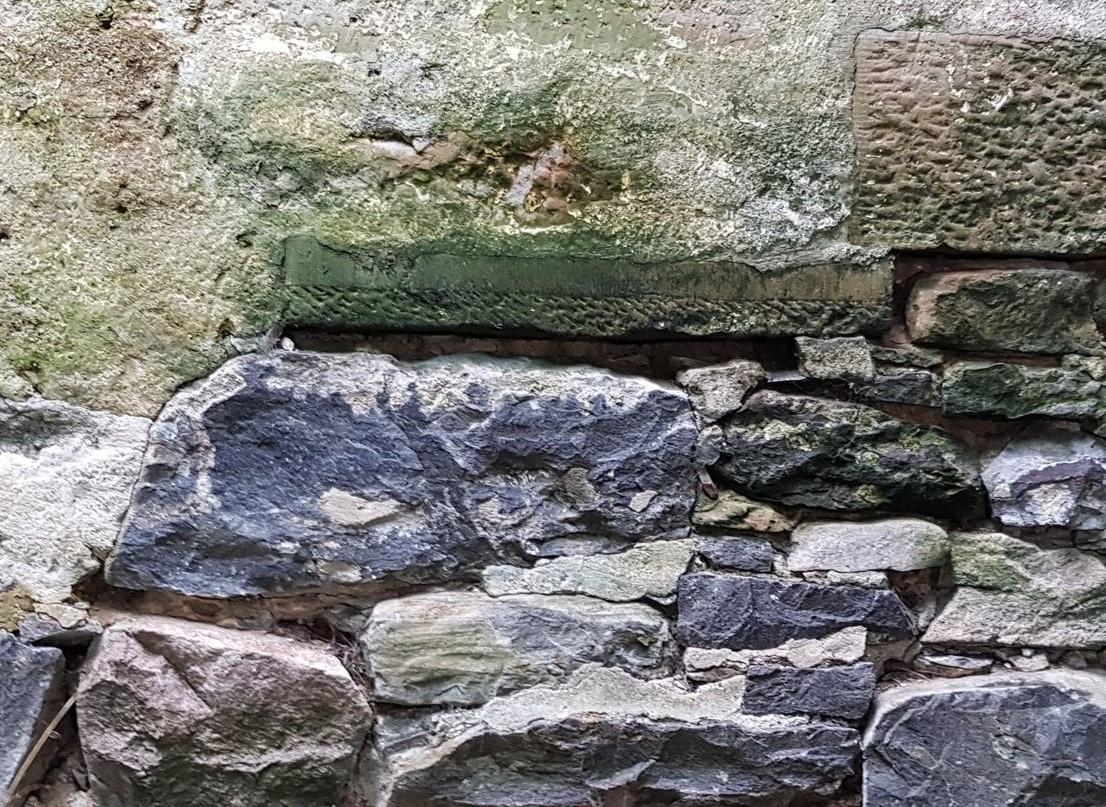
The lime wash is attractive, but so is the exposed stone. In favour of the lime wash...it is an additional coating before the mortar and seals any little gaps. It emphasises the rough stone construction. Conceals old repairs. Relatively easy to repaint if needed. Against: the rough stone face will catch and hold the rain. For the exposed stone, depending on the stone itself, there is less of the absorbent surface. If pointed near to flush, the rain will run off quickly and only the pointing hold water. It is total rendering/ parging that is most effective but it is also rather plain and functional. -
Chapel Conversion - wall design again!
saveasteading replied to RJHumphrey's topic in Barn Conversions
If you look back at other discussions there is a lot of good advice. It is all good whether consistent or not. Also there were recommendations for technical documents, some of which I had not found despite ninja googling, and I recommend them all to you. There is so much practical advice therein, and also some background to old buildings uses and history. If your gutters are good, and you do really good repairs to the lime pointing, then any water that seeps in will evaporate outwards again.....so no need to parge over the lovely masonry. -
It is shocking how un-level and un-square many buildings are. Worst example I found was an indoor tennis court in a posh school that sloped 100mm from one side to the other (Don't tell anyone said the client) And I worked briefly for a small builder who asked me to check why the bricklayer was having problems..(they had a dumpy level but obv couldn't use it). I found that the brick walls were being built in a spiral, ever upwards. Very few builders or professionals can do basic setting out or geometry, and depend on machines too much.... and assume all is ok. Assume nothing. Check by eye, check with a quality tape, check square using diagonal distances , use a golf ball on the floor slab.
-
(Wrong overall heading as the menu isn't working for me.) Does anyone know if the design document "The Small Buildings Structural Guidance, 2010", has been withdrawn or discredited in any way? It is still published online by the Scottish Government. Our Engineer says , with a scoff, that it is no longer used or acceptable.
-
It is very likely that the cable comes in at right angles from the road. Therefore it will be in the way of your new wall, and will be exposed (or broken) during excavation. It is also unlikely to have enough slack to allow it to be nudge out of the way. I think the cable is the responsibility of the electric company so you shouldn't bury it an foundations anyway. Suggest you ask for it to be diverted....you may want to arrange the trenching/ducting
-
Chapel Conversion - wall design again!
saveasteading replied to RJHumphrey's topic in Barn Conversions
Ouch. I have had that and not every detail and calc is available. I had very good help from British gypsum re dew points, just last week. Channel Islands I note. On the island I worked on the Chief Engineer was also the planner and bco. -
Chapel Conversion - wall design again!
saveasteading replied to RJHumphrey's topic in Barn Conversions
Me too, and that is because there are conflicting ideas, and conflicting requirements from designers and building control inspectors. They can't all be right. I am currently of the view that no water will get through a 600mm solid stone wall IF it is in good condition. My main concerns with a vented cavity are that it removes nearly all the thermal advantage of that thick wall, creating air movement through the cavity may bring in as much damp as it removes, and bits can fall off the inside over time and bridge it. There is much discussion on here a few weeks ago, and a lot of certainty......not always in agreement, but all interesting, helpful and thought provoking. -
There is another solution. Get an Architect to post-rationalise the design: a unique skill that makes good reading in Architects Journal. I can't really do it but something like: The sweeping curves of the sustainably sourced local oak staircase juxtaposes aesthetically and figuratively with the harsh rectilinear oversail, referencing the comforts of modern life contrasting with the harshness of the outside environment. If you can find a useful purpose for the corner of floor, then that will also take away some pain. Then convince yourself you like it and most importantly...stop looking.
-
Not like me to say nothing. Assuming this reference is unintended.
-
Re leylandi / cyprus sort of trees: Once the green side branches are cut away I have never seen new branches forming and the ugly brown core is left permanently. Perhaps if it is literally trimmed, so that each branch retains some green stuff, they will recover. OR take out a proportion of the branches and leave the rest. For me, I use a lopper as much as possible because of the control, and then chainsaw for the bigger branches that become apparent under the small ones.
-
that is the one.
-
Polished concrete with UFH
saveasteading replied to Rishard's topic in New House & Self Build Design
All concrete shrinks and cracks. The skill is to have millions of tiny cracks that are invisible. That is done by concrete mix and reinforcement design. Power floating is a skill. The machine is big and powerful and is difficult to control, especially in tight areas. In a warehouse there is a big central area, and the odd edge not quite polished doesn't matter. In a house there is a lot of edge and little middle. There is no secret to successful slab construction, but there is a lack of knowledge. Mix design, mix control, precise preparation, and skilled workers. DIY and the local builder, and it is likely to crack. And polished concrete shows up cracks beautifully. Yes, UFH pipes will complicate the issue slightly, as regards crack control, but the main worry is damage from careless workers or impact from a tool or concrete pump nozzle. That may be a good reason for contractor's giving the sensible advice to be wary. I suggest looking closely at the concrete floor of any local retail park shop. Almost certainly there will be cracks, often roundish shapes, coin sized. If I had to provide a polished floor, I would first check that the client was prepared to pay the high price, and then suggest a specialist laid screed, which is done after the floor has done its shrinking. But don't let me talk you out of it...it is my default to aim for good value and no gimmicks. -
If the house is small and rectangular, with A frame (or attic) roof construction. then there is a Scottish Government document outlining the whole design process. As a Chartered Engineer I still found it slightly challenging, to follow the process, but it is all from tables and not first principles. The purpose of it is to allow design by a 'competent' and experienced person, not necessarily qualified. Foundations too.
-
I only know about SE England on this but it is still Openreach so probably the same applies. There were all the statements about 98%, or whatever, of the nation getting broadband. That 2% includes everyone in a small village or below. Then there were the £3k grants, but that covered about 10m of fibre, and it needed an awful lot of neighbours to combine to anything useful. That is, unless your area is getting lots of new housing, in which case they will get broadband and maybe, just maybe, it can be latched onto. Copper connections can get you 40MBPS IF there is fibre to a box nearby. Otherwise it is likely to be 4G I have heard many stories of Openreach salespeople offering high speeds which are far from available, so the moral is to sign nothing until clarified. In my village we got broadband by commissioning a small company. They used radio signals between church towers*, then linked to the existing boxes, and copper after that. Cost £50k about 15 years ago, but was a massive improvement , and nobody can compete yet, unless in new housing with fibre. * they intended to take a poorish but decent signal up to the tower then beam it to the countryside areas, but when up there realised they could see 4 other churches, and changed their plan to 'import' signal tower to tower.
-
I vaguely remember it being a few metres, but could well be wrong. Whether that was for a safe working distance (which must be sensible) or something to do with electricles I don't know either.
-
Understanding Thermal Properties of plasterboard.
saveasteading replied to JKami84's topic in Heat Insulation
You therefore need both the density of the plasterboard and the softness of the insulation, and had best use mineral wool. Outside structure brick? Remember that sound escapes through small weaknesses in the structure. for example through windows and doors. Don't forget the ceiling. A nice hard and rectangular surface internally will increase the internal reverberation noise and so may persuade you to keep your sound levels down -
Understanding Thermal Properties of plasterboard.
saveasteading replied to JKami84's topic in Heat Insulation
What acoustic property are you seeking? Noise in or out of the new space? Or reverberation within? What sort of noise? -
An alternative to RSJ in providing joist support
saveasteading replied to Annker's topic in Lofts, Dormers & Loft Conversions
Not just buying power, but familiarity with the material. Steel does mix with timber, but you can't just shave a bit off, bang a few nails in 'for now' or adjust. Then there are pad-stones and possibly bolted joints for the steel, so the joiner may want to get a general builder in. In summary I love steel but like timber buildings to be made of timber. This especially the case if there are hips or valleys....steel is horrible for this, as it is not forgiving. As Gus says 'then you iterate'. Never forget to go back to the original issue and check it hasn't gone off track....this is worth a lot of money and quality. Well said Gus. An Engineer (or other professional) who iterates and thinks of the client's needs. -
INTERNAL WALLS FINISH
saveasteading commented on Patrick's blog entry in Timber Portal Frame - but stick built
We took to doing it as standard in some new school buildings. Always offered to the client as an option, which some welcomed and some declined. It wasn't really for vandalism, just big teenagers jostling and the urge of kids to excavate into any small hole that has begun to form. For my own home? I wouldn't bother. -
I imagine that it could badly affect the house value. There are enough people with misguided fears about the effect of pylons, wind farms, G4 signal etc, that some would be put off, and you generally need multiple interest in a property to get the best price. So the value could be tens of thousands on top of your own living with it and disruption. £50k?
-
Help me cost up my new build (300sq m)
saveasteading replied to Indy's topic in Costing & Estimating
To expand on SBMS message. Surveyors use GEA and GIA. GIA is the usable space inside so it doesn't matter how thick the external walls are. However it includes all internal walls (ie they are not deducted.) The reason is that people buy, but especially rent, by the m2. (But surveyors being surveyors, it is usually still in ft2 because it sounds more, and the rent sounds less. 10.76 is forever at hand for conversion in discussion) GEA is the actual building area from outside of walls. It ignores overhangs. This is what builders use, and is more realistic for build cost. By the way, beware scaffolders' cost per m2 face of scaffolding. They tend to measure the ' as built' scaffolding from corner to corner, so the corners are included twice. -
Help me cost up my new build (300sq m)
saveasteading replied to Indy's topic in Costing & Estimating
Pity the professional estimator, who does it all day, every day, and gets criticised for winning a job too cheap, or for losing the work. I was that man. -
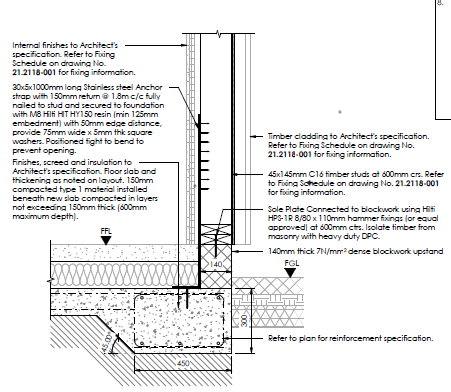
Thanks all. Confirming what I knew really. This is conservative for a 6m span timber building with no upper floor and a central prop. Especially as it requires us to dig out the strong sand base and replace with type 1. Bottom slab is shown as 125 thick with 2 layers A252 Edge beam 2no layers of B1131 and pairs of 12mm links at 300cc.
-
Thanks, just checking terminology, as 'raft' to me is a thickish slab with 2 layers of heavy reinforcement. Yes, tying the UFH down to mesh is a bonus....once had a plumber insist on pouring his own screed and it got under the PIR which floated.
-
Help me cost up my new build (300sq m)
saveasteading replied to Indy's topic in Costing & Estimating
Who chose the contractors to ask? They may be all of a type, and selected because life is easy for the architect with them. Sometimes you get remarkably different quotes from companies with different specialities/ overheads/ attitude to profit. When I was an estimator, for a predesigned project with bills of quantities, there could easily be 6 quotes all within 5% , and only 1/2% between first and second. Whereas in 'design and build' where the contractor who has design and commercial skills (or not) the variation is more typically 30%, for the same quality but different approaches.