saveasteading
-
Posts
10892 -
Joined
-
Last visited
-
Days Won
93
Everything posted by saveasteading
-
Let us know how it goes please? Good luck. You now the rule of setting a limit and sticking to it?
-
Jings, crivvens, cheesy peep, that is a thorough answer. James, re the crack in the original wall, is that a simple crack, or has the wall moved outwards at the crack? There appears to be a shadow under it. I am thinking Gus is right, and the extension is on deep footings whereas the original is on shallow. Normally the building might rise and fall several mm and nobody would know, but the extension is causing a stress point. The positive thought is that it may return to place as the ground gets wet again over the winter, and rises.
-
I wouldn't know where to start in knowing if the glass was suitable for the purpose, so would probably have enough framework to prevent falls, and the glass to keep out the wind and allow vision. I assume this is subject to building warrant, so how could you prove it? There are better value steel and glass balcony systems recently, especially if in standard sizes, which you could design for. 'Composite' is recycled plastic, bulked out with sawdust. Works well and is very durable, but gets very hot in the sun, which of course is a big concern where you are. We bought a picnic table of the stuff, and it is going strong after 15 years, which timber would not.
-
 Everyone above is correct. On large span portal frame buildings, with slopes about 10% but down to 2%, there is generally an upward force from wind, and all the screws and bolts are holding the roof on and the building down. Adding PV panels complicates the forces immensely, and especially very locally. The cost of reinforcing the structure is a very small proportion* of what the PV installation would cost. I have had installers phone and ask for permission to fix PV, which I could not give. Perhaps we could find enough redundancy for 30% cover but that would be the limit. The installers then whinged and demonstrated that they knew and cared nothing about structures, just their potential job. The least knowledgeable fitters may also just screw down to roof panels or purlins. On a steeper roof where any snow might be assumed to slide off, the panels will retain it and the whole building will be subject to 1m of snow as well as the panels weight. All buildings (except agricultural) have safety factors which include for bad workmanship and incompetence, so few buildings fail. But if they do it will be drastic, and not covered by any insurance other than the PV fitter, who will disappear rapidly. * But a lot of money wasted if the capacity is never required.
 -
My greenhouse is set on 6 slabs (4 corners and 2 mids) with gravel in a grid for the floor. the structure is bolted down with 6 chemical bolts and has withstood many gales. However, draughts and dampness don't matter for a greenhouse but might for your shed, so consider how the rain is 'shed' away.
-
There is digestion going on in the tank and gases are likely to need an exit, so probably best to choose the least nuisancy point and leave a gap there. My understanding is that a balance isn't reached for quite a few weeks. But also, the tank will be designed for a balance of contents, so pee, poo and water basically. In a normal household that will balance out. But if there is an imbalance eg rainwater getting in, or not enough water, then it may get whiffy.
-
I would say suggest that the RH bracket simply bends at the base, and the LH one potentially gives more resistance. But the LH one isn't fixed to much floor board or close enough to the newel, so will twist. Can you get down and observe while someone else pushes? Is there any way to get more structure under that bracket? And use a heavier gauge bracket?
-
A concrete slab raised above the existing is best. You could potentially just lay slabs instead. Then bolt it down. What is going in the shed?
-
That is what I meant. Sounds as is it is a tin levelling screed, but of what material
-
Except that the businesses generally look at the return on investment and what other they could do with it. Return in 10 years is the normal rule of thumb, then influenced by the certainty or otherwise. Also, big portal frames are not designed with spare load capacity to support PV panels, or shouldn't be without the express decision by the client paying for the building. Not only the dead weight of the panels, but also increased wind uplift. I offered PV to clients, or the option to allow spare strength for the future, but this was never chosen, and rightly in most cases.
-
No, not unless the water has some means of escape. What is the material? Not 'cement' but concrete/ mortar or what? How thick? In theory trapping water in the concrete for ever might not be terminal, but it isn't the done thing, just in case.
-
Really? With your own money? I would allow for some future repair in your costing, and hang on to the money for something more useful. Consultants, valuers and roofers will likely tell you it is high risk, and that reduces their liability for any future issues. My roof was apparently retiled 70 years ago. Despite some slipped tiles, and even some failed battens, it is holding on, and has never leaked. We bought it 30 years ago at which stage the previous purchaser had just pulled out having been told to replace the roof. Has to be your shout though.
-
Same as my house. Concrete tiles, with a few broken. The valley one does need replacement....or at least shoving back in temporarily. Generally pretty good, but far from new and will need repairs from time to time. The change in line from the end ridge cap to the next one is more than i would say was normal, and seems to be reflected all the way down to the eaves. Tht is good in thaat it prevents water from runnin g over the gable edge, but just looks more than i would expect. I don't mind the moss as it slows the flow a bit. It will need clearing from the gutters once a year but makes decent mulch. Also these tiles will release sand so the gutters will have sludge, which also needs clearing. Not zero risk, but looks pretty good.
-
How does your garden grow?
saveasteading replied to recoveringbuilder's topic in Landscaping, Decking & Patios
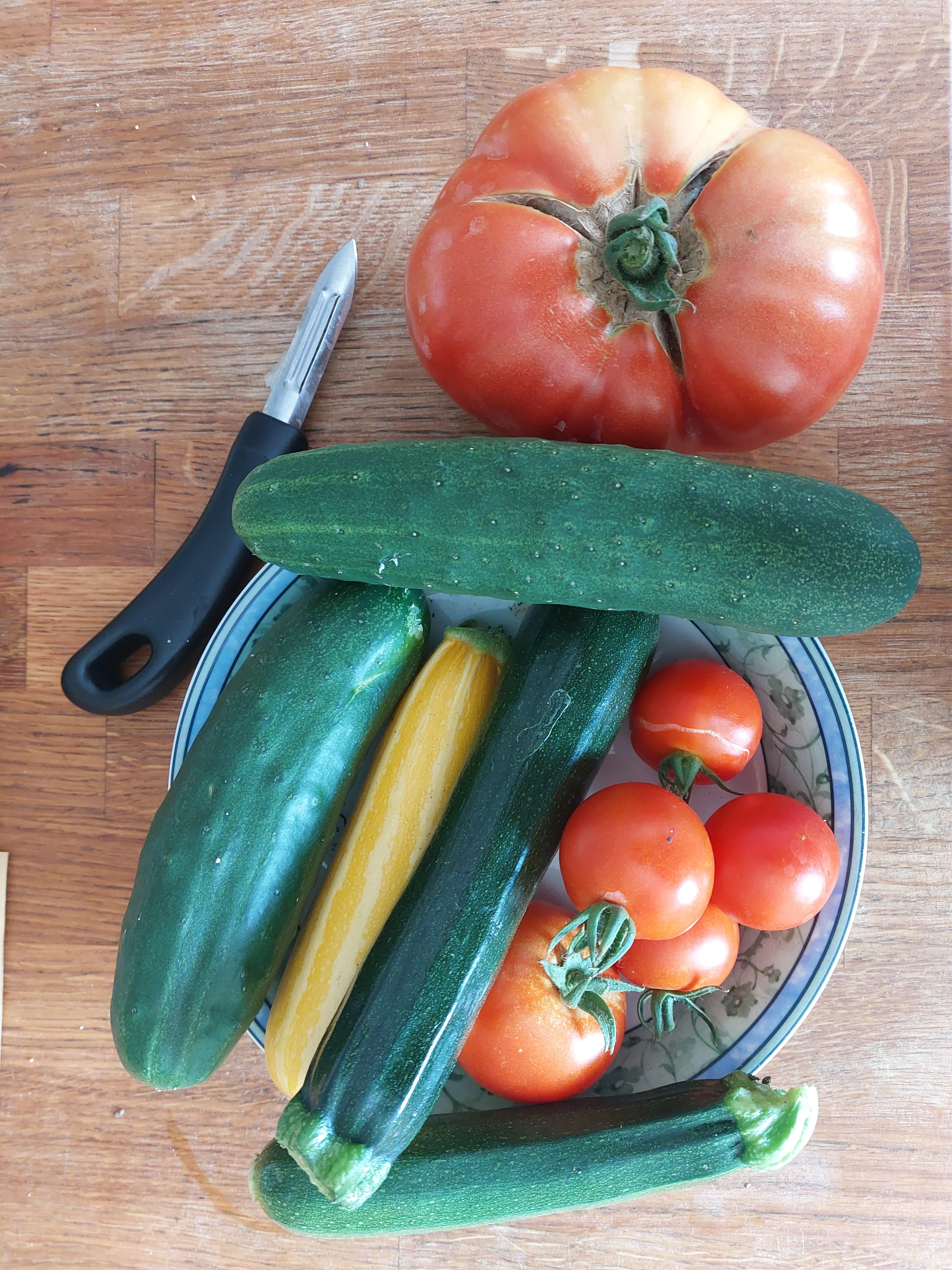
The beans are poor. Plenty of flower but not many turning to beans, so about 2 per day going into whatever veg mix we have. But courgettes good, and the cucumbers and tomatoes looking much livelier in the sensible temperatures.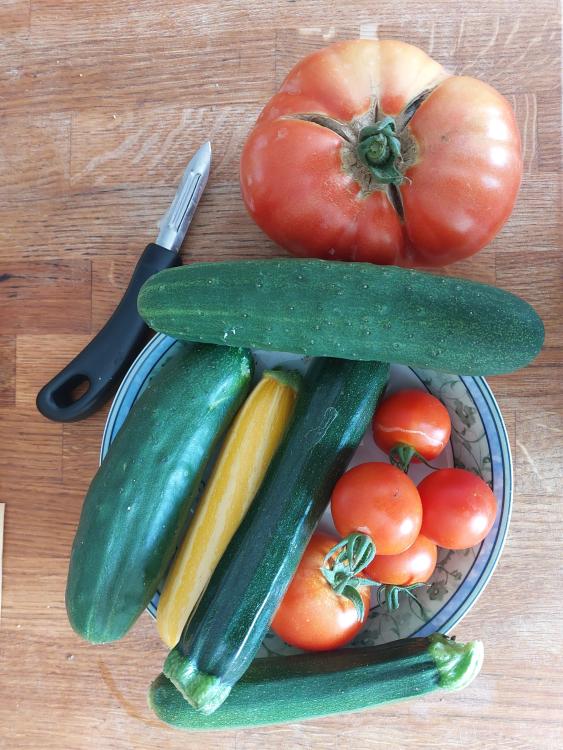
-
My technique is to think of where any individual raindrop will go. Every one should have an easier route away from your wall then towards it. Not Every raindrop obv, but a sample.
-
If a barbecue is extinguished when the food is done, what looks like ash is about 80% charcoal, which can be used again, or spread on the ground. Put it in a container, soak it and the charcoal floats to the top. With a bonfire, the charcoal content will depend on how long it has been burning, but I find it to be about 30%. Someone else will know better, but I gather that bonfire ash is good for the garden, but wood-burner ash is inert.
-
A cross section of the wall at the higher ground would be good. You must get below the footing, and make it easier for the water to runaway than go into your wall. Do you think the ground was always higher than the wall, rendering the adjacent room very damp, or has this been filled by occupants who don't understand the issue? It doesn't look too much work to drag a 1m strip out, below floor level. Looking again at the damp chimney area, yes a flashing above might solve this. It would be surprising though if the constantly wet render stays put for long.
-
Wood was coppiced on a very large scale for making charcoal. The trunk size was very convenient for stacking for charring. I think any hardwood, but may look up a book on the mediaeval iron industry, if I can find it. btw Coppiced timber was also used for splitting into broom heads.
-
Yes. Usually they need an edge cut off though, if the spindle is close the the frame. This is the easiest solution if the door is catching the floor.
-
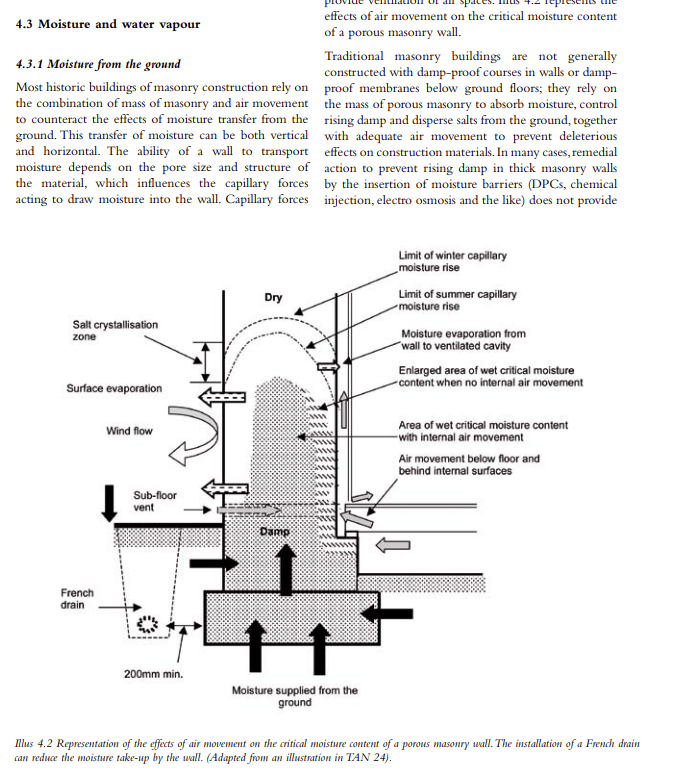
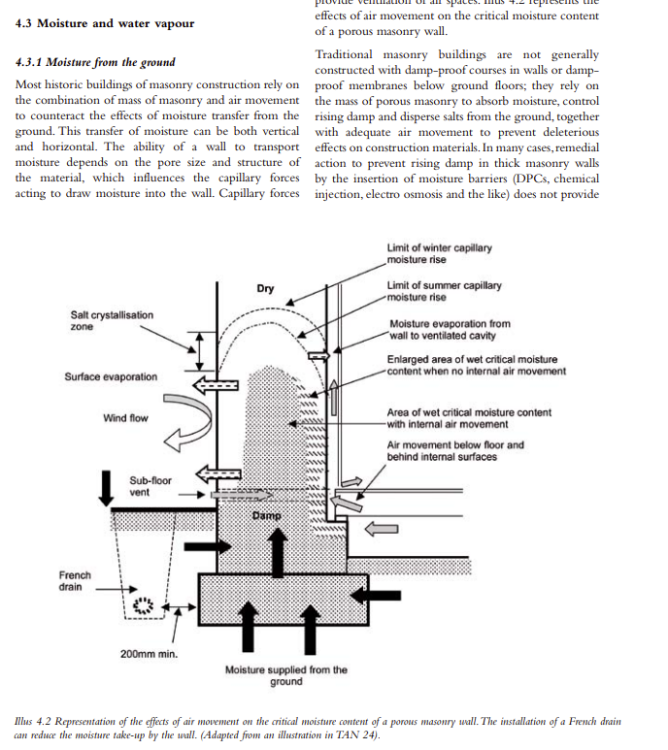
See page 43 among others. https://www.gov.scot/binaries/content/documents/govscot/publications/advice-and-guidance/2020/02/guide-for-practitioners-6-conversion-of-traditional-buildings/documents/guide-for-practitioners-6-conversion-of-traditional-buildings---part-one/guide-for-practitioners-6-conversion-of-traditional-buildings---part-1/guide-for-practitioners-6-conversion-of-traditional-buildings---part-1/govscot%3Adocument/Conversion%2Bof%2Btraditional%2Bbuildings%2BPart%2B1%2B.pdf
-
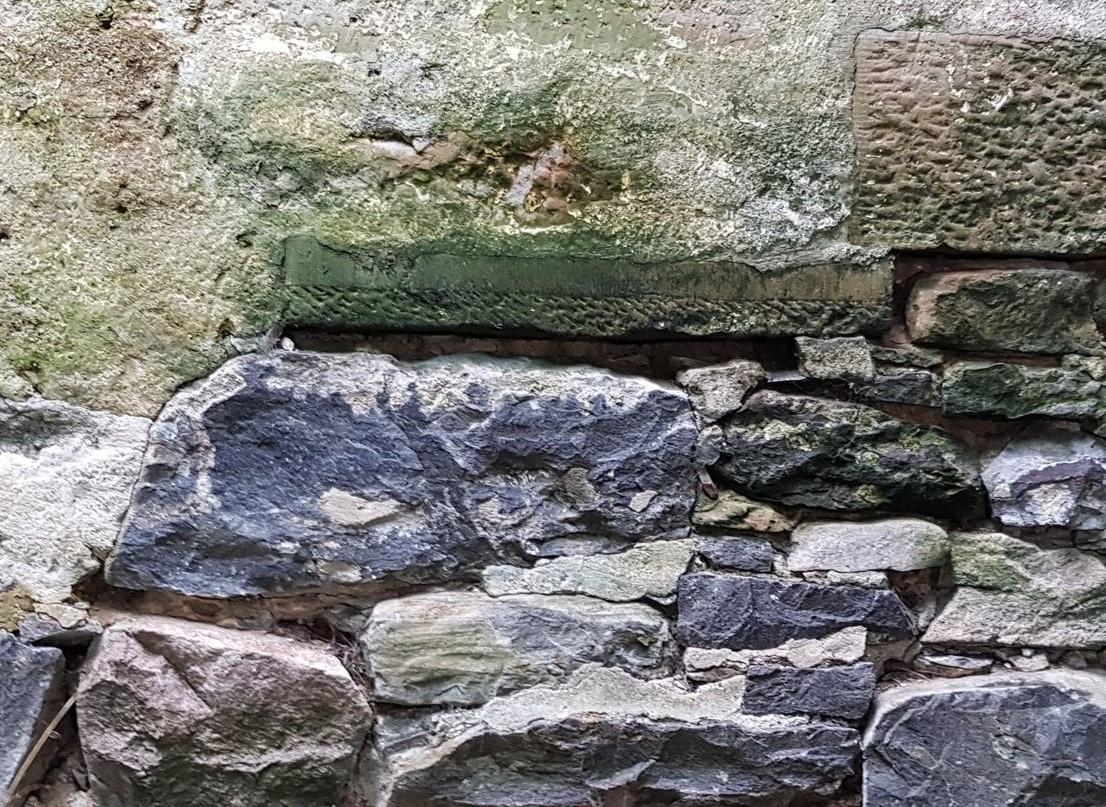
I can see that. Thanks for the pictures. The stonework is probably difficult to make attractive, being small rocks. Therefore I can see the attraction of keeping it, and the rain off. My suggestions. As a priority, lower the ground so that there is no rising damp, and any rain splashes are below the floor level. (Rising damp does exist, according to me and apparently to all professors of rising damp. One website that doesn't agree seems to dominate google, so look beyond that. Also deal with any other issues like chimneys and leaking gutters. Then over-clad but with a rain-screen that will keep the rain off but allow the wall to breathe. (Over-cladding creates a thickness, standing out from the all. this can be a problem at the eaves, as the gutters need to be moved out, involving roof extension.. Therefore I expect this has to be quite thin.) OR patch up the cement screed again and see how the wall behaves in a loved building.
-
You can easily do this yourself. This will show if it is feasible at no cost. Then you may have to get your professional to watch you do it again and confirm. It is not normally in SE or Architect skillset if it is a full assessment. But simple proof may be enough. As I said, contamination isn't the issue.... It is reasonable however for the BCO to ask how you are disposing of the rainwater. To a soakaway, any exceptional rain held back by a swale. None to burn if you can. All my comments have to be related back to the reality of the site of course. This will be on the surface. The test is dug beneath the soil, in the ground which has to allow the percolation. perhaps the same clay, but 18m is a long way down and maybe a different stratum there. Which brings us back to a pond. The fish and frogs will drink the water.
-
No, no no. The wall is still there because of the construction, including lime mortar and lime render allowing it to move and breathe. Any other render will likely cause problems. Don't trust the suppliers or contactors unless they are masons or can show you the successful use on masonry from more than 5 years ago. What stone do you have? any pictures?
-
Coppicing does not require the tree to be killed and if grown in the appropriate sequence is getting close to sustainable. Apart from buying a saw, and running it. and transport, and particulates. But nothing is perfect, and it is better than oil, or coal, or gas, or charcoal from the Amazon.
-
Just when I thought I’d seen it all.
saveasteading replied to Canski's topic in House Extensions & Conservatories
It clearly was, but should no have been. That is a lot of rods and resistance . Next time it might be worth hiring a flexi rod as it will be easier to push. They are available with a transmitter and receiver, but at quite a cost.