saveasteading
-
Posts
10892 -
Joined
-
Last visited
-
Days Won
93
Everything posted by saveasteading
-
I have 2 slightly raised beds and am working on the no-dig principle. I am not fully signed up to the extremes of the Charles Dowding books I have, but most seems sensible. The ground is 45m of clay and it took me 40 minutes to dig a 300mm deep hole for a new plant last month. That clay is under the no-dig beds too, and it is amazing what a difference the top 200mm does. Is seaweed sustainable? I wonder sometimes where it comes from.
-
 They interview people that are hanging around the high street in the day, who also have the time to spare to talk to a journalist. ie not typical. Also, if you have a reasoned, considered position of the options and complexities, they don't want it; they want an extreme view.
 -
https://www.gov.scot/publications/building-standards-technical-handbook-2020-domestic/3-environment/3-9-private-wastewater-treatment-systems-infiltration-systems/
-
Where is the kWh price heading in 2022?
saveasteading replied to epsilonGreedy's topic in General Self Build & DIY Discussion
“The latest Scottish offshore wind energy price: 3.7 pence/kWh unit. Melt that into the political equation when your bill charges 28p (pence/kWh unit) or whatever it’s going to be when the cold sets in again. " Shocking if true. If I understand it, these wind generators (Swedish and Spanish?) then get paid at the price as if it was generated from gas. The same article explained the costing structure like this, which I thought was quite a good analogy. Why is the price of electricity linked to gas? Imagine you had to fill a bucket of fluid every half-hour, and then dispense it to people in thimbles. The bucket varies in size, sometimes it is a regular size, sometimes it is huge, and sometimes it is small. Each time you start by filling the bucket with the cheapest fluid, water perhaps or supermarket-brand fizzy drinks. Then you turn to the pricier drinks – wine, craft ale, non-alcoholic gin. But for the last third of the bucket, most of the time, the only liquid available is single malt whisky. That is going to push up the price of the whole bucketful. That is the system that is used in pricing electricity – it is set by the most expensive ingredient in the mix, which is electricity produced by burning gas. In the UK as a whole, gas is responsible for about 38% of electricity generation. So when the price of gas goes up, so does the price we all pay for electricity. And then there is this. anybody know if it is true, and why this would be done? "existing wind farms are regularly forced to turn off the power or face fines." -
Why isn't it? not sexy enough? Wouldn't make money for cronies? Simply zero rate all insulation tomorrow and diy would increase
-
new loft hatch....would you believe it?
saveasteading replied to saveasteading's topic in Lofts, Dormers & Loft Conversions
The ceiling is at 3.05m so this was the only one I found. But I think even for 2.2m I would need a step up. -
When does building control sign off?
saveasteading replied to Andeh's topic in General Self Build & DIY Discussion
The bco does not and cannot check everything. It is a spot check, and the fee does not allow for full checking of the design, or formal quality control. f the bco disagrees with the SE or Architect then I would leave them to discuss it. -
I fitted a concertina loft ladder today, with great difficulty. the instructions are the worst I have ever seen. Might as well have said 'fit ladder'. Imagine my surprise when I came to try it and couldn't reach the manual hooks. I have to use a stepladder to use the ladder. Then I saw in the operating instructions...ladder may be unwieldy, recommend use stepladder. I also find that the hatch is now very tight for access...bad choice.
-
With good reason. Not a good idea. Try finding a recognised builder who does it, and wonder why they don't.
-
Where is the kWh price heading in 2022?
saveasteading replied to epsilonGreedy's topic in General Self Build & DIY Discussion
Unless it has come via an intermediary. Actually they test it and know where it came from. Russia selling happily to India it seems. Come the winter will the oil companies supply UK and Norway at the old price and to Germany etc at market rate?...I think we know. -
I use ts and sf for convenience not for value, so do check around. Often the specialist merchants can do better. eg Saw some fence washers at £50 / bag in TS that were £15 at fence merchant. Drainage much cheaper from a drainage merchant...but ts and sf great for a quick in and out, if in stock.
-
10% off a £1 order or £1,000. At the end of the job it is 10% of a lot. Keep at it. I have been in Wickes with a 10% voucher that isn't scanning, and thought, 'is it worth the wait for 50p?' Of course it is. I can't speak for Appleby v LAP but will say not to buy own brand (with made up names) from these stores.
-
Excellent. What will you do with the water? In the rainy season will it be partially emptied for car washing etc, before the next rain storm? I
-
Protection of ICF blocks in foundations
saveasteading replied to Joey's topic in Insulated Concrete Formwork (ICF)
No it won't if it performs less well, and eps performs significantly less well than PIR. The actual thickness is not a 'thing' in itself. EPS provides half the u value of PIR, at half the price, so either 350 EPS or 175 PIR, is what I am saying. Either or, to give the option to suit construction detail. Buying twice the volume with EPS might have a transport implication too. There is another option of grey EPS with a 10% better u value than white. Something to do with graphite, so 350mm of that would be like 200mm PIR, roughly. We costed all the options in great detail recently, and there isn't much cost difference in the material purchase, so it is down to whether you have more or less excavation/fill as a result. -
Protection of ICF blocks in foundations
saveasteading replied to Joey's topic in Insulated Concrete Formwork (ICF)
Well, many thousands insulated and tens of thousands not....if the building is big enough, floor insulation is not needed, certainly in the middle. The manufacturers used to make that clear but now seem to have forgotten to tell us. re the drawing. 350mm of EPS is a lot. If a thinner construction suits you then 175mm of PIR will do the same job at the same cost. or 75 of eps under 100 of PIR would be a pragmatic spec. -
When does building control sign off?
saveasteading replied to Andeh's topic in General Self Build & DIY Discussion
I couldn't. Height discrimination. -
Good, that was rather my implication. I can do it but still find it hard. Just check /enquire of the Engineer if there is any natural way to reduce costs rather than crates. Being pedantic here, drainage is Civil Engineering, not Structural. Your SE may very well be able to do this but might choose to sublet all or some of it...watch the costs, as I have seen 40 page reports where 3 would suffice. The SE does not have to dig the holes or carry the buckets of water, so you should pay for observation time only, if they want to observe rather than accept your figures. Probably sensible to do this again, and it may even allow a reduction in caution, and soakaway size. That is surprising as it increases flood risk downstream. I thought there were always constraints. If you haven't done it yet, I urge you to find a way to reduce this flow for the general benefit. It is all these small increases in flow that cause flooding problems. Unless, of course, your water course ends up in the sea in a few minutes. Or into a reservoir would be good.
-
Yes, the stated limit is 15, so we are just outside that. However, I'm sure SEPA would have accepted a faster flow, as there is 15m of the same sand below that, so the water will be very well spread out before it hits the stone and runs off to the burn. The fast limit is to prevent erosion and sinkholes, and over-fast flow to watercourse, and neither would apply,
-
Direct air kit (multi-fuel stove 5kw)
saveasteading replied to Smcmullan88's topic in Stoves, Fires & Fireplaces
In Scotland you now need an air feed for 5kW or more. The more I think of it , the more a direct feed is the right solution, even for under 5kW. I first intended to fit a louvre close behind the burner, as this would provide the air, yet not cause a draight. But it must not have a closer, so it will inevitably create a draught. We have put in a 60mm pipe from outside, then through the PIR to behind the stove position. In due course it will be connected into the back of the stove, as yet not selected. It can all be plastic until close to the stove. I am hoping that more manufacturers start allowing the rear air entry, as currently they are very expensive. As a bonus , opening the vents will create stack ventilation, if ever needed. -
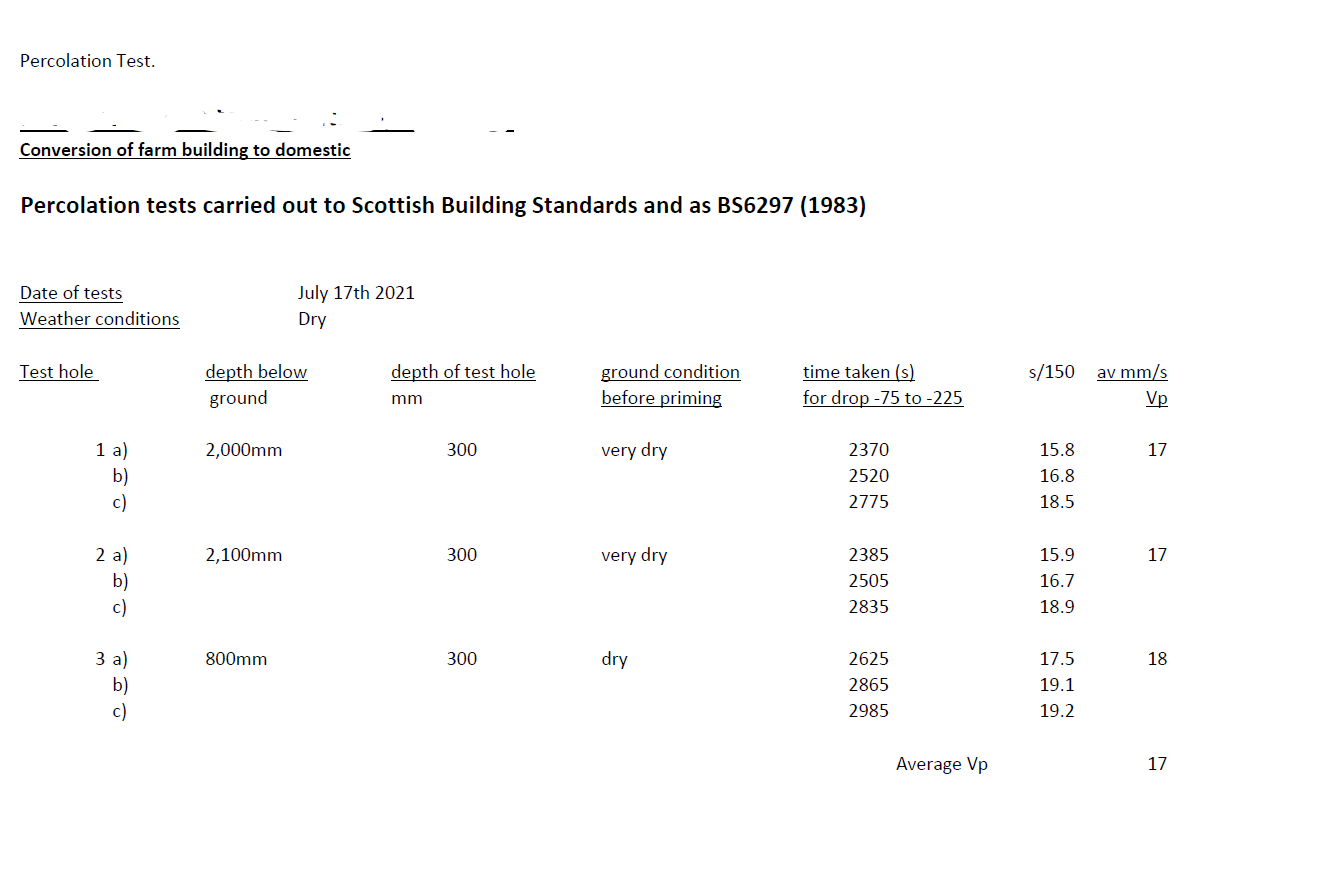
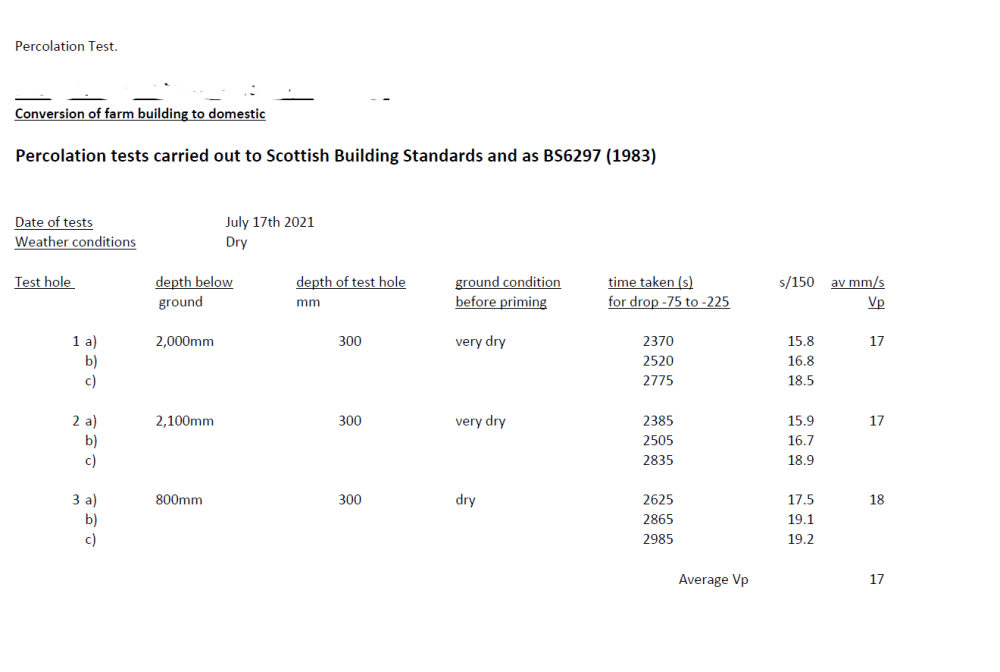
Here is mine. NB this is exceptionally porous. Our soakaways are very small. We happened to have deep pits dug for other reasons so tested within them. The test holes can be nearer the surface. Soakaway design I am not publishing at present. See how you get on with percolation first. Then you have to do rainfall calculations before doing a soakaway proposals, which are not easy.
-
Before we can say more we do need, as Gus says, to know more. Type of tree, and nature of the ground. Conifer...ususly no structural problem but lots of needles and mess. Deciduous...can vary from small up to 25m, with as much in the ground (over and under your house) The roots near the surface are usually much finer than this, but I guess the lack of competition is encouraging this growth. Generally if you cut away or through more than 1/4 of the surface (feeding) roots the tree will die. Once we know the type of tree we can predict its eventual size, and effect on your house..that may affect the most appropriate treatment. If you don't know tree types then a photo of it, plus of the leaves and the bark would help.
-
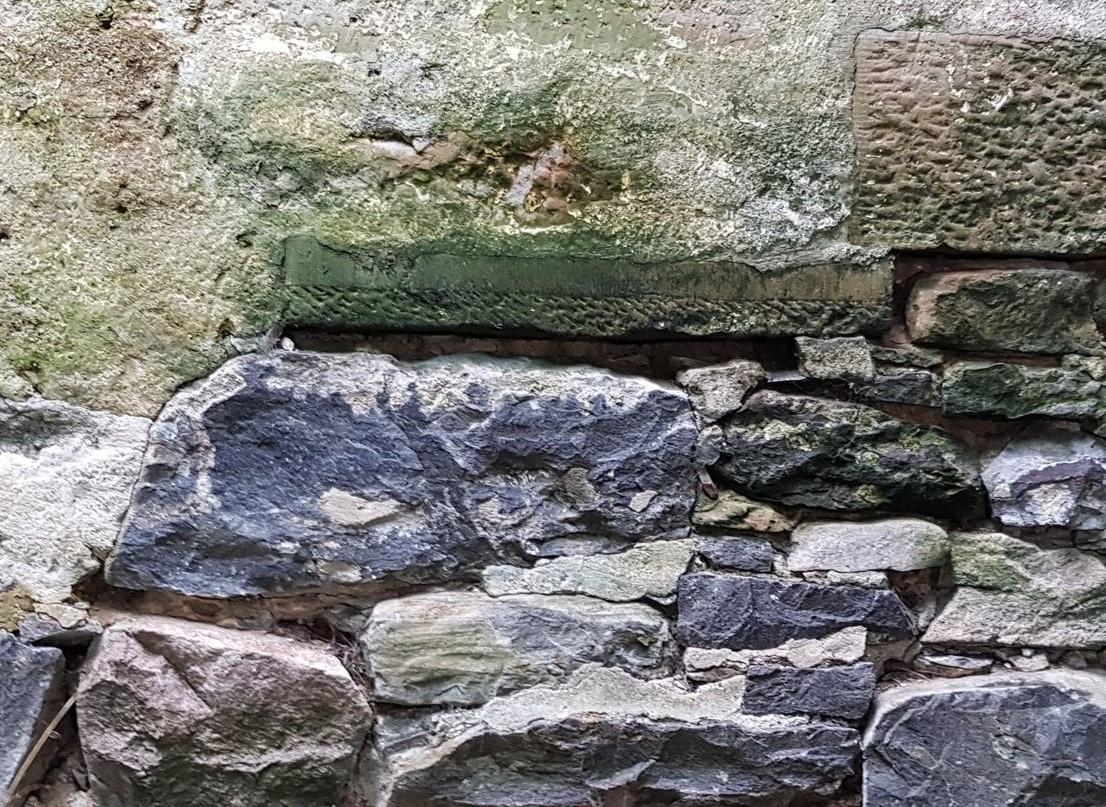
What thickness of Compriband? We have a couple of stone arches, soon to receive glazing, which are no longer symmetrical, and so I want enough flexible sealer to accommodate any slight joggling of the stones. Assuming your windows are not in this situation, but suggestions welcomed.
-
We are getting the Everbuild Thermofoam, for which the spec reads much the same. Will report back after use.
-
Discount Offers of the Week
saveasteading replied to Ferdinand's topic in General Self Build & DIY Discussion
Reduced again. Ours was £50 more, and was certainly a good buy. A little small for our large area, but well worth buying instead of hiring. Actually that is a handy width for trenches. NB no delivery AT ALL at any price to IV and some AB areas. Absolutely appalling, when they have a shop in Inverness, but I blame ignorance rather than prejudice. Same power but 7cm wider at Screwfix costs £616. yes six hundred and sixteen.
-
I would always go for level as well as flat. Anything off level can cause twisting and stresses, especially at the door.