saveasteading
-
Posts
10892 -
Joined
-
Last visited
-
Days Won
93
Everything posted by saveasteading
-
 An additional white or metallic sheet of cladding, facing south, on a spacer system, would reflect most of the sun, absorb the rest and ventilate it away. But an extra 25mm of pir in the wall would be cheaper, and it is already 200mm if memory serves. In reality the first of these was what we did if involved in the spec decisions...build a lightly insulated shed, then cold store inside it. I think this works better than using the cold store panel as the weather wall.
 -
If it is not chipboard then I would be surprised., whatever the price. I have poked at some pogenpohl etc to look for the differences that justify trebling the price. Some details are better, some internal extras are nice, but mostly the cost is for expert fitting. One supplier of very expensive kitchens said that his customers want to move out for 3 days and come back to a new kitchen, and will pay whatever for the lack of hassle to them. I assume the same applies to bedroom furniture.
-
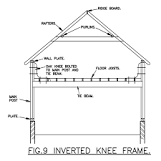
Ok we had this. In our case the roof had spread over many decades, due to natural forces but also rot reducing the strength of some timbers. I would predict that you have a tied roof construction and this will always have an out-thrust at the wall, and the timbers sag and move outwrds. It just depends how much. The chance of pulling it back is minimal and might cause more damage. a secondary plate that picks up the load is an option, but that may then slide too. Any pictures of the roof construction?
-
I was once working with a company re methane from waste; a proper boffin. I asked how best to reclaim the heat from cold-stores which is chucked out into the world, and wasted. I didn't know I was talking abut an enthalpy exchanger, but I was. He said that even with that high temperature of air, and similarly with cooling water in power stations, it is difficult to reclaim even 5% of the energy in a useful manner, and it isn't worth it.
-
Not generally the best type. Or perhaps perfect when simply hypothesising. For cooling, the ground type is equally important, as the surface of the borehole has to absorb the heat and then conduct it quickly away. Here is my suggestion for cooling. Construct a long length of drain pipe at 1m deep. This can be a long run or snaking. Perforated land drain in gravel will increase the heat exchange, but would have to be above the water table. End pops up into fresh air, some distance away and you suck in air to replace/force out the used air. If possible this pipe will be in a shaded area, as the sun's heat will penetrate 1m. But even better if the pipe, and especially the open end, are in woodland, where the trees have done a lot of work in keeping the temperature down. Thinking more, with the woodland source (easy when all hypothetical) you don't need the long run of pipe. Simpler, and will work. How much pipe and how strong a fan I don't know. Best have the fan a distance from the building and ventilated so that it's energy doesn't enter your system. In a very simple way I have done this for a sports hall. with fan ventilation on one end and louvres on the other, there is constant movement of heat outwards. By extracting at the sunny end , the air from the shaded end is brought in, at significantly lower temperature.
-
I have put in 2 in the past. We connected the site toilet temporarily which perhaps gave it a low use start, and then the main buildings when ready. No problems at all, so it seems there are enough microbes or whatever without buying any.
-
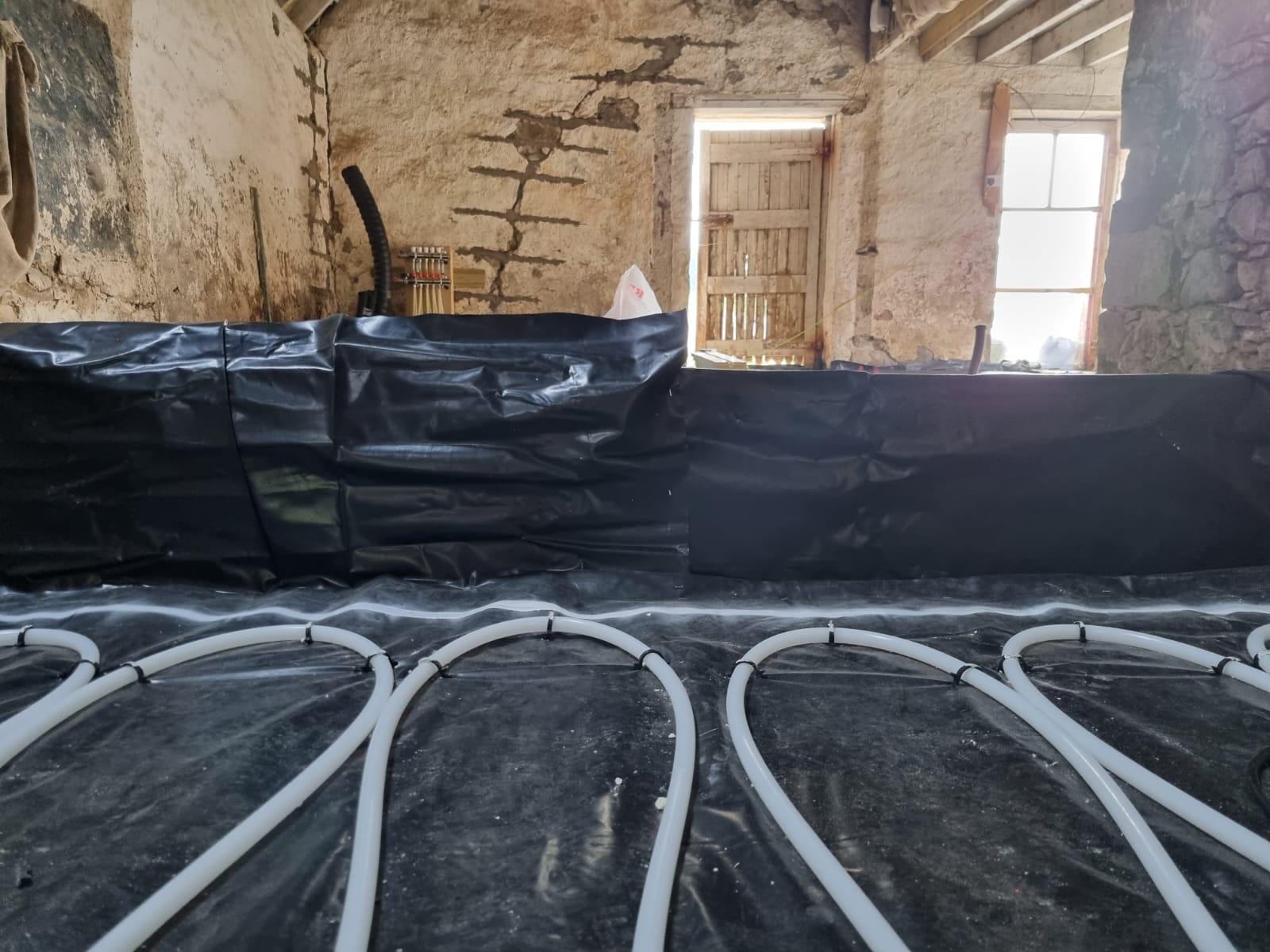
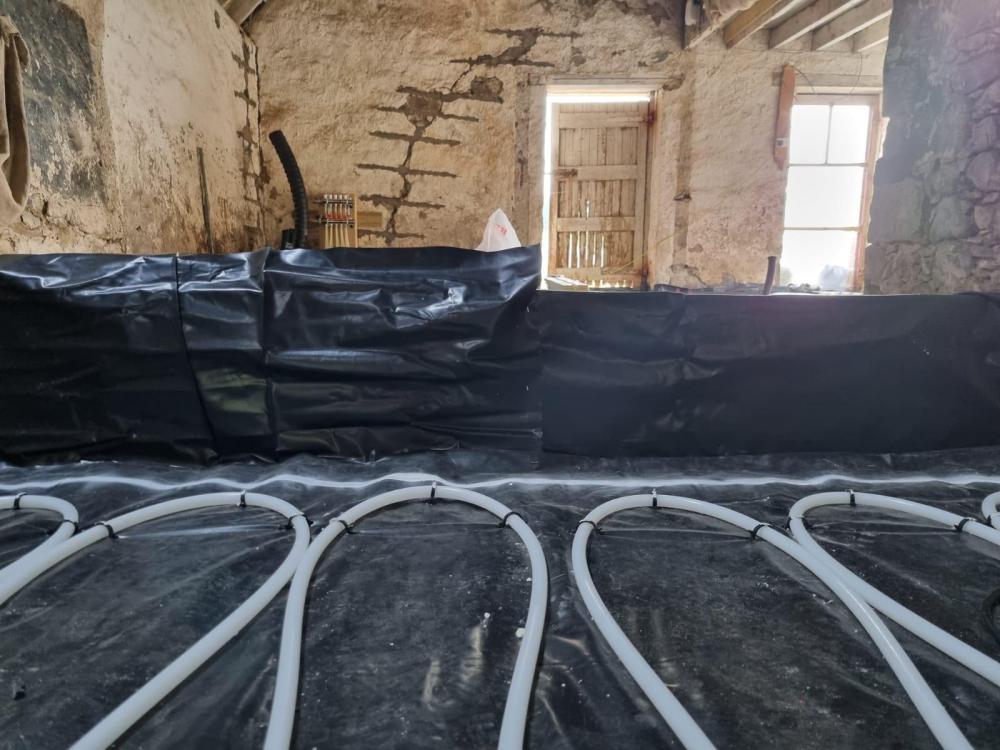
We know this isn't right, but how 'not right'? Do we get them back to adjust this? Screed is next Monday. In case of confusion about perspective, the black plastic is a 100mm stop-end in mid room.
-
Tech term of the day award.
-
Interesting. What are the ground conditions? If rock or clay you don't get much recovery from the surrounding ground once you have taken the heat out of it. Looking at heating only, for simplicity. You need a pump to circulate the tempered fluid. I have gathered from too many visits to caves and mines that the ambient temperature is about 16C. Therefore, assuming the source is constant, you will draw your brine/ammonia at somewhere under 16C, then have to pass it over your additional MVHR, using a fan, to bring the incoming temperature up. I have heard much worse ideas. My gut feeling, with no maths, is that it would marginally effective in use, but horrendously expensive in outlay. And that only if you had warm rock to start with, or porous ground with a water flow through it to provide fresh energy. I tried very hard to justify ground source heating, speaking to the industry. It could never be justified. Where it was used was with government grants to make it anywhere close to air source. The last discussion I had with the GS industry acknowledge that you had to replace the heat in the ground in the summer. I say spend a tenth of the cost on better construction and insulation. Not so much fun, but it will work. Optimising construction details can be fun too.
-
Solar power payback takes much longer than you think
saveasteading replied to Radian's topic in Photovoltaics (PV)
Although the project is Inverness, we live in the SE. with 120 miles maximum per charge that will take 4 stages. I will have a look though, thanks. -
Where is the kWh price heading in 2022?
saveasteading replied to epsilonGreedy's topic in General Self Build & DIY Discussion
Yes it is. Such a nonsense. When I had a substantial amount of salvaged timber in the SE, I tried all the agencies, who had given me glossy books about the circular economy, to get it reused, then recycled, then incinerated for power, but to no avail. Tip. -
Discount Offers of the Week
saveasteading replied to Ferdinand's topic in General Self Build & DIY Discussion
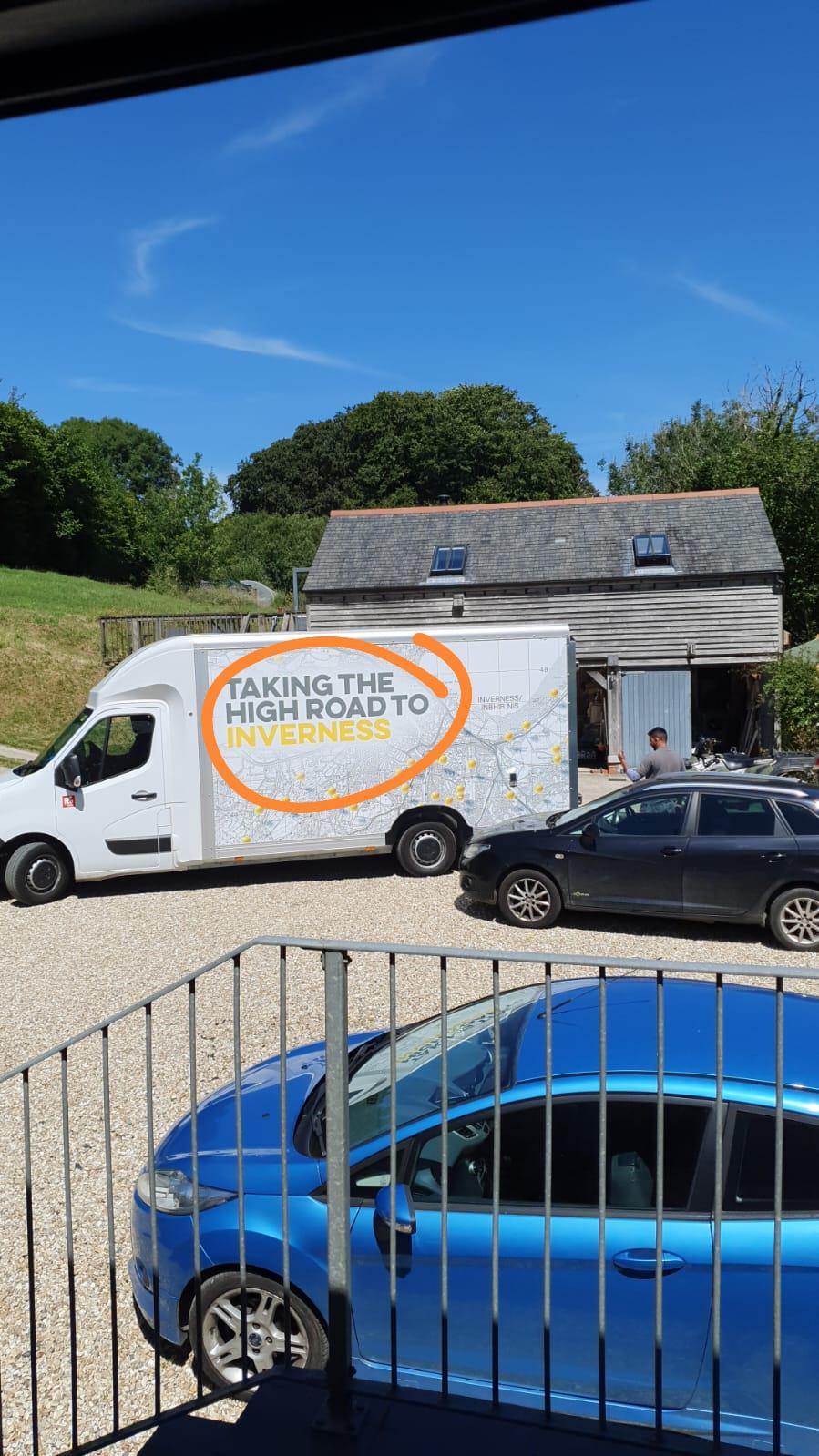
Aldi UK. Now here is our experience of "Aldi Not really all the UK" . Our project is near Inverness, the capital of the Highlands. A very bustling place with every UK retailer you can think of. For those who are rusty on geography, there is a road from the south all the way to Inverness, mostly motorway or dual carriageway. It is not on an island. There is an Aldi in the city. We tried to order the machine online but it said 'not available'. So we phoned, thinking there was a mistake. No we do not deliver to the Highland area. Alright, we will collect at your store in Inverness No you can't do that, we have no control as we don't deliver it, the manufacturer does and they won't deliver to Inverness. But we want to buy it from Aldi, as your advert, not from the manufacturer, and you don't exclude any region. Can't help, but why not get it sent somewhere else? Annoyed, but needing it, we had it sent to a family member in Cornwall, who was coming to help the next week. (There was a deliver charge, applicable anywhere). This is the van delivering in Cornwall . Our orange emphasis.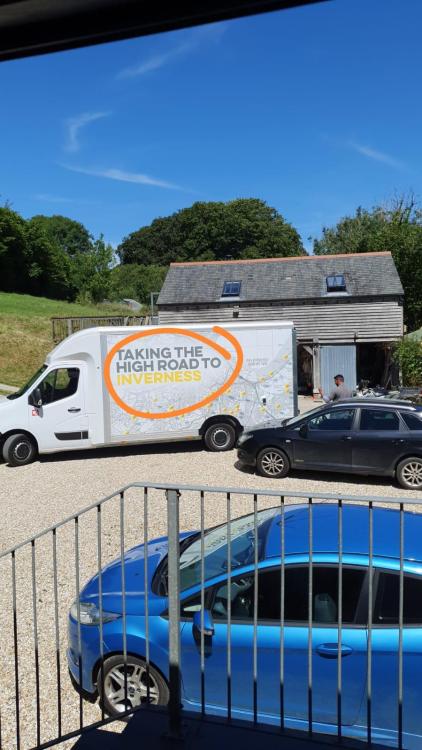
-
Solar power payback takes much longer than you think
saveasteading replied to Radian's topic in Photovoltaics (PV)
We are looking, and surprised how expensive they are . Nissan Leaf new 'from' £32,000, 3 years old and 30,000 miles, a bit tatty, £21,000. Most dealers don't have any. -
Yes , if the blocks are tight together then cement slurry will go between whereas s and c will sit on the top. For bigger gaps you need s and c. So I would do the cement slurry first, as it is just a watering can (without rose) and poured over the joints. It will dry out almost immediately. Then the s and c can go in the bigger gaps. Doing the slurry first can lock loose or cracked blocks together and avoid damage, and is a lot easier than brushing. I seem to recall it was an official recommendation from the B and B manufacturers but maybe it was just me. I now recall that by closing all the little gaps it stops clients fretting when looking up from a ground floor and seeing light through the floor.
-
Where is the kWh price heading in 2022?
saveasteading replied to epsilonGreedy's topic in General Self Build & DIY Discussion
I have heard that Morrisons is a favourite for low-cost on such outings. First you have to get to the bus stop though: one that has buses. The German government has announced a huge reduction in car journeys when they introduced free (or v cheap) bus and train travel. -
Planning - visibility splays (why is it so frustrating)
saveasteading replied to Kelvin's topic in Planning Permission
Good point, but I would still save a survey for later. The photos should do it (for non-technical PO) along with the marked plan. -
Is this your mastermind subject? These look interesting and I will download them.
-
Restoring cast iron rainwater goods.
saveasteading replied to saveasteading's topic in Barn Conversions
They are probably 70 years old I guess, as it has been re-roofed at least once. My own house has similar and they seem to be 90 years old and the only problems are at bolted gutter connections. So I think I agree that we leave the insides alone. Clean and probably drier than I would have imagined. It reminds me that my dad (joiner) told me that all leftover paint from every job used to be tipped into a barrel and mixed, then used to coat the insides of gutters. Whatever colours went in, the resulting colour was khaki. -
Planning - visibility splays (why is it so frustrating)
saveasteading replied to Kelvin's topic in Planning Permission
I don't agree. If you are wanting to show that everyone slows down to below the limit, then that means everyone. -
Brick laying training course - worth it?
saveasteading replied to sunflower's topic in Brick & Block
Lots of good advice above. Knowledge is your main friend. If you can project manage#, do ninja buying*, and read up about each trade just in time, then you will save more than by diy. On our project, my son-in-law has become a superb PM with the judgement to gain the respect of the trades, but be no pushover. Gradually finding better contractors along the way. In the process he has discovered a liking and skill in masonry, and groundworks has become a family and friend, diy process, with huge cost benefits. But it depends on your own abilities. We have also the benefit of design professionals in the family, so the design is lean and practical. Without that, it is important to find designers you can trust, and who are prepared to discuss with you, even be challenged. You want good bricklaying and plastering? Leave it to the people who do that one thing every day. *skilful procurement isn't just about shopping around and discounts. Far more important is to minimise waste. A QS or a builder using your money is likely to overorder by 10%. That will cost you 5% of the project cost. Materials can be scheduled and managed to limit offcuts and waste. excavations dug just big enough and no more, and so on. A skip costing £300 is filled with stuff you have paid £2,000 for. # overhead, management and profit for a main contractor is about 30%, then each of their subcontractors about another 20%. Some of these can't be reduced, but some can. Not to dabble with: Bricklaying joinery plastering final screed electrics plumbing roofing maybe worth a try with a very big IFFFFF: groundworks wall cladding decoration kitchen floor cover ??? -
Planning - visibility splays (why is it so frustrating)
saveasteading replied to Kelvin's topic in Planning Permission
The speed limit for the road is the issue, and a survey won't change that. Also it would need just one car speeding stupidly round the corner to make the survey worse than not having one. Save that option in case there is an objection. If you can see the required distance now then I suggest taking photos of cars at that distance. Photo from the driver eye point. A white car to make it easy to see. If I was a planner I would welcome that practical proof, and it could save them a visit. Also promise to keep hedges down to the necessary height, if applicable. -
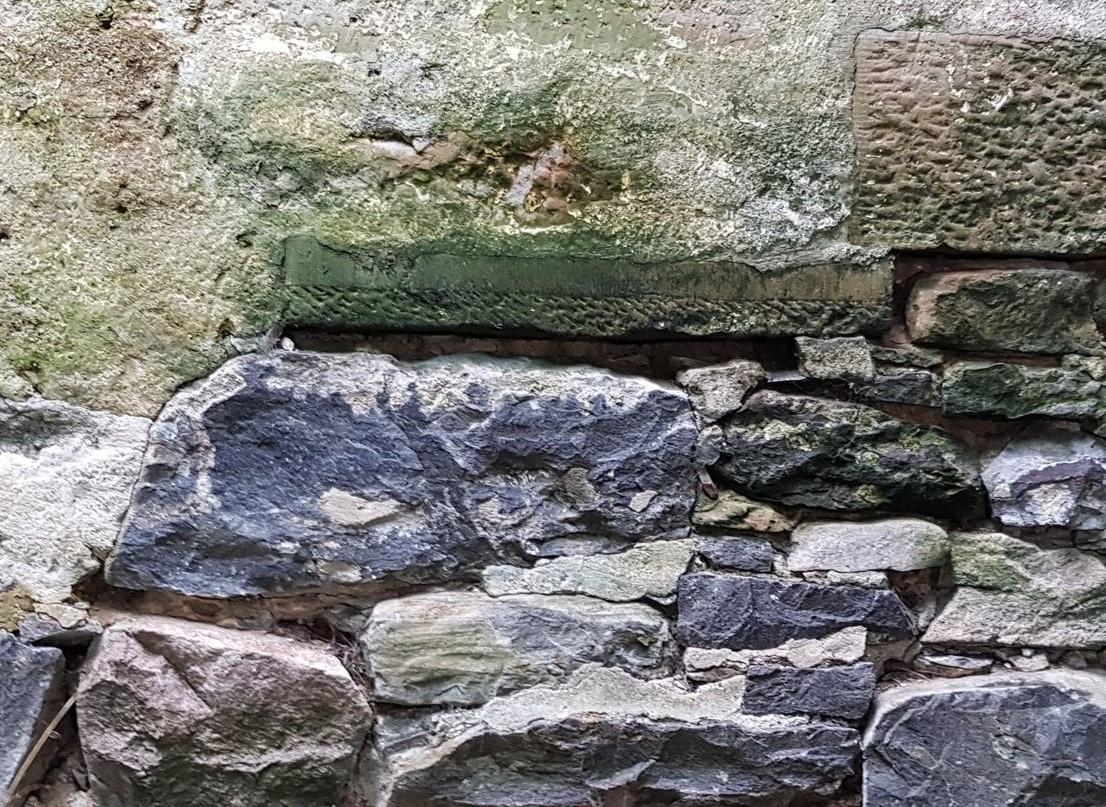
About 60% of the cast iron materials have been rescued. Now they have been de-rusted and thoroughly repainted on the exposed faces. But what about inside the downpipes? I don't know if these were ever painted. Should they be? Of course the insides of the pipes are regularly wetted, and never see daylight. Does that make them constantly exposed to rusting conditions? Or do gravity and rising air do enough to dry the insides? If painted, somehow, it will not be as thorough as the exposed surfaces, and may cause more harm. The best method I have so far is to paint a ferret and send it up and down many times. Or perhaps use a wax spray as used to be recommended for rusting old cars. I really don't know, and so any proper knowledge or best guesses are welcome.
-
That isn't a commercial supply. But collecting it off a beach and processing has to be better than burning it. I have seen news of rejected applications in Scotland for industrial scale harvesting of live seaweed 'fields' which, of course would affect whatever else lives and grows there. My interest having been piqued I have now found this. Generally very small scale production, the smallest being the Summer Isles 100 kg of 3 species All year round Hand plus larger quantities gathered as waste at docks/power station, which again seems better than dumping. But then a large quantity at Lewis Up to 11,500 wet tonnes per annum Hand and mechanical using modified boat with cutter. Maybe I am just suspicious but what is the chance that some large corporation will end up stripping the sea.
-
At some stage caravans become worth less than the transport. They re just a box on a chassis so can usually be cut into slabs so that you are not paying to dispose of air. There is possibly some reusable plywood and polystyrene in there....but you probably don't need that now.
-
May I refer you to the parallel discussion 'how does your garden grow'?' you may be able to help on there.