saveasteading
-
Posts
10890 -
Joined
-
Last visited
-
Days Won
93
Everything posted by saveasteading
-
 Absolutely not. Air flow through the building shifts more moisture than a typical machine. I have seen people getting them in when there is static water and what is needed is brooms and buckets.
 -
Well done. I'm guessing that it isn't a roddable backdrop, just a few bends to fiddle the slope. Having recently made a few, I was surprised how easy it was in plastic. Therefore also surprised why it is so often bodged.
-
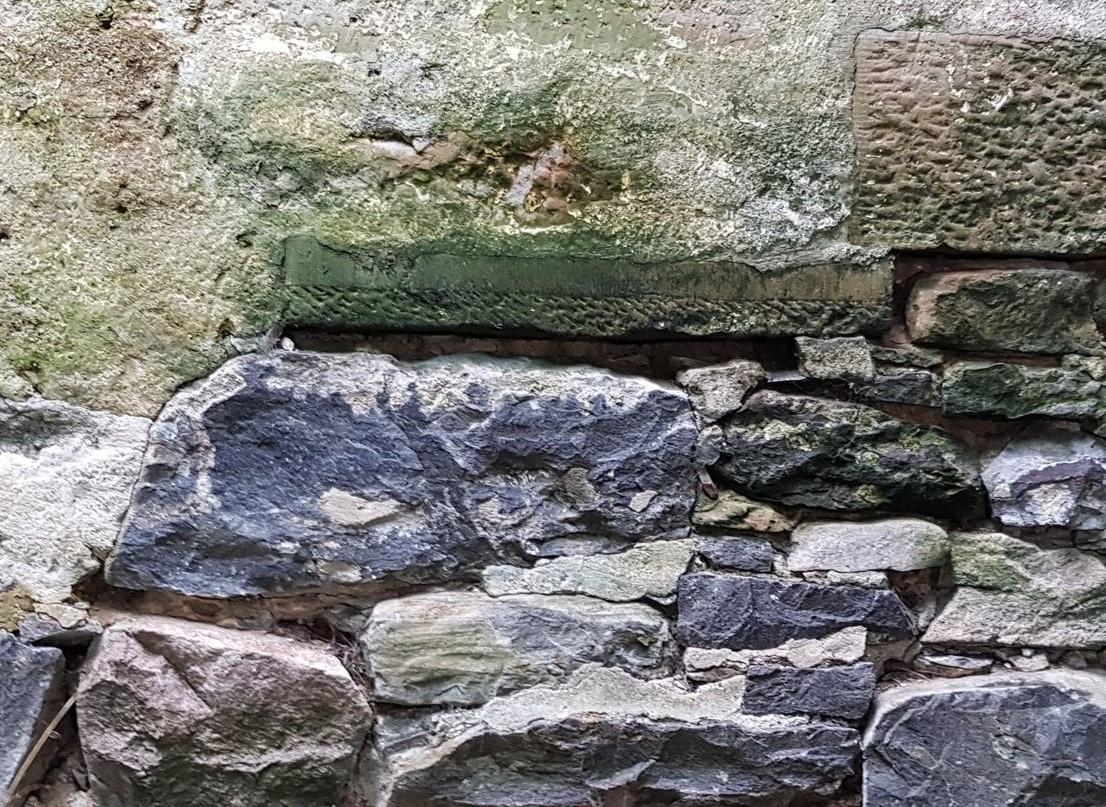
Perhaps not. But it isn't to be preferred and could be a problem. I would guess that a porous stratum in the ground (or an old drain, or a void created by a root) has created a path for rainwater. Then somehow it gets through the mortar...it wouldn't need much gap. Letting it out on the downhill side is easy, using an airbrick. But I wouldn't want it flowing through so would want to catch it at source and divert.
-
shipping from Spain to UK
saveasteading replied to Tom's topic in General Self Build & DIY Discussion
Taken in Spain, 2 minutes later a man was fixing sale stickers at 1 or 2 € less. These are good quality too. Worth filling the car? No.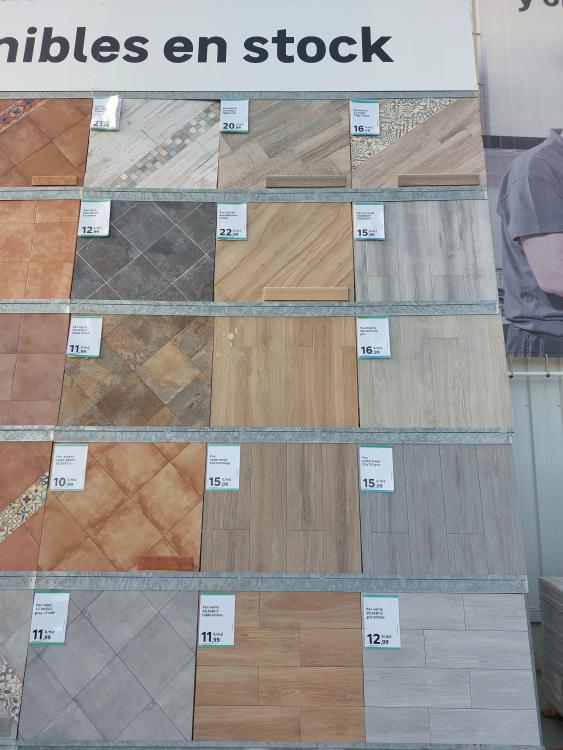
-
shipping from Spain to UK
saveasteading replied to Tom's topic in General Self Build & DIY Discussion
I would rather pay the spanish vat and live with it. Not many spanish retailers will know or want the hassle of selling vat free and doing the paperwork. There are very good spanish fires such as bronpi, half the uk price. But buy for €500, ship for £200, pay uk tax.. barely worth it. I thought of putting a "used" one in the car instead of 48 bottles of wine, but they don't have direct air intakes. There is import duty on anything over £300, (?) as well as vat. From what i read, people are getting taxed on household fixtures and equipment....both directions, and most (under the radar) van services have packed in. It was always the case that uk costs were much higher, and crossing the water allowed a mark-up. But now we are abroad, it is on a different level. Other examples. Roca wc set €120, or in uk £170. Hansgrohe shower mixer €110, uk £160. Vat included. But you can't claim the vat back in the uk unless it has been paid in uk, for obvious reasons. So, on balance, not worth it. -
How long do you think would the drip take to fill a mug? Obv you need to stop the leak. Meantimd perhaps you can divert it to drip into a bucket.
-
110mm soil pipe going through raft foundation help please
saveasteading replied to Martin17's topic in Waste & Sewerage
Pipes should not be encased in concrete, but have either a gap or a protective layer around them (usually polystyrene so it can crush). Then when the building moves it doesn't break the pipe. This is in the buildong regulations. Your designer should be giving you all the detail. Maybe your groundworker is great and can read a drawing and do sums....but you can't count on it as many have had no training and simply go downhill using a spirit level with the bubble out of the lines. Your design mighg require more precision than that. -
Water finds the easiest route, and under your tiles doesn't sound like it. Have you seen the leak? Where from and how fast? You should advise your insurers immediately, even if trying to resolve it yourself. Then you are covered if it is bad. They may send an inspector or ask you to see how it goes....their decision.
-
Poly Steel ICF a valid option?
saveasteading replied to Jenki's topic in Insulated Concrete Formwork (ICF)
I don't know this product. All I can contribute is that I was inspired to try to use similar products, but couldn't ever get near it being best value. If you can find a good joiner, stick built is cheapest and easy enough to seal and insulate.. Ours is really good, but airtightness is clearly not taught at college. So we are watching that. I can't see why these eps products are not more competitive...so maybe this is the one. The website doesn't mention cost at all, which doesn't bode well. I predict that their salesman will avoid any discussion of cost....so please keep us informed...I'd be happy for you if I am wrong. -
Landscaping - choosing trees
saveasteading replied to Drellingore's topic in Landscaping, Decking & Patios
Interesting. Sounds better than 100%. -
Changing some of it would help. Although the restriction would still be there, the turbulence and resistance elsewhere would reduce. Also ensuring slow and smooth bends helps a lot whatever the size.
-
Landscaping - choosing trees
saveasteading replied to Drellingore's topic in Landscaping, Decking & Patios
Larch is a conifer but deciduous. Scots Pine, Juniper and Yew are native conifers. -
Relax. You havent been cheated. A hiab capable of doing that lift would be much more expensive. The hiab used is unlikely to have the strength or reach to lift onto the roof. Also, the delivery company are not contractors so the driver won't have the skills or insurance to do it. Best take the realistic view that the delivery cost was low, using the best and cheapest vehicle for the job, so you have not been overcharged. Really, you have not lost out or been treated badly. Can I point you towards risk assessments? If the hiab was going to lift onto the roof, then you should have previously discussed the process with them in some detail. As you now should do for the hoisting.
-
Welcome. Passive house priciples are great, but there are diminishing returns. Hence most on here, as you, say ---ish. Build quality is the main thing. There is so much on this site...get delving. Searching on Google seems to work better than the bh search itself....eg search for " buildhub passivhaus" or whatever the spelling is. And please tell us more about your intentions.
-
You don't need much off it for it to fit either square or diagonally. Is there an easy bit such as a housing, or feet?
-
Class Q - Steel portal barn conversion cost estimates
saveasteading replied to Stoph43's topic in Costing & Estimating
Or of the structure itself. The problem first, then the solution. Farm buildings have no safety factor. Occupied buildings of course have a factor to allow for freak weather, bad workmanship etc., with people being valued above tractors or animals. Therefore I can promise you that the farmer who built this did not put in, of pay for, any more concrete or steel than necessary. Therefore the steel and foundations will not be sufficient for a house. Enlarging the foundations and strengthening the frame is expensive. The answer is to find a good and pragmatic SE who can find alternatives. For example, building an additional steel column for each portal frame, on a new foundation internally is very much cheaper than attengthening what is there. They can be on the lines of new internal walls. As to insulation. If the steel structure is completely contained within your new insulated envelope, then that is best. There will be some heat loss through the steel into the foundations, but not a lot. A subject for later. -
1. A to d. It might run down the wall and erode it, cause salts to emerge, reduce insulation, cause mould. Ditto to windows. 2. Likely to splash up the wall leading to b- d 3. Might erode the ground 4. Constantly wet ground more likely to settle differentially. 5. Unpleasant on visitors' heads 6. Noisy. All that being said, it is not unheard of, compensated by oversailing eaves and a gravel drain to catch it.
-
That screw into the web is not strong in rotation. The angles in the prev drawing look heavy but won't be. You can get figures on screw shear strengths, but does this look as if it might fail sideways?
-
Class Q - Steel portal barn conversion cost estimates
saveasteading replied to Stoph43's topic in Costing & Estimating
Maybe just my location (SE), but the existing building has to stay, or planning is lost. -
Once water is in the downpipe there is spare capacity, so you could link 2 into 1 with 45 deg bends and keep the water off the small roof. But it might look clumsy. Don't rely on water turning the corner in linked gutters unless they are larger than normal..and total trust in the builder. Detail needed at bottom of valley. It is good that the architect has thought about it at all but more thought needed. Downpipes can be the same colour as the walls as camouflage, or a feature colour to show pride in dealing with reality. Old fashioned hoppers sometimes resolve tricky drainage.
-
Class Q - Steel portal barn conversion cost estimates
saveasteading replied to Stoph43's topic in Costing & Estimating
I haven't, but i have previuosly declined any involvement in such a project, where the existing structure was falling apart but had to be retained. Thus the structure had a high negative value, but the budget didn't allow. Have also looked at some for ourselves and either walked or been beaten on our offer....knowing too much. Some more info, maybe photos, of yours would be a help to being more positive. Sticking to single storey is a plus. Wall rails and purlins steel? Cladding? Your intended layout and cladding. In theory a barn can not be lived in without strenghtening and underpinning , as there are no safety factors. There are solutions, some not too expensive. Cost is much the same as a new build, maybe less, probably more. -
Stick built is a lot cheaper, if you have the joiner that can do it. Esp for a non standard design. But of course you need design, buying, more time, management, risk.
-
Yes I have one. It is low powered and slow, compared to what comes with a specialist's van, but that can be a good thing as old drains can be fragile. I think it requires one of the better karcher machined. I always try rods first though as that usually does the job. But for perhaps a big build up, the jet can nibble away at it. Also I have encountered very devious specialists ( big name) who made up all sorts of rubbish of what needed to be done....I said just rod here or go away...and it worked. £300+ is a lot to pay for a good Karcher set, in hope that it does the trick but it is likely to get more use later. Rods £29 at wickes, less 10% if trade.
-
The gravel also kills splashing onto the wall, esp if left a little lower. You are right to worry about blocks moving. If there is an area that I'd always wetter, there can be differential movement. Drains are no use without an outlet. You are not permitted to connect to a main drain. Many driveway contractors, no let's say layers, either don't know this or pretend they don't. It is to reduce flooding, and very sensible, and also is policed I have heard. This poss doesn't apply if your drive was already impermeable.
-
Discharges in Groundwater Source Protection Zone 1
saveasteading replied to Drellingore's topic in Building Regulations
Doing this will give you a unique undertstanding of your ground. I suggest that as you progress, you do more percolation tests, just in case it is much better at lower levels. Machines are a good invention though. Also ground strength tests while you are at it. I can explain the easy low-tech way if you are interested. I wonder if you are overworrying about the quality. Have you discussed with a digester manufacturer? I have had lots of good advice from Marsh Industries over the years. Email first with the background, then poss phone. Others may be good too.