
saveasteading
-
Posts
10100 -
Joined
-
Last visited
-
Days Won
82
Everything posted by saveasteading
-
What's more important for comfort U value or 'thermal mass'
saveasteading replied to Gone West's topic in Boffin's Corner
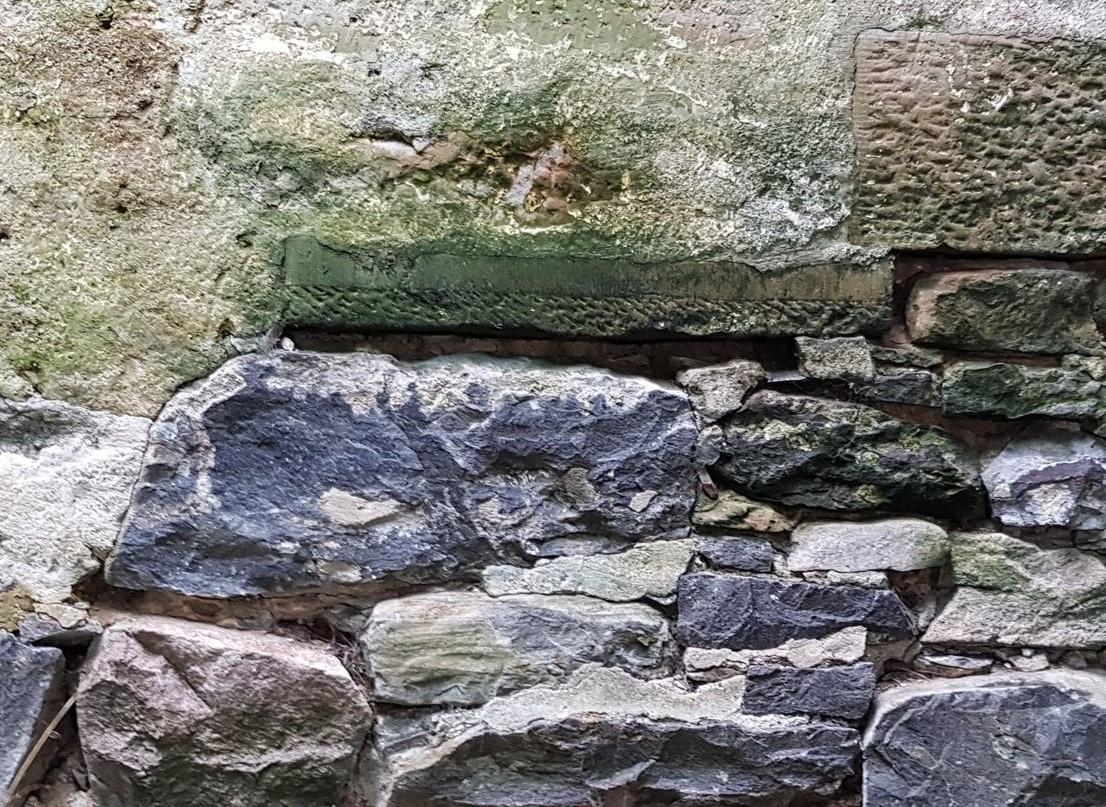
So sandstone, rubble and mortar core, then sandstone. ? Somewhere i have saved the information on this. In principle though: That construction has a better U value than the standard programs allow. This is because the central core is usually about 40% mortar with air gaps. 0.6 has been assessed, so it is nothing like regulation but not hopeless. Plastering won't make much difference. Plasterboard on battens will provide an air gap which will be beneficial but again, not a lot. The point about the moisture slowly dispersing is interesting. I hadn't thought of that. Studies show that moisture migrates to the bottom of the wall and 'rising damp' ( if there is such a thing), is negligible. Is the stone not attractive? We covered and insulated most of ours using vapour barrier, stud, and 100mm mineral wool, but retained a feature area. -
Memory tells me there is a bitumen tack paint, with a lot of solvent in it to make the existing bitumen sticky. Failing that then any bitumen paint probably. Tarmac is only about 5% bitumen, and the surface wears down to all stone, so there won't be much to melt.
-
The Search function on BH isn't great. I find it better to google it. Eg buildhub manifold plumbing. It's also worth following some key experts on here. We learn things we didn't know we needed to know that way. What is top of your list?
-
That's the easy way. It is often best for it to be diagonal across the track, whatever keeps the water moving downhill. Farmers are supposed to plough along the contours, so the field holds maximum water. I don't think anyone imposes this though.
-
Is there any evidence that moss causes damage? I have concrete tiles, and lots of moss on the darker faces. In the summer it shrivels up and lots falls in the gutter. So it is a chore to clear the gutter, but otoh I get a few bags of compost. Moss gives insects a home, thence bird food too. Collects rainwater and slightly reduces flooding. Slows rainfall down the slope. Some resistance to solar gain, especially when wet. A free green roof. Possibly reduces tile chatter, and risk of damage, in high winds.
-
Fence Install - do I have a problem?
saveasteading replied to Ferdinand's topic in General Self Build & DIY Discussion
Re the bottom of the garden, there are usually clues such as old fence posts or a change in the style of fence. How about you 'compromise' and get a written agreement that the fence can stay on your land. -
Fence Install - do I have a problem?
saveasteading replied to Ferdinand's topic in General Self Build & DIY Discussion
Only an inch? But it mattered enough to the builder to gain the inch rather than lose it.. Very deliberate. Which face should be the fair face? And its not an inch it is 3 by the looks of it. Is the correct position of the other end obvious? Eg right angles from the house? I've been there. Neighbour cut down a hedge and planted conifers on my side. Not for long. His missus told him to move them back. Negotiate. After doing your homework. -
In roof panels leaking or condensation?
saveasteading replied to CH_18's topic in Roofing, Tiling & Slating
Leak. It could be anywhere between the wet point and all the way upslope of it. Is the timber wet? -
Any idea why? Or if it is so written, or just something they ask for from habit? I don't recall ever doing this on a dry floor.
-
I clearly should have had your advice for the example I gave, as you'd have seen off the planners. Of course we used all possible arguments in the first instance, including the absence of dimensions. The day the planner walked on site 'for a word' is vivid in my memory 10 years later. I showed the approved drawings that coincided with what was under construction. They simply wouldn't have it. There's more to the reason that the neighbours were so against it, but I can't go there. But the only genuine argument was one un-dimensioned drawing. Perhaps we were always going to get it permitted but 3 months delay is a serious cost as well as worry. We've both said our bits based on different experience and now the OP can make a hypothetical decision for that hypothetical building.
-
One of these groups that I keep meaning to leave. But I stay in it to remind myself how humankind varies, from knowledgeable and thoughtful to ignorant and thoughtless. And how the selfish idiots* don't join, or stay long, on BH. * If it burns: burn it. If it's lying there: take it. If the neighbours complain: well I can't repeat. But my view is that the waste wood is better burning in someone's reasonably efficient wood-burner, than in the garden. Unless your LA produces power from it, which is unlikely.
-
yes that's wise, for strength too as the insulation is the weakest component. I would expect that the floor is designed on this assumption. No dpm required. Nail the sole plate direct to the concrete. I wouldn't stop for doors, as you can measure and cut precisely later, However, it is worth a sheet of polythene over the insulation before screeding. Even if you have taped all the joints impeccably, there is a risk of a gap, especially at the wall interface or of tape sticking to a shoe. You do not want to see the insulation floating to the top of the screed, and the small investment is worth it.
-
I wonder. I stopped specifying expansion bolts after having some work loose due to repetitive loading. It was the concrete that was gradually eroded. Chemical anchor replacements worked fine. If a pipe vibrates, maybe the same applies, wearing or compressing the copper.
-
Patio / aco drain / air brick locations for
saveasteading replied to richie9648's topic in Landscaping, Decking & Patios
You could test this by pushing an electricians' cable rod along it. Ok , assuming it is open, so rainwater could potentially run through this and under the main floor, making it very damp and a mould and rot haven. So i still say keep it open and above ground. I see you have the drainage units already. 1. maybe you don't need them now. 2. can they run to exit in both directions? -
This was stated as a strict requirement for my Professional exams, and to be used thereafter in professional practice. Please all, feel free to nag me when this isn't done. However, within this Buildhub (BH) zone I think we permit ourselves to avoid writing Building Control Officer (BCO) , Medium Density Polyethylene (MDPE) etc. in full, unless we think the poster is new to the subject and might not know what BCO or MDPE stand for.
-
Yes, it can, if grossly out. There will be a large amount of leeway for the approximation of scaling but, for example, a 5m eave on the neighbouring house that is drawn as as 6m would be seen as misleading.
-
I think joints , when well made, are as secure as the rest of the pipe. Leaks would then be most likely from damage by stray nails etc, and not only where the access panel is. But then: I wonder why? increase in water pressure? Is it better to solder?
-
Wind Problems...
saveasteading replied to WiltshireLink's topic in Insulated Concrete Formwork (ICF)
Just interested, and I have no advice to offer. Is there any stipulation on constructing in vertical stages? For a structural concrete wall it would only be done with a lot of attention , and steel, at the overlaps. But if it was hollow concrete blocks I would certainly want to do it in stages, just for convenience. And with this lightweight system there would be the advantage of the dead weight and strength. I guess it isn't allowed. -
I wouldn't scaremonger. In fact, for anyone inclined to ignore the risk I can advise that I had a job stopped for 3 months due to an error on one drawing that was part of the approved package. A different architect, engaged only for planning, but the risk fell to us. 10 (approved) drawings showed one thing, and one differed and nobody had noticed. So £1/2M spent and the job stopped because neighbours saw their chance to stop it. We had to reapply for planning, have on site neighbours' meetings and all sorts. and then it went to committee (where it was approved unanimously). for these 3 months the job stood still, in the weather, with no work allowed. It isn't trivial and it isn't scaremongering.
-
I wouldn't scaremonger. We don't know the situation which is stated as theoretical. If it is likely to be permitted , then be honest with the planners. Why has the neighbouring house been shown too small? Deliberately or in error?
-
An Architect, capital A, should have the skill to establish the size of the neighbouring property, even approximately. They should also have the knowledge that it is important to give accurate representation of the relevant surroundings...otherwise why even show it? Anything else is deceiving the planners, whether intentionally or not. In real life, it isn't likely to be pulled down but would require a re-submission at the very least, modification of the height as likely. So if this theoretical building was being constructed right now, it might be best to pause and discuss it. If it hadn't been started then get new permission by discussion with planners and accurate drawings. And get the Architect to resolve it all free of charge.
-
Patio / aco drain / air brick locations for
saveasteading replied to richie9648's topic in Landscaping, Decking & Patios
Avoidable risks should be avoided. Not that we know how the house is built. Air bricks are to ventilate a suspended floor, but perhaps the floor is now ground-bearing. @richie9648 perhaps you can tell us. -
Good point. It will be low risk stuff but I'd still take reasonable precautions. These tiles look old enough to be asbestos reinforced type Dampness and avoidance of dust is your ally. Double bagged and taken to the tip by appointment, no charge. They will cut through the bags, so boxed first might help.
-
Deflection Head under Steel Beam
saveasteading replied to MortarThePoint's topic in Plastering & Rendering
If you board to 10mm short and fit an L shape or quadrant over the gap but fixed above, it will form a sliding joint. -
We all like progress reports. Next time, put on the Facebook site for wood burners that you have all this , free to collector, and it will soon be taken away, nails and all, and heat someone's house with less pollution. Did the insulation go on the bonfire? At a fire's peak, even fire rated rockwool turns back to sand.

