saveasteading
-
Posts
10887 -
Joined
-
Last visited
-
Days Won
93
Everything posted by saveasteading
-
Cutting bricks - how easy / time consuming is it ?
saveasteading replied to maxdavie's topic in Brick & Block
A bricklayer hits it with the side of the trowel. 5 seconds. But a bit approximate for your project by the sounds of it. let the bricklayer decide how it's best done. trowel? chisel? hydraulic? brick saw? -
Probably with the sole plate at the brick level. Water can creep through timber interfaces. If anything though that fits with the damp being very local. Yes do the pointing repair as a priority. Can you see any hairline crack between the render and the bricks?
-
Button on tiled in toilet cistern not working
saveasteading replied to Jilly's topic in General Plumbing
I have such a cistern, concealed by an mdf window sill. But it is not tiled over and can lifted out very easily. Perhaps a plumber allowed for this, and then a timber cover was made bh them or another. Then a tiler with little understanding of the world tiled over everything. -
Airtightness approach for suspended floor PIR insulation?
saveasteading replied to Sparrowhawk's topic in Heat Insulation
It's hard. Ish. I have some with carpet tiles directly on top and it's fine. Spanning across joists though I doubt is ok. -
Graf waste water treatment plant, any thoughts?
saveasteading replied to joe90's topic in General Self Build & DIY Discussion
They are big. Using even the 100 litres per person per day figure, you get 700 litres and it takes time to work. I like to use shallower designs so as to minimise excavation depth. Do other things in it too! It is designed for the everyday mix from a house so may need more water than you imply. -
Airtightness approach for suspended floor PIR insulation?
saveasteading replied to Sparrowhawk's topic in Heat Insulation
Whatever the theory says, the conductivity improvement is obvious when standing on it shoeless. Maybe it's only very local and short term comfort, but I would do it. It's also easy to work with. -
Just that it shouldn't need it for moisture purposes, and I have only used it for binding the surface of a loose old screed.
-
Has anyone noticed firms seem to be running with a skeleton crew?
saveasteading replied to NailBiter's topic in England
Construction has slowed down as potential customers are economising. Some companies are tendering very low, others are reducing overheads. -
Using EPS flooring for ICF extension instead of PIR
saveasteading replied to damocoleman's topic in Heat Insulation
This will probably have very shallow footings that must not be undermined. Limiting the insulation to 75mm adjacent might be wise. But pir will double the insulation and the extra cost will be recovered very quickly. It may reduce heat loss from the existing house a bit too. There's no reason you can't then increase the thickness away from the wall. Ask your merchant if they've got any damaged pir. It's going to be buried. -
Stone wall corrugated roof join
saveasteading replied to ColdOutside's topic in Roofing, Tiling & Slating
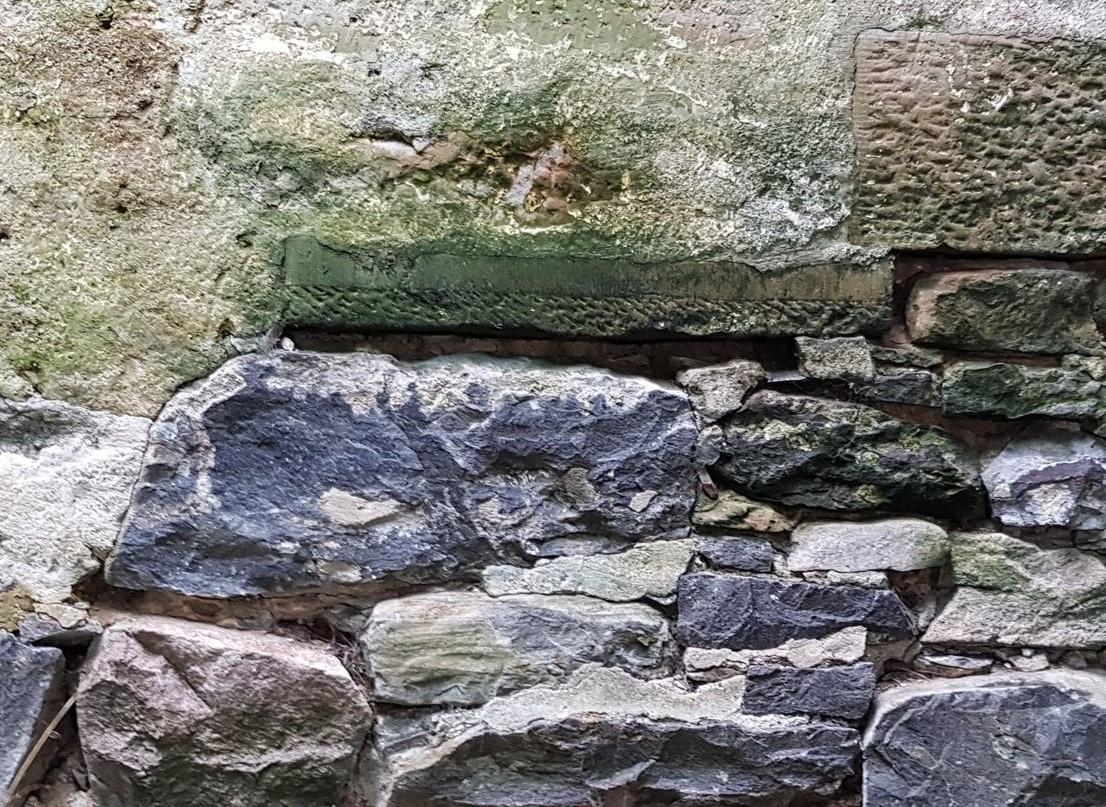
The lead into a groove in the very uneven wall and dressed downwards, as @Onoff says. It is very fiddly but can be done diy, then fill in the groove with lime mortar. Plus a pressed metal angle flashing screwed down to the crowns of the roof sheeting and up the face, with the lead dressed outside it, The troughs of the roof sheet filled with specially shaped rubber fillers which the sheet supplier can provide, with these sealed / glued in on top and bottom. The poor old rain has no chance. I've never done it personally but understand that the lead is much easier to handle in shortish lengths, but lapped of course. -
Button on tiled in toilet cistern not working
saveasteading replied to Jilly's topic in General Plumbing
It isn't by any chance, all one access panel? If it's like my concealed systems, the cistern is behind there and linked to the button by a plastic tube the diameter of a drinking straw. That simply puffs some air and releases the syphon. If the tube comes loose on either end it doesn't work. Maybe the button can be removed very gently. Just maybe the tube will still be loosely attached to the button or visible through the hole. -
OK> I'm not but it isn't my house or problem, and so I will leave this conversation.
-
I've met very few builders who can find and resolve leaks or damp. I don't know why, but perhaps it is a joined up way of thinking that few have. Hence an older general builder may be the answer as @Alan Ambrosesuggets. failing that, Joiners see the trades before and after them so perhaps can join the dots. BUT please do as I suggest and look at it in the rain.
-
Hoorah. I have said this to lots of people but it's great that it worked for you. The merchant should take back the surplus as long as you pay transport and allow them the loss of profit. so ask very nicely. But this is sitting on eps with a bearing strength of...not much, and isn't supporting the structure. OOPS I've looked back at the sketch provided and it shows the outer walls sitting on a bit of slab and a bit of eps, all on top of EPS. THIS IS A FAULTY DESIGN. STOP. Likewise, what are inner walls sitting on? @Duncan62 Have you prepared that sketch provided, using details from other systems? It is wrong in so many ways, but the worst is that the stud wall sitting like it does will not be supported.
-
A very good point. I don't think you will find spacers for 10mm anyway. Ahhh, but there are the bars the other direction too, 6mm or 10mm twice. and do gap remains. So it is a very heavy, single layer in mid slab. Have a word with your designer and ask for an explanation and a solution. You want an agreement to omit one layer, not to increase the slab depth. I also find the 25mm top cover strange. that will got very close to the surface because it is all approximate and it is wobbly stuff. The numbering on the sketch all seems to be random. It looks like it has been wrongly copied from someone else's system. Maybe time to pause and check the design is sound and people know what they are doing. Isn't that a very thin strip of insulation retaining the slab? And a cold bridge from slab, through sole plate to outdoors?
-
You need to go outside to look when its raining. My hunch is simply that the rain is running down the wall and creeping in above the blue bricks. how it gets to the inner skin I cant say, as I dont know the construction. also look at the downpipe for leaks, whether dribbles or spouting. It is a bad detail but it is yours to resolve. The solution may be simply sealing the joint.
-
Number 3. No drainage required.
-
I think it is a very different purpose. Fibres in concrete are only there to resist visible cracking, by causing millions of tiny cracks and slightly helping to spread the load. Steel mesh in the middle of a slab does the same. For strength though (beams and suspended slabs) the steel is working in tension or compression with the concrete also working in compression. Keeping them apart makes the steel work more like an I beam, with the middle concrete keeping them apart. That's why I am surprised to see all those domestic floor slabs on BH with heavy steel mesh top and bottom. Nobody is going to fall through the floor, even with zero steel. Perhaps the worry is dropping a piano from some height when there is eps under the slab. On our Highland project I argued back to the compulsory external SE that it was overdesigned and they (reluctantly) agreed. Saved us £20k or so by shifting from 2 layers of heavy mesh , to fibre anti-crack. Does that begin to answer your question or is it off track?
-
Tell me more @Chanmenie Do you still have the spec for it? In my experience the fibres make it very heavy and sticky to handle. Isn't the additive just to reduce that a bit? I agree re the rebar. But then you say it didn't need floating. This sounds like cemfloor which self levels because it is incredibly fluid. I wonder how much fibre content could go in that before it became sticky and stuck in the pump hose. I'm still interested in this self-compacting claim. There are things I haven't heard of , of course, but on structural concrete you would still be using vibrating pokers to get any trapped air out of it, to move it along, and to compact it. I wonder if it is a fancy name for 'runny', and a bit of air in the concrete doesn't really matter in a domestic slab.
-
It isn't easy. It is a skill. Self levelling screed will do exactly that because it is very highly plasticised and is all fines. I suspect this product will flow with less shovelling than a normal mix, but will still need tamping and floating. Even a powerfloat finish has a 3mm flatness tolerance. But I know nothing about microcement, except that is a hand-trowel applied screed. so can't advise on what accuracy or finish you need below it. 100m2 will require crack control joints.
-
Can you warm the space? Not with gas though as it creates humidity.
-
I've had to cover a concrete floor just 21 days after pouring 150 thick, pumped concrete. Normally I allowed twice that to be sure. It seemed to be taking too long to dry but suddenly it made it (in normal damp weather). Opening all doors and windows daily was more effective than dehumidifiers. I've done this many tens of times, but maybe others have been less lucky. I think , cynically perhaps, that the main driver of this concern is that flooring contractors want an extra for sealing the surface. They made me sign a firm that said I had declined the sealant: another sales ploy. On the other hand, I controlled the concrete mix and forbade extra water. But a dry screed should dry very quickly. If there are windows in yet, the presence or absence of condensation is a good guide.
-
Everything is therefore wrong. I've heard it said but it is nonsense / ultra cautious. 150mm slab would dry in 5 months?. No 2mm is cautious too. A 150mm puddle would dry more quickly than that. A screed will only be 5% free water or so.
-
Perhaps I am missing something but I can't see why this stuff is necessary. It seems to be a concrete recipe with plasticiser and a very high 'fines' content. Like a pump mix but with even more sand. You might choose it in a structure that was crammed with reinforcement so that it gets through the gaps. Or because it stops ignorant workers adding lots of water for their convenience. I think it still needs skill and levelling and floating. On the other hand it is just a thick screed so anything will do. Can anyone explain "Only" 200mm? This is warehouse with 10 tonne forklift thickness, except you wouldn't put eps under it.
-
OK. If you said that then I missed it. That's different. Get professional site specific advice.