
ProDave
-
Posts
30857 -
Joined
-
Last visited
-
Days Won
427
Everything posted by ProDave
-

Credit/Debit Reward Cards, Discounts etc
ProDave replied to Ferdinand's topic in General Self Build & DIY Discussion
Screwfix do their "trade" versions known as plumbfix and elecrtricfix that give you a few percent discount and a monthly trade account. Plus you can use the trade entrance if you go to the shop and get free coffee. You usually have to prove you are in the trade so not that easy but some self builders might manage it. -
Yes as Jeremy says, SEPA have exactly the opposite view to the EA. At the start I even measured the flow rate of the burn (which turned out to accord with their official figures) and worked out the dilution rates but the original answer was a firm NO and it was SEPA that suggested the filter mound system. And yes it is a lesson learned that if you take to long, building regulations can change and what was okay, is no longer allowed. Discharging to the burn is the simplest and cheapest option so I am very pleased that is what we have ended up with. The filter mound would have used about £1000 worth of graded sand and would have left a "hill" in the middle of the garden, and needed a pumped output on ther treatment plant.
-
I didn't compare. I went for the recommendation of what was best and proven to work with the wood fibre cladding. For my entire house the render materials, that's all the render and all the corner beads, bottom beads, window beads etc has cost £3662 excluding VAT (I have paid the VAT and will reclaim it at the end of the build) That was sourced through a local low energy house builder so some big bulk discounting there. I looked at buying the materials myself and the best price I could find was £5K I don't like to say bad things about other render systems but my plasterer has used another well known render system and says it has big problems with cracking. He has never had that problem with the Baumit stuff.
-
I only wondered as a lot of people that have floated / polished concrete leave that as the finished floor.
-
Yes I know this topic very well. We have a burn through the garden, originally SEPA said no to discharging to the burn, so I ended up designing a filter mound system and that is what planning passed. When it came to the building warrant, I suddenly found building regs had changed and the area of land I could put a filter mound on had shrunk, and was no longer big enough. For a while I had no drainage solution = no house, until SEPA changed their mind and said "why not discharge to the burn" Problem solved and we are now proceeding but it was a VERY worrying period. Aparently SEPA only allow discharge to a watercourse as a "last resort" and we had reached that last resort stage.
-
Talks on how to build a 'good' house??
ProDave replied to TheMitchells's topic in General Self Build & DIY Discussion
I fully agree that building regs need to be improved and enforced, but how? The Code for sustainable homes tried that but it failed and missed the target. I have a relative who is a builder and he built a house to CFSH level 5. He said it was just a ridiculous paperwork exercise having to record when the workers had a lunch break and where they went for lunch. I am not sure if he was joking when he said he had to record how many times they flushed the site toilet. There was more emphasis on providing a bike rack to park a pushbike than ensuring the insulation was fitted properly. -
Yes it's a lime based render system. No problems at all so far. We have used LESS materials than estimated so far. Base coat is called MC55W and is mixed from a powder. As it starts to go off, a fibreglass mesh from a roll is pushed into the wet render. Next day a primer called DG27 is painted on, it's a bit like PVA. Then the top coat called Silikon top is applied, that comes pre mixed in tubs. You can get different colours and different textures. Temperature has to be above 5 degrees for 3 days after application. No problem at this time of year, even up here.
-
We are using the Baumit.com render system, marketed in the UK under the "lime green" name (which I think is a very confusing name as peiople expect that to describe the colour) I know from talking to the plasterer today that it can be applied to EPS so should be okay for an ICF build. Here's some pictures of it on my blog http://ardross.altervista.org/Wilowburn/let-the-rendering-commence/
-
The cheapest price I got was from SIG in Inverness. I believe they are a national chain so worth a try?
-
I looked at a GSHP. The cost of the pipes AND the antifreeze to fill them is as much again as the heat pump. I could have done the ground work myself with my own digger but it still would have been a lot of work. then there is the anti freeze needs replacign every 10 years, another expense and a problem to dispiose of the old antifreeze. I just decided it wasn't worth it. Niow a heat pump fed from the water in a burn, Too much regulatory hurdles, but one might "experiment" later on when it's all signed off and nobody is looking........
-
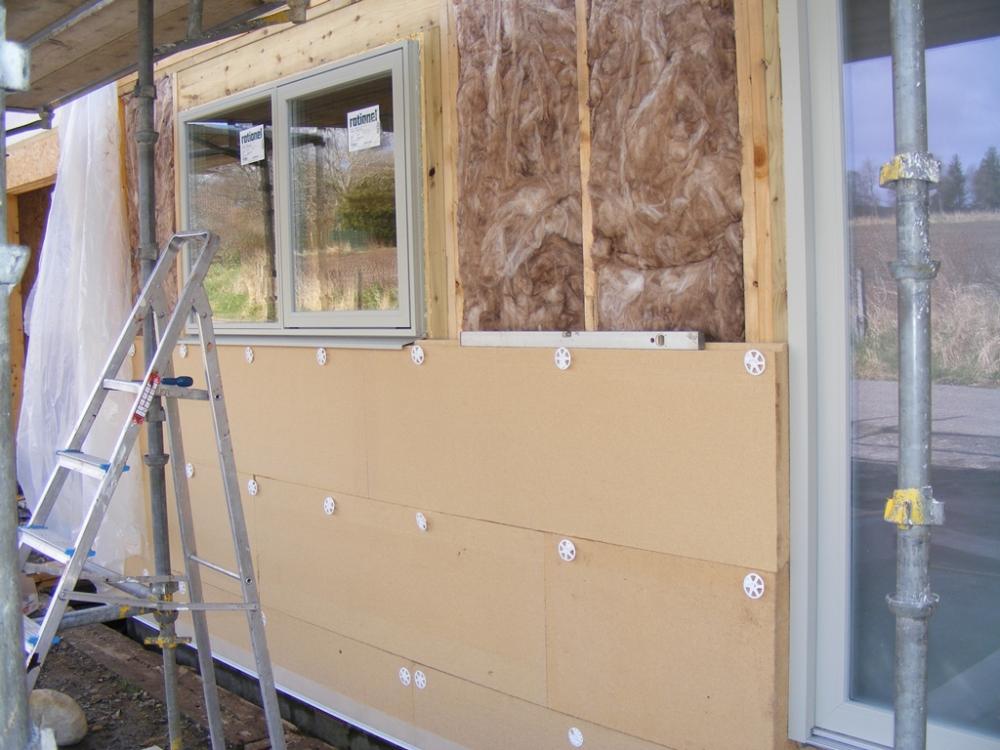
Knauf Earthwool Frametherm 35 is the product you want, available on a roll, or batts. Batts are probably better for a roof.Conveniently available in 90mm thickness and 2 layers nicely fills between 195mm timbers. I am using the roll version in my walls:
-
All looking good. Clearly this is a well rehearsed procedure that your builders have done before. My only comment is they seem to have drilled holes in the slab to fix the temporary braces to. How do you know they haven't hit UFH pipes and how will you fill those holes so they don't show on your floated concrete floor?
-
Handling transition into garage on raft foundation
ProDave replied to jack's topic in Garages & Workshops
I will throw this in for discussion, I might be wrong: WHY do you need to keep the EPS upstand at the entrance to the garage? I would consider cutting it away so your concrete ramp from the drive up to the garage abuts directly to the concrete slab of the garage. yes it creates a cold bridge to the garage slab, but it's a garage, does that matter? As for water under the garage door. That's a problem in our present house. I kept thinking what's needed is a substantial rubber strip or something, on the lines of a TINY sleeping policeman, perhaps just an inch tall. I am sure I have seen such things screwed to floors where a roller door comes down to meet it, but I have never found anything for sale (but I didn't look very hard) The side door, lay your paving level, but incorporate a drainage channel between the slabs and the garage floor. -
My roof membrane is straight on the sarking board and that's normal up here. To do that is must be a non tenting membrane. Draping it over the counter battens makes it more vunerable to damage and is something you would only do if by mistake you had bought a tenting membrane so it could not touch the OSB. As already noted, Sarking board is a building regs requirement in Scotland, I would never want to go back to the English way of not using it.
-
I wired a straw bale house that had one like this, at least similar output levels. The idea was the high water output heated a large thermal store so you only needed to burn the stove every few days and the low room output was to try and ensure you didn't overheat the house when doing so. I believe from the occupants it is working well, but it's situated in a large double height space that can stand a high heat input for a short time. Put it in a small room and you might have a problem.
-
Please don't toddle off. Nobody is suggesting you are a fool, your contributions here are welcome. All this thread has suggested is that the claims of one particular type of insulation have in the past been over stated and we don't trust that type of insulation. And we suggested some alternatives that might be better. All without calling anybody a fool.
-
Interesting debate. Yes a lot of people here think building a well insulated low energy house is a good idea. But I don't recall ever making anyone look like a fool for not agreeing. I recall one discussion on the old place where the poster was adamant he wanted to do just enough to comply with regs and no more. Some of us suggested he could do better and it wouldn't cost much to build to a better standard. He was adamant he just wanted to do the minimum. I don't recall him ever being made to look a fool or feel unwelcome.I certainly hope he didn't feel that was the case. It still amuses me that people will only buy an A+++ rated fridge, and then put it in a house with an EPC rating of F.
-
Objections: the best invalid objection you've heard
ProDave replied to ToughButterCup's topic in Planning Permission
We are more "politically correct" up here, and we have a "community council" instead. One local community councillor objected to a poly tunnel that had been errected in a field on a farm near here to grow vegetables in. Have some people got nothing better to do? -
Not long after I moved to the Highlands and started as self employed, I did the wiring for a loft conversion, that due to the very limited headroom used a layer or 2 or this wonder foil type stuff as its only insulation. I often wonder how that worked out. I could tell the owner didn't have a clue as he was proud of the fact he had "insulated" the eaves storage space with the leftover bits, but on inspection he had covered some bits with what he had but left huge gaps. Fat lot of good that will have done. There is a house in our road that whenever it has sold (twice now) it has been marketed as an "eco house" Just about the only things it has that could even remotely qualify it for that title is solar thermal water heating panels, and (rather poor) triple glazed windows. It has an EPC rating of D, worse than our "ordinary" house. This is one of the reasons why I will not describe our new house as "eco" prefering to use the description "low energy" instead.
-
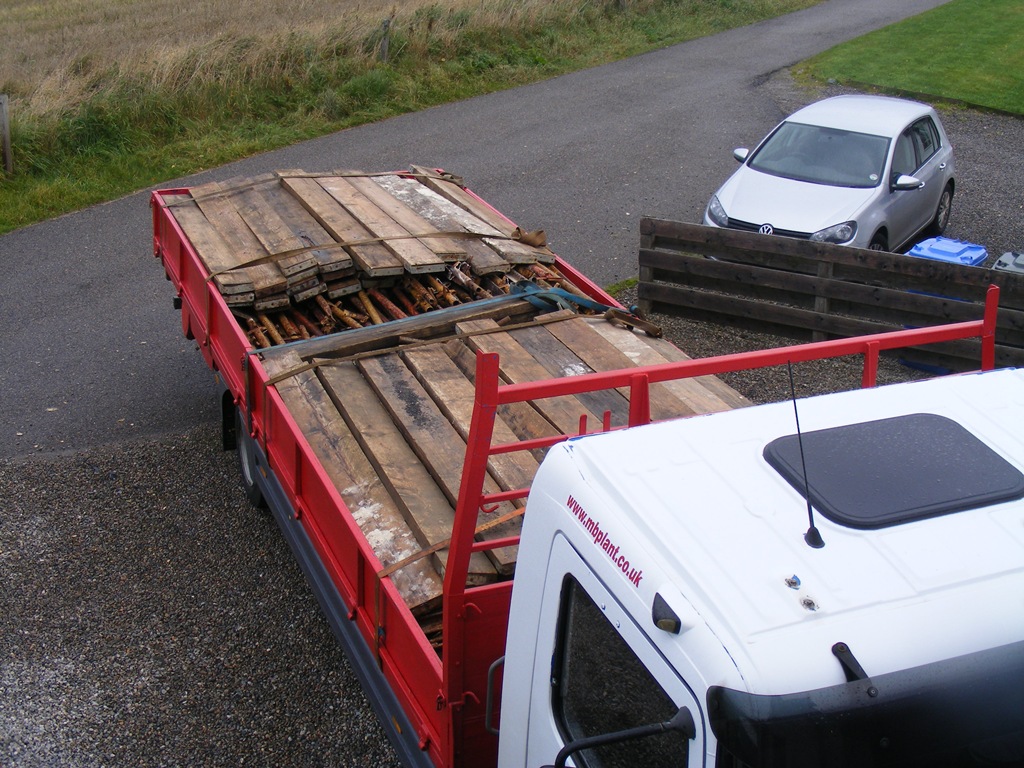
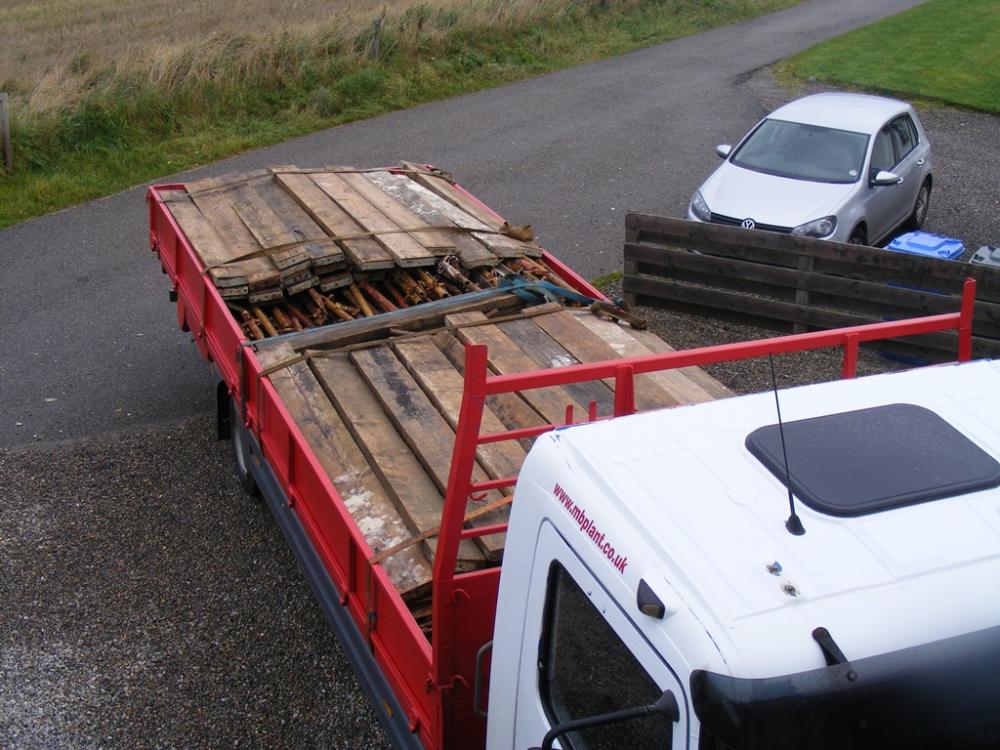
When I bought mine I hired a 7.5t flatbed truck to go and collect it. TIP if looking for one of those, try a plant hire firm, none of the "van" rental firms had a 7.5t flatbed, box van yes but that would have been a pain loading and unloading.
-
I don't recall any particular problems satisfying NHBC. Yes they required more inspections than building control but there was never any real issue. There were a few points where BC and NHBC differed and we had to assure one of them that we would change a detail, while telling the other we wouldn't. At the end of the day, my house has been detailed by an architectural technician and a structural engineer. As long as I build to the detail in the plans, and BC are happy at each inspection, then I am happy, and in an ideal world that should be all that anyone requires.
-
Interesting how opinions differ. My builder was adamant that as he was not doing the whole build he could not rely on his own insurance. It's irelevant anyway, if you take out a self build insurance it will include employers liability, so whether you use it or not, you will have paid for it.
-
I think the concensus there is store the hot water at a low temperature to minimise standing losses and only heat on demand with an in line water heater as you draw water off.
-
BT/Openreach New Connection
ProDave replied to worldwidewebs's topic in General Self Build & DIY Discussion
Yet another example of how different parts of OR have different rules. Up here they still use SWA phone cable and that's what we have. One continuous length that starts under the floor in the house, under our garden, under the road and ends where it will terminate to the trunk cable in the verge. The only bit in ducting is under the road. -
He's right on the fact YOU need to get a self build site insurance policy in place. Part of that will be your employers liability insurance certificate. Like it or not, you are seen as the employer for any contractors you hire. My builders that were contracted to build and erect my frame asked to see this before they started. As regards materials, anything your main contractor supplies and installs should be charged to you at zero VAT as should his labour. It is only materials that you buy and fit yourself that you will have to pay the VAT on and claim back later. If he supplies materials that you are going to install then there is an argument that he should charge VAT on them. That's a matter for you to discuss with him. As long as you don't go overboard that may not be an issue.