
ProDave
-
Posts
30861 -
Joined
-
Last visited
-
Days Won
427
Everything posted by ProDave
-
If more than one service has to cross the road, get water in first (as theirs has to be deepest) and when the road is up to lay their pipe, drop in appropriate coloured (black for electricity, grey for telephone) ducts, with draw strings through them so you only need to have the road up once. Only 1 road opening permit and less delays.
-
Is this to make a road crossing? It took half a day to make the road crossing over our single track road, but because of the VERY low level of traffic there was no requirement for lights, they just slid a big steel plate over the trench when a car wanted to pass. I always understood the utilities had a permanent road opening license and don't need to apply to the council each time, so why are the council poking their nose in?
-
I have a "scaffold staircase" 6 "treads" each 2 scaffold boards wide, and 0.5m rise per "step" So it's big steps put perfectly do able to walk up them, and big items can be lifted up a "step" at a time. That's how all my windows got up to be fitted from inside. I'm out all day but I'll try and post a picture this evening.
-
Hi and welcome (back) I am glad you have found us.
-
The Baumit render system worked out about £20 per square metre for the render, and about £25 per square meter for the labour to apply it. I used 100mm thick wood fibre board that is a lot more expensive than cement board, but the whole point being it's another 100mm of insulation on the outside of the building.
-

Warm Water Coming From CWS Tank Overflow Pipe
ProDave replied to Onoff's topic in Boilers & Hot Water Tanks
Well if water is flowing out, it must be also flowing in somewhere, so which if either header tank is re filling? Another possibility: A thermal mixer on say a shower failed and back feeding mains cold water into the hot water system? -
Looking for a triple glazed roof window....
ProDave replied to ProDave's topic in Skylights & Roof Windows
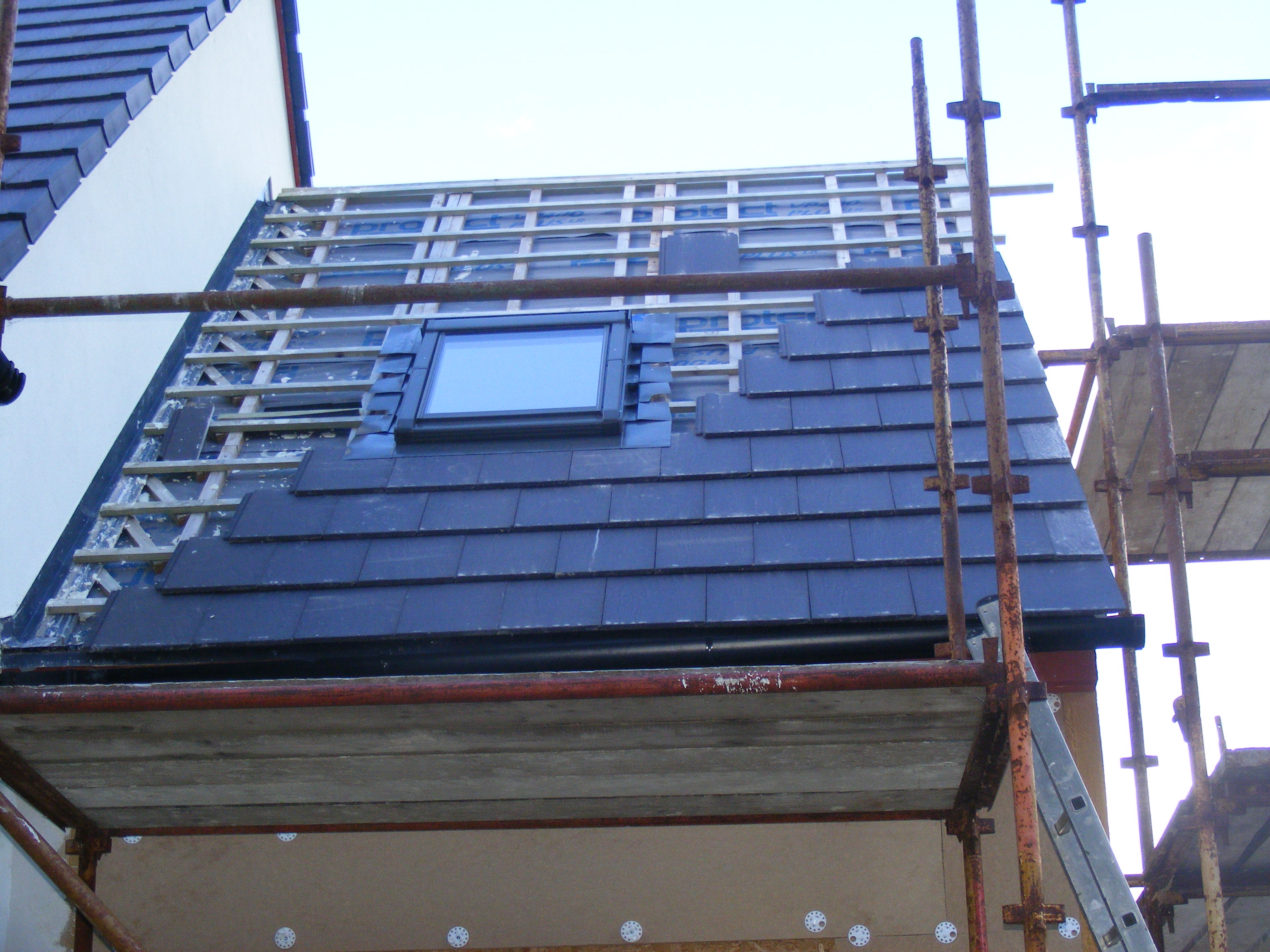
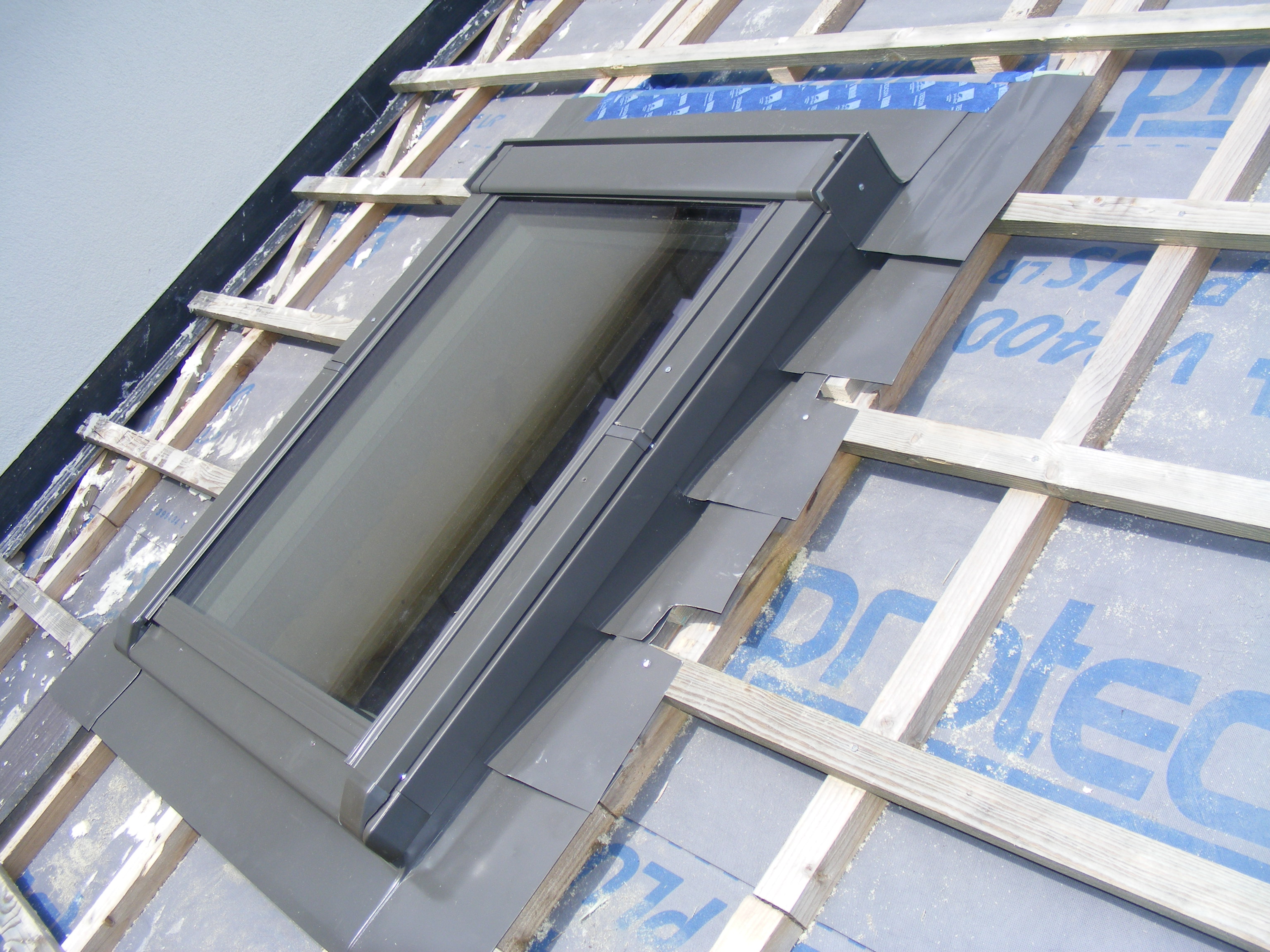
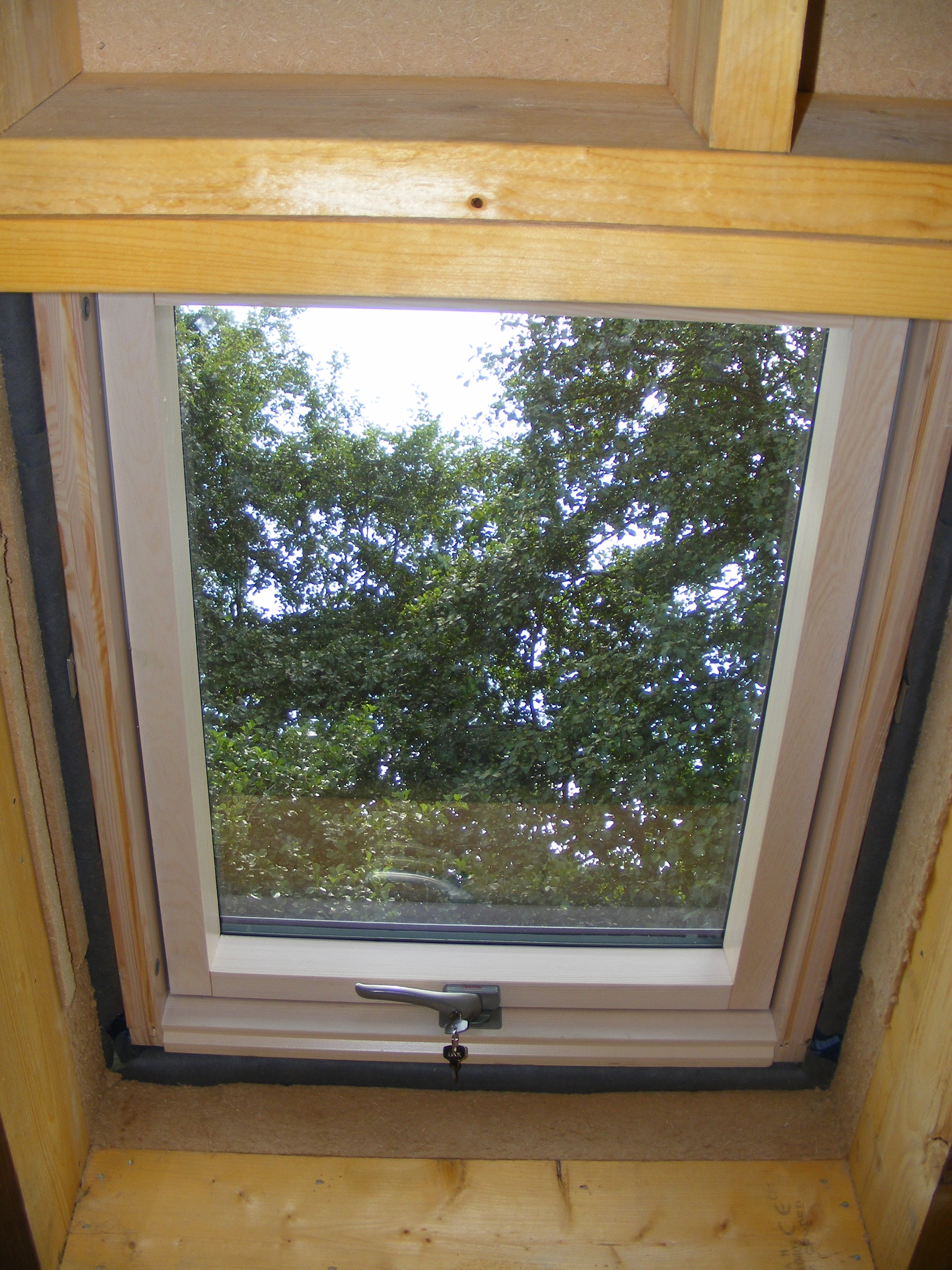
Yes the flashing kit works for my tiles that's the easy ones done, now I need to start cutting tiles up the side of the window. Back to "which window" I was doing some more at the new build I am wiring. Previously I had looked at his UPVC velux windows and decided I don't like them. but I noticed he only has those in the bathrooms. In a bedroom he has a Velux 3G top hung with a painted wooden finish inside. Now that I did like and the fittings are much better quality, so I's pretty well decided that's what we will use for the two in the main part of the house. The painted wood finish inside will go well with the Rationel windows.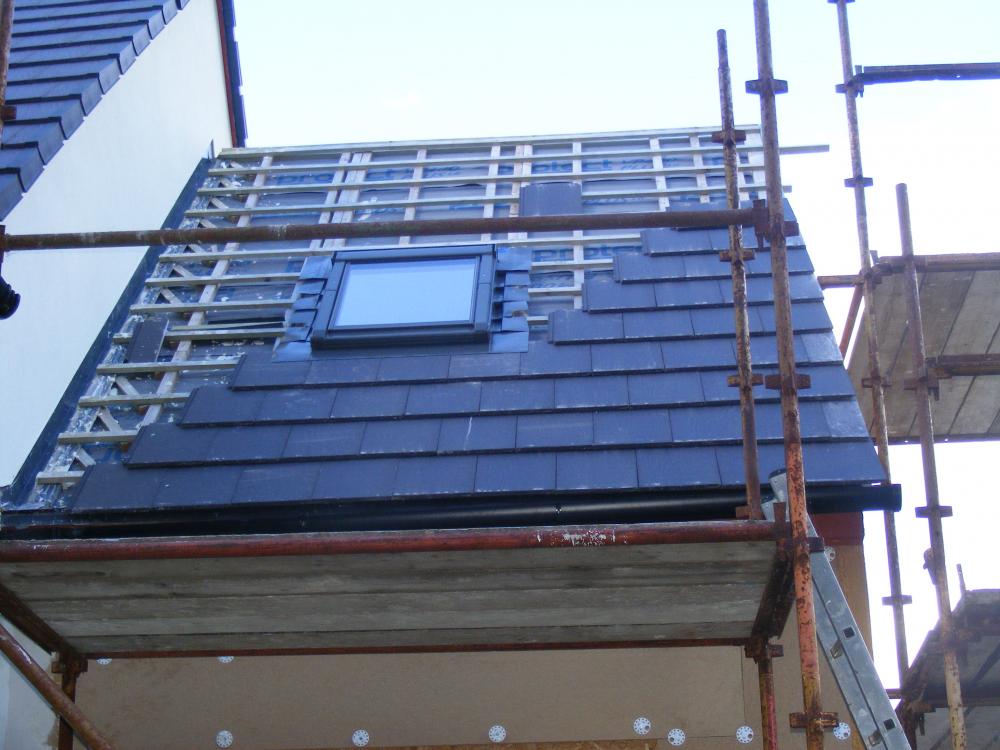
-
Warm Water Coming From CWS Tank Overflow Pipe
ProDave replied to Onoff's topic in Boilers & Hot Water Tanks
How was the water being heated at the time? immersion of boiler? If immersion, probably the thermostat failed, water boiling and venting out the expansion pipe. If the boiler, heat exchange coil perforated. If the heating header tank is higher than the CW header tank, the slightly higher head would over fill the CW header tank. Is the hot water running clear or is it dirty? contaminated by the CH water) Time so consider knock down and rebuild? there seems to be a lot of "issues" with your house. -
Doorway in solid wall to brick up
ProDave replied to Calvinmiddle's topic in Bricklaying, Blockwork & Mortar
I did the same in our previous 1930's semi that was 9" solid brick walls with no cavity. When I bricked up the doorway I used 3" blocks giving me a small cavity that I filled with insulation. It probably didn't meet with building regs but I thought it was better than a solid wall and nobody ever asked.... -
Too late if you have already bought it, but avoid glass wool. Used Knauf Earthwool frametherm 35 instead, MUCH nicer to work with. I got a very good price for it from SIG in Inverness. It's also much stiffer than glass wool so when you push it into place between the studs, it says there, even on the 45 degree sloping ceilings.
-
These are what you need https://www.amazon.co.uk/100-x-insulation-plastic-washers/dp/B011ETWAAI I have used thousands of them to fix my wood fibre board to my house. Mine are actually a different make (rawlplug) but look very similar. Search for "insulation washer" and you will find them.
-
Make house temporarily weatherproof - or leave it to elements?
ProDave replied to readiescards's topic in Brick & Block
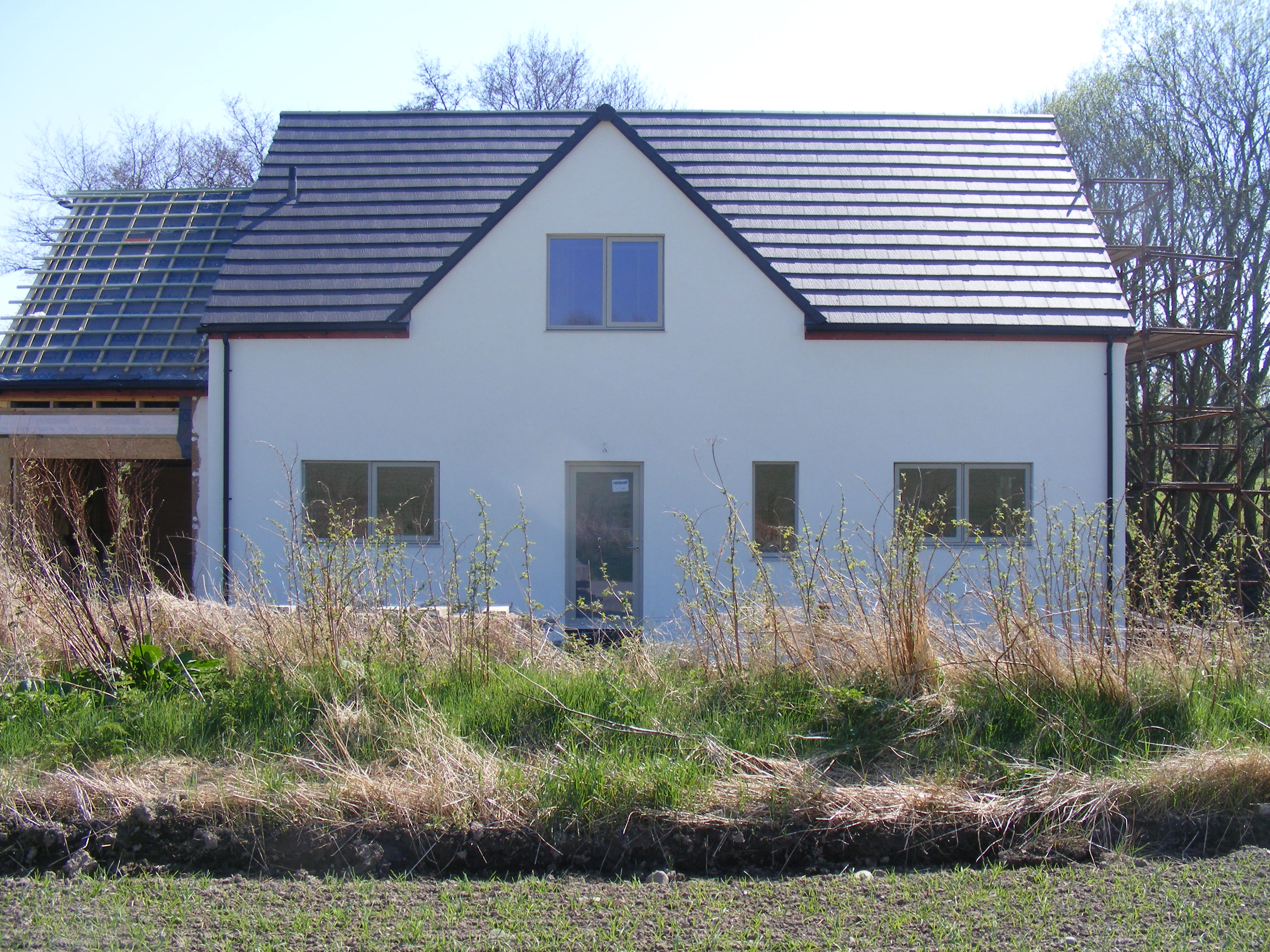
Our frame was exposed all last winter. I just sheeted the entire west gable end that takes the prevailing weather ith OSB over the windows and then a sheet of DPM over the whole wall. I am still in that situation with my sun room that for financial reasons is not getting completed yet. That has the membrane on the walls and timber battens ready to take the wood cladding, and sheets of OSB over the windows. I scrounged a couple of old patio doors that were being thrown away so I can at least let a bit of light into the otherwise boarded up room. -
If you obliterate the bottom bit of stud with said FBH, then just snap off the bent screws that remain. The sistered replacement stud will land alongside the resulting mess. Fix with brackets and screws or diagonal nails.
-
Cut each stud one at a time say 100mm above the level of the pipe. Knock the bottom section out with a FB hammer. Sister a new bit of stud next to it with the required hole drilled in the right place with any required reinforcing. Now please don't tell me it's a load bearing wall...........
-
I had an interesting comment. When I had the home report and EPC done for selling my house, the surveyor said he can only take the solar PV into account if the generation meter is in the same place as your consumption meter (which it is in my case). If the generation meter had been in the garage with my inverter he said he would have to ignore the solar PV for the EPC. Bit of a silly rule if you ask me.
-
Okay, coming at this from a novice point of view, having never (yet) ducted an mvhr system. I would have assumed one could get (or make) an in line coupler to join two lengths of ducting together. then no need to work it out, just pull through until the roll runs out, insert coupler, start next roll, no waste. No I know why we don't do that with UFH as in line water connections that you can never get at are a bad idea. But an in line connection in an air pipe, that in many cases will be in a loft space etc where you can get at it does not sound like a bad idea at all. If in line couplers are not available I think I have just found a gap in the market.
-
If I am understanding it correctly, all the cantilevered bit is contained within the walls of the building so within the insulated envelope of the building. the only bit needing any careful attention being the "floor" of the pod. I think the cold bridging problems start when you are talking of cantilevering an external structure such as the floor of an open balcony.
-
Looking for a triple glazed roof window....
ProDave replied to ProDave's topic in Skylights & Roof Windows
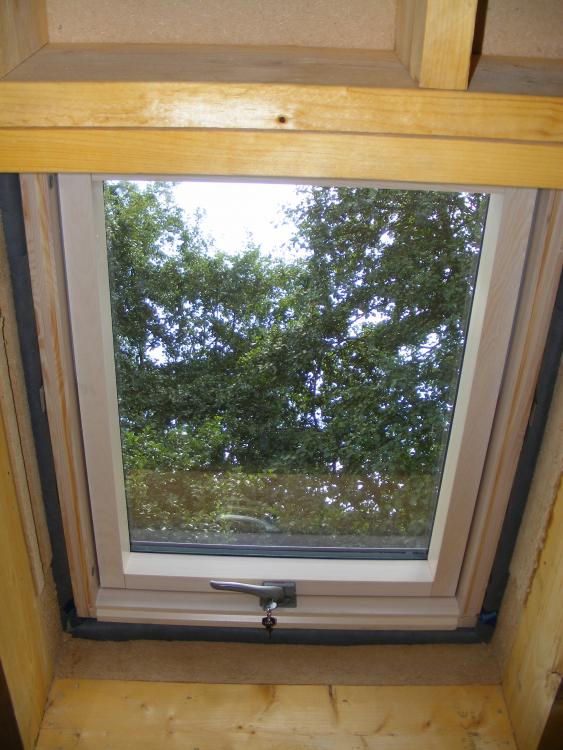
Yes all sorted and the window fitted this morning. The flashing kit was overly complicated. Not helped by the instructions being purely pictorial with no words and not that clear. The confusion was the flashings down the sides which are made from a number of individual pieces. At first I thought it was meant to be something complicated whereby you interleaved them with each row of tiles but that wouldn't work as each flashing piece was shorter than each of my tiles. Once you understand the flashing is just to create a hidden gutter down the edge of the window and is entirely under the tiles and bears no relationship to tile size it all made more sense. The other thing set to challenge you is the kit provides twice as many side pieces as you need leaving you with one of those "what are all these left over bits for" moments. Also had problems with the top flashing across the window. For some reason the two ends were turned upwards which made no sense whatsoever and the upturn was not shown in the instructions. After much head scratching, I flattened the upturn and all made sense. Another little "challenge" I suppose. I think we have decided that for the bathroom windows we will use Velux. I know it's £100 more for each window but it's more important to get it "right" in those rooms. The things that let the Eco+ down are the finish is not as good, and the trickle ventilator mechanism is a bit cheap and nasty. At the end of the day, it is what it says on the tin. A budget priced 3G roof window that does not have the finish quality of more expensive makes.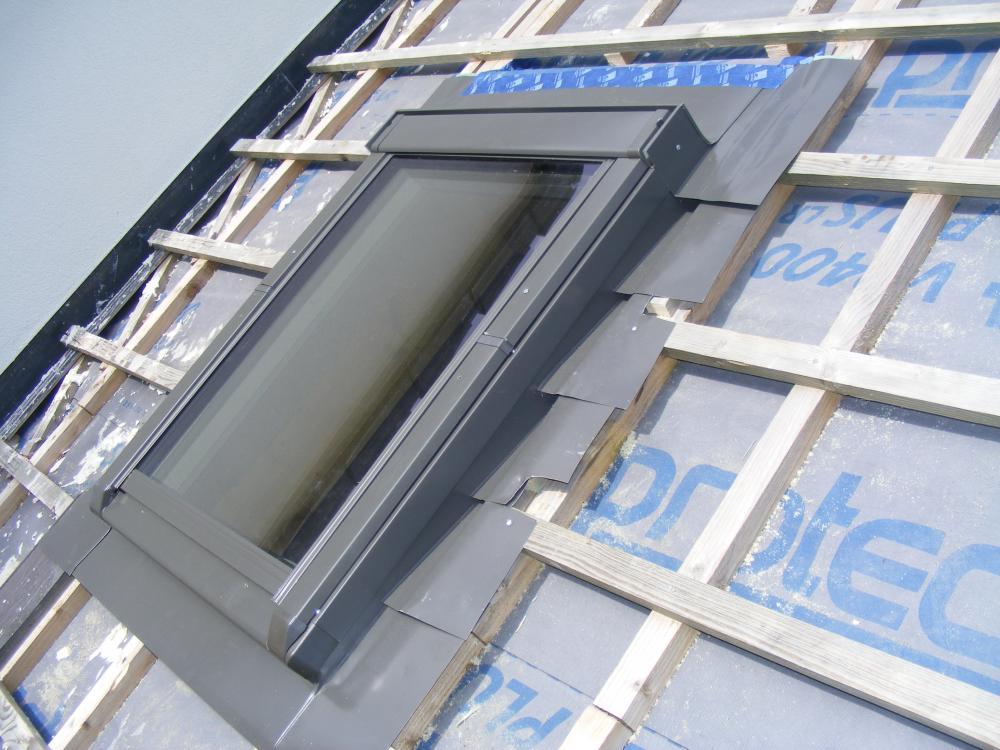
-
That website is VERY short on details, and no prices.
-
We have a thermostatic mixer shower from a UVC that normally gives us a decent shower. but the old shower head was leaking, it had actually cracked so we needed a new one. SWMBO bought one while out shopping and tried it this morning and complained the flow rate was pathetic. I am an evening shower person so have just tried it, and pathetic flow rate was an understatement. What could be wrong. Well I soon found it. Inserted into the fitting on the shower head where the hos plugs into was a "bung" with 3 tiny holes in it. No wonder water was struggling to get through. The "bung" is now in the bin and normal showering restored. No mention on the packaging about water saving, low flow or anything.
-
Rest and relaxation - escaping from the build
ProDave replied to Stones's topic in General Self Build & DIY Discussion
That's because he has what we know as a "stink pot" rather than a raggie (rag and stick) boat. -
The cheapest DIY 4KW system I have yet seen was on ebay for £2000 I haven't looked lately. Best to run the DC cabling over the 12M run, in conduit. Provision for four 4mm square individual cables. There are less issues with volt drop on the DC side. Long runs on the ac side can give tripping issue due to volt rise when generating at full power if your grid voltage is high to start with.
-
Yes, but I doubt they will be doing a visual. On my own build the last BC inspection was when they checked the completed timber frame. I asked what was the next inspection they wanted to make and they said "completion" About the only thing they are ionterested in with drainage is a pressure test.
-
Top tip. do NOT connect a PRV to newly installed plumbing. I did that when our water to site was first installed and I wanted to reduce the pressure to the static 'van. The PRV did not work. With no flow, the pressure slowly crept up. I stripped it down and it was full of grit from the new, unpurged pipework. Cleaned it out, re assembled and it now works. so I guess what I am saying is on a new install make provision to fit it but fit a bypass until everything has been purged and is nice and clean.
-
Sounds like the clutch. First time the drill jammed when I was drilling a stone wall with my SDS, the racket the drill made I thought I had stripped the gears in the gerarbox, but it was the clutch slipping, as said so it didn't break my wrist. Up to that point I didn't even know my SDS drill had a clutch.