ProDave
-
Posts
30862 -
Joined
-
Last visited
-
Days Won
427
Everything posted by ProDave
-
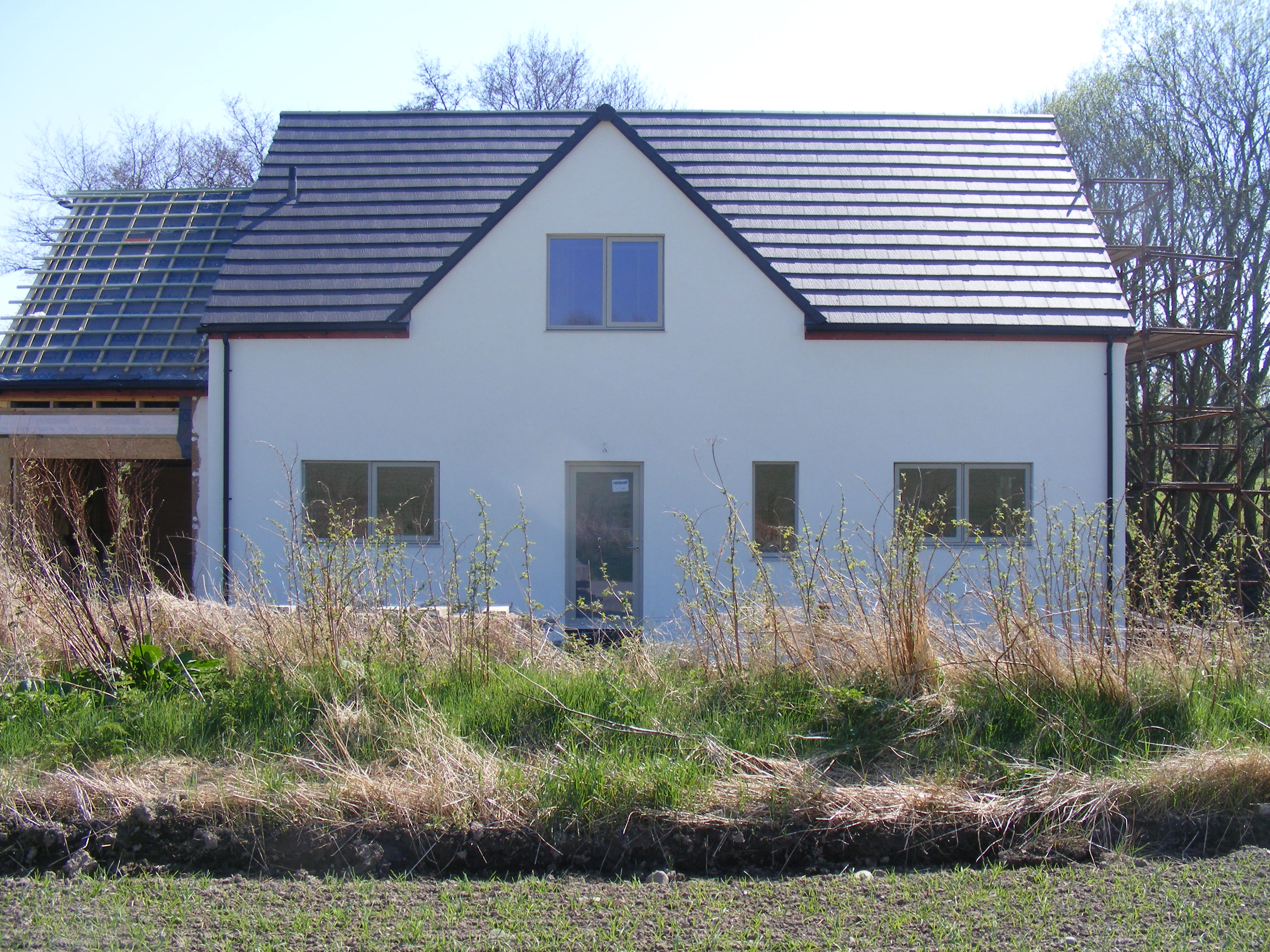
The builders did the ground work (after I had done the excavating with my own digger) and built and erected the frame. I then did: Installed the treatment plant and landscaped the garden, so that was the digger finished with so I sold it. The roof tiling Insulating the frame and the wood fibre cladding The builders came back and fitted the windows and a plasterer came and rendered the house. I then carried on with more insulating Joinery floors and internal walls (oak flooring downstairs) Plasterboarding Wiring Plumbing Under floor heating The plasterer came back and plastered all the rooms I had a tiler to tile 2 floors as he could make a better job than me and I had a joiner hang the doors onto the door frames I had made because he can do a better job than me. I fitted the kitchens, bathrooms and utility rooms, both bathrooms being wet rooms. Mostly SWMBO did all the painting Still more finishing off to do and some of those might not be in the right order.
-
Fibaro switch wiring lack of knowledge!
ProDave replied to Pocster's topic in Networks, AV, Security & Automation
You need a resistor in series with the 12V power supply. At the moment when you push the button you short out the power supply. Never a good idea. It probably has current limiting otherwise it would have already gone bang. and anything else the power supply is feeding will lose it's power when the button is pressed. And yes reversing youe meter probes will read -12V why do you think it would read 0? What is the maximum voltage input rating of the sensor? Is that happy with 12V? If not then I would be using a resistor and zener diode to limit it to 5V EDIT you posted your last reply while I was typing. Yes that explains my point, when the button is pressed you are shorting out the (in that example common single ) power supply so the sensor could not work. -
I will send a PM a bit later
-
Hi and welcome I don't know what the planners are like down your way but up here in the Highlands they are very set against A frame houses. they want either something traditional, or contemporary, but not an A frame.Perhaps you should try and enquire?
-
I would not use a round spiral staircase in a square "room" the old round peg in a square hole situation creating awkward corners you will never get to for cleaning etc. Make a square "spiral" staircase out of timber in the same way a timber stair can wind round a corner, it will just keep on winding like a spiral stair, but with all the treads going out to the corners. Then the space under it could be a cupboard accessed from bed 4.
-
Hi and welcome. There are a few members on here including me not a million miles from where you are building.
-
Are Scotframe putting the kit up? What are you wanting the contractor to do?
-
At least you have the space to do that, unlike the neighbours. But it seems a shame to have to have to do all that if there is a perfectly good shared drain pipe to "somehwere" It has got to be worth talking to BC about it?
-
So, thinking out of the box now. This pipe passes through your land. It carries the discharge from 2 properties to some unknown place perhaps a watercourse. You have a drainage problem on your land due to poor percolation. I would be exploring the possibility of installing a treatment plant with that connecting to this pipe and thus draining to this unknown but obviously working place. To do that i suspect you would have to find out where it goes. I would start by walking down the road to see if there is any place it obviously ends up. then confirm that by putting dye down the pipe. And when concreting over the pipe, insert an inspection chamber primarily as a rodding and inspection point, but with the possibility of joining your discharge to it. Discuss all this with building control, but first try and find out where it goes as they will want to know.
-
You can't pick it worse than me. Sold first house in 1989 a couple of years after the crash. First attempt it sat on the market for a year with no interest. Tried again a year later and it sold in a slow market, eventually. Sold second house in 2003. Put the house on the market. 2 weeks later the gulf war started and the housing market stopped. That took nearly a year to sell. and the first buyer withdrew a week before exchange. Sold buy to let flat in 2013, the market was virtually dead still from the 2008 crash. it took 3 years to sell that. If it had gone on the markey in 2007 people would have been falling over themselves to buy iy and it would have gone to a closing date. Tried to sell old house in 2014 to find the market still dead, Unsold after 3 years we let it to a tenant who still say they want to buy it, but CV19 has buggered that for the time being, Oh how I would love to put a house on the market in a boom time and have people queuing to view it and out bidding each other. when our old house is eventually sold, I never ever ever want to be in the position of owning anything other than the house I live in. There is too much stress and uncertainty.
-
I would want to find out more about where the pipe goes. If you find it connects to a massive leach field under your plot you are going to have problems. It was (is?) quite common for a residential property to have a leach field under adjoining land, we have that at our last house, with a deed of servitude to have the leach field there. It even shows on the land registry map as having the leach field in the field behind our house. I would look up the lad registry maps for his house and see if anything is marked.
-
What is the problem? Which paint to use or how to apply it? The problem with OSB is it is not very flat so a roller might not work well, but give it a try. And I would try with just plain old emulsion paint as you would any other ceiling.
-
Sometimes ebay send out discount codes but usually only for a limited range of sellers. Only once have I actually found one of use and got £50 off a £300 purchase.
-
Sadly for us, just before the virus arrived, the property market in Scotland was starting to boom. with a return of properties going to a closing date, something that has hardly happened at all since 2008. I do hope that pent up demand is still there after this is all over. It took 12 or more years for the property market to get over the last recession, I really can't wait that long if the property market crashes here again.
-
I wired a very large house some years ago, It was only 4 bedrooms but massive. Each of the 4 bedrooms was huge a bed looked lost in the massive rooms, and each had a 12ft square en-suite, bigger than most people's bedrooms. Some people do know how to waste money, but such a shame for a project to end like that. In the last recession there was one like that up here, which sadly got abandoned before the roof was finished so it then sat abandoned for years before it got taken over and completed. When out for one of our walks early on in the shut down we passed a now dormant plot. They had dug the foundation trenches but not even got as far as pouring the concrete.
-
Well if the ground level percolation is okay then you should be good to go with the Puraflow system or a filter mound.
-
That's bigger than my entire house.
-
I looked into the puraflow and also above ground filter mounds. You still need some percolation. The difference, is for these above ground systems, you just dig a 300mm deep hole and do your percolation test in that effectively at ground level. What made that work (in theory at least) for us was it is high water table in winter that stops a normal deep infiltration field from working. So repeat your percolation tests in a shallow 300mm hole at ground level and see what percolation rate you get. In our case building control rejected both and then said "why don't you discharge to the burn" SEPA had initially told us no to discharge to the burn, they say they only allow it as a last resort. I guess by the point BC had rejected two schemes they agreed we had exhausted all avenues and granted us a discharge permit.
-
So what thickness glass for say an 1800 high by 900 wide panel? 6mm or 8mm? 2 hinges or 3?
-
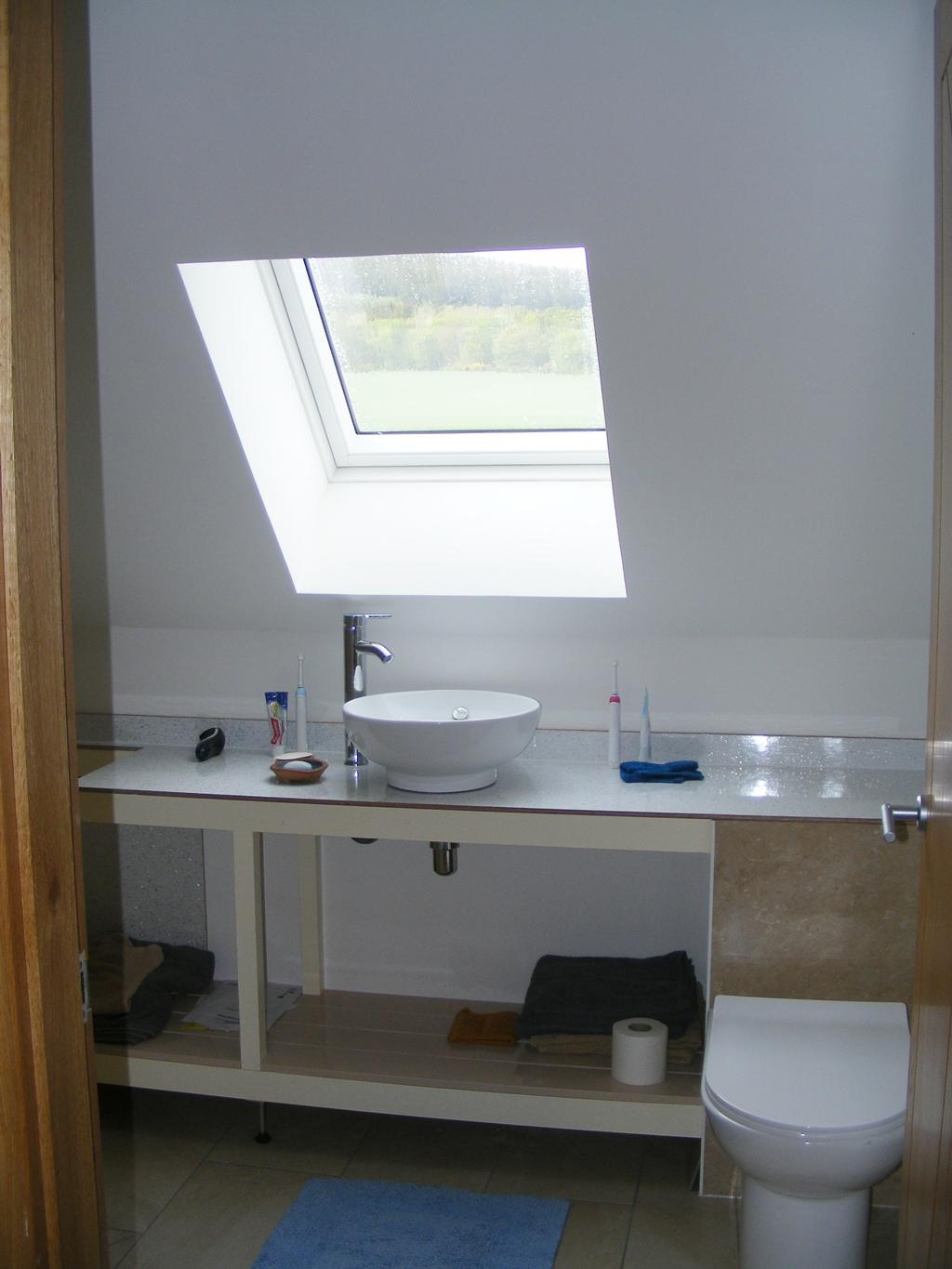
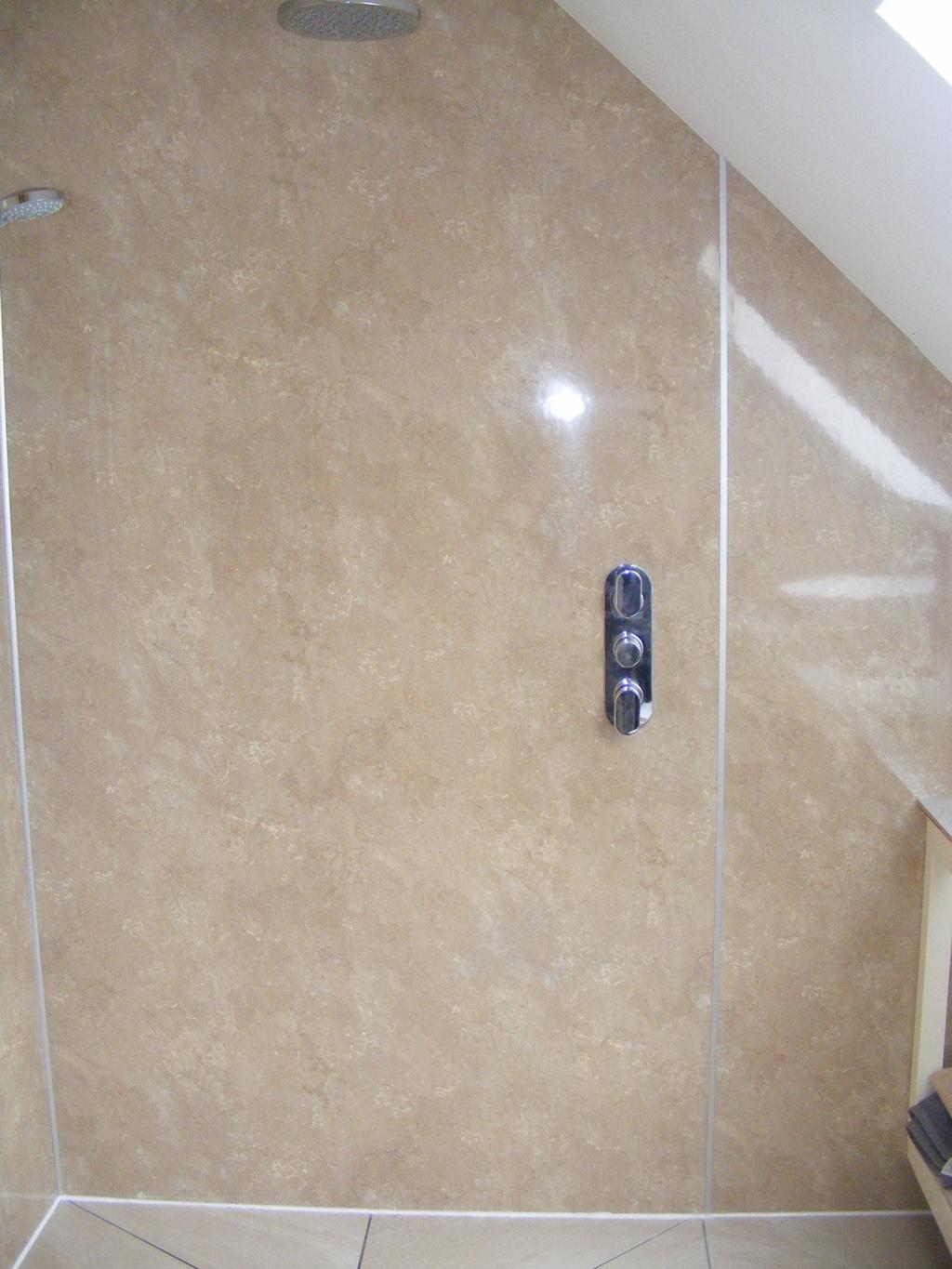
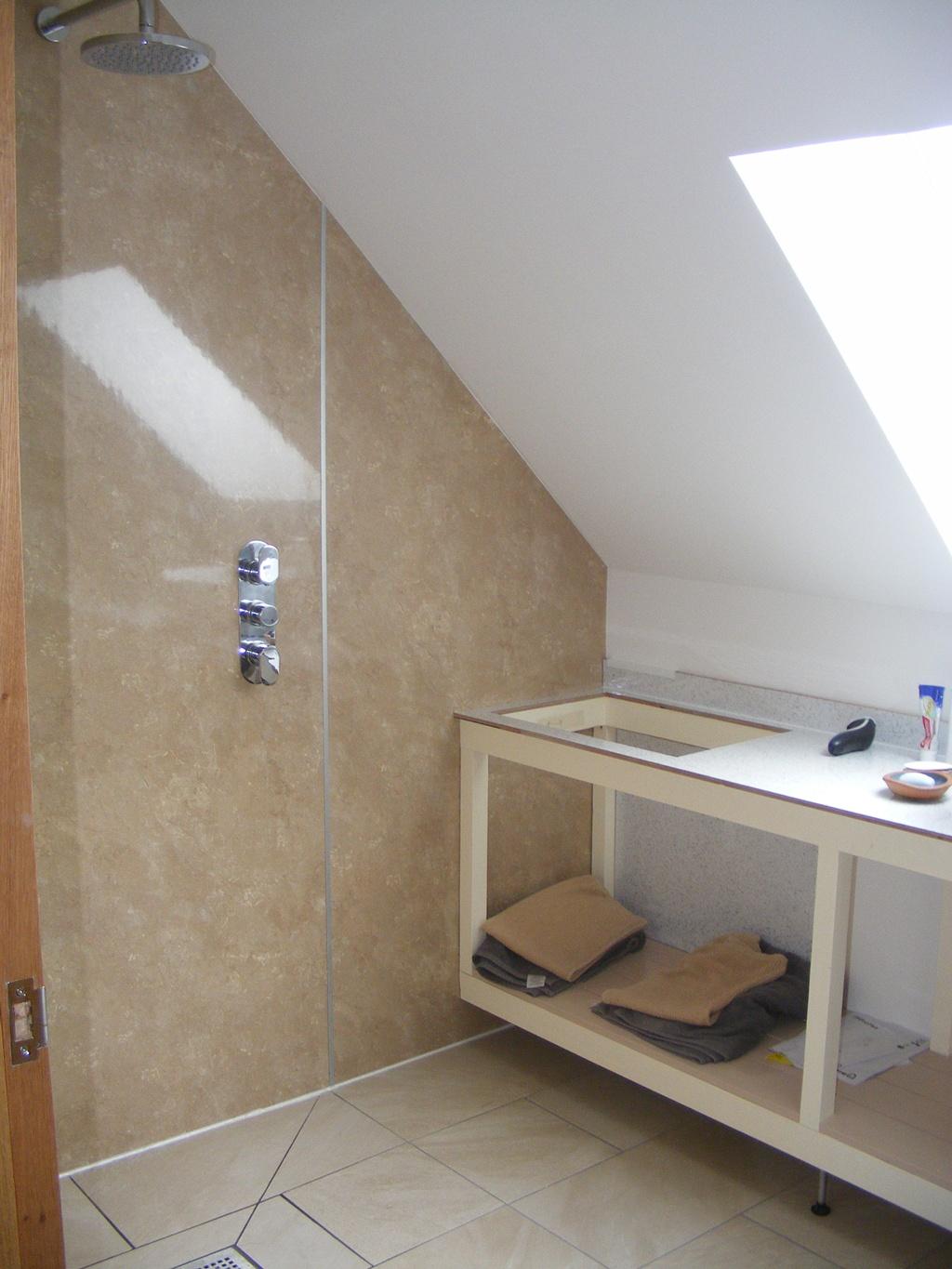
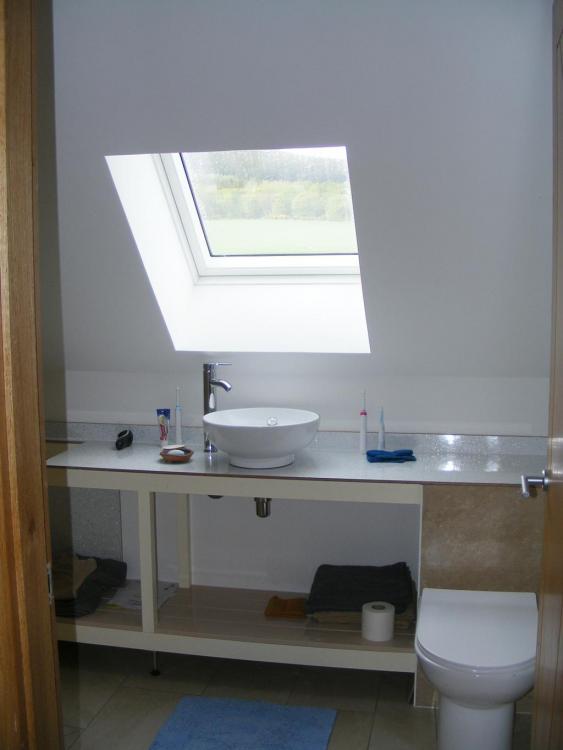
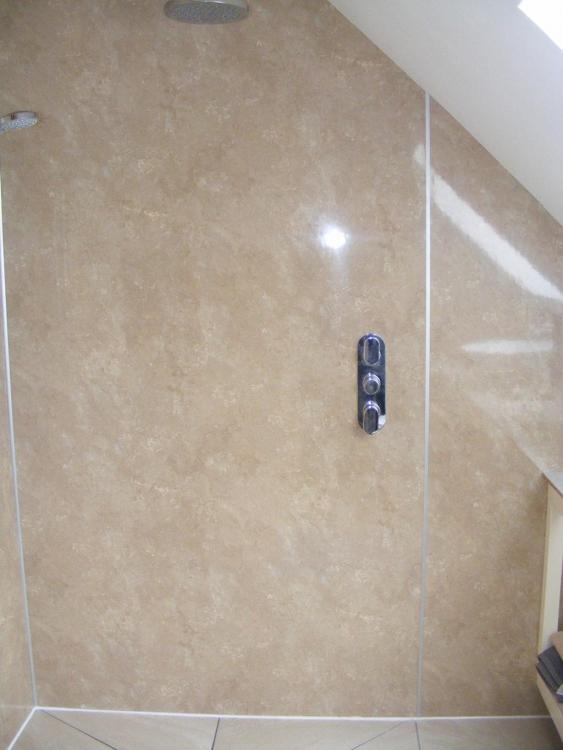
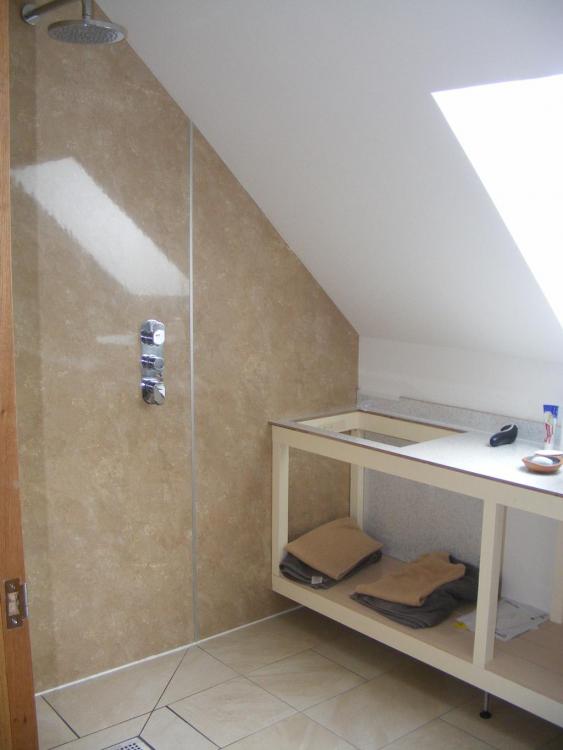
Well after an "interlude" caused by Covid-19, 8 weeks after ordering it, my sheets of multipanel arrived and I could resume working on this. It's nearing completion now. A few photo's Which brings me on to the next question. I need to find a glass shower screen. It will go just about where the multipanel joint is in that last photograph to protect the stuff on or under the wall unit from getting wet when showering. It needs to hinge to the left when not showering to give proper access to the unit. And it is under a sloping ceiling so an absolute maximum height of 1800mm I have not found one yet. I have found 1500mm high hinged shower screens but they are really meant for going on top of a bath, and I don't think 1500mm is high enough. I have found fixed 1800mm high panels, but that is no good it must hinge. I have found 1800mm high pivot doors but that needs a frame above and below which I don't want. All I want is an 1800mm high by about 800 or 900mm glass panel that fixes to the wall with a couple of hinges and will swing side to side. Am I really into the realms of buying the hinges and getting the local glass supplier to supply the sheet of glass with appropriate holes in it?
-
Very sad because I doubt he will get his money back. It will probably be a bargain project for someone.
-
I just use 50% bleach 50% water. Can someone tell me a reason not to use that?
-
You can use a 3 port 2 position valve, but I preferred to use two 2 port valves instead,. Do NOT use a 3 port mid position valve. Yes there is a bit of an anomoly in the control system for mine. The time clock activates the UFH manifold controller and that controls the UFH circulating pump and calls for heat from the ASHP. But because the ASHP decides for itself when to switch between space heating and DHW heating, the ASHP controls the motorised valves. This leaves the UFH circulating pump circulating ever cooling water while the ASHP is heating DHW. Not ideal but it does no harm and I could see no easy way to stop it doing that.
-
I can't say I see an issue with the ASHP short cycling. When heating DHW it seems to try and maintain about 5 degrees between flow and return temperature and modulated the compressor power to achieve that, and the compressor does not seem to stop while it is heating DHW. When heating the UFH then the compressor generally runs a lot slower and does stop from time to time, so it can't always modulate the power low enough so it stops, and re starts a bit later.
-
Did you get a close up of the crack before and after? What if it's more of a crack and a section is delaminating?