ProDave
-
Posts
30862 -
Joined
-
Last visited
-
Days Won
427
Everything posted by ProDave
-
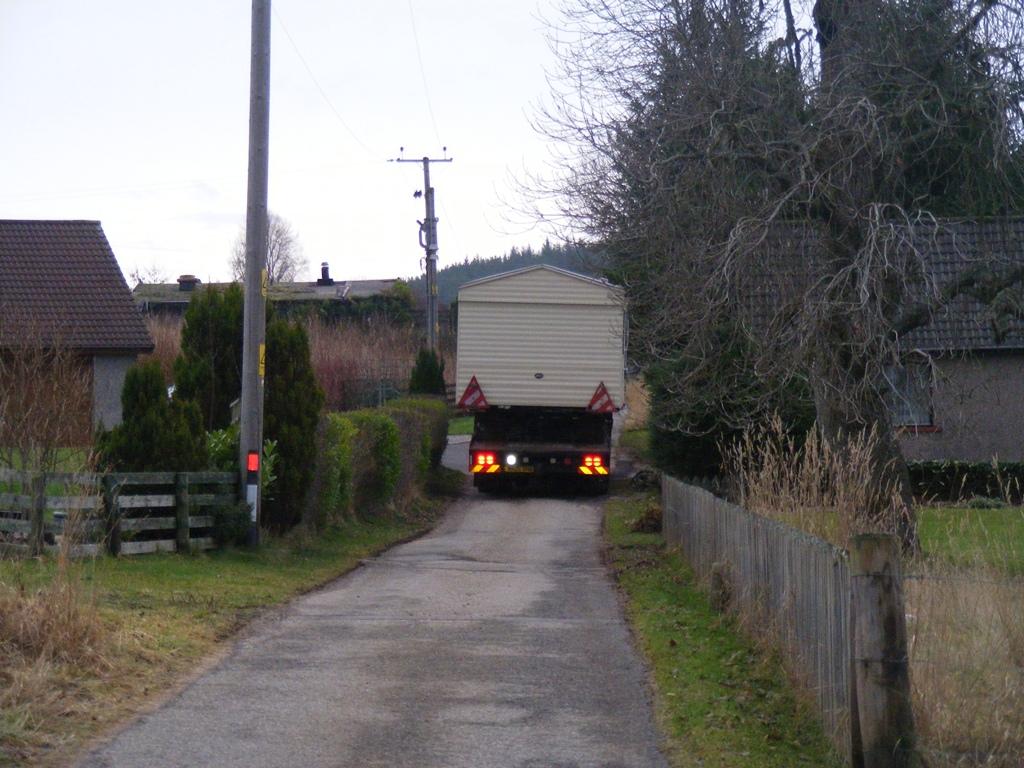
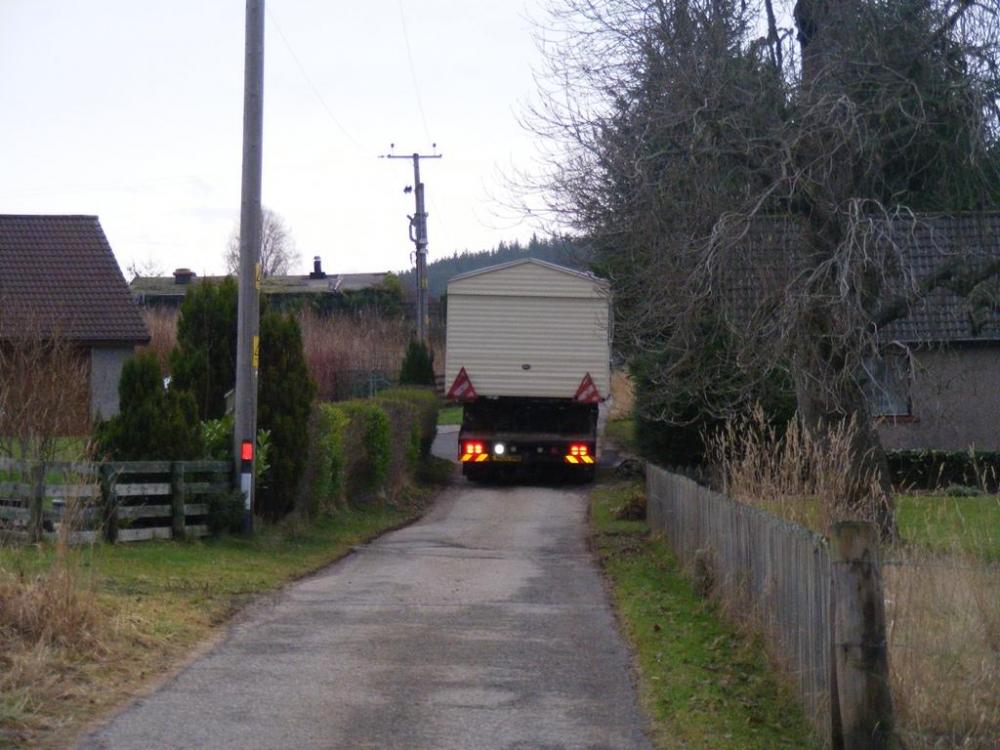
We would have struggled to get anything wider than 10ft here
-
ASHPs - makes and servicing requirements
ProDave replied to newhome's topic in Air Source Heat Pumps (ASHP)
Continue with your thermal store and immersion heater? -
Combi what? Boiler? You can't have an LPG cylinder inside a property (except for those horrible gas heaters on wheels). A ground floor flat you might be able to have LPG cylinders outside if you have access to space you control and if the freeholder has no objections.
-
It's called the "smart export Payment" You get paid about 5p per unit exported, you have to have an MCS install to claim it (££££) and you must have a smart meter. If I had been eligible, I would have earned just over £5 per year for the small amount I export. I wonder how long that would take to pay the extra for am MCS install?
-
I reckon the immersion heater takes about 1/3 of what I generate. It is a handy place to dump spare generation to avoid it being exported. Even when the big appliances are on, there are gaps in their usage when power still goes to the immersion. Are you saying you don't have / will not have a hot water tank?
-
Loft conversion - minimum height 2.2m - why?
ProDave replied to puntloos's topic in Lofts, Dormers & Loft Conversions
I think it's 2 metres for stairs and landing. -
ASHPs - makes and servicing requirements
ProDave replied to newhome's topic in Air Source Heat Pumps (ASHP)
Just don't tell anyone. This message will self destruct in 5, 4, 3....................... -
ASHPs - makes and servicing requirements
ProDave replied to newhome's topic in Air Source Heat Pumps (ASHP)
You don't need water for a bath that hot (64 degrees would take your skin off) so that's probably not an issue. The only time you want really "almost to hot to put your hands in" water is for washing up. -
I self use 95% of what our 4kWp panels generate. the 2 keys to maximum self usage are use the big appliances (WM, tumble dryer and dishwasher) one at a time close to mid day, and fit an immersion heater dump controller to sump surplus power to the immersion heater. I would only fit battery storage if I had more than 4kW of panels personally.
-
ASHPs - makes and servicing requirements
ProDave replied to newhome's topic in Air Source Heat Pumps (ASHP)
An ASHP will not heat DHW much above 50 degrees. If you heat a UVC to 50 degrees, you can then draw hot water from it and you get 50 degree hot water up to the point the tank runs out. If you heat a thermal store to 50 degrees, you will get 50 degree water out to start with. But because you are not actually drawing the water off, you are merely extracting energy from it, by the time you have drawn say half the tank capacity from it, the water will be coming out a lot colder. So it is generally accepted you need to store the water in a thernmal store a lot hotter than your desired water temperature. -
The inability to sell our old house. A house is an illiquid asset and don't always assume you will be able to sell it in a timely manner, or for a price that you find acceptable. It's still not sold having now been accidental landlords for 4 years..........
-
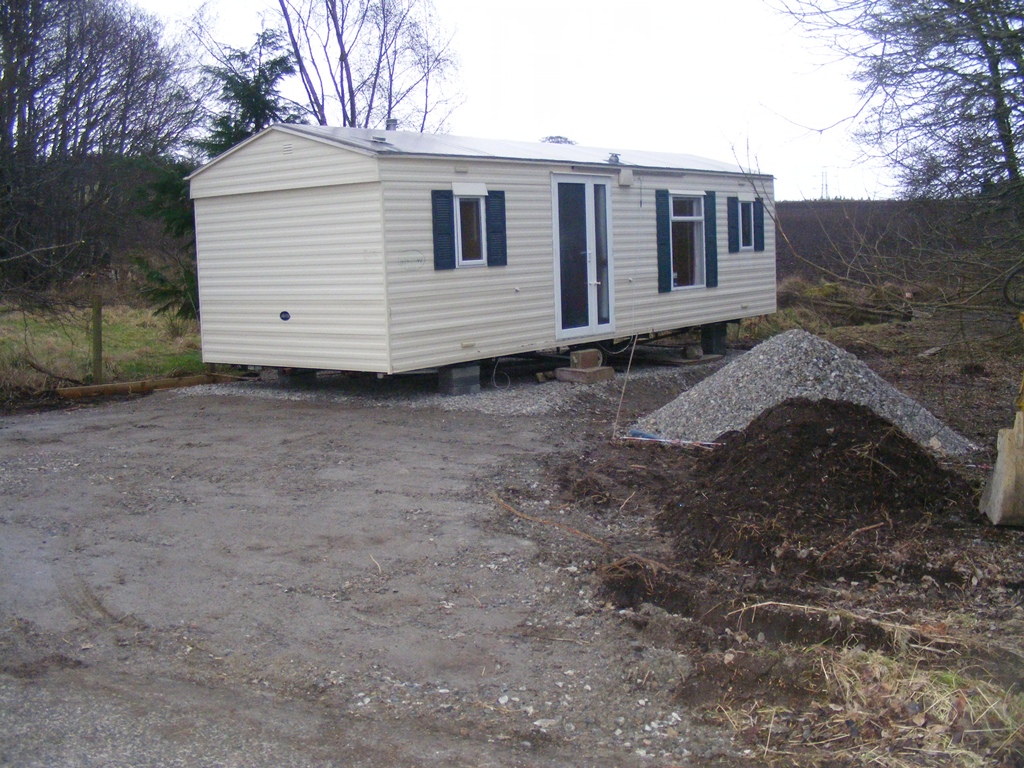
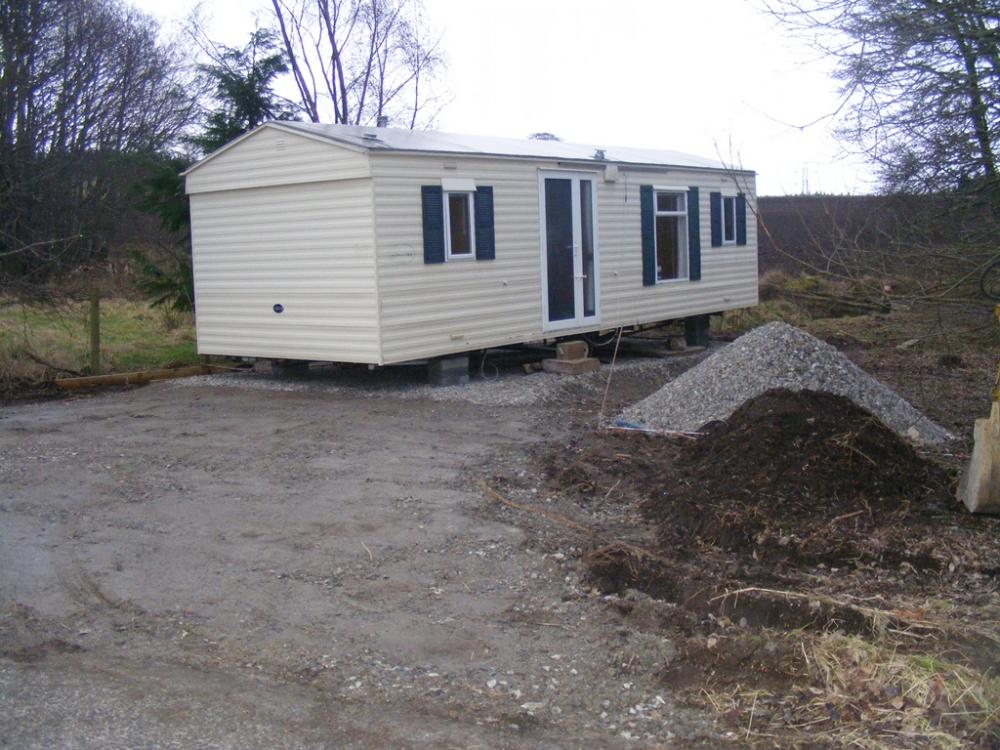
We spent 18 months in this, during the winter with the "beast from the East" That picture was when it was first delivered, it was boxed in around the base and of course had steps to get to it etc. The best thing I did was fit a cheap wood burning stove that hardly went out from November to March. Keeping up with the wood to feed it was challenging, we burned coal overnight. We chose that one for it's unusual layout with the living room in the centre and a bedroom at each end, which fits in better with it's next life when we turn it into a studio, workroom and store room (it is staying on site) The "highlight" of the winter was a frozen pipe underneath due to mice eating a section of the pipe insulation and me spending half an hour underneath it during a blizzard with a hairdryer thawing the pipe. You simply can't beat being on site. No rent, band A council tax and everything is sorted. You get all your stuff, utilities, telephone, banking etc etc moved to your new address and there is nothing to change when you move from the caravan to the house, except the council tax.
-
ASHPs - makes and servicing requirements
ProDave replied to newhome's topic in Air Source Heat Pumps (ASHP)
You can't (or at least will de disappointed if you do) keep the thermal store so you should factor in replacing that with an UVC. An UVC needs an annual service, more of a check that all the safety features are working rather than a service in the sense you would think of with say an oil boiler. It just requires a plumber with the right ticket and takes no more than 2 hours. So your challenge will be finding someone that does that at a fair rate. I would regard £150 as the absolute max for that personally let alone any more. An ASHP does not in theory need a service other than perhaps check the air intakes are not blocked with leaves etc. I would love to be a fly on the wall and see what someone does when they come to "service" it. I have an LG ASHP and you have probably read about the "issues" I had with it and the little help I got from the supplier, I really had to figure it out all for myself and devise work arounds as the root problem is still there. But mine is an old model, so I would not like to say if you are likely to experience problems or not with their current offerings. How long is the warranty of an ASHP with this annual service? You surely only need to pay that until the warranty has expired then just get the UVC serviced after that. -
I would say get the largest one you can if you want to work from home, to the point of a twin unit if you can find one. They will be cold, they are not renowned for insulation, so you want a good heating system and just accept heating will be expensive for the time you use it.
-
PAT tester doing odd things when solar generating
ProDave replied to tonyshouse's topic in Electrics - Kitchen & Bathroom
What sort of strange readings? I had to do a repair on a small grid tie inverter and when testing it after the repair I was surprised to find it generated it's power in bursts, the opposite of how an immersion heater dump controller sends power to the immersion in bursts. I don't know if the larger, better inverters also do this. -
What are the thermometers on the manifold reading? i.e what temperature is showing?
-
Regardless of the issues noted above, each pipe loop (bar one, what is the left hand loop going to?) have an actuator controlled by a room thermostat. So when each room reaches it's set temperature the flow of water to that room will stop. So the overshoot you are seeing can only be water temperature too hot and too much energy in the slab continuing to warm the room after the water has stopped flowing. Turn the water temperature down quite a lot and see how things improve. Another observation. All the flow meters on loops with actuators are showing no flow. So the room thermostats have turned off and the water has stopped flowing. BUT that left hand loop without an actuator is still flowing at a high rate. So water is still flowing somewhere into the slab. What is that left hand loop for and where does it go? Normally the control box above the manifold would turn off the "call for heat" when all the room thermostats are satisfied, stop the pump, and stop calling for heat from the ASHP. But in your case in spite of all the room stats satisfied, the pump is still running pumping around that left hand loop and presumably still being heated by the ASHP. Some attention to the control scheme is required I think. Agree with Peter. you do NOT want a mid position valve. That should be a 2 position valve so it never does heating at the same time as DHW
-
Definitely Aico all the time for me. Shop around and you can get them a bit cheaper.
-
Like Grand designs, in sloooooooooooow motion. That's the whole first episode, they have started to dig a pond, they have drawn a few plans, and only just applied for planning permission. Gosh this is going to be tedious?
-
Planning wins, Highways only advise planning. First if you want the separate drive, your planning application must show that. Then if it is refused you could appeal?
-
Yes count me in as "In the Grind" It's been a slow build for me mostly due to finances, once the shell was up it's been a slow "build as you earn" This year has been particularly challenging with building materials being hard to source, my Multipanel got "held hostage" for 12 weeks over the summer, and then I struggled to get Oak for the door frames and even basic things like decking planks. Then I just could not get hold of the trusted joiner I had hoped to hang my last few doors so I had to do it myself. Now I have the joy of skirting boards. The jobs that are looming are also getting harder, there's a stained glass window to make, then there is the sun room, I still don't know if we can yet afford the windows for that, and what challenges that is going to present even sourcing the windows with the B word looming. I will certainly be glad when it is all done.
-
It's an anti spam measure. Spammers were joining the forum, making a very innocent looking post, then some time later editing the post to add their spam without being noticed.
-
How to waterproof bathroom floor 150 x 200 cm
ProDave replied to g000444555's topic in Bathrooms, Ensuites & Wetrooms
Yes I used the Impey trays and tanking system for two wet rooms. If this is just a bathroom and not a wet room with a drain, then tanking the floor and up the walls would not actually do much. Where would the water go if there is no drain in the floor? Out under the door would be my guess? -
Making OSB air tight
ProDave replied to MikeSharp01's topic in Environmental Materials & Construction Methods
The designer of my house said that taped OSB was okay as the air tightness layer, but I chose to also line it with a taped air tight membrane as well. Both the membrane and OSB are on the inside. It is easy to fit at bare shell time, but would be virtually impossible to fit if you later found air tightness to be an issue. -
Try this, not a perfect description but it might help https://inspectapedia.com/heat/Heat-Anticipator-Operation.php Basically, when the thermostat is on and calling for heat, the little accellerator heater is on so it locally warms the inside of the thermostat just enough to overcome the hysterises of a mechanical thermostat. When the thermostat turns off, the accellearator heater turns off so the inside of the thermostat cools down and will click back on again much sooner rather than having to wait for the room to cool down by the otherwise large hysterisis temperature. the key to it working is the manufacturer has sized and positioned the accellerator heater correctly so it's heating effect exactly cancels the hysterises temperature. You need the neutral connection as the heater is connected between switched L and N . for an electronic thermostat you don't usually need a N connection.