
ProDave
-
Posts
30862 -
Joined
-
Last visited
-
Days Won
427
Everything posted by ProDave
-
Please keep the thread on topic. This is not mumsnet.
-
She portrays herself as a "property professional" yet seems to have an astonishingly poor knowledge of building techniques and the planning system.
-
I would call that simple Fraud. Tell the public you will get a grant to help with the cost, but don't tell the public you will be forced to use a scheme of installers who have deliberately inflated the costs so they end up with the grant money and you are no better off than if you just bought the damned thing and paid someone normal rates to install it.
-
As others are saying, they are easy to self install or install be normal tradesmen. Just be sure they are capable of reading the manual as particularly with the electrics there are some differences from say a system boiler, and some plumbing differences like you never ever use a 3 port mid position valve with an ASHP. And many of us cynical old folk on here believe the MCS scheme is a rip off designed to suck most if the RHI payment out of the customers hand into the installers coffers. a 250L tank will NOT be big enough for 4 showers. We have a 300L tank and it has been know to run out if all 3 of us shower in sequence. Duration of a shower seems proportional to the square of the length of your hair!!! (I don't take long to shower) Remember with a low power ASHP the DHW re heat time is a lot longer than with a gas boiler.
-
When we were in the static van during the build, I had the wifi router in the house and a wired ethernet cable out to the 'van. In the 'van I set up a spare old BT home hub router set up as a wifi access point from the house broaddband. you can find the instructions on line, you basically disable all the DHCP stuff so it is not trying to be a router, just a slave wifi point to the main router.
-
Yes second episode and they still don't actually have their planning permission. However it did raise an interesting planning conundrum (not that the program discussed this, this is just my opinion) They bought the site with planning, and the foundations in place, so the development has started and is not therefore time limited. They don't want to build the house where the existing planning is, but instead want to build it in a different field. Sounds simple? But since planning has been granted and already started, they cannot simply ammend the planning to change it's location? Surely they would now have to grant the planning in the other field in addition to the first?
-

internal stud wall with 100mm rockwool acoustic slab
ProDave replied to redtop's topic in Power Circuits
Always my perfered method, apart from anything else, the cable is there so you can easily add extra sockets anywhere else you want later on. It is surprising how many people think you are not allowed to do that. -
That's an interesting one. With a large tank and a low power ASHP that could take 2 hours, I don't want to be paying a plumber 2 hours labour to sit and wait. That is something I can check myself just by watching it as it heats up on any day and ensuring it does turn off at the set temperature. And something I would expect a friendly plumber to accept I have self tested.
-
Basically shut off the incoming water, let the pressure off the HW system. Check the air pressure in the bladder in the expansion vessel (also checking for water leaks) Re pressurise. Check operation of over temp and over pressure blow off valves. Check water drains freely through tundish to outside vent point, check that is clear and accessible. Run the heating system, check operation of things like the cylinder thermostat and make sure it shuts off the motorised valves etc. There might be a few things I have forgotten.
-
The biggest risk of overheating an UVC is an immersion heater with a failed thermostat (which is why they now have a secondary safety cut out as well) but that risk is not unique to UVC's. Secondary thermostats were mandated after the case of a vented cylinder that had boiled, the venting boiling water had melted the plastic header tank, which ruptured, pouring scalding hot water on a child in a bed in the room below. UVC's have over temperature and over pressure relief valves to protect from over temp and pressure damage, and the control system should be designed to cut off the heat source if it gets too hot. You are supposed to have a UVC checked annually to ensure these all work.
-
I laughed at "Faster and less inexpensive sollution" So it's more expensive then.
-
UFH in slab or screed, eps or pir insulation?
ProDave replied to Tin Soldier's topic in Underfloor Heating
Another with a well functioning WBS in a well insulated sealed house with MVHR My main point I constantly repeat is the stove is in the largest room, that opens with double doors to the stairwell and another set of double doors to the living room. With all the doors open the stove gently heats the whole house rather than overheats a single room. We did try an experiment and shut the doors with the stove going and yes that room quickly got too hot, but then quickly cooled down when you allowed the heat out to the rest of the house. So just give careful thought to where you are going to put a stove so it has the ability to spread it's heat sensibly. -
internal stud wall with 100mm rockwool acoustic slab
ProDave replied to redtop's topic in Power Circuits
You should not be running outside safe zones. The 50mm deep thing is for RCD protection. In some cases if a cable is more than 50mm deep (and in a safe zone) you might be able to get away without RCD protection to that cable. But why would you want to? -
internal stud wall with 100mm rockwool acoustic slab
ProDave replied to redtop's topic in Power Circuits
Make sure the cables are on the surface of the insulation slab, i.e between the insulation and the PB. It is only cables IN insulation that have to be derated, not cables ON insulation. -
Normally the pipe flows down hill from the pan, so anything will drain down away from the pan. But if your pipe is going up hill then yes "stuff" will settle there.
-
I sited my (single unit) on 300mm of compacted MOT1 Even so one of the wheels did sink in a bit as it was driven onto the spot. the danger with a twin unit is you are trying to park 2 units side by side mm perfect and touching. If one wheel sinks a bit they could clash. Hence why I believe they use air movers or similar to push them sideways together. I sited mine on piles of concrete blocks, but all the twin units I have seen are supported on a forrest of jacks, that look very much like adjustable axle stands. the point loading on those might want something more solid than just MOT1, perhaps a small paving slab under each one to spread the load and make them more stable?
-
For a twin unit you want a very good base. you don't want any differential movement between the ground each half sits on. You will need jacks and possible air movers to align the two halves together. Really best done by laying a concrete slab in one go large enough for both to sit on together.
-
installing sewage treatment plant with discharge to stream
ProDave replied to Tom's topic in Waste & Sewerage
This one https://www.fueltankshop.co.uk/harlequin-hydroclear-hc12-sewage-treatment-plant-12-person/p5713 It's a much larger system than most of us are likely to fit, but it serves a 6 bedroom house and a 2 bedroom cottage. It replaced a collapsed septic tank. This one has the blower in a separate remote box, and a very much larger blower than in for example my Conder unit. But the design of the box it's in seems designed to amplify the noise, a bit like putting it on top of a drum. EDIT: just read Peters question. It's the noise from the pump vibrating in it's box. You only hear anything of the stewing froth ir you take the lid off the tank. Didn't someone on here build a brick housing to contain the pump without it vibrating? -
installing sewage treatment plant with discharge to stream
ProDave replied to Tom's topic in Waste & Sewerage
More noise than SWMBO would like, you have to be within a couple of metres of it to hear it, but you would not choose to put your deck chair right next to it. It could probably be soundproofed a bit, something I might try at some point. It is a whole lot less noisy than a different make of treatment plant I connected earlier in the week. -
Looks like plain ordinary underlay as laid in millions and millions of houses without problem. Why do you always assume the "fitter has taken you for a ride"? I bet this is the same underlay he has laid in thousands of houses with thousands of happy customers, yet he was supposed to anticipate your peculiar needs and specify something different?
-
WPD quote for electricity supply blowing our budget
ProDave replied to Omnibuswoman's topic in Electrics - Other
Well done, bite their hand off and accept the new cheaper quote. -
installing sewage treatment plant with discharge to stream
ProDave replied to Tom's topic in Waste & Sewerage
Just soil,. all the rubbish stony subsoil mostly. -
installing sewage treatment plant with discharge to stream
ProDave replied to Tom's topic in Waste & Sewerage
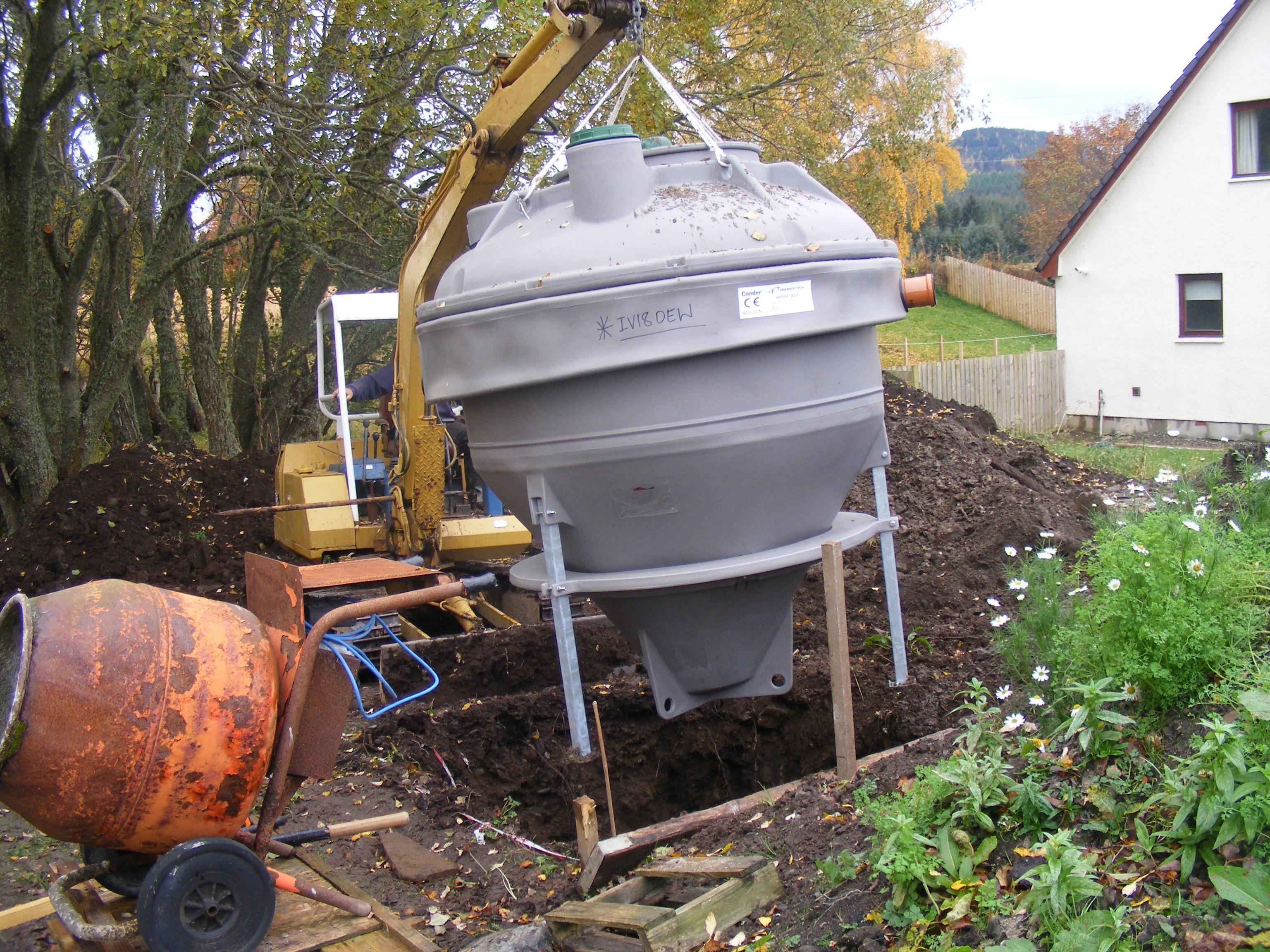
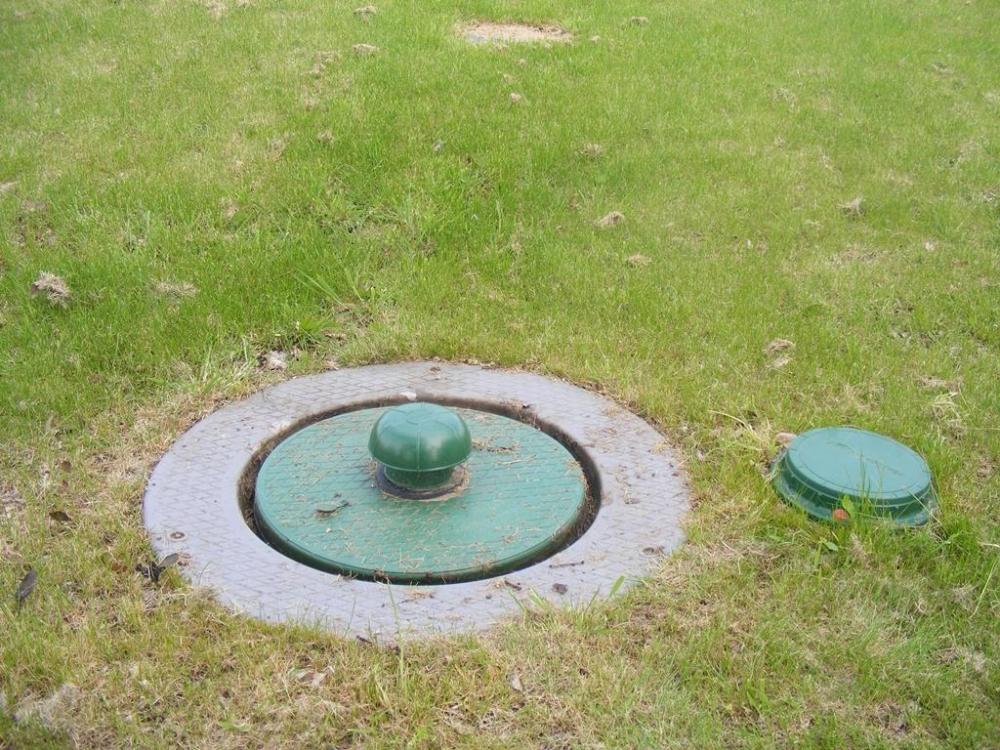
ASP6 Here it is going into the ground One thing I liked compared to some others is the legs for it to stand on when you lower it in the hole,. and that "ring" around the base, you concrete in to above that level to anchor it into the ground. And this is what it looks like all finished. The big green lid with the vent is the housing for the blower pump. the small screw on green lid at the right is where you insert the hose to pump it out.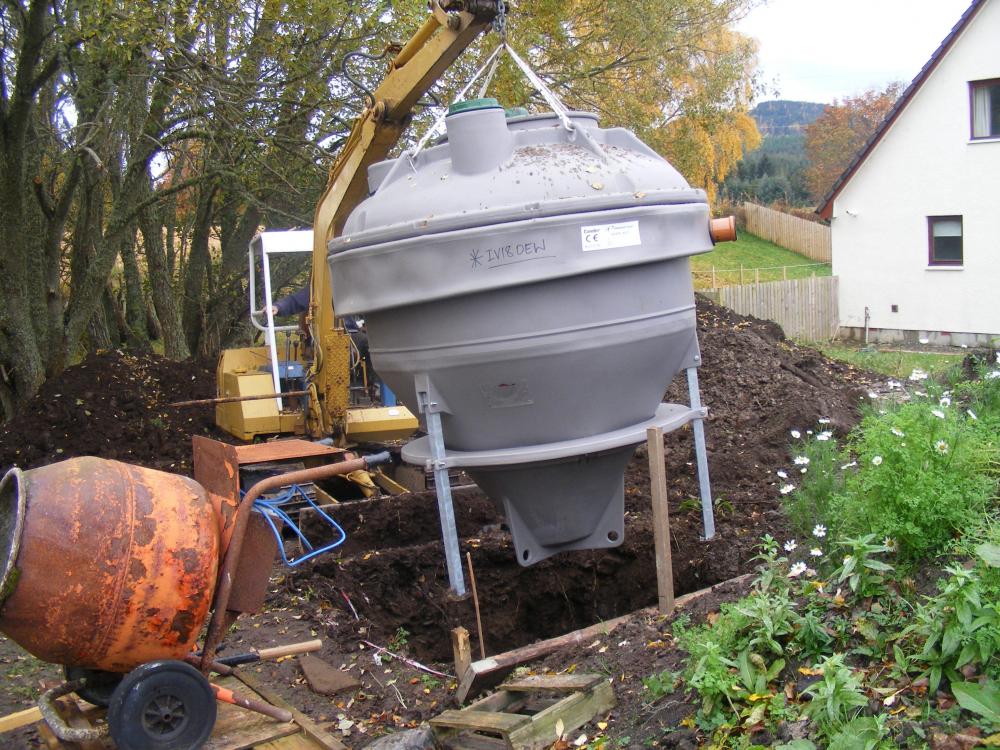
-
I used ours on Saturday. It had been quite dry here for a while, dry enough for the leaves not to be stuck to the ground this year so they blew well. 2 years since being started (it didn't get used last year) and it was somewhat reluctant to rev to start with but it cleared after a while, no doubt the usual small engine / stale petrol problem. Ours must be even cheaper, it is not encumbered by strange safety cutout switches. You start the engine and the fan blows. That is it.
-
We have a 5M span with just posi joists and a strong back and it is fine, but I sense it is a big step up from that to 6M