ProDave
-
Posts
30862 -
Joined
-
Last visited
-
Days Won
427
Everything posted by ProDave
-
Optimizing LG Therma V Controller settings
ProDave replied to Hogboon's topic in Air Source Heat Pumps (ASHP)
I wondered if you could sense when the ASHP was about to ice up and just turn it off and let it defrost on it's own. But then I observed mine defrosting once, and concluded with the outside temperature barely above 0, it would probably take a couple of hours to defrost on it's own, which would mean it would have to work harder to make up for lost time and ice up again quickly. -
Ah the "propellers" are so small and insignificant looking and on the back of the "kite" that I missed them the first time I looked, and just saw the kite with no aparent moving parts. Should have gone to ...........
-
A dumb article devoid of any technical details. So how does a "kite" flying under water actually generate any power? I see no moving bits like turbines.
-
No easy answer. The least hard is a grid tied inverter that complies with G98 and will generate no more than 3.68kW (you can have a larger capacity of panels connected to it) you have to notify that to the DNO under G98 but they cannot say no and there is no charge. The DNO is still stuck in the mindset that you might export all that is being generated. A DIY system won't allow you to get paid for any that is exported so the easiest way to avoid export is fit a solar PV diverter to send any excess to your immersion heater to heat your hot water a bit. That and your server should ensure you never export anything.
-
You definitely don't want heat, unless you want to re paint the whole thing. If you have a heavy steel bar or a scaffold pole, I would just bolt it to the bent step and use the leverage it gives you to bend it back to shape. Nuts and bolts through the stair fixing holes.
-
Optimizing LG Therma V Controller settings
ProDave replied to Hogboon's topic in Air Source Heat Pumps (ASHP)
Mine has clearly separate settings for "leaving water temperature in heating mode" and "leaving water temperature in hot water mode" Exact wording may differ but it is clear there are separate settings for heating and hot water. In hot water mode it is slightly different as you set the target hot water temperature, and the leaving water temperature is the maximum you will allow it to run at. In my case I have set the max LWT in HW mode to 55 with the HW target temperature at 48 degrees. In heating mode I have the LWT set to what I want the UFH temperature to be, so I am not relying on the blending valve in the manifold (which is set slightly higher) -
Yep, that looks fine. There is no need for an earth connection to the unit, it is just a means to join all the earth wires together so the pump etc get an earth connection.
-
I would think so but I would want to be sure. I suspect that pair of terminals just join to each other and nowhere else. Personally I would unscrew the boards and have a look at the pcb tracks to confirm that. I have a question. How do the room thermostats connect to that controller? I see no terminals? Is it all wireless?
-
Solar DC cable direct to hot water tank element.
ProDave replied to epsilonGreedy's topic in Photovoltaics (PV)
Okay a safer way might be a stand alone, i.e. not grid tied inverter to feed the immersion heater. -
Solar DC cable direct to hot water tank element.
ProDave replied to epsilonGreedy's topic in Photovoltaics (PV)
But that would assume the heater element had corroded and water was getting in to the actual element. -
Solar DC cable direct to hot water tank element.
ProDave replied to epsilonGreedy's topic in Photovoltaics (PV)
Good point, but with such a low power input, I doubt it would ever need to turn off. -
I could not possibly advise changing something after completion so it no longer meets building regs. But I have seen such closable air vents next to a stove.
-
Yes that is the main advantage of a room sealed stove, they don't leak much air from the house and don't kill your air tightness. And yes, a closable air inlet vent is not allowed under building regs.
-
Solar DC cable direct to hot water tank element.
ProDave replied to epsilonGreedy's topic in Photovoltaics (PV)
At that price, I would take my chance with a standard immersion heater. With 1.1kW of PV you will not overload a standard 3kW heater. No doubt a direct connection would not run the panels at full eficciency but it has to be worth a try first. And that would be classed as off grid so no need to notify the DNO. If you could set up a data logger to measure voltage across the heater you could calculate the power going into the heater. A normal electricity meter won't work on DC so they are no good. -
Fixed costs in a roof PV installation.
ProDave replied to epsilonGreedy's topic in Photovoltaics (PV)
A requirement for a FIT system. For a non FIT system I would still have one (I do) just out of interest so you know how much you have generated. I think I paid £25 for mine. -
Check the arrow on the side of the pump to ensure it is really pumping upwards. Are you SURE flow and return are correct, i.e the pipe feeding into the left red valve really is the hot flow?
-
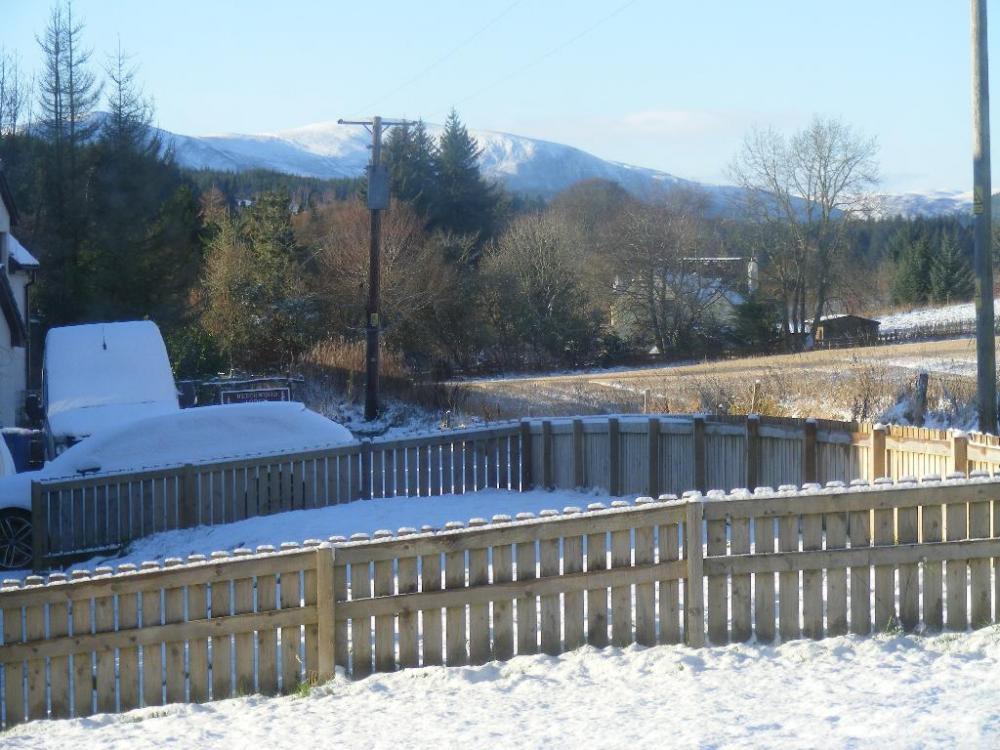
A winter photograph........
ProDave replied to ProDave's topic in General Self Build & DIY Discussion
Yes it's a colder climate here. The penalty for less rain and less midges. It got to the dizzy heights of 2 degrees at 1PM but that didn't melt much snow. It now down below -1 and a cold night ahead. Forecast -2 so -5 is likely tonight. We are 100 metres above sea level so not exactly high up. ASHP turned off now the sun has gone down and PV generation ended. Stove on doing whole house heating. Nice and cosy. -
Is anyone familliar with that particular TMV? or can you post a link to the make and model or instructions? My money is on the TMV being connected incorrectly, but I can't confirm that for sure as i don't know that one and how it should be connected. The flow should not vary. all that should change is is when turned up, it should allow more hot water in to mix with what is circulating.
-
That, and an LPG hob, head light charged and gas camping lights to hand, and you can survive quite a long power outage.
-
That calculation is meaningless without knowing how well insulated the house is. Our WHOLE house needs a heat input of just over 2kW when it's -10 outside so even our 5kW stove would overheat the whole house if you left it burning too long at full power. What are you looking for in terms of style? Are you looking for ducted air intake to make it a room sealed stove? Are you installing a twin wall flue or will it use an existing chimney? I WILL recommend the stove we have, a Mendip Stoves Churchill 5. The first stove I have ever had that genuinely keeps it's glass clean, and has ducted primary and secondary air intake. It is available in larger sizes if you find it really needs to be larger.
-
Thought this 1960s self-build for sale might amuse
ProDave replied to SimonD's topic in General Self Build & DIY Discussion
I would if I could find them. your link just shows me on a map where it is, not how to see the photos? -
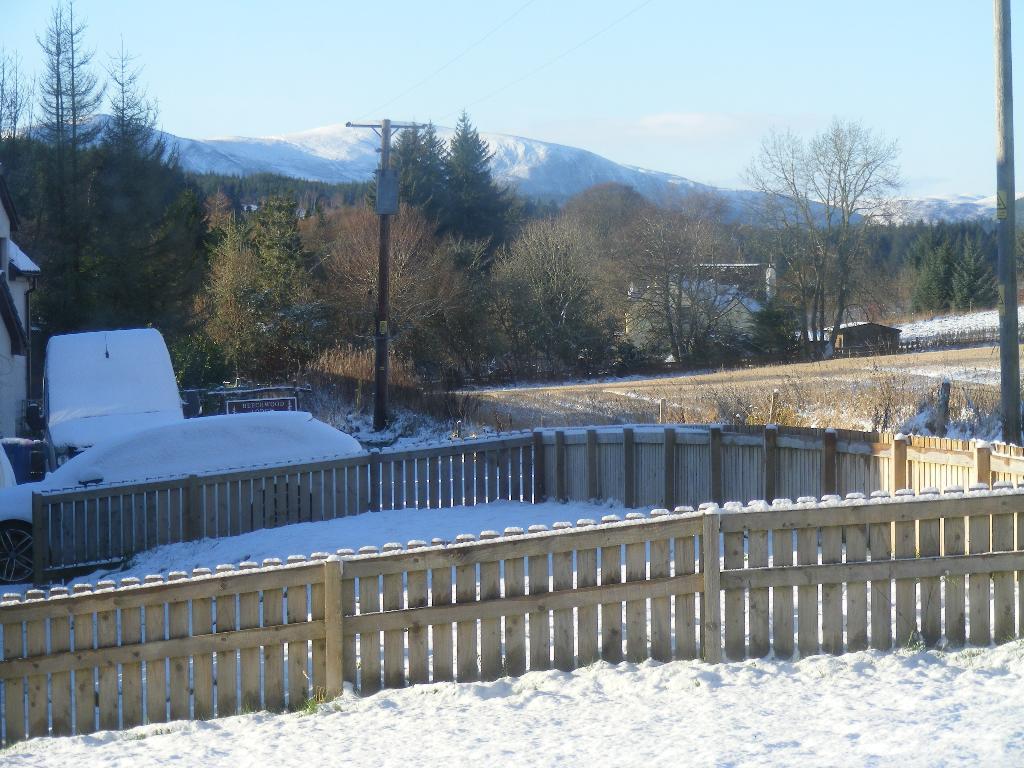
of the view from our kitchen window. This view of the mountains was one of the main reasons we wanted this plot, and why we deliberately set the house a bit closer to the road than the neighbours so we could see down the road in front of the other houses. And it looks best with it's winter coat on. Especially on a clear still sunny day like today.
-
the real milestone is your first MWh
-
Sewage treatment plant - air blower electricity costs
ProDave replied to David Essex's topic in Waste & Sewerage
Before I moved in i checked with just the treatment plant operating and it was clocking up 2kWh per day, so currently about 40p per day so about £146 per year. The metered units was very different to what I expected just be measuring the current drawn, no doubt due to power factor. -
Fixed costs in a roof PV installation.
ProDave replied to epsilonGreedy's topic in Photovoltaics (PV)
You will have to run the DC cabling down to where you want to fit the inverter and install a DC isolator. You will need to buy an inverter, dc isolator ac isolator and generation meter. You are legally obliged to notify the DNO under G98 but there is no cost and they can't say no. Make SURE the inverter is G98 compliant. They will want the make and model of the inverter to confirm it is. They will want some details and a pretty picture of how it is wired.