
ProDave
-
Posts
30861 -
Joined
-
Last visited
-
Days Won
427
Everything posted by ProDave
-
I was put off an EAHP by several reports on a previous forum before buildhub started, of a lot of failures of what at the time seemed to be the most popular make of EAHP. I have not seen such reports for a while so I assume any issues were solved.
-

Nuclear fusion is still decades away in my opinion.
ProDave replied to SteamyTea's topic in Boffin's Corner
The reason most of the time JET used Tritium was it was fairly harmless. During shutdowns between operation, people could enter the Torus hall to carry out maintenance and upgrades. Once Tritium was used, the machine is now highly radioactive so all work is now carried out with some quite complex robotics. It was always the plan that the tritium phase would be left to the very end, and it is only because it has operated for far longer than originally planned that the tritium phase got delayed. The building was only given 25 years temporary planning permission at the start, and the standing joke was it would eventually become the third Wittenham Clump. -
Any electronic component experts? SMD identification.
ProDave replied to ProDave's topic in Boffin's Corner
I am pretty sure the 24V is used for all the I/O there are certainly 24V relays in the box it connects to. The daughter board is probably the microcontroller, mostly enclosed in a metal can, and what you can see is a lot of chips with an awful lot of pins. I might have to uncouple that board, it would make replacing some of the capacitors easier, but it is soldered to the main board with a "link" in one corner. I am nervous of unsoldering that, I think it may have been put there specifically to stop you unplugging it. My fear would be the CR2032 battery is on the main board, and uncoupling that could lose it's backup and you might promptly clear it's memory. Not worth the risk without knowing for sure. -
Any electronic component experts? SMD identification.
ProDave replied to ProDave's topic in Boffin's Corner
This board is not exactly cutting edge stuff, there is a lot of 74HCT logic so we can assume the main output voltage will be 5V There may be other outputs I have not tried tracing the circuit yet. As far as I can tell only a 2 layer board so that should be possible no hidden tracks or blind vias. If I get no luck with fixing the on board PSU then powering it from an off board PSU is plan B The unit is made by Carel. If you buy one direct it will not be programmed. It is Dimplex that will sell you one pre programmed for the heat pump. But the parameters won't be set up. If we can get this one working we are hoping it's program and parameters are intact, but of course a failing PSU could have damaged other stuff on the board. The shopping list for parts so far is only about £10 so worth a try. -
Any electronic component experts? SMD identification.
ProDave replied to ProDave's topic in Boffin's Corner
Both 1000uF 50V. There are two 470uF 50V on their side under that sub panel, and a 220uF 25V in an even harder to reach place. This unit is fed with 24V ac from a transformer and derives it's internal dc voltages from that via this blown PSU section. -
Any electronic component experts? SMD identification.
ProDave replied to ProDave's topic in Boffin's Corner
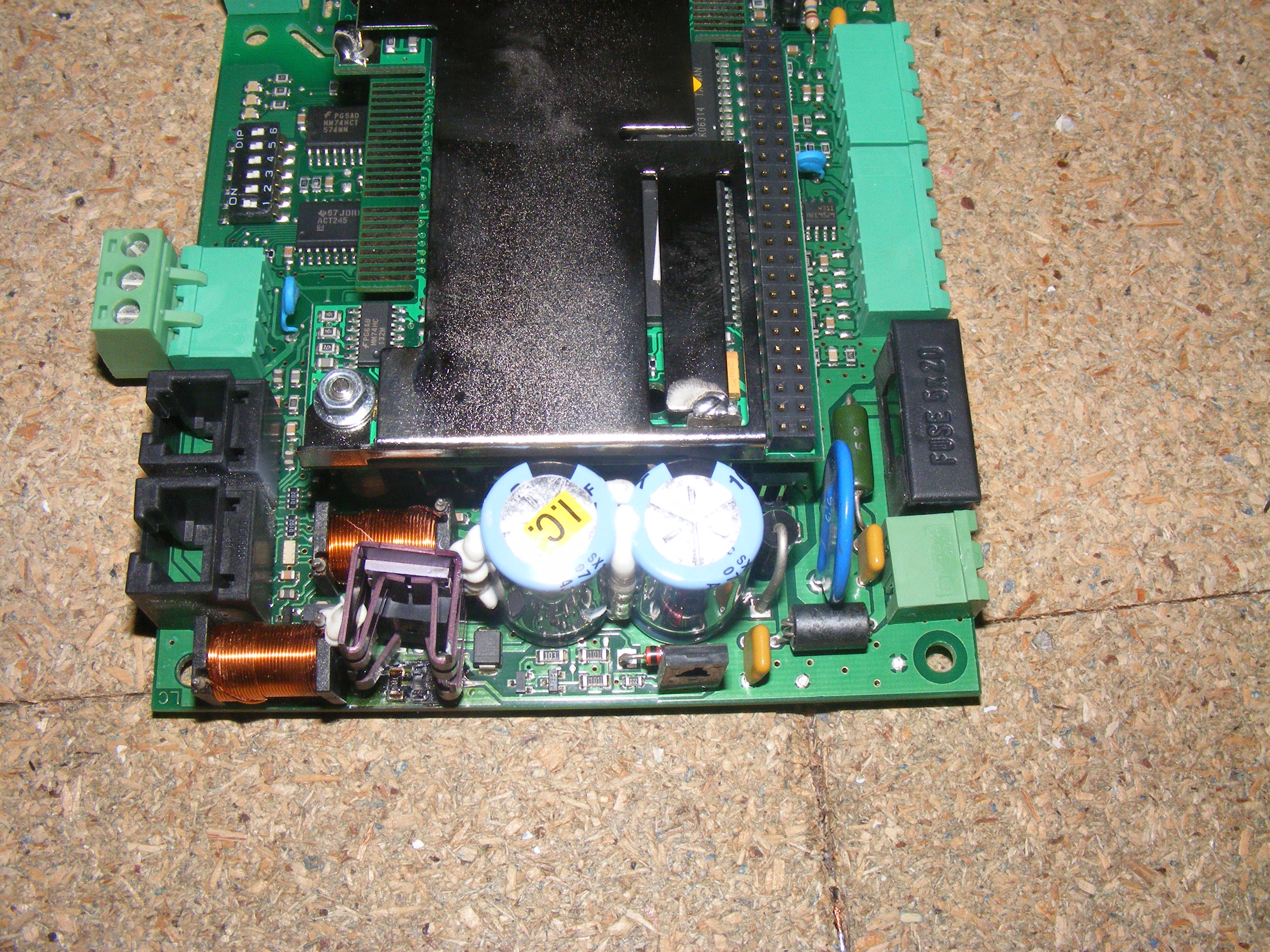
If you want some context, I am trying to rebuild the power supply part of the controller in the industrial sized GSHP at our village hall. The tally of failed components found so far, 5 failed capacitors, 2 failed tab power transistors and this diode. the failed diode is just below the left hand blue capacitor in this photo The scorched pcb area just below the transistor with a heatsink (one of the failed ones) is not as bad as it looks. Those 2 smd resistors are all in fact okay, the scorching is the pcb track underneath them did the job of a fuse when the PSU failed. I don't rate the chance of it just working when I fit the new components as very high, but I said I would give it a go. If I can't fix it, it;s £1400 for a new controller. No pressure there then. And of course I can't find any service information.
-
Any electronic component experts? SMD identification.
ProDave replied to ProDave's topic in Boffin's Corner
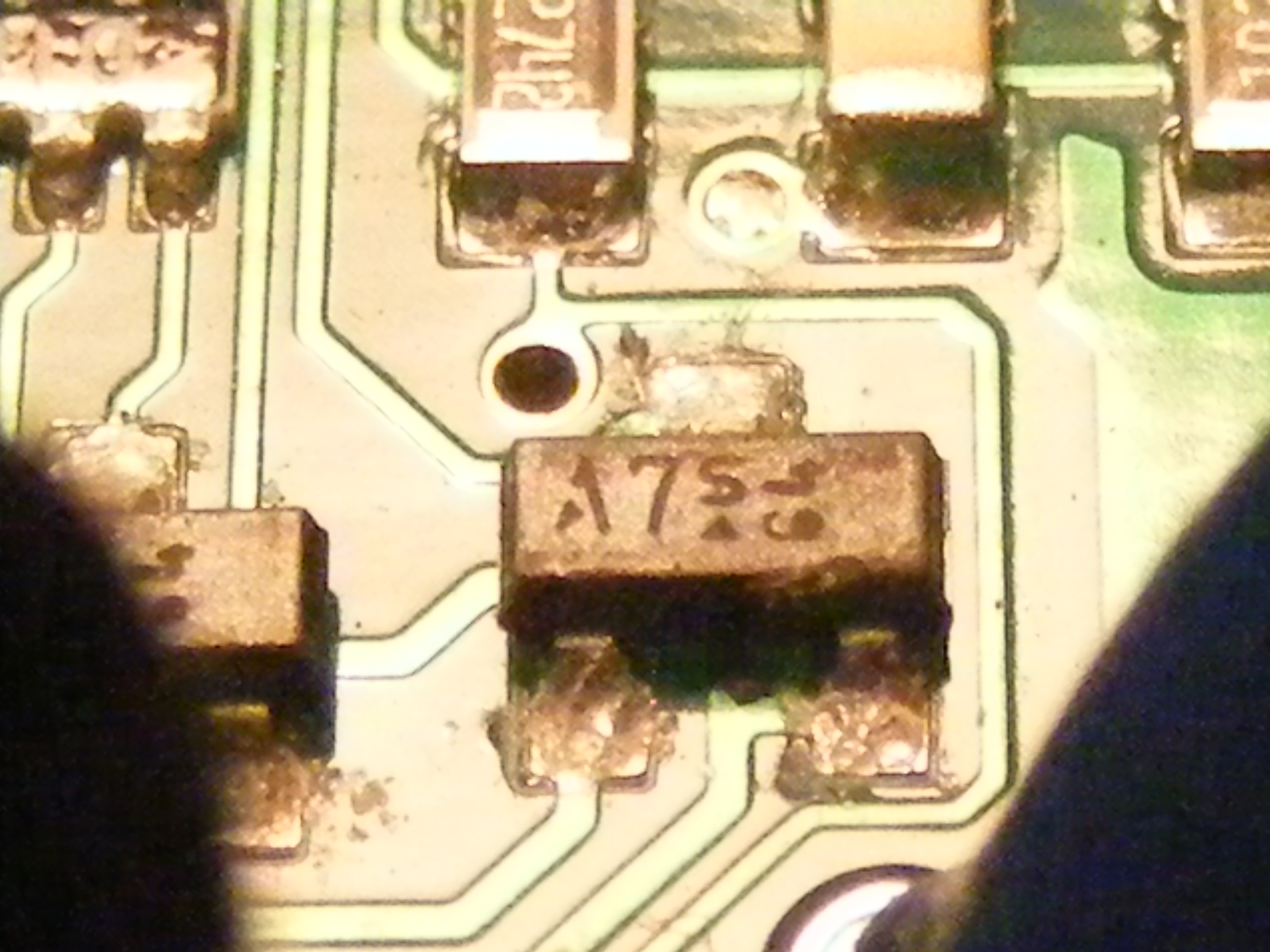
Not de soldered it, but referring to the data sheet linked above, pins 1 and 3 are shorted, so that is clearly one diode short. The photo is not the failed part, i could not get the lighting right to photograph it, it is a photo of an identical part in a different part of the board that was easier to get to. the failed one has a corner blown off, which is what alerted me to it on a visual inspection. -
Any electronic component experts? SMD identification.
ProDave replied to ProDave's topic in Boffin's Corner
Thanks. you can rely on buildhub to solve a problem. -
Any electronic component experts? SMD identification.
ProDave replied to ProDave's topic in Boffin's Corner
I have managed to get a photograph of the device I am trying to identify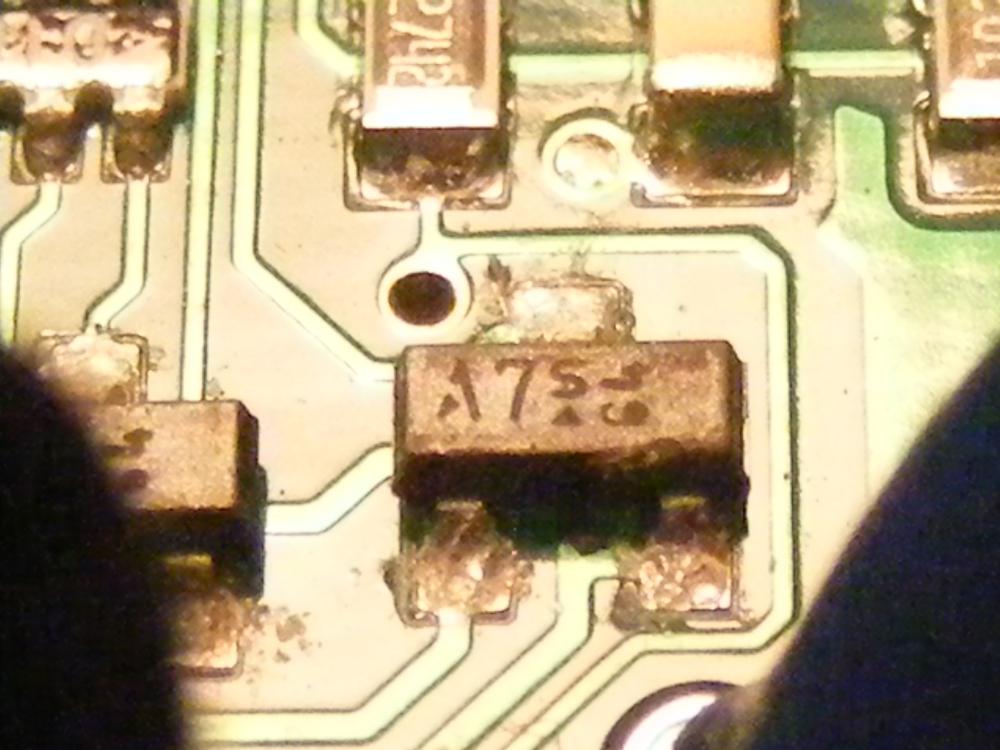
-
Is it doing that "bouncing" all the time? I've not seen anything like that it is too regular and too harsh a noise for it to be air passing through, so my though is a mechanical failure with the pump. @Nickfromwales is the proper plumber around these parts, I wonder if he has seen this before?
-
Trying to do a repair and stuck with identification of a surface mount thransistor. What I know: It's a SOT23-3 package, and it's a PNP bipolar transistor (has b-c short but identified that from still working b-e junction) The writing on it says A7 in large letter then in smaller text either s or 5 And then perpendicular to that in smaller letters it says 64 The best I have come up with with a lot of searching is this ebay listing https://www.ebay.co.uk/itm/234621418101?hash=item36a086ba75:g:Cr4AAOSwpG9htJOf Select the 4th down on the part number box. That tells me it's a BAV99 but googling that tells me it's 2 series switching diodes. Now it may be that, if so one of the diodes is short circuit. So before I order some random component that may or may not be what I need, anyone got any idea how to identify from the limited information what I have?
-
Update on Timeshifting to Minimise Heating Costs.
ProDave commented on TerryE's blog entry in The House at the Bottom of the Garden
Although I was disappointed with my air test result of 1.4, the tester was almost having kittens at the result, being the best he had yet tested. -
Update on Timeshifting to Minimise Heating Costs.
ProDave commented on TerryE's blog entry in The House at the Bottom of the Garden
I never wanted to get mine certified as a passive house, I didn't see the point. I just wanted to do the best that I could and know it was using a lot less energy than most new builds. I was a little surprised when I gave the as built EPC to building control and they remarked it was the first A they had seen. And I do wonder if I had built the same house in a much less cold place, just how low the heating bills would be. -
No they are not. It was over £1 earlier in the year, even ignoring the silly panic peak in March.
-
Update on Timeshifting to Minimise Heating Costs.
ProDave commented on TerryE's blog entry in The House at the Bottom of the Garden
That's last weeks figures before it got colder. I worked it out as an average of about 0.9kW of heat into the building. I normally read my meters once a week on a Friday, but did a mid week reading yesterday and in this cold snap the ASHP is consuming 13kWh per day space heating so witht he same assumed COP of 3 (might be a bit less now it's colder) that would be about 39kWh of heat per day or an average input of 1.6kW House temperature is 20 degrees downstairs, unheated upstairs currently about 18 degrees. Night temperature has been down to -7 and day temperature not above 0 since the weekend. A few days like today has been good sunshine so probably some useful solar gain, and "as good as it gets" PV generation with the sun at almost it's lowest. Actual heat input per square metre as measured suggests it is just about reaching passive house levels, but it would fail passive house certification if we had tried as the air tightness was only 1.4 -
Without seeing how your system is plumbed and wired, I don't think we can be much help. But there is no reason in principle why it can't operate as you want.
-
So if you feed that oil into a generator that achieves 30% efficiency then you self generate electricity at 31p per kWh Not such a stupid idea then? But if you can self generate at small scale for 31p per kWh why is wholesale electricity even at it's capped price ABOUT 33P?
-
Nuclear fusion is still decades away in my opinion.
ProDave replied to SteamyTea's topic in Boffin's Corner
I was sure JET achieved more power out than in in 2021? All this has shown is an alternative method of achieving the conditions for fusion has worked. But can this method heating with a number of lasers be scaled up to power station requirements? It is more certain that a Tokamak design can be. One day. I still don't think we will see a fusion power station in my lifetime. -
At present gas in in the region of 11p per kWh and electricity abut 33p per kWh, so a heat pump achieving a COP of 3 will cost the same to run as a gas boiler. What are the present prices of oil per kWh? @SteamyTea ? (Boilerjuice suggests about 90p per litre so what's that per kWh?) I get the impression some people are "selling" an ASHP as a super cheap means of heating. They are not. Set up properly with a properly designed install they can offer heating to an all electric house at comparable costs to mains gas. They won't improve on the cost of mains gas in many situations. They also give environment benefits as the raw energy use and CO2 emissions are lower.
-
Most modern stoves like the one we have, limits how far you can shut it down, they claim that is needed to meet the present emissions limits.
-
Combi boiler and unvented HW Cylinder
ProDave replied to Edward's topic in Boilers & Hot Water Tanks
We have discussed before, an unvented HW cylinder fed with mains water, there is no way for bugs to get in, so no need for a high temperature. Mine heats to 48 degrees only. -
Phase change insulation: what to think of this?
ProDave replied to Garald's topic in Heat Insulation
Their little infographic talks of a temperature range from 118F to 78F That's 48C to 25C In a typical UK house with indoor temperature 20C and outside temperature much less than 20C, I fail to see the relevance of this 48 to 25C band they are talking about? I could see it stopping, or substantially slow a house from heating inside in a very hot climate? Is that it's aim? Oh and it looks remarkably thin and like a multi layer foil type product and I don't think a lot about them. If it really is a pcm then surely even that would need some mass of material to store the heat in, not an ultra thin sandwich of materials? -
I fitted a repair coupler in our first house, with UFH in pug mix, after we changed the shower layout slightly and fitted a bigger shower tray, and jig sawing the opening for the shower trap resulted in a fountain. Oops, especially as it was me that laid the UFH pipes so I should have known.
-
Kitchen design advice re hob extractor or recirculator
ProDave replied to KayleyH's topic in Ventilation
Unless you are having full MVHR, building regs stipulate you must have an extractor fan in a kitchen, and there are different extraction rates for extraction via a cooker hood to extraction elsewhere. -
You would be doing exceptionally well to self build for £1000 per square metre. That would put your build cost at £300,000 We just got under £1000 psm finishing a couple of years ago and doing 5 years of a mostly DIY build. Most are now saying with the price rises since then that you would do well to achieve £2000 per square metre, I will let you do the maths on that figure.