


MikeGrahamT21
-
Posts
1919 -
Joined
-
Last visited
-
Days Won
2
Everything posted by MikeGrahamT21
-
That'll do for 2023...
MikeGrahamT21 commented on MikeGrahamT21's blog entry in Back on the self-build waggon...
They are indeed my plants, I’m quite a keen gardener though been a little too preoccupied with the renovations to take proper care over it, maybe this year ☺️ Wow yeah £200k does sound a lot, I know things are super expensive (managed to spend £52 on some screws, a bath trap and some penny washers somehow today 😳) and of course it depends how big of a property it is, but I suspect there is some risk premium built into that price. Still a lot of these house renovations on telly seem to spend rediculous amounts on not a lot, I always think to myself, I just don’t think I could bring myself to spend that amount of money, but then I am from Yorkshire 😂 Always happy to help, and I’ll keep the blog updated with this years work, main job is new bathroom, followed by the snug and finishing the dining room, but I’ll see how far my body lets me get, bathroom is a must as I’ve been without a bath for around 4 years (plug is broken and stuck) and I’m looking forward to a good soak! -
Battery Storage Update - 2 years in
MikeGrahamT21 posted a blog entry in Back on the self-build waggon...
Where on earth has that 2 years vanished? So coming up on the 2 year installation of the inverter and single module battery, and as with most things these days, the gradual improvements to firmware over time have made a huge difference. So at the last update I'd managed to get the power leakage down through an offset, and the whole system was a lot more accurate, but nonetheless still had a small amount of leakage throughout the day which was averaging around 0.5-0.6kWh, certainly not insignificant. It turns out that not long after i bought this setup, Solis released a Version 2 of the inverter, which came with an external RS485 Meter, to connect the CT clamp to, and i believe this was done to improve accuracy, gutted i missed out on it, and theres no way of adding it without swapping the inverter, so thats a definite non-starter. I got back in touch with them to see if there was anything more they could do, and it was decided that I would move away from the firmware which supported the fixed offset (A1 branch), to the generally available firmware and ended up on version 17014, which was clearly much improved as now the leakage looks like this... At the end of september I decided to move over to Octopus Flux to take advantage of the cheaper rate during the night to charge the battery up. To compare both scenarios i have taken the same December - January Period (clearly at this time of year, solar input will be minimal), last year and then this year. Neither of these include any standing charge, this is purely for energy alone. 2022 Electricity 8th Dec. 2022 - 31st Dec. 2022 - Total amount after reimbursement from goverment £44.45 Energy Used 141.3 kWh @ 48.45p/kWh £68.47 Energy Price Guarantee 141.3 kWh @ 17.00p/kWh -£24.02 2023 Electricity 8th Dec. 2023 - 31st Dec. 2023 Energy Imported 15.15p/kWh 130.2 kWh £19.731 25.26p/kWh 17.8 kWh £4.491 35.36p/kWh 3.4 kWh £1.188 Total consumption 151.3kWh @ 16.79p/kWh (Average unit rate) £25.41 So taking into account the government reimbursement from last year, the energy pricing on standard variable tariff this year is around 4p cheaper than the same period last year. I've not included the amounts for export, as they are minimal at this time of year also. Otherwise the battery has saved me almost £20 in that single month, by being able to use cheaper electricity, and in effect shift my load. Maybe another month, or thereabouts and I should be able to stop charging from the grid again until autumn, and rely wholly on the excess Solar PV to run the property. The better months of the year for Solar should be really interesting, as at the peak i'll likely be able to totally drain the battery, and still charge it up enough after peak export period to keep me til the next morning, should be able to accrue a good amount of credit from export. I shall report back in the autumn! -
Bungalow renovation - insulation, vcl and airtightness
MikeGrahamT21 replied to Rob000's topic in Heat Insulation
If the cavity is correctly packed with insulation, air movement will be limited at best. The chimney effect is what you are thinking of, which would bypass EWI, and this would not occur with full filled cavity, there could still be a small amount of infiltration but not enough to cause serious degradation of performance. This is a comparison in energy use from the main place I did EWI last year, along with a replacement window for 3G from 2G.
-
Unitrap or McAlpine (or a.n.other) Waterless Trap
MikeGrahamT21 replied to Thorfun's topic in General Plumbing
Maybe that’s why it was without issue 😂 -
Unitrap or McAlpine (or a.n.other) Waterless Trap
MikeGrahamT21 replied to Thorfun's topic in General Plumbing
I’ve used a wavin hepvo one before, I think at the time it was one of the only ones that was available, good quality and didn’t have any issues -
Don’t forget with new build you can claim back the VAT, may well cover that cost and a lot more on top and massively reduce complexities down the line which would end up adding even more
-
Has it got a summer bypass that’s playing up or set incorrectly? The dip follows an average peak, and the dip length seems to correspond to the peak maximum
-
Bungalow renovation - insulation, vcl and airtightness
MikeGrahamT21 replied to Rob000's topic in Heat Insulation
dew point ends up at the render/insulation board interface. No requirement for an internal VCL with EWI alone, your free to wet plaster for airtightness. moisture and moisture vapour are two very different things, the foundation below DPC is designed to remain damp, but the rest needs to be managed correctly. brick slips can be used on any insulant, they get stuck to the basecoat render. There are multiple types of brick slips too, some made from real brick which can be applied with a metal mesh behind them, or lighten resin slips like I used which are stuck straight on with special adhesive. some properties cavities are capped off with slate, mine isn’t and is still open topped, but filled and over covered with loads of dense rockwool. I did speak to someone once who told me the more airtight the cavity, the better the EWI performance, makes perfect sense but isn’t feasible, and is impossible when you have a semi detached property like I do. -
Bungalow renovation - insulation, vcl and airtightness
MikeGrahamT21 replied to Rob000's topic in Heat Insulation
Be careful with that build up, you are putting two very non permeable (in terms of vapour) materials on either side of the main structure, moisture will have no where to go and there will be plenty of that in the bottom of your cavity. Your best off sticking to only EWI, or if you must use PIR internally then use something like wood fibre or rockwool boards for the EWI as the moisture will always travel toward the cooler side of the cavity, in winter this will always be the external leaf. -
What has triggered your want to improve the house? Are you noticing any effects from poor workmanship? Or is it simply because the numbers look poor? Also worth looking into https://www.aerobarrieruk.co.uk/
-
Bungalow renovation - insulation, vcl and airtightness
MikeGrahamT21 replied to Rob000's topic in Heat Insulation
Don’t discount EWI quickly as it solves a lot of problems, plus you can achieve pretty much any finish you want, so shouldn’t be a planning issue. I’ve used it on my bungalow (60s) to good effect. Take a look at my blog on here, I’ve posted a fair bit as I’ve been doing it. never used multifoil, though I do remember seeing the buildup spec many years ago suggesting that to achieve anywhere near a good u value it required supplementary PIR, whether that’s changed since I’m not sure. -
Help identifying guttering
MikeGrahamT21 replied to djarthur78's topic in Rainwater, Guttering & SuDS
If there are any manufacturer markings, they'll be on the inside of the gutter, where the water collects, to remain unseen -
uPVC Window Frames - Improving insulation
MikeGrahamT21 replied to MikeGrahamT21's topic in Windows & Glazing
Managed to get everywhere completed now. Living Room (-2C Night) Before - Temp just before the heating comes on - 15.7C After - Temp just before the heating comes in on - 15.8C Bedroom (0C night) - Least accurate as the reading comes from TRV which on a night is behind curtain, though both values came from same device in same situation. Before - Temp just before the heating comes on - 13.7C After - Temp just before the heating comes in on - 14.8C Dining (0C night) Before - Temp just before the heating comes on - 14.8C After - Temp just before the heating comes in on - 15.1C Did some acoustic readings before and after for the 'roadside' windows, and achieved a 1dB drop on all 3 windows. The temperature readings are probably very finger in the air stuff, i've tried to marry up days with similar temperatures and the previous day where i was in all day to make it as good a comparison as I could. I noticed the newer uPVC windows i've got have a larger gap around the glass in some cases, but not always, so it could be difficult to say exactly what size backer rod would be perfect. I think for the majority the 10mm stuff has been idea, and even tight in some cases, but then on others i've had to double it up and 20mm would have been a better choice. All in all, i think for the small outlay in money and effort, its certainly worthwhile considering, especially if you are fitting new windows and have the beading off anyway. -
Shower tray - subfloor prep
MikeGrahamT21 replied to crispy_wafer's topic in Bathrooms, Ensuites & Wetrooms
I'm also curious to know the best approach to this too, as i have the same job to do this year. Those grey coated chipboards are pretty bomb proof, i used those in the latest extension. -
Which is more expensive DG glass or wood ?
MikeGrahamT21 replied to Post and beam's topic in Windows & Glazing
Why would you want a single layer of wood in place of a DG unit? cold, damp and unsightly in my opinion, and I definitely wouldn’t be paying £6k for the privilege -
To make it more malleable
-
Might be worth lifting it up, putting a strip of butyl tape on the corrugated sheet and then pushing it back and shape it.bit of heat would help this too if it’s not warm outside Double Sided Butyl Tape Used for Membrane Jointing, Waterproofing, Pond Liner Repair (50MM X 1.5MM X 10M) https://amzn.eu/d/2k52nAl Usually the windows with flashings come with this pre installed and you just peel the backing off and push it down
-
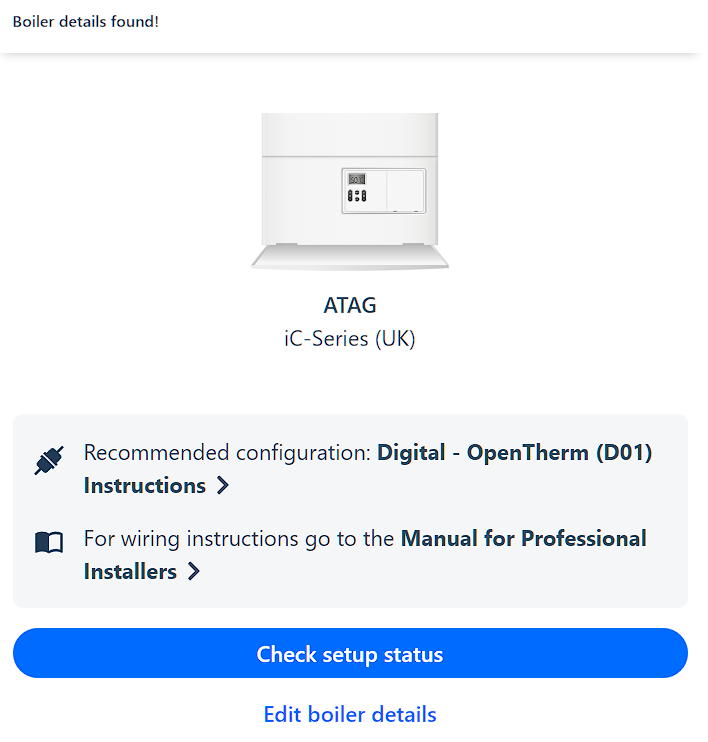
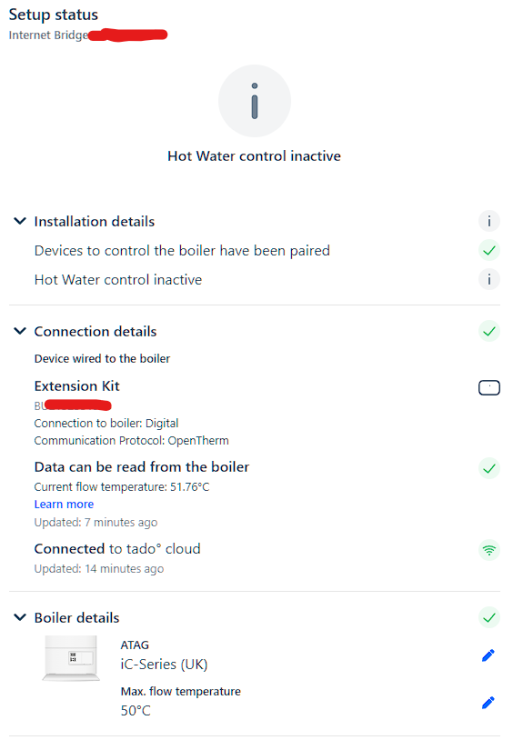
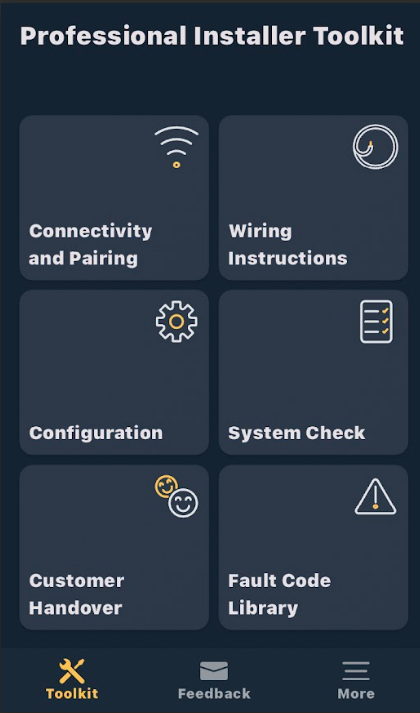
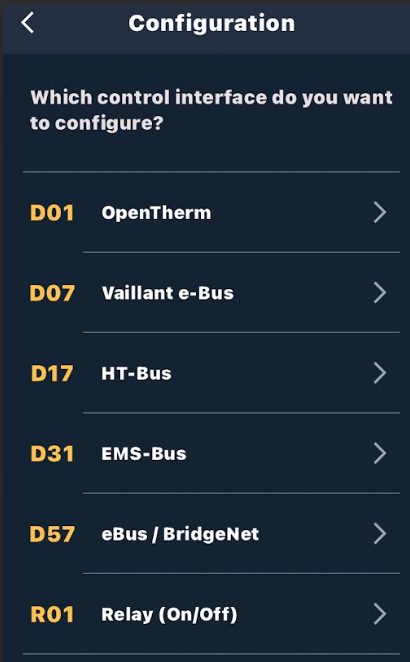
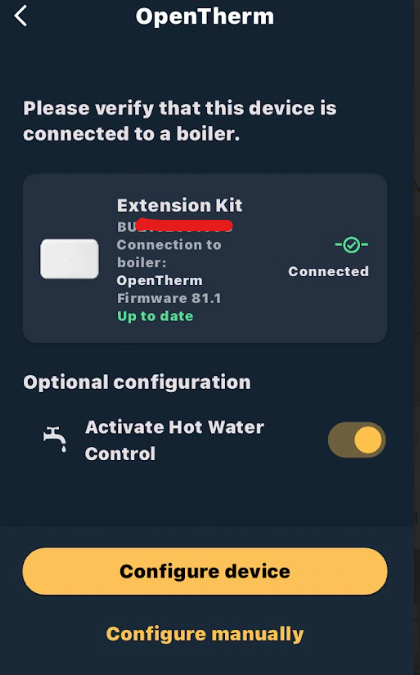
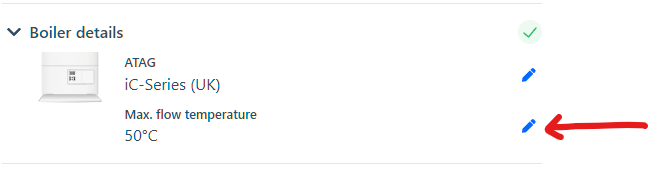
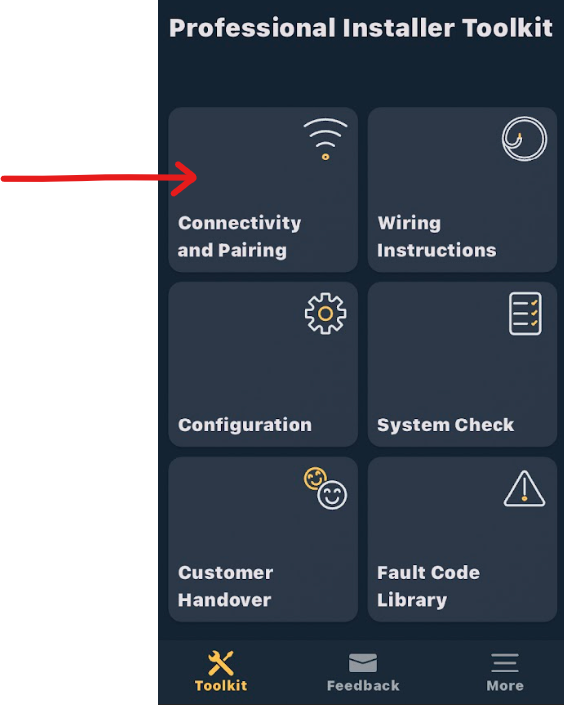
Thought this was worth sharing, as after many years of thinking you have to get in touch with Tado in order to change the boiler flow temperature when you are using an OpenTherm style connection (BUS, eBUS etc), it turns out the options are available to us, but only using the Tado for Installers App, or the web settings which are quite well hidden away. After much trawling on the web yesterday, I only came across one mention of this Tado for Installers App, though i had seen it in the app store, i just presumed that all it did was supply instructions for wiring boilers for installers, which it does, but also has a few more tricks up its sleeve. In order to connect to the OpenTherm connection on your boiler (and there are many different versions, but all are 2 wire digital, so are connected in the same way), you either need an older Extension Unit (V3), these start with a serial number of BU, or the newer starter kit, but currently only the EU version has the digital connections. There is a mention of a new version being released in the UK which will have these connections, but for now you will need one of the mentioned units. Once connected up to the boiler, i had previously assumed that no further config was required, and Tado were the only ones who could change flow temp settings...wrong! Either open the Tado for installers app, or browse to https://model-selector.tado.com/ Enter the serial number of your Internet Bridge, and the Auth code which is printed on the side of it (this assumes the system is setup and linked to your tado account). You will need these details for both the app and the web portal, so if they aren't easily accessible, write them down. Serial number of the IB is in the main app also. Once accepted, it will show the following: Mine is obviously already setup, but if these details are wrong, click Edit Boiler Details, which will take you through a manufacturer and model search. Once the correct boiler is selected, it will show you the recommended digital config, and also the wiring instructions for the specific boiler. Once all the details are correct you can check the status of setup, and it will show something like the following: If data can be read from the boiler, then the digital connection is working. If not, we can change the communication protocol to match the boiler, but this can only be done via the app for installers. From here press on configuration Select the correct bus type, The Dxx are the digital connection types supported by Tado. If you are unsure which protocol, contact the boiler manufacturer, or consult the install guide. It will show a confirmation screen like the following before you submit At this point I disabled the activate hot water control, so my boiler isn't a system boiler, but like a lot of modern boilers, has a comfort option whereby it has a small tank of water which it can preheat. I don't use this feature, hence turning this off at this point. Once this setting goes through, please check the boiler settings to ensure that comfort mode is turned off, and once set it will stay that way, and hot water control can be controlled via the boiler control panel directly. Back on the web interface, if you wish to change your boilers flow temp (since using OpenTherm/Digital overrides any local settings), simply press on the following button, set the temperature and confirm, and it'll update on the boiler after a few seconds Final feature i discovered was the ability to run firmware updates of the various Tado devices, these are of course automatically done, but if any issues have occurred you may need to force manually, this is done via the app, by pressing on the following button I'm pretty sure this will be of use to lots of people, and will save a lot of hair pulling!! Moderators - Would you be so kind to pin this post either in this forum, or move to whichever seems more suitable
-
Try a flow temp of 55C and see if that improves things? 65C is pretty high, but all depends what the return temp is, for condensing to occur.
-
Thanks for the info. I don't have the ability to get any cycling data from this boiler, have sent a query to the manufacturer to see if they know the perfect setting.
-
I know this is a bit off topic, but it’s something I’ve been wondering about for a while, is there a point whereby the flow temperature being lowered causes less efficiency, rather than more? Basically is there a sweet spot for gas boilers or is lower flow temp always better? I’m down at 45C flow this year which is heating the bungalow without issue, but is it the best for efficient use of the gas?
-
Yeah can't see anything in manual for yours. Mine probably has it as its a boiler which can take LPG as well as Nat Gas, and the changes are relevant to fuel type, but there is a range you can set for each, initially mine was set incorrectly and made it take longer to reach the target CH flow temp.
-
How is the heatmiser connected? OpenTherm or just standard On/Off? I found that my boiler (ATAG) had a setting for the Tmax of CH, based upon differing gradients on a chart, and maybe more importantly for your issue, the Gradient Speed for CH, which tells the boiler how many degrees it can rise in a given time. Clearly a different boiler to mine, but one would assume they have similar settings, and this was done off of the boiler front panel itself.
-
yeah I found this too, very annoying. Everbuild Stixall is a good swap out and is bang on! That’s my recommendation, it’s a hybrid adhesive/sealant and is overpaintable should you need to
-
What's more important for comfort U value or 'thermal mass'
MikeGrahamT21 replied to Gone West's topic in Boffin's Corner
That was good old wikipedia, but theres plenty more to go at. Energy Education Canada? An ideal material for thermal mass will have: high heat capacity high material density Heat capacity of a substance is the amount of heat energy required to change the temperature of an object by a given amount. The SI unit for heat capacity is Joule per Kelvin (J/K). The total amount of energy stored by a thermal mass system is proportional to the size of the system or material, therefore specific heat capacity (J/m2K), heat capacity per unit mass, and volumetric heat capacity (J/m3K), heat capacity per unit of volume, are common metrics used to determine a good thermal mass material. the things i've read over the years, people used the term thermal mass, to mean a storage heater effect, the ability the hold hot or cold and then release it back slowly over time, so i would say your version, and this version alike, are all correct and part of the bigger picture. Inertia is talking about the speed at which the transfer happens, and thermal mass (heat capacity) is how much energy a material can hold, you need them both together to understand how it will affect the environment. One which sticks in mind is from my youth, and comparing aluminium and copper heatsinks on CPU's.



