


MikeGrahamT21
-
Posts
1919 -
Joined
-
Last visited
-
Days Won
2
Everything posted by MikeGrahamT21
-
What's more important for comfort U value or 'thermal mass'
MikeGrahamT21 replied to Gone West's topic in Boffin's Corner
🤣 enjoy!
-
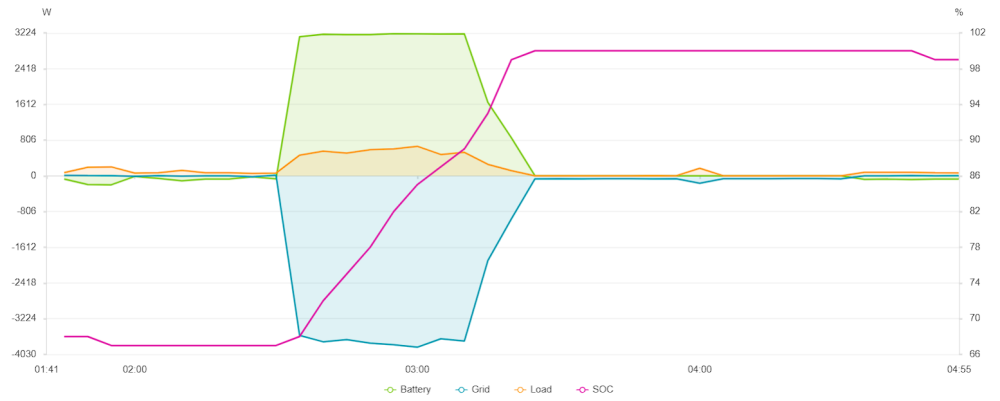
This seems to show an inefficiency, much in the same way mine does, unless you are actually consuming power at that time? This is what mine shows during charge, with an evident "load" during the charge, this isn't a load, its just in fact the inefficiency. I'm in talks with Solis regarding this at the moment, as to me it seems to be too much, and they advised me to speak to Pylontech, i'm waiting for their response
-
it’s based upon the voltage, to achieve 3kW I think from memory you need 52V and higher. one thing which isn’t clear with battery storage is the inefficiency of converting from AC to DC and vice versa, I need to do an update on my blog about it at some point. Say, like I do, charge in the small hours at cheap rate, putting 5kWh into the battery would likely give me around 4.6kWh of available energy, and then by the time that’s made it back out to device’s probably be down to around 4.3 (from memory input efficiency is lower than output), so you are losing energy right from the off. you only have to put your hand on an inverter after an hour of exporting at 3kW, they get rather hot, and the main chip in mine will operate up to 105C, which is classed as normal. will try and find time to post a blog update this week
-
The 15kWh version is only 48V, so you’d only get around 1.8kW output from it maximum. Only VAT free with installation also
-
Have you considered a smart lock? I don’t know if it would work for sure but may be worth looking into, indoor lock with some kind of control panel/keypad outside, change the code for each guest?
-
It does look like asbestos cement board (can see the hairy fibres next to the hole), but only one way of knowing and thats to get it tested. From memory (and i'm sure someone will confirm), this type of asbestos is one of the few which the body is able to expel if it got in, its not a hugely dangerous version like the insulation asbestos.
-
Light bulb removal tool? https://www.ebay.co.uk/itm/166489861049?mkcid=16&mkevt=1&mkrid=711-127632-2357-0&ssspo=sjounk96tlg&sssrc=4429486&ssuid=SHn2lQD2QEu&var=&widget_ver=artemis&media=COPY
-
What age is the property? Are you 100% sure it’s cement asbestos? Would have been a notable difference from cutting plasterboard, much harder and brittle. Photos?
-
@crofter they’re m3 so assuming normal ceiling height divide by 2.4 for m2. if ceiling height is right your around 11kWh/m2 for this month.
-
Certainly a good reduction in kWh comparing the two years, the weather will have helped this December too, had some very mild days. How many m2 are you heating?
-
Smallest tilting fillet (PVC) will do the trick nice and tidy
-
Wow no wonder it wasn’t working, I’d expect that to fill up again some more going on the amount there. likely will need a proper flush asap
-
At this time of year they’ll always have some water in them, that’s not a problem. check the level on your unit, and the manual to see how it should be installed, and check all 3 dimensions. that heat recovery core is the same as mine and it drains just fine in my unit, it has a notch in one corner to drain out, so ensure you have this in the right location too. I wouldn’t go drilling holes in this, asking for trouble!!
-
Yes I’d say you are dealing with just that. How about a converter? https://thepvcshop.com/products/metric-x-imperial-adaptor?variant=32666578714669 that place sell metric pipe at 50mm OD too if that’s what your after, and presumably the fittings to match. https://www.hydrospares.co.uk/plumbing/pipe/all-pipe/50mm-rigid-pvc-pipe-grey.htm another place too
-
I believe it’s name is visco-elastic polyurethane foam
-
EuroCell direct
-
Fixing plywood to blockwork
MikeGrahamT21 replied to Chanmenie's topic in General Construction Issues
Spent a lot of time testing different fixings in aircrete and these came out on top https://www.ukbuildsupplies.com/85mm-insofast-fixings-for-drywall-and-insulated-plasterboard-pack-of-20 drill a hole in your ply but not the block and hammer it home. I drove one of these 50mm into an aircrete block, stood on the block and tried to pull it out as hard as I could and it never shifted -
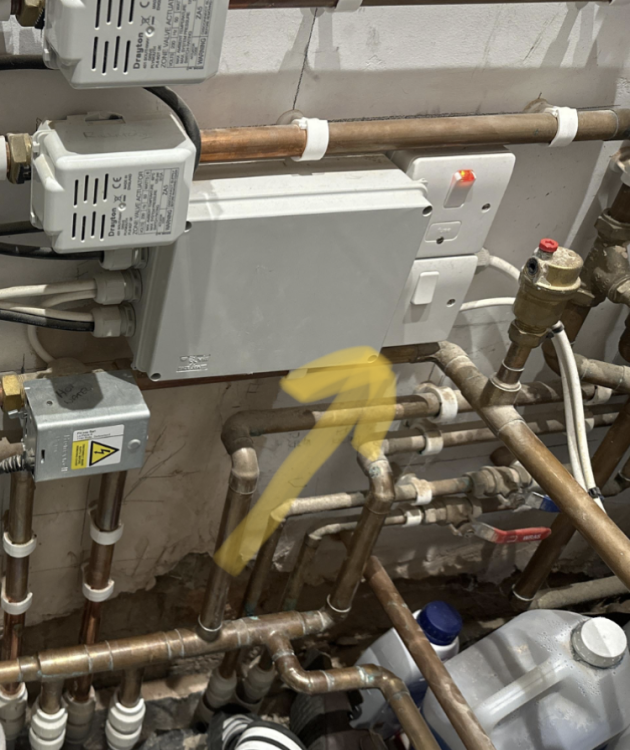
The zones which are working upstairs, they show flow yes? If so how many litres per min are they showing? Also this is assuming it’s a single manifold for all zones? id remove all of the actuators, ensure all zones are open to some degree, then turn down the zones which have flow, this should transition to flowing round the remaining open zones which would be the non working ones, and in theory it’ll either shift whatever is stopping it or just travel through the bypass valve. also should this be turned on?
-
Which floor are we talking? Assuming first floor if you are on about lighting circuits?
-
lots of cracks after attic floored
MikeGrahamT21 replied to Barryscotland's topic in General Flooring
and thickness? -
lots of cracks after attic floored
MikeGrahamT21 replied to Barryscotland's topic in General Flooring
what size are the horizontal timbers of these trusses that form the loft floor/room ceiling? -
Louvred door is probably an option here, and you will be wanting to attach a G3 grade filter medium to the back of it otherwise your AV kit will be rather dusty very soon
-
I’m assuming you are considering how best the manage the environment in terms of humidity and temperature? wattage of devices means very little, when we spec server rooms for new builds, we have to provide btu/hr outputs from the devices, the manufacturers of the equipment should be able to get this for you along with an operating humidity range, and maximum operating temperature. having that info should make it easier to spec a solution
-
according to manufacturers specs, yes. But a lot can happen in the 2.8m2 of area behind that one board however aircrete blocks are very common background to be sticking on to, they shrink and crack very easily resulting in air leakage. Even denser aggregate blocks can be hard to get the mortar to make a perfect seal, which is where the parge coat came in, but it’s not thick enough to withstand shrinkage. For me, avoid D&D at all costs
-
as above, bonding coat/hardwall and skim is absolutely fine for airtightness


