
Stones
-
Posts
3761 -
Joined
-
Last visited
-
Days Won
23
Everything posted by Stones
-

Credit/Debit Reward Cards, Discounts etc
Stones replied to Ferdinand's topic in General Self Build & DIY Discussion
That assumes you have a large enough credit limit for all the purchases you want to make -
The skews are present on all gables as a direct alternative to dry verge. The end of the tiles overhangs the lead soakers (a hidden gutter in effect) by 2 inches. The folded edge of the soaker is pushed up to the underside of the tile ends. All tiles are double nailed and clipped. At the soaker / skew junction, black Soudal roof sealant is used as an additional way of securing each course of tile to the next. I've tried moving them and they are rock solid.
-
That's very helpful, thanks. Riser is going to be painted along with the stringer. Going to go 30mm Oak (not a huge uplift) and the pine riser.
-
Credit/Debit Reward Cards, Discounts etc
Stones replied to Ferdinand's topic in General Self Build & DIY Discussion
I had always understood it to be both - minimum £100 spend before S.75 applies and minimum £100 payment on card to lock in S.75 even if paying balance some other way. -
Rest and relaxation - escaping from the build
Stones replied to Stones's topic in General Self Build & DIY Discussion
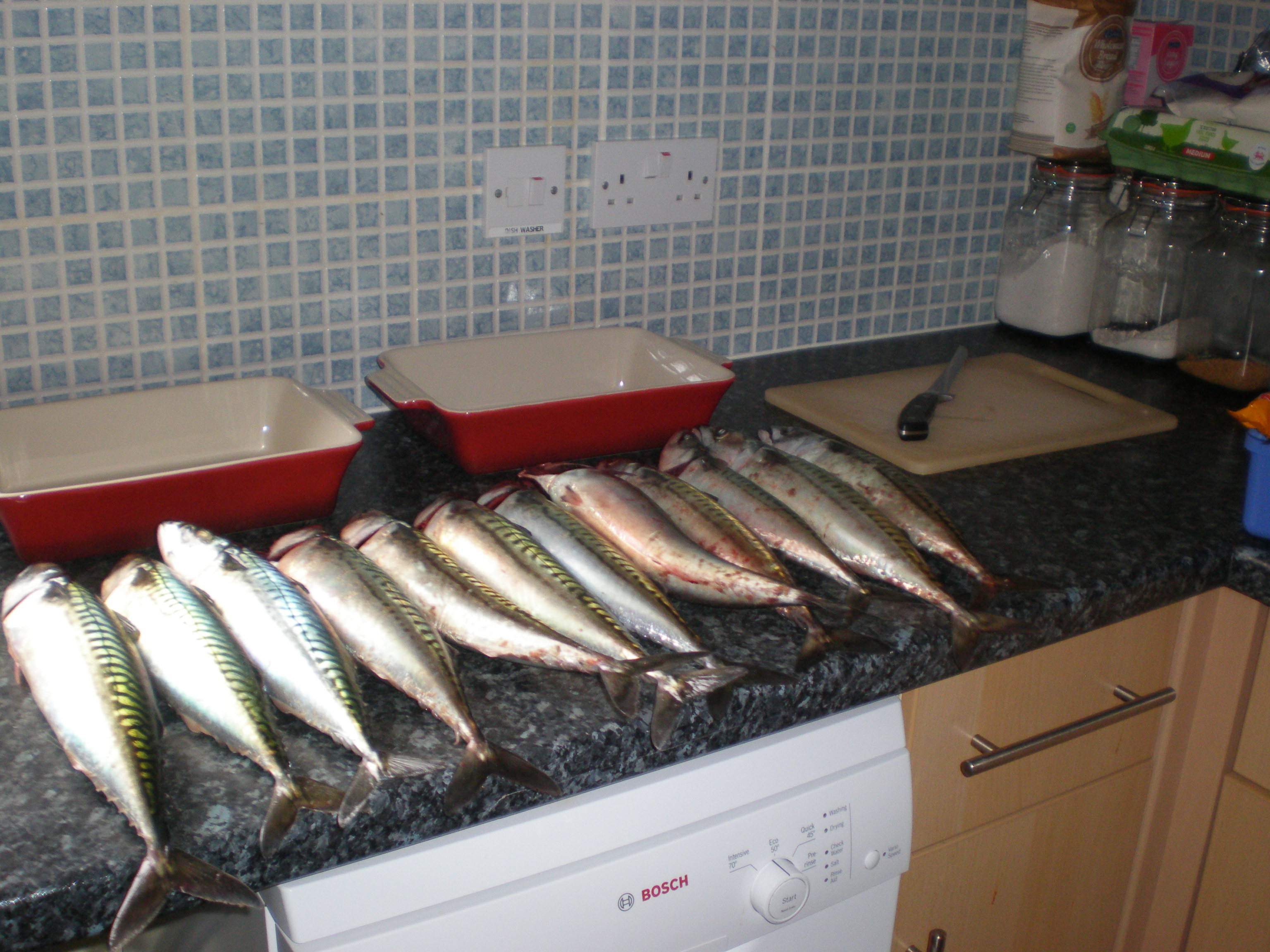
Out fishing this morning, a rising tide, light breeze assisting my cast - 12 cracking Mackrel the result. We even had a brief period (30 seconds literally) when the water next to the pier was 'boiling' with fish, as a small shoal of Mackrel came in and fed on whitebait. A single cast out (3 hooked) before the boiling ceased and the Mackrel disappeared! An amazing sight seeing the Mackrel hunting their prey. Mackrel fillets with lemon & garlic mayo on a roll for lunch , a freezer stocked up with fillets and a healthy store of bait for next time.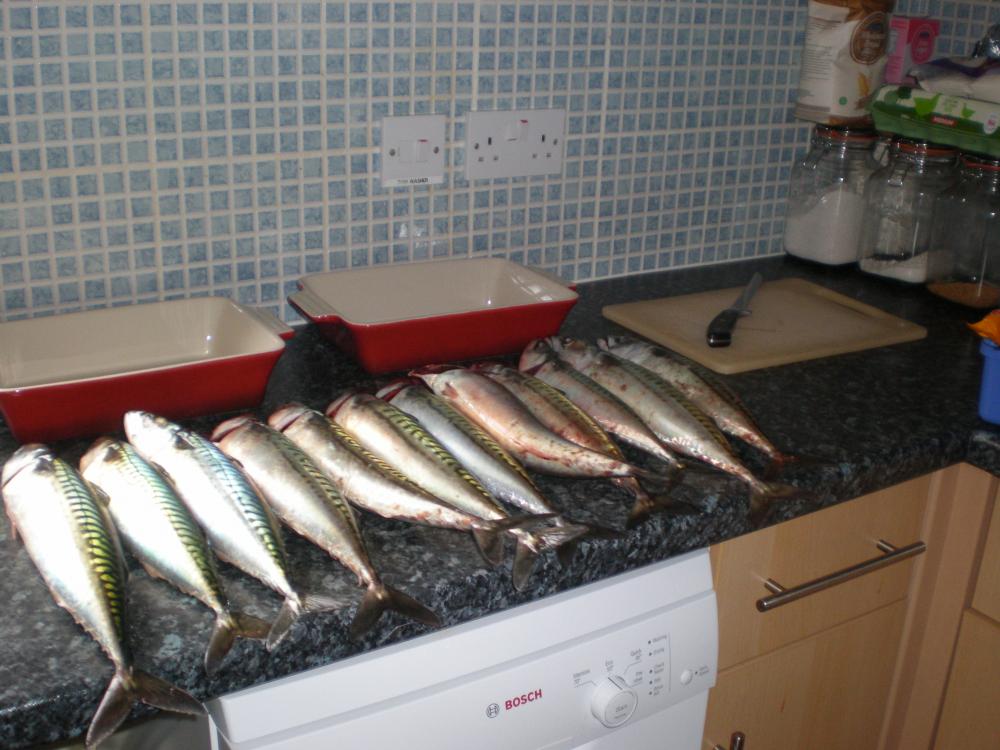
-
I've measured the doors in our kitchen (rented house) and they are 5mm shorter than the nominal cabinet width. Depending how they have been adjusted, you could have up to a 10mm gap between one set, and virtually no gap between another set of doors. Are there any gaps between cabinets?
-
I'm just at the point of ordering my stairs. We are having oak treads, but otherwise the visible parts of the stair will be painted white. Stringer - 32mm Pine Treads - a choice of 21mm or 30mm oak Risers - 9mm plywood or 21mm pine Would appreciate thoughts on which thickness of oak tread and type of riser to go for.
-
Unfortunately not, but its the same ventilation strip used on the roof (pictured below). Lengths were cut to size to close the bottom of the cavity between the vertical battens onto which the cladding is nailed. I'll try and get a picture tomorrow. IIRC the cladding board overlap sits over the sloping section of the ventilation strip, so you don't actually see any of the ventilation strip at all.
-
Since the roof was finished, things have slowed down on site while we have been waiting on our windows. There has been some activity, with the garage being progressed and some EWI fitted to the external face of the ICF walls. Rather than tinker at the edges, the joiners have now been off site for a couple of weeks pushing on another job in readiness for returning to our site next week. Our windows are as I type this, sitting in the delivery depot in Kirkwall awaiting delivery to site. How the garage has progressed: 6" blocks were laid onto the strip foundations previously poured. You can see my youngest 'helping' lay this foundation blockwork. Upfill and blinding, DPC and Slab poured: 6" x 2" timber frame was constructed on site: Timber Skews were formed and covered in lead as per the house, the roof battened out and tiled as per the house and untreated siberian larch cladding fitted using stainless steel nails. Plastic ventilation strips were used instead of insect mesh at the bottom of the cavity between the timber frame and cladding. The cladding still needs finishing off with corner pieces and a trim to the underside of the skews. The side door has been fitted but we are still waiting on the main door. Ramp access into the garage will be completed further down the line. Other than some EWI being fitted to the outer face of the ICF blockwork: and applying patination oil to the lead skews following a very useful discussion here: we have been a bit limited in what we could get done. With our windows on the way, and 4 joiners due on site from Monday, we should see fairly rapid progress.
-
I looked into both galvanised steel and aluminium guttering. Both discounted due to cost - compared to plastic, 4 times the cost for galvanised, more for aluminium.
-
We have always wanted to use timber cladding, but examples we had previously seen in Perthshire were always troubled with black growth. The examples I have seen up here don't seem to suffer, which I can only put down to the exposed climate- plenty of wind to dry the cladding off. Are the neglected looking properties you have seen in exposed or sheltered locations?
-
I suppose the only negatives of using treated fencing timber are the greenish tinge it has when it first goes up, and that it is rough sawn rather than smooth finish. That said it does always seem to weather quite well, or certainly has where I've used it to construct outbuildings etc. That may be down to a much better air flow round the timber than you would achieve if cladding a house with only a small ventilation cavity behind the cladding.
-
Rob, re-reading your first post, what kind of treated look are you actually after? I'd always assumed (shows how wrong one can be) that a treated finish meant either a opaque coloured /painted finish or a clear finish to retain the freshly milled colour of the cladding. As per my last post, it's good to see there is an option which facilitates weathering, although reading through the Q&A's it's clear cladding may still suffer from green and black algae growth etc - as it is a mitigating product rather than a total solution. The other question is lifespan. Up to 15 years, which I would seriously doubt as a lifespan in the marine climate up here [having seen painted timber stripped back to bare wood on a few houses last winter (after a couple of wind driven hail storms)], which means at some point you have to decide whether to re-apply or live with the finish as it is and the potential for the problematic issues this product seeks to mitigate, to appear on your cladding?
-
I hadn't realised that treating with Sioo meant you would end up with a weathered finish. Seems similar in some respects to treating lead with patination oil - controls and evens the weathering and prevents some of the problems associated with untreated an untreated finish.
-
Spoke to the Vortex people today about servicing. Apart from the air blower itself (filter and diaphrams), and a test of the treated effluent for suspended solids to determine when desludge required, no other maintenance required. They did say in the first few months there may be some adjustment needed in terms of the amount of air going into the unit. I specifically asked about the air diffusers but they were clear that there was no service requirement for these. They did advise that the diffuser would eventually need replaced as over time it would silt up or the rubber in it would perish, but to date, they hadn't had to replace any. Remote support available by phone and online. They said sending in a video of how the unit was operating was probably the best way of them being able to assist in diagnosing any issues. I have to say I'm not entirely convinced about the air diffuser not requiring, at the very least, an annual inspection, especially given that the air diffuser isn't operating 24/7.
-
Polishing concrete samples : guess whose job it is?
Stones replied to ToughButterCup's topic in General Flooring
I was visiting a WW2 gun emplacements the other day. Inside, was a beautifully cast concrete worktop. An everyday utilitarian surface put in quickly with an expected service life of only a few years, looks, 75 years on, perfect. I've seen other wartime examples up here of worktops with drainage grooves cast into them, concrete 'kitchen' units with caithness stone roof slate shelves. All of it done in a hurry with what was available. Shame those same skills are not readily available today. -
Not convinced at all about grey water recycling. Strikes me as being problematic (and expensive) to avoid nasties. Rainwater harvesting seems a better bet. Until such time as Scottish water moves to metering, there is absolutely zero incentive for us to adopt rainwater harvesting. Living on an island which sustained the water needs of an additional 100000 servicemen (and additional visiting ships) during WW1 and WW2 without problem, leads me to believe that water shortage isn't really an issue for us.
-
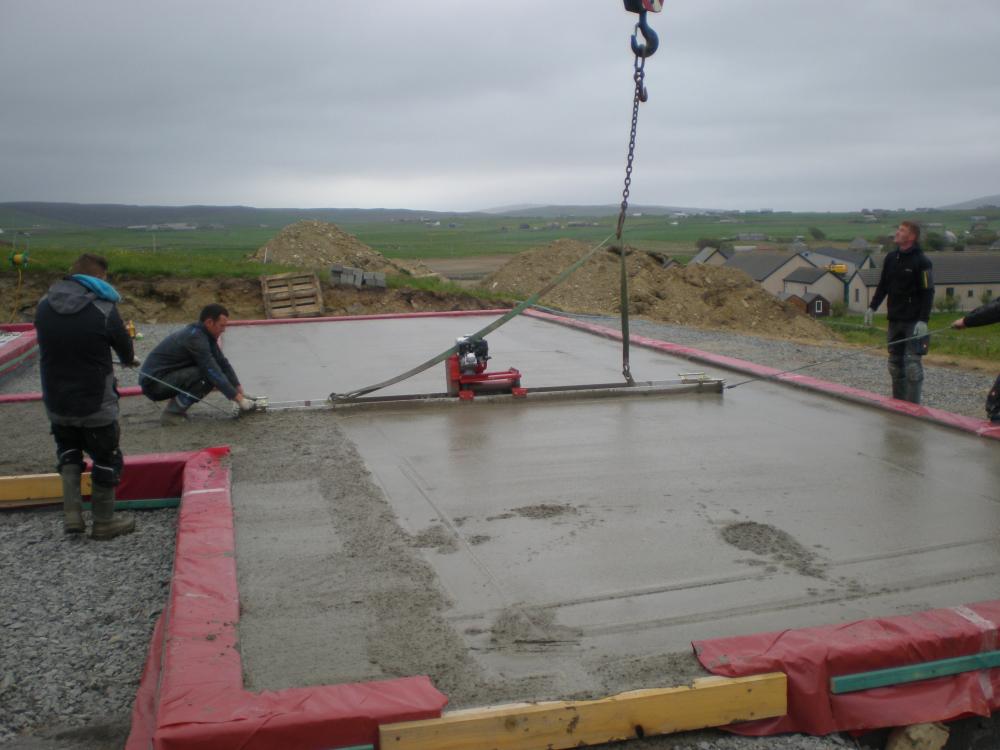
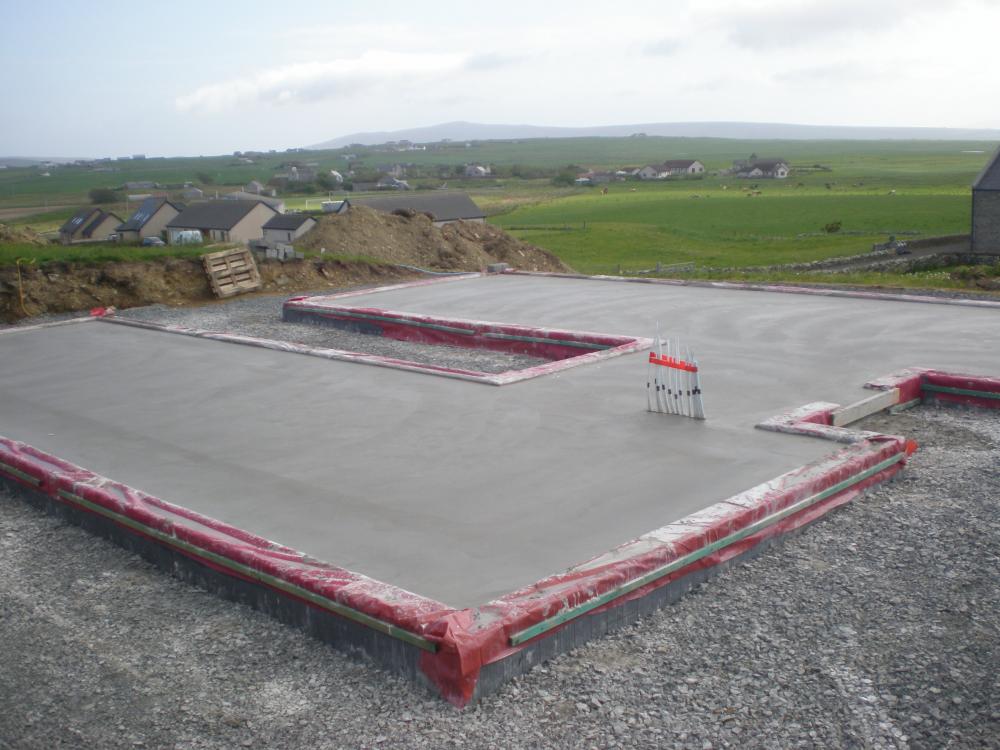
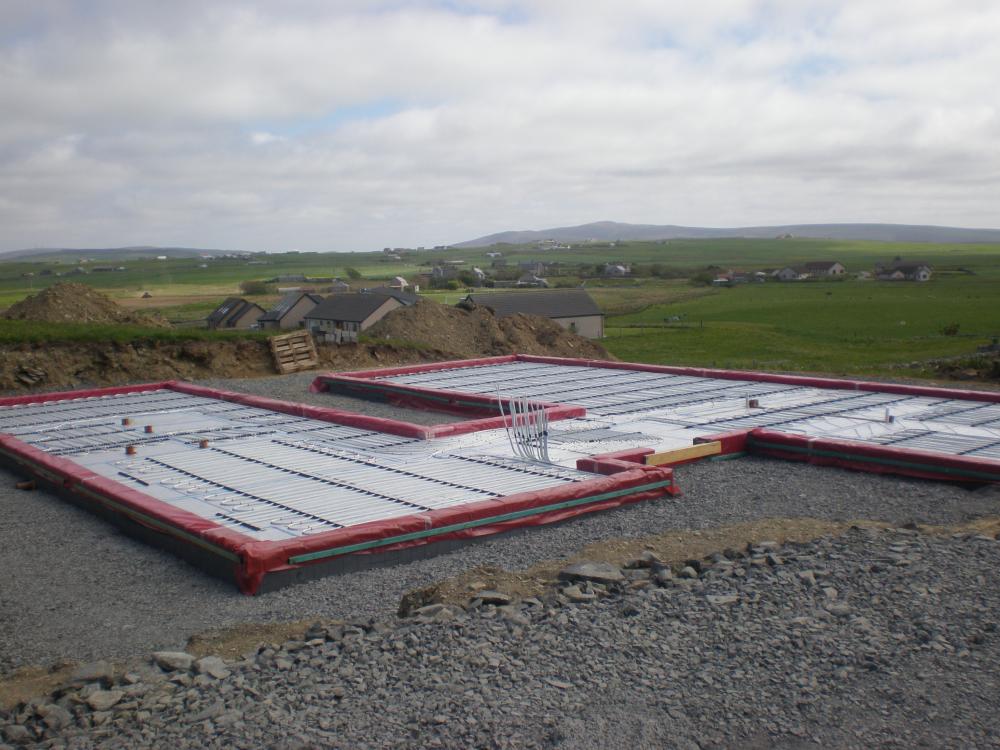
Our builder / ICF construction uses a similar strategy, extending the slab into the door way so that the door threshold has something solid to sit on. Not the best of pictures as i wasn't concentrating on this detail, but you can see how the slab extends through the ICF foundation blockwork for the door openings. You can just see in the last picture the PU upstand insulation behind the timber former so the finished opening is flush with the outer face of the ICF block External insulation still to be fitted onto the outer face of the ICF block.
-
Do it in stages, perhaps no more than two things each time? I think I'd approach the dormer window one by stressing your discussions with neighbours and wanting to reduce impact on their and neighbouring properties amenity.
-
Prices are for 6 person units, Ex VAT but include £140 delivery charges to Orkney. Free delivery seems to apply to a large % of the mainland. From what you say, the shape of the unit is going to make much difference, it's the ratio of air in vs volume of sewage that's important? Just wondering whether the conical design effectively guides sewage to a concentrated point directly over the air diffuser, thus ensuring that there is even aeration? That's the concern I have going down this road and why i wondered whether varying the amount of air going into the treatment plant was the better option. Not sure how the air blowers would react / perform if one were to fit a variable resistor to limit its power.
-
Have you got an electronic copy of you planning consent (or look on the planning portal) and copy/paste in the conditions here so we can see them?
-
I'll hopefully confirm the servicing requirements of the Vortex tomorrow. Household under occupancy is an interesting one as building regs require us to install on a population basis which often bears no relation to the actual occupancy. Not sure what the answer to that is, the dual approach of the Vortex (intermittent running of air blower and ability to adjust air blower), replicating that approach by timing air blower operation and fitting a variable resistor to control blower output or simply using a smaller air blower.
-
Where is this page 'inserted'? Bottom line is if it's not a condition or specified on the approved plans, then English Heritage cannot force you to do anything. The flip side of that coin is if you deviate from the approved plans, enforcement action could be taken against you.
-
So, I've been looking a bit more into the Activate Sludge process to try and determine which is the optimum shape - conical or cylindrical. The short answer is I can't find definitive information and that various shapes of 'tank' seem to work. The main difference between the two units seem to be the size of bubbles produced by the air diffuser. The Biopure appears to produce larger bubbles, as it has to both aerate and break up solids that are deposited directly into the digestion chamber. The Vortex has an initial breaking up stage before using a diffuser that produces finer bubbles in the main chamber. Whether there is a greater risk of a finer diffuser getting blocked / scaling up is something to think about. The Vortex also appears to only aerate part of the time as compared to the Biopure which runs 24/7. The Vortex also claims to be adjustable to deal with household under occupancy. I'm not sure how bug an issue this is. presumably a variable resistor fitted to the air blower would be an option to reduce the amount of air / oxygenation going into any treatment plant. I'm still to confirm service requirements for the Vortex, but a chat with Biopure, it all seems straightforward. Service the air blower (filter and diaphrams), sample treated liquor, desludge every 3 or so years, lift air line to check and clean diffuser. I'm guessing the Vortex will be similar. One advantage the Biopure does have is that the air blower can be housed in the top part of the unit whereas the Vortex seems to be a little box that sits on top of the unit.
-
Reading both your and Jeremy's posts on this topic, its the connection to the MVHR ductwork that seems to be the biggest problem / obstacle. I'm using semi rigid 75mm airflex duct so facing the same issue if i want to go down this route. Just had a look at my concealed cistern and it look to be straightforward enough in terms connecting to that using one of the punch outs.