


Stones
-
Posts
3762 -
Joined
-
Last visited
-
Days Won
23
Everything posted by Stones
-
 Turning my attention to the MVHR service area I have, I need to decide whether to insulate the area of loft space which will house the MVHR unit and distribution boxes as a warm space (i.e. line the attic trusses with PU boards) or leave it as a cold space (i.e. earthwool insulation between ceiling joists, with MVHR and distribution boxes on a raised platform above. Insulating over the top of the ductwork and distribution boxes is easy enough in the cold roof scenario, so it's really a question of whether there are significant disadvantages to having the MVHR unit (Vent Axia Sentinal Kinetic Plus) in a cold space. Ducts to and from the MVHR unit will be insulated and would in the case of the air intake and exhaust have to pass into cold roof space at some point. Looking inside the MVHR unit itself, it's mostly an insulated box. A cold space would certainly be easier and cheaper (as I would need 6 x 100mm PU boards to insulate the space as a warm space), but that has to be set against the increased heat losses from the MVHR unit if it is in a cold rather than warm space. Looking through the manual, it suggests insulating the unit for optimum performance if installed in a cold space, but doesn't quantify what the losses may be / how the performance would differ. Anyone care to comment / have a stab at what the likely losses would be in a cold space?
 -
BT Openreach have an obligation to provide you with a connection free of charge up to a value of around £3400. Register your site here: http://www.newdevelopments-openreach.co.uk/developers-and-architects/RegisterYourSite.aspx They will email back within a day or so giving you a local contact to make arrangements to survey and see what is required / for the on site work. If it is going to costs more, this has to be agreed with you before work commences. They will register the site which would thereafter allow you to contact and arrange service with your chosen supplier.
-
Fair enough. Having just got back from site and trying this, I think gentle agitation with a brush (rather than scrubbing) and plenty of water to wash the stuff away is the name of the game here.
-
May have found the answer - http://www.boralamerica.com/Media/Default/Resources/Roofing/Roof-Technical-Cut-Dust-Removal.pdf Any other thoughts / experience welcome
-
Cutting roof tiles generates silica dust which can land on surrounding tiles and is unsightly. In our case, tiles were fitted and a final cut made on the insitu tiles at the valley junctions, to ensure a consistent and tidy 2" gap. This has resulted in silica dust deposits on the surrounding roof tiles. Can this be cleaned off without damaging the tiles (tile surface) or should it just be left for the natural process of rainwater washing the tile surface clean?
-
Having looked at the warehouse steps / ladders, they look like a decent compromise. TBH, I can't see me using whatever I buy that often, as there will really only be three requirements - cleaning, accessing MVHR vents, and decorating. The bulk of the decorating would be done by roller on an extended pole, so I only need to reach the apex to cut in around light fittings etc. Lights themselves will be long pendants so once fitted, changing a bulb is from ground floor level. General cleaning (cobwebs etc) could probably be done using a duster on an extendable pole. MVHR outlets, will perhaps need adjustment and cleaning from time to time. Realistically then, maybe twice a year for MVHR outlets and every 3 years for decorating. Cleaning / checking gutters is probably the other use for which a ladder would be used for, and certainly one with a decent platform height, would work well.
-
Patination Oil to lead - to coat or not
Stones replied to Stones's topic in Roofing, Tiling & Slating
That's why I started it! Where are those moderators when you need them? -
One of the longer term issues I have to consider is how I facilitate maintenance (primarily decorating and checking MVHR outlets) of my vaulted ceiling. Working off the builders tower platform to put in my MVHR ductwork was not a pleasant experience, primarily because of the height the working platform had been set at, and it being a touch on the wobbly side. Ideally I'm looking for a platform height of between 8' and 9' and am really just thinking about what my options are. A scaffolding box or some kind of scaffolding tower / trestle system seem the obvious answers. I'd rather not work off a ladder if I can help it, although this may be the simplest solution given the limited amount of use it will get. Are there any other options I have missed?
-
Patination Oil to lead - to coat or not
Stones replied to Stones's topic in Roofing, Tiling & Slating
No, not my own scaffolding, so I think that its simply going to be a case (as Ed suggests) of getting it done while the scaffolding is there. A box of scaffolding, or at least some kind of platform to work off inside so I can reach the vaulted ceiling is something I'll have to think about acquiring. Not sure yet what the best options are - another topic looms! -
Patination Oil to lead - to coat or not
Stones replied to Stones's topic in Roofing, Tiling & Slating
Shouldn't be any run off. I suppose its really a question of whether it's actually worth doing - i.e. is it in going to improve the appearance of the lead? I'm not bothered about the small cost of buying the stuff, or an hour or so applying it as the scaffolding is still there making it an easy enough job to do. My view is it won't do any harm. -
Patination Oil to lead - to coat or not
Stones replied to Stones's topic in Roofing, Tiling & Slating
At site today and gave the skews a light clean, primarily to remove the building debris / tile dust etc that had accumulated whilst the roof tiles were going on. Made a huge difference and makes clear the patina that is already developing. I've no problem applying patination oil (albeit I am going to have to wait for a suitable weather window which looks like being a week away now) if it is going to slow the oxidization process, but I'm not convinced taking the lead back to a milled / shiny finish prior to oiling is going to be worthwhile given what is already there is attractive in appearance. Assuming I can actually get oil applied sometime next week, and perhaps after another quick wash to remove any further dust/debris, is there an issue with applying oil over lead which has already started oxidizing? -
House fire - how to control mvhr
Stones replied to warby's topic in Mechanical Ventilation with Heat Recovery (MVHR)
I have seen my fair share of fire related death, and it isn't pretty. The one that probably sticks out in relation to this thread was a family of five that died in a house fire (20 odd years ago now). The simple fact was they couldn't get out of the house before the smoke overwhelmed them. That house didn't have MVHR, but did have smoke detectors. Having a clearly planned escape route and strategy is essential. In that particular case, doors and windows were all locked from within. The grandmother and two grandchildren were found huddled together at the bottom of the stairs right beside the front door. We will never know of course, but it makes you wonder if something as simple as the key not being in the lock was ultimately the reason they didn't survive. Speaking to fire crew in the aftermath, to a man they all suggested fire suppresion - a sprinkler system, was the most effective way of giving an escape window to occupants. The problem sadly, as many of us who have looked at such systems has found, is the cost. -
Patination Oil to lead - to coat or not
Stones replied to Stones's topic in Roofing, Tiling & Slating
We are using Code 5, and certainly the supply came from the local builders merchant. Given the price indications for the lead, its the real deal (and in any case I know for a fact my builder wouldn't cut corners in this way - too small an island for that sort of nonsense). I'll see how it looks tomorrow and maybe clean a small area and make a judgement then. -
No. I've started a new topic to discuss this:
-
Raised by Declan52 in my blog here: Thought it might be useful to discuss this more widely. We have lead covered skews as our verge treatment. Not being aware of the product or the requirement for it, I asked the question and established that Patination Oil wasn't applied during installation primarily because it doesn't tend to last long up here due to the prevailing weather. Having discussed it with a few people through the course of the day, there is a definite split of opinion as to whether it is worth doing or not. http://www.britishlead.co.uk/patination-oil and various other websites selling Patination Oil, list the reasons why you should coat new lead. The main reason for doing so appears to be controlling the formation of lead carbonate, which can stain roof tiles, walls etc if there is run off directly from the lead onto said finishes. In our case, the skews do not run onto the roof tiles, but directly into a gutter. Thinking back to our last house, where we had lead valleys and lead roof vents, the only area we had a visible problem was the roof vents, as these ran off onto the slate roof. The valleys were unaffected, one assumes by being subject to a regular dousing of water running off into the gutter. So the question for me is do I leave them to patina naturally, reasonably safe in the knowledge that nothing I don't have a run off problem to cause staining to surrounding building materials, or given the lead has been in place for a good couple of weeks and already subject to the elements and moisture, apply a coat of oil following a thorough cleaning? Our lead is already developing its patina, with the odd piece showing signs moisture had been present during storage. However, it is still easy enough to get at should I wish to go down the route of cleaning / applying oil. I would however be limited in where I could clean and oil (as the roof is finished and I now cannot coat on the underside of the lead or effectively and properly coat lead beneath the roof tiles). It does make me wonder whether the effort would be worthwhile. A first step might just be a light clean, to get rid of any dust and debris to see how it looks before I make a decision one way or another. Any thoughts / experience either way?
-
All of the guys we have had on site certainly do seem to have shown a real pride in their work, which yes, makes me very, very happy. TBH, I can't wait for the external finishing to be done and we can see the house properly. The windows are coming finished in a 'granite' powder coated finish, so a slight texture which changes in appearance with the sun, and is very much in keeping with the lead. Contrast will come in the form of colour, material and texture - a nice crisp slightly off white render to one section of the house and larch timber cladding to the rear section (which we are leaving to weather down). Larch fascias will be common to all of the house as will either galvanised or black guttering.
-
Yes, really pleased. One of the alternatives we did consider (when we were thinking about having part of the roof finished with Tata standing seam, was using a powder coated aluminium skew colour matched to the standing seam. Aluminium skews and soakers would have been more expensive to buy, but probably quicker and therefore cheaper to fit, but I'm not convinced they would have kept their looks as well as I anticipate lead will, over the coming years. Lead gives a timeless appearance (judging by the lead skews we see around Orkney) and we believe it will ground the house into the local style in a way that a plastic dry verge system wouldn't. Adding up the cost of each gable skew, they are coming out around £750 each. Expensive compared to a dry verge, but then no gable fascias or soffits to finish in UPVC or aluminium, so perhaps not as expensive as you may first think. Overall it's still cheaper putting in skews than slating (or artificial slating) the roof given the area we had to cover, as that was really the only other way we could have avoided using a dry verge system.
-
Fibreglass was something I asked about early on, but was advised against. Its reputation up here isn't good, and having spoken to two local surveyors about it since, I'm rather glad we didn't go down that route. Of course the poor reputation of fibreglass up here, could be down to a few poor installations rather than anything to do with the product itself. Lead just seems to be the preferred and more robust option up here. Also looks better (IMHO).
-
Having fitted sarking boards and roofing membrane, the next task for the joiners was to batten out the roof ready for tiling, and forming timber 'skews'. 'Skews' are a verge treatment seen widely throughout Orkney, be they lead covered, stone or formed from concrete. Nothing especially complicated in their construction, as can be seen in the 'technical diagram' used by the joiners: With no external block leaf, our options were a bit limited in terms of construction, but the cantilever design is strongly anchored, bolted as it is to the concrete core of the ICF block, and to a timber (also bolted into the concrete core) that runs under the cantilever. The overhang will be significantly reduced as and when the additional EWI is fitted and cladding / render has been applied. Lead work next. A lot of lead required, 13 rolls of 390mm, 10 rolls of 600mm for the skews and valleys combined. Those of you who know the price of lead will appreciate the costs involved! The lead valleys were done first, 3 rolls of 390mm used: followed by a couple of days folding lead for the 'skews'. Two pieces were used to form the finish, the first being the 'soaker', which formers the gutter between the edge of the tiles and the 'skew' itself. The soaker profile, formed from 390mm lead (7 rolls used for the house, 3 left for the garage): The skew profile, formed from 600mm lead (7 rolls used for the house skews, 3 rolls left for the garage) : and how the two profiles fit together: And finally, how they look when complete: As you can see, to facilitate expansion, the skew is made up of overlapping pieces of lead rather than a single strip. Having completed the lead work, 5 days of it - 1 for the valleys, 1 day each per gable skew and soaker, the plumber handed over to the tiler. Working alone, he covered the roof with a flat profile concrete tile in 2 weeks. Because of the wind up here, every tile is double nailed and clipped. Black Soudal roofing sealant was used at valley / soaker junctions to secure any tiles that had been cut. Where tile meets lead, the folded edge of the soaker / valley lead was pulled up to the underside of the tile to prevent water (and bird) ingress. We now have a finished roof, which I have to say looks great. We are really pleased with the skews and the huge difference they make to the overall finished roof appearance. Unfortunately, we are still waiting for our windows, so will not be fully water tight for another 3 - 4 weeks. Work will however continue on site, with a reasonable list of jobs that can be progressed while we wait - building the garage, fitting EWI, fitting fascia and soffit boards, dwanging and battening inside etc.
-
MVHR layout queries
Stones replied to Stones's topic in Mechanical Ventilation with Heat Recovery (MVHR)
Nobody? -
The following shows part of my MVHR layout. MVHR layout.pdf The en-suite extract has been positioned over the bath, as this is the point furthest from the door. So far so good. However, I would prefer to position the extract over the shower, as this will have the greatest use, and ensure a quicker auto boost via the MVHR inbuilt humidity sensor. The downside with relocating the extract is that there would be a 'dead area' in terms of ventilation draw through. One option is to run one of the twin extract ducts to a plenum over the shower, and another to the position over the bath as marked. Does anyone see any issues doing this? Next question relates to the kitchen extract - is there a minimum distance in terms of extract position relative to the hob and hob extractor. My plan currently shows the extract point 1m away from the hob extractor. The hob extractor will be set to recirculation via charcoal filter.
-
A lot of businesses will have hedged the price they are paying months ago, or alternatively will be selling based on a pre-determined exchange rate (as opposed to the current and variable exchange rate). By way of example, read the small print in a holiday brochure and you'll find that their brochure prices are based at a certain rate of exchange.
-
Depends on the goods in question. I can't see the supermarkets raising prices as they are locked in a fairly vicious price war. Suppliers of other goods may increase prices if they think they can get away with it - what the market will bear.
-
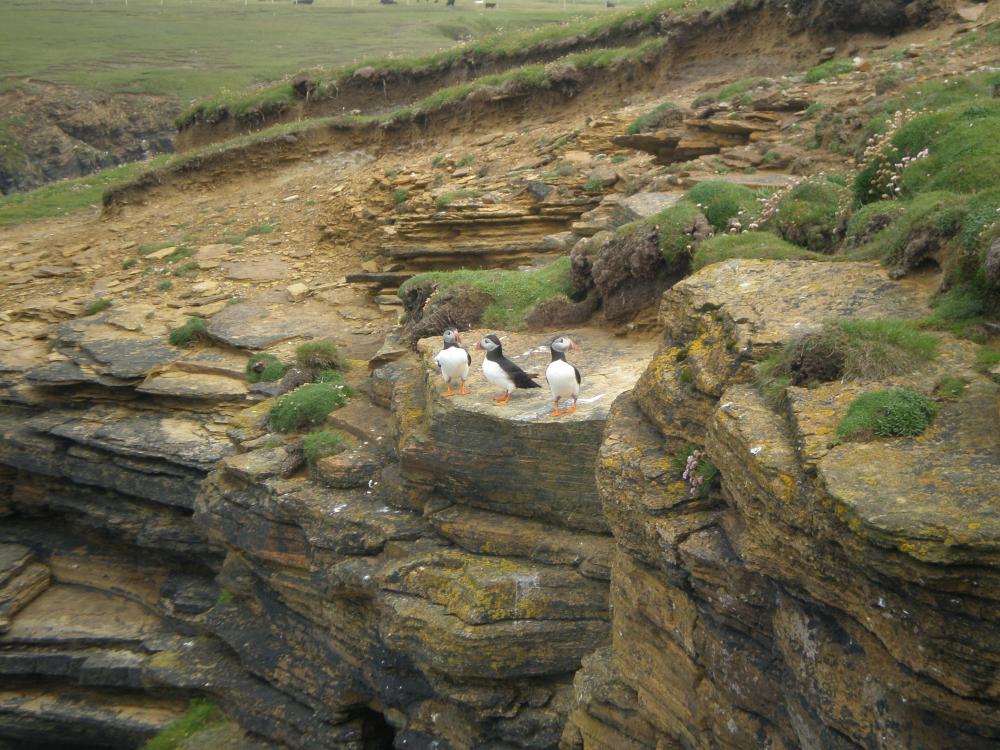
The danger with a self build, is it becomes all consuming. Taking a bit of time out sometimes does wonders... Despite having a long list of things to do, they were all put aside today as we went searching for puffins. Glad to say we found some Enjoy...

-
I sowed our last lawn in November! I broke all the rules and rolled the seed into the prepared surface (to stop the anticipated rain from washing it all away). Slowly but surely a green hue appeared over the course of the next few weeks. That December saw a huge snowfall and cold snap (2010) which lasted for about 10 weeks. When the snow finally melted, I had a lawn! The grass had continued growing under the nice insulating blanket of snow with no ill effect whatsoever.


